
Reviewed · GRAND CANYON TOURS
45-minute Helicopter Flight Over the Grand Canyon from Tusayan, Arizona
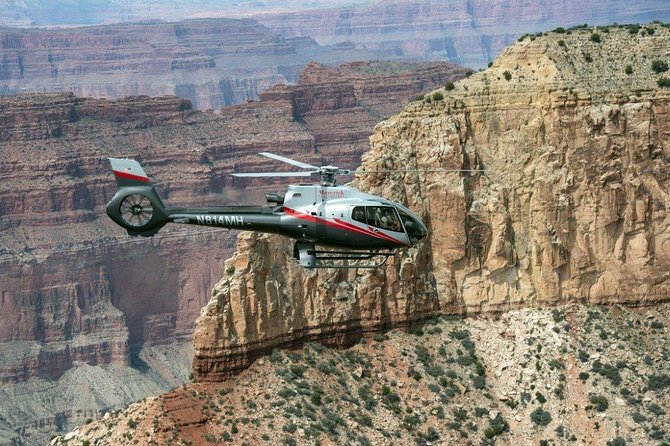
The most striking part of this 45-minute Grand Canyon helicopter flight is the change in scale. From Tusayan, the forest looks broad and calm, then the South Rim suddenly falls away and the canyon opens beneath you. You can see the North Rim, Colorado River, Painted Desert, and Dragon Corridor in one sweeping outing. I like the EC130’s large windows and the fact that the route reaches both rims, and I like the pilots’ live commentary, often paired with music through the headset.
The main catch is the price: $394.88 per person is a serious splurge, and seating is assigned by weight and balance, so your party may not sit together. Bring an original government-issued photo ID, arrive ready for a fixed seat assignment, and book early, since this flight is often reserved well ahead.
In This Review
- Key points at a glance
- Why an aerial view changes the Grand Canyon
- Leaving Tusayan above Kaibab National Forest
- The South Rim drops away
- Following the Colorado River toward the east
- Marble Canyon and Point Imperial
- Through the Dragon Corridor on the return
- What the $394.88 price buys you
- Timing, comfort, and the practical rules
- Who should book this Grand Canyon flight
- Should you book the 45-minute Grand Canyon helicopter flight?
- FAQ
- Is there a minimum age for the helicopter flight?
- Can a child fly without an adult?
- Do adults need photo identification?
- What type of helicopter is used?
- Can I request a particular seat?
- What happens if I weigh more than 275 pounds?
- What happens if weather cancels the flight?
Key points at a glance
- Both rims in one flight: The route crosses from the South Rim to the North Rim and returns through the canyon’s Dragon Corridor.
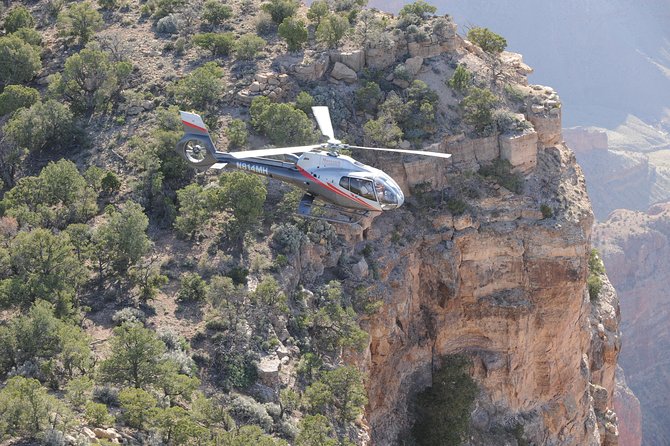
- Wide aircraft windows: The Airbus EC130, also called an ECO-Star, is designed for sightseeing, with broad front and side views.
- A six- or seven-person flight: The small aircraft keeps the experience personal, though exact seating is not guaranteed.
- Big geographic sweep: You see Kaibab National Forest, the Colorado River, Painted Desert, Desert View Watchtower, Marble Canyon, and Point Imperial.
- A polished operation: Check-in, boarding, headsets, pilot narration, and safety procedures are handled in a streamlined way.
- Plan for strict rules: Adults need an original photo ID, passengers over 275 pounds need an extra seat, and bad weather can cancel the flight.
Why an aerial view changes the Grand Canyon
From the rim, the Grand Canyon is a wall of color and shadow. From a helicopter, you see how the whole system fits together. The river is no longer a distant thread at the bottom. The North Rim is no longer an abstract opposite edge. You begin to grasp the canyon as a long, twisting channel cut through a huge plateau.
That wider view is the chief reason to consider this tour. A road trip to the North Rim takes far longer than 45 minutes, and viewpoints from the South Rim cannot show you the canyon from inside it. Here, you travel from the South Rim toward the North Rim, follow the Colorado River upstream, and return through the Dragon Corridor.
I especially like the sequence. The flight does not simply circle one scenic overlook and return. It starts above the Kaibab National Forest, approaches the canyon from the south, tracks toward its eastern reaches, then turns into the broadest and deepest part of the gorge. That gives the outing a sense of progression rather than a string of disconnected sights.
More flights over Grand Canyon:
- Grand Canyon Village: Helicopter Tour & Hummer Tour Options
★ 4.7 · 2,586 reviews - Grand Canyon Deluxe Helicopter Tour with Landing from Las Vegas
★ 5.0 · 2,535 reviews - From South Rim: Grand Canyon Spirit Helicopter Tour
★ 4.9 · 1,806 reviews
Leaving Tusayan above Kaibab National Forest
The flight begins at Maverick Helicopters, 107 Corsair Drive in Grand Canyon Village, near Tusayan. You drive yourself to the terminal, with free parking available, and return to the same point after the flight. Hotel pickup and drop-off are not included, so allow time to reach the terminal on your own.
The opening stretch passes over the 1.6 million-acre Kaibab National Forest. This is not filler before the canyon begins. The forest borders both the South and North Rims and helps explain the setting of the Grand Canyon, a high, wooded plateau split by the Colorado River.
The Kaibab is known for its enormous ponderosa pines, described here as the world’s largest. From the air, you get a useful contrast: a dense green-brown carpet of trees gives way to bare cliffs, layered rock, and immense space. If you have already spent time at South Rim viewpoints, this opening view helps you see the park as more than a line of overlooks along a road.
The Airbus EC130 is built for sightseeing, with wraparound windows and broad front and side viewing areas. The cabin uses headsets, which let the pilot provide information and can include music during the flight. Several pilots have been singled out by name for calm flying and clear narration, including Drew, Dylan, Forrest, Gabriel, Jeff, Colin, and Braydan. Your pilot will vary, but the shared pattern is a smooth flight with information about the canyon’s formations and past.
The South Rim drops away
The best visual transition comes when you reach the canyon edge. The South Rim gently falls away, and the North Rim and eastern end of the canyon come into view. This is the moment when the trip shifts from scenic flight to full-scale canyon experience.
You may know the Grand Canyon from photographs, but photographs flatten the depth. The helicopter gives you several layers at once: the near rim, distant walls, side canyons, and the river far below. The aircraft’s height also lets you follow the shape of the gorge rather than stare at one vertical face.
This is a good point to think about seating. You will have a window view, but you may not have the exact side or row you request. Maverick assigns seats after check-in based on legal weight and balance limits and does not promise that members of one party will sit together. The aircraft holds about six to seven passengers, which keeps the cabin small, but it also leaves little room for seat changes.
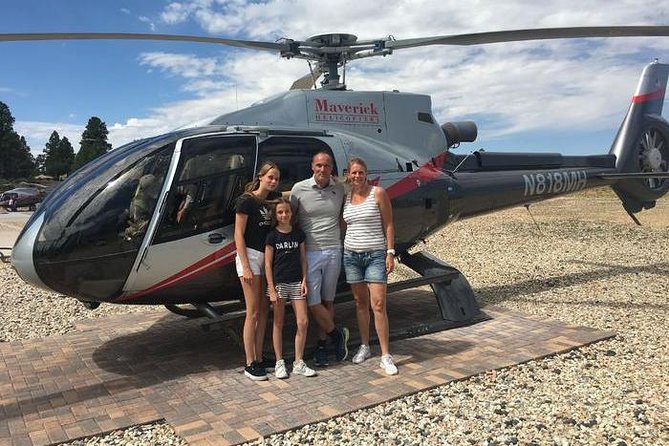
If photography matters to you, keep your camera ready, wear sunglasses, and expect reflections or changing light through the windows. You can take photographs before and after the flight as well. The operator takes a preflight picture with the helicopter and pilot, though souvenir photo arrangements are not included in the stated fare.
Following the Colorado River toward the east
The aircraft continues upstream along the Colorado River. From above, the river provides a natural guide through the canyon’s bends, while the rock layers show how much ground the water has cut over time.
The route also gives you distant views of the 146-square-mile Painted Desert. Its colors can appear softer from the air than they do from a road overlook, but the broad sweep is the point. You are not just seeing one red or orange ridge. You are looking across a large region beyond the canyon’s eastern end.
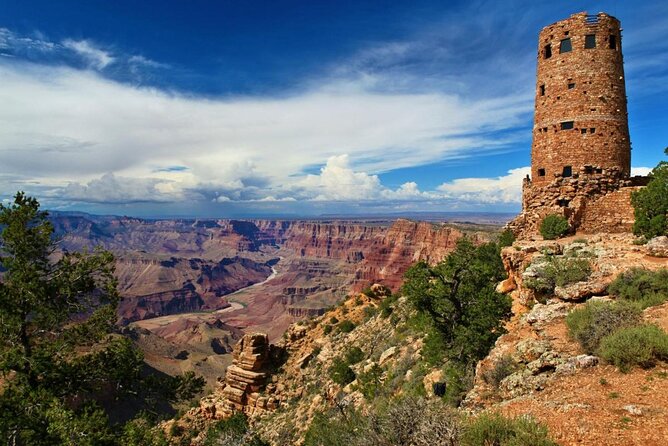
The 70-foot Desert View Watchtower comes into view as well. Built as a National Historic Landmark, the tower sits at the eastern end of the South Rim and has an observation deck aimed toward the eastern Grand Canyon. From the helicopter, you see the structure in its setting rather than standing inside it or looking out from its windows.
This is one limitation of the flight: you see the watchtower, Marble Canyon, and Point Imperial from the air, but you do not stop at any of them. If you want to climb the tower, walk a rim trail, or spend time at a viewpoint, you need to plan those separately. The helicopter is a broad survey, not a replacement for time on the ground.
A completely different way to spend a day nearby:
- Grand Canyon West, Hoover Dam Stop and Optional Lunch and Skywalk
★ 5.0 · 19,535 reviews - Grand Canyon West, Hoover Dam Stop, Breakfast, Lunch & Skywalk
★ 5.0 · 12,194 reviews - Grand Canyon West Bus Tour with Hoover Dam and Optional Skywalk
★ 4.0 · 7,224 reviews - Lower Antelope Canyon and Horseshoe Bend Day Tour with Lunch
★ 5.0 · 6,764 reviews
Marble Canyon and Point Imperial
The flight then reaches Marble Canyon, the section of the Colorado River that marks the beginning of the Grand Canyon. That detail gives the sight a useful sense of geography. The canyon is not one uniform trench. Its character changes along the river, and Marble Canyon marks an important eastern transition.
Point Imperial is another strong reference point. At 8,803 feet, it is the highest point on the North Rim. From the air, it overlooks both the Painted Desert and the eastern end of the Grand Canyon. The height helps explain why the North Rim feels different from the South Rim when you visit it on foot: it sits higher and has its own relationship to the canyon’s walls and forests.
Seeing Point Imperial from the helicopter is valuable if your trip is based at the South Rim and you do not have time to drive north. It is not the same as standing at the overlook, but it gives you a rare look at the rim from outside the usual viewpoint. The route also helps you compare the two rims directly, something ordinary sightseeing from one side cannot do.
Through the Dragon Corridor on the return
The return leg is the dramatic finish. You fly above the North Rim and head south through the Dragon Corridor, identified as the widest and deepest section of the Grand Canyon.
The name fits the visual effect. The canyon walls spread and fold around the aircraft, and the route gives you a stronger sense of being inside the gorge rather than simply looking across it. This is likely the portion that makes the flight feel distinct from a short rim loop.
You then cross the Colorado River and fly over the South Rim and Kaibab National Forest before landing at the Tusayan terminal. The complete circuit takes about 45 minutes. That is long enough to cover a great deal of ground without consuming an entire day of a South Rim visit.
The exact route can change for safety, weather, or operating conditions. One flight was shortened because of fires, and one passenger found the supplied route map did not match the actual course. Treat the map as a general guide, not a guarantee of every turn. The pilot makes the final call on the route and whether conditions allow the flight to operate.
What the $394.88 price buys you
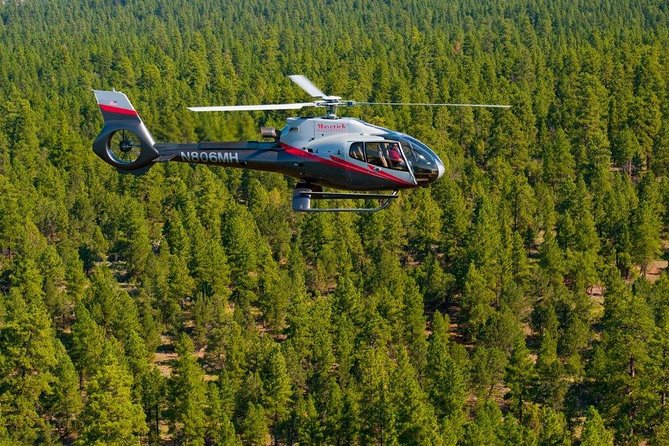
At $394.88 per person, this is one of the pricier ways to add a single activity to a Grand Canyon visit. You are paying for more than transport. The fare includes the 45-minute helicopter flight, local taxes, and fees, with a sightseeing aircraft, headset system, pilot narration, and access to views that cannot be reached from a standard rim stop.
The value depends on your priorities. If you have only one day at the South Rim, the flight gives you a quick geographic overview. If you are marking an anniversary or another major occasion, the combination of scale, comfort, and limited cabin size may justify the cost. One couple used the flight as the highlight of a four-week national park trip, which makes sense if you want one special experience among many lower-cost park activities.
On the other hand, the flight will not suit every budget. The national park offers plenty of excellent views at no extra tour cost, and a helicopter cannot replace hiking, quiet time at the rim, or a visit to Desert View Watchtower. If your main goal is to save money, spend more time on the ground. If your goal is to understand the canyon’s full shape in less than an hour, the price is easier to defend.
The strongest value comes when you use the flight as a complement to the park, not as your only visit. See the canyon from the rim first if you can, then use the aircraft to connect the distant parts and reveal the scale.
Timing, comfort, and the practical rules
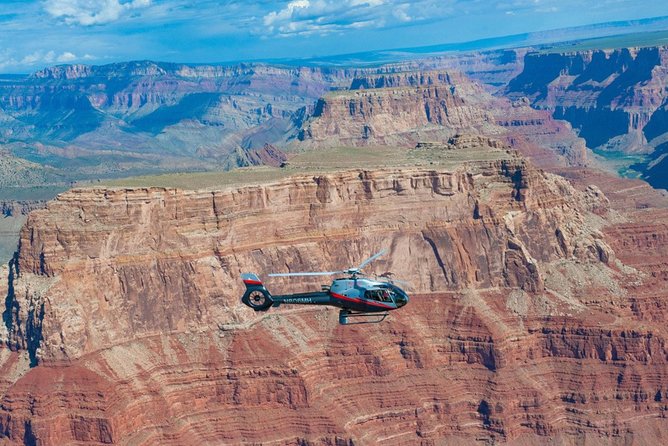
You can choose from several departure times. Midday flights offer detailed views of the canyon walls, while early morning flights are popular in summer because the canyon is cooler. Sunset is the most sought-after departure period, so availability may be tighter then.
No time is perfect for every purpose. Morning light can feel fresh and clear, midday makes the rock layers easier to study, and late light can give the walls warmer color. Pick the time that fits your park plans and your tolerance for heat, rather than assuming one departure is always best.
Wear comfortable clothes and shoes. Only bottled water is allowed on board, and snacks are available at the terminal, with some flight options offering them as well. If you are prone to motion sickness, eating lightly beforehand may be sensible, though the operator leaves that choice to you.
Passengers over 18 must show an original government-issued photo ID at check-in. A REAL-ID compliant driver’s license or valid passport is accepted. Photocopies and digital IDs are not accepted, and arriving without the required original ID means you can be refused boarding without a refund.
The total passenger weight limit is 275 pounds. Anyone above 275 pounds must buy an additional seat, payable directly to the operator on the day of the flight. Weight and balance also determine seating, so do not book this expecting to choose a particular window or sit beside everyone in your group.
Pilots cannot assist passengers as they board or leave the aircraft because of insurance rules. Most people can take part, but you should be comfortable managing that process yourself. Children under two with valid paperwork can fly free as lap children, and anyone 16 or younger must be accompanied by an adult. Service animals are not permitted on these helicopter flights.
Who should book this Grand Canyon flight
I would put this near the top of the list for a first visit with limited time, a special celebration, or anyone who wants to compare the South Rim and North Rim without a long drive. It also suits people who value a small aircraft, headset commentary, and a polished check-in process.
The flight is especially useful for photographers and visual learners. You can see how the river, forest, rims, and eastern canyon fit together. Just remember that seating is assigned, so the best photographic angle is not guaranteed for every person.
I would hesitate if your budget is tight, you dislike flying, or you want a slow, quiet national park experience. The helicopter is smooth and pilots have helped put nervous passengers at ease, but it is still an aircraft with engine noise, fixed seating, and a firm schedule. Commentary is delivered through headsets, and one passenger found it difficult to hear the pilot clearly, so narration may not be perfect from every seat.
Cancellation is free up to three full days before the local start time. Inside that window, the fare is not refunded. Poor weather or an insufficient number of passengers can cancel the flight, in which case you are offered a new date or a full refund.
Should you book the 45-minute Grand Canyon helicopter flight?
Book it if you want the canyon’s big picture and can comfortably spend nearly $400 for a short, highly focused experience. The route is unusually useful because it combines both rims, the river, the eastern sights, and the Dragon Corridor rather than circling one section.
I would book an early or midday departure if clear wall detail matters most, or choose sunset if the timing and price work for your plans. Arrive with your original ID, accept that seats are assigned, and keep expectations realistic about route changes.
If the cost makes you wince, skip the flight without guilt and spend the money on extra park time. But if this is your one major splurge at the Grand Canyon, the EC130 flight gives you something the overlooks cannot: a fast, sweeping view of the canyon as a connected place.
FAQ
Is there a minimum age for the helicopter flight?
There is no minimum age. Children under two with valid paperwork are considered lap children and fly at no cost.
Can a child fly without an adult?
No. Children age 16 and under must be accompanied by an adult.
Do adults need photo identification?
Yes. Every passenger over 18 must bring an original government-issued photo ID, such as a REAL-ID compliant driver’s license or valid passport. Digital IDs and photocopies are not accepted.
What type of helicopter is used?
The flight uses Airbus EC130 helicopters, also described as ECO-Star helicopters. The aircraft can hold about six to seven passengers and has broad windows for sightseeing.
Can I request a particular seat?
You can make a seating request, but it is not guaranteed. Seats are assigned after check-in according to the aircraft’s legal weight and balance limits, and people in the same booking may not sit together.
What happens if I weigh more than 275 pounds?
Passengers weighing over 275 pounds must purchase an additional seat. The extra seat is paid directly to the tour operator on the day of the flight.
What happens if weather cancels the flight?
The operator will try to reschedule the flight. If rescheduling is not possible, you receive a full refund. Cancellation can also occur if the minimum number of passengers is not reached, with a new date, alternative experience, or full refund offered.
Recently reviewed around Grand Canyon
- Grand Canyon West Rim Luxury Helicopter Tour from Las Vegas★ 4.5 · 1,283 reviews
- Grand Canyon West Rim by Coach with Helicopter Tour and Meals★ 4.0 · 751 reviews
- Extended Grand Canyon West Rim Air-Only Helicopter Tour★ 4.5 · 650 reviews
- Grand Canyon Helicopter and Western Ranch Adventure Landing Tour★ 5.0 · 401 reviews
- Sunset Grand Canyon Helicopter Tour from Las Vegas★ 5.0 · 425 reviews
- Grand Canyon West Rim Helicopter Tour with Champagne Toast★ 4.5 · 962 reviews
- Small Group Tour: Grand Canyon West Rim, Skywalk & Hoover Dam★ 5.0 · 1,092 reviews
- 2 Day: Grand Canyon, Antelope Canyon, Horseshoe Bend, Zion Tour★ 5.0 · 719 reviews
Grand Canyon Tours, compared.
Grand Canyon West, Hoover Dam Stop and Optional Lunch and Skywalk
Read our review →
Grand Canyon West, Hoover Dam Stop, Breakfast, Lunch & Skywalk
Read our review →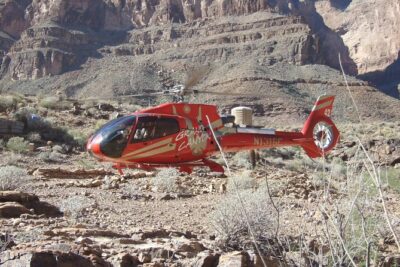
Grand Canyon West Bus Tour with Hoover Dam and Optional Skywalk
Read our review →
Lower Antelope Canyon and Horseshoe Bend Day Tour with Lunch
Read our review →
Grand Canyon, Hoover Dam, Lunch/Skywalk Options, WiFi
Read our review →
Grand Canyon + Hoover Dam View + WiFi (Skywalk/lunch options)
Read our review →
Grand Canyon West + Hoover Dam Photo Stop + Optional Skywalk Tour
Read our review →
Grand Canyon National Park South Rim Bus Tour from Las Vegas
Read our review →Browse the lists this tour appears in