
Reviewed · NEW ORLEANS TOURS
Laura Creole Plantation Guided Tour
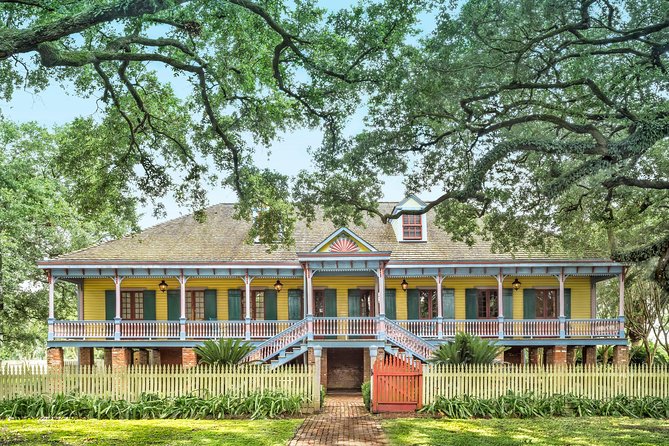
Laura Plantation tells Louisiana history through people, not just architecture. The tour follows four generations of a Creole family through the furnished main house, gardens, and original 1840s slave cabins, while using Laura Locoul’s memoir and French archival records to fill in the story.
I like the direct treatment of slavery and the clear explanation of Creole culture, which lasted in Louisiana for more than 200 years. I also like the small group limit of 28 and the chance to ask questions of guides such as Amelia, Cameron, Lee, Pam, and Joseph, though the quality can depend on who leads your tour.
The main drawback is getting there. Laura Plantation is about an hour from New Orleans, and the plantation does not provide its own transportation. A paid transfer can cost more than the admission, so driving yourself is the better value if you have that option.
In This Review
- Key points
- Why Laura Plantation tells a different Creole story
- The Maison Principale and its furnished rooms
- The 1840s slave cabins and the hard facts of plantation life
- Gardens, sugar fields, and the working plantation
- What the 70-minute schedule feels like
- The drive from New Orleans and the real cost
- How the guides shape the experience
- Who will get the most from Laura Plantation
- Practical details before you go
- Is Laura Plantation worth the $32.06 price?
- FAQ
- How long does the Laura Plantation tour last?
- Where does the tour begin and end?
- What does the tour include?
- Is transportation from New Orleans included?
- Is Laura Plantation accessible for visitors using mobility aids?
- Can I cancel for a full refund?
Key points
- Four generations of one Creole family: Learn how the Duparc family founded the plantation in 1804 and how Laura Locoul’s memoir helps explain its later years.
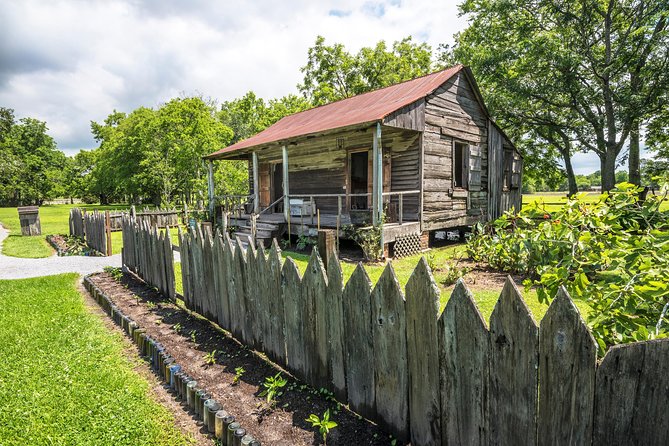
- Original 1840s slave cabins: The tour includes the cabins and addresses the lives of enslaved people, not only those of the plantation owners.
- A furnished 24,000-square-foot main house: See the ground floor of the Maison Principale along with its gardens and surrounding sugar fields.
- A serious look at slavery: The guide explains the plantation economy and the contrast between free and enslaved lives in French colonial and American Louisiana.
- An easy day trip from New Orleans: The drive follows the Mississippi River’s Great River Road and takes about an hour each way.
- A short but tightly scheduled visit: The guided portion lasts about 1 hour and 10 minutes, and you should pay close attention as you move through each area.
Why Laura Plantation tells a different Creole story
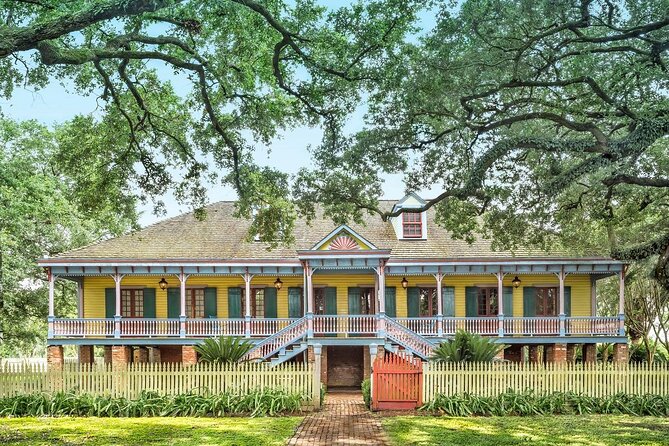
Laura Plantation is not simply a grand house surrounded by old trees. It is a place where French, African, Caribbean, and American influences shaped daily life, language, family ties, and work.
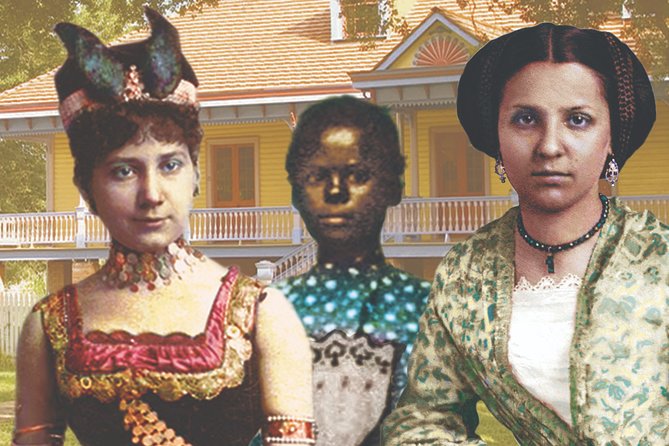
The plantation was founded in 1804 by the French-descended Duparc family. Four generations lived here, and the surviving records give the guide more material than the usual list of owners, dates, and architectural features.
Much of the family story comes from the memoir of Laura Locoul, a fourth-generation family member. Records found in the French National Archives add another layer, helping explain the people and decisions connected with the property.
That matters because you are not hearing a story built only around a beautiful house. You are hearing about a working sugar plantation and the free and enslaved people whose lives were tied to it.
I especially value the way the tour places Creole identity at the center. You learn about a culture that developed in Louisiana over more than two centuries, rather than receiving a simple French-versus-American explanation of the region.
More New Orleans trips worth a second look
- Guided Boat Tour of New Orleans Bayou
★ 4.5 · 1,452 reviews - Houmas House Estate and Gardens Guided Tour
★ 4.5 · 632 reviews - New Orleans: Guided Swamp Cruise by Tour Boat
★ 4.7 · 570 reviews
The Maison Principale and its furnished rooms
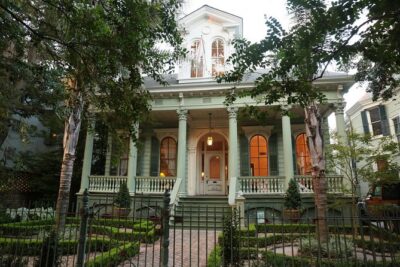
The guided visit begins with the Maison Principale, the 24,000-square-foot main house. The house is furnished, so you get more than an exterior view and a few empty rooms.
The guide explains the plantation family, the house, and the people who kept the property operating. The focus is not limited to decoration. Architecture, family relationships, business, and social rank all help explain how the plantation worked.
You need to look carefully as you move through the house. The tour is guided and progresses at a set pace, so you may not have a second chance to return to a room for a closer look. One useful tactic is to take in the room before focusing on photographs.
The tour takes place on the ground floor of the main house. That portion is ADA accessible, but the rest of the property is not described as fully accessible. If mobility is a concern, contact the plantation before booking and ask about the outdoor sections.
The house gives you the clearest picture of plantation owners and their daily setting. It also creates an important contrast with the cabins, where enslaved people lived under entirely different conditions.
The 1840s slave cabins and the hard facts of plantation life
The original 1840s slave cabins are one of the most important parts of the visit. They keep the tour from becoming a pleasant walk around an old family home with slavery treated as a footnote.
Your guide discusses the enslaved people connected with Laura Plantation and the work that supported the sugar operation. The tour also looks at the plantation owners, which helps you see the system from both sides without confusing unequal lives as equivalent ones.
The level of detail about everyday life can vary. The plantation is revising its presentation to include more stories and experiences of enslaved people, including the realities of their lives at this particular site. If the subject is your main reason for visiting, ask questions during the tour.
A thoughtful guide can make a major difference here. Cameron has been praised for explaining Creole culture, plantation work, and the experiences of both owners and enslaved people. Other guides, including Lee, Lindie, and Joseph, have also been noted for combining strong historical detail with an engaging delivery.
You should expect a serious subject handled in an educational setting. The tour addresses slavery in French colonial and American Louisiana through the end of the 19th century. It does not present the past as harmless or romantic, but it may not answer every question about the day-to-day lives of enslaved people.
Gardens, sugar fields, and the working plantation
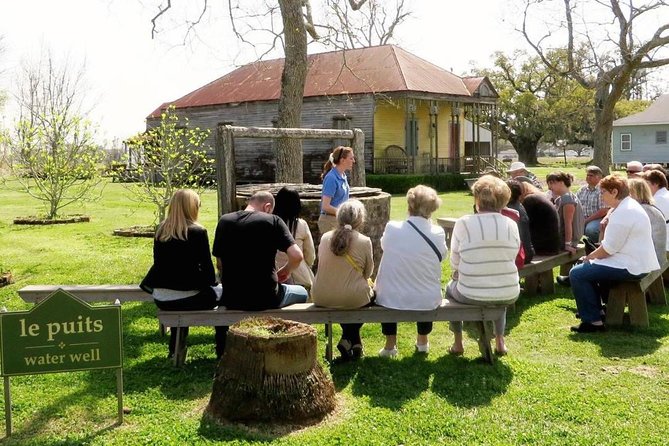
The gardens add beauty, but they also help you understand that Laura was a working estate. The grounds and sugar fields connect the family home to the labor and business that made plantation life possible.
The property is listed on the National Register of Historic Places and the Louisiana African American Heritage Trail. Those designations do not replace the tour, but they help explain why the site has been preserved and why its story matters beyond the house itself.
You may want to allow a little time to notice the grounds before the guided portion begins. The tour includes the gardens, but the route and timing mean you should not assume you can wander wherever you like during the group visit.
The outdoor portion can be hot, wet, or uncomfortable depending on the day. The experience operates in all weather conditions, and good walking shoes are recommended. Dress for Louisiana weather rather than for a formal historic-house visit.
The setting is especially useful if you are visiting more than one plantation along the Great River Road. Laura gives you a Creole perspective, and seeing another plantation afterward can help you compare architecture, ownership, labor, and interpretation.
A completely different way to spend a day nearby:
- New Orleans Premier Ghost, Voodoo and Vampire Walking Tour
★ 4.5 · 12,856 reviews - New Orleans Steamboat Natchez Jazz Cruise with Dinner Option
★ 4.0 · 7,533 reviews - Adults-Only New Orleans Ghost, Crime, Voodoo, and Vampire Tour
★ 5.0 · 6,545 reviews - New Orleans Food Walking Tour of the French Quarter with Small-Group Option
★ 5.0 · 6,118 reviews
What the 70-minute schedule feels like
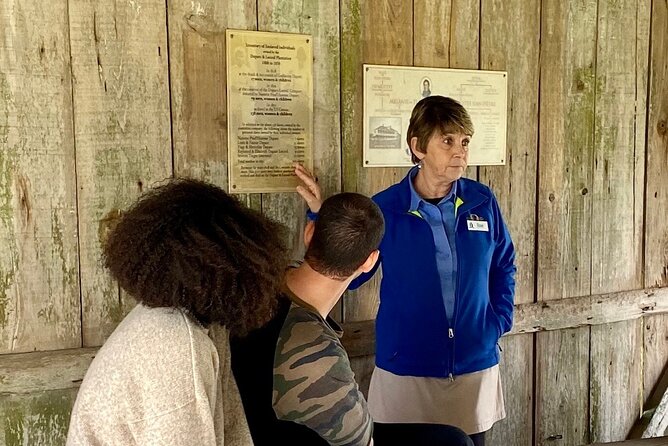
At about 1 hour and 10 minutes, this is a compact tour. That is good news if you want a focused history stop during a day trip, but it also means the guide cannot explain every person, building, and issue in detail.
The visit includes the Maison Principale, the gardens, and the original slave cabins. You should expect the guide to keep the group moving between these areas rather than offer a long period of independent exploration after each stop.
The group limit is 28 people. That is not a private tour, but it is small enough for questions to be practical when the group is full. Smaller groups can feel more personal, and one reported visit had only six people, allowing the guide to take extra time with explanations.
Guide style is worth considering. Many guides have been praised for clear explanations and strong command of the subject. One disappointing experience involved a guide speaking too quickly, giving little time for photographs, and competing with a noisy fan in the cellar.
That complaint points to a useful habit: tell the guide if you cannot hear or follow the explanation. If a particular room is hard to understand, ask for the point to be repeated. The tour is short, and a small question can make the difference between catching the story and losing it.
The drive from New Orleans and the real cost
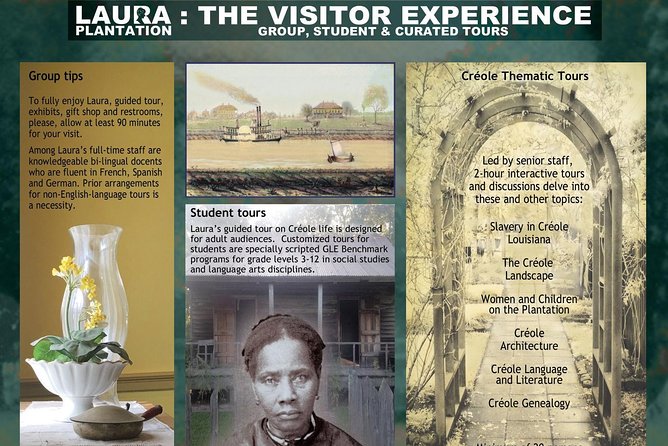
Laura Plantation is at 2247 LA-18 in Vacherie, Louisiana, about an hour from New Orleans by car. The route follows the Great River Road along the Mississippi, making the drive part of a broader plantation day rather than a quick city excursion.
The listed price is $32.06 per person, with a local guide included. At that price, I consider the tour good value for a focused, guided visit to a preserved plantation with a furnished main house, gardens, and original cabins.
Transportation changes the calculation. Hotel pickup and drop-off are not included, and Laura Plantation does not provide transportation directly. Several outside operators offer transfers, but prices vary, and the transportation cost can exceed the admission.
If you can drive, the admission price is straightforward and reasonable. If you need a paid transfer, compare the total cost before booking. A low ticket price is less meaningful when the ride becomes the most expensive part of the day.
The drive also affects your schedule. You are committing roughly two hours to the round trip, plus the 70-minute tour and any time spent at nearby plantations or stops. I would plan Laura as part of a full day rather than trying to squeeze it between several New Orleans activities.
How the guides shape the experience
The strongest part of this tour is the guide. Names that have received especially warm praise include Amelia, Cameron, Lee, Pam, Lindie, and Joseph, though you cannot count on a specific person leading your visit.
Amelia has been described as a student of the period, with a strong grasp of the era in which the plantation was built and the years that followed. Cameron has been praised for conveying the people, Creole culture, plantation work, and the experiences of owners and enslaved people.
Lee has been recognized for explaining the plantation’s operation and the meaning of Creole identity. Lindie has been noted for making difficult material understandable, while Joseph has been described as both well informed and entertaining.
Pam receives mixed assessments. Some visitors found her funny, accurate, and careful with explanations. Another visitor found her rushed and hard to understand. That contrast is a reminder that even a strong site can feel different depending on the guide and the group pace.
I would not book this as a self-guided visit. The records, family connections, and social context are what turn the buildings into a meaningful historical experience. Listen closely, ask questions, and treat the guide as your main source of context.
Who will get the most from Laura Plantation
I recommend Laura Plantation most strongly to people who want history presented through specific families and real records. The tour suits you if you want to understand Creole culture, plantation business, architecture, and slavery in one compact visit.
It is also a good choice for families with older children and teenagers who can handle a serious discussion of slavery. The mix of a preserved house, gardens, cabins, and personal stories gives the subject more shape than a museum display alone.
You will likely get the most from it if you prepare yourself to listen rather than simply photograph the property. The grounds are attractive, but the purpose of the visit is to understand the people who lived and worked there.
You may want a different plan if you dislike guided pacing or expect extensive free time inside the house. The group moves through the property, and you may not be allowed to return to areas for a second look after the guide has moved on.
Black visitors and anyone focused on African American history should ask direct questions about the enslaved people and their descendants. The tour does not ignore slavery, but some parts of the everyday experience receive less attention than the plantation family and the house.
Practical details before you go
Booking ahead is wise. The experience is commonly reserved about 25 days in advance, so waiting until the last minute may leave you without your preferred day or time.
The tour is offered daily in English and French. The bookable experience is presented in English, so confirm the language you need when making your reservation.
You receive a mobile ticket, and most people can participate. Service animals are allowed. Since part of the tour is outdoors, wear shoes suited to walking and dress for changing weather.
Snacks and drinks are available for purchase, but they are not included. Hotel pickup and drop-off are also not included. The tour ends back at the plantation meeting point.
Free cancellation is available up to 24 hours before the start time for a full refund. Changes or cancellations inside that 24-hour window are not accepted for a refund. If bad weather forces the plantation to cancel, you are offered another date or a full refund.
Is Laura Plantation worth the $32.06 price?
I would book Laura Plantation if I had a car and wanted one carefully guided plantation visit near New Orleans. The price covers a substantial property, a furnished main house, original cabins, gardens, and a guide who can connect the site to Creole culture and the history of slavery.
I would think harder if I needed expensive transportation. In that case, compare the complete cost with other plantation options and consider visiting more than one site during the same outing.
Choose Laura for its Creole focus, family records, and frank treatment of the plantation system. Go with realistic expectations about the short schedule, outdoor walking, and the possibility that the guide’s pace may affect how much detail you absorb.
FAQ
How long does the Laura Plantation tour last?
The guided experience lasts approximately 1 hour and 10 minutes.
Where does the tour begin and end?
It begins and ends at Laura Plantation, 2247 LA-18, Vacherie, Louisiana 70090.
What does the tour include?
The tour includes a local guide, the furnished Maison Principale, the gardens, and original 1840s slave cabins.
Is transportation from New Orleans included?
No. Hotel pickup and drop-off are not included, and Laura Plantation does not provide transportation directly.
Is Laura Plantation accessible for visitors using mobility aids?
Only the ground floor of the main house is ADA accessible. Part of the tour takes place outdoors, and good walking shoes are suggested.
Can I cancel for a full refund?
Yes, if you cancel at least 24 hours before the experience start time. Cancellations within 24 hours are not refunded. If poor weather causes the plantation to cancel, you are offered a different date or a full refund.
Recently reviewed around New Orleans
- New Orleans Yellow Fever Ghost Tour★ 5.0 · 1,298 reviews
- VIP Jazz Dinner Cruise with Private Tour and Open Bar Option★ 4.5 · 838 reviews
- Whitney Plantation Tour with Transportation from New Orleans★ 4.5 · 1,351 reviews
- New Orleans Private Carriage Tour of the French Quarter★ 5.0 · 537 reviews
- New Orleans French Quarter Photo Shoot★ 5.0 · 462 reviews
- New Orleans Delicious Donuts & Beignets: A Sweet Walking Tour★ 5.0 · 928 reviews
- The Escape Game at the French Quarter in New Orleans★ 5.0 · 364 reviews
- The Ghosts of New Orleans Tour★ 4.5 · 702 reviews
New Orleans Tours, compared.

New Orleans Premier Ghost, Voodoo and Vampire Walking Tour
Read our review →
New Orleans Steamboat Natchez Jazz Cruise with Dinner Option
Read our review →
Adults-Only New Orleans Ghost, Crime, Voodoo, and Vampire Tour
Read our review →
New Orleans Food Walking Tour of the French Quarter with Small-Group Option
Read our review →
New Orleans Swamp and Bayou Boat Tour with Transportation
Read our review →
New Orleans City Sightseeing Hop-On Hop-Off Bus Tour
Read our review →
Browse the lists this tour appears in