
Reviewed · FULL-DAY
Maui Ocean Center All Day Admission Ticket
The Humpback Whales of Hawaiʻi 3D Sphere is the star here. You sit inside a short film that puts you close to humpback whales, creating the feeling of being beneath the Pacific without getting wet. It is a memorable use of modern theater, especially for children and anyone who cannot get out on the water.
I like the focus on marine life native to Hawaii, rather than a grab bag of animals from around the globe. I also like the hands-on elements: the two-finger touch pool, the shark nursery, and the daily talks at Turtle Lagoon, Open Ocean, Discovery Pool, Living Reef, and Nursery Bay.
The catch is the price. At $55.44 per person, Maui Ocean Center is not a huge aquarium, and some people will see everything in about an hour. Plan your time well, and use the talks and whale sphere to make the admission feel worthwhile.
In This Review
- Key points to know before you go
- What Maui Ocean Center does best
- A visit built around native Hawaiian sea life
- The 750,000-gallon Open Ocean exhibit
- Turtle Lagoon and the daily naturalist talks
- Shark Nursery Bay and the Discovery Pool
- Living Reef and live Pacific coral
- The Humpback Whales of Hawaiʻi 3D Sphere
- Cultural activities add a local sense of place
- How long should you stay?
- Seascape Restaurant and the Maui Ocean Treasures shop
- Price, parking, and the real value
- Who will enjoy this most?
- Cancellation and booking details
- Should you book Maui Ocean Center?
- FAQ
- How much does Maui Ocean Center admission cost?
- How long does a visit to Maui Ocean Center take?
- What is included with admission?
- When are the Turtle Lagoon presentations?
- When are the Shark Nursery Bay presentations?
- Can children touch the marine animals?
- Is parking included with admission?
- Can I cancel for a refund?
Key points to know before you go
- The 750,000-gallon Open Ocean exhibit gives you the biggest viewing area, with sharks, rays, and other Hawaiian sea life moving through a large underwater setting.
- The 3D whale sphere is short but memorable, and several families and couples rate it as the best part of the visit.
- Turtle Lagoon talks run at 10:30 AM and 2:30 PM, while Shark Nursery Bay presentations take place at 11:45 AM and 1:45 PM.
- The Living Coral Reef exhibit features live Pacific corals, a useful stop if you want to understand the fragile foundation of Hawaii’s marine world.
- All-day admission runs from 9 AM to 5 PM, with final entry at 4 PM, so you can return to an exhibit or make time for lunch.
- Parking costs $3 per hour, paid through the ParkLinq app or a QR code at arrival.
What Maui Ocean Center does best
Maui Ocean Center is a place to slow down and look closely. The aquarium presents Hawaii’s underwater world in a way that works for a two-year-old watching sharks, a parent explaining coral, or an adult who wants to read every sign and spend several hours with the smaller creatures.
The collection is built around Hawaiian waters. You will see tropical reef fish, eels, octopuses, sea jellies, stingrays, sharks, turtles, and other Pacific species. The setting gives each animal some context, which makes the visit more useful than simply walking past tanks and checking off names.
I especially appreciate the attention given to live coral. Coral can be easy to overlook beside a shark or turtle, but the Living Coral Reef display helps you see that reefs are living communities, not just colorful rock. It also connects the aquarium to conservation and restoration work, themes that appear throughout the center.
The aquarium is clean and well kept, with a mix of indoor and outdoor areas. That makes it a practical choice if you need a break from the sun, want an air-conditioned activity, or have young children who need a change of pace.
More Maui trips worth a second look
- Road to Hana: Full-Day Scenic Drive with Blacksand & Waterfalls
★ 4.5 · 837 reviews - Full-Day Iconic Sights of LA, Hollywood, Beverly Hills, Beaches and More
★ 5.0 · 6,147 reviews - Napa and Sonoma Wine Country Full-Day Tour from San Francisco
★ 4.5 · 4,455 reviews
A visit built around native Hawaiian sea life
Start at the entrance and work at your own speed. The admission ticket covers more than 60 exhibits, daily presentations, cultural activities, and the whale sphere, so you do not need to rush from one display to the next.
The layout is accessible and generally easy to walk. Most of the exhibits are close enough together that you can keep a family group moving without a long trek between stops. Still, a few presentation areas use stairwells and uneven rock features. If someone in your group has limited mobility, move carefully and ask staff for help when needed.
The center’s local focus gives the exhibits a clear purpose. Hawaii’s marine life evolved in an isolated island environment, and many species found here are not familiar to people from the mainland. You might recognize a turtle or shark, but the smaller reef fish, unusual frogfish, eels, and coral communities reward close attention.
If you enjoy reading exhibit panels, allow more than the basic two-hour visit. One especially dedicated visitor spent four to five hours reading signs and watching the animals. That is possible because the ticket permits all-day access, but it requires a real interest in marine life. If you simply stroll through, you may finish in less than an hour.
The 750,000-gallon Open Ocean exhibit
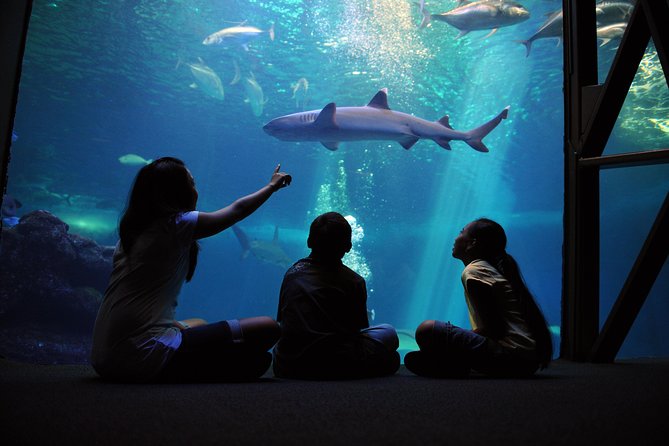
The Open Ocean exhibit is the aquarium’s main visual event. Its 750,000-gallon scale gives sharks, stingrays, and other animals room to move, and the viewing areas let you watch them from different angles.
Look for the clear underwater tunnel and the glass floor area. These viewpoints can bring sharks and a manta ray close to eye level, and they offer some of the best photo opportunities in the center. The effect is strongest when an animal passes directly overhead or glides across the tunnel.
This is also one of the better areas for children. A toddler may not read a panel about coral ecology, but a shark moving above the glass needs no explanation. The exhibit gives parents an easy way to start a conversation about ocean animals and responsible care for the sea.
The Open Ocean area can become a natural stopping point, so give yourself time here. If you are trying to finish the whole aquarium in one hour, you may end up moving on just as the best animal activity begins.
Turtle Lagoon and the daily naturalist talks
Turtle Lagoon is more than a turtle viewing area. A marine naturalist gives presentations at 10:30 AM and 2:30 PM, explaining the animals and the work involved in protecting Hawaii’s marine environment.
You should check the presentation times soon after entering. The morning talk fits easily into a visit that begins at 9 AM, while the afternoon talk works well if you arrive later or return after lunch. Since the ticket allows all-day entry, you can plan around a talk rather than treating the aquarium as one continuous walk-through.
The presentations add value because they give you a human guide to the exhibits. Staff can answer questions about fish, plants, and coral, which helps if you see something unusual or want more detail than the signs provide.
Turtles are a dependable favorite for families, but the stop also appeals to adults interested in conservation. The center connects animal viewing with the health of Hawaiian waters, so the experience does not end with a photograph through the glass.
A completely different way to spend a day nearby:
- Maui Pineapple Farm Tour in Haliimaile
★ 5.0 · 2,855 reviews - Maui Eco-Raft Tour: Eye-Level Whale or Dolphin Watching – Lahaina
★ 5.0 · 2,482 reviews - Maui Snorkeling Adventure to Molokini and Turtle Town
★ 4.5 · 2,221 reviews - Maui: Haleakala Sunrise Spectacular with Local Breakfast
★ 4.5 · 2,155 reviews
Shark Nursery Bay and the Discovery Pool
Shark Nursery Bay offers another scheduled presentation, at 11:45 AM and 1:45 PM. The word nursery makes this a useful place to understand young sharks and their early life, rather than seeing sharks only as large predators in the Open Ocean exhibit.
If you have children, this timing can help shape the whole visit. You might see the whale sphere before the 11:45 talk, watch the shark presentation, then stop for lunch at Seascape Restaurant. The afternoon schedule gives you a similar plan for a later arrival.
The Discovery Pool and Tide Pool Tactile Discovery area provide hands-on contact with marine animals. The center specifies a two-finger touch, so this is a gentle, guided activity rather than free handling. Listen to staff instructions and remind children to use a light touch.
This is one of the strongest reasons to bring younger children. They can connect the animals in the tanks with a physical experience, while adults can reinforce the idea that wildlife requires care and restraint.
Living Reef and live Pacific coral
The Living Coral Reef exhibit is a quiet highlight. It may not produce the same instant reaction as a shark, but it shows the structure that supports much of the reef life around Hawaii.
The display is one of the world’s largest presentations of live Pacific corals. That scale matters because it lets you compare different shapes, colors, and growth patterns instead of viewing a single small coral tank.
I would spend more time here than you might expect. Watch the fish using the coral, then consider how much of the reef’s value comes from the living habitat rather than from the most noticeable animals. The center’s conservation message makes more sense after you see this relationship up close.
One criticism is fair: some people expect more coral and more live exhibits throughout the aquarium. If coral is your main reason for visiting, check your expectations. The Living Reef is important, but the center is not a giant reef-only facility.
The Humpback Whales of Hawaiʻi 3D Sphere
The whale sphere is included with admission and is usually the first feature I would plan around. It is a short presentation, but the rounded screen creates a close-up whale encounter that feels different from a standard flat theater screen.
The show places you near humpback whales and gives the visit a strong emotional center. You are not watching a live whale excursion, and the film cannot replace time on the ocean, but it offers a dependable encounter without weather, boat motion, or seasonal uncertainty.
Families often find this to be the most exciting part. Adults who care about conservation may appreciate the connection to whale protection and ocean awareness. The show is brief enough that it does not consume the day, but you should still check its schedule or ask staff when to attend.
There is one important age limitation: children under five are not permitted to participate in the whale sphere. If your group includes toddlers, plan the rest of the visit around that fact so nobody expects to join the presentation.
Cultural activities add a local sense of place
Maui Ocean Center includes a cultural wood carving demonstration. This gives the visit a wider frame, linking the ocean to Hawaiian culture rather than presenting marine life as a detached science display.
The cultural element is useful because the center is not simply an aquarium transplanted onto an island. The exhibits and activities help you think about Hawaii as a place shaped by the sea, its animals, its plants, and the traditions connected to them.
The exact demonstration timing is not provided with the admission details, so ask at the entrance. That small step can help you avoid missing it, particularly if you are visiting on a tight schedule.
How long should you stay?
The stated visit length is about two hours, but your actual time depends on how you use the center. A quick walk through can take less than an hour, while a careful visit with presentations, the whale sphere, touch pools, and lunch can fill much of the day.
I would plan on at least two hours. Add time if you want to attend several talks or read the exhibit panels. The all-day ticket is helpful because you can enter between 9 AM and 5 PM, with last entry at 4 PM, and return to an exhibit after eating.
A practical schedule might look like this:
- Arrive near 9 AM and see the early exhibits before the day’s activities fill in.
- Attend the 10:30 AM Turtle Lagoon talk.
- Visit the Open Ocean exhibit and Living Reef.
- Watch the 11:45 AM Shark Nursery Bay presentation.
- Eat at Seascape Restaurant.
- Finish with the whale sphere, cultural demonstration, and touch pool.
You do not need to follow that order. The point is to use the schedule rather than simply wandering in and discovering that a presentation has ended.
Seascape Restaurant and the Maui Ocean Treasures shop
Seascape Restaurant gives you an easy lunch option without leaving the site. It serves fresh catch specials and island-inspired food and is described as an Ocean-Friendly certified restaurant, which fits the aquarium’s conservation message.
The ocean view setting adds appeal, especially if you want to turn the visit into a relaxed half-day outing. Food and drinks are not included in the admission price, so include lunch in your budget.
The Maui Ocean Treasures gift shop offers another way to finish the visit. It is described as a world-class shopping stop, but the practical point is simple: you can browse ocean-themed merchandise on site instead of adding another shopping stop to your day.
Price, parking, and the real value
Admission costs $55.44 per person. That is a serious price for an aquarium that some people can see in under an hour, and several visitors find the value weak if they compare it with much larger aquariums elsewhere.
The ticket makes more sense when you treat it as an all-day admission rather than a two-hour attraction. Attend the presentations, use the touch pool, watch the whale sphere, spend time with the coral, and take a meal break. If you only walk past the exhibits, the price will feel harder to justify.
Parking is not included. It costs $3 per hour through the ParkLinq app or a QR code at arrival. Food, drinks, hotel pickup, and hotel drop-off are also separate.
The location is at 192 Maalaea Road in Wailuku. Public transportation is nearby, but no transportation from hotels or the cruise ship dock is provided. One taxi estimate in the feedback was about $100 round trip from the cruise ship area, so check your transport cost before booking if you are arriving without a car.
Who will enjoy this most?
I would recommend Maui Ocean Center to families with young children, people who want an indoor and outdoor activity, and anyone curious about Hawaii’s native sea life. The exhibits are easy to walk, the animals provide plenty of visual appeal, and the staff presentations give children something structured to follow.
It also suits ocean lovers who read signs and enjoy patient observation. A person who wants to spend four hours with reef fish, coral, turtles, and conservation material can get much more from the center than someone seeking a quick attraction.
You may want to skip it if your main expectation is a huge aquarium with many large exhibits. It is medium-sized, and comparisons with major aquariums in large mainland cities can leave you disappointed. The price is easier to defend for a focused local aquarium visit than as a full-day mega-attraction.
The site is generally accessible, and service animals are allowed. Most people can participate, but some stairwells and rock features near presentations may be difficult for someone with limited mobility. Walk slowly and ask staff about the easiest route.
Cancellation and booking details
You receive confirmation at booking, and the ticket is mobile, so you can keep it on your phone. Free cancellation is available up to 24 hours before the experience start time for a full refund.
Changes or cancellations made within 24 hours are not accepted and are not refunded. Cutoff times use Maui local time, so check the clock carefully if your plans change.
Should you book Maui Ocean Center?
Book it if you want a clear introduction to Hawaii’s marine life, especially with children, and if you will stay long enough to use the talks and included whale sphere. The Open Ocean viewing areas, Turtle Lagoon, shark nursery, touch pool, and live coral display give the visit more substance than a simple walk past fish tanks.
Skip it if you are expecting a large aquarium complex or if $55.44 feels high for a short visit. My best advice is to arrive early, reserve time for at least one naturalist presentation, see the whale sphere, and treat Seascape Restaurant as part of a relaxed half-day plan. That approach gives you the strongest value.
FAQ
How much does Maui Ocean Center admission cost?
The admission price is $55.44 per person.
How long does a visit to Maui Ocean Center take?
The approximate visit duration is two hours, but all-day admission allows you to stay longer. The aquarium is open from 9 AM to 5 PM, with final entry at 4 PM.
What is included with admission?
Admission includes all-day access, more than 60 exhibits, the Humpback Whales of Hawaiʻi 3D Sphere, Turtle Lagoon, the Living Coral Reef exhibit, Shark Nursery Bay, Tide Pool Tactile Discovery, daily presentations, and a cultural wood carving demonstration.
When are the Turtle Lagoon presentations?
Marine naturalist presentations at Turtle Lagoon take place at 10:30 AM and 2:30 PM.
When are the Shark Nursery Bay presentations?
Shark Nursery Bay presentations take place at 11:45 AM and 1:45 PM.
Can children touch the marine animals?
Yes. Tide Pool Tactile Discovery allows a two-finger touch of marine animals.
Is parking included with admission?
No. Paid parking costs $3 per hour and is handled through the ParkLinq app or a QR code upon arrival.
Can I cancel for a refund?
You can cancel at least 24 hours before the experience start time for a full refund. Cancellations and changes made less than 24 hours before the start time are not accepted or refunded.
Recently reviewed around Maui
- Whale Watching from Ma’alaea Harbor★ 5.0 · 537 reviews
- Maui: Whale Watching Cruise with Open Bar from Ka’anapali Beach★ 5.0 · 802 reviews
- Maui Premium Sunset Dinner Cruise & Whale Watch★ 4.5 · 504 reviews
- West Maui Half Day Snorkel from Ka’anapali Beach★ 5.0 · 1,253 reviews
- West Maui and Molokai Special 45-Minute Helicopter Tour★ 5.0 · 759 reviews
- Water Bike Tour in South Maui★ 5.0 · 372 reviews
- Maui Snorkeling Boat Tour to Turtle Town Aboard Quicksilver★ 4.5 · 542 reviews
- Rainforest Tour to Hana and Beyond★ 5.0 · 864 reviews
Full-Day, compared.

Full-Day Iconic Sights of LA, Hollywood, Beverly Hills, Beaches and More
Read our review →
Napa and Sonoma Wine Country Full-Day Tour from San Francisco
Read our review →
Water Taxi All Day hop-on hop-off Venice of America Boat Tour
Read our review →

Full-Day LA Tour: Santa Monica, Hollywood and Beverly Hills
Read our review →
Monterey, Carmel and 17-Mile Drive: Full Day Tour from SF
Read our review →
From Manhattan: Full-Day NYC Boroughs and Coney Island Tour
Read our review →
Browse the lists this tour appears in