
Reviewed · CANOES & KAYAKS
Bioluminescence Kayak Tour
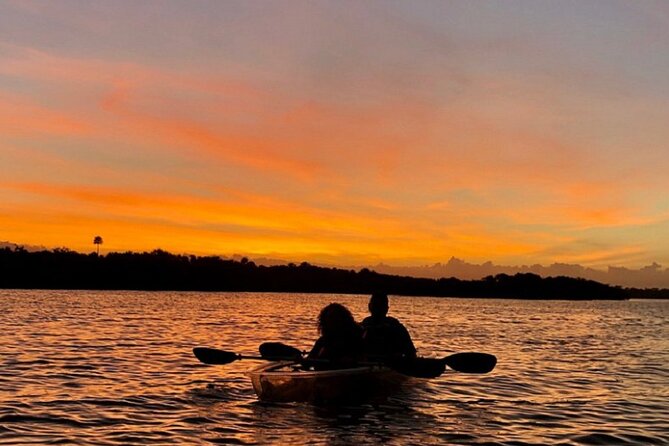
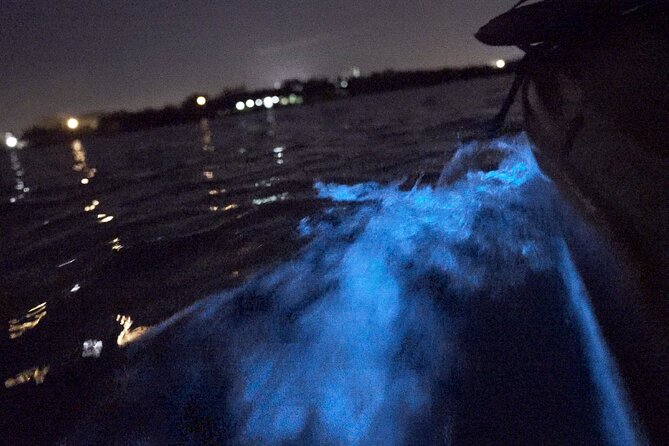
The most memorable part of this Cocoa Beach-area tour happens when you stir the dark water with your paddle and tiny organisms flash blue-green around you. In winter, you may instead catch clear comb jellies that glow in your hands and do not sting. It is a nighttime wildlife outing with a touch of science-fiction magic.
I like the easygoing pace, which works well for first-time kayakers and families, and I like the guides’ role in turning a strange natural event into something you can understand. Matt, Aidan, Caleb, Zoey, Sean, Jorge, Drew, and others have earned praise for safety, humor, and clear explanations. The main catch is simple: nature controls the show. Some nights offer bright glowing water, while others produce only a few sparks, especially outside the best season or near local lights.
In This Review
- Key points to know before you book
- Why the water glows near Cocoa Beach
- A two-hour paddle after dark
- The best part, and the part you cannot control
- What the guides add to the experience
- What you will see, and what you may not
- Clothes, shoes, and useful packing advice
- Group size, timing, and value
- Who should book this night kayak tour
- Should you book it?
- FAQ
- How long does the bioluminescence kayak tour last?
- Where does the tour meet?
- What equipment is included?
- When is the best season for dinoflagellate bioluminescence?
- When can I see glowing comb jellies?
- What should I bring?
- What is the cancellation policy?
Key points to know before you book
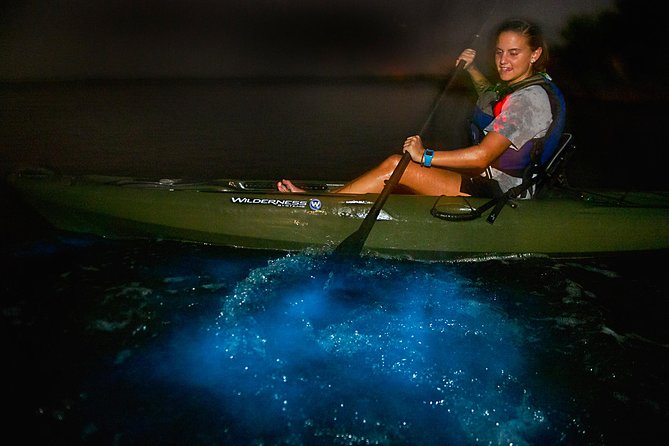
- Summer brings glowing dinoflagellates: From May through early November, the water may light up in cloudy blue-green swirls when fish, paddles, or hands disturb it.
- Winter brings comb jellies: From late November through April, look for individual clear jellies that glow and do not sting.
- The tour lasts about two hours: You paddle out, spend time looking for glowing life and wildlife, then return to the same meeting point.
- Wildlife adds surprise: Fish, jumping mullet, dolphins, and manatees have all appeared during these outings, but none can be promised.
- Bring clothes that can get wet: Water shoes, a spare outfit, bottled water, and snacks make the evening easier.
- The guide matters: Strong guides such as Aidan, Caleb, Sean, Zoey, Jorge, and Drew have helped nervous beginners feel safe and kept groups together.
Why the water glows near Cocoa Beach
This tour meets at 951 Kiwanis Island Park Road on Merritt Island, just north of Cocoa Beach. From there, you head onto the calm waters of the Indian River Lagoon and nearby Mosquito Lagoon area, part of a major estuary system known for its wide range of marine life.
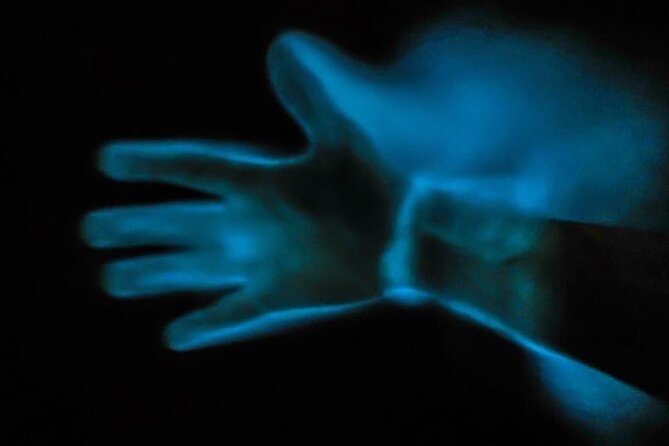
In warm months, the main attraction is dinoflagellates. These single-celled organisms emit light when the water moves. A paddle stroke may create a brief spark, while a fish moving below can leave a glowing trace. When conditions are good, the effect looks less like a steady lamp and more like blue-green dust scattered through the water.
The glow is often easiest to appreciate with your own movement. You may trail a hand in the lagoon, sweep your paddle through the surface, or watch fish flash beneath your kayak. This is why the experience feels active even when the group is moving slowly.
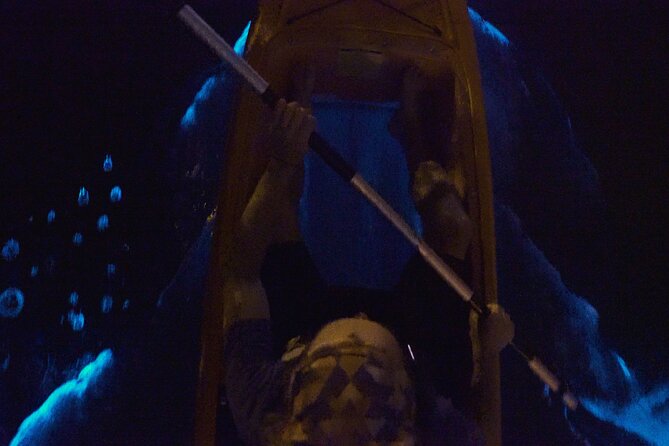
In cooler months, the show changes. Comb jellies gather in the protected lagoon waters. These clear, rounded creatures have rows of tiny cilia that catch the light as they move. They are not stinging jellyfish, so you may be able to catch and hold one briefly under the guide’s direction.
I would choose your season based on the sight you want most. Go from May to early November for the best chance of widespread glowing plankton. Choose late November through April if you are more interested in seeing individual comb jellies up close. Seasonal timing improves your odds, but it does not guarantee a strong display.
More paddling around the USA:
- Clear Kayak Tour of Shell Key Preserve and Tampa Bay Area
★ 5.0 · 5,800 reviews - Half-Day Emerald Cave Kayak Tour with Optional Hotel Pickup
★ 5.0 · 4,978 reviews - Emerald Cave Kayak Tour: Scenic Paddle with Optional Shuttle
★ 5.0 · 2,858 reviews
A two-hour paddle after dark
The activity begins at the stated meeting point on Kiwanis Island. You receive a kayak, paddle, and personal flotation device, then get instructions before heading out. A safety light is provided, and you may bring a flashlight if you wish.
You do not need to be an experienced paddler for this outing. People with no prior kayaking experience have managed the trip with help from the guides, and the route is described as low-stress rather than strenuous. Still, kayaking at night adds a real challenge. You need to listen carefully, keep your kayak near the group, and stay comfortable with limited visibility.
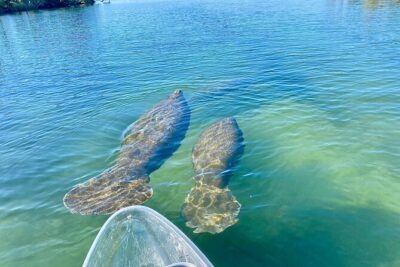
Once on the water, the group paddles through calm sections near mangroves and palm trees. The exact amount of visible wildlife depends on the night. Jumping mullet have startled paddlers by leaping near the kayaks, and manatees have surfaced close enough to make the boats rock. Dolphins have also appeared.
The guides often keep the group moving as one. Sean was praised for paddling backward while watching the group and explaining the fish, manatees, and other activity around the kayaks. Zoey has helped tired paddlers through rougher patches by offering a tow from her kayak. Those details matter more here than fancy equipment. Darkness can make a simple outing feel less simple, so steady supervision adds genuine value.
The tour ends back at the meeting point. Plan on roughly two hours from launch to return, with some flexibility for conditions and wildlife.
The best part, and the part you cannot control
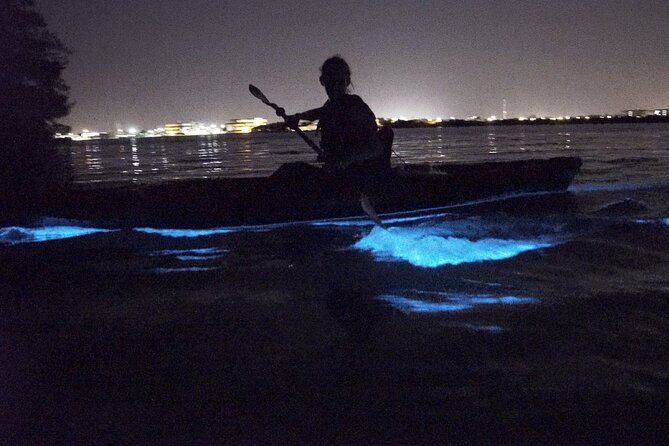
A strong night can be extraordinary. One outing included bright bioluminescence, a manatee, jumping fish, and a rocket launch visible from the water. Another included dolphins, comb jellies, a large manatee, and a sky full of stars. These moments explain why the activity has a 4.8 out of 5 rating and is recommended by 94 percent of participants.
But you should book this as a nature outing, not a guaranteed light show. Several outings produced only a few glowing jellies or a sprinkle of light. A December trip had problems with local light pollution, and the bioluminescence was hard to see. A late January outing was calm and relaxing but revealed only limited glowing life.
The moon and weather can affect the mood and visibility. A new moon and clear sky can make the water and stars feel especially dramatic. Wind can cancel the trip or make the return paddle harder. High winds have caused cancellations, and one cancellation led to a dispute about receiving a credit instead of an immediate refund. The stated policy allows a full refund when you cancel at least 24 hours before the start time, but no refund for cancellations within 24 hours. If the operator cancels for weather, ask clearly how the refund will be handled before accepting a credit.
Light pollution also deserves attention. A dark setting helps you see faint flashes, but this launch area is not guaranteed to be completely free of nearby lights. If bioluminescence is your main reason for booking, ask which departure time and launch area offer the best conditions on your date. The supplied details do not establish that one start time is always best, and one disappointing outing raised questions about an early versus later departure.
What the guides add to the experience
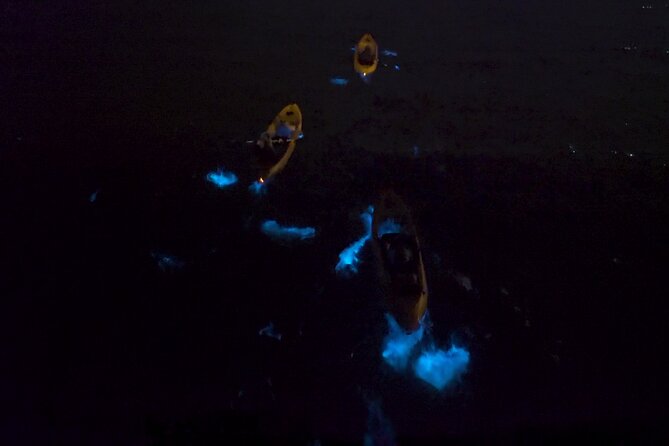
The best guides do more than lead a line of kayaks. They explain why the water glows, identify animals, answer questions, and adjust the trip to the group’s ability.
Matt has been praised for explaining the science behind the experience, even on a chilly February night. Aidan helped a nervous first-time kayaker feel ready before launch and stayed highly alert to group safety. Caleb has explained local sea life and ecosystems while adjusting the pace for smaller groups.
Sean is a good choice if you enjoy detailed biology. He has explained the process down to molecular details and kept teenagers interested with humor and back-and-forth conversation. Zoey has been singled out for her care with safety, group energy, and rougher water.
Jorge, Lucas, Drew, Jordan, Kurt, Kirk, and Jessie have also been praised for facts, humor, and help on the water. Guide quality can vary on any scheduled outing, but the strongest pattern here is clear: the guide can make a modest wildlife night feel worthwhile even when the glow is faint.
A completely different way to spend a day nearby:
- NYC: SUMMIT One Vanderbilt Tickets
★ 4.7 · 51,195 reviews - NYC: 9/11 Memorial & Museum Timed-Entry Ticket
★ 4.8 · 31,428 reviews - NYC: Empire State Building Tickets – Observatory & Museum
★ 4.7 · 25,757 reviews - NYC: Empire State Building Observation Deck Tickets
★ 4.7 · 22,072 reviews
What you will see, and what you may not
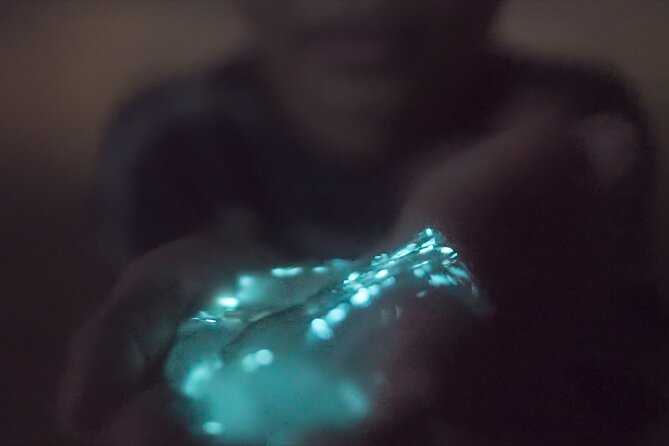
The tour operates in an estuary with mangroves, palm trees, shallow water, and abundant marine life. You may see fish darting under the kayak, mullet jumping across the surface, or a manatee surfacing nearby. Dolphins are possible, too.
These encounters are not staged. That is part of the appeal, but also part of the uncertainty. You may paddle for a while without seeing a large animal. Even when the bioluminescence is weak, the quiet nighttime setting and wildlife search can still make the trip worthwhile.
The water has been described as warm and around 12 inches deep in some sections, though conditions can vary. Do not treat shallow water as a promise that you will stay dry. One especially lively outing left paddlers soaked, and the normal motion of getting into, out of, and paddling a kayak can splash clothing.
You should also avoid expecting a perfect camera record. A phone or camera may capture people in the kayaks, but it is fairly useless for recording the glow itself. A dry bag is optional and useful for protecting personal items rather than producing great night photographs.
Clothes, shoes, and useful packing advice
Wear clothing you do not mind getting wet. Bring water shoes, sandals, or Crocs that can be worn in the water. Bare feet are a poor match for launching and landing, and regular shoes may become uncomfortable if soaked.
Pack an extra change of clothes. Keep a towel in the car rather than bringing it onto the kayak. Bottled water and snacks are sensible for after the paddle, especially if you are booking a late departure.
A flashlight is allowed, but the operator provides a safety light. Use extra lights carefully so you do not shine them into another paddler’s eyes or spoil your own night vision. A dry bag and camera are optional. If you bring a phone, protect it well.
The personal flotation device is included and should be worn as directed. Most people can participate, but the tour still requires enough balance and arm strength to paddle for about two hours. If you have not kayaked in decades, tell the guide before setting out. Beginners have done well with instruction, but you should not hide concerns about balance, stamina, or night conditions.
Group size, timing, and value
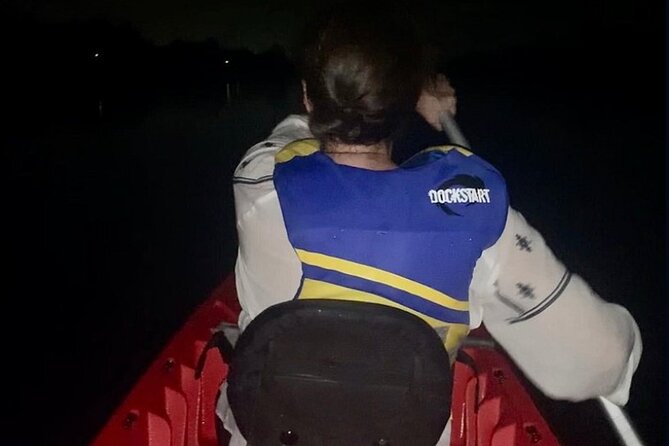
The maximum group size is 42 people. That is a fairly large possible group for a quiet water activity, though the number on your departure may be much smaller. One outing had only three people, and another had just a couple. Small groups allow more questions and closer contact with the guide. A full group may feel less personal, but several guides may help keep everyone together.
The price is not provided here, so I cannot judge the exact dollar value. I can tell you what you are paying for: about two hours on the water, a kayak, paddle, PFD, and a professional guide who provides safety support and natural-history interpretation.
The value is strongest when you see the phenomenon clearly or encounter wildlife. It is weaker if you expect a bright, constant glow and receive only a few sparks. Still, the included gear and instruction make it more accessible than arranging your own nighttime kayak trip, and the guides provide a level of safety that is hard to replace on your first outing after dark.
I would treat the tour as a special evening activity rather than a standard sightseeing stop. If the bioluminescence is faint, you have still paid for a guided paddle through a protected lagoon at night. If the water lights up, the experience can become one of the most memorable parts of a Cocoa Beach visit.
Who should book this night kayak tour
This is a good choice for families, couples, teenagers, and curious first-time kayakers. A five-year-old has managed the experience, and teenage children have enjoyed both the wildlife and the science. The paddling is not described as strenuous, but younger children still need to follow directions and remain comfortable in a kayak after dark.
It also suits anyone who likes natural events that cannot be scheduled on demand. You will get more from it if you can enjoy the paddle itself, not just the hope of glowing water.
I would be more cautious if you require a guaranteed sighting, dislike getting wet, or feel uneasy in a boat at night. You should also think twice about booking outside the peak season if your only goal is a strong dinoflagellate display. Winter can be rewarding for comb jellies, but some nights produce very little light.
Should you book it?
Yes, if you want a gentle nighttime adventure and can accept uncertain wildlife conditions. Choose May through early November for the best chance of cloudy blue-green dinoflagellate glow, or late November through April for glowing comb jellies.
Book with realistic expectations, bring clothes that can get soaked, and ask about the night’s conditions, light pollution, and departure timing. If you get a guide like Aidan, Caleb, Sean, Zoey, or Matt, you can expect the safety briefing and natural-history side of the outing to add real value. If nature cooperates, the glow is magical. If it does not, you still get a quiet paddle and a close look at one of Florida’s strangest water habitats.
FAQ
How long does the bioluminescence kayak tour last?
The tour lasts approximately two hours and ends back at the meeting point.
Where does the tour meet?
The stated meeting point is 951 Kiwanis Island Park Road, Merritt Island, Florida 32953.
What equipment is included?
The tour includes a kayak, paddle, personal flotation device, and professional guide.
When is the best season for dinoflagellate bioluminescence?
Dinoflagellate bioluminescence is described as being at peak season from May through early November.
When can I see glowing comb jellies?
Comb jelly bioluminescence is described as being at peak season from late November through April. Comb jellies do not sting and may be held during the activity under the guide’s direction.
What should I bring?
Bring clothes that can get wet, water shoes or sandals suitable for water, an extra change of clothes, bottled water, and snacks. A towel should be left in your car. A camera and dry bag are optional, and a flashlight may be brought, although a safety light is provided.
What is the cancellation policy?
You can cancel at least 24 hours before the start time for a full refund. Cancellations or changes made less than 24 hours before the experience are not accepted for a refund.
Recently reviewed around the USA
- Dyker Heights Christmas Lights Guided Tour★ 4.5 · 920 reviews
- New York City Dinner Cruise with Live Music★ 4.0 · 377 reviews
- New York City Holiday Lights Tour★ 4.5 · 664 reviews
- NYC in a Day Tour: Statue of Liberty, Times Square and More★ 5.0 · 366 reviews
- Broadway and Times Square Insider Tour with Theater Professional★ 5.0 · 651 reviews
- NYC Central Park Bicycle Rentals★ 4.5 · 368 reviews
- Central Park Bike Rental New York City★ 4.0 · 560 reviews
- Manhattan Sky Tour: New York Helicopter Flight★ 4.5 · 1,458 reviews
Canoes & Kayaks, compared.
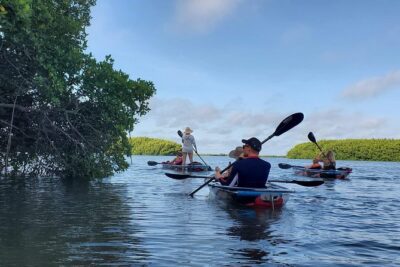
Clear Kayak Tour of Shell Key Preserve and Tampa Bay Area
Read our review →
Half-Day Emerald Cave Kayak Tour with Optional Hotel Pickup
Read our review →
Emerald Cave Kayak Tour: Scenic Paddle with Optional Shuttle
Read our review →
Rock Springs 2-Hour Glass Bottom Guided Kayak Eco Tour
Read our review →
Crystal River Three Sisters Springs and Manatee Clear Kayak Tours
Read our review →Browse the lists this tour appears in