
Reviewed · WHALE WATCHING
Monterey Bay: Whale Watching Tour
Monterey Bay is one of the rare places where whales feed close to shore, thanks to a submarine canyon that brings deep water near the coast. From the boat, you may watch humpbacks surface beside feeding seabirds, spot dolphins racing at the bow, or see a blue whale rise through the swells. The wildlife is the main event, and the setting gives you a real chance to see it in the open sea rather than in a marine park.
I like the route through the harbor and past Cannery Row, because the cruise begins with sea lions and local scenery before reaching the sanctuary. I also like the small-boat feel reported by several customers, with one boat holding about 25 people and enough room to move around for a better view. The main drawback is the ocean itself: conditions can be choppy, sightings are never guaranteed, and motion sickness can turn a fine outing into a hard few hours.
The $75 price is fair if you care about marine life and can give the outing most of a morning or afternoon. Guides such as Isaiah, Isiah, Maddy, Sophie, and others have been praised for making the ride both educational and entertaining. Bring warm layers and take motion-sickness medicine before boarding, especially if you are unsure how you handle open water.
In This Review
- Key points to know before booking
- Why Monterey Bay is such a strong whale-watching spot
- Leaving Old Fisherman’s Wharf
- Passing Cannery Row into protected waters
- Watching humpbacks feed in summer and fall
- Winter migration and the chance of gray whales
- Dolphins, sea lions, otters, and surprise sightings
- The boat, guide, and onboard comfort
- Motion sickness and what to wear
- Is $75 a good value?
- Who should book this cruise?
- Should you book the Monterey Bay whale watch?
- FAQ
- How long does the whale-watching cruise last?
- Where does the tour meet?
- How early should I arrive?
- What whales might I see?
- Are food and drinks included?
- Is motion-sickness medicine available?
- Can I cancel or pay later?
Key points to know before booking
- Whales can appear almost daily: Humpbacks are common, with seasonal chances for gray, blue, fin, orca, and other whales.
- The submarine canyon matters: Monterey Bay’s deep water sits close to shore, helping bring feeding whales within reach of the boat.
- The season changes the focus: Summer and fall trips follow feeding whales, while winter outings look for migrating whales, especially gray whales.
- A biologist guides the ride: You get explanations about animal behavior, the sanctuary, and conservation rather than a simple boat trip.
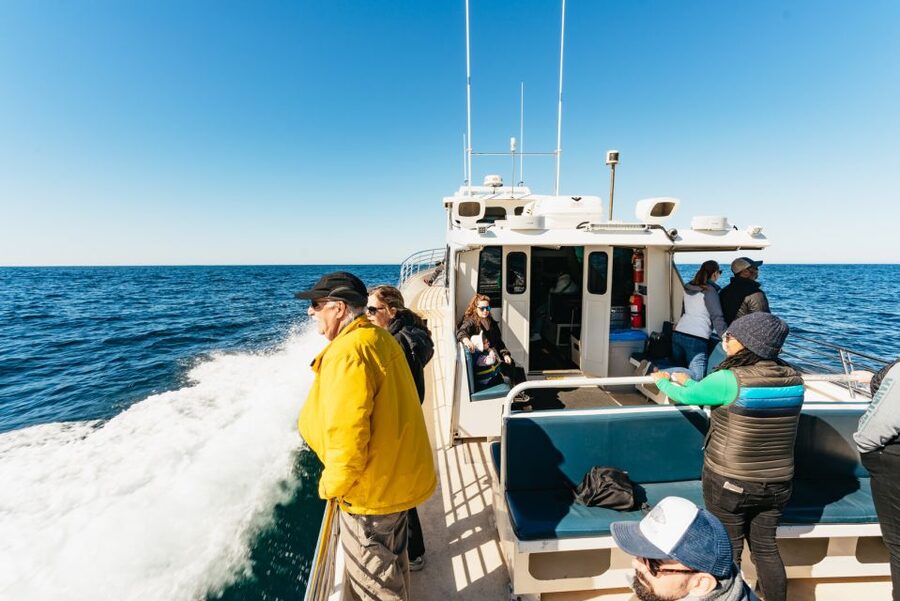
- The boat may feel pleasantly uncrowded: One recent account described a vessel for roughly 25 people, with room to shift positions.
- The sea can be rough: Hot drinks are included, restrooms are onboard, and motion-sickness remedies are available for purchase at the office.
Why Monterey Bay is such a strong whale-watching spot
The bay’s underwater shape explains much of its appeal. A submarine canyon cuts close to shore, allowing deep, nutrient-rich water to affect the bay’s food chain. Small fish and krill attract feeding whales, seabirds, sea lions, and dolphins.
You do not need to travel far offshore before the natural setting changes. The boat leaves Monterey Harbor, passes the waterfront, and reaches the protected waters of Monterey Bay National Marine Sanctuary. That sanctuary is not a theme park with trained animals waiting on cue. You are watching wild creatures on their own terms, which makes every sighting exciting but also unpredictable.
In summer and fall, the boat generally looks for feeding humpback whales. These whales have been spotted repeatedly on morning and afternoon trips, sometimes in groups and sometimes close enough for you to see the shape of the back, blow, and tail. Blue whales, fin whales, orcas, gray whales, and several dolphin species are possible extras.
Winter changes the pattern. The boat heads toward the southern end of the bay to look for migrating whales, including gray whales. December and early winter can still produce good sightings, but the trip may feel less reliable than the peak feeding season. One winter outing produced around ten whales, along with more dolphins and sea lions, while another found migrating gray whales in February.
More whale watching out of the USA:
- Juneau Wildlife Whale Watching
★ 5.0 · 7,379 reviews - Juneau Wildlife Whale Watching & Mendenhall Glacier
★ 5.0 · 6,236 reviews - Boston: City Cruises Whale Watching Cruise
★ 4.5 · 4,710 reviews
Leaving Old Fisherman’s Wharf
The meeting point is Discovery Whale Watch at 66 Fisherman’s Wharf. You need to check in at least 45 minutes before departure, with the Coast Guard waiver completed for every person in your group. Adults complete waivers for children, and the electronic link can be forwarded by email or text.
The first part of the trip gives you an easy look at Monterey’s harbor life. Hundreds of California sea lions may be gathered inside the harbor, barking, jostling, and piling onto docks or other structures. This is a useful warm-up, particularly if you are traveling with children, since you can see wildlife before the boat reaches open water.
Parking is at the Monterey Harbor Waterfront lot at 245 Washington Street. You must pay before leaving the lot through the ParkMobile app or a pay station. The stated penalty for failing to pay is $49, so do not treat parking as an afterthought. From the lot, walk toward Wharf 1, pass the pink Harbor House and yellow Crab House, then turn right. Discovery Whale Watch is the blue building on your right.
If you are staying near the wharf, walking may be easier than dealing with parking. One customer walked from a hotel without trouble. Hotel pickup and drop-off are not included, so plan your own way to the waterfront.
Passing Cannery Row into protected waters
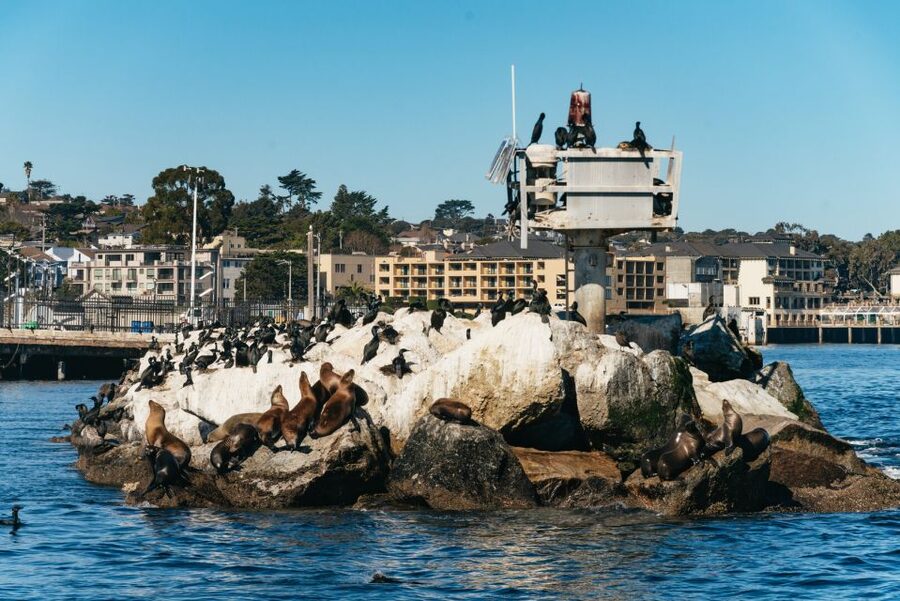
As the boat moves beyond the harbor, you pass Cannery Row, the famous waterfront corridor associated with Monterey’s fishing and canning past. From the water, you get a different view of the shoreline and a clear sense that the built-up waterfront quickly gives way to open bay.
The route then enters Monterey Bay National Marine Sanctuary. This is where the trip shifts from harbor sightseeing to wildlife watching. The crew and biologist begin scanning the water, while you learn what to look for: a blow, a dark back, a fluke, splashing birds, or a sudden change in the behavior of nearby sea lions and dolphins.
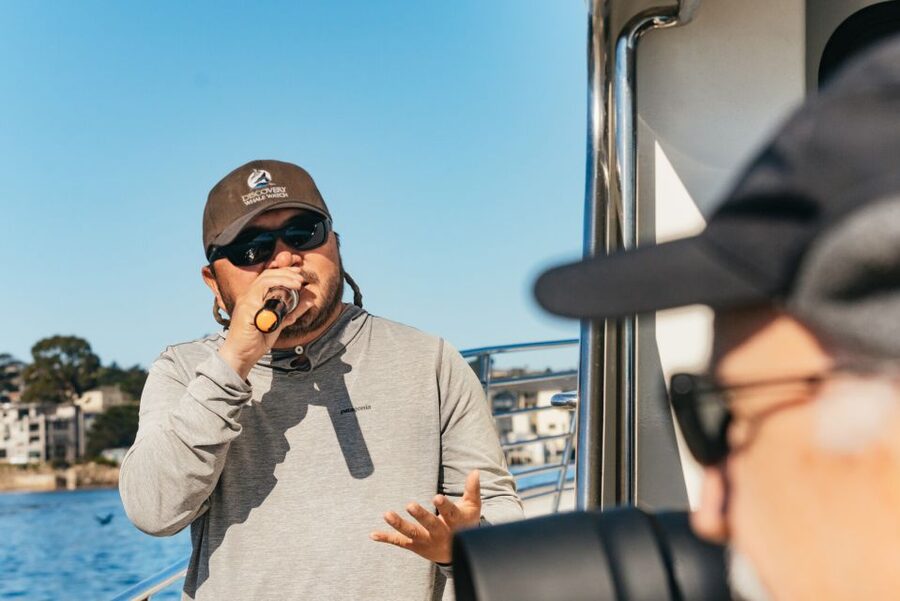
The guide’s role adds real value. Maddy, Isaiah, Isiah, and other guides have been singled out for explaining what the animals are doing in a clear and lively way. A good guide helps you understand why a group of birds suddenly gathers, why sea lions may cluster around feeding whales, or how to distinguish a humpback’s surface pattern from a smaller whale.
The commentary also covers conservation. That matters here because the sanctuary is not just scenery. You are entering a protected marine environment, and the explanations help connect your wildlife encounter with the need to protect the bay.
Watching humpbacks feed in summer and fall
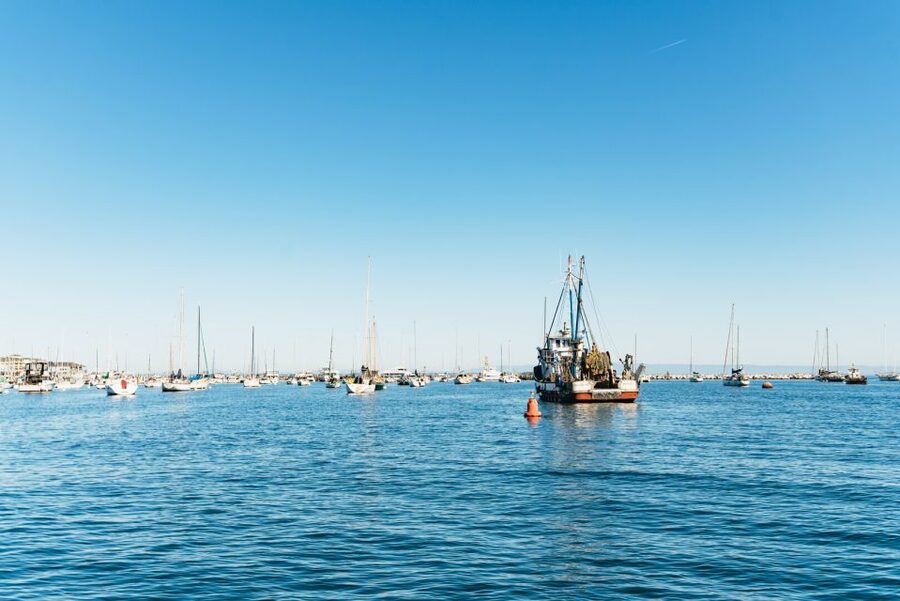
Humpback whales are the most dependable target during the warmer months. The boat follows feeding activity, often around small fish and krill. You may see one whale surface several times, or several whales spread across the water.
The sightings described by recent customers range from about four humpbacks to groups of 15 or more. Some saw breaching, fin slapping, or a pair of whales staying near the boat. Others watched a feeding frenzy involving whales, sea lions, and seabirds. These moments are thrilling because the whole food chain becomes visible at once.
You should keep your expectations realistic. A whale may show only its back before disappearing for several minutes. Then it may surface behind you, so resist staring in one direction. The guides and captain work together to place the boat well, but wildlife determines the timing.
The open deck is important. A smaller vessel makes it easier to shift from one side to the other, and one customer particularly liked having room to move without feeling crowded. Still, you will want a warm layer even on a sunny Monterey day. Wind on the water can feel much colder than conditions at the wharf.
A completely different way to spend a day nearby:
- NYC: SUMMIT One Vanderbilt Tickets
★ 4.7 · 51,195 reviews - NYC: 9/11 Memorial & Museum Timed-Entry Ticket
★ 4.8 · 31,428 reviews - NYC: Empire State Building Tickets – Observatory & Museum
★ 4.7 · 25,757 reviews - NYC: Empire State Building Observation Deck Tickets
★ 4.7 · 22,072 reviews
Winter migration and the chance of gray whales
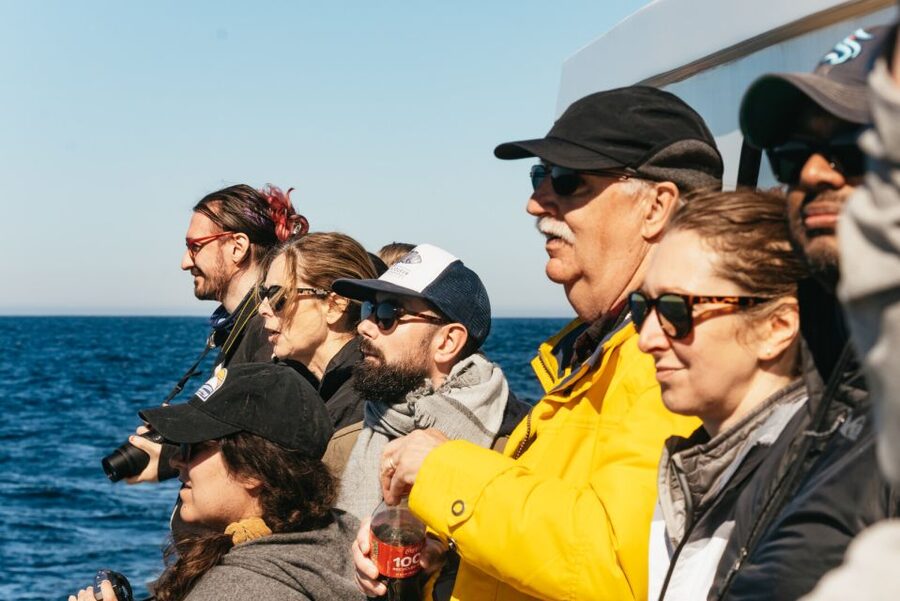
Winter trips focus on migrating whales, especially gray whales at the southern end of Monterey Bay. This gives you a different kind of experience from the summer feeding trips. Gray whales may pass through during migration, while dolphins and sea lions can add activity closer to the boat.
The timing can be rewarding. One February trip produced migrating gray whales, while a December outing found around ten whales and even more dolphins and sea lions. Another winter trip included a breaching humpback and five additional humpbacks.
Winter also brings more uncertainty. Weather, sea conditions, and migration patterns affect the day. You may spend more time scanning open water, and the boat may be affected by rain or larger swells. The crew still provides the same interpretation and makes a serious effort to locate animals, but you should book winter for the experience of being on the bay, not only for a guaranteed dramatic breach.
Dolphins, sea lions, otters, and surprise sightings
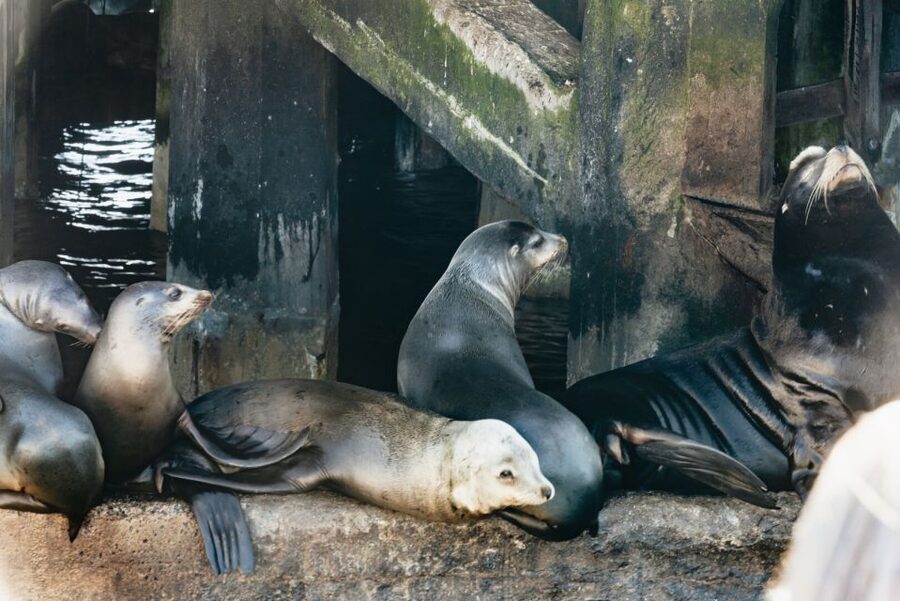
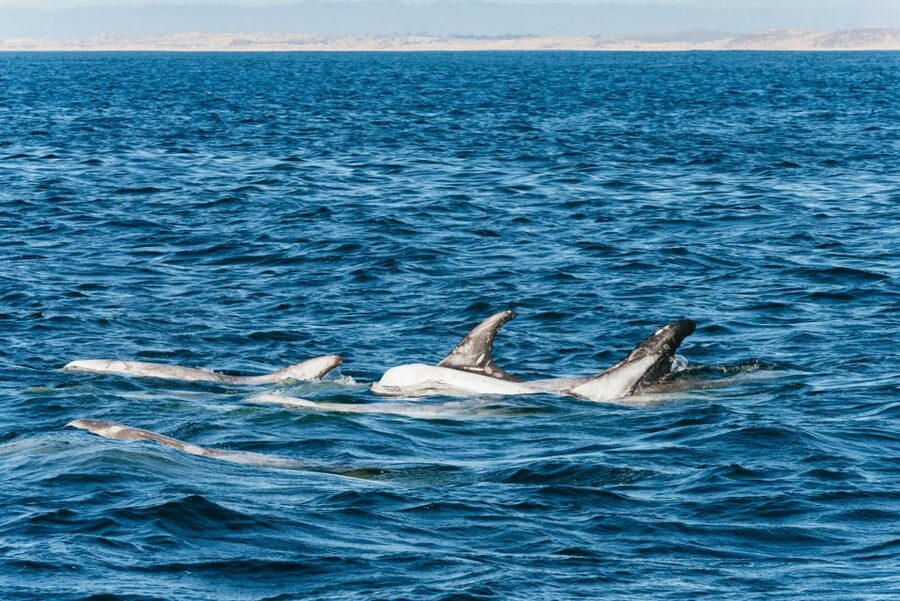
Whales are the headline, but Monterey Bay’s supporting cast can be just as memorable. Sightings have included Risso’s dolphins, white-sided dolphins, common dolphins, porpoises, sea otters, elephant seals, and large groups of sea lions.
Dolphins may ride the bow wave, giving you quick, energetic views as they move alongside the vessel. Sea lions often appear in the harbor and offshore, while otters are smaller and easier to miss. Keep watching even after the first whale sighting. The best trip may be a series of smaller encounters rather than one dramatic moment.
Rare sightings are possible too. Recent outings included orcas, a blue whale with a calf, a tufted puffin, salmon sharks, albatross, and a well-known all-white dolphin called Casper. These are special bonuses, not promises, but they show how varied the bay can be.
The boat’s camera can also help. On one trip, Isiah took photographs that passengers could access afterward, giving them clearer images than handheld shots taken in rough water. Ask the crew what photography options are available on your departure, since this detail may vary.
The boat, guide, and onboard comfort
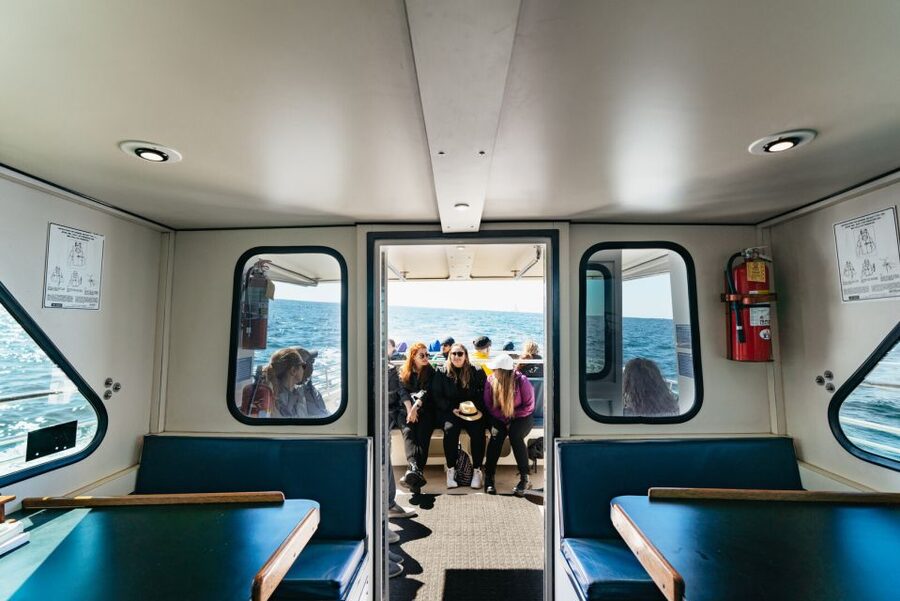
The cruise lasts three to four hours as advertised, but the more specific timing depends on the departure. Summer and fall morning trips generally last about three and a half to four hours. Winter morning trips and afternoon trips throughout the year are usually about two and a half to three hours.
That difference matters when you plan your day. Whale watching can run later than expected if the crew finds animals and stays with them. Leave some space after the cruise rather than scheduling a tight meal, drive, or attraction immediately afterward.
Hot beverages are included, a welcome touch on a cool morning. You may bring a small packed lunch and non-alcoholic drinks, and snacks such as chips and drinks may also be sold onboard. Restrooms are available on the vessel.
Friendly dogs are permitted, but the open sea is not ideal for every animal. Consider your dog’s comfort around engine noise, wind, movement, and crowds before bringing one.
Smoking, alcohol, and drugs are not allowed. Pregnant people and those with mobility impairments are advised not to take this activity. The tour is conducted in English.
Motion sickness and what to wear
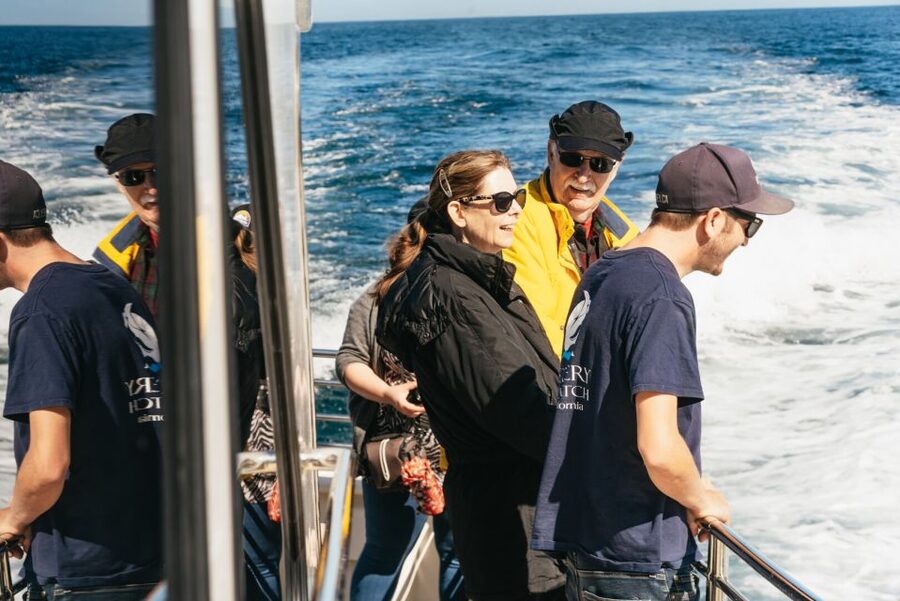
Treat motion sickness as a real possibility, even if you feel fine on land. The bay can be calm, but several outings were described as choppy, and one passenger became seriously seasick despite having a good wildlife experience.
Motion-sickness remedies are available for purchase at the office, or you can bring your own. Taking medicine before boarding is generally more useful than waiting until symptoms begin, though you should follow the product directions and any medical advice you normally use.
Pack:
- Comfortable, closed shoes
- Sunglasses
- A sun hat
- Sunscreen
- Several warm layers
- Passport or identification card
- Motion-sickness medication if needed
Cloudy weather can make the water feel cold. At the same time, sun reflecting off the bay can be strong, so sunscreen and sunglasses still matter. You may spend much of the trip outside, moving between viewing positions.
Is $75 a good value?
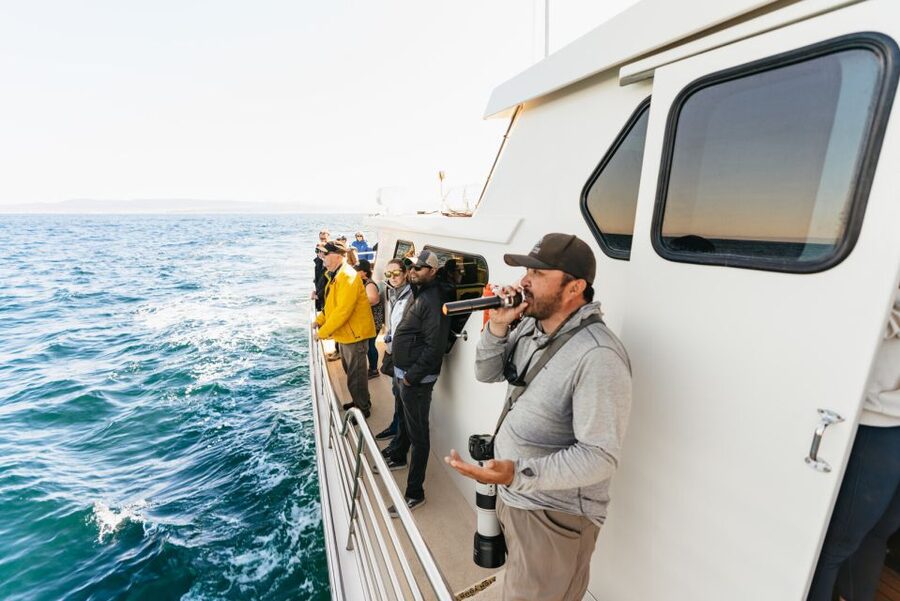
At $75 per person, this is not a cheap harbor cruise, but the price is reasonable for a three to four-hour wildlife outing with a biologist guide and hot drinks. You are paying for the boat, captain, crew, fuel, time on the water, and the chance to search a large marine area.
The value is strongest if you already care about whales and want expert help understanding what you see. A guide can turn a distant blow into a meaningful sighting by explaining the species and behavior. The small-boat setup may also give you better viewing access than a heavily packed vessel.
The value is less certain if you need a guaranteed close encounter or have only a narrow window in Monterey. Wildlife watching is never a fixed show. You might see 20 whales, dolphins, and sea lions, or you might spend more time searching in difficult weather.
Free cancellation up to 24 hours before departure and the option to reserve now and pay later make planning easier. Still, choose your date with care, give yourself extra time after the cruise, and check seasonal conditions before booking.
Who should book this cruise?
I would choose this tour for families with older children, couples, solo visitors, and anyone making marine life a key part of a Monterey visit. Children aged nine and 13 enjoyed one outing, and the guides have been praised for keeping young passengers interested with humor, stories, and animal facts.
It also suits first-time whale watchers. You do not need to know the difference between a humpback and a fin whale before boarding. The guide helps you read the water and gives context to what you see.
I would be cautious if you are pregnant, have mobility limitations, or know that boat motion affects you badly. You should also avoid booking if you expect a polished sightseeing cruise with guaranteed calm conditions. This is an active search for wild animals, with cold air, wind, and possible swells.
Should you book the Monterey Bay whale watch?
Book it if you can accept uncertainty and want a genuine encounter with Monterey Bay’s wildlife. The combination of a deep submarine canyon, frequent humpback sightings, a helpful biologist, and the chance of dolphins, sea lions, otters, gray whales, blue whales, or orcas makes the $75 fare worthwhile for most wildlife-minded visitors.
For the best odds of feeding whales, summer and fall are the natural choice. Choose winter if migrating gray whales appeal to you, and leave room in your schedule for a trip that may last longer than planned. Take motion-sickness precautions, dress warmly, and arrive early for the waiver and check-in.
This is not simply a ride past the coast. It is a few hours of watching a wild marine system work around you, with the possibility of seeing one of the largest animals on Earth surface just beyond the rail.
FAQ
How long does the whale-watching cruise last?
The activity is advertised as three to four hours. Summer and fall morning tours usually last three and a half to four hours, while winter morning tours and afternoon trips year-round generally last two and a half to three hours.
Where does the tour meet?
Check in at Discovery Whale Watch, 66 Fisherman’s Wharf, Monterey, California 93940. The office is in the blue building near the yellow Crab House at the end of the walking route from the waterfront parking lot.
How early should I arrive?
You should check in at least 45 minutes before departure. Each person must complete a Coast Guard waiver electronically, with adults completing waivers for minors.
What whales might I see?
Humpback whales are commonly sought in summer and fall. Depending on the season and conditions, you might also see blue whales, fin whales, gray whales, orcas, and other whale species.
Are food and drinks included?
Hot beverages are included. Food is not included, but you may bring a small packed lunch and non-alcoholic beverages. Drinks and chips may also be available for purchase onboard.
Is motion-sickness medicine available?
Motion-sickness remedies are available for purchase at the office before the cruise. You may also bring your own. The boat has restroom facilities.
Can I cancel or pay later?
You can cancel up to 24 hours before departure for a full refund. You can also reserve your place and pay later, keeping your plans flexible.
Recently reviewed around the USA
- Dyker Heights Christmas Lights Guided Tour★ 4.5 · 920 reviews
- New York City Dinner Cruise with Live Music★ 4.0 · 377 reviews
- New York City Holiday Lights Tour★ 4.5 · 664 reviews
- NYC in a Day Tour: Statue of Liberty, Times Square and More★ 5.0 · 366 reviews
- Broadway and Times Square Insider Tour with Theater Professional★ 5.0 · 651 reviews
- Central Park Bike Rental New York City★ 4.0 · 560 reviews
- NYC Central Park Bicycle Rentals★ 4.5 · 368 reviews
- Manhattan Sky Tour: New York Helicopter Flight★ 4.5 · 1,458 reviews
Whale Watching, compared.
Juneau Wildlife Whale Watching & Mendenhall Glacier
Read our review →
City Cruises Boston Whale Watching Cruise by High-Speed Boat
Read our review →
Whale Watching Trips to Stellwagen Bank Marine Sanctuary. Guaranteed sightings!
Read our review →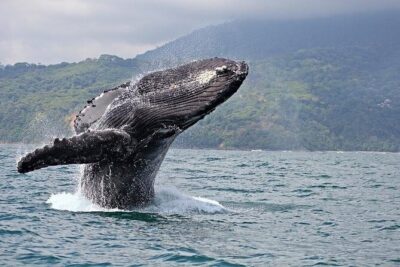
2-Hour Oahu Whale Watch from Ala Wai Harbor, Waikiki
Read our review →Browse the lists this tour appears in