
Reviewed · GHOST & HISTORY WALKING TOURS
New Orleans Dead of Night Ghosts and Cemetery Bus Tour
New Orleans saves some of its best stories for after dark. This two-hour bus tour heads beyond the French Quarter to Bayou St. John, old cemeteries, voodoo sites, and places tied to ghost sightings. The city’s past includes yellow fever, mass death, secret rituals, and Hurricane Katrina, so the material has real weight beneath the spooky packaging.
I like the air-conditioned bus, especially when the weather is wet, hot, or simply too muggy for a long walk. I also like the way guides such as Christian, Drew, and Shannon bring local history into the tales. The main drawback is clear: you may spend more time hearing about cemeteries than walking inside them, and some people find the tour more historical than frightening.
In This Review
- Key points to know before booking
- What the two-hour night route is really like
- Bayou St. John and the Marie Laveau connection
- St. Louis Cemetery No. 3 and a cemetery on top of a cemetery
- Charity Hospital Cemetery, Katrina, and difficult New Orleans stories
- City Park and the Café du Monde pause
- Christian, Drew, Shannon, and the guide factor
- How spooky is it, really?
- What $55 buys you
- Who should book this experience?
- Booking, cancellation, and the best place in your itinerary
- Should you book the Dead of Night tour?
- FAQ
- How long is the New Orleans Dead of Night Ghosts and Cemetery Bus Tour?
- Where does the tour begin and end?
- What is included in the price?
- Are food and drinks included?
- Can I bring alcohol on the bus?
- Does the tour enter every cemetery?
- Does the tour operate in bad weather?
- What is the cancellation policy?
Key points to know before booking
- Bayou St. John opens the story: Hear about Marie Laveau and the rituals associated with the Magnolia Bridge.
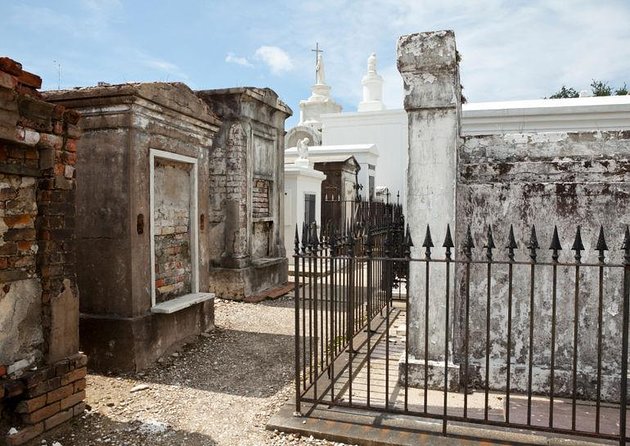
- St. Louis Cemetery No. 3 has layered history: The site is tied to yellow fever epidemics and an earlier leper colony.
- The bus keeps the night easy: A professional guide and air-conditioned vehicle cover sites outside the French Quarter.
- Guides make a major difference: Christian is praised for energy and local knowledge, while Drew and Shannon also receive strong marks for storytelling.
- Cemetery access is limited: Some stops may be viewed from outside the gates, with little time for walking around.
- The break includes beignets: You can stop at Café du Monde in City Park, with food and drinks at your own cost.
What the two-hour night route is really like
This is not a slow cemetery walk with hours spent among tombs. It is a moving history lesson with several short stops, ghost stories, and a few chances to leave the bus. That distinction matters.
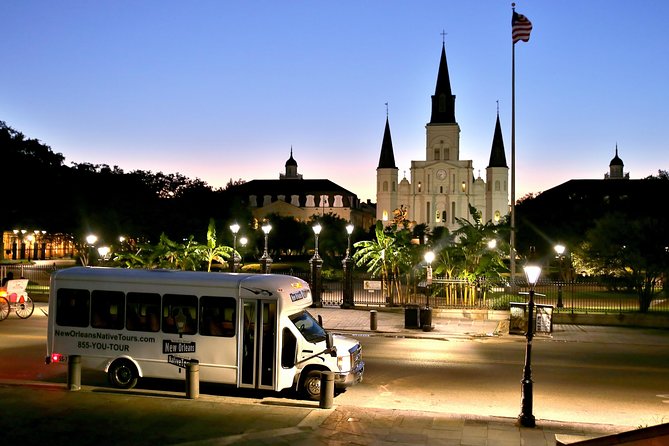
You meet at the Rampart Treehouse, at 740 N Rampart Street. From there, the bus carries a maximum of 28 people through neighborhoods outside the French Quarter. The smaller vehicle is more personal than a large coach, though the experience still depends on where you sit and how much time the guide can give each stop.
The bus is a practical part of the tour, not just a way to get from one spooky place to another. New Orleans weather can change quickly, and an air-conditioned ride gives you shelter between stops. You also avoid trying to find several out-of-the-way sites on your own at night.
The route combines documented events with local legends. I find that mix works best when you treat the ghost stories as part of New Orleans culture rather than as a promise of a supernatural event. You may hear about apparitions, whispers, voodoo practices, curses, and strange photographs, but the experience cannot guarantee a ghost encounter.
More Ghost Tours in New Orleans
- New Orleans Garden District History Walking Tour
★ 5.0 · 2,879 reviews - New Orleans Haunted Ghost, Voodoo & Vampire Walking Tour
★ 4.5 · 2,731 reviews - New Orleans Small-Group Haunted History Carriage Tour
★ 4.5 · 2,289 reviews
Bayou St. John and the Marie Laveau connection
The first stop is Bayou St. John, where you spend about 15 minutes. This waterway has long been linked with New Orleans folklore, and the tour focuses on the claim that Marie Laveau carried out voodoo rituals along the bayou.
The Magnolia Bridge is especially important to the story. It continues to be associated with rituals on St. John’s Eve, giving the guide a chance to explain how older religious traditions and popular ideas about voodoo became tangled together in New Orleans.
This stop is less about a dramatic scare than about setting the tone. You begin with a place that looks ordinary in daylight but takes on a different feel at night. The guide can connect the site to religion, local custom, and the city’s long habit of preserving stories through generations.
Keep your expectations sensible. The visit is short, and the information supplied for the stop does not promise a formal ritual or a long walk along the water. You are there to hear the story, take in the setting, and begin the evening’s shift from ordinary New Orleans to its darker folklore.
St. Louis Cemetery No. 3 and a cemetery on top of a cemetery
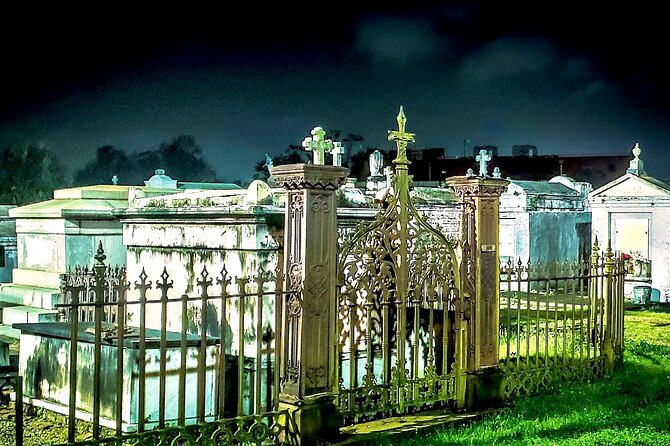
St. Louis Cemetery No. 3 is the most historically interesting stop on the route. It was built in the 1800s, during yellow fever epidemics when New Orleans needed more burial space. The tour also explains that the area had earlier been used as a leper colony, with a cemetery of its own.
That gives the site an unusual historical layering. You are not simply looking at an old burial ground. You are hearing how disease, overcrowding, fear, and changing land use shaped the city. The idea of a cemetery built over an earlier cemetery is memorable, and it helps explain why New Orleans burial sites carry so many stories.
The scheduled stop is only about six minutes, so the guide has to work quickly. In practice, access may vary. Some accounts describe standing outside cemetery gates, while another experience included time to walk around one cemetery. Do not book this expecting a long, quiet exploration among the tombs.
The short stop can still work if your priority is context. A lively guide can make six minutes useful, especially when the story covers yellow fever, the leper colony, burial customs, and the legends attached to the place. If you want time to inspect tombs, read names, and study architecture, choose a daytime cemetery visit instead or add one to your plans.
Charity Hospital Cemetery, Katrina, and difficult New Orleans stories
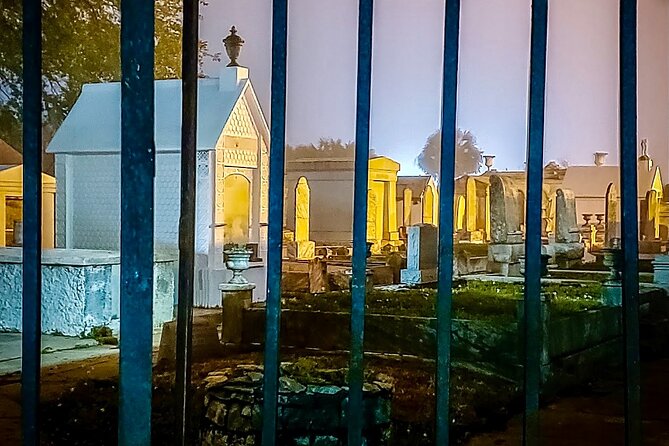
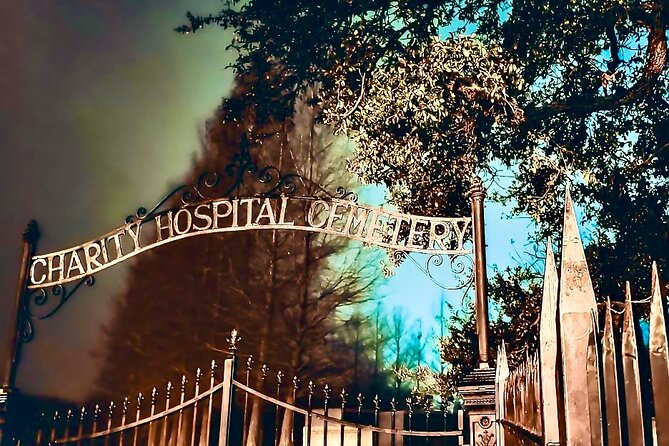
The tour description also includes Charity Hospital Cemetery, a site associated with many ghost sightings. It then calls at a memorial connected with Hurricane Katrina, where tombs hold 85 unidentified victims.
These are not light subjects. Disease, unidentified dead, and a devastating hurricane bring the human cost of New Orleans into the evening. That is one reason I think the tour can offer more than simple haunted-house entertainment. The supernatural stories gain force when you understand the real grief and uncertainty behind them.
At the same time, the dark can make memorial sites hard to see. One account specifically found the Katrina memorial difficult to view at night. You should approach this part as a respectful stop with spoken context, not as a chance to examine every tomb or monument clearly.
The exact amount of time at these sites may also feel brief. A two-hour tour has to include driving, several locations, explanations, and a food break. If a guide is especially energetic, the evening can feel full. If you hoped to linger in silence at each cemetery, it may feel rushed.
More New Orleans trips worth a second look
- New Orleans: Evening Steamboat Jazz Cruise + Optional Dinner
★ 4.3 · 4,548 reviews - New Orleans: Evening Jazz Boat Cruise with Optional Dinner
★ 4.4 · 1,024 reviews - New Orleans: Night Cemetery and Ghost BYOB Bus Tour
★ 4.2 · 496 reviews - DC Memorials Night Tour: Glass-Roof Convertible Upgrade Option
★ 4.5 · 6,933 reviews
City Park and the Café du Monde pause
New Orleans City Park provides a break during the tour, with about 15 minutes set aside for food. Café du Monde is the familiar draw, and beignets, drinks, and other purchases cost extra.
This pause gives the evening a welcome change of mood. After stories about death, disease, and ghosts, sitting down for a sweet snack can keep the tour from becoming too heavy. It also gives you a chance to use the bathroom and buy a drink, details that matter during a nighttime outing.
The break is short, so think of it as a refreshment stop rather than a full meal. If you want beignets or hot chocolate, budget separately and move promptly when the guide calls the group back. You end where you began, at the Rampart Treehouse.
Some descriptions refer to City Park and Café du Monde, while individual experiences have used the name Morning Call for the food stop. The practical point is the same: expect a mid-tour stop for snacks, with the exact café arrangement subject to the operation of that evening.
Christian, Drew, Shannon, and the guide factor
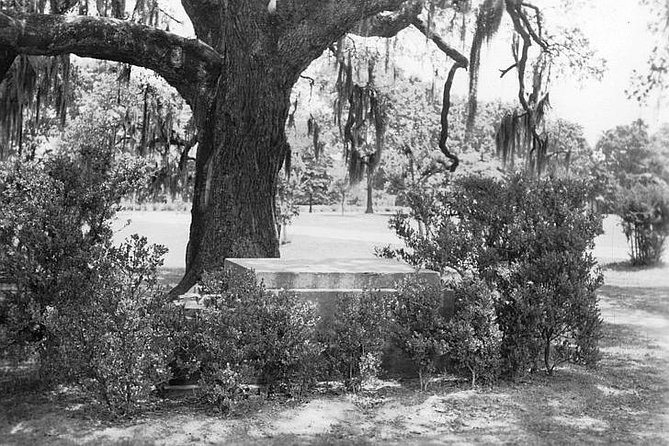
The guide can shape this experience more than any single location. Christian receives especially strong praise for his energy, passion, humor, and command of New Orleans history. He has been described as animated and confident, with stories covering voodoo, the city’s founding, the Freemasons, Hurricane Katrina, and the events that led to mass death.
That range is useful. A ghost tour can become thin if every story is reduced to a possible apparition. Christian’s approach appears to give the evening a broader base, explaining how the city developed and how old beliefs still affect the way people understand New Orleans.
Drew is also praised for keeping the ride entertaining while explaining cemeteries and local history. Shannon is noted for discussing the spiritual and religious sides of the area, including the way different faiths shaped New Orleans traditions.
Guide assignments can change, so you cannot count on a particular person unless the operator confirms it. Still, the repeated praise for these guides tells you what the tour does best when it is working well: strong oral storytelling, local context, and a guide who can keep a group of up to 28 people focused in the dark.
How spooky is it, really?
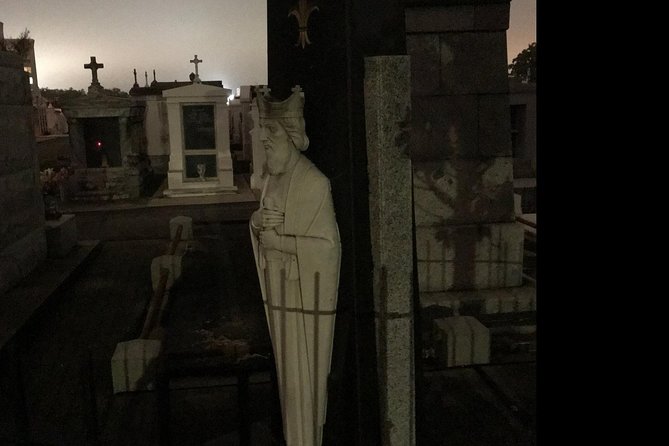
The advertising leans hard into ghosts, apparitions, whispers, and spirits appearing in photographs. Some people leave convinced they caught something unusual in a picture. Bring a camera if that sounds fun, but keep your expectations open rather than demanding proof of the paranormal.
The more dependable attraction is the atmosphere and the history. Several accounts describe the tour as interesting but less haunted than expected. One person found it informative yet lacking mystery, while another rated it mainly as a good way to spend two hours learning about New Orleans.
I think that is the fairest way to view it. If you want a theatrical fright show, this may feel restrained. If you enjoy old cemeteries, local beliefs, dark history, and a guide who can tell a story, the balance may suit you.
The nighttime setting helps. Even a short stop at a cemetery feels different after sunset, especially when the guide is explaining epidemics, unidentified victims, or rituals connected to the area. Just remember that atmosphere is not the same as guaranteed paranormal activity.
What $55 buys you
At $55 per person, the tour is priced in the middle range for a guided New Orleans evening activity. The price includes the professional guide and air-conditioned transportation. It does not include food or drinks, and alcoholic drinks are not allowed on the bus.
The value depends on what you would otherwise have to arrange. You get transport between several sites, a guide who supplies the stories and local context, and a fixed two-hour plan. That is useful if you have limited time or do not want to navigate unfamiliar areas after dark.
The value is weaker if your main goal is entering cemeteries for long periods. Several stops are brief, and some may be viewed from outside the gates. In that case, your $55 is paying mostly for transportation and storytelling rather than extended access.
For many people, that trade-off makes sense on a first New Orleans visit. You can hear about sites that are outside the usual French Quarter circuit without spending a full night walking. I would compare it with the cost of a separate cemetery visit, taxi rides, and a self-guided attempt to connect these places.
Who should book this experience?
I would suggest this tour to first-time visitors who want a quick introduction to New Orleans history beyond Bourbon Street. It also suits couples, families with older children, friends, and solo visitors who prefer a guide-led evening rather than a long walking tour.
The experience can work for children and teenagers who enjoy spooky stories. One family found that both a 12-year-old and a 17-year-old liked the material. Still, the subjects include disease, death, cemeteries, and disaster, so use your judgment for younger children.
It is less suitable for you if you want extensive time inside burial grounds, a serious paranormal investigation, or a quiet photography session. The pace is brisk, and the guide must keep everyone together and return the bus on schedule.
Dress for the weather. The tour operates in all weather conditions, even though the bus is air-conditioned. Wear practical shoes and bring a light rain layer when the forecast looks uncertain. Keep your phone or camera ready, but do not let photography distract from the guide’s explanations.
One safety point deserves attention. Make sure you return to the bus with your group at every stop and confirm that the guide has seen you board. A serious complaint described two people being left briefly at a cemetery before the bus returned. That should not happen, but a simple head count on your part is wise.
Booking, cancellation, and the best place in your itinerary
The tour is offered in English, uses a mobile ticket, and is often reserved about 14 days ahead. If your New Orleans dates are fixed, booking early is sensible, especially during busy periods.
Free cancellation is available up to 24 hours before the start time for a full refund. Cancellations or changes made inside that window are not refunded or accepted, and the cut-off follows local New Orleans time.
I like the idea of taking this tour early in your stay. It gives you place names, local legends, and historical context that can make later visits to cemeteries, museums, and neighborhoods more meaningful. One person specifically wished they had scheduled it near the beginning of a New Orleans visit.
Should you book the Dead of Night tour?
Book it if you want a comfortable, organized evening that mixes ghost lore with serious New Orleans history. The strongest reasons are the air-conditioned bus, the access to sites outside the French Quarter, and the lively guides, especially Christian, Drew, and Shannon.
Skip it if your picture of a cemetery tour involves long walks among tombs or guaranteed ghost activity. At $55, the experience is a fair buy for storytelling and transport, but less compelling if you measure value by cemetery access alone.
My practical verdict: choose it for the city’s stories, atmosphere, and convenience, not for a promise that a spirit will appear in your camera. Keep an open mind, listen closely, and allow the history to do much of the haunting.
FAQ
How long is the New Orleans Dead of Night Ghosts and Cemetery Bus Tour?
The tour lasts approximately two hours, including the bus ride and stops.
Where does the tour begin and end?
It begins at the Rampart Treehouse, 740 N Rampart Street, New Orleans, Louisiana 70116. The tour ends back at the same meeting point.
What is included in the price?
The $55 price includes a professional guide and transportation in an air-conditioned vehicle.
Are food and drinks included?
No. The City Park stop gives you a chance to buy food or drinks at Café du Monde, but purchases are at your own expense.
Can I bring alcohol on the bus?
No. Alcoholic drinks are not allowed on the bus.
Does the tour enter every cemetery?
No specific guarantee of full cemetery access is provided. Some stops may involve standing outside the gates, and the time available for walking can be limited.
Does the tour operate in bad weather?
Yes. It operates in all weather conditions, so dress appropriately for the forecast.
What is the cancellation policy?
You can cancel up to 24 hours before the start time for a full refund. Cancellations or changes made less than 24 hours before the start time are not refunded or accepted.
Recently reviewed around New Orleans
- New Orleans Yellow Fever Ghost Tour★ 5.0 · 1,298 reviews
- VIP Jazz Dinner Cruise with Private Tour and Open Bar Option★ 4.5 · 838 reviews
- Whitney Plantation Tour with Transportation from New Orleans★ 4.5 · 1,351 reviews
- New Orleans Private Carriage Tour of the French Quarter★ 5.0 · 537 reviews
- New Orleans French Quarter Photo Shoot★ 5.0 · 462 reviews
- New Orleans Delicious Donuts & Beignets: A Sweet Walking Tour★ 5.0 · 928 reviews
- The Escape Game at the French Quarter in New Orleans★ 5.0 · 364 reviews
- The Ghosts of New Orleans Tour★ 4.5 · 702 reviews
Ghost & History Walking Tours, compared.
Haunted Evening Horse and Carriage Tour of Charleston
Read our review →
New Orleans Garden District History Walking Tour
Read our review →
Ghosts of Charleston Night-Time Walking Tour with Unitarian Church Graveyard
Read our review →
New Orleans Haunted Ghost, Voodoo & Vampire Walking Tour
Read our review →

Browse the lists this tour appears in