
Reviewed · GHOST & HISTORY WALKING TOURS
Chicago: Gangsters and Ghosts Walking Tour
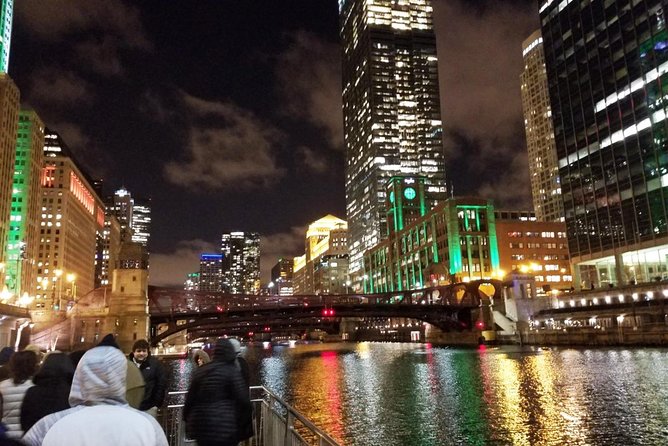
Chicago’s Loop has plenty of polished towers and famous sights, but beneath them sits a darker story of bootleggers, speakeasies, and Al Capone’s headquarters. This two-hour walk links that past with ghost tales at the Palmer House, Riverwalk, and Congress Plaza Hotel, giving familiar streets an extra layer.
I like the way the tour mixes documented Chicago history with spooky folklore, rather than treating the whole outing as a theatrical scare show. I also like the guides’ clear delivery. Taka, Sophia, Tanner, and Avery have all been praised for strong storytelling, loud voices, and keeping groups together.
The main consideration is that most of the experience happens outdoors. You cover about 1.5 miles, and you may not enter many buildings beyond the Palmer House lobby, so cold, rain, or city noise can affect the mood.
In This Review
- Key points to know before you book
- Why Chicago’s Loop makes such a good setting
- Starting in the Loop: speakeasies, tunnels, and mob headquarters
- Millennium Park and Cloud Gate: a modern landmark with an older past
- The Palmer House lobby and its ghost stories
- Chicago Riverwalk: stories beside the water
- The Chicago Theatre and the route’s visual highlights
- Congress Plaza Hotel: Al Capone and the final haunted stop
- What the guides add to the experience
- Walking or taking the minibus
- Is $52 a fair price?
- Who should book this Chicago ghost tour?
- Should you book the Gangsters and Ghosts Walking Tour?
- FAQ
- How long does the Chicago Gangsters and Ghosts Walking Tour last?
- How far does the walking route go?
- Where does the tour begin?
- Where does the walking tour end?
- What landmarks are included?
- Is Al Capone discussed on the tour?
- Is the tour mainly about real history or staged scares?
- Is a bus option available?
- How many people can join the tour?
- What happens if the weather is poor?
Key points to know before you book
- Al Capone connections: See places tied to Capone, including the Congress Plaza Hotel, where he reportedly set up a headquarters.
- About 1.5 miles on foot: The route includes frequent stops, a refreshment and restroom break, and city streets rather than a long, continuous march.
- History first, scares second: The guide tells verified ghost stories in a campfire-style manner instead of staging haunted-house theatrics.
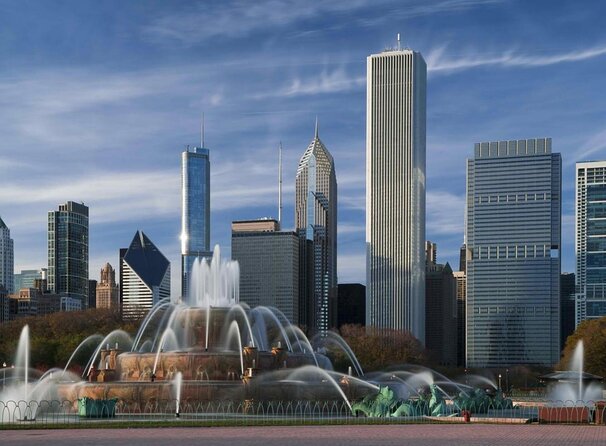
- Major sights included: The route passes Millennium Park, Cloud Gate, the Palmer House, Chicago Riverwalk, and Chicago Theatre.
- Small-group format: The maximum group size is 20, which helps you hear the guide in busy downtown streets.
- Bus upgrade available: The minibus option follows the same general theme and includes one stop at Harry Caray’s Italian Steakhouse.
Why Chicago’s Loop makes such a good setting
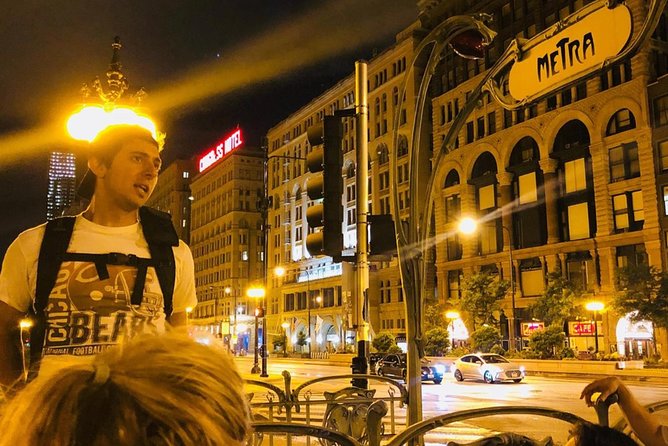
The Loop is an easy place to explore on foot, but it can feel like a collection of grand buildings unless you know what happened there. This tour gives the streets a plot. During Prohibition, the area was tied to illegal liquor, secret clubs, gang warfare, and underground routes used by bootleggers.
That setting makes the tour more than a string of ghost stories. You are standing in the same central district where hotels, theatres, restaurants, and offices brought together politicians, performers, businessmen, police, and criminals. The contrast between elegant architecture and violent stories is part of the appeal.
The tour begins at 71 East Wacker Drive. From there, you follow a historian guide through the downtown core and finish near the Congress Plaza Hotel at 520 South Michigan Avenue. The route is about 1.5 miles, with regular stops for stories and photographs.
I would think of this as a history walk with a spooky theme, not a horror attraction. The stories are presented in an around-the-campfire style. That suits the subject because the guide can move from real gangster events to ghost reports and tragic episodes without pretending that every tale has the same level of proof.
More Walking Tours in Chicago
- Chicago Favorites Ultimate Food and Walking Tour
★ 5.0 · 1,962 reviews - Chicago: Gangsters and Ghosts Guided Walking Tour
★ 4.7 · 1,697 reviews - Chicago in a Day: Food, History & Architecture Walking Tour
★ 5.0 · 1,153 reviews
Starting in the Loop: speakeasies, tunnels, and mob headquarters
The opening section focuses on the Loop’s role as Chicago’s vice district in the 1920s and 1930s. You hear about speakeasies, illegal liquor, secret passages, and the people who controlled parts of the city’s underworld.
This is where a strong guide matters most. A list of gangsters and dates would quickly become hard to follow, especially on loud downtown streets. The best guides on this tour use a clear voice and keep the group moving as a unit. Taka has been especially praised for speaking loudly and clearly, even with traffic and crowds around her.
The Al Capone material gives the tour its best-known name, but you should expect more than a Capone biography. The guide connects the gangster era to the buildings and streets around you. That makes the information easier to remember than a general talk about Prohibition delivered indoors.
The first section lasts about 35 minutes. It is not a long walk without a pause. Frequent stops let you listen, look around, and catch your breath. Still, you should wear comfortable shoes and be ready to remain outside for much of the time.
Millennium Park and Cloud Gate: a modern landmark with an older past
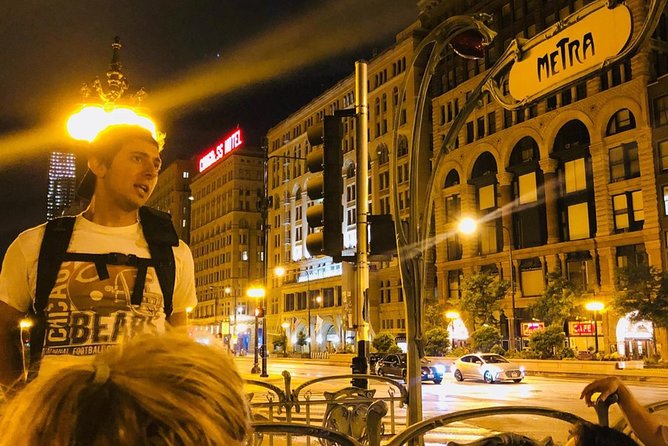
The route reaches Millennium Park, home of Cloud Gate, the polished sculpture most people call the Bean. You have about 15 minutes here, with time to take photographs and hear how the modern park fits into the city center.
This stop provides a useful change of pace. The gangster stories often point backward to the early 20th century, while Millennium Park feels thoroughly modern. You get one of Chicago’s most recognizable photo stops without leaving the main story of the Loop.
Do not expect a long visit focused on the park itself. This is a stop within a larger walking tour, not a dedicated architecture or public-art experience. If you already plan to visit Cloud Gate, the tour gives you another chance to see it while keeping you close to the route.
The Palmer House lobby and its ghost stories
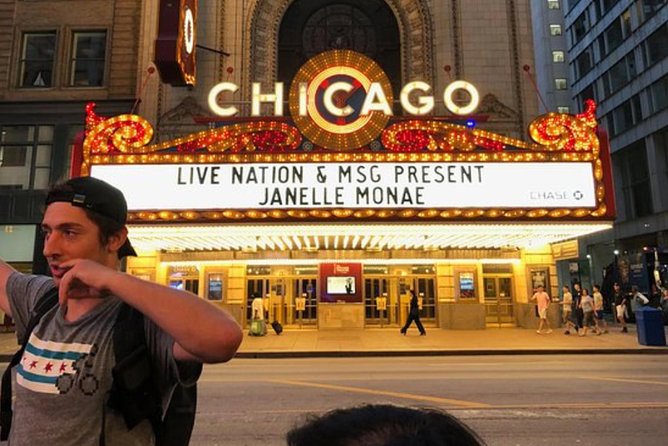
The Palmer House Hilton is one of the tour’s most atmospheric stops. The group pauses in its historic lobby for about 20 minutes, with time for a break. The hotel is described as the oldest hotel in Chicago and the oldest continuously operating hotel in the United States.
The building’s age gives the ghost stories a natural setting. Instead of hearing about a supposedly haunted place from the sidewalk, you get inside the lobby and have a moment to take in the surroundings. That brief indoor pause also matters if the weather is cold or wet.
The Palmer House is not presented as a haunted-house attraction. The guide shares reported ghost stories while placing them beside the hotel’s long connection to Chicago life. You can enjoy the eerie side without needing to accept every supernatural claim as fact.
This is one of the more practical stops because it combines storytelling, a landmark interior, and a restroom or refreshment break. If you are booking for a family group or with a teenager, that pause helps keep the two-hour outing comfortable.
More Chicago walks with a guide:
- Chicago’s Secret Interiors Architectural Walking Tour
★ 5.0 · 635 reviews - Chicago’s Chinatown Food and Walking Tour
★ 5.0 · 600 reviews - Chicago: Secret Interiors Architecture Walking Tour
★ 4.9 · 498 reviews - Chicago Gangster and Food Walking Tour
★ 5.0 · 471 reviews
Chicago Riverwalk: stories beside the water
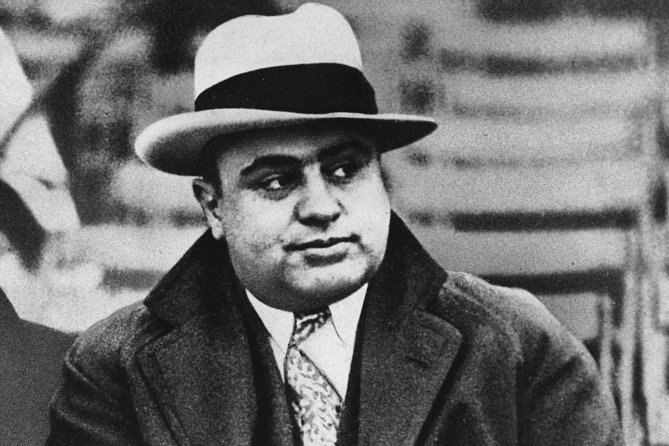
The tour then reaches the Chicago Riverwalk for about 15 minutes. Here, the setting shifts from grand hotels and downtown streets to the river corridor that helped shape the city’s growth and industry.
The river also gives the guide a good place to tell some of the tour’s more unsettling stories. One subject that has made a strong impression is the SS Eastland, a real Chicago maritime tragedy involving a tragic loss of life. The story broadens the tour beyond gangsters and shows how the city’s darker history includes disasters as well as organized crime.
This section is guided, not a free period to wander. Stay near the group so you do not miss the next story or direction. The Riverwalk can be active, and the guide needs to project over normal city noise.
The route’s ghost stories are described as verified in the sense that the reports and events have a documented basis. That does not mean you are asked to treat ghosts as proven fact. The distinction is useful: the historical event may be certain, while the haunting remains a story tied to the place.
The Chicago Theatre and the route’s visual highlights
A stop at the Chicago Theatre allows about 15 minutes for photographs. Its famous sign gives you one of the clearest images of downtown Chicago, and it breaks up the walking with another landmark.
This is a good example of the tour’s value. You are not only following crime stories through anonymous streets. You are also seeing major sights that you might already have on your Chicago list, then learning how the surrounding district changed over time.
The walk moves through busy downtown areas, so do not expect a quiet, candlelit atmosphere. You will hear traffic and encounter ordinary city activity. For some people, that makes the ghost stories more fun. The spooky material is playing out against a real working city rather than an artificial set.
Congress Plaza Hotel: Al Capone and the final haunted stop
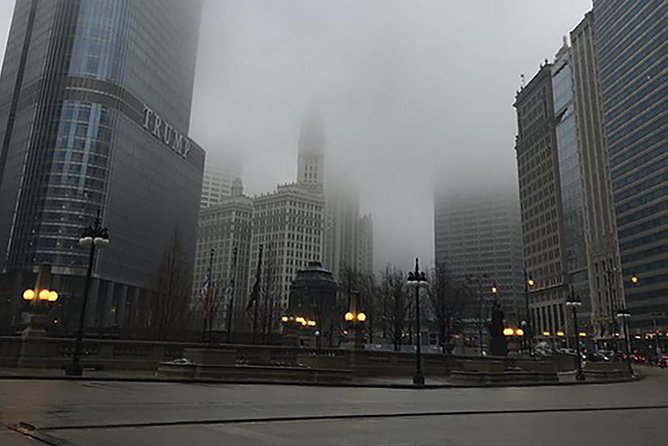
The tour ends at the Congress Plaza Hotel and Convention Center, where the group spends about five minutes. The hotel has been named among the most haunted places in Illinois, and the tour connects it with Al Capone.
According to the tour’s history, Capone set up his headquarters here. His ghost is said to appear most often near his former suite on the eighth floor. You should not expect to go upstairs or enter the suite. The stop is mainly an exterior and historical conclusion near the hotel.
The ending works because it brings the two themes together. Capone represents the documented gangster past, while the reported ghost sightings supply the supernatural edge. It also leaves you in a central location on South Michigan Avenue, useful for continuing your evening.
The five-minute stop is short. If you want an extended hotel visit or a detailed architectural tour, this experience will not provide it. Its goal is to finish the story, not inspect every room.
What the guides add to the experience
The guide can make or break a walking tour, and this one depends heavily on delivery. You are outside in a city with traffic, wind, pedestrians, and large buildings that can swallow a quiet voice.
The strongest guide feedback centers on four qualities: clear speech, good pacing, strong command of the subject, and a sense of humor. Taka is repeatedly described as an engaging storyteller who could shift from Al Capone and gang warfare to the SS Eastland tragedy without losing the group. Sophia is praised for an energetic and theatrical approach, while Tanner is noted for funny stories that worked for different ages. Avery is also singled out for creating a smooth, easy walk.
Those details matter more than a formal lecture. You want a guide who can tell a story in plain language, explain where to stand, and answer questions without letting the group drift. A group of up to 20 is not tiny, but it is manageable when the guide keeps everyone close and speaks clearly.
The tone can vary by guide. Some may tell the stories with more theatrical flair, while others may lean toward a history talk. The common thread is that the outing is not designed as a staged scare performance.
Walking or taking the minibus
The standard option is a walking tour. You cover about 1.5 miles over roughly two hours, with frequent stops and a refreshment or restroom break. A moderate level of physical fitness is recommended.
That distance is reasonable for most people who are comfortable walking around a city, but the weather is important. Chicago can be bitterly cold and windy, and the tour requires good weather. Dress for the forecast, since much of the time is spent outdoors.
The minibus upgrade offers the same spine-chilling tales by bus, with one stop at Harry Caray’s Italian Steakhouse for an immersive experience. The supplied details do not describe the full vehicle route or the exact added cost, so check those points when choosing the upgrade.
I would choose the walk if you want to see the Loop at street level and take photographs along the way. The minibus may suit you better if extended outdoor walking is a concern, but it does not turn the experience into an indoor tour. It remains focused on the same gangster and ghost stories.
Is $52 a fair price?
At $52, this is not the cheapest way to see downtown Chicago. The value comes from the guide’s interpretation, the carefully linked route, and the chance to cover several landmarks while hearing stories you would not get from simply walking between them.
You are paying for about two hours with an expert guide, not admission to a collection of attractions. The listed stops do not require separate entry tickets, and the tour does not promise extended access to private areas or historic rooms. If you want building interiors, museum collections, or a formal Al Capone exhibit, spend your money elsewhere.
I think the price makes sense for a first visit when you want a structured introduction to the Loop. It is also useful for repeat visitors who already know the major sights but want new context. Chicago residents can get value from it too, since the stories may reveal parts of the city’s past that are easy to miss during everyday walks.
The small group limit helps support the price. A guide who can be heard and who keeps the group together is much more useful than a cheap walk where you miss half the story.
Who should book this Chicago ghost tour?
I would recommend it to adults, families with older children, couples, and first-time visitors who enjoy history with a spooky twist. An 18-year-old and a parent can both find enough here to enjoy, since the guide combines crime, tragedy, architecture, and ghost tales.
It is also a good fit if you want a low-pressure evening activity. The walk is active but not described as strenuous, and the regular stops keep it from feeling like a forced march.
You may want to skip it if you dislike ghost stories, need a fully indoor activity, or hope to visit the interiors of several historic buildings. The experience mostly takes place on public streets and outside landmarks.
Book with weather in mind. You can cancel for a full refund up to 24 hours before the start time. Cancellations or changes made within 24 hours are not refunded, and poor weather may lead to a different date or a full refund.
Should you book the Gangsters and Ghosts Walking Tour?
Book this tour if you want Chicago history delivered through memorable stories instead of a standard sightseeing script. The best parts are the clear, energetic guides, the Al Capone connections, the Palmer House stop, and the way real tragedies such as the SS Eastland story sit alongside ghost reports.
Choose the walking option for the fullest street-level experience, and choose the minibus if you prefer less time on foot. Just bring suitable clothing, expect city noise, and remember that the tour gives you stories and views rather than extended access to historic buildings.
For $52, it is a solid choice for a two-hour introduction to the Loop’s darker side, especially if your guide has the storytelling skill shown by Taka, Sophia, Tanner, or Avery.
FAQ
How long does the Chicago Gangsters and Ghosts Walking Tour last?
The tour lasts approximately two hours.
How far does the walking route go?
The walking route is about 1.5 miles long, with frequent stops and a refreshment or restroom break.
Where does the tour begin?
The tour begins at 71 East Wacker Drive, Chicago, Illinois 60601.
Where does the walking tour end?
The tour ends at the Congress Plaza Hotel and Convention Center at 520 South Michigan Avenue, Chicago, Illinois 60605.
What landmarks are included?
The route includes the Loop, Millennium Park and Cloud Gate, the Palmer House historic lobby, Chicago Riverwalk, the Chicago Theatre, and the Congress Plaza Hotel.
Is Al Capone discussed on the tour?
Yes. The tour covers Al Capone’s connection to Chicago, including his reported headquarters at the Congress Plaza Hotel.
Is the tour mainly about real history or staged scares?
The guide shares true Chicago history and ghost stories in an around-the-campfire style. The tour is not described as a theatrical performance.
Is a bus option available?
Yes. You can upgrade to a minibus tour covering the same general stories. The bus option includes one stop at Harry Caray’s Italian Steakhouse.
How many people can join the tour?
The maximum group size is 20 people.
What happens if the weather is poor?
The experience requires good weather. If it is canceled because of poor weather, you will be offered another date or a full refund.
Recently reviewed around Chicago
- Delicious Donuts & City Sights: Chicago’s Original Donut Tour★ 5.0 · 1,389 reviews
- Field Museum of Natural History Admission Tickets★ 4.5 · 489 reviews
- Bikes, Bites & Views: Chicago’s Signature Dishes Bike Tour-Adults★ 5.0 · 732 reviews
- Original Chicago Architecture Interiors Tour: Dazzling Interiors★ 5.0 · 1,489 reviews
- City Cruises Chicago: Signature Lunch Cruise on Lake Michigan★ 4.0 · 348 reviews
- BYOB Spray Paint and Sip at Studio W.I.P.★ 5.0 · 401 reviews
- Skip-the-line: Art Institute of Chicago Guided Tour★ 5.0 · 417 reviews
- Chicago Architecture Tour: Underground Pedway and the Loop★ 5.0 · 388 reviews
Ghost & History Walking Tours, compared.
Haunted Evening Horse and Carriage Tour of Charleston
Read our review →
New Orleans Garden District History Walking Tour
Read our review →
Ghosts of Charleston Night-Time Walking Tour with Unitarian Church Graveyard
Read our review →
New Orleans Haunted Ghost, Voodoo & Vampire Walking Tour
Read our review →

St. Augustine Ghost Tour: A Ghostly Encounter
Read our review →Browse the lists this tour appears in