
Reviewed · NEW ORLEANS TOURS
New Orleans: Laura Creole Plantation Guided Tour
The most important thing about Laura Plantation is that it tells the story of the whole farm, not only the family who owned it. In the 1805 Maison Principale and original 1840s slave cabins, you hear personal accounts of free and enslaved people drawn from memoirs and records in the United States and France. I especially like the Creole family stories and the way the tour connects the house to the people who worked around it.
I also like the original cabins and permanent slavery exhibit, which give the visit weight and purpose. Guides such as Renee, Lindie, Pam, and James have been praised for clear storytelling and patient answers. The main drawback is practical: Laura Plantation sits well outside New Orleans on the West Bank of the Mississippi, so you need to arrange your own transport. The tour also includes stairs, outdoor walking, and no elevator.
In This Review
- Key points to know before you go
- Why Laura Plantation tells a different plantation story
- Entering the 1805 Maison Principale
- The gardens connect the house to daily work
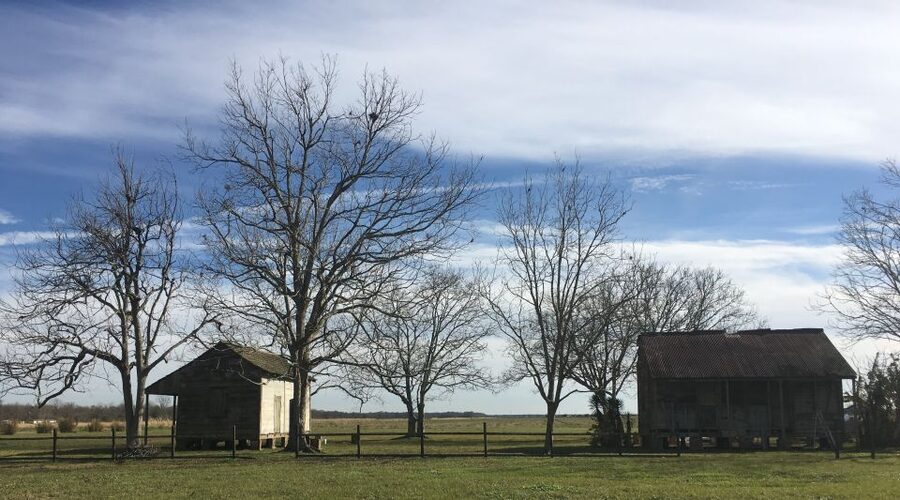
- The original cabins give the tour its clearest focus
- The guides shape the experience
- What the 75-minute itinerary feels like
- Is $32 a fair price?
- Who should choose Laura Plantation?
- My call: book it if you want the complete story
- FAQ
- Where does the Laura Plantation tour begin?
- How long does the guided tour last?
- Is transportation from New Orleans included?
- What languages are available?
- Can I take photographs?
- Is Laura Plantation accessible by elevator?
Key points to know before you go
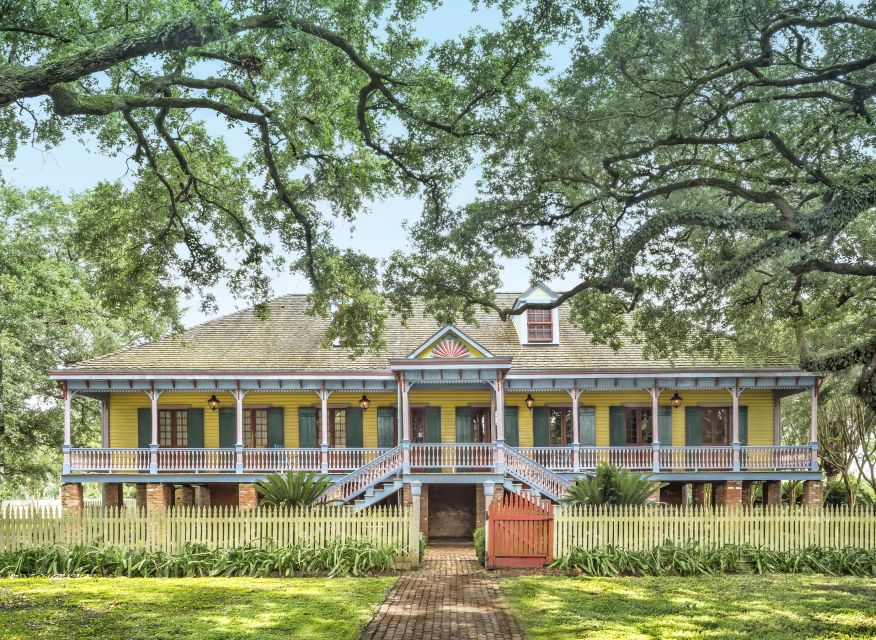
- The 1805 Maison Principale: Walk through a raised Louisiana Creole home that also served as the plantation office.
- Four generations of personal stories: Learn about owners, free family members, and enslaved people through written records rather than a polished family-only narrative.
- Original 1840s slave cabins: See the buildings connected with the community that lived and worked on the sugar farm.
- Three very different gardens: Visit the French garden, kitchen potager, and BananaLand grove.
- A 75-minute guided visit: The tour covers the house, grounds, and quarters, followed by time in the permanent museum exhibit.
- A $32 history lesson: The price includes the guide, gardens, buildings, and self-guided slavery exhibit, but not transport or food.
Why Laura Plantation tells a different plantation story
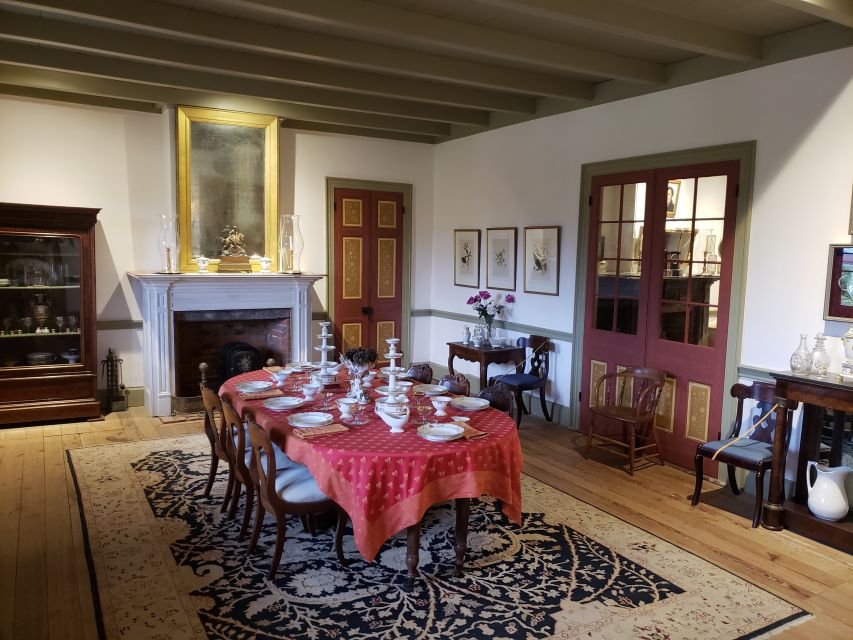
Many plantation visits focus heavily on grand rooms, family portraits, and architecture. Laura Plantation takes a broader route. The Creole family lived in the Maison Principale, but the plantation could not function without the enslaved people who farmed, cooked, cleaned, raised children, and maintained the property.
That balance matters. You are not asked to look at the house as an isolated showpiece. You are shown how the home, work buildings, gardens, cabins, and sugar operation fit together. The result is more useful than a tour that treats plantation life as an elegant period postcard.
The stories cover four generations of free and enslaved members of the Creole families connected with the property. They are based on handwritten memoirs and archival documents from both the United States and France. That gives the guide specific people and family connections to discuss, rather than only broad dates and general facts.
I find this approach especially helpful if you want to understand Louisiana Creole culture as something lived and complicated. The tour includes family life, work, language, class, and slavery in the same place. It does not turn the visit into a simple tale of one wealthy household.
More New Orleans trips worth a second look
- Guided Boat Tour of New Orleans Bayou
★ 4.5 · 1,452 reviews - Laura Creole Plantation Guided Tour
★ 5.0 · 1,279 reviews - Houmas House Estate and Gardens Guided Tour
★ 4.5 · 632 reviews
Entering the 1805 Maison Principale
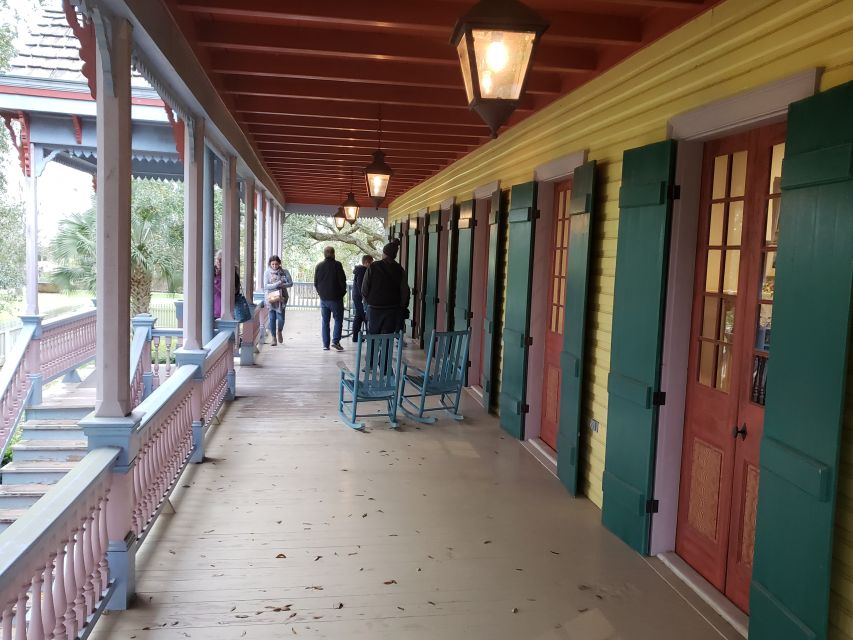
Your visit begins at the admissions window inside the Laura Plantation Gift Store. From there, the guided portion moves into the Maison Principale, the raised house built in 1805.
The house was both a family home and the office for the sugar plantation. That double role gives the building more meaning than its age alone. You see the domestic rooms where family life took place, along with the practical side of running a farm that depended on a large labor force.
The tour includes the raised basement and galleries, men’s and women’s parlors, service rooms, and common rooms. These spaces help you picture how a Louisiana Creole household was organized. They also show that the house was not simply a private retreat. It was part of a working business.
You will climb and descend 15 steps to enter the Maison Principale. There is no elevator, so this is worth considering before you book. The visit also moves indoors and outdoors, with some walking on the grounds. Comfortable shoes are a good idea, and an umbrella is useful because the tour runs rain or shine.
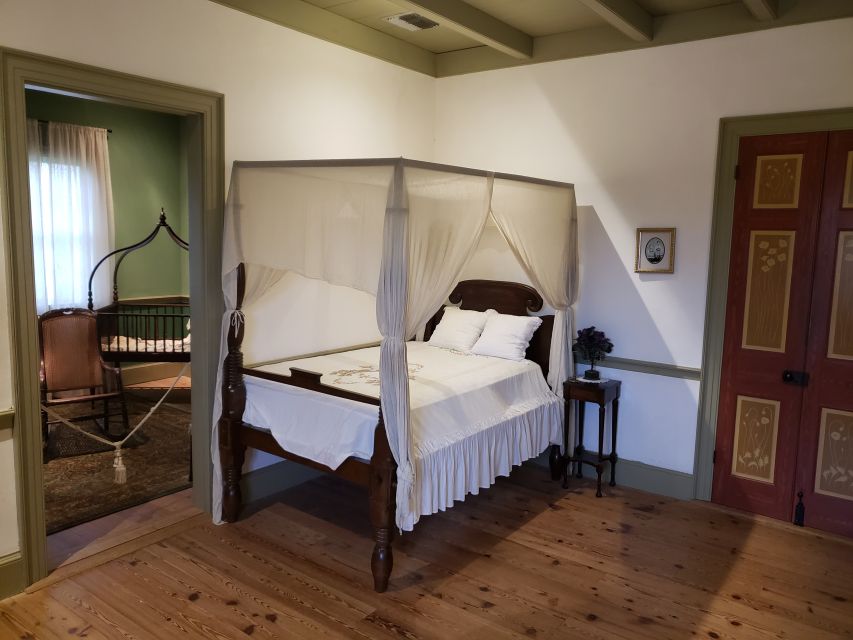
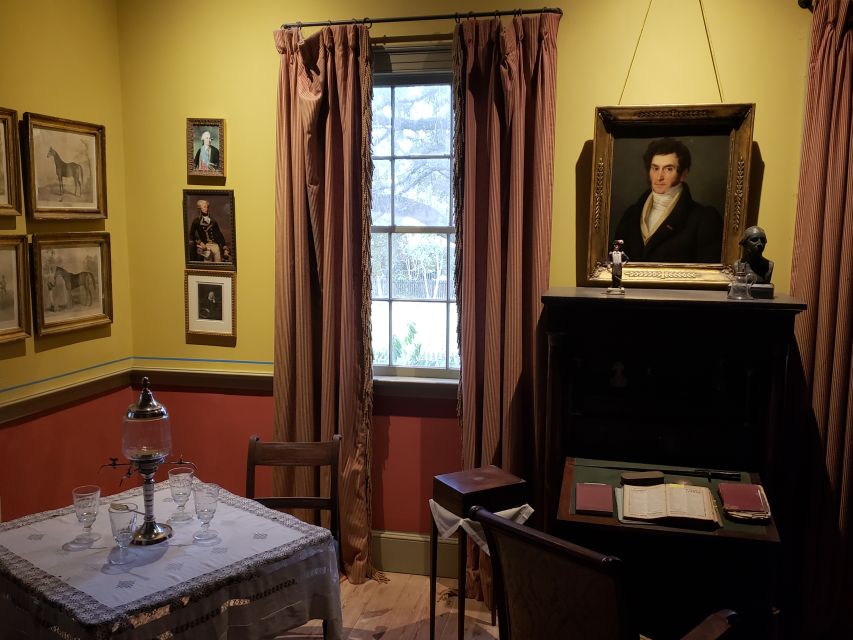
The house is restored to the period when it served as the center of the plantation. I like that the tour does not stop at decorative details. The rooms become settings for personal stories about the people who lived there, including women and children whose lives were shaped by the plantation system.
The gardens connect the house to daily work
Laura Plantation includes three gardens, each offering a different view of life on the property.
The Jardin Français reflects the formal side of the estate. Near it, the kitchen potager points to the daily work of feeding the household. The BananaLand grove adds another practical and visual element to the grounds.
These gardens are not just pauses between rooms. They help you see the plantation as a place where food was grown, household needs were managed, and outdoor work mattered as much as the house itself. The kitchen garden, in particular, gives useful context for the service rooms and the people responsible for keeping the household running.
The grounds include 12 buildings listed on the National Register. Along with the main house and slave cabins, you may see animal barns, overseers’ cottages, and the 1829 Maison de Reprise. Each building helps fill in the working structure of the farm.
Because the guided visit lasts about 75 minutes, the pace is fairly purposeful. You get a guided look at the key buildings and gardens, but this is not an all-day wandering tour. If you like stopping for many photographs, tell your guide early. Renee, one of the guides praised for her patience, was willing to slow down while people took pictures and asked questions.
The original cabins give the tour its clearest focus
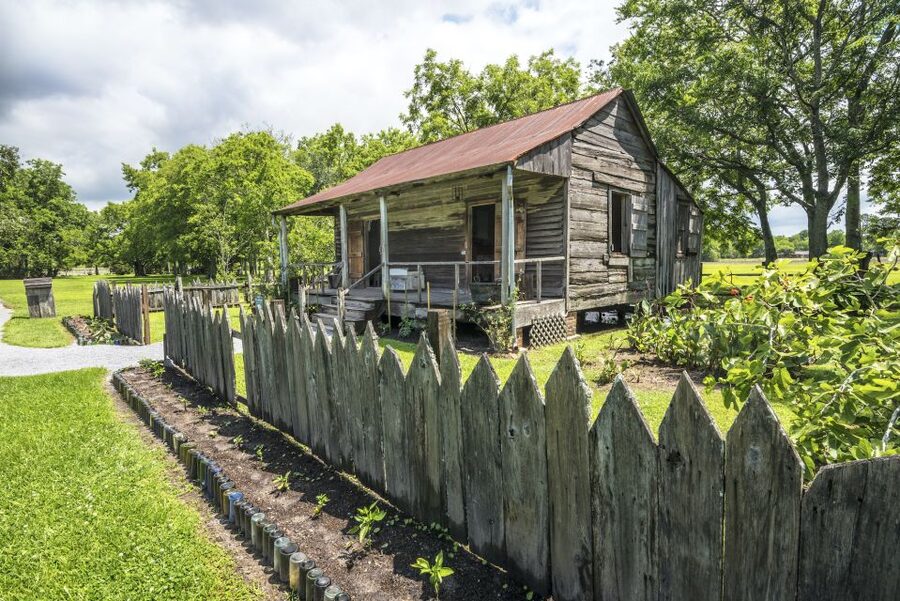
The 1840s slave cabins are among the most important parts of the visit. They are original buildings, not modern replicas, and they connect the tour to the people who were forced to live and work at Laura Plantation.
The cabins are also linked with the Louisiana Compair Lapin stories, a group of Creole folktales recorded in the area. Hearing that these stories were recorded in these cabins gives the buildings a cultural role beyond their use as housing. They are tied to memory, oral tradition, and the survival of stories within the enslaved community.
This part of the tour can be difficult, and it should be. The cabins make the living conditions and separation from the main house harder to ignore. You are no longer considering plantation history only through architecture or family life. You are standing in buildings connected with the people whose labor made the plantation possible.
The permanent exhibit, From the Big House to the Quarters: Slavery on Laura Plantation, continues this work after the guided tour. Laura Plantation became the first historic attraction in Louisiana to include stories of enslaved Africans as part of its public tour when it opened in 1994. The exhibit is self-guided, so you can spend extra time with the material instead of being rushed along with the group.
I would plan to use that extra time. The guided tour gives you structure and context, while the exhibit lets you pause over the history of the enslaved community. Together, they make the visit far more useful than a quick walk through the main house.
A completely different way to spend a day nearby:
- New Orleans Premier Ghost, Voodoo and Vampire Walking Tour
★ 4.5 · 12,856 reviews - New Orleans Steamboat Natchez Jazz Cruise with Dinner Option
★ 4.0 · 7,533 reviews - Adults-Only New Orleans Ghost, Crime, Voodoo, and Vampire Tour
★ 5.0 · 6,545 reviews - New Orleans Food Walking Tour of the French Quarter with Small-Group Option
★ 5.0 · 6,118 reviews
The guides shape the experience

The guide is important here because Laura Plantation deals with several generations, family relationships, buildings, and difficult subjects within a short visit. A clear guide keeps the story from becoming a blur of names.
The guides praised in recent bookings include Renee, Lindie, Pam, and James. Lindie was noted for her energy and for switching into French to help one member of the group. James was praised for taking time with each story and making sure the group could follow the many people connected with the property. Pam and Renee were also singled out for interesting explanations, patient answers, and steady pacing.
That pattern tells you what to expect from the best version of the tour: a live storyteller who can answer questions, explain the family links, and keep the group moving without rushing every stop. Tours are offered in English and French. Written translations are available in French, Spanish, Italian, and German.
Personal stories are the strongest feature. Instead of hearing only that plantation owners and enslaved workers existed in a general sense, you hear about individuals and families across four generations. That makes the past easier to follow and harder to dismiss as distant history.
The subject matter is serious, but the tour is still accessible. One guide was praised for explaining facts without rambling, which is valuable on a 75-minute visit. You should expect education rather than entertainment, but the storytelling keeps the experience from feeling like a list of dates.
What the 75-minute itinerary feels like
The visit starts at 2247 LA-18, where you check in at the admissions window inside the gift store. There is free parking, but transportation is not included. A note from the site warns against taking a taxi unless the driver agrees to wait in the parking lot, an important detail if you are not driving yourself.
The guided portion covers the Maison Principale, gardens, grounds, and enslaved quarters. The main house is the architectural anchor, while the cabins and work buildings add the human and practical context. You will walk outdoors between stops, so weather can affect your comfort even though the tour runs in rain.
The schedule allows time for a photo stop and a guided tour lasting about 70 to 75 minutes. Afterward, you can visit the permanent slavery exhibit on your own. The gift shop is also at the starting point and offers a convenient place to check in before the tour or browse afterward.
Photography for personal use is allowed, but video recording, tripods, selfie sticks, backpacks, food, and smoking are not allowed. Pack light. A phone or small camera is fine, but bulky gear will only make the walking and stairs less comfortable.
The tour is officially not suitable for children under 12. That guidance is sensible given the subject matter, outdoor walking, and stairs, although some families have found that older children can follow the stories well. Use your judgment, but do not assume this is a casual family attraction.
Is $32 a fair price?
At $32 per person, Laura Plantation is reasonably priced for a guided historic site visit. Your ticket covers the 75-minute tour of the buildings and gardens, plus the self-guided permanent exhibit on slavery. You are paying for a focused history program, not just access to a pretty house.
The value is strongest if you take time with the exhibit afterward. The guided portion gives you the framework, while the museum adds detail about the enslaved community. If you rush away as soon as the guide finishes, you will miss part of what makes this visit different.
The price does not include transportation, food, or drinks. Since the plantation is far from central New Orleans, the real cost depends on how you reach it. Plan that part before booking. The lack of hotel pickup means this is easiest for someone with a car or a reliable arranged ride.
Free parking helps if you drive. Reserve now and pay later is available, and cancellation is free up to 24 hours before the visit. Those policies are useful if your New Orleans schedule is still shifting, but the transport question remains the main practical issue.
Who should choose Laura Plantation?
I would choose this tour if you want plantation history presented through personal accounts and the full community connected with the property. It suits adults, older teenagers, and anyone interested in Creole culture, slavery, architecture, gardens, and local folklore.
It is also a good choice if you prefer a guided visit with a clear timetable. You receive a 75-minute introduction, then get time to examine the slavery exhibit independently. That combination gives you both an expert framework and room to think.
You may want another option if you dislike stairs, outdoor walking, or serious historical subjects. The house requires 15 steps, there is no elevator, and the tour takes place in all weather. You also need to solve the transport problem from New Orleans before you arrive.
The strongest guides make a real difference. Names such as Renee, Lindie, Pam, and James appear in the site’s recent guide rotation, with particular praise for clear explanations, patience, language skills, and thoughtful answers. Still, the exact guide is not guaranteed, so book for the site and subject, not for one specific person.
My call: book it if you want the complete story
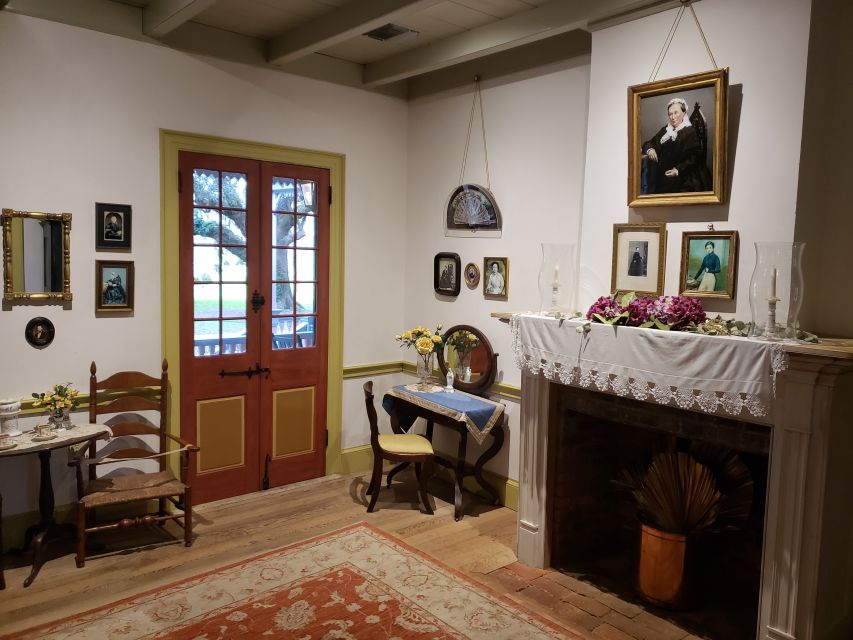
Laura Plantation is worth booking if you want more than polished rooms and plantation-era scenery. The 1805 house is attractive and important, but the original cabins, archival stories, gardens, and slavery exhibit give the visit its real force.
At $32, the experience offers strong value, especially if you stay for the self-guided exhibit. Arrange your own transport, wear comfortable shoes, bring an umbrella, and allow for the stairs. If those conditions work for you, Laura Plantation provides a serious, carefully framed look at Louisiana Creole life and the enslaved community that lived alongside it.
FAQ
Where does the Laura Plantation tour begin?
Check in at the admissions window inside the Laura Plantation Gift Store at 2247 LA-18.
How long does the guided tour last?
The guided visit lasts about 75 minutes and covers the main house, gardens, grounds, and enslaved quarters.
Is transportation from New Orleans included?
No. Hotel pickup, drop-off, and transportation are not included. Free parking is available at the plantation.
What languages are available?
Live tours are offered in English and French. Written translations are available in French, Spanish, Italian, and German.
Can I take photographs?
Yes. Photography for personal use is allowed. Video recording, tripods, and selfie sticks are not allowed.
Is Laura Plantation accessible by elevator?
No. There is no elevator, and you must climb and descend 15 steps to access the Maison Principale. The tour also includes indoor and outdoor walking.
Recently reviewed around New Orleans
- New Orleans Yellow Fever Ghost Tour★ 5.0 · 1,298 reviews
- VIP Jazz Dinner Cruise with Private Tour and Open Bar Option★ 4.5 · 838 reviews
- Whitney Plantation Tour with Transportation from New Orleans★ 4.5 · 1,351 reviews
- New Orleans Private Carriage Tour of the French Quarter★ 5.0 · 537 reviews
- New Orleans French Quarter Photo Shoot★ 5.0 · 462 reviews
- New Orleans Delicious Donuts & Beignets: A Sweet Walking Tour★ 5.0 · 928 reviews
- The Escape Game at the French Quarter in New Orleans★ 5.0 · 364 reviews
- The Ghosts of New Orleans Tour★ 4.5 · 702 reviews
New Orleans Tours, compared.

New Orleans Premier Ghost, Voodoo and Vampire Walking Tour
Read our review →
New Orleans Steamboat Natchez Jazz Cruise with Dinner Option
Read our review →
Adults-Only New Orleans Ghost, Crime, Voodoo, and Vampire Tour
Read our review →
New Orleans Food Walking Tour of the French Quarter with Small-Group Option
Read our review →
New Orleans Swamp and Bayou Boat Tour with Transportation
Read our review →
New Orleans City Sightseeing Hop-On Hop-Off Bus Tour
Read our review →
Browse the lists this tour appears in