
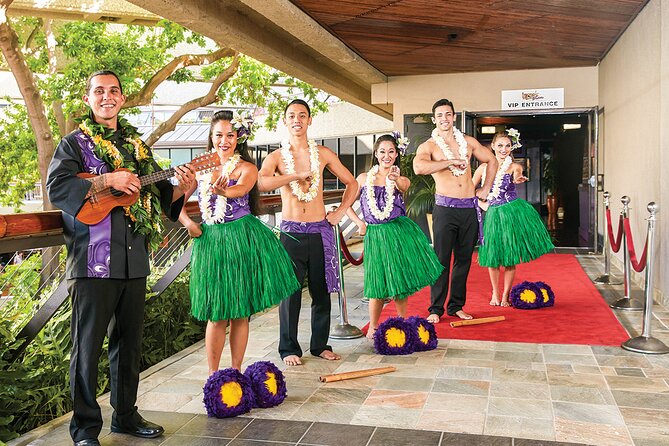
Reviewed · OAHU TOURS
Rock-A-Hula Ticket
Rock-A-Hula is less a quiet cultural presentation than a bright, high-energy stage show about how Hawaii’s music changed from the 1920s to today. You’ll see hula, live music, old concert images, fire performance, and tribute acts built around Elvis Presley and Michael Jackson.
I like the 750-seat Royal Hawaiian Theater, where soft, spacious seats and clear sightlines make the show easy to enjoy. I also like the way the production mixes traditional hula with modern entertainment, giving families and mixed-age groups plenty to watch. The main caution is simple: if you want a strictly traditional Hawaiian performance, the long Elvis and Michael Jackson sections may feel too much like a mainland variety show.
In This Review
- Rock-A-Hula at a glance
- A musical trip through Hawaii, not a traditional luau
- What happens at the 7:15 pm performance
- Hula, costumes, and the Hawaiian elements
- The Elvis and Michael Jackson tribute acts
- The fire knife performance brings the biggest thrill
- Live music, screens, and stage production
- Is the $99 general ticket good value?
- Who will enjoy Rock-A-Hula most?
- Practical details before you book
- Rock-A-Hula compared with a traditional luau
- Should you book Rock-A-Hula?
- FAQ
- What time does Rock-A-Hula begin?
- How long does the Rock-A-Hula experience last?
- What does the $99 ticket include?
- Is dinner included with the standard ticket?
- Is the show suitable for children and families?
- Can I cancel for a refund?
Rock-A-Hula at a glance
- A musical timeline from the 1920s to today: The production shows how Hawaiian music and dance shifted under outside influence and later moved into contemporary styles.
- Fire knife dancing is a major highlight: The finale-style fire work brings real skill and danger to an otherwise polished theater production.
- Elvis and Michael Jackson take center stage: Tribute performances are a large part of the evening, not a brief side act.
- A comfortable theater with no poor viewing areas: The 750-seat room is designed so you can follow the dancers, singers, and screens from general seating.
- A cast meet-and-greet is included: After the performance, you can meet members of the cast and take photos.
- The $99 ticket is show-only: Dinner, buffet options, and VIP upgrades are separate, so check what is included before paying more.
A musical trip through Hawaii, not a traditional luau
The show is called Hawaiian Journey, and its basic idea is easy to follow. You watch Hawaii’s music develop across roughly a century, beginning with early popular styles and hapa-haole hula, then moving toward the sounds and stage fashions that shaped modern entertainment.
That structure gives the performance a little more purpose than a string of unrelated songs. You are not just watching dancers appear in different costumes. You are being shown a broad version of how Hawaii’s stage culture changed over time.
Still, keep your expectations in the right place. This is a theatrical production in Waikiki, not a village-style cultural demonstration or a quiet lesson in ancient Hawaiian traditions. The show uses lighting, large-screen imagery, singing, dancing, famous pop songs, and impersonation. If you want a polished night out with Hawaiian elements, it fits well. If you want long explanations of traditional hula, language, ceremony, and local history, you may find it light on detail.
The production works best when you treat it as entertainment with cultural context. The historical thread helps you understand why the musical styles are arranged as they are, while the big stage numbers keep the pace moving.
More Honolulu trips worth a second look
- NYC: SUMMIT One Vanderbilt Tickets
★ 4.7 · 51,195 reviews - NYC: 9/11 Memorial & Museum Timed-Entry Ticket
★ 4.8 · 31,428 reviews - NYC: Empire State Building Tickets – Observatory & Museum
★ 4.7 · 25,757 reviews
What happens at the 7:15 pm performance
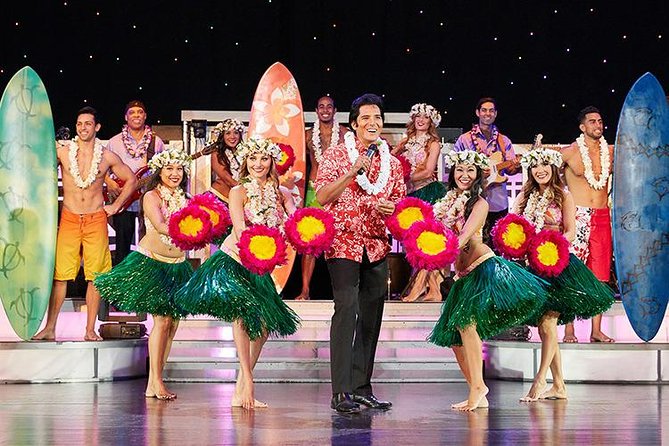
The evening begins at 7:15 pm at the Royal Hawaiian Theater in the Royal Hawaiian Center. The standard ticket provides general seating and admission to the main Rock-A-Hula show.
The theater holds 750 people, but the room is not so large that the stage feels distant. Seating is soft and spacious, and the layout gives you a useful view of the performers, lighting, and screen images. You do not need to pay for a premium seat simply to see the action.
The first sections introduce the earlier stages of Hawaii’s popular music. Hula dancers help connect the music to place and tradition, while the stage presentation shows how outside musical styles became part of Hawaii’s entertainment culture.
You can expect costume changes, several musical styles, and a steady run of dance numbers. The format is accessible, especially for families who want a taste of Hawaii without committing to a full dinner event.
Live musicians are part of the production, rather than having every sound come from a backing track. That adds energy, though the sound balance may not always suit everyone. At times the band can overpower the lead singers, particularly during the louder numbers. If you are sensitive to volume, this is worth keeping in mind.
Hula, costumes, and the Hawaiian elements
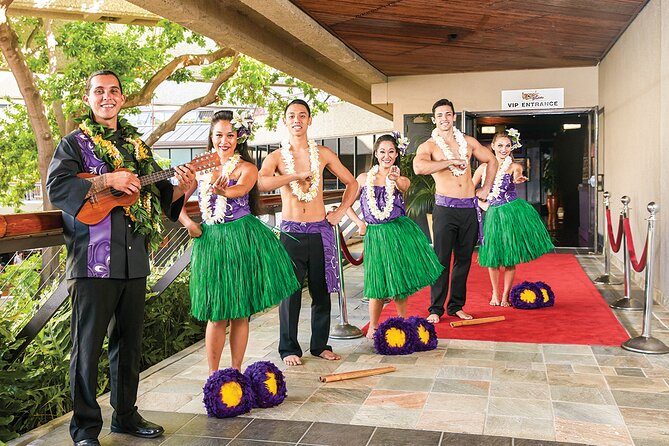
The hula sections are among the strongest reasons to choose this show over a standard pop concert. You will see different hula outfits and styles as the production moves through its timeline, with dancers using hand motions, hip movements, and group choreography to shape the story.
The hula is presented for a broad Waikiki audience, so it is framed inside a large theatrical production. It is not an intimate cultural workshop, and the show does not provide the kind of detailed explanation you might receive from a specialist cultural guide.
Even so, the dancers add a clear Hawaiian identity to the evening. Without these sections, the show would lean almost entirely toward tribute concert territory. With them, the production becomes a bridge between local performance traditions and the American pop music that later influenced Hawaii’s stage culture.
I especially like the visual variety. The costumes help you distinguish the different periods and styles, and the old Hawaii footage gives the musical timeline some setting. The screens also help during large group numbers, when it can be hard to see every dancer from the back of the theater.
The Elvis and Michael Jackson tribute acts
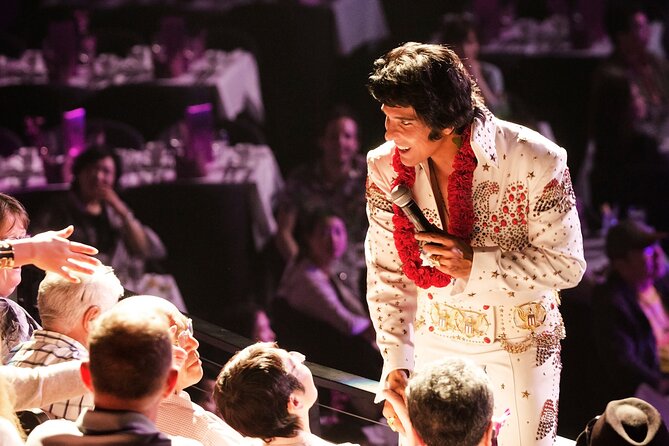
Elvis Presley and Michael Jackson are not minor cameos. They are major attractions, and much of the audience will likely remember these portions most clearly.
The Elvis segment connects naturally with Hawaii through songs such as Blue Hawaii. The performer uses the familiar clothing, gestures, and stage mannerisms associated with Elvis, and the number invites audience participation. Some performances include direct interaction, such as giving a scarf to someone in the crowd, which can make the room feel lively and personal.
Quality can vary by taste. Some people will enjoy the theatrical Elvis style and find the performer convincing. Others may feel the voice does not match the original recording closely enough, or that the act is more cruise-ship entertainment than top-tier impersonation.
The Michael Jackson section generally focuses on dance, movement, and recognizable choreography. The moonwalk-style gestures and costume details make the character easy to identify, and this part often works especially well for younger audience members.
If you are buying a ticket mainly to see world-class impersonators, I would be cautious. The performers are entertaining, but this is a Waikiki stage production rather than a Las Vegas tribute spectacular. Go for the full mix of music, hula, costumes, and fire work, not for perfect vocal replicas.
A completely different way to spend a day nearby:
- Oahu Grand Circle Island and Haleiwa Tour: 9-Hr Deluxe Experience
★ 5.0 · 17,387 reviews - Oahu: Grand Tour Around Island 16 Locations plus Snorkeling
★ 5.0 · 8,669 reviews - Salute to Pearl Harbor Including USS Arizona
★ 4.5 · 7,433 reviews - Majestic Circle Island Tour with Lunch
★ 5.0 · 7,014 reviews
The fire knife performance brings the biggest thrill
The fire knife dance is the show’s most distinctly Polynesian stage moment and one of its strongest crowd-pleasers. A skilled performer handles flaming equipment with speed and control, adding danger and drama to the final stretch.
This is not just a quick fire trick between songs. The act has enough time to build tension, and the performer’s control gives the production a strong finish. Fire juggling and fire dancing are repeatedly praised as major highlights, and I can see why. The flames change the mood at once, shifting the evening from pop tribute to something more connected to Pacific performance traditions.
The fire segment also helps balance the long singing sections. If you are less interested in Elvis or Michael Jackson, this may be the portion you most anticipate.
As with any show involving fire, the effect depends on lighting, sound, and your seat. The theater provides good views from general seating, so you should still be able to follow the action without upgrading.
Live music, screens, and stage production
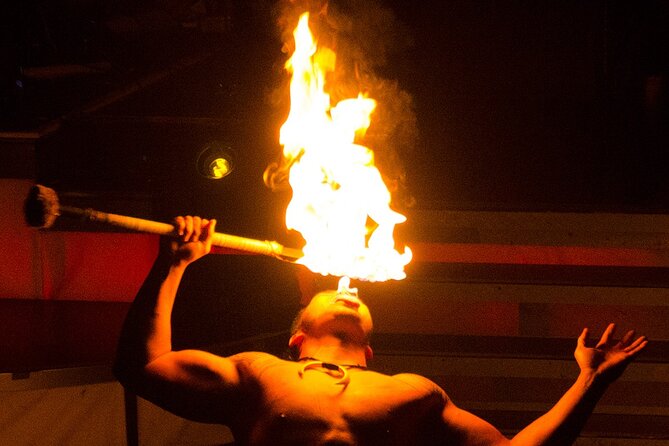
The production has the tools of a large professional theater show: a live band, singers, dancers, lighting, and large images drawn from actual concerts and Hawaii-related scenes.
The concert footage helps the history sections move beyond costumes alone. You see visual reminders of how popular music presentation changed, while the performers recreate the feeling on stage.
The lighting is used heavily during the pop numbers, particularly the Elvis and Michael Jackson sections. This makes the show feel more like a concert than a museum presentation. That is a strength if you enjoy big stage effects, but it can also make the cultural material feel less detailed.
Sound is the main technical concern. The band can be louder than the singers in some numbers, making lyrics hard to follow. The issue is not present for everyone, but it comes up often enough to be useful advice. Do not choose this experience expecting a small, quiet room where every word will be easy to hear.
The production is also built for audience participation. You may be encouraged to clap, sing along, or respond to the performers. That keeps the atmosphere warm and informal, although people who prefer a serious concert setting may find it a little broad.
Is the $99 general ticket good value?
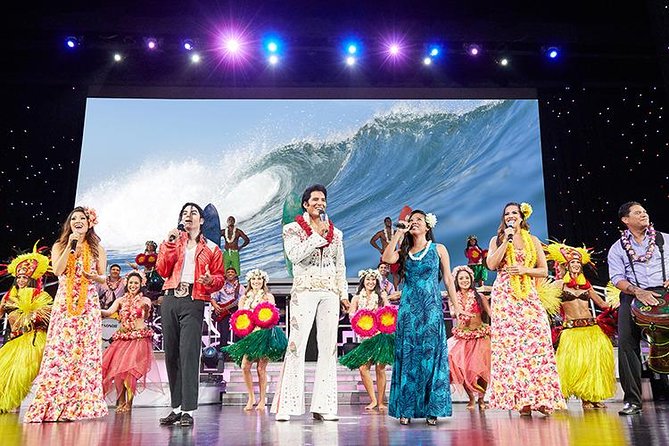
At $99 per person, the standard ticket is not a bargain show, but it can be fair value for a Waikiki evening if you want several forms of entertainment in one sitting.
You are paying for a full theater production rather than a short hula demonstration. The ticket includes general seating, the Rock-A-Hula performance, live music, dancers, fire performance, and a chance to meet the cast afterward. The theater itself is comfortable, and the show covers a wide range of styles.
The value depends heavily on your priorities. If you would happily pay for a concert featuring Elvis and Michael Jackson tribute numbers, hula, and fire dancing, the ticket can feel worthwhile. If you are looking for a traditional luau with a meal, ceremony, and extended cultural presentation, your money may be better spent elsewhere.
Do not assume the $99 admission includes dinner. The show-only ticket does not include the buffet. A separate upgrade is available, and one recent price cited for the buffet was $96 per person. That makes the meal a serious extra cost, so compare the package carefully before you select it.
You can also choose a VIP option. The exact benefits and sample menus depend on the package offered, but the important point is that general admission and VIP dining are different products. For many people, eating separately at the Royal Hawaiian Center and buying the show-only ticket will be the simpler value.
Who will enjoy Rock-A-Hula most?
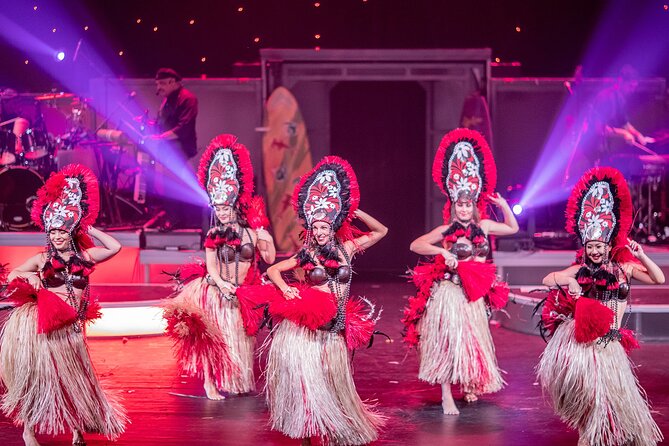
I would recommend this performance to families, couples, and mixed-age groups who want an easy evening of entertainment in Waikiki. The variety helps bridge different interests. One person can enjoy hula, another can look forward to Elvis, and younger audience members may connect with Michael Jackson and the fast dance numbers.
It also suits visitors with limited time on Oahu. The experience lasts about one to three hours, depending on the evening’s format and added options, and starts at 7:15 pm. That makes it a practical way to end a day of sightseeing without spending a full day on an excursion.
The show can work well for cruise passengers with a short stay in Honolulu. It is an evening activity with a fixed start time, and the central theater location makes it a straightforward choice when you want a taste of Hawaiian entertainment before sailing.
I would be more hesitant to recommend it to anyone seeking a deeply traditional cultural experience. The Hawaiian material is real and important to the show, but the production gives equal or greater attention to American pop icons and Broadway-style staging.
Practical details before you book
Your confirmation arrives at booking, and the ticket is mobile, so you can keep it on your phone. The listed start time is 7:15 pm, and you should check the exact instructions on your confirmation before setting out.
The activity operates in all weather conditions, so dress for the conditions outside even though the performance takes place indoors. If the experience is canceled because of poor weather, you are offered another date or a full refund.
Most people can take part, and service animals are allowed. The group size for the activity is listed as a maximum of 10, although the performance itself takes place in a much larger 750-seat theater. That small booking group limit should not be confused with a private show.
You can cancel for a full refund up to 24 hours before the start time. Inside that 24-hour window, refunds are not provided and changes are not accepted. The cut-off is based on local Honolulu time.
After the show, the cast meet-and-greet is included. This is a nice extra if you want a photo or a final interaction with the performers. If you plan to eat afterward, several restaurants operate on the second floor of the same building, though availability can vary.
Rock-A-Hula compared with a traditional luau
A traditional luau usually centers on food, local customs, storytelling, and a longer sequence of cultural performances. Rock-A-Hula instead centers on a theater show with a musical timeline, pop tributes, dance, lighting, and fire performance.
Neither format is automatically better. They answer different questions.
Choose Rock-A-Hula if you want:
- A seated theater show with soft, spacious seats
- A mix of hula and American pop music
- Elvis and Michael Jackson tribute performances
- A strong fire knife dance number
- An evening activity without committing to a full dinner package
- A show that can entertain children, parents, and grandparents together
Look elsewhere if you mainly want:
- A meal included in the standard price
- A quiet presentation focused on traditional Hawaiian culture
- Detailed instruction about hula or Hawaiian history
- A performance with no pop impersonation
- A small, intimate setting
The best way to think about Rock-A-Hula is as a stage show that uses Hawaii’s music and dance as its foundation, then builds a large entertainment package around them.
Should you book Rock-A-Hula?
Book it if you want a polished, upbeat night in Waikiki and enjoy variety shows. The hula, live band, old footage, costume changes, Elvis, Michael Jackson, and fire knife dancing give you plenty of contrast for the price. The comfortable theater and cast meet-and-greet make the evening easy, especially for a family.
I would book the $99 show-only option first and add dining only if the menu and price make sense for you. The buffet is not included, and the extra cost can change the value quickly.
Skip it if your top goal is an authentic, tradition-first Hawaiian program. You may come away wishing the hula and local music had more time, while the pop tribute acts had less.
For everyone else, Rock-A-Hula is a good Waikiki compromise: not a pure cultural lesson, not a high-end concert, but an entertaining introduction to Hawaii’s stage traditions with a memorable fire performance at the end.
FAQ
What time does Rock-A-Hula begin?
The listed start time is 7:15 pm.
How long does the Rock-A-Hula experience last?
The experience lasts approximately one to three hours.
What does the $99 ticket include?
The ticket includes general seating, admission to the Rock-A-Hula show, and a meet-and-greet with the cast.
Is dinner included with the standard ticket?
No. The show-only ticket does not include the buffet. Dining and VIP options require a separate upgrade.
Is the show suitable for children and families?
Yes. The experience is open to most participants and includes music, dancing, hula, pop tribute acts, and fire performance designed for a broad audience.
Can I cancel for a refund?
You can cancel at least 24 hours before the start time for a full refund. Cancellations or changes made within 24 hours are not accepted for a refund.
Recently reviewed around Honolulu
- Waikiki Starlight Luau on The Great Lawn-Hilton Hawaiian Village★ 3.5 · 374 reviews
- Ultimate Pearl Harbor Circle Island★ 5.0 · 404 reviews
- Tribute to Pearl Harbor Arizona Memorial and Honolulu City Tour★ 4.5 · 733 reviews
- Pearl Harbor Arizona Memorial – Honolulu Tour – Submarine Access★ 3.5 · 767 reviews
- WWII Pearl Harbor Heroes Deluxe Tour★ 4.5 · 621 reviews
- Shared Arrival Transfer: Honolulu Airport to Hotel or Cruise Terminal★ 3.5 · 609 reviews
- Shared Round-Trip Transfer: Honolulu Airport to Hotel or Cruise Terminal★ 4.0 · 711 reviews
- Royal Crown of Oahu – 60 Min Helicopter Tour – Doors Off or On★ 5.0 · 755 reviews
Oahu Tours, compared.
Oahu Grand Circle Island and Haleiwa Tour: 9-Hr Deluxe Experience
Read our review →
Grand Tour Around Island 16 Locations plus Snorkeling
Read our review →


Oahu’s Ultimate Tour: Dole, Turtle Snorkel, Pali Lookout & More
Read our review →
Oahu Circle Island Tour with Turtle Snorkeling— Small-Groups
Read our review →
Browse the lists this tour appears in