
Reviewed · JACKSON HOLE TOURS
Sunset 4-Hour Grand Teton Wildlife Adventure
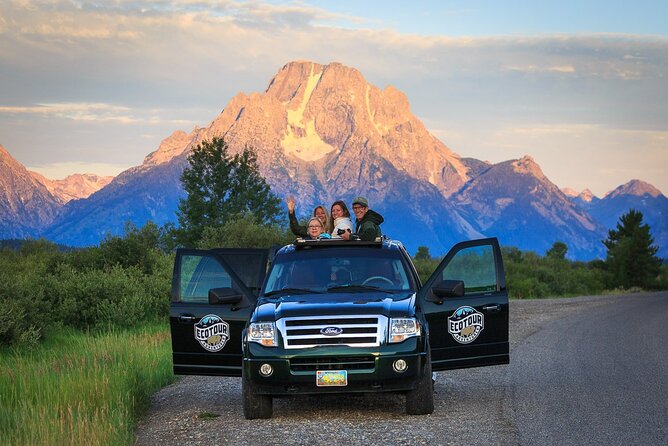
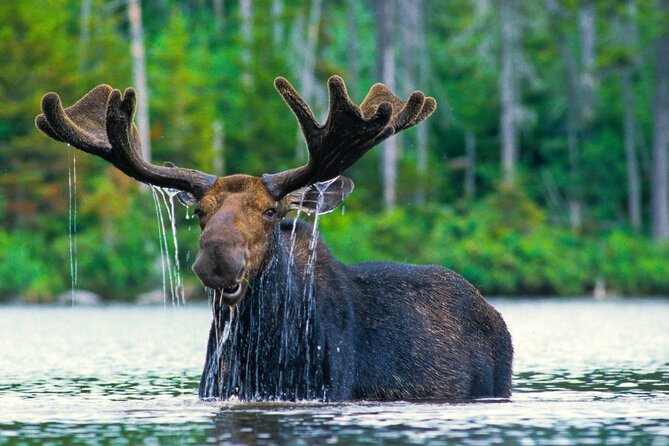
At sunset, Grand Teton’s meadows and wetlands can turn into a wildlife theater. Moose step from the brush, elk gather in open country, and bison, pronghorn, coyotes, or even a bear may appear before the light fades. The best part here is a maximum of seven people, with a window seat for everyone, plus a roof hatch for overhead views.
I like the professional scopes and binoculars, which turn a distant animal into a clear sighting rather than a small brown dot. I also like the guides’ broad approach: Kirk, Ricky, Joy, Raf, Sarah, Billy, Ashley, and others have explained animal behavior, geology, park history, and local life instead of simply pointing and driving on.
The catch is simple: wildlife is wild, and four hours cannot guarantee a wolf, bear, or moose. Sunset light can also bring changing weather, and the $198 price does not include the $20 park entrance fee or a guide gratuity.
In This Review
- Key points at a glance
- Why sunset is the right time for Grand Teton wildlife
- A seven-person vehicle changes the whole outing
- What happens inside Grand Teton National Park
- Your guide is part naturalist, part local storyteller
- Scopes, binoculars, iPads, and a better look at distant animals
- Snacks, hot drinks, and small comforts
- Is $198 a fair price?
- Who will get the most from this sunset safari?
- Practical details before you book
- Should you book the Grand Teton sunset adventure?
- FAQ
- How long is the Grand Teton wildlife tour?
- Where does the tour begin and end?
- How many people can join the tour?
- Is the Grand Teton entrance fee included?
- Are children allowed on the tour?
- What happens if the weather is poor?
Key points at a glance
- Sunset timing: Animals are often more active near the end of the day, while the Tetons may glow in the last light.
- Small custom vehicle: Seven people maximum means you get a proper window seat and room to use the roof hatches.
- Serious viewing gear: Swarovski scopes, binoculars, iPads, and wildlife specimens make distant sightings easier to understand.
- Science-minded guiding: Guides bring backgrounds in ecology, geology, animal behavior, and cultural history.
- Comfort along the way: Snacks, bottled water, coffee, tea, and bathroom breaks are included.
- Useful family rule: Children 8 and under require a private tour for comfort and flexibility.
Why sunset is the right time for Grand Teton wildlife
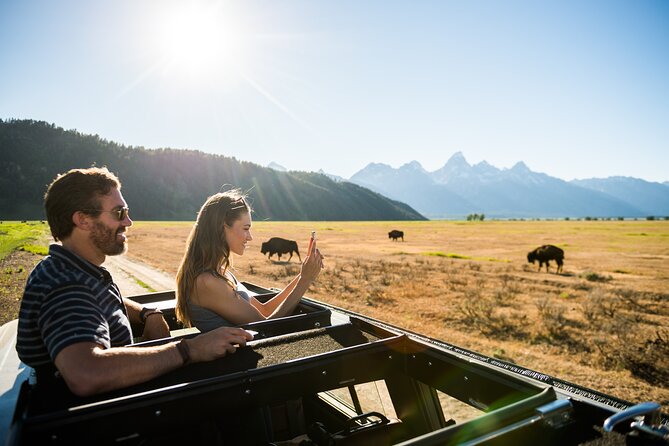
This is not a sightseeing bus that happens to pass a few animals. The tour is built around the hours when wildlife may be moving and feeding. That makes sunset a smart choice if you want more than a quick daytime drive through Grand Teton National Park.
You meet at 210 N Cache Street in Jackson, then ride into Jackson Hole and the park in a four-wheel-drive safari-style vehicle. The exact route changes with animal activity, weather, daylight, and the guide’s judgment. That flexibility matters because a fixed checklist would be less useful than following fresh sightings.
The final light also adds something beyond wildlife. You may be watching elk through a scope while the Teton peaks catch the sunset behind them. One guide even used a scope to show a large moon at sunset. That kind of moment is not guaranteed, but it shows how the outing can shift from animal search to sky and scenery when the light is right.
Keep your expectations sensible. A guide can read tracks, habitat, recent sightings, and animal behavior, but cannot order a wolf into view. The trip is best understood as a well-equipped search, not a guaranteed animal parade.
More Jackson Hole trips worth a second look
- From Jackson Hole: Yellowstone Old Faithful, Waterfalls and Wildlife Day Tour
★ 5.0 · 1,557 reviews - Grand Teton Wildlife Safari in a Enclosed or Open-Air Vehicle (season dependent)
★ 5.0 · 1,212 reviews - Sunrise 4-Hour Grand Teton Wildlife Adventure
★ 5.0 · 899 reviews
A seven-person vehicle changes the whole outing
The vehicle is one of the strongest reasons to choose this tour instead of exploring alone. Each person has a window, so you are not fighting for a view or leaning across someone else when an animal appears. With only seven people aboard, the guide can answer questions and adjust stops more easily.
The panoramic windows help during ordinary viewing, while roof hatches give you a higher, more open angle. You can look out without leaving the vehicle, which is especially handy when the weather turns cold or wet. The setup also helps you keep a safe distance from wildlife while still seeing it well.
You may still spend stretches of time driving or scanning empty meadows. That is normal. The quiet gaps are part of wildlife watching, and the vehicle makes those periods more comfortable than standing beside a roadside for hours.
The small group does not mean private service. You share the four-hour outing with other people, and the route must suit the group as a whole. Still, the seven-person limit is a real advantage for photography, questions, and quick stops.
What happens inside Grand Teton National Park
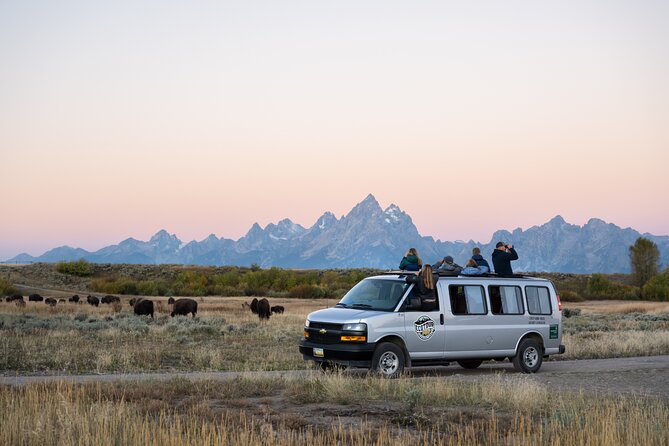
The sole listed stop is Grand Teton National Park, but this does not mean you park in one place for four hours. The guide takes you through wildlife areas around Jackson Hole and the park, moving between meadows, wetlands, mountain views, and known animal areas as conditions suggest.
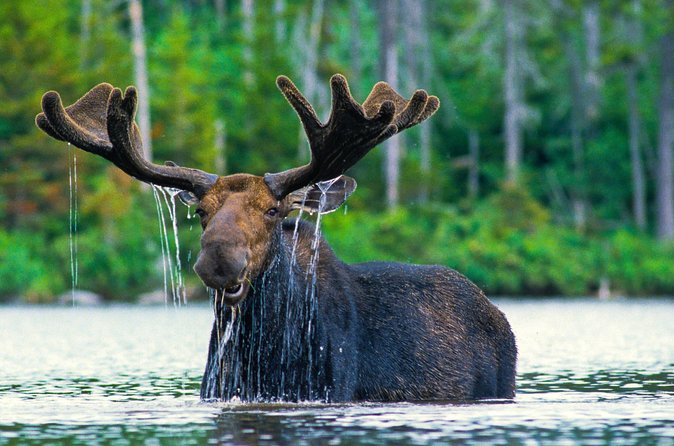
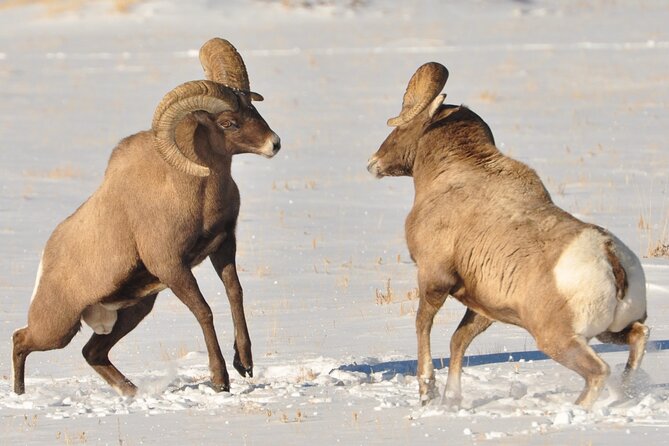
Past sightings have included bison, moose, elk, pronghorn, bighorn sheep, mule deer, coyotes, wolves, bald eagles, pelicans, herons, swans, beavers, great horned owls, and bears. One outing produced a grizzly feeding in a meadow. Another included a mother moose with a calf and a bull moose. Those examples show the possible range, not a promise for your departure.
The guides may stop near places such as Mormon Row, Elk Ranch Flats, Oxbow Bend, Jackson Lake, or the Chapel of the Sacred Heart, depending on the route and conditions described by the guide. These areas offer different habitats and viewpoints. Open flats can be useful for bison, pronghorn, and elk, while bends, water, and forest edges can reveal birds or moose.
The guide sets up the spotting scope and helps you find the animal in the view. In some cases, the guide records video or photographs through the scope and shares them afterward. That is useful when an animal is too far away for a phone camera or when several people need a record of the sighting.
You should expect the guide to balance sighting quality with animal welfare. The aim is not to crowd an animal or push closer for a dramatic picture. Guides have moved on when weather deteriorated or when a closer approach would have been unsafe or disrespectful.
Your guide is part naturalist, part local storyteller
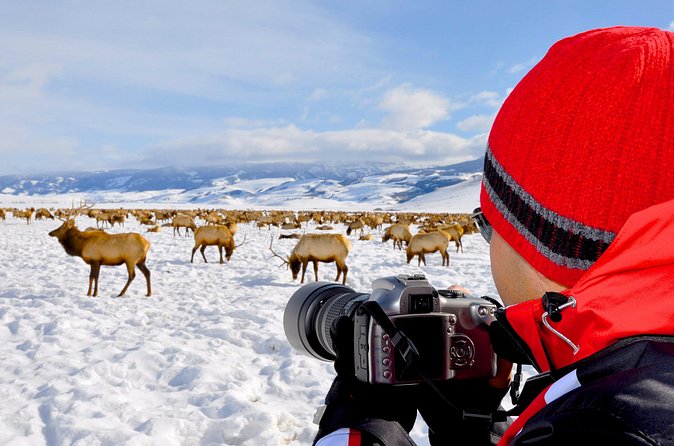
The strongest part of this experience is the guiding. The company’s guides have science backgrounds and years of field experience, and the outings have been led by people such as Kirk, Ricky, Joy, Raf, Sarah, Billy, Ashley, Rob, Roy, Laura, Ben, Drew, and Bo.
I would not choose one specific guide as the reason to book, since assignments can change. The useful point is the breadth of the guiding team. Kirk has been praised for explaining animals and the Jackson Hole area while keeping the outing comfortable. Ricky has combined wildlife spotting with stories about local life and the park. Joy has explained regional topography before departure and used scope video to help the group see animals clearly.
Other guides have brought different strengths. Billy has covered subjects ranging from mountain geology to Jackson Hole history. Laura has connected wildlife with conservation and local culture. Sarah has explained why animal sightings can be unpredictable and has made choices based on daylight, safety, and respect for the animals.
That range gives the tour more substance than a simple ride. You learn why an animal uses a certain habitat, how behavior changes with the season, and how geology shaped the country around you. If your questions turn toward local history, culture, or the park’s wider ecology, the guides are prepared to discuss those subjects too.
The style is friendly rather than formal. Guides have been described as funny, attentive, personable, and willing to share local stories. If you prefer silence and photography with little explanation, you may find the steady commentary more than you need. If you want to understand what you are seeing, it is a major benefit.
A completely different way to spend a day nearby:
- Grand Teton Half Day Tour
★ 5.0 · 1,067 reviews - Tetons and Snake River Scenic Float Trip In Jackson Hole
★ 5.0 · 1,000 reviews - Whitewater Rafting in Jackson Hole : Family Standard Raft
★ 5.0 · 965 reviews - Horseback Riding with Grand Teton Views in Jackson Hole
★ 4.5 · 916 reviews
Scopes, binoculars, iPads, and a better look at distant animals
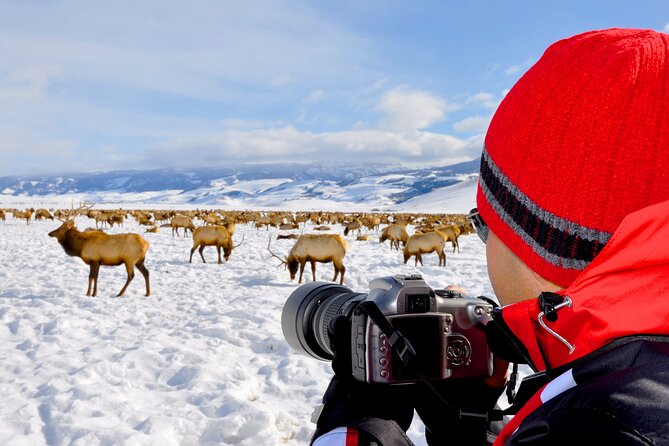
Wildlife watching often fails because the animal is simply too far away. This tour solves part of that problem with professional-grade spotting scopes and binoculars. You can scan with your own camera, then use the guide’s equipment for a sharper look.
The scope also makes group viewing practical. Instead of passing one small pair of binoculars around, the guide can place the scope and help each person find the same animal. That saves time and reduces the chance that someone misses the sighting while trying to focus.
The iPads add an educational layer. They can help identify animals and explain what you are looking at. Wildlife specimens give the guide a hands-on way to discuss animal features, though the exact specimens available are not specified.
The gear is particularly valuable at sunset, when fading light can make an animal harder to pick out. It cannot create light where there is none, but it gives you a better chance of seeing detail during the useful part of the evening.
Bring your own camera if you like, but do not judge the tour only by phone photos. A phone may capture the mountains or a close roadside animal, while the scope may provide the best view of a distant wolf, eagle, or bear. The guide’s shared videos and photographs can fill that gap.
Snacks, hot drinks, and small comforts
The tour includes snacks, bottled water, coffee, and tea. Past outings have also included hot chocolate and a snack basket. These are modest inclusions, but they matter on an evening ride when temperatures drop after sunset.
A guide has also supplied electric hand warmers. That is a particularly useful touch for anyone who plans to keep hands outside a roof hatch or hold binoculars in cool weather. Still, you should dress for changing mountain conditions. The tour provides comfort items, not a complete cold-weather wardrobe.
Bathroom breaks have also been built into the outing when needed. Four hours is not an extreme length, but it is long enough that a break can make the ride much more pleasant, especially for families and older adults.
The vehicle’s enclosed seating, panoramic windows, and roof hatches create a good compromise. You can stay warm inside for much of the drive, then open up for a better view when the guide spots something. The drawback is that weather remains part of the experience. Rain, wind, or cloud can limit both comfort and animal sightings.
Is $198 a fair price?
At $198 per person, this is not a budget park shuttle. You are paying for a small group, a specialized vehicle, an experienced naturalist guide, viewing equipment, drinks, snacks, and four hours of focused searching.
The value improves if wildlife is a top priority. A self-guided drive gives you freedom, but you must choose roads, spot animals, understand safe distances, and identify what you see. Here, the guide handles the driving and scanning while adding context. The scope alone can change the quality of a distant sighting.
The price is harder to justify if you mainly want a scenic drive or a guaranteed close animal encounter. You may spend part of the trip looking without success, and the tour does not include the park entry fee. Add $20 per person for a seven-day Grand Teton pass if you do not already have one.
A 15 to 20 percent tip for the guide is also appreciated and is not included. That puts the real cost above the advertised rate, so budget honestly before booking.
For a couple, solo visitor, or small family that values expert help and good equipment, the cost can be worthwhile. If you already know the park well and own quality optics, you may prefer to explore independently.
Who will get the most from this sunset safari?
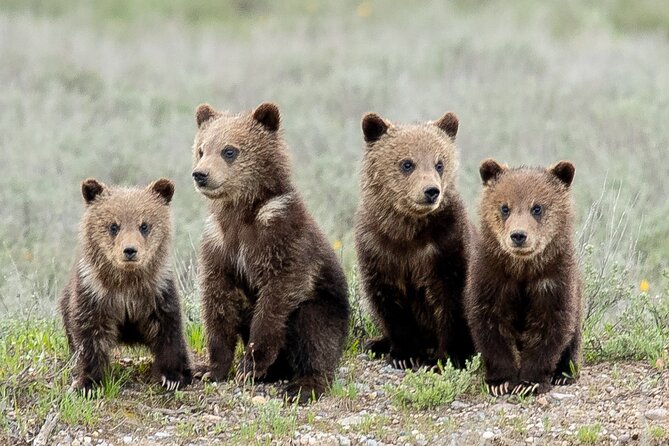
I would recommend this tour to anyone visiting Grand Teton for the first time who wants a focused introduction to wildlife. It also suits photographers who want a better chance at distant subjects without carrying a full field kit.
It works well for teenagers. One 16-year-old hunter enjoyed the guide’s animal stories and conversation, which suggests the outing can hold the attention of young people who like wildlife, outdoor skills, or local history.
Families with older children should find the small vehicle useful. For children 8 and under, the company requires a private tour. That rule may raise the cost, but it gives families more control over comfort, pace, and stops.
The tour is also a good fit for solo visitors. You get a window seat and professional equipment without needing to assemble a group of your own. Service animals are allowed, and the meeting point is near public transportation.
You may want to skip it if you dislike sitting in a vehicle, need a guaranteed animal list, or prefer to set your own route. Wildlife watching involves patience and uncertainty. The guide improves your chances, not the laws of nature.
Practical details before you book
The experience lasts about four hours and starts at 210 N Cache Street in Jackson, Wyoming. It returns to the same meeting point, so you do not need to arrange a separate pickup at the end.
The tour is offered in English and uses mobile tickets. Confirmation is provided when you book. Most people can participate, but the vehicle has a strict maximum of seven people.
Plan for a sunset finish and changing temperatures. Wear layers and bring a camera if you want your own photographs. If you already hold a Grand Teton park pass, take it with you. If not, the $20 entrance fee can be purchased on the tour and is valid for seven days.
The activity depends on good weather and a minimum number of bookings. If the operator cancels for poor weather or because the minimum is not met, you can choose another date or experience, or receive a full refund. You can cancel for a full refund up to 24 hours before the start time. Inside 24 hours, refunds are not available and changes are not accepted.
Should you book the Grand Teton sunset adventure?
Book it if you want wildlife to be the main event, not a lucky side effect of a park drive. The seven-person vehicle, roof hatch, scopes, binoculars, and science-focused guides give you a much better setup than wandering from pullout to pullout on your own.
I especially like this tour for first-time visitors, couples without much field experience, solo visitors, and families with children over 8. The guides add enough ecology, geology, animal behavior, and local context to make a quiet stretch of road feel worthwhile.
Skip it if $198 feels high for a chance-based outing or if you need a guaranteed bear, wolf, or moose sighting. For everyone else, the combination of sunset light, strong equipment, and a guide who knows how to search responsibly makes this one of the more useful ways to spend an evening in Grand Teton.
FAQ
How long is the Grand Teton wildlife tour?
The sunset wildlife adventure lasts approximately four hours.
Where does the tour begin and end?
It begins at 210 N Cache Street in Jackson, Wyoming, and ends back at the same meeting point.
How many people can join the tour?
The specially designed vehicle holds a maximum of seven travelers, with a window seat for everyone.
Is the Grand Teton entrance fee included?
No. The park entrance fee is $20 per person and is valid for seven days. You can bring an existing park pass or purchase one on the tour.
Are children allowed on the tour?
Families with children 8 and under must book a private tour. Most other participants can join the regular small-group experience.
What happens if the weather is poor?
If poor weather causes the operator to cancel, you will be offered another date or experience, or a full refund. You can also cancel yourself at least 24 hours before the start time for a full refund.
Recently reviewed around Jackson Hole
- Yellowstone National Park – Full-Day Lower Loop Tour from Jackson★ 5.0 · 502 reviews
- Sunrise 4-Hour Grand Teton Wildlife Adventure★ 5.0 · 899 reviews
- Yellowstone Lower Loop Full-Day Tour★ 5.0 · 687 reviews
- Half-Day Wildlife Safari Tour in Grand Teton National Park★ 5.0 · 341 reviews
- Horseback Riding with Grand Teton Views in Jackson Hole★ 4.5 · 916 reviews
- Snake River Scenic Float Trip with Teton Views in Jackson Hole★ 5.0 · 864 reviews
- Whitewater Rafting in Jackson Hole: Small Boat Excitement★ 5.0 · 542 reviews
- Whitewater Rafting in Jackson Hole : Family Standard Raft★ 5.0 · 965 reviews
Jackson Hole Tours, compared.
From Jackson Hole: Yellowstone Old Faithful, Waterfalls and Wildlife Day Tour
Read our review →
Grand Teton Wildlife Safari in a Enclosed or Open-Air Vehicle (season dependent)
Read our review →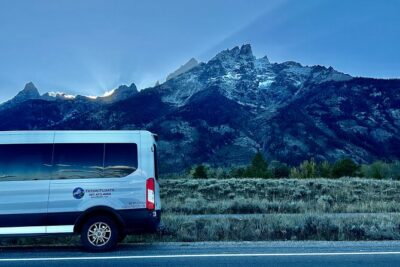
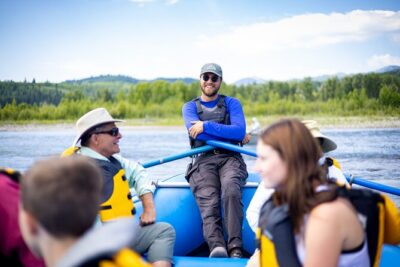
Tetons and Snake River Scenic Float Trip In Jackson Hole
Read our review →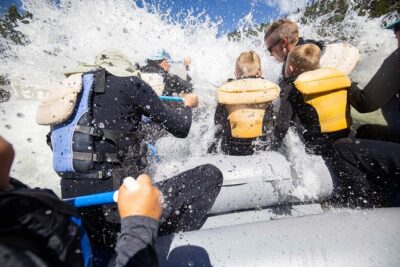
Whitewater Rafting in Jackson Hole : Family Standard Raft
Read our review →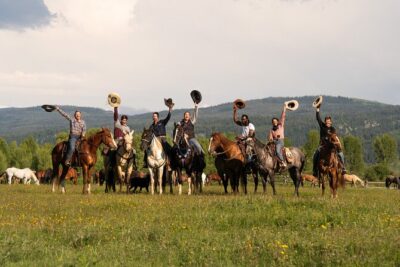
Horseback Riding with Grand Teton Views in Jackson Hole
Read our review →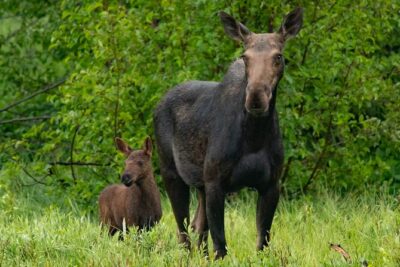
Snake River Scenic Float Trip with Teton Views in Jackson Hole
Read our review →Browse the lists this tour appears in