
Reviewed · WHALE WATCHING
4 Hour Whale Watching Tour From Monterey
The best part of this Monterey cruise is the chance to watch wild whales feeding in one of California’s top marine habitats. On a good morning, you might see humpbacks working the surface, dolphins racing alongside the boat, or sea lions gathered around a feeding area. The crew also explains how to spot animals and improve your photos.
I like the small maximum group of 30 and the scientific purpose behind the trip: the crew records sightings while teaching you about Monterey Bay. I also like the warm drink, the lively naturalists, and the chance of seeing far more than whales, including sea otters, sunfish, sharks, and even orcas. The main drawback is rough water. Several people have become seasick, and the boat can feel quite wavy once it leaves the bay.
In This Review
- Key points before you book
- Leaving Fisherman’s Wharf at 9 a.m.
- What three and a half hours on Monterey Bay feels like
- Whale encounters from gray whales to orcas
- Dolphins, sea lions, otters, and the bonus sightings
- The naturalist commentary adds real value
- Small boat advantages and the motion problem
- Clothing, food, and camera planning
- Is $85 a good value?
- Who should book this Monterey cruise?
- Booking timing and cancellation details
- Should you book the Discovery Whale Watch?
- FAQ
- Where does the whale watching tour leave from?
- What time does the boat leave?
- How long does the tour last?
- What animals might I see?
- What is included in the price?
- Should I bring food and warm clothing?
- What happens if the tour is canceled?
Key points before you book
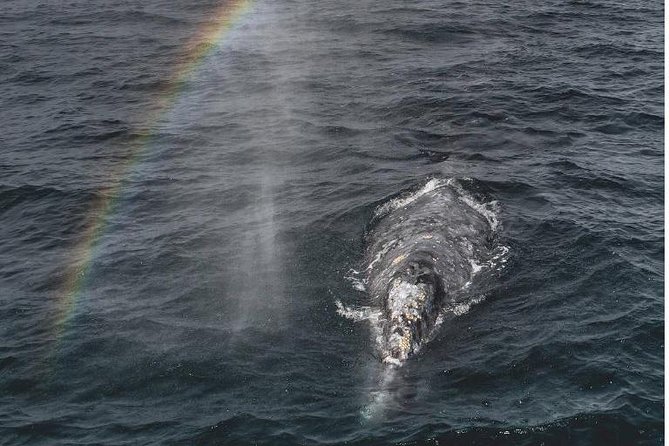
- Whales are the main event: Gray whales are common, while humpback and blue whales may also appear. Recent trips have included orcas and Baird’s beaked whales.
- A three-and-a-half-hour outing: Meet at 66 Fishermans Wharf at 9 a.m. and return around 12:30 to 1 p.m.
- Naturalists do more than point: Guides explain whale behavior, Monterey’s geography, conservation, and the science behind recorded sightings.
- Wildlife can come in many forms: You might see dolphins, sea lions, seals, sea otters, birds, sharks, or sunfish along with whales.
- Prepare for cold and motion: Wear warm layers, take seasickness precautions if needed, and bring water, snacks, sunscreen, binoculars, and a camera.
- $85 is fair for the format: The price includes the boat trip, naturalist or marine biologist, deckhand, and coffee or tea, but not food, soda, water, or alcoholic drinks.
Leaving Fisherman’s Wharf at 9 a.m.
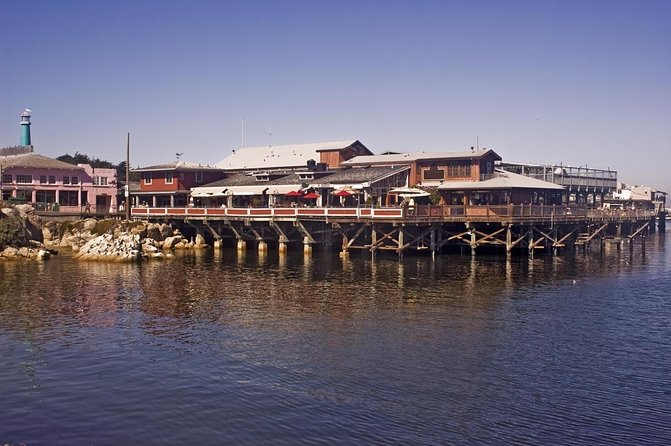
Your morning begins at Old Fisherman’s Wharf in Monterey, at 66 Fishermans Wharf. The listed 9 a.m. start is the boat’s departure time, not your arrival time, so plan to check in 30 to 45 minutes early.
That early arrival matters. You need time to find the shop, complete check-in, and settle aboard before the crew casts off. The activity returns to the same point, making it easy to fit into a half-day in Monterey.
The wharf is near public transportation, and the tour does not include hotel pickup or drop-off. If you are staying elsewhere in the Monterey or Carmel area, allow extra time to reach the waterfront on your own.
The boat carries no more than 30 people. That is a useful middle ground. You get more room than on a large sightseeing vessel, yet you still have enough company for the crew to share sightings and point out animals on different sides of the boat.
More whale watching out of the USA:
- Juneau Wildlife Whale Watching
★ 5.0 · 7,379 reviews - Juneau Wildlife Whale Watching & Mendenhall Glacier
★ 5.0 · 6,236 reviews - Boston: City Cruises Whale Watching Cruise
★ 4.5 · 4,710 reviews
What three and a half hours on Monterey Bay feels like
Once the boat leaves the protected waterfront, the outing becomes a moving search. There is no fixed parade of whales waiting at a marked stop. The captain and naturalist watch the water, communicate with the crew, and move toward signs of feeding or other wildlife.
That uncertainty is part of the experience, but it also calls for realistic expectations. One trip may produce an unforgettable feeding scene with a dozen or more humpbacks, hundreds of sea lions, and a cloud of seabirds. Another may bring fewer whales but plenty of dolphins. The ocean decides.
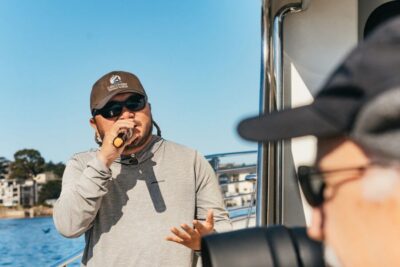
The most praised part of the outing is the crew’s role in making the search worthwhile. Naturalists such as Isaiah, Cory, Colby, Maddy, Ivy, Ryan, and Sophie have been singled out for clear explanations, enthusiasm, and care aboard the boat. Names and crew assignments can change, but the format remains the same: a marine biologist or naturalist narrates the trip while a deckhand helps passengers and watches for animals.
You will learn how to scan the water for a blow, a dorsal fin, a rolling back, or a sudden splash. The crew also gives advice on framing photos and videos, which is especially helpful when a whale appears for only a few seconds.
Whale encounters from gray whales to orcas
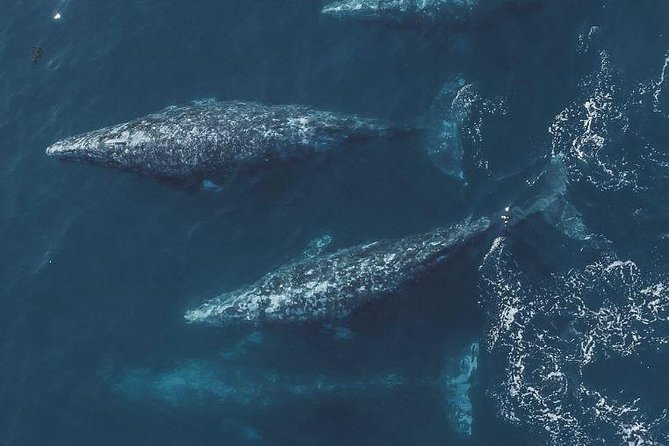
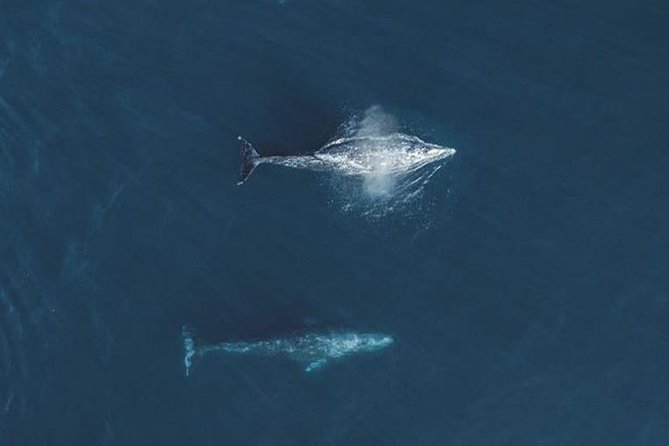
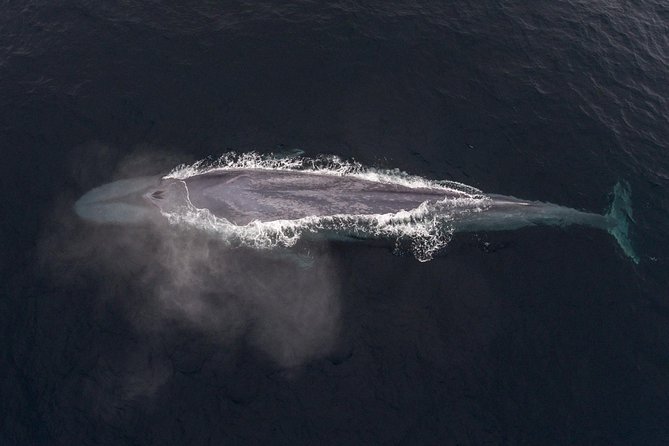
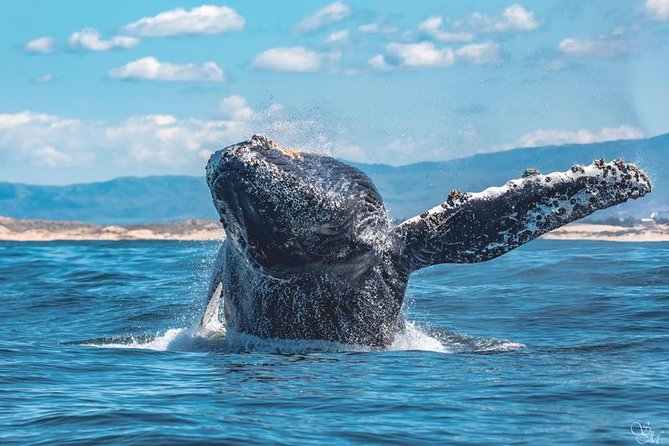
Gray whales are described as the most common sighting, and Monterey Bay is known for whale watching throughout the year. Humpbacks are a major draw, particularly when they are feeding near the surface. Blue whales may also appear, though their presence is less predictable.
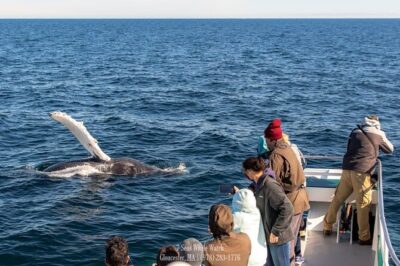
Recent outings have included close views of humpbacks, mother and calf pairs, and playful young whales. One especially memorable pattern is the feeding scene: two female humpbacks rising vertically through the water as they gather food. Other sightings have included a blue whale, Baird’s beaked whales, and pods of killer whales.
You should not book this expecting a guaranteed close approach. Whales are wild animals, and the boat must keep a respectful distance. One account described seeing whales from more than 100 meters away, which is a reminder that a safe and ethical sighting may not fill your camera frame.
Still, distance does not mean the experience is weak. A whale surfacing, exhaling, and rolling away in open water gives you a better sense of its scale and freedom than a staged encounter ever could. The crew’s explanations help you understand what you are seeing instead of simply waiting for a splash.
Dolphins, sea lions, otters, and the bonus sightings
Whales are only one reason to keep watching. Pacific white-sided dolphins have appeared in large groups, sometimes turning the trip into a fast-moving show of their own. Dolphins can be harder to photograph than whales, but they are often more active and may keep everyone scanning the water.
Sea lions and seals are frequent supporting characters. A feeding frenzy can bring hundreds of sea lions close to a concentration of anchovies, along with humpbacks and many birds. That kind of scene connects the animals: the fish attract the sea lions, whales, and seabirds at the same time.
You might also see sea otters, sharks, sunfish, and assorted marine birds. These sightings are not promised, but they are a good reason to bring binoculars and keep your attention on the water between whale appearances.
For children, this variety helps. A long wait for a whale can test a young child’s patience, but dolphins, sea lions, and birds give the crew other subjects to point out. Children must be accompanied by an adult.
A completely different way to spend a day nearby:
- NYC: SUMMIT One Vanderbilt Tickets
★ 4.7 · 51,195 reviews - NYC: 9/11 Memorial & Museum Timed-Entry Ticket
★ 4.8 · 31,428 reviews - NYC: Empire State Building Tickets – Observatory & Museum
★ 4.7 · 25,757 reviews - NYC: Empire State Building Observation Deck Tickets
★ 4.7 · 22,072 reviews
The naturalist commentary adds real value
This is not simply a boat ride with occasional animal sightings. The guide discusses local natural history, whale habitat, conservation, and the geography of Monterey Bay.
That context changes the way you watch. Instead of seeing a whale as a random fin on the horizon, you begin to look for feeding behavior, surfacing patterns, and the relationship between the animal and its surroundings.
The crew also collects sighting data for scientific research. That does not turn the trip into a formal class, but it gives the work a useful purpose. Your morning helps document marine life while you learn about it.
Audio quality can vary. One passenger found the speakers hard to hear, so I would stay near the naturalist when possible and listen carefully during the explanations. The boat’s movement, wind, and excited conversations can make commentary difficult to catch from every seat.
Small boat advantages and the motion problem
A boat limited to 30 people can make wildlife watching feel more personal. You are less likely to disappear in a huge crowd, and a deckhand can help passengers move their attention when something appears off the side or behind the boat.
The tradeoff is motion. Conditions can become choppy outside the bay, especially as autumn shifts toward winter. Several people have reported strong seasickness, including some who had already taken Dramamine.
If you are prone to motion sickness, take precautions before reaching the dock. The operator sells remedies in the shop, and crew members have offered ginger and water to sick passengers, but it is better to prepare before departure.
Avoid the forward part of the boat if you know you are sensitive to motion. Keep your eyes on the horizon when possible, and bring only what you can manage in a moving environment. A phone stabilizer can help with video, but it will not solve seasickness.
The crew makes safety a priority, and some passengers describe the trip as professional and comfortable. Still, one account raised concerns about limited safe seating on a small boat, including a child who fell. Families with very young children should listen closely to crew instructions and choose seating carefully.
Clothing, food, and camera planning
Monterey Bay can feel much colder once the boat leaves the shelter of the wharf. Wear warm layers rather than relying on one heavy coat. A dry-fit top, warm shacket, leggings, or similar layered clothing can work, but bring something to cover your lap if you tend to get cold while seated.
Sun protection remains important, even on a cool morning. Pack sunscreen, sunglasses, and a hat that fits securely. Wind can make loose items inconvenient.
Coffee or tea is included. Chips, candy, soda, water, and other food are not included, though basic snacks and drinks are available for purchase. I would bring water and a small snack, especially if motion sickness makes you reluctant to buy food aboard.
Bring your camera, but keep expectations practical. The crew stops or slows when useful and offers photo tips, yet whales do not pose. A fast phone or camera, extra battery power, and binoculars are more useful than a large amount of gear you cannot handle comfortably.
A stabilizer is worth considering if video matters to you. Several sightings can happen quickly, and the boat may move at the same time as the animal.
Is $85 a good value?
At $85 per person, this is not the cheapest way to spend a Monterey morning. The value comes from the length of the trip, the small group size, the marine naturalist, the deckhand, and the chance to see several types of wildlife in one outing.
You are paying for time on the water, not a guaranteed number of whales. That distinction is important. On a spectacular day, 90 minutes with feeding humpbacks, sea lions, dolphins, and seabirds can feel like an exceptional deal. On a quieter day, the educational commentary and the open-ocean experience carry more of the value.
Coffee or tea is included, but meals and most drinks cost extra. Hotel transportation is also excluded, so add your own transport and snack costs when planning the morning.
The 97 percent recommendation rate and 4.8 rating from more than 1,000 ratings suggest a very strong record. I would still put seasickness at the top of your decision list. The quality of a whale trip depends on the sea conditions as much as the crew.
Who should book this Monterey cruise?
I would choose this outing if you love marine life, want a guided introduction to Monterey Bay, or hope to see whales in the wild without committing to a full day at sea. It also suits families with older children and teenagers, since the range of animals can keep the morning interesting.
It is a good choice for photographers who want practical help spotting and framing wildlife. The naturalist commentary also makes it worthwhile for anyone who wants to understand conservation and animal behavior rather than simply collect a few pictures.
I would think twice if you are highly sensitive to motion, cannot tolerate cold wind, or need a guaranteed close view. The boat can be wavy, and wildlife sightings vary. A calm day with distant whales is still authentic, but it may not match the dramatic images you have seen online.
The crew’s attitude helps when conditions are difficult. Guides have been praised for helping sick passengers, explaining the bay, and keeping the mood positive. That does not remove the physical challenge, but it makes a rough morning easier to manage.
Booking timing and cancellation details
This trip is often reserved about 34 days ahead, so book early if your Monterey dates are fixed. You receive confirmation when booking, and the activity is offered in English.
Free cancellation is available until 24 hours before the local start time for a full refund. Changes or cancellations inside that 24-hour window are not accepted and are not refunded.
The trip depends on suitable weather and a minimum number of participants. If the operator cancels for poor weather or insufficient numbers, you can choose another date or experience, or receive a full refund.
Should you book the Discovery Whale Watch?
Book it if you want a well-supported chance to see Monterey Bay wildlife, especially humpback whales, dolphins, sea lions, and seabirds, and you value naturalist commentary as much as the sightings.
I would make two preparations: arrive 30 to 45 minutes before the 9 a.m. departure, and take seasickness precautions before you reach the wharf. Wear warm layers, bring water and snacks, and keep your camera ready.
The strongest reason to go is the possibility of seeing natural behavior, such as humpbacks feeding among sea lions and birds. The strongest reason to hesitate is the open ocean itself. If you accept that the animals set the schedule and the sea may be rough, this is a well-priced, memorable way to spend a Monterey morning.
FAQ
Where does the whale watching tour leave from?
The tour departs from Old Fisherman’s Wharf at 66 Fishermans Wharf, Monterey, California 93940.
What time does the boat leave?
The boat leaves at 9 a.m. The listed time is the departure time, so check in 30 to 45 minutes beforehand.
How long does the tour last?
The cruise lasts approximately three hours and 30 minutes. You return to the original meeting point between 12:30 and 1 p.m.
What animals might I see?
Possible sightings include gray, humpback, and blue whales, along with dolphins, sea lions, seals, sea otters, birds, sharks, sunfish, and occasionally orcas or Baird’s beaked whales.
What is included in the price?
The price includes the boat trip, a marine biologist or naturalist, a deckhand, and coffee or tea.
Should I bring food and warm clothing?
Yes. Warm layers, sun protection, water, snacks, a camera, and binoculars are recommended. Chips, candy, soda, water, and alcoholic drinks are not included, though drinks and snacks are available to purchase.
What happens if the tour is canceled?
If poor weather or an insufficient number of participants causes cancellation, you can select a different date or experience, or receive a full refund. You can also cancel at least 24 hours before departure for a full refund.
Recently reviewed around the USA
- Dyker Heights Christmas Lights Guided Tour★ 4.5 · 920 reviews
- New York City Dinner Cruise with Live Music★ 4.0 · 377 reviews
- New York City Holiday Lights Tour★ 4.5 · 664 reviews
- NYC in a Day Tour: Statue of Liberty, Times Square and More★ 5.0 · 366 reviews
- Broadway and Times Square Insider Tour with Theater Professional★ 5.0 · 651 reviews
- NYC Central Park Bicycle Rentals★ 4.5 · 368 reviews
- Central Park Bike Rental New York City★ 4.0 · 560 reviews
- Manhattan Sky Tour: New York Helicopter Flight★ 4.5 · 1,458 reviews
Whale Watching, compared.
Juneau Wildlife Whale Watching & Mendenhall Glacier
Read our review →
City Cruises Boston Whale Watching Cruise by High-Speed Boat
Read our review →
Whale Watching Trips to Stellwagen Bank Marine Sanctuary. Guaranteed sightings!
Read our review →Browse the lists this tour appears in