
Reviewed · CHICAGO TOURS
Big Bus Chicago: Hop-On Hop-Off Sightseeing Tour, 24/48/72hr Pass
Chicago is a city made for a raised seat and a clear view. From the open top of this double-decker bus, you can sweep past the river, parks, museums, and tall walls of downtown without spending your first day guessing which direction to walk.
I especially like the 11-stop route, which reaches the Field Museum, Adler Planetarium, Navy Pier, and the Magnificent Mile. I also like the freedom of a 24-, 48-, or 72-hour pass, plus the app’s live bus tracking. The catch is that traffic, road closures, cold weather, and uneven bus timing can reduce the value of a pass if your schedule is tight.
In This Review
- Key points to know before boarding
- Why this bus is useful on a first Chicago day
- Starting at the Chicago Riverwalk
- Willis Tower and the view from Stop 2
- Millennium Park and the Art Institute
- Grant Park and the city’s open space
- Adler Planetarium and Museum Campus
- Chicago Architecture Center at Stop 7
- Navy Pier, Chicago’s big waterfront stop
- The Magnificent Mile and 360 Chicago
- River North and the final stop
- Upper deck views, lower deck shelter
- Commentary, drivers, and the human side
- How to get good value from 24, 48, or 72 hours
- Practical details before you go
- Should you book Big Bus Chicago?
- FAQ
- How long does the full Big Bus Chicago route take?
- How often does the bus arrive?
- What are the operating hours?
- Where can I board the bus?
- Do I have to redeem my ticket at Stop 1?
- How do I activate a mobile ticket?
- Is attraction admission included?
- Is the bus wheelchair accessible?
- Can I bring food, pets, or luggage?
Key points to know before boarding
- The full circuit takes about two hours, making it a useful first look at central Chicago.
- Eleven stops cover the main downtown sights, including Millennium Park, Willis Tower, Navy Pier, and Museum Campus.
- The open upper deck offers the best views, while the lower deck is enclosed and climate controlled.
- Buses operate from about 10 a.m. to 5 p.m., with service details and vehicle locations shown in the Big Bus app.
- The recorded commentary is useful but uneven, and some drivers add better local color than others.
- Traffic and special events matter, so allow extra time and check the app before planning an attraction visit.
Why this bus is useful on a first Chicago day
At $45 per person, the 24-hour pass is not automatically a bargain if you only ride the loop once. In that case, you are paying for a two-hour orientation ride, open views, and commentary. That can still be worthwhile, especially if you want to see a large part of downtown without tiring your feet.
The pass earns its keep when you use it as transport between several stops. You could ride past the Loop, get off for Millennium Park and the Art Institute, continue to Museum Campus, then use the bus later for Navy Pier or the Magnificent Mile. The longer 48- and 72-hour options make more sense if you plan to spread sightseeing over several days.
I would not treat this as a substitute for Chicago’s trains, buses, or your own walking route. The Big Bus follows a sightseeing circuit, not the fastest path from one address to another. Its value is the view and the orientation. You get a moving introduction to the city, then decide which places deserve more time.
Other Chicago days travellers line up against this one:
- Chicago Architecture River Cruise
★ 5.0 · 15,756 reviews - Chicago River 90-Minute Architecture Tour
★ 4.5 · 9,629 reviews - Chicago River: 1.5-Hour Guided Architecture Cruise
★ 4.8 · 8,046 reviews
Starting at the Chicago Riverwalk
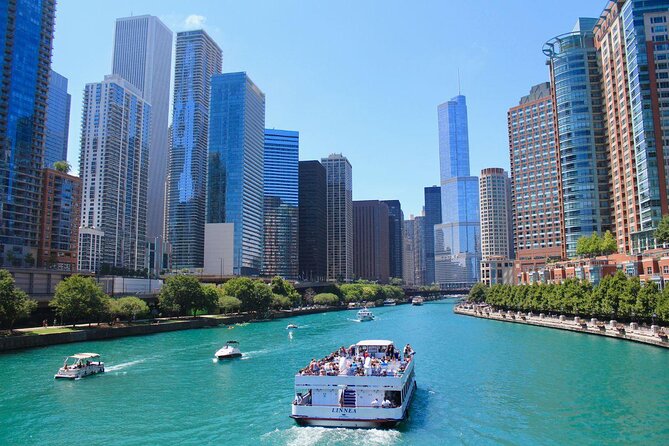
Stop 1 is at 98 East Wacker Drive, across the bridge from Trump Tower and near the corner of Michigan Avenue and Wacker Drive. It is the main place to redeem a voucher with staff, but you can also show an electronic or printed ticket to a driver at another stop.
This is a smart starting point because the Chicago Riverwalk gives you an immediate sense of the city’s architecture and street plan. Wacker Drive runs along the river, and the bus soon carries you through the dense downtown core. If you want to get moving quickly, board here and save the Riverwalk for a separate walk.
The app is important from the start. Add your booking reference, activate the ticket on the day of use, and show it to the driver. It also provides stop locations, route information, city details, and live tracking. Use the stop-finding feature carefully, since some pickup points are easy to miss among busy streets and large buildings.
Willis Tower and the view from Stop 2
The second stop serves Skydeck Chicago at Willis Tower. The bus does not include admission to the tower, so you will need a separate ticket if you want to step onto the glass ledge high above the city.
This stop works well as part of a morning plan. Ride the bus from the Riverwalk, get off at Willis Tower, visit Skydeck, and reboard when you are ready. The route gives you the outside view of Chicago’s vertical center, while Skydeck offers the dramatic inside attraction.
Keep your timing realistic. If the bus is running every 30 to 45 minutes, a short attraction visit may leave you waiting. That is not a serious problem if you have a 48- or 72-hour pass, but it matters on a single day when you are trying to fit in several stops.
Millennium Park and the Art Institute
Stop 3 brings you to Millennium Park and the Art Institute of Chicago. This is one of the most useful stops on the route because it links two major sights with very different experiences.
Millennium Park is the quick outdoor stop. You can see its famous public art, take photographs, and walk through the park before continuing. The nearby Art Institute requires more time, so I would not combine it with a rushed loop unless you are content with a brief look.
The self-guided digital walks add value here if your pass includes them. One focuses on Millennium Park, and another covers public art. These walks let you explore at your own pace rather than trying to hear every detail through bus headphones.
Audio quality is a recurring weak spot. The commentary is available in multiple languages, and headphones are provided, but sound can be hard to hear at times. Bring your own standard earphones only if the onboard connection allows it, and keep the volume controls handy. Some drivers add useful information beyond the recording. Felicia is praised for clear narration and a playful manner, while Candace is remembered for making the ride especially engaging.
A completely different way to spend a day nearby:
- Chicago: Gangsters and Ghosts Walking Tour
★ 5.0 · 7,155 reviews - Chicago Architecture Center River Cruise aboard First Lady
★ 5.0 · 5,536 reviews - Chicago: Willis Tower Skydeck and The Ledge Ticket
★ 4.6 · 4,350 reviews - Chicago: Architecture River Cruise Skip-the-Ticket Line
★ 4.8 · 4,325 reviews
Grant Park and the city’s open space
Stop 4 serves the Hilton Chicago and Grant Park. This is a good place to break up the tall buildings with a walk through one of the city’s great open areas.
Grant Park connects naturally with Millennium Park and the lakefront sights, though the distances can add up. If you are visiting with children or want to conserve energy, use the bus instead of treating every nearby attraction as a walk. The route lets you see the park without committing to a long crossing.
This stop also shows why the bus is better as a flexible sightseeing tool than as a strict timetable service. Chicago traffic can slow the circuit, and downtown events may cause detours or early service changes. Check the app before leaving Grant Park, especially if you have a timed entry at a museum.
Adler Planetarium and Museum Campus
Stop 5 is Adler Planetarium, followed by Stop 6 at the Field Museum of Natural History and Museum Campus. These stops place you near some of Chicago’s best museum attractions and offer broad views toward the downtown skyline.
The planetarium and Field Museum are separate attractions, and admission is not included. Each can fill a large part of a day, so a 48- or 72-hour pass gives you more breathing room. You can ride to Museum Campus, spend several hours inside, and pick up the bus later rather than trying to squeeze the museums into a single circuit.
The open top is especially rewarding along this section when the weather cooperates. The skyline opens up, and you are less hemmed in by downtown buildings. On a cold or wet day, use the lower deck. The upper deck is partly covered on some buses, but that does not guarantee warmth. Recent winter rides have had complaints about cold seats and missing or weak heat, while other passengers found the covered section comfortable enough.
Dress for a real outdoor ride. Chicago wind can make an upper-deck seat feel much colder than the street. In warm weather, the upper level gives you the clearest photographs, though dirty windows or overhanging branches can occasionally affect the view.
Chicago Architecture Center at Stop 7
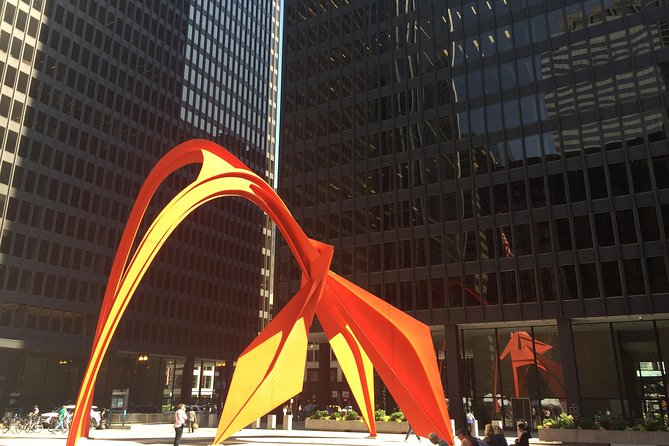
Stop 7 serves the Chicago Architecture Center and the Sheraton Grand. This is a particularly useful stop for anyone interested in the city’s buildings, though the bus commentary may not satisfy serious architecture fans on its own.
Chicago’s architecture deserves time on foot and from the river. The included self-guided digital walk on Chicago architecture can help you notice details that pass quickly from a bus seat. Use the bus for the broad picture, then return to the area for a closer look or book a separate architecture experience if that is a main interest.
The location also works as a practical transfer point between the river area, Navy Pier, and the northern downtown stops. The bus will show you the city’s canyon of towers, but do not expect every building to receive a full explanation. The audio is informative, yet some rides provide only limited commentary on architecture and nearby places.
Navy Pier, Chicago’s big waterfront stop
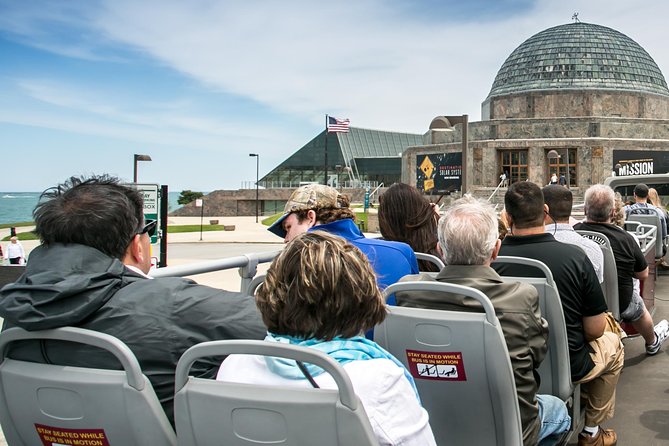
Stop 8 is Navy Pier, one of the route’s most recognizable destinations. You can hop off for lake views, attractions, food, and a change of pace from the downtown streets.
Navy Pier is easy to understand as a sightseeing stop: get off, walk out along the pier, and return to the pickup point when ready. The pass is useful here because the pier can take as little or as much time as you choose.
Do not assume every bus arrives exactly when the printed schedule suggests. Published information places buses roughly 30 to 45 minutes apart, while the main tour description also describes hourly departures. Traffic can stretch the wait. Use live tracking and give yourself a buffer, rather than leaving a waterfront attraction at the last possible minute.
The Magnificent Mile and 360 Chicago
Stop 9 serves Water Tower and the Magnificent Mile. Stop 10 is the John Hancock Center, now home to 360 Chicago. These stops are close to the shopping and hotel district, but they serve different purposes.
Water Tower and the Magnificent Mile are best for a street-level walk. You can browse shops, look up at the buildings, and use the bus to avoid retracing your steps. At the John Hancock Center, you can visit 360 Chicago with a separate admission ticket for elevated city views.
This northern part of the route is a useful reason to choose the bus over a simple downtown walking tour. It connects the river, central parks, and Michigan Avenue in one circuit. Still, traffic on Michigan Avenue can be slow, and road closures during festivals or parades may force the bus to finish at a different stop than expected.
One special event caused a service day to end several hours early, leaving a rider far from the original starting point. That sort of disruption is not common enough to make the tour unusable, but it is serious if you have only 24 hours. Check service notices before setting out.
River North and the final stop
Stop 11 serves McDonald’s in River North. It is less of a major attraction than the museums, parks, or pier, but it can be convenient for hotels, restaurants, and the neighborhood’s central location.
River North is also a practical point for ending a ride. You can get off here for food or continue toward the Riverwalk. The route’s value is not that every stop is a destination in itself. It is that the complete circuit links several parts of central Chicago without requiring you to plan every connection.
Upper deck views, lower deck shelter
The bus gives you two different experiences. The open upper deck offers the best photographs and the clearest look at Chicago’s towers, bridges, parks, and lakefront. On a sunny day, it is the seat I would choose.
The lower deck is enclosed and climate controlled, with WiFi available onboard. It is the safer choice in rain, snow, or strong wind, though the quality of heating may vary by vehicle. Winter riders have found the covered section useful, but cold conditions have also exposed weak heating and chilly seats.
The partially covered upper section can be a good compromise. You get some outdoor views without sitting fully exposed. Do not count on it as a winter coat replacement, and remember that weather can affect service or cause cancellation.
Commentary, drivers, and the human side
The digital commentary supplies the basic story in multiple languages. It tells you about upcoming stops and gives context as you move through the city. That is enough to make the ride more than simple transportation.
The human element varies. Drivers such as Felicia, Candace, and Donnie have been singled out for clear narration, humor, extra facts, and friendly help. A driver may point out local food or add a detail that the recording skips. Other rides have had a relief driver who offered little beyond stop announcements, and a few passengers found staff interactions abrupt.
Headphones are supplied, but they are not always comfortable or easy to hear. Bring patience and use the volume control. If the audio fails, the route itself still gives you a useful visual introduction, but the educational value drops.
How to get good value from 24, 48, or 72 hours
A 24-hour pass is best for a focused day. Ride the full loop early, note the places you want to revisit, then hop off at one or two major stops. Trying to visit every museum and attraction in one day will turn the pass into a race.
A 48-hour pass suits a relaxed weekend. Use the first ride for orientation, spend the next day visiting Museum Campus, Millennium Park, or Navy Pier, and use the bus to reduce walking between areas. The 72-hour option is useful if you are spreading sightseeing across several days or want flexibility around weather.
The pass is strongest when you make at least three or four useful hops. If you ride once and spend the rest of the day in one neighborhood, public transport or walking may cost less. If you are visiting with children, older relatives, or anyone who tires easily, the bus’s direct connection between major sights may justify the price even with fewer rides.
Practical details before you go
The first bus departs at about 10 a.m., and the last departs at about 5 p.m. A full non-stop circuit takes around two hours, but hopping off turns it into a half-day or full-day plan.
You can activate the mobile ticket in the Big Bus app by adding your booking reference and pressing Activate on the day of travel. You can also redeem a voucher with staff at Stop 1 or show it to a driver at any stop. The app is worth downloading even if you prefer a printed ticket because it shows live vehicle locations and stop information.
Food and alcohol are not allowed onboard. A nonalcoholic drink in a screw-top bottle is permitted, but luggage is not. Pets cannot ride, except ADA service animals. Wheelchair-accessible vehicles with lifts are available, although not every bus has one, so note the requirement when booking.
Free cancellation is available up to 24 hours before the scheduled start. Changes or cancellations inside that window are not refunded, and poor weather may lead to a different date or a full refund.
Should you book Big Bus Chicago?
I would book it if you want a quick city orientation, prefer sitting to walking, or are visiting with children or family members who need regular breaks. The route covers a strong selection of Chicago sights, and the upper deck gives you a view you cannot get from a normal city bus.
Choose the 48- or 72-hour option only if you expect to hop off several times. For a single loop, $45 is a fair convenience price but not a standout bargain. Check the app before leaving, plan around the 10 a.m. to 5 p.m. operating window, and allow extra time for traffic and special events.
If you want detailed architecture commentary, exact departure times, or a fully guided experience with a person narrating every block, this may leave you wanting more. If you want an easy first look at Chicago with the freedom to stop at the places that catch your eye, it is a practical choice.
FAQ
How long does the full Big Bus Chicago route take?
A complete circuit takes approximately two hours if you remain on the bus and do not get off at any stop.
How often does the bus arrive?
Buses are scheduled to arrive approximately every 30 to 45 minutes, although the tour information also describes departures at roughly hourly intervals. Traffic and road closures can affect actual arrival times.
What are the operating hours?
The first bus departs at about 10 a.m., and the last bus departs at about 5 p.m.
Where can I board the bus?
You can board at any designated stop along the route. The 11 stops include the Chicago Riverwalk, Willis Tower, Millennium Park, Grant Park, Adler Planetarium, Field Museum, Chicago Architecture Center, Navy Pier, the Magnificent Mile, 360 Chicago, and River North.
Do I have to redeem my ticket at Stop 1?
No. You can redeem a voucher with staff at Stop 1 at 98 East Wacker Drive, or show a printed or electronic ticket to a driver at any Big Bus stop.
How do I activate a mobile ticket?
Download and open the Big Bus app, tap Add Booking, and enter your booking reference. On the day of travel, open the ticket, press Activate, and show it to the driver.
Is attraction admission included?
No. Admission to Skydeck Chicago, the Art Institute, museums, 360 Chicago, and other attractions is not included in the bus pass.
Is the bus wheelchair accessible?
Yes, wheelchair-accessible vehicles with lifts can accommodate up to 650 pounds, but not every vehicle is equipped. Request an accessible vehicle in the special requirements section when booking.
Can I bring food, pets, or luggage?
Food and alcohol are not permitted. Nonalcoholic drinks in screw-top bottles are allowed. Luggage is not allowed onboard, and pets are prohibited except ADA service animals.
Recently reviewed around Chicago
- Delicious Donuts & City Sights: Chicago’s Original Donut Tour★ 5.0 · 1,389 reviews
- Field Museum of Natural History Admission Tickets★ 4.5 · 489 reviews
- Bikes, Bites & Views: Chicago’s Signature Dishes Bike Tour-Adults★ 5.0 · 732 reviews
- Original Chicago Architecture Interiors Tour: Dazzling Interiors★ 5.0 · 1,489 reviews
- City Cruises Chicago: Signature Lunch Cruise on Lake Michigan★ 4.0 · 348 reviews
- BYOB Spray Paint and Sip at Studio W.I.P.★ 5.0 · 401 reviews
- Skip-the-line: Art Institute of Chicago Guided Tour★ 5.0 · 417 reviews
- Chicago Architecture Tour: Underground Pedway and the Loop★ 5.0 · 388 reviews
Chicago Tours, compared.
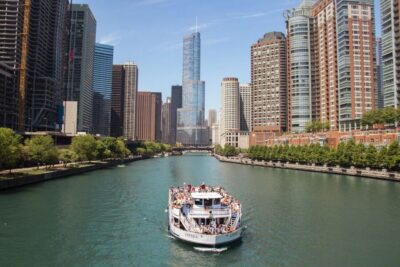
Chicago River: 1.5-Hour Guided Architecture Cruise
Read our review →
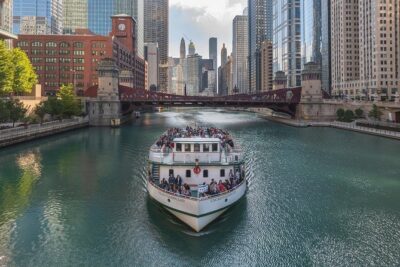
Chicago Architecture Center River Cruise aboard First Lady
Read our review →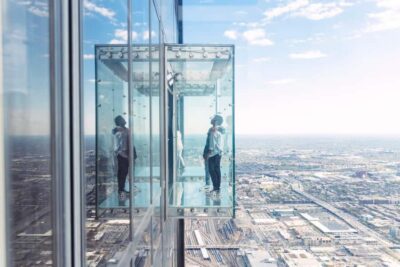
Architecture River Cruise Skip-the-Ticket Line
Read our review →
Browse the lists this tour appears in