
Reviewed · WHALE WATCHING
Big Island: Pelagic Whale Watch Tour
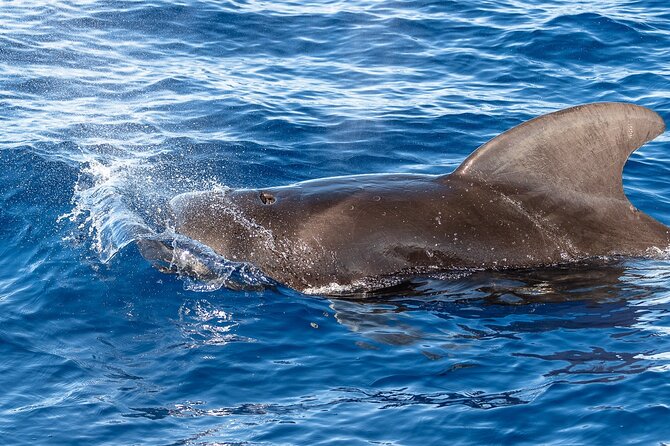
The most unusual feature here is access to Kona’s pelagic zone, where the water can reach thousands of feet deep. That gives you a real chance at species that stay offshore, including pilot whales, beaked whales, sperm whales, whale sharks, and spotted dolphins, not just the familiar humpbacks near shore.
I like the open 360-degree viewing and the crew’s strong natural-history focus. Captain Andrew and naturalist Olivia have earned special praise for explaining whale behavior, migration, and local marine life in clear terms. The main caution is simple: wild animals set the schedule, and the ride can get choppy for anyone prone to seasickness.
In This Review
- Key points to know before you book
- Why Kona is such a strong place for whale watching
- Leaving Honokohau Harbor at 8:30 in the morning
- Nearshore waters: humpbacks, dolphins, rays, and flying fish
- The pelagic search is the tour’s main advantage
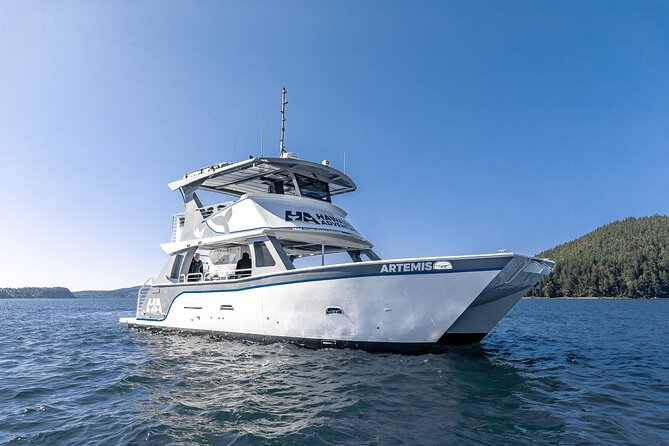
- Artemis gives you a practical viewing platform
- The crew turns sightings into a lesson
- How the sightings really work
- Is $129 a fair price?
- Practical details that affect your morning
- Who should book the Pelagic Whale Watch?
- Should you book it?
- FAQ
- How much does the Pelagic Whale Watch cost?
- How long does the tour last?
- What time does the tour begin?
- Where does the tour depart?
- Does the tour include hotel pickup?
- What animals might I see?
- Are whales and dolphins guaranteed?
- What is included in the price?
- Is the tour suitable for young children?
- How many people can join the boat?
- Is the tour offered in English?
- What happens if the weather is poor?
- Can I cancel for a refund?
Key points to know before you book
- Pelagic access: The US Coast Guard offshore certification lets the boat search waters thousands of feet deep.
- Year-round wildlife: You may see pilot whales, several dolphin species, sharks, manta rays, flying fish, and more at any time of year.
- Winter humpbacks: Humpback sightings are most closely tied to the winter season, when whales visit Hawaiian waters.
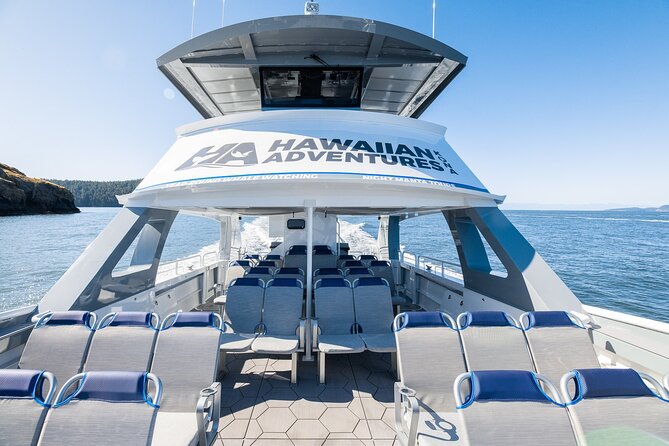
- Comfortable catamaran: The 46-foot Artemis has padded seating, shaded and sunny areas, soft flooring, handholds, and broad sight lines.
- Naturalist-led trip: Captain Andrew, Olivia, and the onboard naturalist explain animal behavior, conservation, culture, and the Kona ecosystem.
- Plan for motion: Kona is known for relatively calm water, but this is still an offshore boat trip. Take motion-sickness medicine beforehand if you need it.
Why Kona is such a strong place for whale watching
Kona gives you an unusual mix of shallow coastal water and very deep offshore water close to the harbor. That matters because different marine species prefer different parts of the ocean.
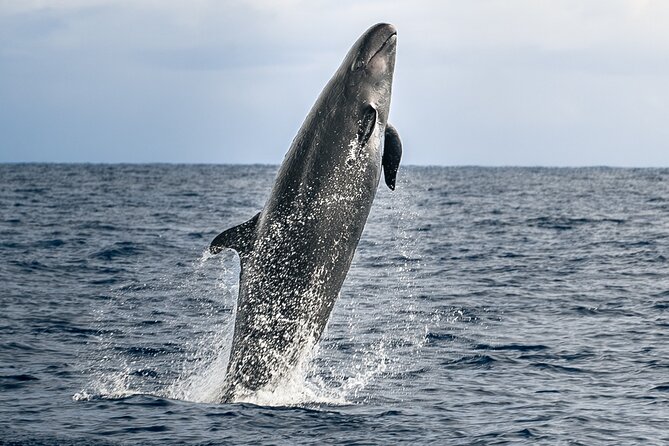
Near shore, your search may include spinner dolphins, bottlenose dolphins, manta rays, flying fish, and humpback whales during winter. Move farther offshore and the possibilities expand to short-finned pilot whales, beaked whales, sperm whales, spotted dolphins, whale sharks, and oceanic white-tip sharks.
You are not visiting an aquarium with a predictable display. You are scanning open water for animals that may surface for only a few seconds. That uncertainty is part of the appeal, but it also sets a realistic limit on what any company can promise.
The operator describes more than a dozen possible whale and dolphin species across the year. That does not mean you will see them all, or even see whales and dolphins on every departure. It means Kona offers a broader range of encounters than a trip built around one seasonal species.
More whale watching out of Big Island of Hawaii:
- Whale Watching On The Big Island
★ 5.0 · 573 reviews - Zodiac Raft Whale Watching Adventure
★ 5.0 · 456 reviews - Juneau Wildlife Whale Watching
★ 5.0 · 7,379 reviews
Leaving Honokohau Harbor at 8:30 in the morning
The tour begins at 8:30 a.m. at 275 Kealakehe Parkway in Kailua-Kona, near Honokohau Harbor. You arrange your own way there because hotel pickup and return transportation are not included.
A morning departure gives you a useful half-day activity without taking over your entire schedule. The advertised time on the water is about three to four hours, enough for the crew to work both the nearshore and offshore areas rather than turning around after a quick look.
As the boat moves away from shore, you get a different view of the Kona coast. The shoreline is part of the experience, not just scenery on the way out. Crew commentary may also point out local features and area businesses connected to the ocean, including fish farms and a seahorse farm.
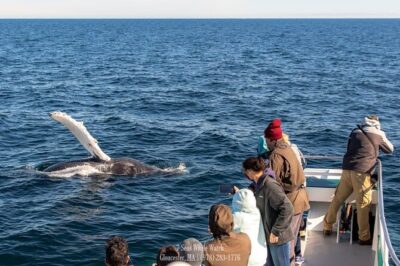
The boat carries no more than 42 people. That is not a tiny private outing, but the vessel’s open design should give you more room to see than a tightly enclosed boat. The crew encourages everyone to keep watching in different directions because wildlife can appear anywhere around the boat.
Nearshore waters: humpbacks, dolphins, rays, and flying fish
The first search area is the coastal zone. Here, the water may be only 50 to 200 feet deep, and humpback whales can sometimes be found surprisingly close to land during winter.
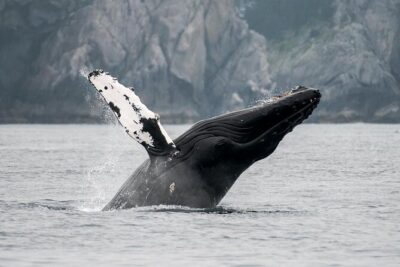
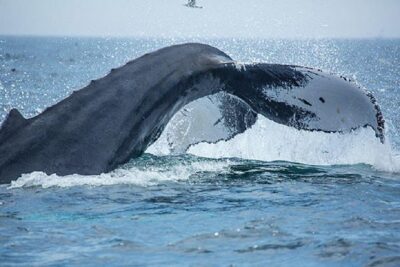
Humpbacks are the headline sighting for many people. If you are lucky, you might see a blow, a back, a tail, or more dramatic behavior such as breaching, chin slaps, and spyhops. One particularly useful bit of interpretation from the naturalist team concerns whales raising their eyes above the surface to look around. A brief vertical appearance can be more than a random movement, it may be a whale checking its surroundings.
Still, you should not book this trip only for a breach. Breaching is spectacular but unpredictable. A calm encounter with a whale surfacing nearby can be just as memorable, especially when the naturalist helps you understand what you are seeing.
Spinner dolphins are another major possibility. Their leaps and spins make them easy to appreciate even when they are several yards away. Bottlenose dolphins and spotted dolphins may also appear, and one outing can include more than one dolphin species.
Manta rays and flying fish add variety to the coastal search. The flying fish may flash across the surface and vanish before you have your camera ready. Manta rays are another reminder that the trip is about Kona’s full marine community, not only large whales.
The pelagic search is the tour’s main advantage
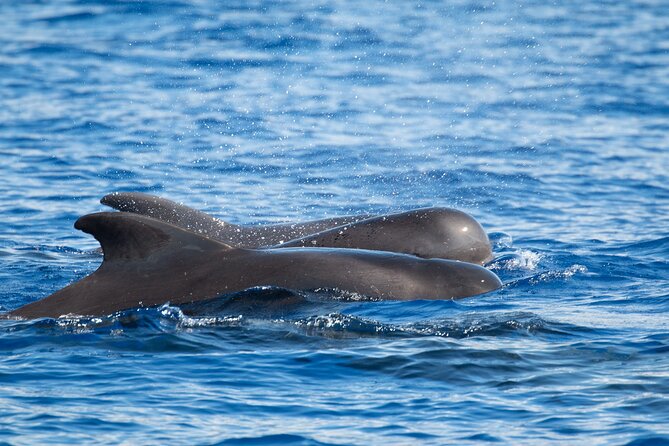
Many boat trips stay close to shore. This one can travel into the pelagic zone, a major reason to consider it over a shorter coastal cruise.
Offshore waters thousands of feet deep support animals you are unlikely to find in shallow coastal areas. The crew may look for pilot whales, sperm whales, beaked whales, spotted dolphins, whale sharks, and sharks such as the oceanic white-tip.
Short-finned pilot whales appear often in the trip’s wildlife possibilities. They are social, powerful animals, and a pod can create a busy scene at the surface. You may see several whales surfacing together, hear about their vocal behavior, or watch one animal roll and inspect the boat.
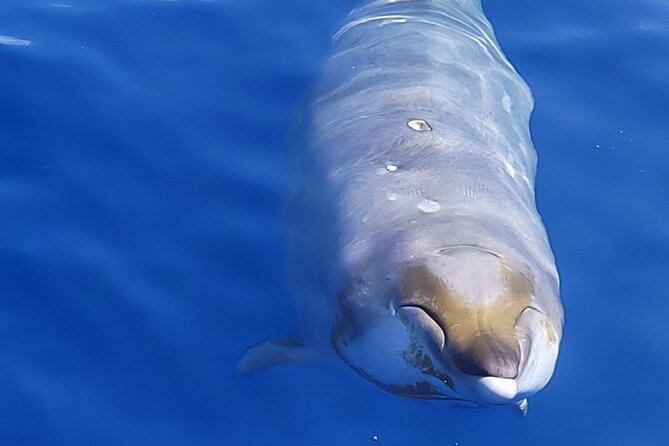
The offshore search can also produce unusual sightings. Specific encounters have included Cuvier’s beaked whales, oceanic white-tip sharks, a scalloped hammerhead, whale sharks, and multiple dolphin species. These are not promised sightings, but they show why the pelagic range adds value to the outing.
The tradeoff is the ride. Going farther offshore can mean more time in open swells. One person described the boat ride as fast and choppy, while another found the catamaran smooth through larger swells. Both experiences can be true on the same route under different conditions.
A completely different way to spend a day nearby:
- Big Island in a Day: Volcanoes Waterfalls Sightseeing and History
★ 5.0 · 6,569 reviews - Big Island Manta Ray Night Snorkel
★ 5.0 · 5,656 reviews - Big Island: Kona Manta Ray Snorkel Tour in Keauhou Harbor
★ 4.5 · 2,465 reviews - Hilo Shore Excursion: Volcanoes National Park & Black Sand Beach
★ 4.5 · 2,338 reviews
Artemis gives you a practical viewing platform
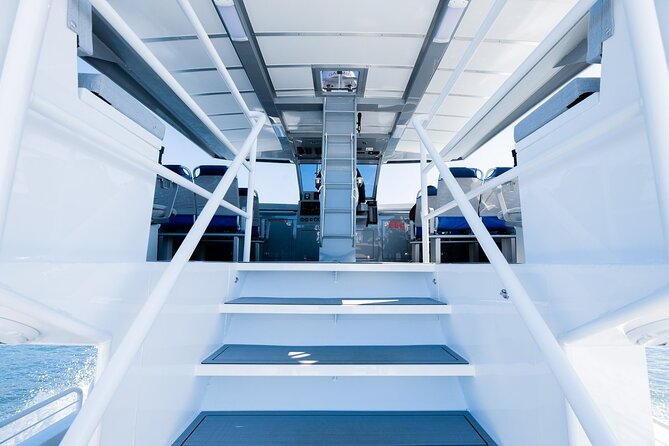
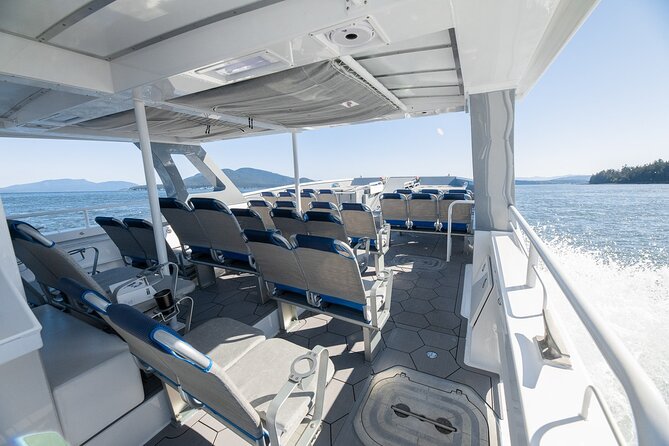
The 46-foot catamaran Artemis is designed for wildlife watching rather than formal sightseeing. Its open style provides viewing angles around the vessel, so you are not limited to looking through a few windows.
Padded seating, soft foam flooring, railings, and handholds make the boat more comfortable and secure. There are shaded and full-sun areas, along with plenty of seating. I would still avoid assuming that every seat gives the same view at every moment. When an animal appears, people naturally shift toward the action, and one person noted that others sometimes blocked the front viewing area.
The best approach is to keep moving politely and use the boat’s 360-degree layout. If a group gathers on one side, check the opposite rail. Whales and dolphins do not follow the crowd’s preferred viewing position.
Cold soft drinks and bottled water are included. That is a modest perk, but it is useful on a three to four hour outing. Bring whatever personal sun protection you normally use, though no special equipment is listed as part of the tour.
The crew turns sightings into a lesson
The strongest part of this experience is the crew’s role in interpreting the ocean. Naturalist-led wildlife trips are more satisfying than simple animal searches because you learn what behavior means and why an animal belongs in that part of the water.
Captain Andrew and naturalist Olivia are specifically associated with warm, energetic commentary. The naturalist team explains whale migration, feeding, social behavior, vocalization, and the purpose of visiting Hawaiian waters. They also discuss the ecological role of different species, conservation, local culture, and the Kona ecosystem.
That information changes the way you watch. A pod of dolphins becomes more than a collection of fast-moving animals. A pilot whale surfacing beside the boat becomes a chance to observe social behavior. A shark following whales gains context rather than becoming a sudden scare.
The crew also works to keep the trip comfortable. They help people dealing with seasickness and place safety, along with respect for the animals, ahead of a close photograph. That balance matters. Wildlife boats should never chase an animal simply to produce a better view.
How the sightings really work
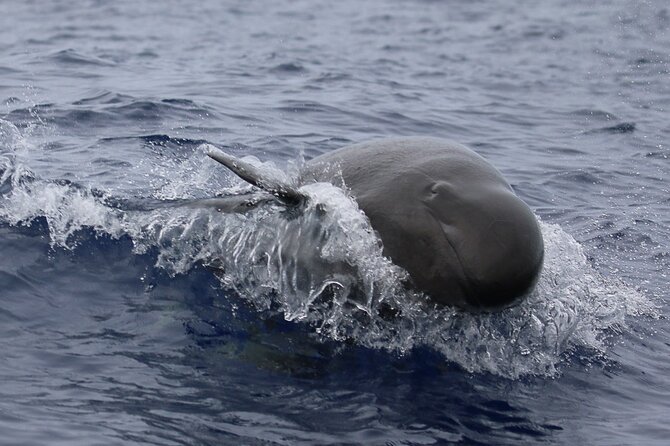
The tour is designed to give you a broad search range, but no responsible operator can control the ocean. You may see several species in one morning, including whales, dolphins, sharks, and flying fish. You may also see only brief glimpses, or on rare days, no whales or dolphins at all.
The published response from the operator explains its sighting policy: if you see neither whales nor dolphins, you may join another trip for 50 percent off. Treat this as a second-chance policy, not a guarantee that wildlife will appear on your chosen morning.
This distinction is important because the word guaranteed can create the wrong expectation. A whale watch increases your odds through local experience, boat range, and search time. It cannot make a wild humpback breach on command.
The very high overall rating, 4.9 from 557 ratings with 97 percent recommending the experience, suggests that most people find the combination of wildlife and crew worthwhile. Even so, the lower-rated experiences underline the main risk: some departures simply do not produce the hoped-for species, and the ride can be uncomfortable in rougher conditions.
Is $129 a fair price?
At $129 per person, this is not the cheapest way to spend a morning in Kona. The value depends on what you want from a boat trip.
If your goal is a quick coastal cruise with a decent chance of seeing one familiar species, a less expensive outing may be enough. If you want a longer search, access to offshore water, a catamaran built for viewing, drinks onboard, and a naturalist explaining what you see, the price is easier to justify.
You are paying for more than the time on the boat. The crew’s offshore certification expands the search area, and the three to four hour duration gives them time to look rather than settle for a rushed pass along the coast. The possibility of seeing pilot whales, beaked whales, sperm whales, sharks, or a whale shark adds real value for anyone interested in marine life.
For a family, the cost can add up quickly, and children under 10 are not permitted. The tour is better suited to adults, couples, older children, and anyone who would rather learn about animal behavior than simply take a scenic boat ride.
Practical details that affect your morning
Confirmation is provided at booking, and the activity ends where it begins. You need to reach the meeting point yourself, so allow time to get to 275 Kealakehe Parkway in Kailua-Kona.
The tour is offered in English. Service animals are allowed, and the departure point is near public transportation. Most people can participate, though the combination of moving around the boat, offshore water, and possible swells deserves thought if you have mobility or balance concerns.
For seasickness, the most useful advice is to prepare before boarding. One person specifically recommended taking motion-sickness medicine in advance if you are prone to it. The crew can offer help, but prevention is usually easier than trying to recover once the boat is underway.
You can cancel for a full refund up to 24 hours before the start time. Cancellations or changes made inside that window are not refunded or accepted. Poor weather or failure to meet the minimum number of participants can lead to a different date, another experience, or a full refund.
Who should book the Pelagic Whale Watch?
I would choose this tour if you care about marine biology, want access to both coastal and offshore habitats, or prefer a crew that explains the animals rather than simply pointing at them.
It is especially appealing during winter humpback season, when whales may be close to shore and active at the surface. It is also a good year-round option if pilot whales, dolphins, sharks, manta rays, and less common offshore species interest you.
I would be cautious if you need a guaranteed whale sighting, dislike open-water motion, or want a quiet, slow harbor cruise. The boat can move quickly and conditions vary. You should also remember that the tour is not suitable for children under 10.
Should you book it?
Book the Big Island Pelagic Whale Watch if you want the widest possible wildlife search around Kona and value an informed crew. The offshore range, open catamaran, and naturalist commentary make it more than a basic whale ride.
Go in with the right expectation: you are buying a well-planned search, not a staged wildlife show. If the ocean cooperates, you could see humpbacks, pilot whales, spinner dolphins, sharks, and flying fish in one morning. If it does not, the crew still provides useful context, but you must be comfortable with nature’s refusal to follow a schedule.
FAQ
How much does the Pelagic Whale Watch cost?
The tour costs $129 per person.
How long does the tour last?
The experience lasts approximately three to four hours.
What time does the tour begin?
The tour starts at 8:30 a.m.
Where does the tour depart?
You meet at 275 Kealakehe Parkway, Kailua-Kona, Hawaii 96740, near Honokohau Harbor.
Does the tour include hotel pickup?
No. Hotel pickup and drop-off are not included. The activity ends back at the meeting point.
What animals might I see?
Possible sightings include humpback whales, pilot whales, beaked whales, sperm whales, spinner dolphins, bottlenose dolphins, spotted dolphins, manta rays, whale sharks, oceanic white-tip sharks, flying fish, and other marine life.
Are whales and dolphins guaranteed?
Wildlife sightings cannot be guaranteed on every departure. If you see neither whales nor dolphins, the provider states that you may join another trip for 50 percent off.
What is included in the price?
The price includes the whale-watching tour, professional crew, soft drinks, and bottled water.
Is the tour suitable for young children?
No. The activity is not appropriate for children under 10.
How many people can join the boat?
The tour has a maximum group size of 42 people.
Is the tour offered in English?
Yes. The tour is offered in English.
What happens if the weather is poor?
If bad weather cancels the experience, you can choose a different date or receive a full refund.
Can I cancel for a refund?
Yes. You can cancel at least 24 hours before the start time for a full refund. Cancellations made less than 24 hours before departure are not refunded.
Recently reviewed around Big Island of Hawaii
- Hilo Shore Excursion: Active Volcano, Lava Tube, Waterfall and Gardens★ 5.0 · 393 reviews
- Volcano Adventure: Hilo Sightseeing w/ Optional Helicopter Tour★ 4.5 · 412 reviews
- Kealakekua Bay Snorkeling Tour – 4 hour Kona Zodiac Adventure★ 5.0 · 508 reviews
- Whale Watching On The Big Island★ 5.0 · 573 reviews
- Hawaii Volcanoes, Waterfalls, Beaches & Hilo Highlights Day Tour★ 5.0 · 391 reviews
- Zodiac Raft Whale Watching Adventure★ 5.0 · 456 reviews
- Small Group Big Island Twilight Volcano and Stargazing Tour★ 5.0 · 1,619 reviews
- Manta Ray Night Snorkel Tour in Kailua-Kona, Big Island★ 5.0 · 382 reviews
Whale Watching, compared.
Juneau Wildlife Whale Watching & Mendenhall Glacier
Read our review →
City Cruises Boston Whale Watching Cruise by High-Speed Boat
Read our review →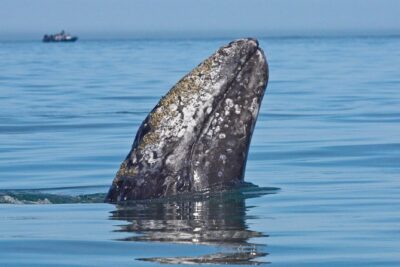
Whale Watching Trips to Stellwagen Bank Marine Sanctuary. Guaranteed sightings!
Read our review →Browse the lists this tour appears in