
Reviewed · FOOD & DRINK
Charleston’s Historic Downtown Food Tour
Charleston’s food tells a complicated story, and this 2.5-hour walk puts that story on your plate. You move through the French Quarter and nearby landmarks while stopping at four restaurants for enough food to make a full lunch, not just a few token bites. She-crab soup, Carolina rice, barbecue, and dessert are among the dishes that may appear.
I like the way the tour links food to place, especially at Rainbow Row, the Pineapple Fountain, the Old Exchange, and Charleston City Market. I also like the small group, capped at 15, and guides such as Page and Emerson, who bring plenty of local and historical detail. The main drawback is that the pace can feel rushed, and the advertised shrimp and grits may not be served.
In This Review
- Key points to know before booking
- A Charleston lunch with a history lesson attached
- Starting near East Bay Street
- Rainbow Row and the French connection
- Pineapple Fountain and the meaning of hospitality
- She-crab soup sets the tone
- The Old Exchange and Charleston’s pirate years
- City Market and African foodways
- What the menu can and cannot promise
- How the timing affects your day
- Who will get the most from this tour
- Booking, weather, and cancellation details
- Should you book Charleston’s Historic Downtown Food Tour?
- FAQ
- Where does Charleston’s Historic Downtown Food Tour begin?
- Where does the tour end?
- How long does the tour last?
- How many people can join the tour?
- What food is included?
- Is shrimp and grits included?
- Are alcoholic drinks included?
- Are young children included in the food tastings?
- What happens if the weather is poor?
Key points to know before booking
- Four restaurant stops provide a full lunch: Expect substantial tastings rather than a small snack crawl.
- She-crab soup is a highlight: Its Charleston roots make it both a local specialty and a useful starting point for the city’s food story.
- The history includes difficult subjects: Slavery, the slave trade, African foodways, and Gullah Geechee culture are treated as important parts of Charleston’s past.
- The walk connects food with landmarks: Rainbow Row, the Pineapple Fountain, the Old Exchange, and City Market all have a role.
- The schedule moves quickly: The official duration is about 2 hours 30 minutes, though some tours may finish closer to two hours.
- The menu can change: Shrimp and grits is shown in older promotional material, but it is not always included.
A Charleston lunch with a history lesson attached
I see this as two tours joined together: a downtown food walk and a compact introduction to Charleston’s past. You are not simply eating your way from one restaurant to the next. At each stop, the guide explains how local ingredients and cooking traditions developed through French influence, African foodways, Low Country culture, trade, and even piracy.
That approach gives the meal more meaning. She-crab soup is not just creamy seafood soup. Rice is not merely a side dish. Barbecue, seafood, and Southern hospitality all connect to Charleston’s people and past. If you want food without any background talk, this may feel too instructional. If you like knowing why a dish belongs in a city, it is a good fit.
The price is $110. That is not cheap for a 2.5-hour activity, but it includes food at four restaurant stops and enough portions to replace lunch. You are also paying for a guide, reserved or VIP-style access at the food stops, and a walking route through the historic center. I would compare it with the cost of buying several local dishes on your own, then ask how much you value the explanations and company.
More Historical Tours in Charleston
- Charleston’s Old South Carriage Historic Horse & Carriage Tour
★ 5.0 · 10,023 reviews - Historic Charleston Guided Sightseeing Walking Tour
★ 5.0 · 6,216 reviews - Charleston Horse-Drawn Carriage Tour: Explore Historic Charleston
★ 5.0 · 3,561 reviews
Starting near East Bay Street
The tour begins at 195 E Bay St in downtown Charleston and ends back at the same meeting point. That makes planning easy. You do not need to arrange a ride from one side of town to another, and the start point is near public transportation.
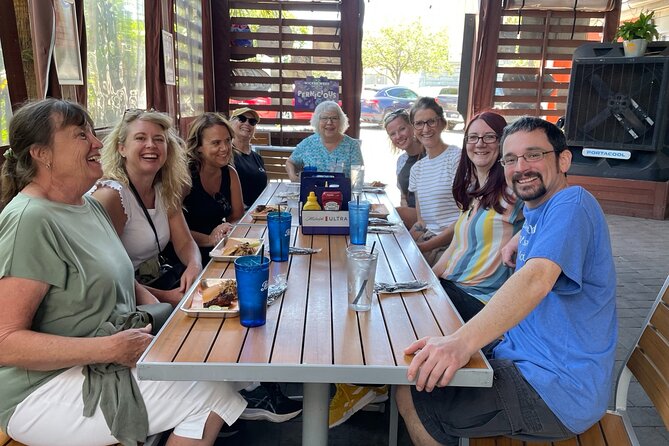
The group can include up to 15 people. That is small enough for questions without making the walk feel like a parade. It also matters at restaurant stops, where a large group could be awkward. Guides Page, also written as Paige in some tour material, and Emerson have both led tours. Their styles may differ, but the feedback points to a strong emphasis on local history and friendly conversation.
Wear comfortable shoes. The route is a walking tour through the historic district, with several stops for food and several outdoor history talks. The tour requires good weather, so rain or other poor conditions can lead to a new date or a full refund.
Rainbow Row and the French connection
The first landmark is Rainbow Row, a short stop rather than a full house tour. You pass the famous row of colorful historic buildings on the way to food stops in the French Quarter.
Here, the guide explains the French role in Charleston’s cooking. The point is not simply that French settlers lived in the city. You learn how French methods and dishes became part of local habits, adding another layer to a cuisine shaped by the port, regional agriculture, and the people who lived and worked here.
This is a useful opening because it reminds you that Charleston cooking did not develop from one source. The city’s food is a meeting point. French technique, African ingredients, British colonial traditions, Caribbean connections, and Low Country produce all appear in the story.
The limitation is time. You are passing by Rainbow Row, not spending a long stretch there. If you want detailed architectural history, save time for a separate visit. On this tour, the buildings provide the setting for the food discussion.
Pineapple Fountain and the meaning of hospitality
The Pineapple Fountain gets about 20 minutes. The pineapple is a familiar symbol of Southern hospitality, and the guide uses it to discuss how welcome, celebration, and regional identity show up in Charleston’s cooking.
This stop gives the tour a lighter pause between restaurant visits. It is also a good place to ask questions, since the fountain is an easy visual reference and the group is not focused on eating. The conversation ties a public landmark to the way Charleston presents its food culture.
Do not expect the fountain itself to provide a long historical visit. It is a passing point in a larger route. Its value comes from the connection between symbol and cuisine, not from a formal monument tour.
If the weather is poor, this part can be less comfortable. The tour can be canceled for bad weather, but even on a day when it operates, outdoor stops may not be as pleasant as they are in sunshine.
More Charleston food and drink outings:
- Charleston French Quarter or Brunch Food Tour with 7+ Tastings
★ 5.0 · 1,853 reviews - Downtown Charleston Food Tour
★ 4.5 · 1,376 reviews - Undiscovered Charleston: Half Day Food, Wine & History Tour with Cooking Class
★ 5.0 · 948 reviews - Savor the Flavors of Charleston Walking Food Tour
★ 4.5 · 881 reviews
She-crab soup sets the tone
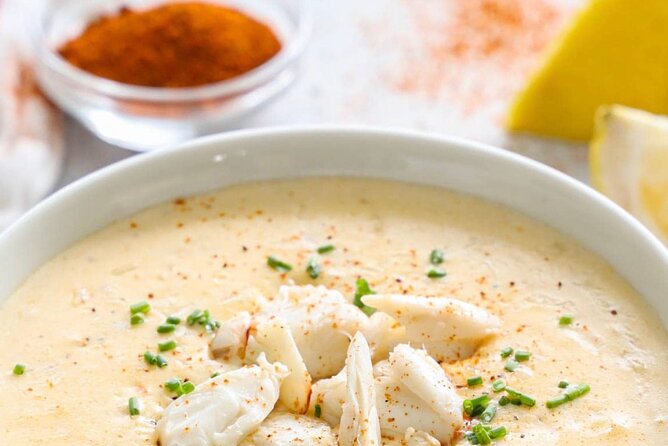
The food stops are the heart of the experience. She-crab soup has been a favorite tasting for many people on the tour, and I can see why it works as the opening dish. It is strongly associated with Charleston and gives the guide a natural way to explain local seafood and the dish’s place in the city’s food traditions.
You may also receive a rice dish, often described as Carolina Gold rice or rice jollof, followed by barbecue or a pulled pork slider. Dessert rounds out the meal. Exact offerings can change, so you should treat these dishes as examples rather than a guaranteed menu.
The portions are designed to add up. You are not sitting down to four full restaurant meals, but the combination is intended to cover lunch. Several accounts describe people feeling full by the final stop. That makes the $110 price easier to justify, especially if you would otherwise pay separately for a soup, rice dish, barbecue, and dessert.
Still, this is a tasting tour, not a relaxed restaurant afternoon. One rating described the pace as eat and run with history mixed in. You may have limited time to sip a drink or linger over a favorite dish. Alcohol is not included, though you can buy a cocktail or another alcoholic drink at the venues if you wish.
The Old Exchange and Charleston’s pirate years
The Old Exchange and Provost Dungeon receives about 15 minutes. The guide uses this location to explain how privateering and piracy affected early Charleston and the food available to people living in the port.
That may sound like an odd food topic, but it makes sense in a port city. Trade, ships, raiding, and imported goods all affected what reached local tables. The discussion adds a less predictable angle to the tour and keeps the history from becoming a standard list of dates and buildings.
You will not be taking a full tour of the Old Exchange and Provost Dungeon as part of this food walk. The stop is a short outdoor history talk tied to the meal. If you want to explore the building in detail, plan a separate visit.
City Market and African foodways
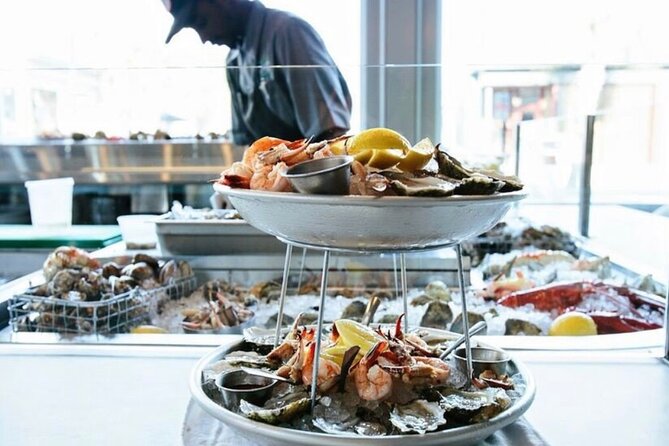
The City Market is the longest history stop, at about 20 minutes. Here, the guide discusses African influences on Charleston’s cuisine and ingredients introduced or popularized through African foodways.
This is one of the most important parts of the walk. Charleston’s food cannot be explained honestly without discussing slavery and the slave trade. Rice, cooking methods, seasoning traditions, and knowledge carried by enslaved Africans shaped the Low Country table. The tour also touches on Gullah Geechee culture, which gives you a better frame for understanding why local food is more than a collection of Southern comfort dishes.
I appreciate that this subject is included directly rather than brushed aside. The discussion may be uncomfortable, but it belongs in any serious account of Charleston’s cuisine. Food here is tied to labor, power, migration, and survival as much as to restaurants and recipes.
City Market can be crowded, and the stop is part of a working downtown route rather than a quiet classroom. Keep close to the guide and expect conversation mixed with city noise. That setting may make the talk feel less polished, but it also keeps the subject connected to the real city around you.
What the menu can and cannot promise
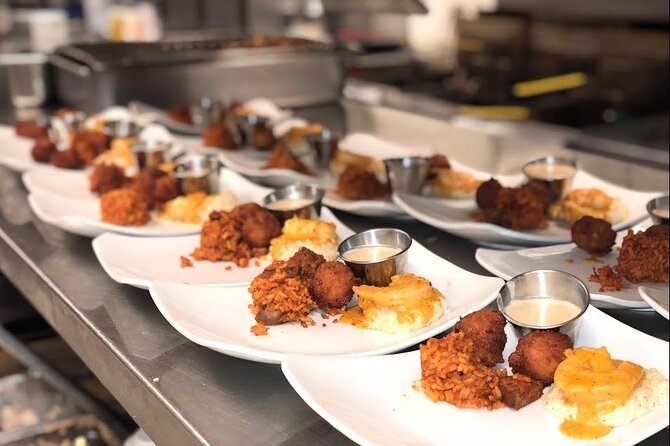
The strongest food lineup described for this tour includes:
- She-crab soup
- Carolina Gold rice or rice jollof
- Barbecue or a pulled pork slider
- Dessert
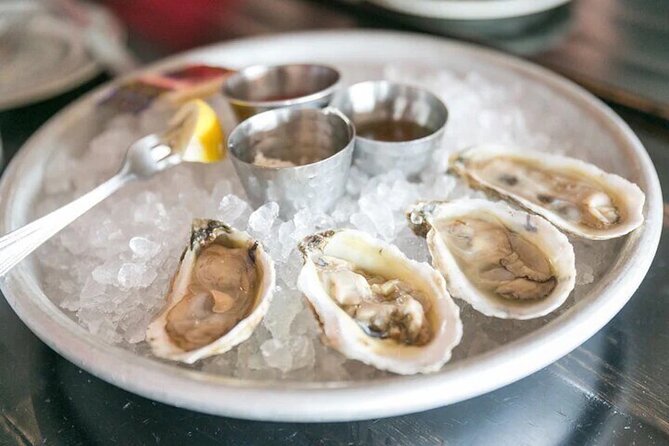
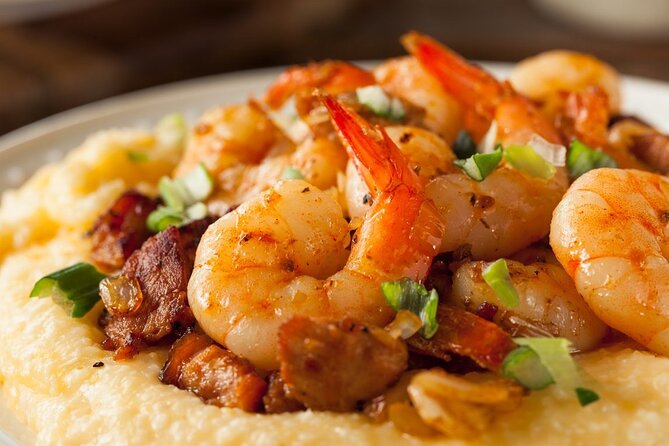
The exact restaurants and dishes can change. That matters because shrimp and grits has appeared in the tour’s promotional imagery, but it is not consistently served. If shrimp and grits is the main reason you are booking, ask about the current menu before paying.
The food receives mostly warm praise, especially the soup and dessert. A few people found the food only average, so I would not book this expecting a series of destination restaurants or elaborate chef tastings. The tour’s value comes from the complete package: several local dishes, a guide, and a walk through key historic areas.
Dietary needs are not described in the available details. You should contact Charleston Tours before booking if you have allergies or strict dietary restrictions. The information provided confirms lunch tastings at four restaurants, but it does not promise substitutions.
How the timing affects your day
The stated duration is approximately 2 hours 30 minutes. One important planning note: some tours may take closer to two hours. I would leave extra space around this activity rather than scheduling another tour immediately afterward.
The route includes enough stops for restroom breaks, according to the available tour feedback, but you should still use facilities when convenient. Since food arrives at multiple venues, the tour works best when you arrive hungry but not desperate for a large meal at the first stop.
The schedule also affects the kind of food experience you get. You are tasting, walking, listening, and moving on. That is efficient for a first day in Charleston, but it is not ideal if you want to linger over a drink, study a menu, or return to a restaurant for a second course.
The mobile ticket is convenient. Confirmation arrives when you book, and the activity returns to the starting point. Service animals are allowed, and the tour is described as suitable for most people, though the walking format may not suit anyone who has trouble staying on foot for the duration.
Who will get the most from this tour
I would recommend this experience to first-time Charleston visitors who want a quick orientation with lunch built in. It gives you a useful sense of the historic center, introduces several local dishes, and points out places you can revisit later.
It also suits couples, families with older children, and solo visitors who enjoy joining a small group. The guide-led format makes it easy to ask questions and meet people from different places. Children ages 0 to 6 may join, but their ticket does not include food, so check the booking details carefully if you are bringing a young child.
History-minded food lovers will get the most from it. You will hear about French influence, African ingredients, Gullah Geechee culture, piracy, privateering, and slavery while eating dishes connected to those subjects. That is a fuller picture than a tour focused only on restaurant rankings.
I would be more cautious if you want a slow meal, guaranteed shrimp and grits, or highly specialized culinary instruction. The menu may change, and the pace leaves little room for lingering.
Booking, weather, and cancellation details
The tour costs $110 and offers free cancellation if you cancel at least 24 hours before the local start time. Cancellations made within 24 hours are not refunded, and last-minute changes are not accepted.
Because good weather is required, Charleston Tours may cancel the activity in poor conditions. In that case, you are offered another date or a full refund.
The experience has a maximum of 15 participants, includes mobile ticketing, and ends where it begins. Alcohol is extra. Food is included for the main tour, but children ages 0 to 6 do not receive included food.
Should you book Charleston’s Historic Downtown Food Tour?
Book it if you want a filling introduction to Charleston’s food and past in one compact outing. The best parts are the clear links between dishes and history, the she-crab soup, the range of tastings, and guides such as Page and Emerson who bring personality to the walk.
Go in with realistic expectations. This is not a leisurely restaurant crawl, the exact menu can change, and shrimp and grits is not guaranteed. At $110, the tour makes sense when you value the food, the small group, the guide, and the historical context together. If that combination sounds right, it is a strong way to get your bearings and your lunch at the same time.
FAQ
Where does Charleston’s Historic Downtown Food Tour begin?
The tour begins at 195 E Bay St, Charleston, South Carolina 29401.
Where does the tour end?
The activity ends back at the meeting point.
How long does the tour last?
The stated duration is approximately 2 hours 30 minutes. Some tours may finish closer to two hours, so leave extra time before your next activity.
How many people can join the tour?
The tour has a maximum group size of 15 participants.
What food is included?
Lunch tastings at four different restaurant stops are included. Dishes described for the tour include she-crab soup, Carolina Gold rice or rice jollof, barbecue or a pulled pork slider, and dessert. The menu may change.
Is shrimp and grits included?
Shrimp and grits is not guaranteed. It appears in older promotional material, but the current food lineup may use other dishes.
Are alcoholic drinks included?
No. Alcoholic beverages are not included, but you may purchase your own drink at the venues.
Are young children included in the food tastings?
Children ages 0 to 6 may have a ticket without included food. Check the booking details for the appropriate ticket.
What happens if the weather is poor?
The experience requires good weather. If Charleston Tours cancels because of poor weather, you can choose another date or receive a full refund. You can also cancel for a full refund if you do so at least 24 hours before the start time.
More Food in Charleston
- Little Havana Food and Walking Tour in Miami
★ 5.0 · 8,882 reviews - New Orleans Food Walking Tour of the French Quarter with Small-Group Option
★ 5.0 · 6,118 reviews - NYC Bus Tour of Brooklyn, Bronx, Queens: Art, Food & Sports
★ 5.0 · 3,805 reviews - Chef Guided Food Tour of Pike Place Market
★ 5.0 · 3,733 reviews
Recently reviewed around Charleston
- Kayak With Dolphins in Historic Shem Creek★ 5.0 · 407 reviews
- Charleston’s Best Highlights: History, Culture & Architecture★ 5.0 · 422 reviews
- 2-Hour Guided Kayak Eco Tour in Charleston★ 5.0 · 954 reviews
- Charleston Ghosts of Liberty Guided Walking Tour★ 4.5 · 473 reviews
- Undiscovered Charleston: Half Day Food, Wine & History Tour with Cooking Class★ 5.0 · 948 reviews
- Real Hauntings of Charleston! (Small Group Ghost Tour)★ 5.0 · 724 reviews
- Afternoon Schooner Sightseeing Dolphin Cruise on Charleston Harbor★ 4.5 · 620 reviews
- Private Daytime Horse-Drawn Carriage Tour of Charleston★ 5.0 · 340 reviews
Food & Drink, compared.
New Orleans Food Walking Tour of the French Quarter with Small-Group Option
Read our review →
NYC Bus Tour of Brooklyn, Bronx, Queens: Art, Food & Sports
Read our review →
Savannah First Squares Culinary & Cultural Walking Food Tour
Read our review →
Chinatown & Little Italy Food Tour with 7 Flavorful Tastings
Read our review →
Food Tour with 5+ Tastings of Local Delicacies
Read our review →
Browse the lists this tour appears in