
Reviewed · HISTORICAL TOURS
Historic Charleston Guided Sightseeing Walking Tour
Charleston’s past is packed into a surprisingly walkable corner of the peninsula. In two hours, this tour takes you from City Hall and the Four Corners of Law through the French Quarter, past Rainbow Row, and down to White Point Garden, where Fort Sumter sits across the water. It is a useful first look at a city where grand homes, churches, wartime stories, and the legacy of slavery all share the same streets.
I like the strong local storytelling, especially with guides such as Al, Duggar, Dennis, and Evans, and I like the gentle pace on mostly flat streets. The drawback is that you do not enter most of the buildings, the exact stops can change by guide, and there are no public restrooms or dependable water stops along the route.
In This Review
- Key points before you book
- Why this Charleston walk works as a first introduction
- City Hall and the Four Corners of Law
- The French Quarter, where the stories thicken
- Rainbow Row and the South of Broad neighborhood
- The Battery and White Point Garden
- The guides are the main attraction
- What the $30 price buys you
- Pace, weather, and practical preparation
- Who will get the most from this tour
- Should you book the Historic Charleston Walking Tour?
- FAQ
- Where does the Historic Charleston Guided Sightseeing Walking Tour begin?
- Where does the tour end?
- How long does the walking tour last?
- Does the tour enter the historic buildings?
- Is the walk difficult?
- What should I bring?
- What happens if bad weather cancels the tour?
Key points before you book
- Charleston in one compact walk: Cover City Hall, the French Quarter, Rainbow Row, the Battery, and White Point Garden in about two hours.
- Guides make the difference: Al, Duggar, Dennis, and Evans have been especially praised for history, architecture, humor, and clear storytelling.
- A flat, manageable route: The walk is generally easy, with no hills, though Charleston’s heat and sun can make water and comfortable shoes essential.
- A serious look at the past: The route includes churches, military sites, old homes, and the Slave Mart Museum, giving you a fuller picture than an architecture-only stroll.
- Good orientation for a first visit: Multiple departure times help you fit it into your day, and the guide can point you toward restaurants and further reading.
- Small enough to feel personal: The group can include up to 20 people, a reasonable size for questions without the feel of a giant procession.
Why this Charleston walk works as a first introduction
Charleston is easy to admire and easy to misunderstand. Its pastel houses and handsome churches can make the city feel like an open-air museum, but the streets also carry stories of forced labor, revolution, civil conflict, storms, wealth, and rebuilding. A good guide supplies the links between those pieces.
This tour begins at 80 Broad Street, in front of Charleston City Hall. You meet the guide 15 minutes before departure, then set off on foot. The provider asks everyone to arrive early because the tour begins promptly.
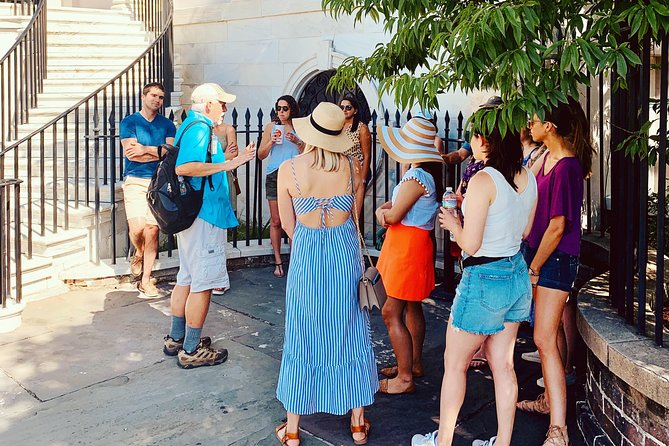
The route is designed for seeing rather than rushing. You will pause at major sites while the guide explains what happened there and why the buildings look as they do. Al has been praised for mixing architecture, culture, and amusing facts. Duggar is known for an entertaining style and practical restaurant suggestions. Dennis is especially suited to people who enjoy a strong historical narrative, while Evans has been singled out for connecting people and events to the places around you.
The guide assigned to your departure matters more than any fixed script. Names and route details can vary, but the central value remains the same: you gain a framework for Charleston before spending the rest of your stay exploring on your own.
More Historical Tours in Charleston
- Charleston’s Old South Carriage Historic Horse & Carriage Tour
★ 5.0 · 10,023 reviews - Charleston Horse-Drawn Carriage Tour: Explore Historic Charleston
★ 5.0 · 3,561 reviews - Charleston Harbor History Day-Time or Sunset Boat Cruise
★ 4.5 · 2,788 reviews
City Hall and the Four Corners of Law
The opening stop takes about 15 minutes and sets the tone. Charleston City Hall is one part of the Four Corners of Law, an intersection that also includes the courthouse, the post office, and St. Michael’s Church.
This is a smart starting point because the buildings represent different forms of authority gathered within a short walk. St. Michael’s is also linked with George Washington, who is known to have worshipped there. Your guide can turn what might otherwise be a quick photo stop into a lesson in the civic and religious forces that shaped the city.
Admission to City Hall is not included, and the experience is primarily an exterior walking visit. If you want to tour interiors, you will need to make separate plans.
This first section is also useful for getting a feel for the pace. You will stop often, listen, and move on. The walk is not a race, and the mostly flat streets make it approachable for most people who are comfortable walking for two hours.
The French Quarter, where the stories thicken
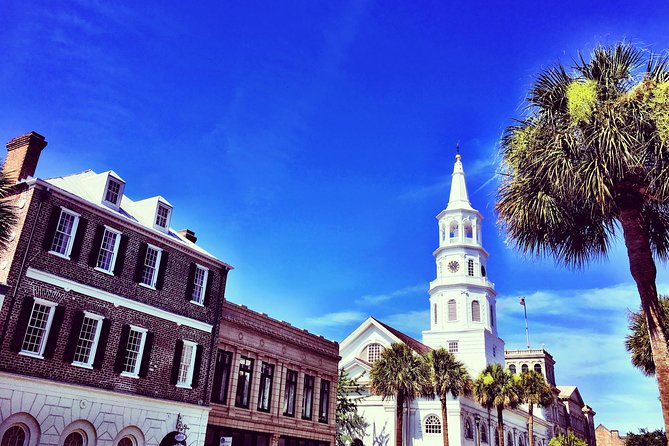
The longest portion of the tour, about 45 minutes, takes place in the French Quarter. The stops can vary, but the route generally includes several of Charleston’s most important historic sites.
The Dock Street Theatre is a major highlight. It is described as America’s first theatre, giving the guide a chance to explain Charleston’s performing arts tradition and the city’s early social life. You will also see St. Philip’s Church, another important religious landmark in the old district.
The Powder Magazine adds a military layer. It is one of the city’s notable early structures, and its presence helps explain how Charleston prepared for conflict. The French Huguenot Church offers another window into the people and beliefs that helped shape the city.
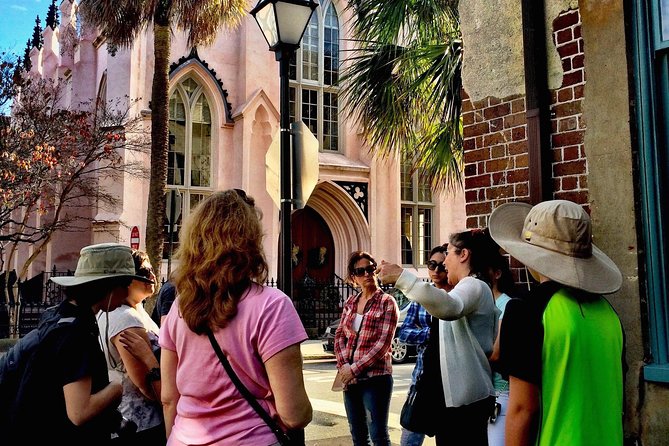
The Pink House is a smaller but memorable stop, valued for its appearance and age. You may also pass the Slave Mart Museum. This is an important part of the route, because Charleston’s grand architecture cannot be understood honestly without addressing the trade and forced labor that supported much of the region’s wealth.
The tour does not promise entry to each attraction. Most of what you receive here is an exterior view paired with explanation from the guide. That is a benefit if you want broad coverage in a short time, but a limitation if you prefer long interior visits or museum exhibits.
I would pay close attention to how the guide handles the difficult parts of Charleston’s past. The strongest version of this tour does not separate beautiful buildings from the people whose labor built and maintained them. The route gives you a chance to ask questions and hear how the city’s story includes both achievement and injustice.
Rainbow Row and the South of Broad neighborhood
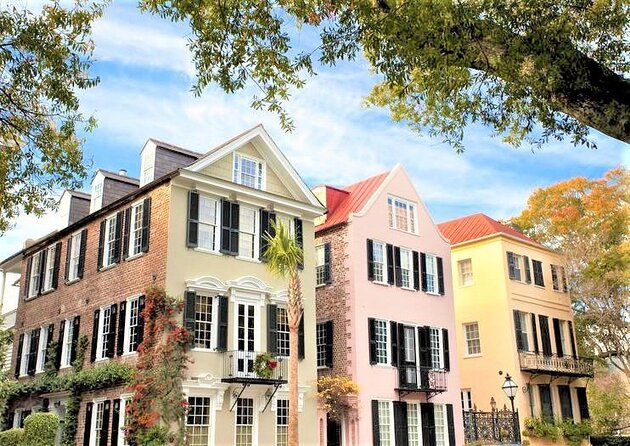
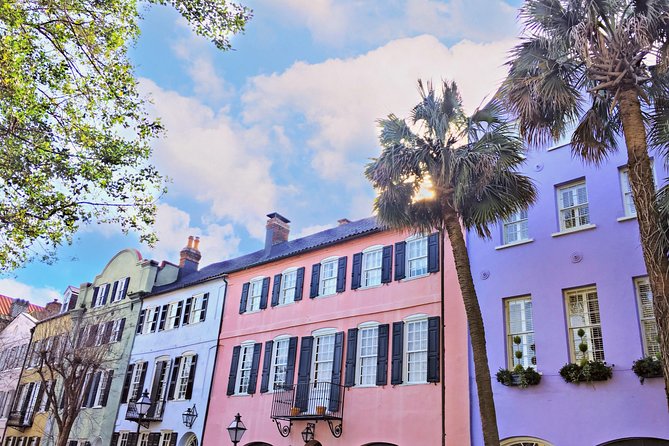
Rainbow Row takes about 10 minutes. This line of 13 colorful houses is among Charleston’s most photographed sights, but the quick stop is more useful when you learn what it means within the larger South of Broad neighborhood.
The houses are not an isolated attraction. They form part of a residential district filled with old homes and antebellum mansions. Your guide may explain the development of the area, architectural details, and the reasons Charleston’s homes have such distinctive shapes and colors.
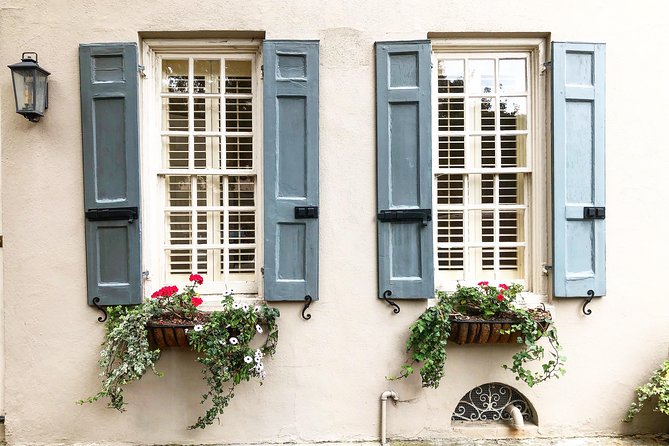
Several people have particularly valued the architecture lessons on this walk, including explanations of why homes were designed in certain ways and how they were repaired after storms and hurricanes. That information helps you read the streets later. Instead of simply seeing a pretty façade, you begin to notice shutters, porches, orientation, and the relationship between the house and the street.
Rainbow Row is also one of the places where the tour can feel crowded or photo-focused, depending on the time of day. The stop is brief, so do not expect a long examination of every building. Think of it as a visual marker within a larger neighborhood walk.
More Walking Tours in Charleston
- Ghosts of Charleston Night-Time Walking Tour with Unitarian Church Graveyard
★ 4.5 · 2,835 reviews - Hidden Alleyways and Historic Sites Small-Group Walking Tour
★ 5.0 · 2,335 reviews - Highlights of Charleston Guided Walking Tour
★ 5.0 · 2,206 reviews - Charleston Haunted Booze and Boos Ghost Walking Tour
★ 5.0 · 1,569 reviews
The Battery and White Point Garden
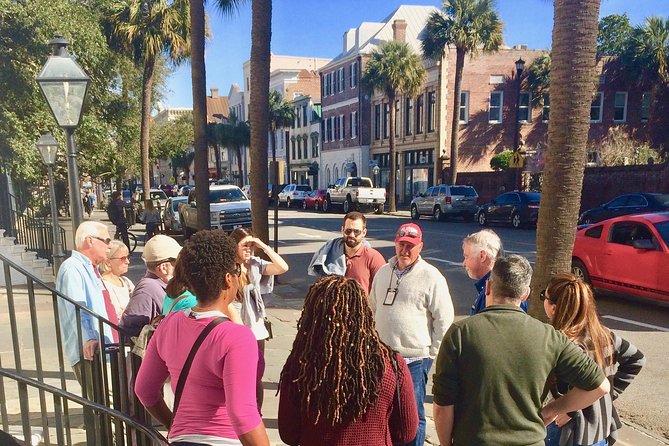
The final major section lasts about 30 minutes and reaches Charleston’s waterfront edge. The Battery is a defensive and residential area at the southern end of the historic district. White Point Garden provides open space, old trees, and views across the water toward Fort Sumter.
This is one of the tour’s best visual payoffs. After several narrow streets and close-set buildings, the waterfront gives you room to look outward. Fort Sumter’s presence connects the city to the opening conflict of the Civil War, and the guide can place that story within Charleston’s wider military and political past.
The tour does not cover the entire length of the Battery. The precise stopping points depend on the guide and route, so you should not book this walk expecting a complete Battery promenade. You will still see the key area and have time to take in the view.
White Point Garden is also a pleasant place to pause after the denser French Quarter. Bring a camera, but listen before you start photographing. The guide’s explanation of the waterfront, defensive history, and nearby homes is what makes this stop more than a scenic finish.
The listed end point is South of Broad, though the actual finish can vary. If you want to return to the starting point, the guide will walk you back when requested.
The guides are the main attraction
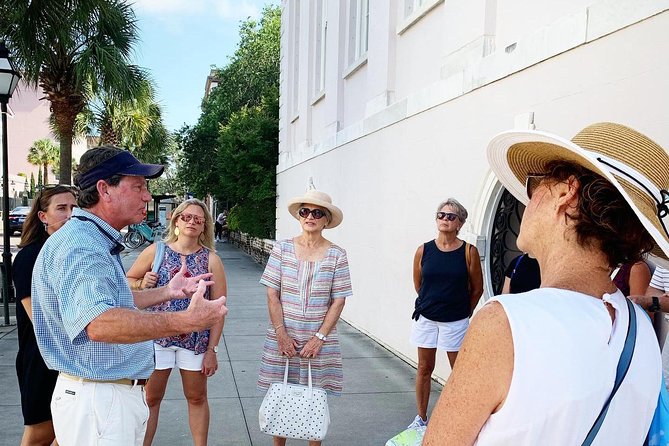
A walking tour lives or dies by its guide, and this one appears to put real weight on personal storytelling. The names most often associated with strong tours are Al, Duggar, Dennis, and Evans, though you cannot assume one particular guide will lead every departure.
Al is a good fit if you enjoy humor, architecture, and frequent opportunities to ask questions. Duggar has been praised for making the walk fun while offering practical restaurant suggestions. Dennis brings a clear, witty approach that suits people who want Charleston’s major events explained in a connected story. Evans has been noted for linking specific places to the people who shaped the city.
The best guides do more than recite dates. They explain why a church matters, how a house reflects local conditions, or how a national conflict changed this particular street. That is the difference between a walk you forget and one that changes how you see Charleston afterward.
The tour is offered in English only. The maximum group size is 20, which should allow the guide to answer questions while keeping the group together. Still, a group of 20 can be harder to hear in noisy streets, so stay near the guide during explanations.
What the $30 price buys you
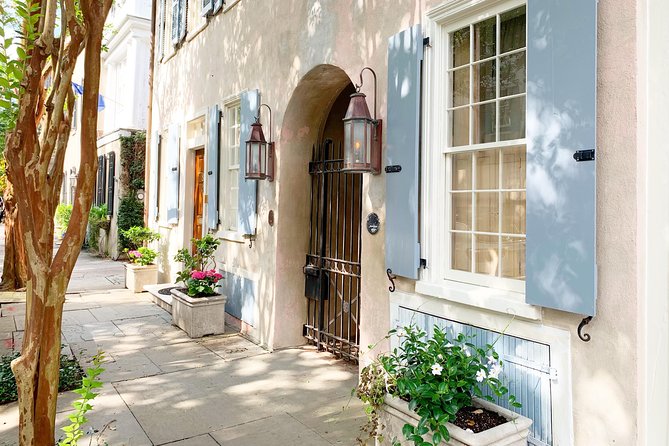
At $30 per person, this is a reasonable purchase if you are new to Charleston and want an informed overview before choosing how to spend the rest of your time. You are paying for two hours of a licensed local guide’s attention, not for admission to museums or historic interiors.
That distinction matters. If you want to enter the Dock Street Theatre, Slave Mart Museum, City Hall, or other sites, budget for separate tickets where required. This walk is about streets, façades, public spaces, views, and context.
I see the best value for a first morning or early afternoon. The route introduces several neighborhoods and gives you ideas for later exploration. Guides may also offer restaurant recommendations, which can be useful when you are deciding where to eat in the historic district.
The tour is also a good value for visitors who might otherwise wander without understanding what they are seeing. Charleston’s compact center is easy to walk, but its details are not always obvious. Two hours of explanation can save you from treating the city as a series of attractive façades with no connection between them.
Pace, weather, and practical preparation
The walk is generally described as easy and flat, but two hours outdoors still calls for preparation. Wear comfortable walking shoes and bring your own water bottle. Water is not supplied, and there are very few places to buy it along the route, a serious concern during Charleston’s warmer months.
Use the restroom before you arrive. There are no public restrooms along the tour route. That small detail can make a noticeable difference, especially for families.
The tour operates in all weather conditions, with cancellations possible in dangerous weather. Check the forecast and dress accordingly. Rain may not automatically stop the walk, but severe conditions can lead to a new date or a full refund.
Service animals are allowed, the meeting point is near public transportation, and most people who can manage a two-hour city walk can take part. If your group members booked under different names, contact the provider so they can place you with the same guide.
For drivers, parking garages and open-air lots are scattered through downtown. The provider recommends the garage at 85 Queen Street for this tour. Since the end point can vary, walking back to your car may be part of your plan unless you ask the guide to return you to City Hall.
Who will get the most from this tour
I would choose this walk for a first Charleston visit, a short stay, or the first day of a longer trip. It gives you a useful mental map of the French Quarter and South of Broad without taking up an entire day.
It suits history fans, architecture lovers, couples, families, and solo visitors. The pace is moderate, and the guides make room for humor as well as serious subjects. Families should be comfortable with two hours of listening and walking, while people focused on shopping or food may prefer a shorter orientation.
You may want something else if you have already taken several Charleston history tours or want extensive interior access. This is a broad street-level introduction, not a museum tour or a detailed study of one building.
The tour is also a strong choice for anyone who wants difficult history treated as part of the main story. The Slave Mart Museum, churches, old homes, military sites, and waterfront views are not presented as separate attractions. Together, they show how Charleston became the city you see today.
Should you book the Historic Charleston Walking Tour?
Book it if you want a well-paced overview with a local guide who can connect architecture, politics, war, religion, and slavery to real places. The $30 fee is fair for two hours of guided sightseeing, particularly when you use the tour to plan the rest of your visit.
Go in with the right expectations. You will see many important sites from the outside, but you will not tour every interior. The route can change, the Battery section is not complete, and hot or wet weather can affect your comfort.
Bring water, arrive 15 minutes early, and ask questions. If you are lucky enough to have Al, Duggar, Dennis, or Evans, you may get an especially memorable telling of the city’s story, but the value of the route does not depend on one name. For most first-time visitors, this is a sensible and worthwhile way to get oriented.
FAQ
Where does the Historic Charleston Guided Sightseeing Walking Tour begin?
The tour begins at 80 Broad Street, in front of Charleston City Hall, Charleston, South Carolina. The starting point is at the intersection of Meeting Street and Broad Street.
Where does the tour end?
The listed end area is South of Broad, but the exact finish depends on the guide and route. The guide will walk you back to the starting point if you request it.
How long does the walking tour last?
The tour lasts approximately two hours. The general route includes about 15 minutes at City Hall, 45 minutes in the French Quarter, 10 minutes at Rainbow Row, and 30 minutes around the Battery and White Point Garden.
Does the tour enter the historic buildings?
Admission to the buildings is not included. The tour focuses mainly on walking through the historic district and viewing sites from the outside, including the Dock Street Theatre, churches, the Powder Magazine, the Pink House, and Rainbow Row.
Is the walk difficult?
The route is generally flat, and most people can participate. Comfortable walking shoes are advised because the experience lasts about two hours and takes place outdoors.
What should I bring?
Bring comfortable walking shoes and a water bottle. Water is not provided, and there are very few places to purchase it along the route. You should also use the restroom before the tour because there are no public restrooms along the route.
What happens if bad weather cancels the tour?
The tour usually operates in all weather, but it may be canceled in dangerous conditions. If the provider cancels, you will be offered a different date or a full refund. You can also cancel for a full refund if you do so at least 24 hours before the start time.
Recently reviewed around Charleston
- Kayak With Dolphins in Historic Shem Creek★ 5.0 · 407 reviews
- Charleston’s Best Highlights: History, Culture & Architecture★ 5.0 · 422 reviews
- 2-Hour Guided Kayak Eco Tour in Charleston★ 5.0 · 954 reviews
- Charleston Ghosts of Liberty Guided Walking Tour★ 4.5 · 473 reviews
- Undiscovered Charleston: Half Day Food, Wine & History Tour with Cooking Class★ 5.0 · 948 reviews
- Afternoon Schooner Sightseeing Dolphin Cruise on Charleston Harbor★ 4.5 · 620 reviews
- Real Hauntings of Charleston! (Small Group Ghost Tour)★ 5.0 · 724 reviews
- Private Daytime Horse-Drawn Carriage Tour of Charleston★ 5.0 · 340 reviews
Historical Tours, compared.

History and Hauntings of Salem Guided Walking Tour
Read our review →
Charleston’s Old South Carriage Historic Horse & Carriage Tour
Read our review →

Big Island in a Day: Volcanoes Waterfalls Sightseeing and History
Read our review →
Freedom Trail History Small Group Walking Tour
Read our review →
Starship Landmark 90 Minute Sightseeing Cruise
Read our review →
Charleston Horse-Drawn Carriage Tour: Explore Historic Charleston
Read our review →Browse the lists this tour appears in