
Reviewed · WALKING TOURS
Highlights of Charleston Guided Walking Tour
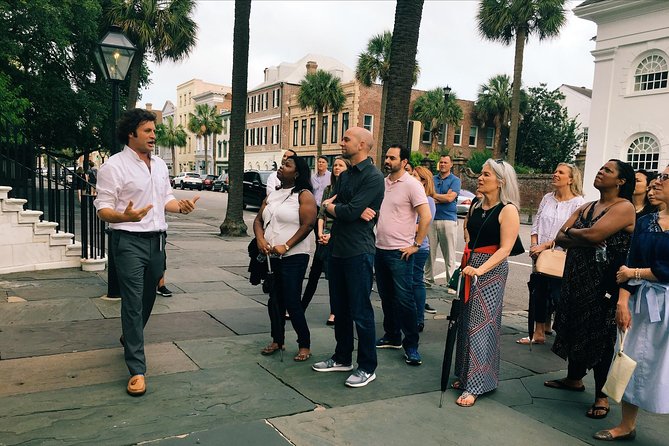
Charleston’s story is best read from the street, where grand churches, painted houses, and old civic buildings sit within a few blocks of one another. This two-hour guided walk links the French Quarter and South of Broad, giving you a useful first look at the city without turning the experience into a simple photo stop.
I like the way the route pairs famous sights such as Rainbow Row with difficult subjects, including Charleston’s role in slavery. I also like the guides’ apparent range, especially Bill Harris, whose humor, opinions, and command of local and national history can turn a standard walk into a lively discussion. The main consideration is pace: one recent experience became more talk than walking, so this suits you best if you value explanation over covering lots of ground.
In This Review
- Key points to know before you book
- Why this Charleston walk works for first-time visitors
- St. Philip’s Church and the opening view of Charleston
- French Huguenot Church and Charleston’s religious mix
- The Pink House Gallery and Charleston’s oldest private residence
- The Old Slave Mart Museum and Charleston’s hardest subject
- The Old Exchange and Provost Dungeon
- Rainbow Row and the final postcard view
- How much walking is actually involved?
- Is the tour a good value?
- Who should book this Charleston walking tour?
- My call: book it if you want the story behind the streets
- FAQ
- How long is the Highlights of Charleston Guided Walking Tour?
- Where does the tour begin and end?
- Are admission tickets included?
- What should I bring?
- Are children and pets allowed?
- What happens if bad weather cancels the tour?
Key points to know before you book
- A compact route through two historic neighborhoods: You move from the French Quarter toward South of Broad, with major sights close together.
- History comes before postcard views: The Old Slave Mart Museum and Old Exchange add context to Charleston’s wealth, politics, and painful past.
- Guide quality is central: Bill Harris receives especially strong praise for humor, candor, and wide historical knowledge, while Vanna is also described as personable and funny.
- Six planned stops, mostly viewed from outside: Two museums charge admission separately, and the other stops are free to view.
- Bring water and weather gear: The route is almost entirely outdoors, with limited restroom access and little assurance of water along the way.
- Small-group format: The maximum is 20 people, and you need to arrive 5 to 10 minutes early because late arrivals cannot be held.
Why this Charleston walk works for first-time visitors
I see this tour as a city orientation with a strong history lesson attached. In two hours, you get a close look at the old center of Charleston, rather than spending your first day trying to sort out the city’s streets, churches, and historic houses on your own.
The route begins at 200 East Bay Street and generally finishes near Meeting Street and Broad Street. That location is useful because you end near the heart of downtown, close to more sightseeing, restaurants, and public transportation. The exact finish can shift with the group’s pace and the guide, so treat the endpoint as approximate.
The tour is limited to 20 people. That is not a private walk, but it is small enough for a guide to interact with the group and answer questions. If your departure has only a few participants, the experience may feel closer to a personal history conversation than a formal lecture.
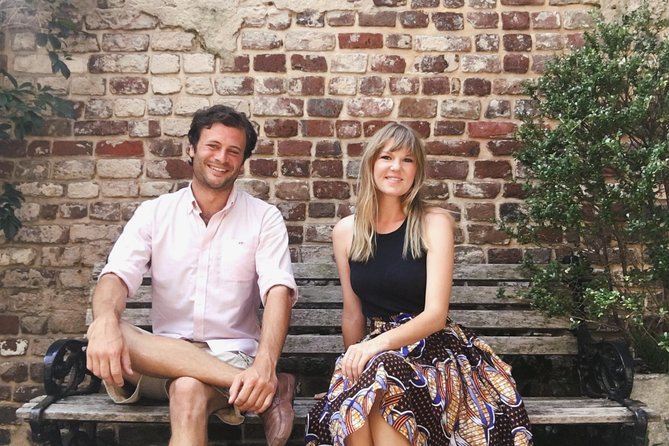
The guide makes or breaks this kind of outing. Bill Harris is the name most closely associated with the strongest praise, and his style sounds unusually personal: funny, direct, highly informed, and willing to connect Charleston’s past with the wider story of the colonies, the United States, religion, and social change. Vanna is also described as warm, amusing, and well informed.
You should not book this expecting a scripted march from one photo stop to the next. The best version of the experience seems to be a conversation shaped by the group’s interests. That is a strength if you want context. It can be a weakness if you prefer constant movement and quick commentary.
More Walking Tours in Charleston
- Historic Charleston Guided Sightseeing Walking Tour
★ 5.0 · 6,216 reviews - Ghosts of Charleston Night-Time Walking Tour with Unitarian Church Graveyard
★ 4.5 · 2,835 reviews - Hidden Alleyways and Historic Sites Small-Group Walking Tour
★ 5.0 · 2,335 reviews
St. Philip’s Church and the opening view of Charleston
The first stop is St. Philip’s Church, where you spend about 10 minutes viewing the historic congregation. The church is important not only as an attractive old building, but also as a marker of Charleston’s long religious and civic life.
A guide can help you see how churches in this part of town fit into the city’s social order. That matters because Charleston’s old streets are full of handsome façades that can look alike after a while. The background gives the architecture a purpose.
You do not pay an admission fee for this stop. The visit is primarily an exterior view, so do not expect a full interior tour or a long pause inside the church. It is an efficient opening, and it places you in the historic core almost immediately.
This is also where you can judge the guide’s style. If your guide sets a broad historical frame early, you will likely get more from the later stops. Some guides may spend more time explaining dates and institutions, while others may focus on stories and local characters.
French Huguenot Church and Charleston’s religious mix
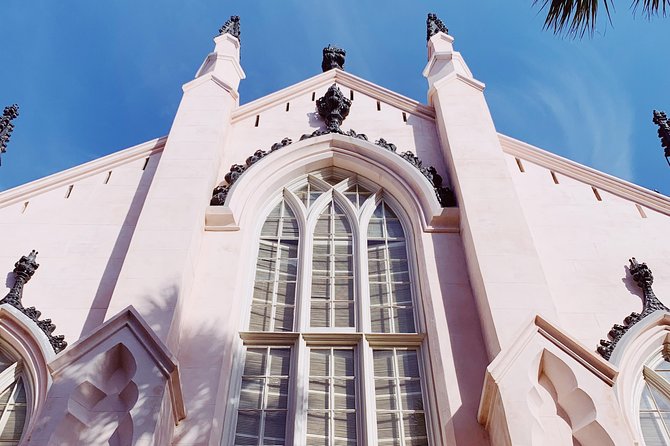
The French Huguenot Church is described as the only church of its denomination in North America. That distinction gives this brief stop more weight than its 10-minute length suggests.
Here, I would pay attention to the way your guide explains Charleston as a port city shaped by people from different places and religious traditions. The church is not just another old façade. It points to migration, belief, community identity, and the ways groups established themselves in colonial America.
The stop is free to view, and it fits neatly into the walking route. You get another example of Charleston’s architecture without needing a separate museum visit. If religious history interests you, this may be one of the more rewarding moments of the walk, especially with Bill Harris, whose background in religious history has been singled out as an unexpected strength.
The limitation is simple: 10 minutes is enough for an introduction, not a full study. If you want to see the interior or learn every detail about the congregation, you would need additional time on your own.
The Pink House Gallery and Charleston’s oldest private residence
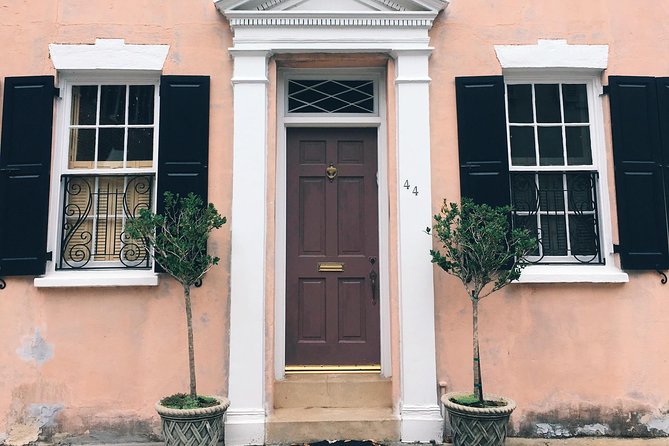
The Pink House Gallery is presented as Charleston’s oldest private residence. Its small scale and colorful exterior provide a welcome change from the larger churches and public buildings nearby.
This stop shows why a guide is useful in Charleston. Without context, you may notice the pink color and unusual shape, take a picture, and continue. With a guide, you can place the house within the city’s development and understand why this kind of private building matters.
You spend around 10 minutes here, with no admission fee included because there is no paid entry required for the planned view. The stop is short, but it helps balance the tour. Charleston is not only about major churches and colonial institutions. Its character also comes from individual houses, narrow streets, and small architectural surprises.
Keep your expectations in check. The experience does not promise a house tour or a gallery visit. Think of it as a look at an important private residence from the route, with the guide supplying the meaning.
More Charleston walks with a guide:
- Charleston Haunted Booze and Boos Ghost Walking Tour
★ 5.0 · 1,569 reviews - Charleston’s Pleasing Terrors Night-Time Walking Ghost Tour
★ 5.0 · 1,345 reviews - Charleston historical walking tour with a Professor of History at The Citadel
★ 5.0 · 1,284 reviews - Charleston Ghost & Graveyard Night-Time Guided Walking Tour
★ 4.5 · 1,100 reviews
The Old Slave Mart Museum and Charleston’s hardest subject
The Old Slave Mart Museum is the most important stop for understanding the moral and economic history behind Charleston’s beauty. It is described as the only museum dedicated to the history of enslaved people in Charleston, and admission is not included.
This is the point where the tour moves beyond architecture. Charleston’s prosperity was tied to slavery, and a useful city walk must address that plainly. The guide can connect the museum to the city’s trade, politics, buildings, and social structure, rather than treating slavery as a side note.
The planned stop lasts about 10 minutes, which is enough to identify the museum and explain its place in the city. It is not enough for a full museum visit. If you want to go inside, budget extra time and pay the separate admission. You may prefer to return after the walk so you can move at your own pace and read the exhibits carefully.
I especially value this stop because it keeps the tour from becoming a parade of pretty façades. The experience aims to explain how Charleston worked, not only how it looked. Still, the quality of the discussion depends on your guide, and you should be ready for a serious subject in an outdoor group setting.
The Old Exchange and Provost Dungeon
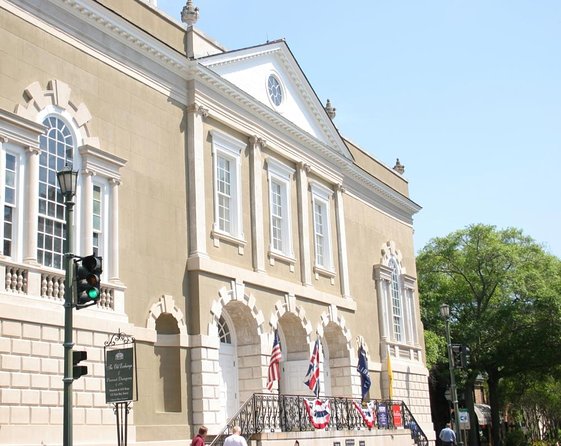
The Old Exchange and Provost Dungeon represents Charleston’s pre-Revolutionary economic center. This building connects the city’s commercial life with its political history, making it a natural stop after the Old Slave Mart Museum.
The name can sound dramatic, but the useful question is what the building tells you about power. Your guide may explain how trade, government, public events, and imprisonment overlapped in colonial Charleston. That wider frame helps you read the city as a working port and political center, not simply a preserved neighborhood.
Admission is not included, so the scheduled stop is mainly a view and explanation. If you want to visit the interior and dungeon, plan a separate entry. Ten minutes gives you a solid introduction, but not the time for a full examination of the building.
This is another place where a history-focused guide adds value. Bill Harris is often praised for placing Charleston within the history of the colonies, the country, and the wider world. That broad approach can make the building easier to understand, though it may also lead to longer talks at each stop.
Rainbow Row and the final postcard view
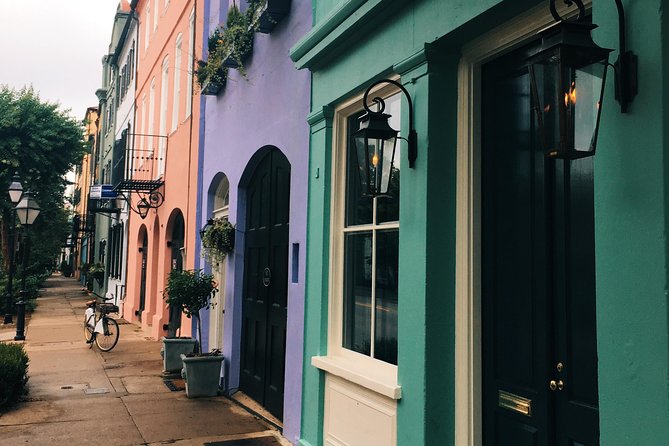
Rainbow Row is the most photographed sight on the route, and it is an easy crowd-pleaser. The row of colorful houses gives you the classic Charleston image, but the guide helps place the scene within the larger walk.
By this point, you have seen churches, a private house, a slavery museum, and a major civic building. Rainbow Row works well at the end because it gives you a bright visual finish after several serious historical subjects.
The stop is free, and you do not need a ticket to view the façades. Expect time for photographs and a final explanation rather than an entry into the houses. Because the end point generally falls near Meeting Street and Broad Street, you can continue exploring afterward.
Do not judge the entire tour by Rainbow Row. It is attractive, but it is also the easiest sight to find on your own. The value comes from the stops before it and the links your guide makes between them.
How much walking is actually involved?
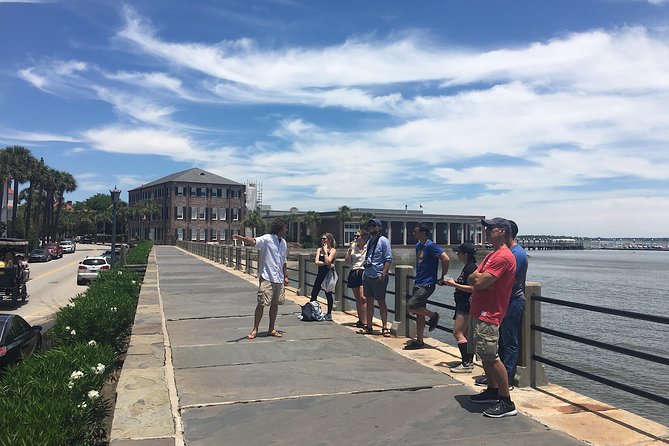
The experience is described as a walking tour, but the route is not presented as a strenuous hike. You should still have a moderate level of fitness and wear comfortable shoes. Charleston’s weather can make an easy urban walk feel harder, especially in strong sun or high humidity.
One practical point deserves attention: the tour may include long periods standing in one place while the guide speaks. That can be a plus if you want detailed history. It can frustrate you if you expect a brisk circuit with constant movement.
The best strategy is to arrive ready to listen. If you want more walking and fewer explanations, tell your guide early. The group’s questions and interests can shape the amount of time spent at each location, and the advertised endpoint may change with walking speed.
Use the restroom before you arrive. Restrooms are not always accessible along the route. Bring bottled water, since it may not be available for purchase during the walk, along with sunscreen, a hat, sunglasses, or a parasol. For wet weather, bring your own rain gear.
The tour normally operates in rain but may be canceled for lightning, flooding, high winds, or other dangerous conditions. It requires good weather, and a cancellation due to poor conditions brings the choice of another date or a full refund.
Is the tour a good value?
No price is provided here, so I cannot judge the exact dollar value. I can tell you what you are paying for: a guide, a compact route through two of Charleston’s key historic districts, and interpretation that connects buildings to larger events.
The guide is the main value. If you simply want photographs of Rainbow Row and the churches, you can see several of these locations without paying for a tour. If you want to understand why they matter, and how Charleston’s economy, religion, politics, and slavery shaped the city, the guided format earns its keep.
The two museum admissions are extra. That keeps the base walk focused and gives you control over your spending, but remember to budget separately if you want to enter the Old Slave Mart Museum or Old Exchange and Provost Dungeon.
A two-hour length is also useful. You get a substantial introduction without giving up a full day. I would schedule it near the start of your Charleston stay, then return to the places that deserve more time. The walk can help you decide which buildings and museums to revisit.
Free cancellation is available until 24 hours before the start time. Changes or cancellations inside that window are not refunded, so do not wait until the last minute if your plans are uncertain.
Who should book this Charleston walking tour?
I would choose this for a first visit, especially if you want a clear sense of the old city before exploring alone. It is also a strong fit for anyone who prefers history, architecture, and conversation to a quick sightseeing loop.
Families can bring children, though the tour is designed mainly for adults. Children and young adults have taken the route, but the serious subject matter and extended talks may suit older children better. Children must be accompanied by an adult, and you should notify the operator if you plan to bring a stroller.
History teachers, students, and curious adults may get the most from the guide’s broad perspective. The strongest guide style here appears to be energetic and opinionated, with plenty of facts and side connections. If you want a quiet, carefully timed walk, that same style may feel like too much.
Service animals are allowed. Other pets are not permitted. Parking is not included, and the suggested garages are at 1 Cumberland Street and 89 Cumberland Street, each about a five-minute walk from the meeting point. Public transportation is nearby, which may be easier than driving into the historic center.
My call: book it if you want the story behind the streets
Book this tour if you want Charleston explained, not just displayed. The route covers the expected sights, but the real reason to go is the guide’s ability to connect churches, houses, commerce, slavery, and politics in one walk.
I would especially consider it if Bill Harris is leading your departure, though guide assignments can vary and Vanna has also received warm praise. Arrive early, bring water and sun protection, and accept that the talk may be as important as the walking.
Skip it if you want to cover a large area quickly or spend most of the time moving. For everyone else, this is a thoughtful, compact introduction to Charleston, with enough difficult history to make the pretty parts mean something.
FAQ
How long is the Highlights of Charleston Guided Walking Tour?
The tour lasts approximately two hours.
Where does the tour begin and end?
It begins at 200 East Bay Street in Charleston. It generally ends near the intersection of Meeting Street and Broad Street, though the exact endpoint can change based on the group’s walking speed and the guide.
Are admission tickets included?
Admission is not included for the Old Slave Mart Museum or the Old Exchange and Provost Dungeon. The other listed stops are free to view.
What should I bring?
Bring comfortable walking shoes, bottled water, sunscreen, a hat, sunglasses, or a parasol. You should also bring your own rain gear if wet weather is expected.
Are children and pets allowed?
Children may join but must be accompanied by an adult. Registered service animals are allowed, but other pets are not permitted.
What happens if bad weather cancels the tour?
The tour usually operates in rain but may be canceled for dangerous or disruptive weather such as lightning, flooding, or high winds. If it is canceled, you may reschedule or receive a full refund.
Recently reviewed around Charleston
- Kayak With Dolphins in Historic Shem Creek★ 5.0 · 407 reviews
- Charleston’s Best Highlights: History, Culture & Architecture★ 5.0 · 422 reviews
- 2-Hour Guided Kayak Eco Tour in Charleston★ 5.0 · 954 reviews
- Charleston Ghosts of Liberty Guided Walking Tour★ 4.5 · 473 reviews
- Undiscovered Charleston: Half Day Food, Wine & History Tour with Cooking Class★ 5.0 · 948 reviews
- Real Hauntings of Charleston! (Small Group Ghost Tour)★ 5.0 · 724 reviews
- Afternoon Schooner Sightseeing Dolphin Cruise on Charleston Harbor★ 4.5 · 620 reviews
- Private Daytime Horse-Drawn Carriage Tour of Charleston★ 5.0 · 340 reviews
Walking Tours, compared.
History and Hauntings of Salem Guided Walking Tour
Read our review →
New Orleans Premier Ghost, Voodoo and Vampire Walking Tour
Read our review →
Freedom Trail History Small Group Walking Tour
Read our review →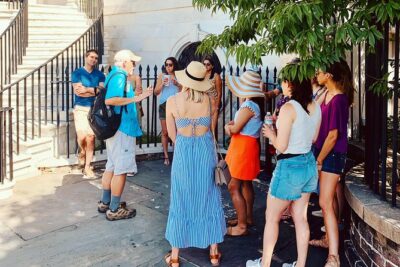
Historic Charleston Guided Sightseeing Walking Tour
Read our review →
New Orleans Food Walking Tour of the French Quarter with Small-Group Option
Read our review →
St. Louis Cemetery No. 1 Official Walking Tour
Read our review →Browse the lists this tour appears in