

Reviewed · HISTORICAL TOURS
Charleston historical walking tour with a Professor of History at The Citadel
Charleston’s past comes into focus on this three-hour walk with Eric Lager, Ph.D., a history professor at The Citadel. Rather than racing through a list of landmarks, you move from colonial Charleston to the Revolution, the early republic, and the Civil War, with buildings and streets serving as your classroom.
I like the small group limit of 12, which makes it easier to hear and ask detailed questions. I also like the route’s mix of architecture and politics, from the Pink House and French Huguenot Church to the Old Exchange and Provost Dungeon and the Battery view toward Fort Sumter.
The main consideration is the pace and subject matter. This is a serious history walk, packed with information, and you need moderate physical fitness for roughly three hours on foot. The tour also runs outdoors, so rain or poor weather can lead to a rescheduled date or refund.
In This Review
- Key points to know before you book
- Why this Charleston walk feels different
- Starting at the Mills House on Meeting Street
- Dock Street Theater and the Pink House
- Washington Square and Charleston’s civic buildings
- St. Michael’s Church and the Washington connection
- The Old Exchange, Huguenots, and the French Quarter
- Hibernian Hall and the road to secession
- The Battery view toward Fort Sumter
- What three hours and $40 really buy you
- The guide’s teaching style and group size
- Weather, walking, and practical planning
- Who should book this walk
- Should you book Charleston History Walk by Eric Lager?
- FAQ
- How much does the Charleston historical walking tour cost?
- How long does the tour last?
- Who leads the walking tour?
- How large is the group?
- What language is the tour offered in?
- Where does the tour start?
- Where does the tour end?
- Do you visit Fort Sumter?
- Are admission tickets to the historic buildings included?
- Can I cancel for a refund?
Key points to know before you book
- A professor leads the walk: Eric Lager teaches history at The Citadel and holds a Ph.D.
- Only 12 people maximum: The small size supports questions and keeps the guide within easy hearing range.
- The route covers about 400 years: Expect colonial, religious, political, architectural, Revolutionary, and Civil War history.
- Fort Sumter is viewed from shore: You see the site from the Battery, but you do not ride out to the fort.
- The walk ends by Rainbow Row: The finish at 39 East Battery puts you near one of Charleston’s best-known postcard scenes.
- The $40 fee covers taxes and fees: Entry to the Heyward-Washington House, Old Exchange, and Hibernian Hall is not included.
Why this Charleston walk feels different

Many city walks give you a date, a name, and a quick photograph stop. This one is built for people who want the connections between those facts. Eric Lager’s academic background matters most when the conversation moves beyond basic landmarks and into politics, religion, architecture, and the forces that shaped South Carolina.
I would choose this tour if you enjoy asking why a building looks the way it does, why a church mattered to a particular community, or how a local dispute grew into a national crisis. The guide’s role is not limited to reciting prepared lines. You are encouraged to ask questions, and the small group gives those questions room.
The walk has also earned a perfect five-star score from 1,284 ratings, with 100 percent of participants recommending it. That figure does not mean every person will want the same style of tour, but it does point to a clear strength: the combination of expert instruction, humor, and personal attention works very well for history-focused visitors.
More Historical Tours in Charleston
- Charleston’s Old South Carriage Historic Horse & Carriage Tour
★ 5.0 · 10,023 reviews - Historic Charleston Guided Sightseeing Walking Tour
★ 5.0 · 6,216 reviews - Charleston Horse-Drawn Carriage Tour: Explore Historic Charleston
★ 5.0 · 3,561 reviews
Starting at the Mills House on Meeting Street
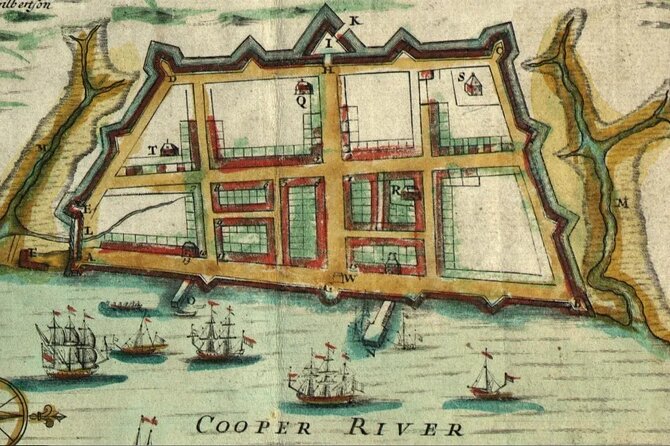
The meeting point is 108 Meeting Street, outside the historic Mills House Charleston, Curio Collection by Hilton. The hotel gives the tour an appropriate opening, since it played a role during the early part of the American Civil War.
This first stop is brief, about 10 minutes, but it sets the tone. You begin with a real building and use it to enter a larger story about Charleston during a period of national strain. Because there is no admission fee here, the stop stays focused on the exterior and the surrounding setting.
Arrive ready to walk. Private transportation is not provided, and the tour remains on city streets for its full length.
Dock Street Theater and the Pink House
At Dock Street Theater, you spend about 10 minutes learning about the first theater built in North America and the memorable figures linked to its past. The stop works well for visitors who want more than military and political history. Charleston’s theaters reveal how people spent their leisure time, what kinds of culture mattered, and which personalities shaped public life.
The route then reaches the Pink House Gallery, one of Charleston’s oldest buildings, dating to about 1712. The visit lasts only five minutes, so this is a quick look rather than an interior tour. Still, it gives you a chance to see an early structure up close and compare its scale and design with the grander civic buildings later in the walk.
I like this early pairing because it keeps the morning from becoming a parade of government buildings. You get social history, architecture, and an old surviving house before moving into Charleston’s civic center.
Washington Square and Charleston’s civic buildings
Washington Square receives about 15 minutes, making it one of the longer stops. The square contains several monuments, and it provides a natural place to discuss the people and events Charleston chose to commemorate.
The stop at Charleston City Hall lasts about 10 minutes. Its earlier uses as a meat market and bank help explain how one building can change with the needs of a growing city. You are not just looking at a handsome facade. You are tracing the shift from a commercial market town to a more formal civic government.
At the Charleston County Courthouse, the focus turns to the building’s earlier role as the old South Carolina statehouse. This stop also lasts about 10 minutes. The sequence of City Hall and the courthouse is useful because it places Charleston’s public institutions side by side, showing how power, commerce, and law occupied the same compact part of the city.
Expect a lot of information in this stretch. If you prefer a light stroll with occasional commentary, you may find the level of detail demanding. If you like the political story behind streets and buildings, this is where the tour earns much of its $40 price.
More Walking Tours in Charleston
- Ghosts of Charleston Night-Time Walking Tour with Unitarian Church Graveyard
★ 4.5 · 2,835 reviews - Hidden Alleyways and Historic Sites Small-Group Walking Tour
★ 5.0 · 2,335 reviews - Highlights of Charleston Guided Walking Tour
★ 5.0 · 2,206 reviews - Charleston Haunted Booze and Boos Ghost Walking Tour
★ 5.0 · 1,569 reviews
St. Michael’s Church and the Washington connection
St. Michael’s Church is one of the key architectural and historical stops. Completed in 1761, it is Charleston’s oldest church edifice, and the guide uses its history to explain more about the city’s religious and civic life.
The church stop lasts roughly 10 minutes. Admission is free, but the experience is centered on the history presented outdoors rather than a guaranteed interior visit. As with the other sites, listen closely, since the value comes from the explanation attached to the building.
The Heyward-Washington House follows. Here you learn where George Washington stayed during his visit to Charleston in 1791. Admission is not included, so you should not expect the $40 tour price to cover entry. The stop lasts about 10 minutes and is best understood as part of the exterior walking route unless you separately arrange admission.
I appreciate the way this portion connects a nationally famous visitor with an actual Charleston address. It makes the early republic feel less abstract and gives you a precise place to remember after the walk.
The Old Exchange, Huguenots, and the French Quarter
The Old Exchange and Provost Dungeon is another short stop, about five minutes. It was the last public building built by the British in North America, and the site is also tied to the ratification of the Constitution in 1788.
Admission is not included here either. The important point for a walking-tour decision is that you can understand the site’s role without spending the entire day inside museums, but anyone wanting an interior visit should budget separately.
At the French Huguenot Church, the tour turns to Charleston’s French Huguenot community and the first church built in the Gothic Revival style. The stop lasts about 10 minutes and adds religious history to the political and military themes already in play.
The French Quarter itself receives about 15 minutes. This is your chance to enjoy the streets, buildings, and visual character of one of Charleston’s best-known areas while the guide explains how the district fits into the city’s past. It is a pleasant change of rhythm after the civic stops, though the walk remains an interpretation of the neighborhood rather than free time for shopping or independent wandering.
Hibernian Hall and the road to secession
Hibernian Hall gets about 10 minutes. The building is connected with the seeds of disunion and also offers a way to discuss Greek Revival architecture and America’s ties to that style.
This is a valuable stop if you want the Civil War treated as a political process rather than a single event. The route does not reduce Charleston’s past to forts and battle dates. It places architecture, organizations, and public debate into the same story.
Admission to Hibernian Hall is not included. The tour’s basic cost covers all fees and taxes, but not entry to the three sites specifically identified as paid attractions: the Heyward-Washington House, Old Exchange and Provost Dungeon, and Hibernian Hall.
The Battery view toward Fort Sumter
The final major stop is the Battery, where you look across Charleston Harbor toward Fort Sumter National Monument. This is where the first shots of the Civil War were fired, but the tour does not travel out to the fort.
That detail matters. If you want a boat ride and time on Fort Sumter itself, this walk is not a substitute for a dedicated fort excursion. If you want the setting, the harbor view, and the story without adding a separate boat trip, the Battery stop gives you a useful introduction.
The experience ends at 39 East Battery, near the iconic Rainbow Row section of Charleston. That finish is practical: you can continue exploring on your own, take photographs, or use the location as a starting point for more time in the historic district.
What three hours and $40 really buy you
At $40 per person, this is a strong value for a focused history walk. You receive about three hours of instruction, a route through major historic areas, a group capped at 12, and the chance to ask a professor detailed questions. The price also includes all fees and taxes.
The value is less convincing if you mainly want to enter historic houses or spend time inside museums. Several stops are exterior presentations, and admission is not included at the Heyward-Washington House, Old Exchange and Provost Dungeon, and Hibernian Hall.
The walk is also long enough to provide context but short enough to fit into a Charleston visit. I would schedule it early in your stay. The route can help you decide which buildings and neighborhoods deserve a second look, and the guide’s explanations may give you better questions to take into later museum visits.
Recent participants describe the tour as lasting three hours or slightly more, so do not schedule a tight appointment immediately afterward. The material can be dense, but the format allows questions and the guide adjusts to the group’s interests.
The guide’s teaching style and group size
Eric Lager is the central reason to book this particular walk. He is presented as a Citadel history professor with a Ph.D., and the experience is designed around his ability to explain Charleston in detail.
The strongest praise focuses on his command of subjects beyond the official route: American and European nineteenth-century history, architecture, religion, local politics, and the Civil War. People also describe him as funny, personable, accommodating, and able to keep a long history lesson moving.
The cap of 12 is not a minor selling point. In a larger group, you may struggle to hear on a city street or hesitate to interrupt with a question. Here, the guide can speak with people individually while walking, and the group can stay close enough for a more direct exchange.
That said, a professor-led walk is not automatically the right choice for everyone. If your ideal tour is mostly amusing anecdotes, shopping suggestions, or quick photo stops, this one may feel too academic. The tone is friendly, but the content is substantial.
Weather, walking, and practical planning
You need moderate physical fitness. The tour involves about three hours on foot, with standing at the stops and movement between them. Wear comfortable shoes and bring water, since bottled water is not provided.
The tour is offered in English and uses a mobile ticket. Service animals are allowed, and the starting point is near public transportation. Private transportation is not part of the experience.
Charleston weather can change the feel of an outdoor walk. The activity requires good weather, and a cancellation caused by poor conditions results in an alternative date or a full refund. You can cancel for a full refund up to 24 hours before the start time. Within 24 hours, cancellations and changes are not accepted, and the amount paid is not refunded.
Who should book this walk
I would recommend it most strongly to history buffs, architecture fans, solo visitors, couples, and small groups who enjoy asking questions. It is also a smart first-day activity for someone who wants a clear framework for Charleston before exploring independently.
Families with older children may find the subject matter rewarding if the children enjoy history and can manage the walking time. The tour is less suited to anyone seeking a relaxed, low-information outing or a tour that enters every building.
Book it if you want to understand how Charleston’s churches, theaters, courthouses, squares, and harbor fit together. Skip it if your main goal is Fort Sumter itself, since the tour only views the fort from the Battery.
Should you book Charleston History Walk by Eric Lager?
Yes, if you want a serious but approachable lesson in Charleston’s past. The small group, professor-led format, question time, and broad route make the $40 fee good value, especially when you consider the amount of history covered in about three hours.
I would book this early in a Charleston visit and leave extra time afterward for the Battery and nearby Rainbow Row. Bring water, prepare for a full outdoor walk, and understand that this is mainly an exterior city tour. For an authentic sense of how Charleston’s buildings and public spaces connect to national events, this is one of the strongest choices in the city.
FAQ
How much does the Charleston historical walking tour cost?
The tour costs $40 per person. All fees and taxes are included.
How long does the tour last?
The scheduled duration is approximately three hours.
Who leads the walking tour?
The tour is led by Eric Lager, Ph.D., a professor of history at The Citadel.
How large is the group?
The group has a maximum of 12 participants.
What language is the tour offered in?
The tour is offered in English.
Where does the tour start?
It starts at 108 Meeting Street, Charleston, South Carolina 29401, USA.
Where does the tour end?
It ends at 39 East Battery near the Rainbow Row section of Charleston.
Do you visit Fort Sumter?
You view Fort Sumter National Monument from the Battery on Charleston Harbor. The tour does not travel out to the fort.
Are admission tickets to the historic buildings included?
Admission is not included for the Heyward-Washington House, Old Exchange and Provost Dungeon, or Hibernian Hall. All fees and taxes for the tour itself are included.
Can I cancel for a refund?
You can cancel at least 24 hours before the start time for a full refund. Cancellations or changes made within 24 hours are not accepted and are not refunded. If poor weather causes the tour to be canceled, you will be offered another date or a full refund.
Recently reviewed around Charleston
- Kayak With Dolphins in Historic Shem Creek★ 5.0 · 407 reviews
- Charleston’s Best Highlights: History, Culture & Architecture★ 5.0 · 422 reviews
- 2-Hour Guided Kayak Eco Tour in Charleston★ 5.0 · 954 reviews
- Charleston Ghosts of Liberty Guided Walking Tour★ 4.5 · 473 reviews
- Undiscovered Charleston: Half Day Food, Wine & History Tour with Cooking Class★ 5.0 · 948 reviews
- Real Hauntings of Charleston! (Small Group Ghost Tour)★ 5.0 · 724 reviews
- Afternoon Schooner Sightseeing Dolphin Cruise on Charleston Harbor★ 4.5 · 620 reviews
- Private Daytime Horse-Drawn Carriage Tour of Charleston★ 5.0 · 340 reviews
Historical Tours, compared.

History and Hauntings of Salem Guided Walking Tour
Read our review →
Charleston’s Old South Carriage Historic Horse & Carriage Tour
Read our review →

Big Island in a Day: Volcanoes Waterfalls Sightseeing and History
Read our review →
Freedom Trail History Small Group Walking Tour
Read our review →
Historic Charleston Guided Sightseeing Walking Tour
Read our review →
Starship Landmark 90 Minute Sightseeing Cruise
Read our review →Browse the lists this tour appears in