
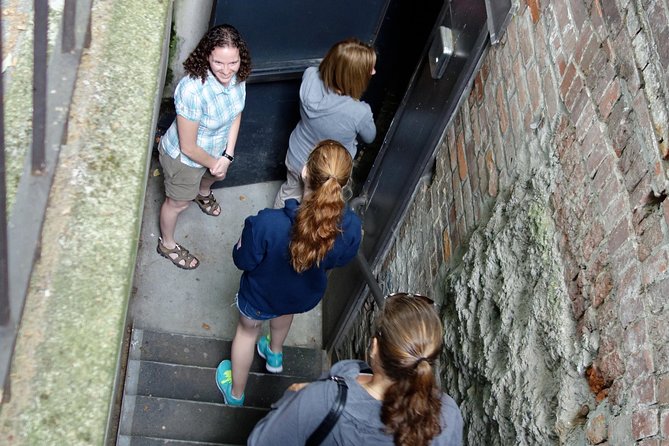
Reviewed · HISTORICAL TOURS
Beneath The Streets Underground History Tour
Seattle’s Pioneer Square has a second city beneath it, but don’t expect a continuous maze. Beneath the Streets takes you through three separate underground spaces, with short walks above ground connecting them. That layout gives you a clearer picture of old and modern Seattle, though it means less time below street level than some people expect.
I like the way the tour ties physical places to big turning points, especially the rebuilding of Seattle in the 1890s and the city’s role in the Klondike Gold Rush. I also like the guide-led storytelling. Guides including David, Patti, Sarah, Jim, Daniel, and Imogen are praised for humor, personal touches, and energy. The main drawback is simple: if you want a long underground expedition, this one-hour tour may feel too short and too talk-heavy above ground.
In This Review
- Key points at a glance
- What Seattle’s underground really is
- The story begins with the Coast Salish peoples
- Pioneer Square above the old street level
- Three underground spaces, not one continuous tunnel
- The Great Fire and Seattle’s rebuilding
- Seattle and the Klondike Gold Rush
- Guides make or break this one-hour walk
- Price, duration, and what you receive
- Stairs, weather, and what to wear
- Who will enjoy Beneath the Streets
- Should you book it?
- FAQ
- How long does the Beneath the Streets tour last?
- Where does the tour start?
- Where does the tour end?
- How much walking is involved?
- Are there stairs on the tour?
- Is the underground area one connected tunnel system?
- Can I cancel for a full refund?
Key points at a glance
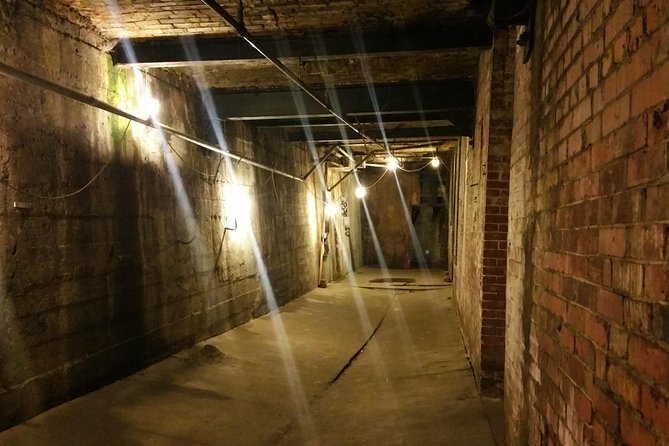
- Three separate underground passageways: You explore historic spaces rather than one connected tunnel system.
- A walking lesson in Seattle’s beginnings: The route covers Pioneer Square, old street levels, 1890s architecture, and the city’s rebuilding.
- Strong guide personalities: David, Patti, Sarah, Daniel, Jim, and Imogen are among the guides noted for humor and lively storytelling.
- About half a mile on foot: Expect four city blocks and three flights of stairs, taken at an easy pace.
- Useful for families and locals: Children as young as seven have enjoyed it, and the content works for people who already live in Seattle.
- A good use of one hour: At $29.03, it offers a focused introduction, but not an all-day history experience.
What Seattle’s underground really is
The phrase underground city sounds dramatic. It can also create the wrong picture.
Seattle’s underground passages are not a single, connected maze stretching beneath downtown. The spaces in Pioneer Square were created after the original street level was raised and rebuilt in the 1890s. Beneath the Streets shows you three separate areas, then walks you above ground between them.
That distinction matters. If you picture a dark, continuous network like a subway system, you may leave disappointed. If you see the tour as a short history walk with several preserved underground stops, the format makes much more sense.
You begin at 102 Cherry Street, near Pioneer Square. From there, the guide sets the scene: Seattle’s early settlement, the city’s original street layout, and the changes that followed its growth. The underground spaces are the visual evidence. The guide’s job is to connect those rooms and passageways to the streets above.
I find that approach more useful than simply wandering through old brick and timber. You learn why the lower level exists, how the upper streets changed, and how Pioneer Square moved from Seattle’s first urban center into a neighborhood with a very different present-day identity.
More history-led days around Seattle:
- New York City: American Museum of Natural History Ticket
★ 4.5 · 15,447 reviews - History and Hauntings of Salem Guided Walking Tour
★ 5.0 · 14,564 reviews - Charleston’s Old South Carriage Historic Horse & Carriage Tour
★ 5.0 · 10,023 reviews
The story begins with the Coast Salish peoples
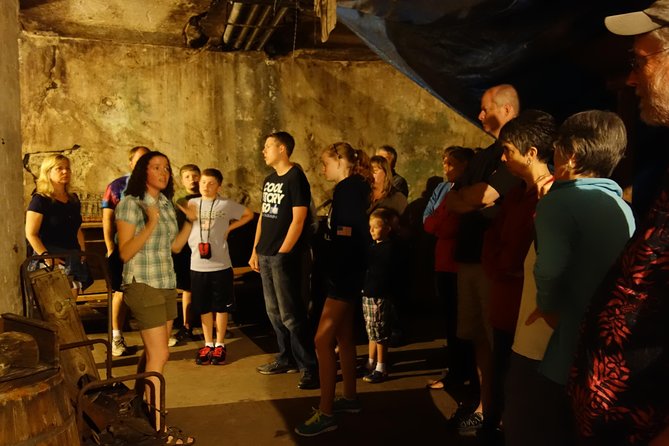
A worthwhile Seattle history tour should begin before Seattle became a city. Beneath the Streets includes the Coast Salish peoples, the related Indigenous communities who first inhabited this region.
That part gives the tour needed context. The city did not begin with 1890s buildings, gold seekers, or newly laid streets. Indigenous peoples had established communities and traditions here long before Seattle’s urban development.
The company says its guides take part in workshops on cultural traditions and history with historians and Native Tribal members. That continuing preparation is important because a short tour can easily rush past Indigenous history in favor of more familiar pioneer stories.
You should not expect an extended study of Coast Salish culture in a one-hour walk. The tour has many subjects to cover. Still, placing Indigenous history near the start helps frame Seattle as a place with a much older story than its built environment suggests.
Pioneer Square above the old street level
The above-ground portion is not filler. It is where you compare modern Pioneer Square with the neighborhood of the late nineteenth century.
The tour covers about four city blocks and moves at a leisurely pace. You will see the present-day streets while hearing about the original main street, commercial life, and the social conditions that shaped the district. The old street level below your feet and the current street level under your shoes become part of the same lesson.
One subject is Skid Row, the rough urban area that served as a main street in Pioneer Square. The name carries plenty of later associations, but here it helps explain how the district changed as Seattle grew. The tour looks at a neighborhood that was once central to city life, then developed a less polished reputation.
This above-ground storytelling is one of the experience’s strengths. Several guides are praised for explaining both what happened below and how it connects to the streets around you. David, in particular, is noted for making the relationship between upper and lower Seattle easy to follow.
The limitation is time. The tour covers four blocks, three underground areas, and several major historical subjects in roughly one hour. You get a brisk introduction, not a slow architectural walk through every building in Pioneer Square.
Three underground spaces, not one continuous tunnel
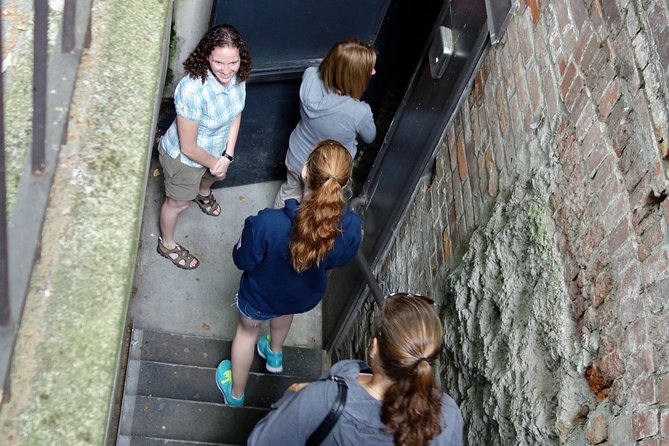
The underground sections are the tour’s main attraction. They are also the part that requires realistic expectations.
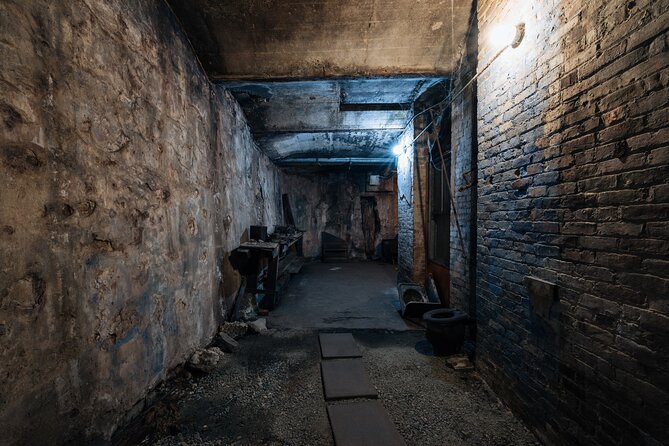
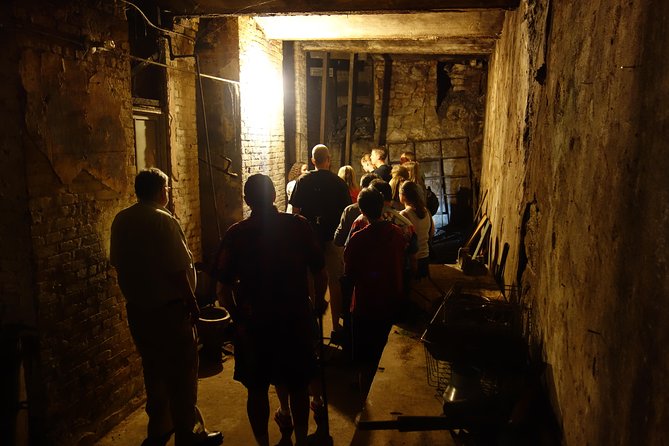
You descend through three flights of stairs during the hour. The underground surfaces can be uneven, and the route involves stairs going up and down each flight. The pace is described as easy, but this is still a walking tour, not a seated presentation.
Inside the passageways, you can study the old construction and imagine how Seattle’s original street level functioned. The spaces show the physical result of rebuilding and street raising. They are historic remains, not a polished attraction designed to look new.
The underground areas are reportedly cleaner and less unpleasant than some first-time visitors expect. That is useful to know if the word underground makes you picture a damp, foul-smelling tunnel. The spaces may feel old and rough, but the experience is not presented as a grim endurance test.
The strongest part is the contrast. You may stand beneath a modern street while hearing how the old level once worked. Then you return to the surface and see the same district from today’s perspective. That movement gives the tour its purpose.
Still, the amount of time underground can vary with the guide and the flow of the group. Some people want more passageways and less explanation. If that sounds like you, ask yourself if the historical talk is the main reason you are booking. For this experience, it needs to be.
A completely different way to spend a day nearby:
- Chef Guided Food Tour of Pike Place Market
★ 5.0 · 3,733 reviews - Mt. Rainier National Park Highlights Tour
★ 5.0 · 3,156 reviews - Seattle: Guided Underground Walking Tour
★ 4.6 · 2,144 reviews - Seattle’s Original Guided Harbor Cruise
★ 4.5 · 2,077 reviews
The Great Fire and Seattle’s rebuilding
The city’s development story includes disaster, planning, and practical engineering. Beneath the Streets focuses on the events that helped transform a small settlement into a major American city.
The Great Fire and the rebuilding that followed are central to understanding the underground. A fire can destroy a city, but it can also give officials and builders a chance to alter streets, sidewalks, and building practices. The underground spaces exist because Seattle changed its street level during this period.
Rather than treating the underground as a strange accident, the tour places it within that larger rebuilding story. This is where the guide’s explanations matter most. Old walls alone cannot tell you why the lower level was left behind or how people adapted to the new streets above.
The 1890s architecture also gets attention. You will not receive a full architecture course, but you do get a closer look at the period that shaped Pioneer Square. The buildings and passageways become clues to Seattle’s early urban growth.
This section suits you if you like understanding how cities physically change. It may feel less satisfying if you want ghost stories, legends, or a tour built mainly around spectacle. The focus is factual history, with humor added by the guide.
Seattle and the Klondike Gold Rush
The stampede to the Yukon gold fields helped put Seattle on the map in a new way. The tour explains Seattle’s role in what became the Klondike Gold Rush and shows how the city used that connection to attract people and business.
Seattle was not the gold fields, but it became a major starting point for people heading north. That distinction makes the subject more interesting. The city benefited by presenting itself as the gateway to the rush, supplying hopeful prospectors and profiting from the movement of people and goods.
The Klondike story also gives the tour a useful link between local streets and national events. Pioneer Square was not an isolated district. Its businesses, hotels, and streets were part of a larger period of American expansion.
If you have time after the tour, the nearby Klondike Gold Rush museum is a sensible follow-up. A guide may point you toward it, and its theater presentation can add more detail to the gold-rush chapter without requiring another long walk.
Guides make or break this one-hour walk
This tour is not tightly scripted. That can be a plus or a risk.
A strong guide can adjust the pace, answer questions, and turn dry facts into a story. The supplied guide information names professional development with historians and Native Tribal members, and the guide roster includes experienced personalities such as Sarah, Patti, David, Daniel, Jim, and Imogen.
David is repeatedly described as funny, enthusiastic, and able to connect the underground with the city above. Patti is noted for enthusiasm and a strong grasp of Pioneer Square. Sarah is praised for handling questions and making the tour work for both local residents and newcomers. Imogen brings an acting background and a gift for creating vivid scenes through storytelling.
That variety is part of the charm. You may get a formal history lesson with jokes, or a more theatrical presentation with extra stories. The upside is that the experience can feel personal rather than recited. The downside is that your experience depends partly on who leads your group.
You should not book this expecting identical wording every time. The company allows guides to discuss Seattle’s history in their own way. That works well for people who enjoy personality and conversation. It is less ideal if you want a tightly controlled script or a fixed list of sights.
Price, duration, and what you receive
At $29.03 per person, this is priced as a modest city attraction rather than a major half-day outing. You receive a professional English-speaking guide and about an hour of structured history in a central Seattle neighborhood.
The value depends on how you use it. For a first visit, the tour can help you understand Pioneer Square before you explore the area on your own. For a local, it offers a compact refresher and may reveal details you have walked past for years.
The tour does not include food, transport, or a long museum visit. You are paying for access to the underground spaces and the guide’s interpretation. That is fair if you care about context. It is less compelling if you mainly want underground photographs or a longer physical exploration.
The group limit is 20 people. That is small enough for a guide to keep the group together and answer some questions, though it is not an intimate private tour. Booking is often done around 12 days ahead, so reserving early is sensible if your schedule is fixed.
Several tour times make it easier to fit into a day of sightseeing. The end point is near the Union Trust Building at 119 South Main Street, in the same general Pioneer Square area. You can pair it with nearby sights, including the Klondike Gold Rush museum.
Stairs, weather, and what to wear
Plan on walking four blocks, roughly half a mile or 0.8 kilometers, at an easy pace. There are three flights of stairs, with stairs going both up and down through the route, plus uneven surfaces in the historic areas.
Comfortable shoes are the right choice. In winter, wear warm layers and cover up properly. The underground spaces may not be the only place you feel the weather, since the route travels outdoors between separate areas.
The tour information says it operates rain or shine and asks you to dress appropriately. It also includes a provision for cancellation in poor weather, with a different date or full refund offered if the operator cancels. Because those statements sit side by side, check the conditions attached to your booking if the forecast looks rough.
Service animals are allowed. The route is near public transportation, and most people can take part, but the stairs and uneven surfaces matter. If those create a serious problem for you, this is not the right kind of walking tour.
Cancellation is free up to 24 hours before the start time. Within 24 hours, changes are not accepted and the amount paid is not refunded, unless the operator cancels because of weather.
Who will enjoy Beneath the Streets
I would choose this for a first-time visitor who wants Seattle’s backstory before moving on to Pike Place Market, the waterfront, or other city sights. It gives you a useful sense of how Pioneer Square developed and why the lower street level exists.
It also works for families. A seven-year-old has enjoyed the experience, and teenagers can follow the stories without needing a special children’s format. The humor helps keep the hour moving.
History fans should get the most from it. You will hear about Indigenous peoples, the 1890s, the Great Fire, Skid Row, Seattle’s early urban growth, and the Klondike Gold Rush. That is a lot of ground for one hour, but the subjects fit together.
Locals may find it worthwhile too, especially if you know Pioneer Square only from the surface. The route offers a different way to read familiar streets. You may also appreciate hearing details beyond the standard guidebook version.
I would be cautious about booking if your main goal is an extended underground walk. A portion of the tour takes place above ground, and the underground sections are not connected. The experience is best understood as a history tour that uses the underground as its most memorable setting.
Should you book it?
Book Beneath the Streets if you want a short, affordable introduction to Seattle’s origins, and if a lively guide matters as much to you as the passageways themselves. The best part is the connection between old street levels, modern Pioneer Square, and the events that changed the city.
Skip it if you expect a large underground complex or want most of the hour spent below ground. For everyone else, the $29.03 price is reasonable for a focused walk, especially when you choose a time that fits your day and wear shoes suited to stairs and uneven floors.
FAQ
How long does the Beneath the Streets tour last?
The experience lasts about one hour. It covers four city blocks and three underground passageways at a leisurely pace.
Where does the tour start?
The tour starts at 102 Cherry Street, Seattle, Washington 98104.
Where does the tour end?
The tour ends at the Union Trust Building at 119 South Main Street in Seattle’s Pioneer Square area.
How much walking is involved?
You walk about four blocks, or roughly half a mile, during the tour. The pace is described as leisurely.
Are there stairs on the tour?
Yes. The route includes three flights of stairs, with stairs going up and down through the hour. Some surfaces are uneven.
Is the underground area one connected tunnel system?
No. The three underground spaces are separate, so the group walks above ground between them.
Can I cancel for a full refund?
Yes, if you cancel at least 24 hours before the experience starts. Cancellations within 24 hours are not refunded, unless the operator cancels because of poor weather.
Recently reviewed around Seattle
- Seattle: Pike Place Market Chef-Guided Food Tour★ 4.8 · 847 reviews
- Seattle: Harbor Cruise with Local Guide★ 4.8 · 599 reviews
- Seattle: City Highlights Tour★ 4.7 · 416 reviews
- Seattle: Half-Day Wildlife and Whale Watching Cruise★ 4.3 · 378 reviews
- Seattle CityPASS®: Save up to 46% at 5 Top Attractions★ 4.6 · 742 reviews
- Seattle: Chihuly Garden and Glass Entry Ticket★ 4.8 · 374 reviews
- From Seattle: Mount Rainier National Park Guided Tour★ 4.8 · 412 reviews
- Seattle: City Sightseeing Hop-On Hop-Off Bus Tour★ 3.9 · 421 reviews
Historical Tours, compared.

History and Hauntings of Salem Guided Walking Tour
Read our review →
Charleston’s Old South Carriage Historic Horse & Carriage Tour
Read our review →
Big Island in a Day: Volcanoes Waterfalls Sightseeing and History
Read our review →
Freedom Trail History Small Group Walking Tour
Read our review →
Historic Charleston Guided Sightseeing Walking Tour
Read our review →
Starship Landmark 90 Minute Sightseeing Cruise
Read our review →
Charleston Horse-Drawn Carriage Tour: Explore Historic Charleston
Read our review →Browse the lists this tour appears in