
Reviewed · MUSEUMS
New York City: American Museum of Natural History Ticket
The American Museum of Natural History packs dinosaurs, distant galaxies, ocean life, human cultures, and 30 million objects into a huge complex beside Central Park. The new Richard Gilder Center gives you another reason to visit, with dramatic architecture, hands-on science displays, and experiences aimed at both children and adults.
I like the museum for two clear reasons: you can shape the day around your interests, and the exhibits give you plenty to see even if you skip every extra-cost show. I also like the practical Explorer app, which provides maps, self-guided routes, quizzes, and stories in English, Spanish, French, and Portuguese.
The main drawback is scale. You will not see everything in a few hours, and a basic entry ticket does not cover the ticketed exhibitions. Busy holiday periods can also make the building feel crowded, so plan your route before you arrive.
In This Review
- Key points for planning your museum day
- Start with the size of the American Museum of Natural History
- The fourth floor is the natural place to begin
- The dinosaur extinction story adds a ticketed choice
- The Gilder Center is more than another exhibition wing
- Ocean life, biodiversity, and cultures give the museum its range
- The Rose Center brings the universe indoors
- Ticketed exhibitions can turn a good visit into a full day
- Use the Explorer app instead of fighting the map
- Families get plenty, but the day can be tiring
- Accessibility and booking details worth knowing
- Is $37 good value for New York?
- Who should book this experience?
- FAQ
- How long is the American Museum of Natural History ticket valid?
- What does general admission include?
- Are special exhibitions included with every ticket?
- Is the museum wheelchair accessible?
- Is a guide included?
- Can I store luggage at the museum?
- What languages does the Explorer app support?
Key points for planning your museum day
- More than 40 permanent halls: See dinosaurs, diamonds, biodiversity, human cultures, ocean life, and much more with general admission.
- The Gilder Center is included: Explore the museum’s newest major addition, with modern science and education displays.
- The Rose Center reaches into space: Visit the planetarium area and explore astronomy exhibits focused on Earth and the universe.
- Ticketed extras change the day: Add one or all special exhibitions, such as the butterfly vivarium, giant-screen film, or space show.
- The Explorer app helps with the size: Use turn-by-turn navigation and self-guided tours instead of trying to follow the paper map alone.
- Allow four to five hours at minimum: If you want a serious look at the museum, a full day is more realistic.
Start with the size of the American Museum of Natural History
This is not a quick stop that you squeeze between Central Park and another attraction. The museum fills a large complex and contains more than 40 permanent exhibition halls, the Rose Center for Earth and Space, and the Gilder Center.
At $37 per person, general admission is reasonable if you plan to stay for several hours. You are paying for access to a large number of permanent displays rather than a short, fixed tour. The value becomes stronger for families, museum fans, and anyone looking for a useful indoor day in cold or rainy weather.
You can spend a focused two or three hours on dinosaurs, ocean life, or space. Still, the practical advice is to allow at least four to five hours if you want to see a broad selection. One useful strategy is to begin on the fourth floor and work downward, especially if your schedule is tight. That approach gives you a simple route through the building, though the app is a better guide than relying only on the printed map.
There is no guide included, so you set the pace. That suits visitors who prefer freedom, but you need to make your own plan. Without one, it is easy to wander from room to room and lose time before reaching the exhibits you most want to see.
More City Tours in New York City
- New York City: Statue of Liberty & Ellis Island with Ferry
★ 4.6 · 18,683 reviews - New York City: Top of the Rock Observation Deck Ticket
★ 4.6 · 14,488 reviews - New York City: Manhattan Helicopter Tour
★ 4.7 · 7,076 reviews
The fourth floor is the natural place to begin
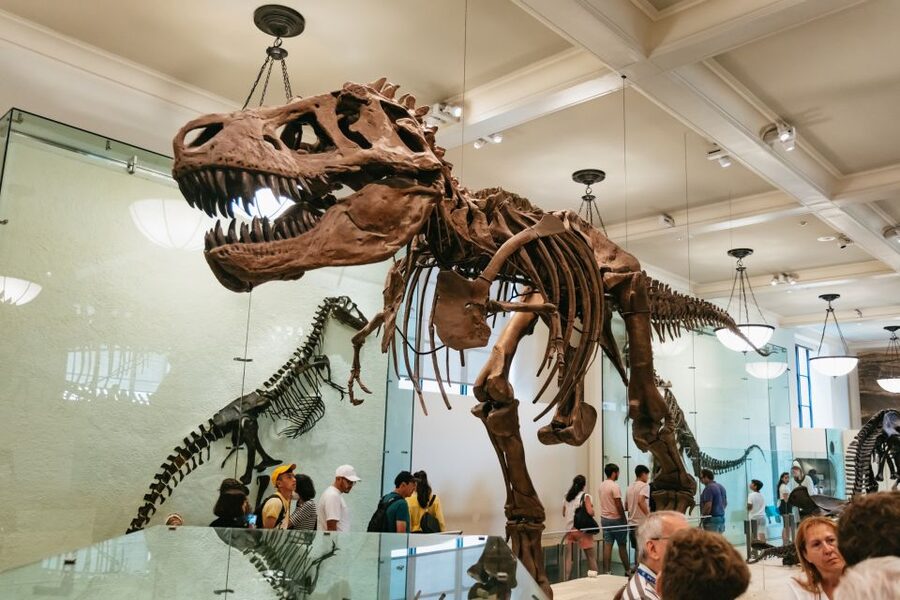
The upper floors contain some of the museum’s biggest crowd-pullers, including its dinosaur displays. The museum is home to what is described as the world’s largest dinosaur fossil collection, so this is the place to start if prehistoric animals are your main reason for coming.
You can expect large fossil skeletons, information about ancient life, and the familiar Tyrannosaurus Rex. The dinosaur halls work well for children because the subject is immediate and visual, but adults get plenty to consider too. The displays connect individual fossils with broader questions about extinction, adaptation, and the changing history of life.
The famous Tyrannosaurus Rex skeleton is also part of the museum’s Night at the Museum appeal. The movie connection adds a playful layer for families, but the real value is seeing the original specimens and carefully arranged displays in person.
The upper-floor approach is efficient, not mandatory. If you are visiting with young children, you may prefer to go straight to the halls that match their interests. The museum is too large for a single correct route.
The dinosaur extinction story adds a ticketed choice
If you select the option that includes special exhibitions, Impact: The End of the Age of Dinosaurs examines the asteroid collision that occurred 66 million years ago. The exhibition focuses on the before-and-after story: how the dinosaur era might have continued, and how one huge event changed the course of life.
This is a useful choice if you want more than a display of fossils. It gives the extinction story a clear structure and helps explain why the event matters beyond the familiar image of a fallen dinosaur. You receive timed entry, so check your selected time and build the rest of your visit around it.
General admission alone does not include ticketed exhibitions. That distinction matters when you compare prices. A basic ticket may be enough if the permanent halls are your priority, but you should choose General Admission + One or General Admission + All if you want the added shows and special experiences.
The Gilder Center is more than another exhibition wing

The Richard Gilder Center for Science, Education, and Innovation is the museum’s newest major addition. It is designed around modern science displays and interactive experiences, giving you a different feel from the classic fossil and diorama halls.
I would make time for it even if you arrive mainly for the dinosaurs. The center is included with general admission, so it improves the value of the basic ticket. Its state-of-the-art displays are also useful for families because you can learn by looking, moving through spaces, and taking part in interactive elements rather than reading long labels alone.
The Gilder Center is a good reset between older galleries. After several rooms of fossils or glass cases, the newer design offers a change of pace. It also gives children a reason to stay engaged when their attention begins to fade.
The supplied information does not specify a set route or exact visit length for the center. I would treat it as one of your main stops rather than something to rush through at the end.
More Museum Tours in New York City
- NYC: 9/11 Memorial & Museum Timed-Entry Ticket
★ 4.8 · 31,428 reviews - NYC: Empire State Building Tickets – Observatory & Museum
★ 4.7 · 25,757 reviews - NYC: Museum of Modern Art (MoMA) Entry Ticket
★ 4.6 · 12,540 reviews - 9/11 Memorial, Ground Zero Tour with Optional 9/11 Museum Ticket
★ 5.0 · 6,381 reviews
Ocean life, biodiversity, and cultures give the museum its range
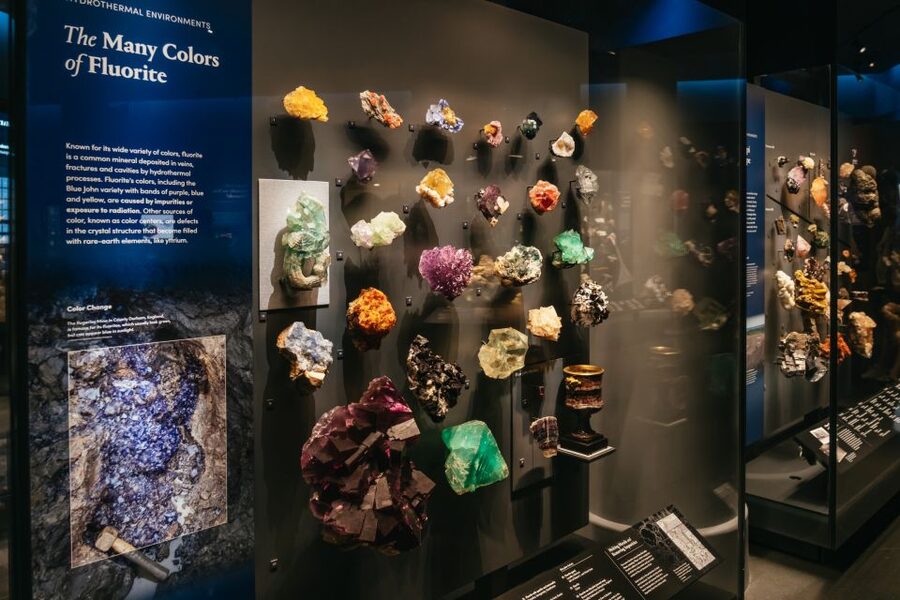
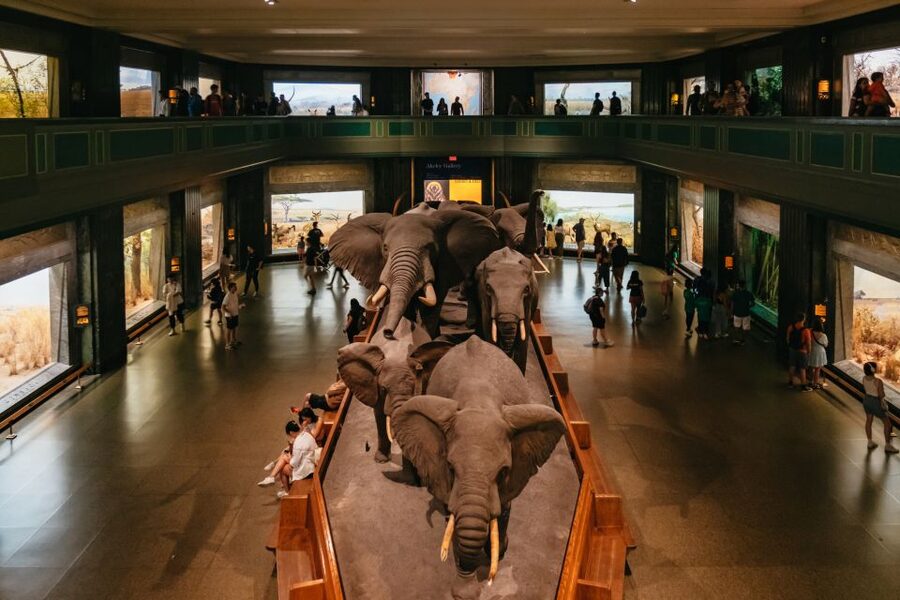
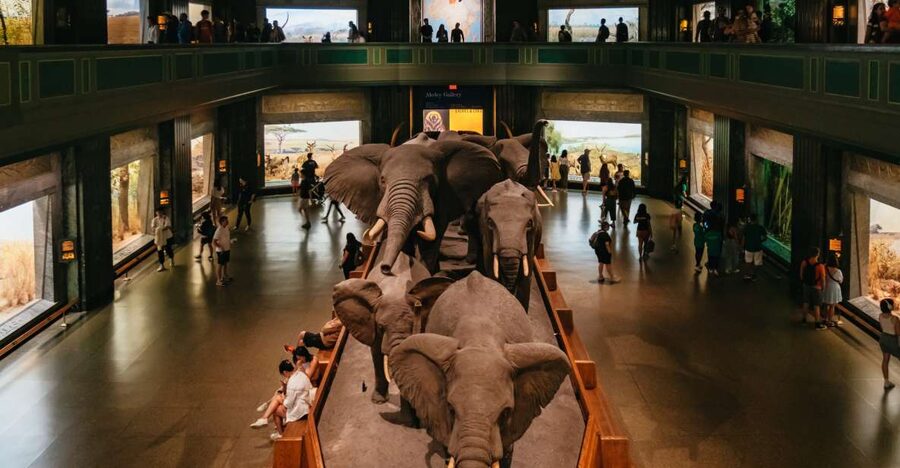
The museum is much more than dinosaurs. In the Milstein Hall of Ocean Life, you can come face-to-face with some of the largest creatures represented in the collection. The hall gives the museum a strong sense of scale, especially after smaller displays about fossils, minerals, or human cultures.
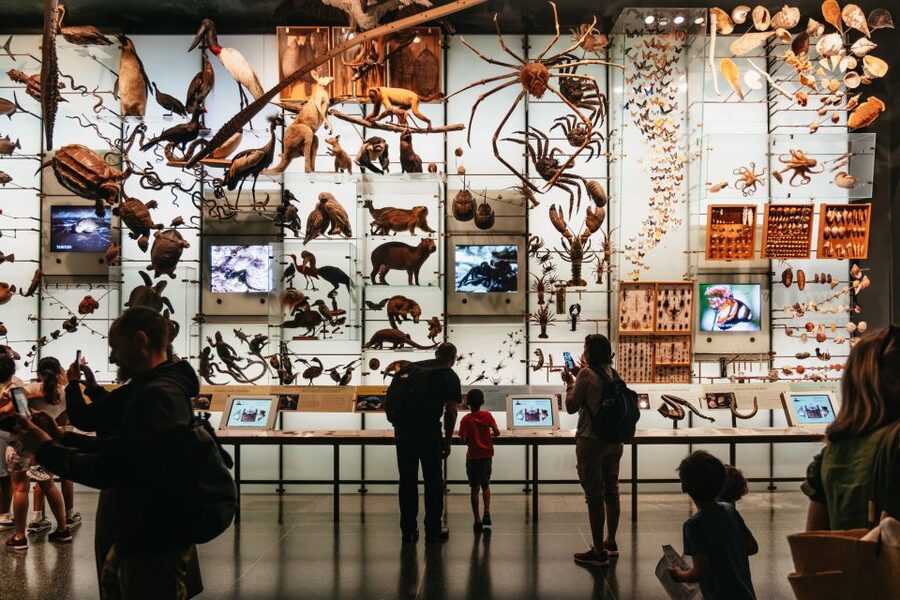
The Hall of Biodiversity takes you in another direction. It looks at the variety of living things and the systems that support life. This is a good place to slow down, especially if you want the museum to connect individual animals with larger scientific ideas.
You can also explore cultures from around the globe through interactive exhibits. These halls broaden the visit beyond natural science and make the museum useful for families with different interests. One person can focus on animals, another on human societies, and everyone can meet again at a major central exhibit.
The dioramas deserve attention. They are among the museum’s most carefully presented displays, placing animals and environments into scenes that are easy to understand at a glance. I find them especially helpful when you want context rather than a single object behind glass.
The Rose Center brings the universe indoors
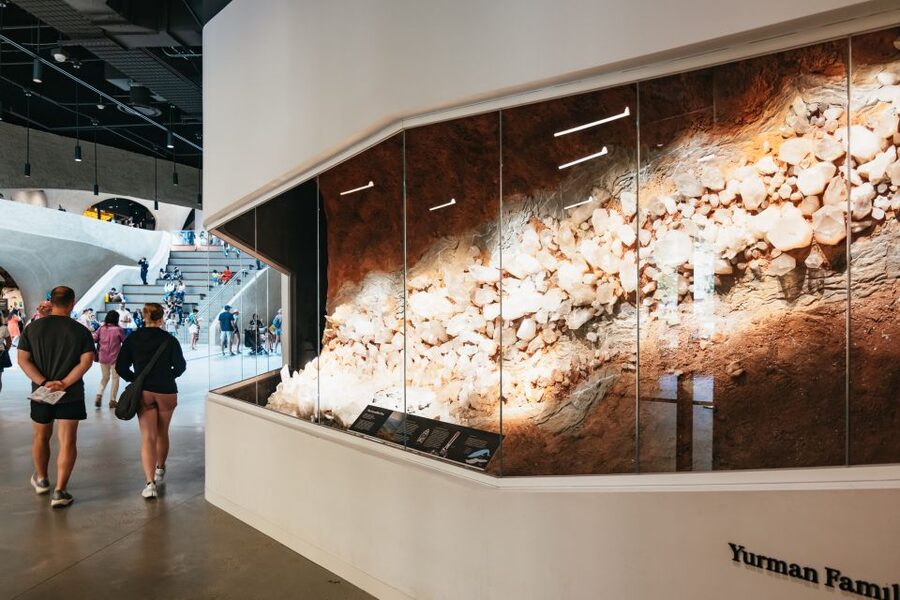
The Rose Center for Earth and Space gives you a change from biological and cultural exhibits. Here, you can consider the formation of Earth, the scale of the solar system, and the mysteries of the universe.
The planetarium is part of the museum’s space program, but the specific Space Show requires the appropriate ticket option. The current show, Encounters in the Milky Way, is narrated by Pedro Pascal and presents a time-traveling journey through the cosmic movements that shape our galactic neighborhood.
That makes the show a worthwhile extra for anyone who enjoys astronomy or large-format visual storytelling. It is not included with general entry, so do not assume that a museum ticket automatically covers it. If space is your main interest, check the available ticket choices before booking.
The Rose Center also helps explain why this museum works well as a full-day visit. You can move from a T Rex to the structure of the universe without leaving the building.
Ticketed exhibitions can turn a good visit into a full day
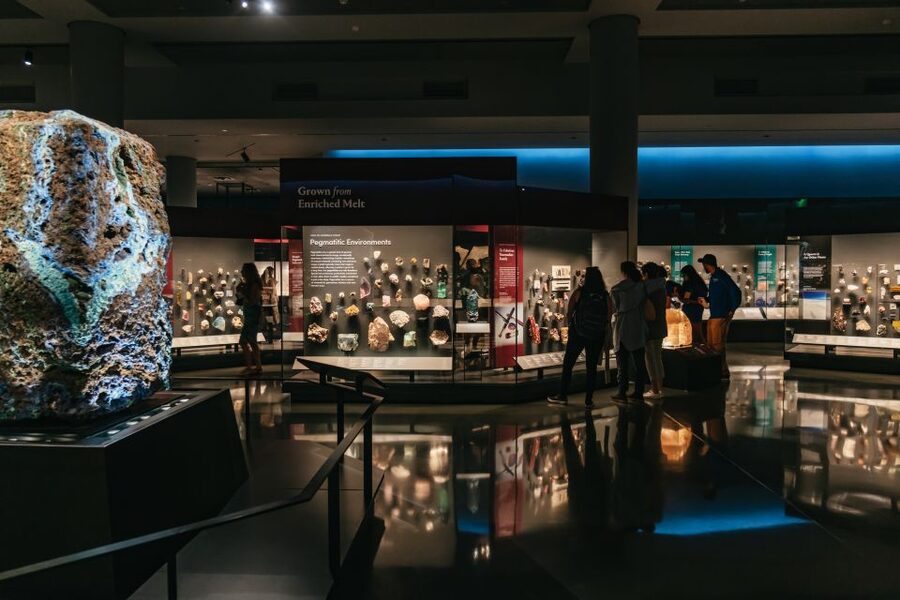
The add-on options are where the price can rise, but they also fill out the experience. General Admission + One includes timed entry to one special exhibition, while General Admission + All gives you access to all listed ticketed options.
Available experiences include Invisible Worlds, a 360-degree theater experience that presents hidden parts of nature, from ocean depths to DNA strands. Life at the Limits: Nature’s Superheroes focuses on organisms that survive in extreme conditions and the unusual abilities that help them do so.
The Davis Family Butterfly Vivarium is another popular choice for families. Up to 1,000 free-flying butterflies move through the year-round exhibit, and one might even land on you. This is more personal and lighthearted than the fossil halls, making it a good choice when you want a break from reading and science displays.
The LeFrak Theater offers giant-screen nature films on a 40-foot-high by 66-foot-wide screen, with digital sound. Captioning devices and audio description devices are available, and the theater is wheelchair accessible.
You should not try to fit every special exhibition into a short visit. Timed entries create a schedule, and too many fixed appointments can make the rest of the museum feel rushed. If you have a full day, General Admission + All may offer better value. If you have only a few hours, general admission plus one carefully chosen extra is easier to manage.
Use the Explorer app instead of fighting the map

The free Explorer app is one of the most useful tools in a museum this large. Once connected to the museum’s Wi-Fi, you can use turn-by-turn navigation, exhibition highlights, quizzes, behind-the-scenes stories, and self-guided tours.
I recommend downloading it before you feel lost. The paper map can be confusing, particularly on a first visit, and the number of floors makes casual navigation harder than it sounds. The app lets you pick a collection and find it without spending half your day at a junction wondering which staircase is correct.
The self-guided tours are also helpful if you want structure without paying for a guide. You can choose a popular collection, follow the route, and then move on when your group has had enough. The language choices are useful for multilingual families, with English, Spanish, French, and Portuguese available.
Bring a charged phone. The museum Wi-Fi helps, but navigation and exhibit information are less useful if your battery is nearly empty.
Families get plenty, but the day can be tiring
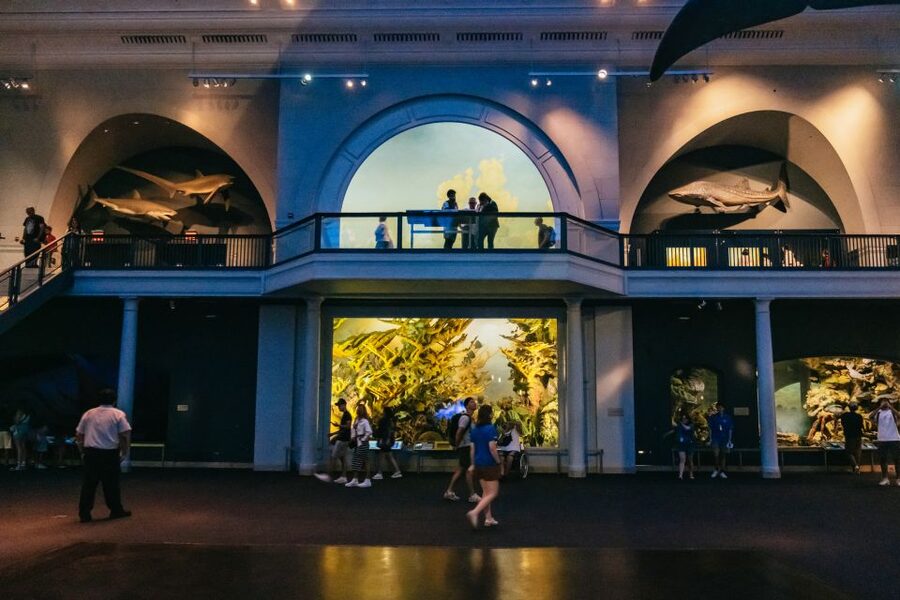
Children who like dinosaurs, enormous animals, space, or the Night at the Museum films have an obvious reason to enjoy this visit. The interactive displays in the Gilder Center and the butterfly vivarium give younger children some hands-on variety, while the fossils and dioramas offer strong visual appeal.
Still, this is not a purpose-built children’s attraction. One useful comment about the museum was that a dedicated kids’ area would be welcome. That is fair. You will find family-friendly material throughout the building, but not every hall is designed for short attention spans.
Plan breaks. The building has cafeterias, lockers, and support from museum staff, which makes a long visit easier. Lockers cost extra, and oversized luggage and large bags are not allowed, so arrive with only what you need for the day.
Holiday weeks can be especially crowded. A visit during a busy period may mean slower movement through popular rooms and less quiet at the major displays. Booking ahead and keeping your barcode ready can speed up entry, but it will not remove the crowds inside.
Accessibility and booking details worth knowing
The experience is wheelchair accessible. The LeFrak Theater is wheelchair accessible as well, with captioning and audio description devices available.
Free cancellation is available up to 24 hours before the scheduled visit, and you can reserve now and pay later. The ticket is valid for one day, with entry times depending on availability. The meeting point can vary by the option you book, so check your confirmation before setting out.
New York residents have a different admission arrangement. The amount paid for general admission is up to the visitor and includes the permanent halls, Rose Center, and Gilder Center, but not the ticketed exhibitions, butterfly vivarium, giant-screen film, or Hayden Planetarium Space Show.
Is $37 good value for New York?
For $37, I think the basic ticket offers solid value if you can give the museum half a day or more. You are not paying for a short attraction with one main room. You are getting access to dozens of permanent halls and enough material for repeat visits.
The value is weaker if you have only an hour or two. The building is so large that a rushed visit may leave you feeling that you paid for far more than you could use. In that case, choose two or three priority halls and accept that you are sampling the museum.
The special exhibitions need a separate value judgment. If you want the Space Show, butterfly vivarium, giant-screen film, or a featured science exhibition, the upgraded ticket may make sense. If dinosaurs and permanent halls are enough, keep the basic ticket and spend your time there.
I would also factor in the weather. On a wet, cold, or very hot New York day, a full museum ticket becomes more useful because it can anchor your schedule for hours.
Who should book this experience?
I would recommend it to families, science fans, dinosaur enthusiasts, first-time New York visitors, and anyone who wants a substantial indoor attraction near Central Park. It also suits independent visitors who like to choose their own route rather than follow a guide.
You should think twice if you dislike large museums or have a packed sightseeing schedule. The building rewards patience, and you need to accept that you will miss some halls unless you devote most of the day.
My best plan is simple: book ahead, start high if time is limited, use the Explorer app, choose your priority halls, and add only the ticketed exhibitions you truly want. If you can stay four to five hours, the $37 general ticket is a sensible purchase. If you want the shows as well, compare the upgraded options before booking and protect enough time to enjoy them.
FAQ
How long is the American Museum of Natural History ticket valid?
The ticket is valid for one day. You should check availability for the available starting times when booking.
What does general admission include?
General admission includes access to more than 40 permanent exhibition halls, the Rose Center for Earth and Space, and the Richard Gilder Center for Science, Education, and Innovation.
Are special exhibitions included with every ticket?
No. General entry does not include special exhibitions. General Admission + One includes timed entry to one special exhibition, while General Admission + All includes the listed ticketed exhibitions.
Is the museum wheelchair accessible?
Yes. The museum is wheelchair accessible, and the LeFrak Theater is also wheelchair accessible.
Is a guide included?
No guide is included. You can use the free Explorer app, which offers navigation, exhibit stories, quizzes, and self-guided tours.
Can I store luggage at the museum?
Lockers are available on-site for an additional charge. Oversized luggage and large bags are not allowed.
What languages does the Explorer app support?
The Explorer app is available in English, Spanish, French, and Portuguese.
More Historical Tours in New York City
- NYC: Starship Landmark 90 Minute Sightseeing Cruise
★ 4.6 · 3,666 reviews - Starship Landmark 90 Minute Sightseeing Cruise
★ 4.5 · 2,073 reviews - American Museum of Natural History Admission Ticket
★ 4.0 · 1,931 reviews - Top Rated Brooklyn Half-Day Food, History & Culture Tour via bus
★ 5.0 · 758 reviews
Recently reviewed around New York City
- Dyker Heights Christmas Lights Guided Tour★ 4.5 · 920 reviews
- New York City Dinner Cruise with Live Music★ 4.0 · 377 reviews
- New York City Holiday Lights Tour★ 4.5 · 664 reviews
- NYC in a Day Tour: Statue of Liberty, Times Square and More★ 5.0 · 366 reviews
- Broadway and Times Square Insider Tour with Theater Professional★ 5.0 · 651 reviews
- Central Park Bike Rental New York City★ 4.0 · 560 reviews
- NYC Central Park Bicycle Rentals★ 4.5 · 368 reviews
- Manhattan Sky Tour: New York Helicopter Flight★ 4.5 · 1,458 reviews
Museums, compared.


Empire State Building Tickets – Observatory & Museum
Read our review →

9/11 Memorial, Ground Zero Tour with Optional 9/11 Museum Ticket
Read our review →

All-Access 9/11: Ground Zero Tour, Memorial and Museum, One World Observatory
Read our review →

Browse the lists this tour appears in