
Reviewed · MUSEUMS
American Museum of Natural History Admission Ticket
The American Museum of Natural History packs the story of the universe, Earth, animals, people, and ancient life into a huge Upper West Side complex. You can stand beneath the 94-foot blue whale, face a Tyrannosaurus Rex skeleton, then walk into the Rose Center for Earth and Space without leaving the building.
I like the freedom to set your own pace, and I like the range. Kids can chase dinosaurs and giant mammals while adults study astronomy, anthropology, fossils, and minerals. The main drawback is the ticket process: an online voucher may need to be exchanged for an actual admission ticket, and that line has sometimes been painfully slow.
In This Review
- Key points
- What the $37 admission actually gives you
- Entering the museum on the Upper West Side
- The dinosaur halls: the strongest first stop
- The Akeley Hall and the blue whale
- Space, Earth, and the 13-billion-year story
- The Richard Gilder Center and newer science spaces
- How long should you allow?
- Crowds, comfort, and the museum layout
- Food and a useful family break
- Who will get the most from this ticket?
- A practical plan for three to four hours
- Should you book this admission?
- FAQ
- How much does admission to the American Museum of Natural History cost?
- How long does a visit usually take?
- What does general admission include?
- Are the planetarium and butterfly vivarium included?
- Do I need to exchange my voucher for a ticket?
- Is the museum suitable for children and strollers?
- Can I cancel for a refund?
Key points
- More than 40 permanent galleries: The admission covers the museum’s main exhibition halls, the Rose Center for Earth and Space, and the Richard Gilder Center.
- Three hours is the minimum: You can see major highlights in three to four hours, but a relaxed visit can fill most of a day.
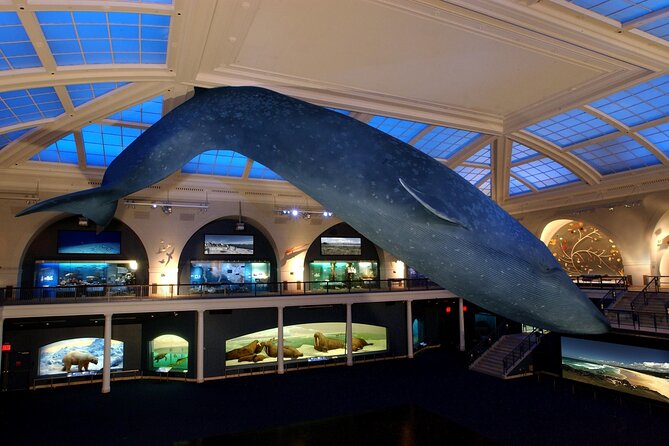
- The blue whale is a must-see: The 94-foot model in Milstein Hall of Ocean Life gives the museum one of its most memorable rooms.
- Great for mixed-age families: Dinosaurs, realistic animal displays, space, and interactive science give children and adults different reasons to keep moving.
- Extra attractions cost more: The ticket does not include the Hayden Planetarium Space Show, giant-screen film, butterfly vivarium, Invisible Worlds, or ticketed exhibitions.
- Plan for crowds and walking: Four levels, hard floors, confusing routes, and popular galleries can make a map and a clear plan very useful.
What the $37 admission actually gives you

At $37 per person, this is not a guided tour with a fixed route. It is a general admission ticket that lets you explore the museum’s permanent halls at your own speed.
That flexibility matters in New York. You can spend 20 minutes on dinosaurs, an hour with the mammals, or pause for food and return to another section. You are not tied to a group or a guide, and you can shape the day around children’s attention spans.
The admission includes more than 40 permanent exhibition halls, the Rose Center for Earth and Space, and the Richard Gilder Center for Science, Education, and Innovation. Those inclusions give you plenty to see before paying for anything extra.
New York residents have a different arrangement: the amount paid for general admission is up to the visitor. For everyone else, the listed price is $37 per person. Children under 3 qualify for waived admission fees.
More Museum Tours in New York City
- NYC: 9/11 Memorial & Museum Timed-Entry Ticket
★ 4.8 · 31,428 reviews - NYC: Empire State Building Tickets – Observatory & Museum
★ 4.7 · 25,757 reviews - New York City: American Museum of Natural History Ticket
★ 4.5 · 15,447 reviews
Entering the museum on the Upper West Side
You make your own way to the museum at a time that suits your schedule. The location is near public transportation, and it works well as part of a day on the Upper West Side or near Central Park.
The practical issue is the voucher. You may receive a QR code or booking voucher, but that may not be your final museum ticket. You need to have it converted at the museum, and some people have faced a long ticketing queue before reaching the entrance.
This is the one part of the purchase I would handle carefully. Some visits have had quick entry, while others have involved 30 minutes, an hour, or even longer waits. Direct museum purchase can be faster if avoiding a voucher exchange is your top concern.
If you use this option, arrive with the voucher ready on your phone and allow extra time before any later plans. If you are visiting with a one-year-old, three-year-old, stroller, or a tight schedule, that possible queue matters more than it would for a flexible solo visit.
Once inside, pick up a paper map at an entrance, information desk, or membership desk. The building is large enough to make a map worthwhile, and the layout is not always easy to follow. Mark your priorities before walking off, since it is easy to lose time simply finding the next hall.
The dinosaur halls: the strongest first stop
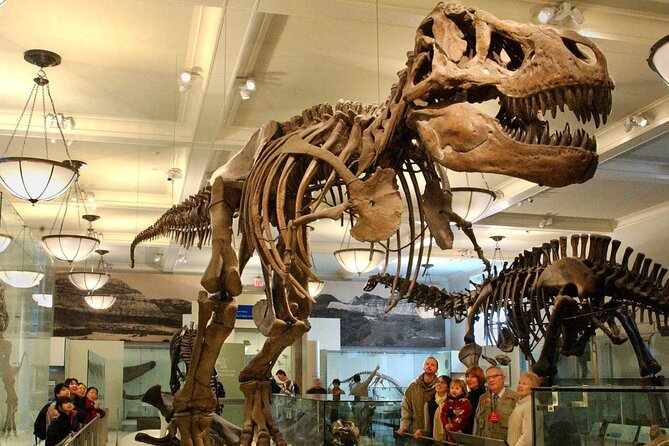
The Hall of Saurischian Dinosaurs contains the Tyrannosaurus Rex skeleton, one of the museum’s major crowd-pleasers. Dinosaur fans can spend far longer here than expected, and children often have a clear favorite before they even arrive.
The appeal is not only the size of the bones. The displays give you a sense of ancient animals as physical creatures, not just names in a book. You can look up at massive skeletons, compare body shapes, and then move into other fossil displays nearby.
I suggest making this one of your first stops if dinosaurs are a main reason for your visit. Popular rooms can become warm and crowded, especially on busy days, and an early visit gives you more breathing room.
The museum also has plenty for children who are less interested in fossils. The mix of animals, space, human cultures, and science means a family can split its time without anyone being stuck in one subject for the entire morning.
The Akeley Hall and the blue whale
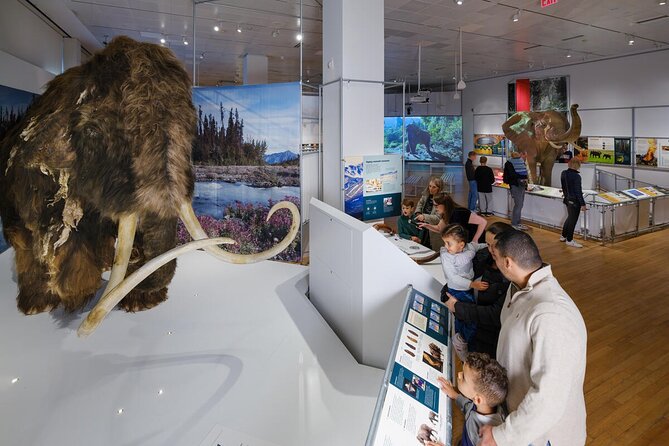
The Akeley Hall of African Mammals is home to the Asian elephants, along with displays of animals presented in detailed natural settings. The scale of the elephants makes this one of the easiest halls for children to appreciate, while adults may spend more time looking at the smaller details around them.
The museum’s animal halls are especially effective when you want a break from bones and text panels. You can see the size and posture of animals up close, then compare them with species from other parts of the world.
In the Milstein Hall of Ocean Life, the 94-foot-long blue whale model is the main event. It hangs above you with enough scale to make the animal feel almost unreal. Even if you move quickly through other galleries, give yourself time beneath the whale.
The animal displays are among the museum’s most accessible sights. They work for young children, teenagers, and adults who may not want a technical science lesson at every turn. Several families also use the museum as a way to find the locations connected with Night at the Museum, and staff can help children locate those familiar characters and scenes.
More New York City museums and collections:
- NYC: Museum of Modern Art (MoMA) Entry Ticket
★ 4.6 · 12,540 reviews - 9/11 Memorial, Ground Zero Tour with Optional 9/11 Museum Ticket
★ 5.0 · 6,381 reviews - 9/11 Memorial Museum Admission Ticket
★ 4.5 · 6,376 reviews - All-Access 9/11: Ground Zero Tour, Memorial and Museum, One World Observatory
★ 5.0 · 4,886 reviews
Space, Earth, and the 13-billion-year story
The Rose Center for Earth and Space shifts the mood from animal life to the universe. The museum presents a story reaching back roughly 13 billion years, giving your visit a much larger scale than a standard natural history collection.
You can move from fossils and mammals to questions about planets, stars, and the origins of the universe. That change of subject helps keep a long museum day fresh, especially for older children and teenagers who may want more than animal displays.
The included Rose Center is different from the Hayden Planetarium Space Show. The general admission ticket does not include that show, so check your ticket details before promising a planetarium visit to your family.
The same rule applies to the giant-screen film. It is an additional attraction, not part of the standard admission. If you want a show, film, or special exhibition, plan for an added charge and possible timed entry.
The Richard Gilder Center and newer science spaces
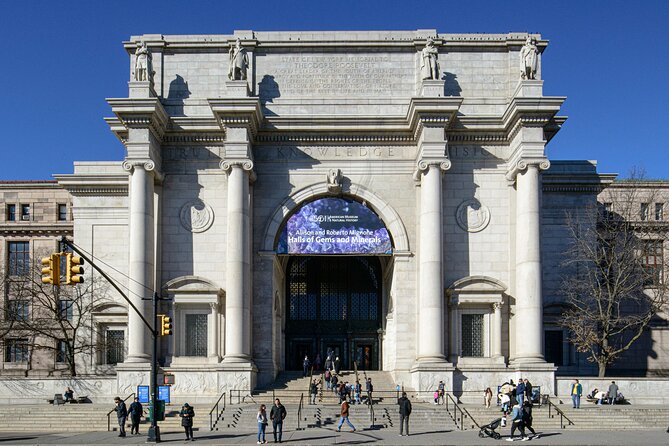
General admission also includes the Richard Gilder Center for Science, Education, and Innovation. It adds another major area to an already large museum, with a focus on science and learning.
Because the museum covers so many subjects, the Gilder Center can help balance the more traditional animal and fossil halls. It is a useful stop for families who want science presented in a setting that feels different from the older galleries.
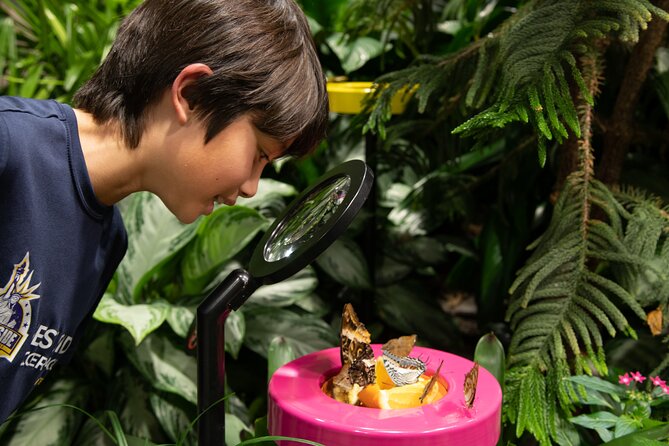
Do not assume every attraction in the building is included. Invisible Worlds, the butterfly vivarium, ticketed exhibitions, the giant-screen film, and the Hayden Planetarium Space Show require separate tickets or are excluded from this admission.
The butterfly vivarium is a particularly easy one to misunderstand. A family may arrive expecting it to be part of the general ticket, only to discover that it costs extra. Decide in advance which add-ons matter most, especially if your budget is limited.
How long should you allow?

The advertised visit length is about three to four hours, and that is a sensible target for the main highlights. You can see important dinosaur, mammal, ocean, and space areas in that time without trying to read every panel.
I would allow a full day if you are visiting with children who need breaks, want to eat inside, or hope to cover several floors carefully. The museum has four levels, and walking between them takes time even before you stop at an exhibit.
One recent three-hour visit covered all four levels without the extra attractions, but that pace is not the same as a careful study. Another visit could not fit everything into a day. The right length depends on how many galleries you choose and how often you stop.
A useful plan is to select three must-see areas and two backup areas. Start with dinosaurs, elephants, or the whale, depending on your group. Then use the map to connect nearby galleries instead of crossing the building repeatedly.
Crowds, comfort, and the museum layout
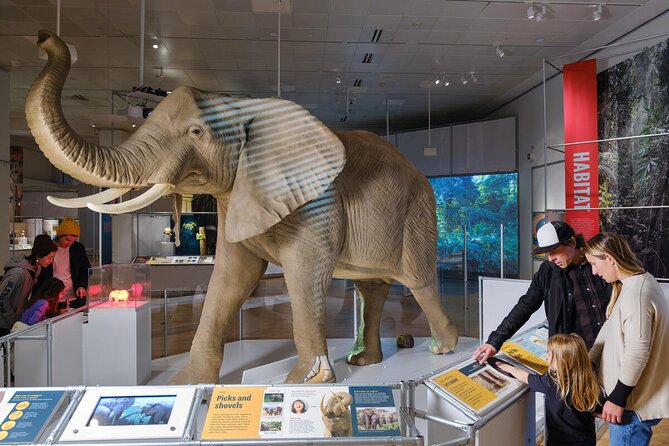
This is a major New York attraction, so busy conditions are normal. Even an early arrival may turn into a crowded visit within 30 minutes, and some halls can feel hot and humid when packed.
The building is impressive but not always simple to navigate. Signage can be unclear, and the map takes some study. I would not rely on wandering if you have a timed film, a hungry child, or only three hours.
There is also a lot of walking on hard floors. Comfortable shoes matter, and you should expect the museum to feel like an active day rather than a quiet stroll through a small gallery.
Strollers and ADA access have worked well for family visits, and most people can participate. Service animals are allowed. Still, crowds, long distances, and hard flooring can affect comfort, so build in pauses rather than racing from hall to hall.
Food and a useful family break
The food court offers some gluten-free choices, including gluten-free pizza and brownies. That does not turn the museum into a dining destination, but it gives families a practical way to stay inside rather than losing time looking for lunch elsewhere.
A food break can also rescue the second half of the visit. Children often handle a large museum better when they know there will be time to sit, eat, and reset before returning to the exhibits.
The ability to spend as long as you wish makes this more useful than a short timed attraction. You can leave the most demanding galleries, take a break, and return to another floor without having to complete a set tour route.
Who will get the most from this ticket?
This is a strong choice for families, especially those with children interested in dinosaurs, animals, space, or science. Teenagers also have enough visual scale and subject variety to avoid the feeling that the museum is only for small children.
It suits couples and adult groups too. The human culture galleries, minerals, fossils, and astronomy areas give adults plenty to study, and the building itself adds to the experience.
The ticket is less suitable if you dislike large museums or have only an hour in Manhattan. You would spend too much of that limited time finding the entrance, collecting the ticket, and moving between halls.
It is also not the best value if your main goal is the planetarium, butterfly vivarium, or a special exhibition. Those require extra tickets, so calculate the total cost before booking.
A practical plan for three to four hours
Start by getting the admission ticket and paper map. Circle the dinosaur halls, Akeley Hall of African Mammals, Milstein Hall of Ocean Life, Rose Center, and Gilder Center, then check which temporary areas are included or extra.
Spend the first hour on your top priority. For many families, that means the dinosaur halls. For others, it may be the blue whale or the animal displays.
Use the second hour for a different subject. Move from animals to space, or from fossils to human cultures, so the visit does not become a blur of similar cases and signs.
Keep the final hour flexible. Return to a favorite gallery, take a food break, or visit another permanent hall you passed earlier. If you add a film or special exhibition, reduce the number of general galleries you expect to see.
Should you book this admission?
Book it if you want a flexible, family-friendly museum day and can give the American Museum of Natural History at least three hours. The dinosaur skeletons, Asian elephants, blue whale, Rose Center, and broad mix of science displays make the $37 general admission a fair value for a substantial visit.
I would be cautious if you need fast entry. The voucher exchange has caused serious delays for some people, so buying directly from the museum may be the better choice when time is tight. Also check the cost of extra attractions before booking, since the planetarium, butterflies, film, Invisible Worlds, and ticketed exhibitions are not included.
For most visitors, the best approach is simple: arrive with time to spare, get a map, choose a short list of priorities, and accept that you will not see everything. That is not a failure here. The museum is too large for that on a normal half-day visit.
FAQ
How much does admission to the American Museum of Natural History cost?
The listed price is $37 per person. New York residents pay an amount of their choosing for general admission, and children under 3 have waived admission fees.
How long does a visit usually take?
Plan about three to four hours for the main museum visit. You can spend much longer, including most of a day, if you want to cover more galleries and take breaks.
What does general admission include?
General admission includes more than 40 permanent exhibition halls, the Rose Center for Earth and Space, and the Richard Gilder Center for Science, Education, and Innovation.
Are the planetarium and butterfly vivarium included?
No. General admission does not include the Hayden Planetarium Space Show, butterfly vivarium, giant-screen film, Invisible Worlds, or ticketed exhibitions.
Do I need to exchange my voucher for a ticket?
Yes. The voucher must be converted to an admission ticket at the museum. The exchange may be quick, but some visitors have faced a long ticketing line.
Is the museum suitable for children and strollers?
Yes. It is a family-friendly attraction, and children under 3 enter without an admission fee. The museum has worked well for strollers and ADA access, and service animals are allowed.
Can I cancel for a refund?
You can cancel at least 24 hours before the experience start time for a full refund. Cancellations or changes made within 24 hours are not accepted and are not refunded.
More Historical Tours in New York City
- NYC: Starship Landmark 90 Minute Sightseeing Cruise
★ 4.6 · 3,666 reviews - Starship Landmark 90 Minute Sightseeing Cruise
★ 4.5 · 2,073 reviews - Top Rated Brooklyn Half-Day Food, History & Culture Tour via bus
★ 5.0 · 758 reviews - NYC: Speakeasy Drinks and Prohibition History Tour
★ 4.7 · 474 reviews
Recently reviewed around New York City
- Dyker Heights Christmas Lights Guided Tour★ 4.5 · 920 reviews
- New York City Dinner Cruise with Live Music★ 4.0 · 377 reviews
- New York City Holiday Lights Tour★ 4.5 · 664 reviews
- NYC in a Day Tour: Statue of Liberty, Times Square and More★ 5.0 · 366 reviews
- Broadway and Times Square Insider Tour with Theater Professional★ 5.0 · 651 reviews
- NYC Central Park Bicycle Rentals★ 4.5 · 368 reviews
- Central Park Bike Rental New York City★ 4.0 · 560 reviews
- Museum of Sex NYC Admission Ticket★ 4.5 · 380 reviews
Museums, compared.


Empire State Building Tickets – Observatory & Museum
Read our review →


9/11 Memorial, Ground Zero Tour with Optional 9/11 Museum Ticket
Read our review →

All-Access 9/11: Ground Zero Tour, Memorial and Museum, One World Observatory
Read our review →
Browse the lists this tour appears in