
Reviewed · MUSEUMS
NYC: Museum of Modern Art (MoMA) Entry Ticket
MoMA packs some of the world’s most famous paintings into six floors in Midtown Manhattan. You can stand before Van Gogh’s The Starry Night, Monet’s Water Lilies, Picasso’s Les Demoiselles d’Avignon, and Warhol’s Campbell’s Soup Cans in a single visit. The permanent collection is the main event, but film screenings, art-making labs, and changing exhibitions add plenty of variety.
I like the easy entry with a pre-booked barcode and the chance to use a free audio guide on your own phone. I also like the freedom to spend an hour on famous paintings or several hours on film, design, and newer art. The main drawback is size and crowding. Six floors can feel like too much, especially around the most popular works, so you need a plan.
In This Review
- Key points before you go
- What your $30 MoMA ticket gets you
- Entering at 11 West 53rd Street
- The best route through six floors
- Floor 5 and the famous paintings
- Floor 4 and the pull of Pop Art
- Contemporary galleries, film, and design
- Special exhibitions and changing displays
- Using the free audio guide
- Finding space in a popular museum
- Family visits and accessibility
- Restaurants, terrace time, and the MoMA Design Store
- Who should book MoMA?
- Should you book this MoMA ticket?
- FAQ
- How much does admission to MoMA cost?
- How long is the MoMA ticket valid?
- Where do I enter the museum?
- Do I need to visit the ticket desk?
- What are MoMA’s opening hours?
- Is an audio guide included?
- Which languages are available for the audio guide?
- Do I need to bring anything for the audio guide?
- Are special exhibitions included?
- Does the ticket include MoMA PS1?
- Are films and art-making labs included?
- Is MoMA suitable for children?
- Is the museum wheelchair accessible?
- Can I bring food or large luggage?
- Can I cancel the booking?
Key points before you go
- Start on the fifth floor: This is where many of the best-known early modern works are displayed, including Van Gogh, Monet, Picasso, Matisse, and Dalí.
- Allow two to four hours: You can see key paintings quickly, but the museum rewards a slower visit.
- Bring your phone and headphones: The multilingual audio guide works through the MoMA app or mobile site.
- Use the Friday evening hours carefully: MoMA stays open until 8:30 PM on Fridays, but the later period can be very busy.
- Your ticket includes more than galleries: Daily films, art-making labs, special exhibitions, and later admission to MoMA PS1 are included.
- Families are welcome: Children age 16 and under enter free, and child-friendly explanations can help newcomers to modern art.
What your $30 MoMA ticket gets you
Admission costs $30 per person, which is a fair price if you give the museum at least two or three hours. You are not paying only to see a few famous paintings. The ticket covers the permanent collection, special exhibitions, daily film screenings, and art-making labs.
That makes MoMA a better value than a quick celebrity-art stop. You can focus on painting and sculpture, then shift to photography, design, film, or performance-related work when your eyes need a change. If you return to New York within 14 days, the same admission also includes entry to MoMA PS1, the museum’s sister location in Queens.
The value drops if you rush through in under an hour. MoMA is large, and a fast march toward The Starry Night gives you little time for the works around it. If modern art is not your usual choice, you may prefer a shorter visit focused on Floors 4 and 5 rather than trying to see every room.
More Museum Tours in New York City
- NYC: 9/11 Memorial & Museum Timed-Entry Ticket
★ 4.8 · 31,428 reviews - NYC: Empire State Building Tickets – Observatory & Museum
★ 4.7 · 25,757 reviews - New York City: American Museum of Natural History Ticket
★ 4.5 · 15,447 reviews
Entering at 11 West 53rd Street
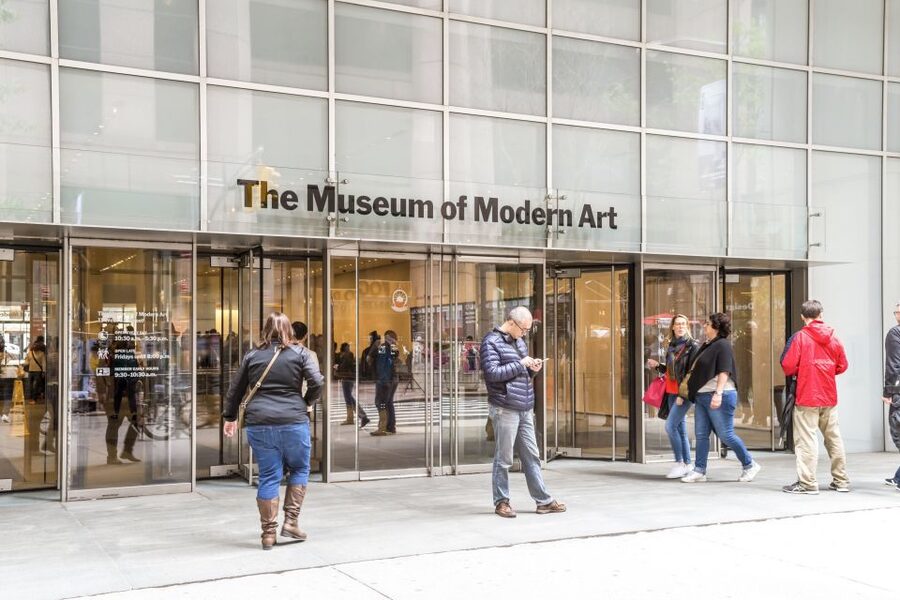
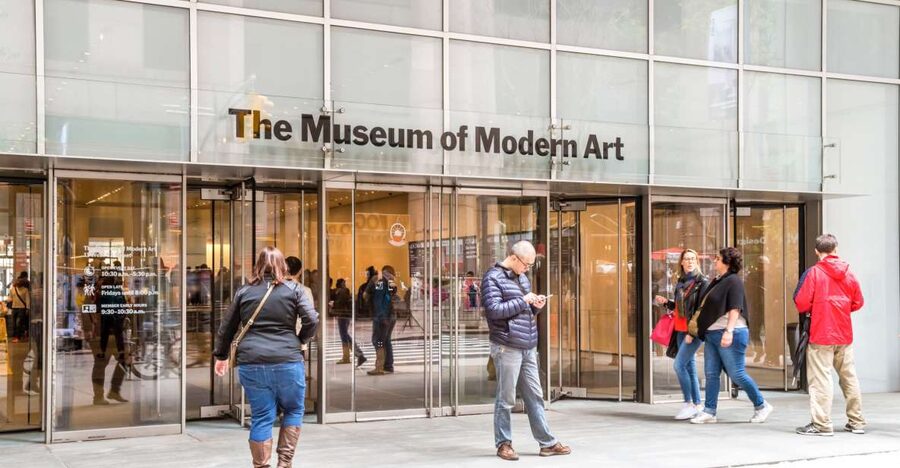
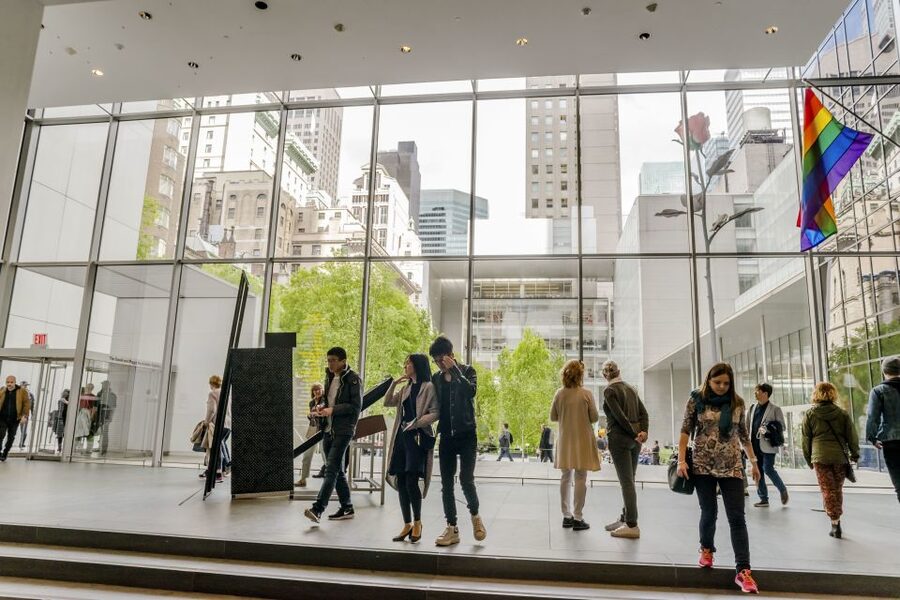
MoMA is at 11 West 53rd Street in Midtown Manhattan. With a pre-booked ticket, you present the barcode on your voucher to staff at one of the gallery entry points. You do not need to stop at the ticket desk, which is useful when you have a timed day in Midtown.
The process is simple, but the entrance can feel unclear if you are carrying a ticket and do not know where to begin. Look for the gallery entry points and show your barcode to museum staff. The ticket is valid for one day, and you should check the available starting times when booking.
The museum operates daily from 10:30 AM to 5:30 PM. On Fridays, it remains open until 8:30 PM. Last entry is one hour before closing, so do not arrive late in the day expecting to see all six floors.
Friday evening sounds attractive, but it may not be the calmest choice. The later hours can draw large crowds, which makes it harder to linger in front of the famous paintings. For a quieter visit, an earlier time gives you more room to move.
The best route through six floors
A practical route is to begin on Floor 5 and work downward. This places many of the major early modern paintings near the start of your visit and gives you a sensible chronological flow.
One useful plan is:
- Floor 5: Early modern painting and sculpture, including Monet, Van Gogh, Matisse, Picasso, Gauguin, and Dalí.
- Floor 4: Later modern works, including Warhol and other major twentieth-century artists.
- Lower floors: Newer art, design, film, photography, and changing presentations, depending on the displays during your visit.
The exact works on view can change. A major museum does not show every piece in its collection at once, and some galleries may be rearranged for special exhibitions. That is worth remembering if you have one particular artist in mind.
Starting high also saves you from wandering without a plan. One visitor found the rooms confusing at first, while another recommended beginning on the fifth floor and moving down. I agree with that approach. You can always skip rooms that do not interest you, but it is harder to recover time after exploring the lower floors first.
Floor 5 and the famous paintings
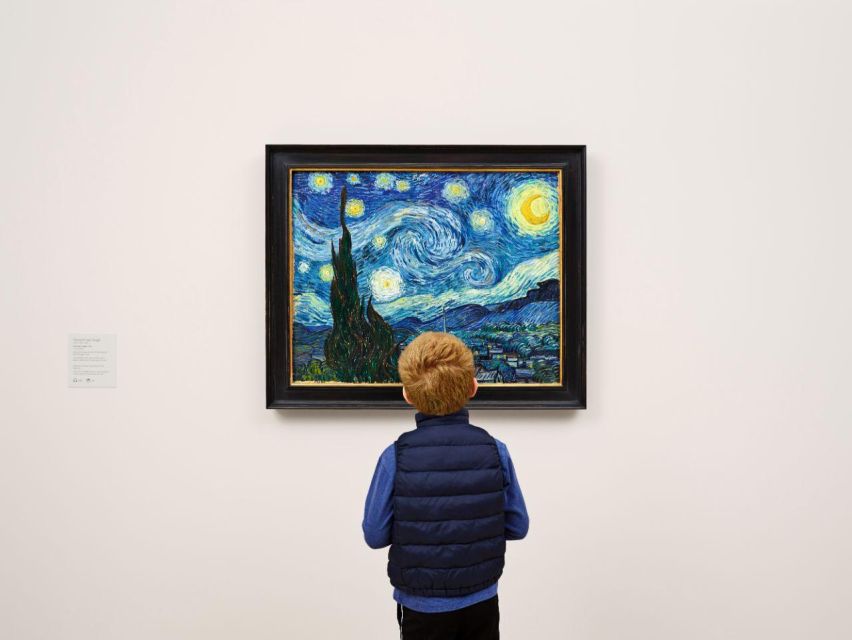
Floor 5 is the place to begin if you came for the icons. Van Gogh’s The Starry Night draws the biggest pull, and it is easy to understand why. Seeing a familiar image in person lets you notice brushwork, scale, and surface details that disappear in a reproduction.
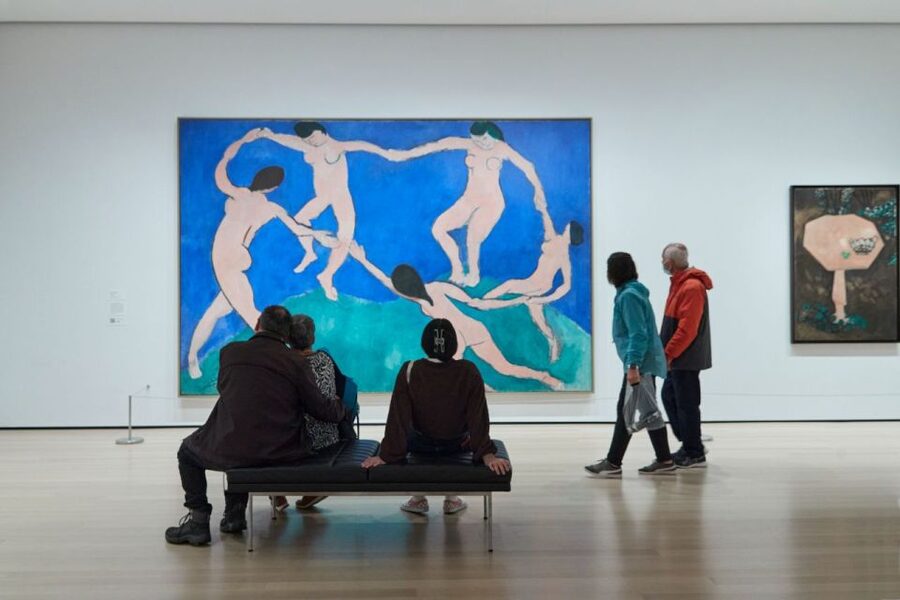
Monet’s Water Lilies offers a different kind of experience. Matisse’s Dance (I) brings bold shape and color, while Picasso’s Les Demoiselles d’Avignon asks you to look longer and think harder. These works are not simply famous names on a checklist. Together, they show how quickly artists changed the rules of painting from the late nineteenth century into the twentieth.
You may also find works by Gauguin, Dalí, Pollock, Klimt, Frida Kahlo, Edward Hopper, René Magritte, and other major figures. The collection gives you a broad view of modern art rather than one narrow school.
The drawback is attention. After a few rooms of major paintings, your eyes can tire. Choose the artists you most want to see, then allow yourself to skip a gallery without guilt. A focused two-hour visit can be more satisfying than a four-hour march with no energy left.
More New York City museums and collections:
- 9/11 Memorial, Ground Zero Tour with Optional 9/11 Museum Ticket
★ 5.0 · 6,381 reviews - 9/11 Memorial Museum Admission Ticket
★ 4.5 · 6,376 reviews - All-Access 9/11: Ground Zero Tour, Memorial and Museum, One World Observatory
★ 5.0 · 4,886 reviews - NYC: Intrepid Museum Entry Ticket
★ 4.7 · 4,687 reviews
Floor 4 and the pull of Pop Art
Floor 4 is the likely destination for Andy Warhol’s Campbell’s Soup Cans and other later twentieth-century work. Warhol’s piece is familiar from books and posters, but seeing the complete arrangement in a museum changes how you read it. Repetition, advertising, and everyday objects become the subject.
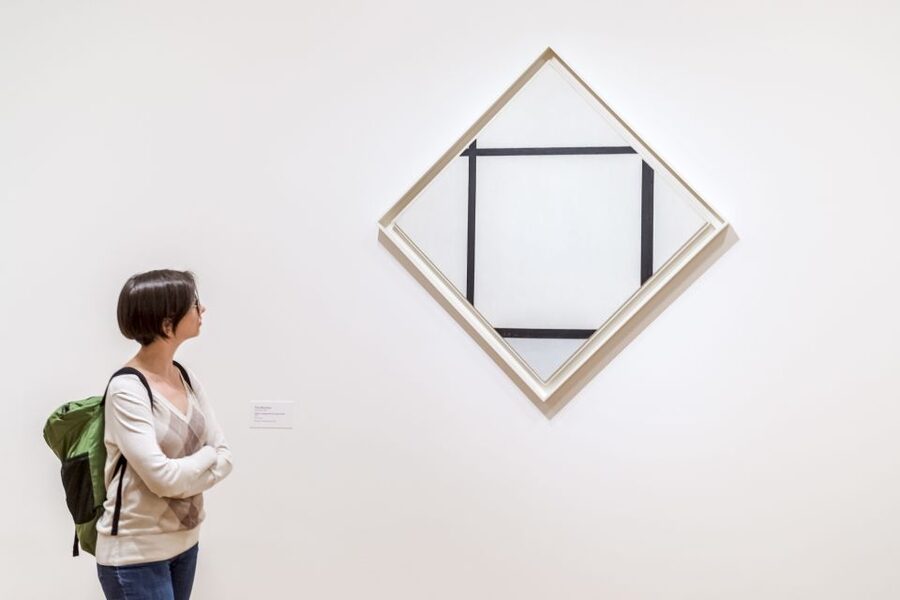
This floor is useful for visitors who want a clear sense of how modern art moved toward Pop Art, abstraction, and new forms of visual language. You might find cubist works, Surrealist pieces, and other important movements alongside artists who are less familiar.
Some people connect more strongly with the older masters than with later or contemporary work. That is normal. MoMA does not ask you to like everything. It gives you a chance to compare your own reaction from room to room, which is part of the point.
If you are short on time, Floors 5 and 4 provide the strongest first visit. One visitor spent only those two floors and still found the experience impressive. I would add more time if you care about design, photography, film, or current exhibitions.
Contemporary galleries, film, and design
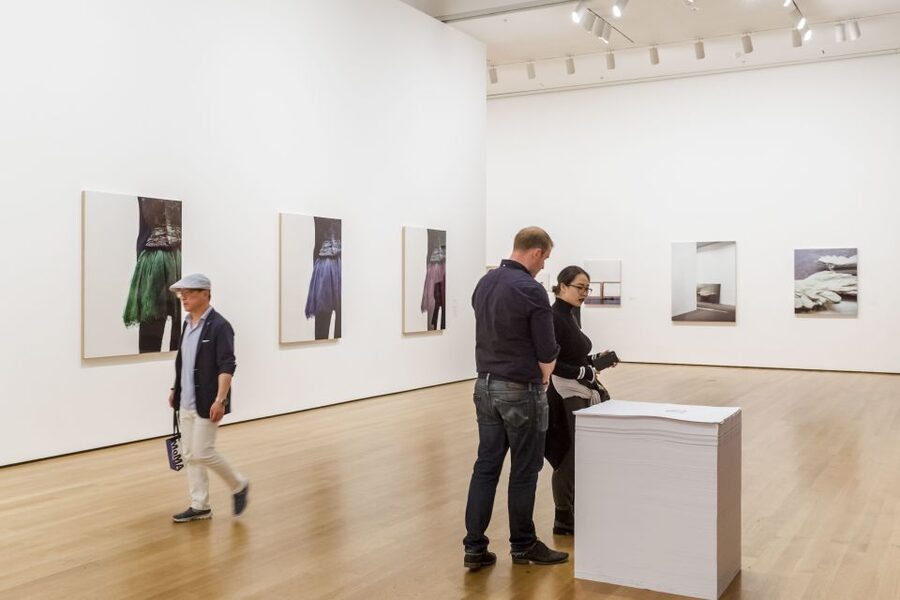
MoMA is not only a hall of famous paintings. Its contemporary program includes artists such as Elizabeth Murray, Cindy Sherman, and Ai Weiwei, along with newer work that may be less immediately familiar.
This section can be rewarding, but it requires patience. Contemporary art often gives you less instant recognition than Van Gogh or Picasso. Read the wall text, use the audio guide, and give each work a moment before deciding it is not for you.
Daily film screenings and art-making labs are included with admission. These activities make the visit more varied, especially for families or anyone who needs a break from gallery walking. The supplied details do not promise a particular film or lab on a particular day, so check the museum schedule when you arrive.
The museum also presents design and performance-related work. This widens the visit beyond traditional painting and sculpture. If you are interested in how art connects with objects, media, and daily life, plan time for these areas rather than stopping after the famous canvases.
Special exhibitions and changing displays
Special exhibitions are included in the ticket, but their content depends on your date. The listed schedule includes Crafting Modernity: Design in Latin America 1940-1980, on view through September 22, and Joan Jonas: Good Night Good Morning, through July 6.
Upcoming displays include Käthe Kollwitz, scheduled from March 31 through July 20, and LaToya Ruby Frazier, scheduled from May 12 through September 7. These dates may overlap or change depending on when you visit, so check the current museum program before booking if a particular exhibition matters to you.
Changing displays can make a repeat visit feel different. They also affect how much time you need. A special exhibition may be compact and focused, or it may add several rooms to an already full day.
I would not book this ticket solely for one temporary exhibition without checking its dates. For a general MoMA visit, though, the included exhibitions make the $30 admission more useful.
Using the free audio guide
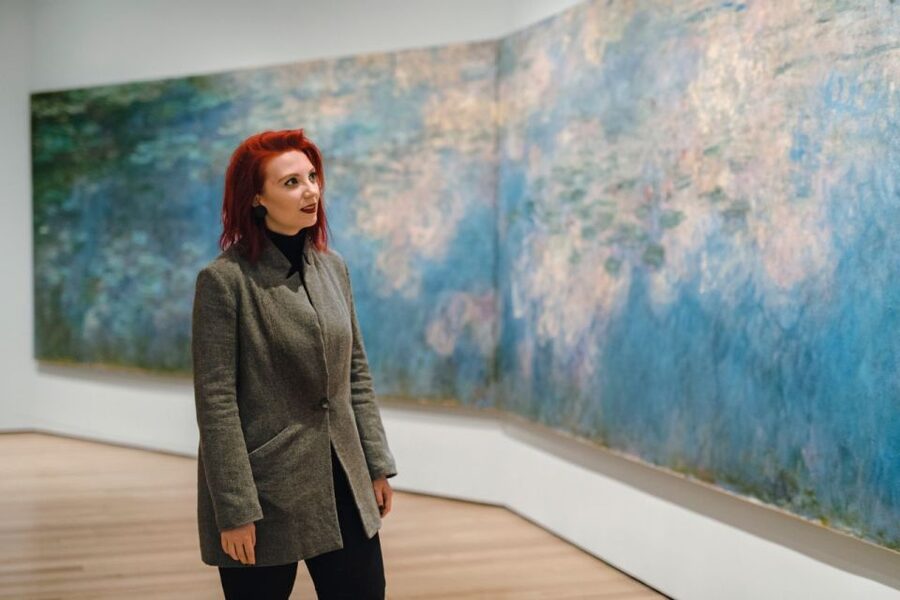
The audio guide is available through the MoMA app or mobile site. It supports Spanish, Chinese, English, French, German, Italian, Japanese, and Portuguese.
Bring a charged smartphone and headphones. That sounds basic, but a dead battery or forgotten headphones can make the guide less useful. Free WiFi is available throughout the museum, which helps with downloading or accessing the material.
The audio guide can give you a stronger footing if modern art is new to you. It may explain the artist, the period, and the ideas behind a work without forcing you into a guided group. You can listen to only the pieces that interest you and move on when you are ready.
There is one practical warning: the QR codes and audio access may not work perfectly every time. Try the app or mobile site before you arrive, and give yourself a few minutes to get it running. If the technology becomes frustrating, the wall labels still provide a useful basic guide.
Finding space in a popular museum
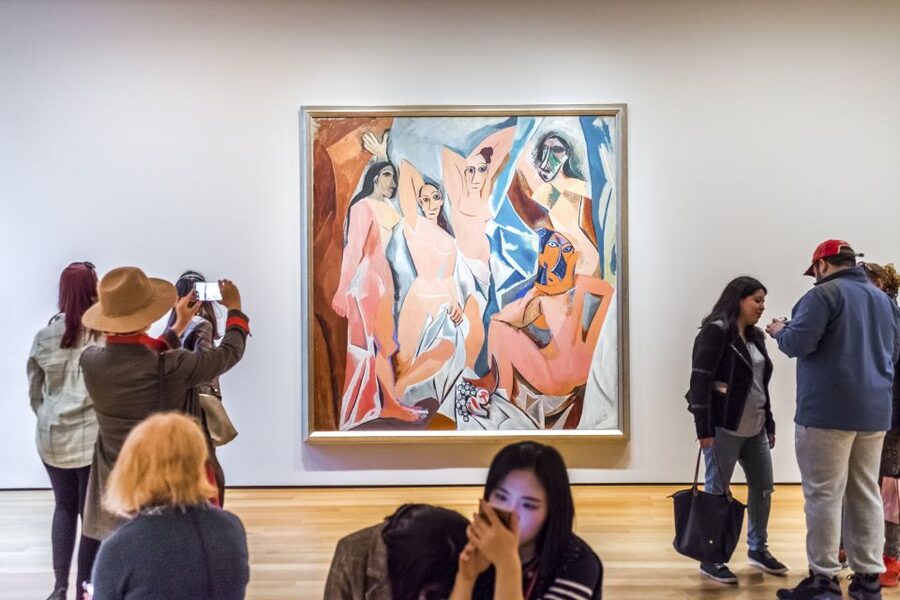
MoMA is popular for good reason, but popularity affects the visit. The rooms around The Starry Night and other major paintings can become crowded. You may need to wait for a clear view, and taking photographs can be difficult when several people are gathered in front of the same work.
Do not measure the museum only by how long you spend at the most famous painting. Move into the adjoining galleries, where you may find equally interesting pieces with more breathing room. Return to a favorite work later if you have the energy.
Earlier hours are generally the safer choice if you want a calmer visit, based on the practical pattern of crowded Friday evenings and busy popular rooms. The museum is open late Friday, but late access is not necessarily quiet access.
Comfortable pacing matters. Several visitors found that two and a half to three hours felt right, while others wished they had more time. I would set aside three hours for a first visit, or four if you want the special exhibitions, films, and design displays.
Family visits and accessibility
Children age 16 and under enter free. Families are welcome, and art-making labs add an activity beyond looking at paintings. Child-friendly explanations can also help adults who feel unsure about modern art.
The museum is wheelchair accessible. That makes the six-floor layout more manageable, though the size of the building can still be tiring. Plan breaks rather than trying to cover every room.
Food and drinks are not allowed in the galleries. Luggage and large bags are also prohibited, and video recording is not allowed. Pack lightly and bring only what you need for the visit.
Restaurants, terrace time, and the MoMA Design Store
You have several dining choices at the museum, including The Modern, which has two Michelin stars. That is a destination for a serious meal, not a quick snack stop, so plan according to your budget and schedule.
There are three restaurants in total, and a terrace cafe offers a pleasant place to pause when it is open and conditions are suitable. A meal or coffee break can help you reset after several floors of art.
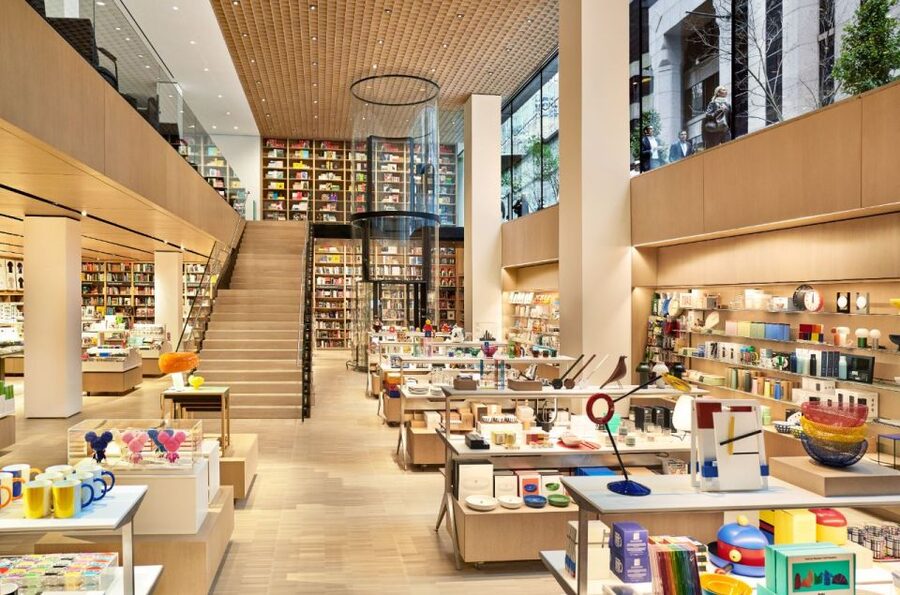
The MoMA Design Store is part of the experience for many people. It carries books, design objects, jewelry, furniture, clothing, and other items. The selection is broader than standard museum souvenirs, but prices can rise quickly. If you want a keepsake, set a budget before browsing.
Who should book MoMA?
I recommend this ticket if you want to see major modern art in one central New York museum and prefer to explore at your own speed. It suits first-time visitors, art students, design fans, families, and anyone who wants a flexible indoor stop near Rockefeller Center and Midtown.
It is also a good choice if your schedule may change. You can reserve now and pay later, and cancellation is free up to 24 hours in advance for a full refund.
I would be more cautious if you dislike contemporary art, crowded galleries, or long indoor visits. Focus on Floors 5 and 4, and you can still make the ticket worthwhile without seeing the entire museum. If you want a quiet, guided explanation of every room, this self-guided format may feel too loose.
Should you book this MoMA ticket?
Book it if The Starry Night, Water Lilies, Picasso, Matisse, or Warhol are on your New York list. The skip-the-ticket-desk entry, broad collection, included exhibitions, and free audio guide make $30 reasonable when you allow enough time.
For the best first visit, arrive early, start on Floor 5, work downward, and choose your priorities before entering. Bring a charged phone and headphones, leave large bags behind, and do not judge the museum by the crowd around one famous painting. If you have three hours and even a moderate interest in modern art, MoMA earns its place in your New York plans.
FAQ
How much does admission to MoMA cost?
The listed price is $30 per person.
How long is the MoMA ticket valid?
The ticket is valid for one day.
Where do I enter the museum?
Enter at the Museum of Modern Art at 11 West 53rd Street in Midtown Manhattan.
Do I need to visit the ticket desk?
No. Present your barcoded voucher to museum staff at one of the gallery entry points.
What are MoMA’s opening hours?
MoMA is open daily from 10:30 AM to 5:30 PM. On Fridays, it is open from 10:30 AM to 8:30 PM. Last entry is one hour before closing.
Is an audio guide included?
Yes. You can use a downloadable audio guide through the MoMA app or mobile site.
Which languages are available for the audio guide?
The audio guide is available in Spanish, Chinese, English, French, German, Italian, Japanese, and Portuguese.
Do I need to bring anything for the audio guide?
Bring headphones and a charged smartphone.
Are special exhibitions included?
Yes. Admission includes access to the permanent collections and all special exhibitions.
Does the ticket include MoMA PS1?
Yes. Entry to MoMA PS1 is included for up to 14 days after your MoMA visit.
Are films and art-making labs included?
Yes. Daily film screenings and art-making labs are included with admission.
Is MoMA suitable for children?
Yes. Families and children are welcome, and children age 16 and under enter free.
Is the museum wheelchair accessible?
Yes. MoMA is wheelchair accessible.
Can I bring food or large luggage?
No. Food and drinks, luggage, and large bags are not allowed.
Can I cancel the booking?
Yes. You can cancel up to 24 hours in advance for a full refund.
Recently reviewed around New York City
- Dyker Heights Christmas Lights Guided Tour★ 4.5 · 920 reviews
- New York City Dinner Cruise with Live Music★ 4.0 · 377 reviews
- New York City Holiday Lights Tour★ 4.5 · 664 reviews
- NYC in a Day Tour: Statue of Liberty, Times Square and More★ 5.0 · 366 reviews
- Broadway and Times Square Insider Tour with Theater Professional★ 5.0 · 651 reviews
- NYC Central Park Bicycle Rentals★ 4.5 · 368 reviews
- Central Park Bike Rental New York City★ 4.0 · 560 reviews
- Museum of Ice Cream New York City Admission Ticket★ 4.0 · 1,154 reviews
Museums, compared.
Empire State Building Tickets – Observatory & Museum
Read our review →

9/11 Memorial, Ground Zero Tour with Optional 9/11 Museum Ticket
Read our review →
All-Access 9/11: Ground Zero Tour, Memorial and Museum, One World Observatory
Read our review →

Browse the lists this tour appears in