
Reviewed · WALKING TOURS
Seattle: Guided Underground Walking Tour
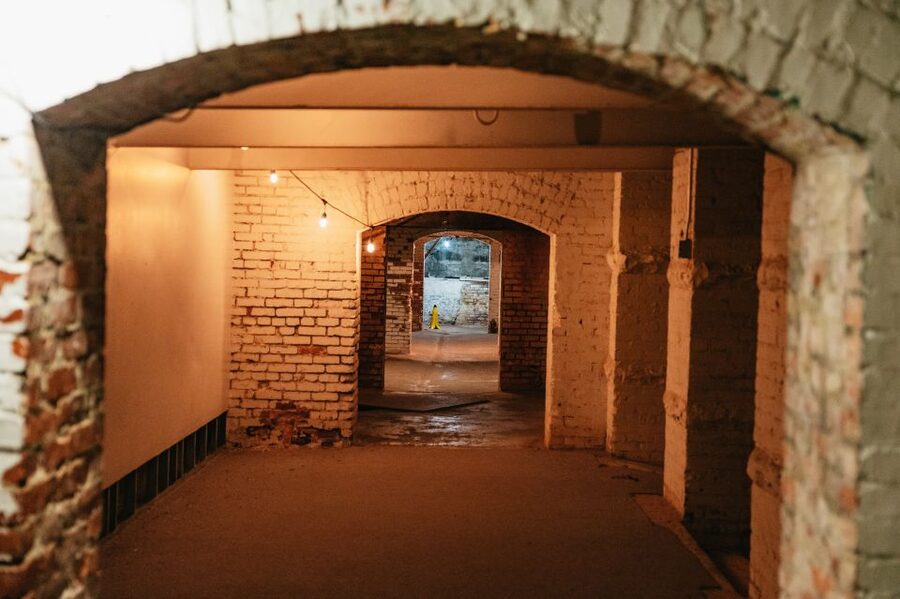
Seattle’s most curious streets are the ones you cannot see from above. This one-hour walk takes you beneath Pioneer Square, through three passageways built in the 1890s, where old sidewalks, storefronts, and construction clues explain how the city rebuilt after the Great Seattle Fire of 1889.
I like the way the tour connects the underground spaces to the city overhead, and I like its lively storytelling. Guides such as David, Mark, Jim, Eowyn, and Patti have been praised for mixing solid facts with humor. The main drawback is physical: six flights of stairs, uneven ground, and no elevator make this a poor choice for anyone with mobility limits.
In This Review
- Key points
- What Seattle’s underground really is
- Starting beneath Cherry Street Coffee
- The Great Seattle Fire and a city forced to start again
- Three passageways with real construction clues
- Why the streets were raised above the swamp
- Guides who make a short tour work
- Is $31 a fair price for one hour?
- Who should book this Seattle underground tour?
- Practical ways to enjoy the hour
- Should you book Beneath the Streets?
- FAQ
- How long is the Seattle Guided Underground Walking Tour?
- What does the tour include?
- How many underground passageways will I visit?
- Where does the tour meet?
- Is the tour offered in English?
- How many stairs are on the route?
- Can I bring a stroller or pet?
Key points
- Three passageways from the 1890s: Walk through preserved spaces beneath Pioneer Square rather than simply viewing old buildings from the sidewalk.
- The 1889 fire explained: Learn how the fire destroyed large parts of Seattle and forced a radical rebuilding project.
- A city raised above its old streets: See how retaining walls and fill created roads several feet above the original level.
- One hour, tightly paced: The short format works well before lunch or as an opening activity in Seattle.
- Storytelling is central: Guides use personalities, odd details, and humor to make engineering and urban history easy to follow.
- Stairs are unavoidable: There are six flights, no elevator access, and pets are not allowed.
What Seattle’s underground really is
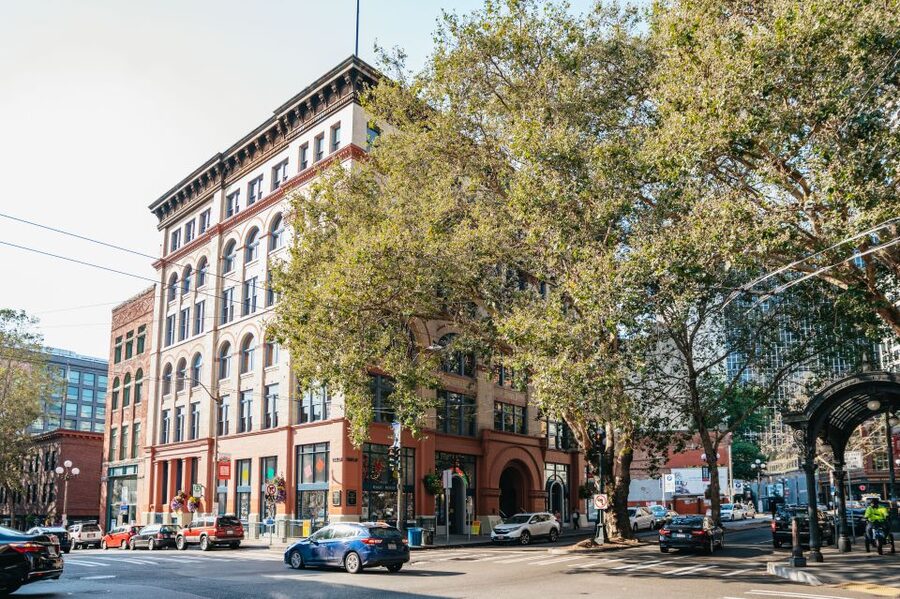
Seattle’s underground is not a single secret tunnel running beneath the whole city. It is a series of spaces left below today’s Pioneer Square after the city rebuilt at a higher level.
That distinction matters. You are not entering a fantasy city with fully furnished shops waiting below the pavement. You are seeing the remains of an earlier street system and the structural spaces created when Seattle changed its grade. The appeal comes from the evidence: old walls, buried sidewalks, storefront remnants, and the odd feeling of standing several feet below the traffic above.
The tour covers more than four city blocks and includes three historic passageways dating to the 1890s. Your guide explains how the original streets became obsolete and how the new ones were built above them. That physical comparison gives the history a clear shape. You can see the gap between old and new rather than trying to picture it from a paragraph in a museum.
I find this kind of tour especially useful early in a Seattle visit. Once you understand how Pioneer Square was rebuilt, the city’s steep grades, old brick buildings, and layered streets make more sense.
More Seattle walks with a guide:
- Taste Pike Place Walking Food Tour
★ 5.0 · 930 reviews - History and Hauntings of Salem Guided Walking Tour
★ 5.0 · 14,564 reviews - New Orleans Premier Ghost, Voodoo and Vampire Walking Tour
★ 4.5 · 12,856 reviews
Starting beneath Cherry Street Coffee
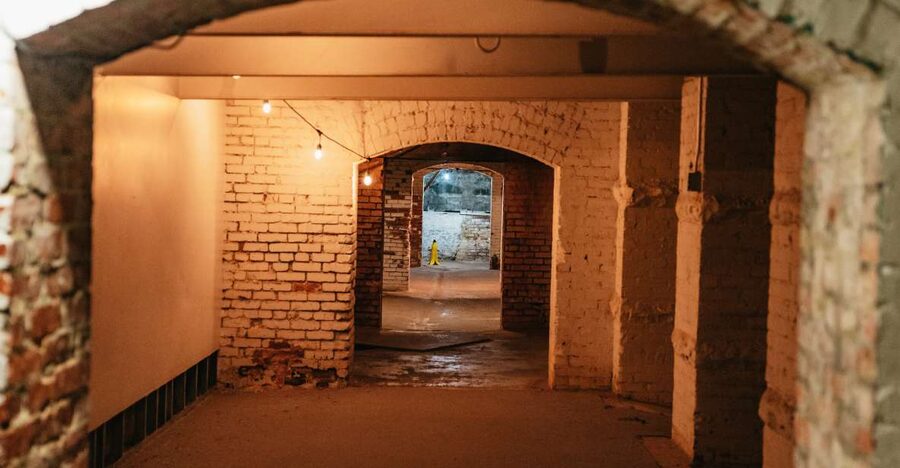
The meeting point is beneath the Cherry Street Coffee shop. Look for the black and purple Beneath the Streets sign, then take the stairs down to the reception desk.
Give yourself enough time to identify the entrance. The tour does not begin at a broad plaza with a large coach waiting outside. You are looking for a doorway and a sign beneath a coffee shop, so a calm arrival is better than a last-second dash through Pioneer Square.
The tour is conducted in English with a live guide. The guide leads the group on foot, switching between the underground spaces and the streets above. That outdoor component is important. You do not spend the full hour in a dark corridor, and the above-ground views help you understand the relationship between the modern city and the buried one.
Comfortable shoes are essential. You will walk across uneven surfaces and manage six flights of stairs during the route. Strollers can be carried up and down the stairs or stored in the ticket office during the tour, but this is not a suitable outing for people with mobility impairments.
The Great Seattle Fire and a city forced to start again
The central story is the Great Seattle Fire of 1889. The fire destroyed large sections of the young city, creating a crisis but also an opportunity to rebuild in a more controlled way.
Your guide uses the fire to explain why Seattle did not simply replace damaged buildings on the same streets. The city had problems with swampy ground, drainage, street grades, and construction. Rebuilding offered a chance to tackle those issues at the same time.
This is where the tour moves beyond a simple disaster story. You learn about the decisions made after the fire and the practical work needed to reshape the city. Streets were raised several feet, retaining walls were built alongside them, and the space between the old and new levels was filled to form new roads.
That work changed daily life in ways that are easy to miss from above. A doorway that once opened onto a street might later sit below the new street level. A sidewalk could become part of an enclosed underground space. Buildings that look ordinary from the present-day pavement may preserve an earlier relationship with the street beneath them.
The guide’s job is to turn those facts into a readable story. The strongest guides do not merely list dates. David, Mark, Jim Gall, Eowyn, Patti, Terrilyn, and others have been praised for keeping the pace lively while explaining how Seattle developed. Names and personalities may vary with the schedule, but the format depends heavily on the person leading your group.
Three passageways with real construction clues
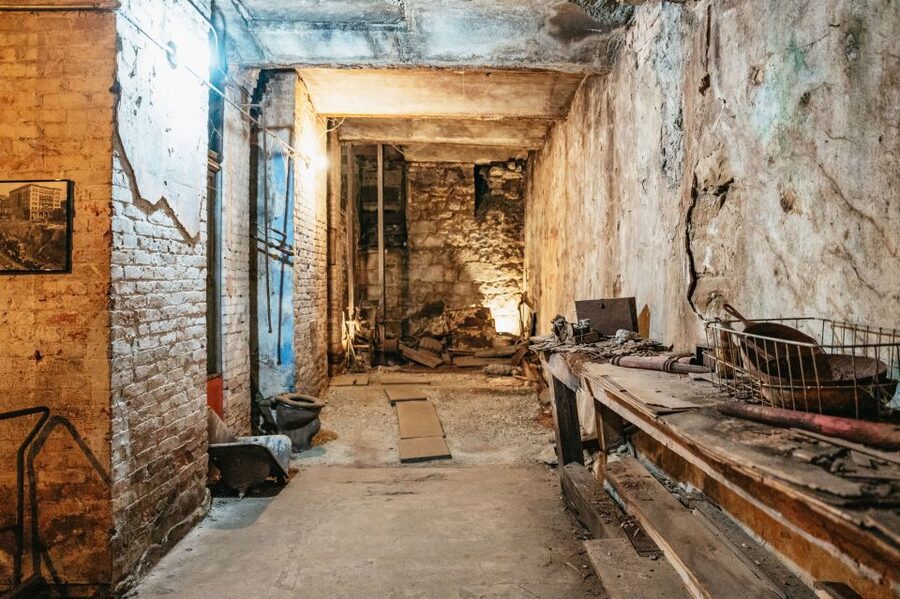
The underground route includes three passageways from the 1890s. Each helps show a different part of Seattle’s rebuilding process, even though the experience is best understood as one connected story rather than three separate attractions.
You may see old storefronts and buried street elements that make the former city level easier to picture. The spaces are not presented as polished period rooms. Their value comes from their structure and age, along with the guide’s explanation of what you are looking at and why it ended up below the modern streets.
That point is worth stressing if you are comparing this with a theatrical history attraction. The tour does not rely on elaborate staging. It offers preserved architecture, photographs, infrastructure, and spoken interpretation. If you want actors, recreated shops, or a fully furnished underground town, this may feel restrained. If you enjoy looking at original fabric and working out how a city was built, it is a better fit.
Some visual material is displayed along the route. Larger images could make certain details easier to study, but the guide remains the main source of context. Listen closely, and do not rush ahead. The meaning of a wall or opening may not be obvious until the guide connects it to the old street grade.
The route’s four-plus-block reach also helps. You are not standing in one room hearing a lecture. You move through different sections of Pioneer Square, seeing how the underground spaces relate to the blocks overhead.
More Seattle trips worth a second look
- Chef Guided Food Tour of Pike Place Market
★ 5.0 · 3,733 reviews - Seattle’s Original Guided Harbor Cruise
★ 4.5 · 2,077 reviews - Seattle City and Snoqualmie Falls Half-Day Guided Tour
★ 5.0 · 1,293 reviews - Seattle: Pike Place Market Chef-Guided Food Tour
★ 4.8 · 847 reviews
Why the streets were raised above the swamp
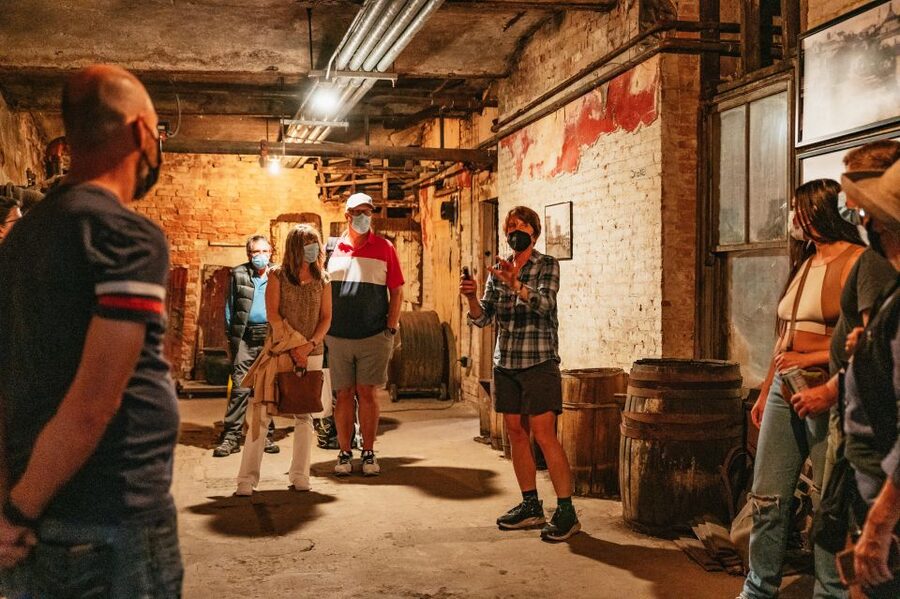
The engineering story is the tour’s most useful lesson. Seattle was not rebuilt at a higher level simply to create an unusual attraction for future sightseers. The city had to deal with wet ground and difficult street conditions, and the rebuilding project addressed those practical concerns.
Your guide describes the retaining walls built beside the streets and the fill used to create new roads above the originals. The result was a layered city: an earlier pedestrian level below and a new public level above.
Once you have seen this, Pioneer Square becomes easier to read. Look at the old masonry buildings from the sidewalk and you may start wondering where their first entrances sat. Notice how the streets meet the buildings, then picture the earlier grade beneath your feet. The tour gives you a useful way to observe the neighborhood after the hour is over.
This is also why the underground spaces can feel more architectural than spooky. Their strongest moments come from columns, walls, brickwork, and the sheer scale of the construction. The infrastructure tells you how much labor went into changing the city.
The route is outside and underground, so conditions can vary. Wear shoes that handle both pavement and rougher surfaces. The provided information does not promise a temperature-controlled environment, so dress for a walking tour rather than an indoor museum visit.
Guides who make a short tour work
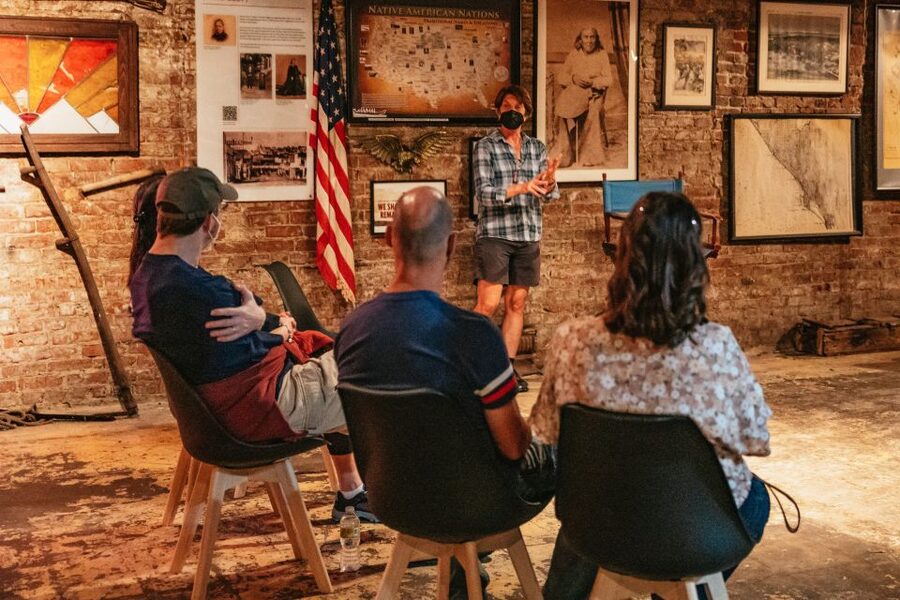
An hour is not long for Seattle’s early settlement, fire, rebuilding, and underground spaces. A dry lecture would feel rushed. The best guides solve that problem with clear explanations, a steady walking pace, and humor.
Several guides have been singled out for those qualities. David is repeatedly described as energetic, personable, and full of useful facts. Mark has been praised for funny stories and a strong grasp of local history. Jim Gall is known for storytelling and humor, while Eowyn has been described as lively and engaging. Patti, Terrilyn, Jennifer, Imojen, Sarah, Richard, and others have also led well-received tours.
You cannot choose a particular guide from the information provided, and the roster can change. Still, the pattern is clear: the tour is built around live interpretation rather than an audio device or self-guided signs.
I especially like the way a good guide can adjust the experience for the group. One guide may ask where people come from and refer back to those places during the hour. Another may use dry jokes or family-friendly humor to keep younger participants interested. The subject includes fire, construction, politics, and the less polished parts of Seattle’s past, but the tone is generally accessible.
If you prefer to read at your own speed, this format may feel fast. You have to listen while walking and keep up with the group. The reward is a stronger sense of place and a chance to ask questions in real time.
Is $31 a fair price for one hour?
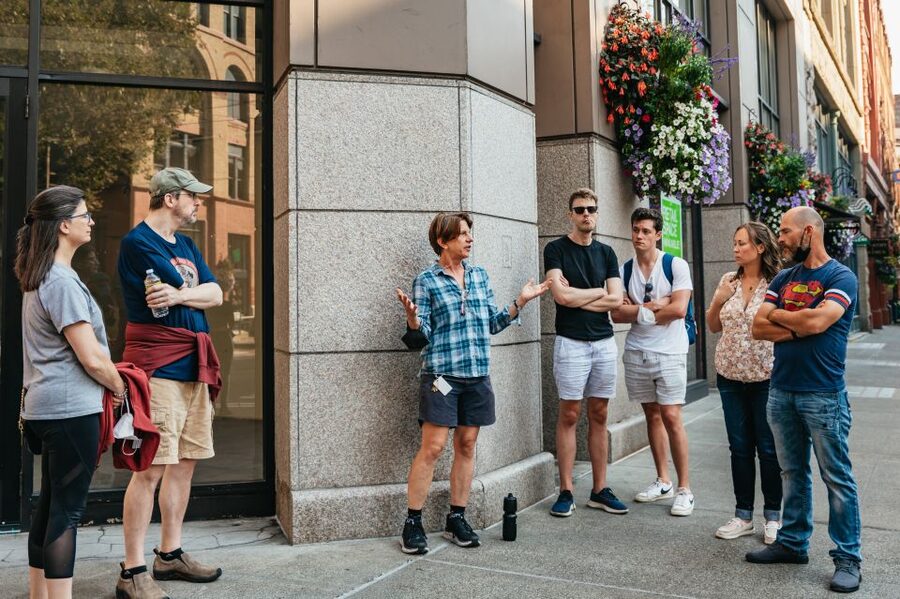
At $31 per person, this is not the cheapest way to spend an hour in Seattle. You can walk around Pioneer Square for free, admire its historic architecture, and read up on the Great Seattle Fire before your visit.
The paid tour earns its price through access and interpretation. You get into three underground passageways, cover more than four city blocks, and receive a guided explanation of why those spaces exist. Without the guide, the old walls and lower-level openings can be interesting but confusing. With the story of the raised streets in mind, the same features become evidence.
The one-hour length helps the value. You are not committing half a day, and the tour fits neatly into a morning or afternoon. A 10 a.m. start can work well as the first activity of the day, leaving time for Pioneer Square, the waterfront, museums, or lunch afterward.
The short duration is also the chief limitation. Seattle’s settlement, fire, reconstruction, and underground life involve more information than can fit comfortably into sixty minutes. You receive a focused introduction, not a full study of the city. If you want every tunnel, a long stop at each display, or a detailed architectural survey, you may want a longer history experience as well.
For me, the price is reasonable if the underground spaces are a priority and you value a strong guide. It is less compelling if you only want a quick photo or if stairs will make the route stressful.
Who should book this Seattle underground tour?
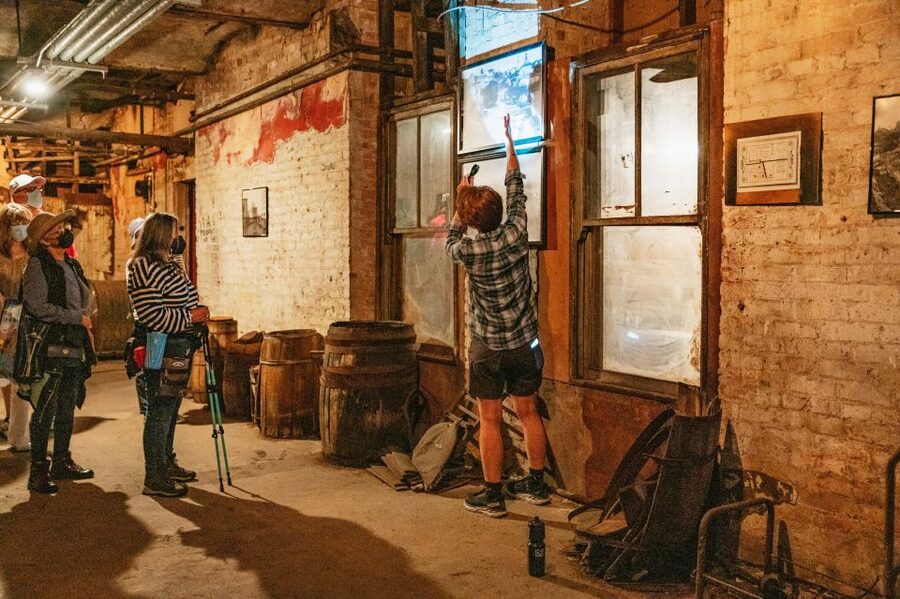
This tour suits people who enjoy city history, old buildings, engineering, and stories about how ordinary places changed over time. It is also a good choice for repeat visitors and Seattle locals. Knowing the city already does not make the route pointless. In fact, the below-street perspective can add a new layer to familiar blocks.
Families can enjoy it, especially when the guide uses humor and unusual details. The one-hour format is manageable, though children need to stay with the group and handle the stairs safely. The experience is conducted in English, so you should be comfortable following a spoken tour in that language.
Architecture fans will find plenty to consider, but this is not a formal building survey. History-minded visitors will get more from it than people looking only for a spooky attraction. The underground setting may sound mysterious, yet the main subject is urban development rather than ghosts or special effects.
The tour may not suit you if you use a wheelchair, have difficulty with stairs, or need an elevator. There are six flights and no elevator access. Strollers may be carried or left at the ticket office, but that still requires managing the stairs. Pets are not allowed.
Practical ways to enjoy the hour
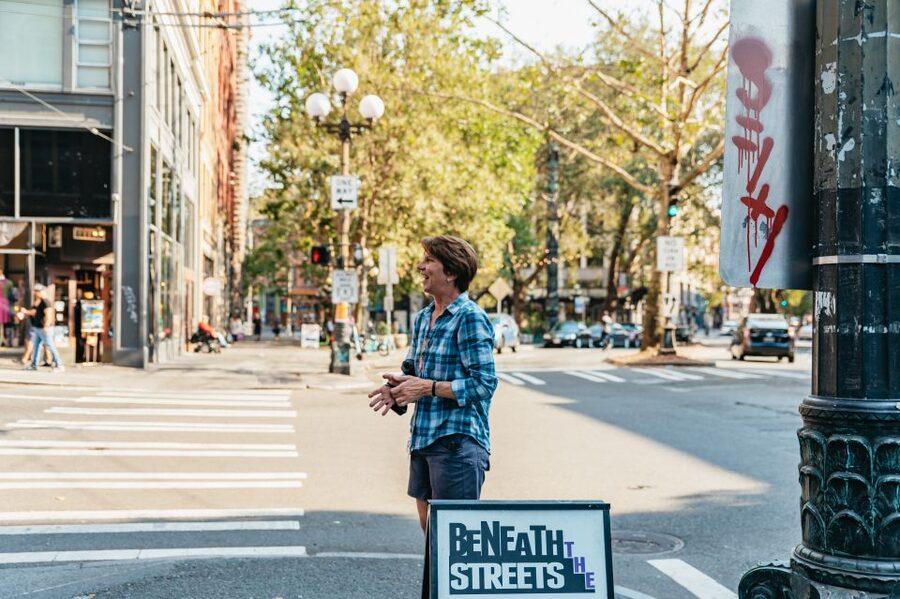
Arrive at the Cherry Street Coffee meeting point with comfortable shoes and a few minutes to spare. Find the black and purple sign, then go down to the reception desk rather than waiting on the sidewalk.
Keep your group together. Some of the most useful information comes when the guide points out a feature and explains how it relates to the street above. If you move ahead, you may see the object but miss the reason it matters.
Plan another Pioneer Square activity before or after the tour. The underground walk gives you the framework, while a later stroll lets you test what you learned against the buildings and streets above. This pairing makes the $31 cost feel more worthwhile because you continue using the tour’s ideas for the rest of the day.
You can also book with some flexibility. Cancellation is free up to 24 hours before the tour for a full refund, and the reserve-now, pay-later option lets you hold a place without paying immediately. Check the available starting times when booking, since the tour lasts one hour and schedules can vary.
Should you book Beneath the Streets?
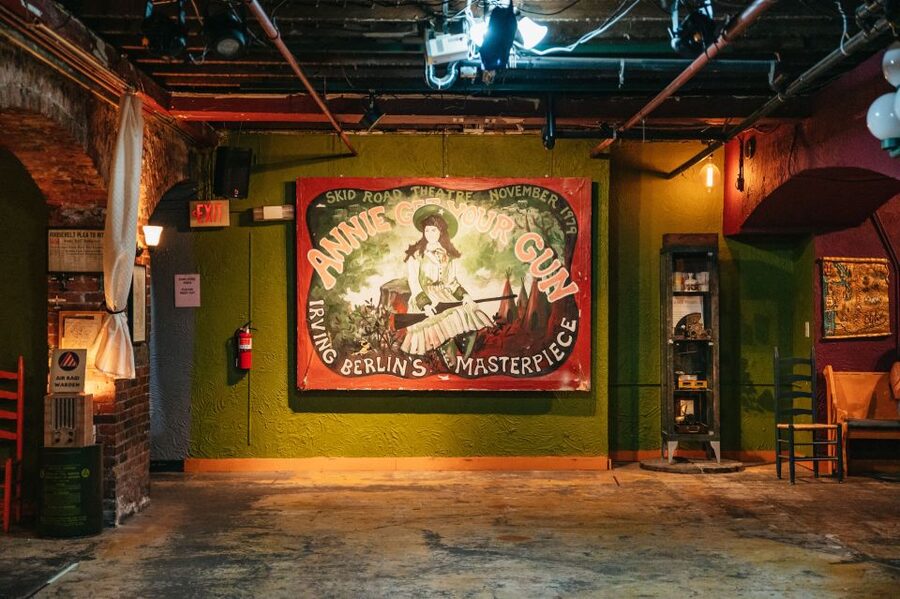
Yes, if you want a compact, well-told introduction to Seattle’s buried streets and the rebuilding that followed the 1889 fire. The mix of three historic passageways, old construction details, and above-ground context gives you something more useful than a quick look at a dark tunnel.
I would book it early in a Seattle stay, especially if you plan to explore Pioneer Square afterward. Go in expecting preserved spaces and strong storytelling, not staged rooms or a fully recreated underground town. Most important, be ready for six flights of stairs and uneven ground.
At $31, it is a fair buy for history fans, curious first-time visitors, and locals who want to see familiar Seattle from a different level. Skip it if mobility is an issue or if you prefer a self-guided museum. For everyone else, this is one of the city’s more memorable short walks.
FAQ
How long is the Seattle Guided Underground Walking Tour?
The tour lasts one hour.
What does the tour include?
The price includes a live guide and the walking tour through Seattle’s underground passageways.
How many underground passageways will I visit?
The route includes three historic passageways originally constructed in the 1890s.
Where does the tour meet?
The meeting point is beneath the Cherry Street Coffee shop. Look for the black and purple Beneath the Streets sign and take the stairs down to the reception desk.
Is the tour offered in English?
Yes. The tour has a live English-speaking guide.
How many stairs are on the route?
There are six flights of stairs, and there is no elevator access.
Can I bring a stroller or pet?
Pets are not allowed. A stroller may be carried up and down the stairs or stored in the ticket office for the duration of the tour.
Recently reviewed around Seattle
- Seattle: Pike Place Market Chef-Guided Food Tour★ 4.8 · 847 reviews
- Seattle: Harbor Cruise with Local Guide★ 4.8 · 599 reviews
- Seattle: City Highlights Tour★ 4.7 · 416 reviews
- Seattle: Half-Day Wildlife and Whale Watching Cruise★ 4.3 · 378 reviews
- Seattle CityPASS®: Save up to 46% at 5 Top Attractions★ 4.6 · 742 reviews
- Seattle: Chihuly Garden and Glass Entry Ticket★ 4.8 · 374 reviews
- From Seattle: Mount Rainier National Park Guided Tour★ 4.8 · 412 reviews
- Seattle: City Sightseeing Hop-On Hop-Off Bus Tour★ 3.9 · 421 reviews
Walking Tours, compared.
History and Hauntings of Salem Guided Walking Tour
Read our review →
New Orleans Premier Ghost, Voodoo and Vampire Walking Tour
Read our review →

Freedom Trail History Small Group Walking Tour
Read our review →
Historic Charleston Guided Sightseeing Walking Tour
Read our review →
New Orleans Food Walking Tour of the French Quarter with Small-Group Option
Read our review →
St. Louis Cemetery No. 1 Official Walking Tour
Read our review →Browse the lists this tour appears in