
Reviewed · NEW YORK CITY TOURS
Gilded Age Mansions Tour in New York
New York’s Gilded Age comes alive best when you connect the grand façades to the people who built them. This two-hour walk follows a stretch of Fifth Avenue and the Upper East Side, where fortunes funded enormous homes, social battles, universities, museums, and more than a few scandals. The stories are the main event, not simply the stone and ironwork.
I like two things right away. First, the route puts famous buildings into a social setting, linking owners, architects, ex-wives, philanthropists, and rival families. Second, the guide uses photos and videos to show what has changed, which helps you picture interiors that are now private, modernized, or gone. Guides Matthew, Care, and AJ are praised for clear storytelling, strong preparation, and thoughtful pacing.
The main point to understand before booking is simple: this is mostly an outdoor history walk. You enter a few preserved spaces, including parts of mansions and the Metropolitan Museum of Art, but you do not tour a string of intact private homes from room to room.
In This Review
- Key points to know before you go
- What this two-hour walk is really about
- East 78th Street and the opening lesson in New York society
- 972 Fifth Avenue and the first look inside
- A former wife and the changing role of women
- 2 East 79th Street and a mansion saved from destruction
- 1009 Fifth Avenue and the surprise of size
- The Metropolitan Museum of Art and Gilded Age glamour
- 1040 Fifth Avenue and the fight for New York’s landmarks
- Neue Galerie and the Vanderbilt connection
- 2 East 91st Street and philanthropy beyond the mansion
- 1 East 91st Street and a modern pop-culture link
- 1109 Fifth Avenue and a final act of defiance
- How much indoor access should you expect?
- Guides, pace, weather, and accessibility
- Is $40 a fair price?
- Who should book this Upper East Side walk?
- Should you book it?
- FAQ
- Where does the Gilded Age Mansions Tour start?
- Where does the tour end?
- How long does the tour last?
- How much does the tour cost?
- Is the tour mostly indoors or outdoors?
- Is admission to the Neue Galerie included?
- Is admission to the Metropolitan Museum of Art included?
- Is the tour wheelchair accessible?
Key points to know before you go
- A focused Upper East Side route: The walk runs from 1 East 78th Street to 1109 Fifth Avenue, with eleven stops around Fifth Avenue, Central Park, and East 91st Street.
- Preserved interiors are limited: You go inside some buildings, but several mansions are now schools, museums, private residences, or altered modern spaces.
- Scandal drives the storytelling: Expect tales of prison, murder, romance, social defiance, architectural disputes, and enormous acts of giving.
- The Metropolitan Museum of Art adds context: The tour connects the Met Gala and the museum’s modern identity to Gilded Age display and glamour.
- Guides make a major difference: Matthew, Care, and AJ are noted for vivid stories, photographs, videos, clear voices, and thoughtful answers.
- A small group keeps the walk manageable: The tour allows no more than 20 people and costs $40 per person.
What this two-hour walk is really about
If you picture a mansion tour as an indoor visit to lavish bedrooms, ballrooms, and dining rooms, adjust your expectations. The experience is built around walking between historic addresses and hearing how the buildings fit into New York’s social and economic story.
That approach has real value. Many Gilded Age mansions no longer survive as private homes. Some were demolished, some were converted, and others have new interiors that tell you little about their original owners. Seeing the exterior while learning what happened inside can be more revealing than touring a preserved room without any wider context.
The route also gives you a useful sense of scale. These were not isolated country houses. They formed part of a social world along Fifth Avenue, close to Central Park and major cultural institutions. The buildings were statements of wealth, status, family ambition, and competition.
The walk is capped at 20 people, which matters on city sidewalks. A good guide can position the group away from traffic noise, and Care is specifically praised for speaking loudly and choosing spots where the narration could be heard. That small detail can make the difference between following the story and missing half of it.
Other New York City days travellers line up against this one:
- NYC: SUMMIT One Vanderbilt Tickets
★ 4.7 · 51,195 reviews - NYC: 9/11 Memorial & Museum Timed-Entry Ticket
★ 4.8 · 31,428 reviews - NYC: Empire State Building Tickets – Observatory & Museum
★ 4.7 · 25,757 reviews
East 78th Street and the opening lesson in New York society
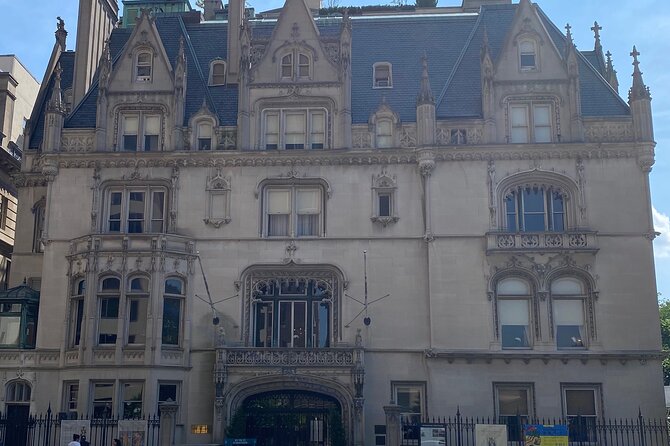
The meeting point is 1 East 78th Street. The first mansion is viewed from the outside, and the guide introduces its owner, architects, and the social world that produced these houses.
This opening stop sets the tone. Instead of treating a mansion as an isolated piece of architecture, you begin with the people behind it. You learn why design mattered, how wealthy New Yorkers presented themselves, and how the Gilded Age shaped the city’s elite.
You will spend about 10 minutes here. That is enough time for an introduction and exterior explanation, but not enough for a detailed architectural lecture. The benefit is that the tour gets moving quickly and saves its most striking interior access for later.
972 Fifth Avenue and the first look inside
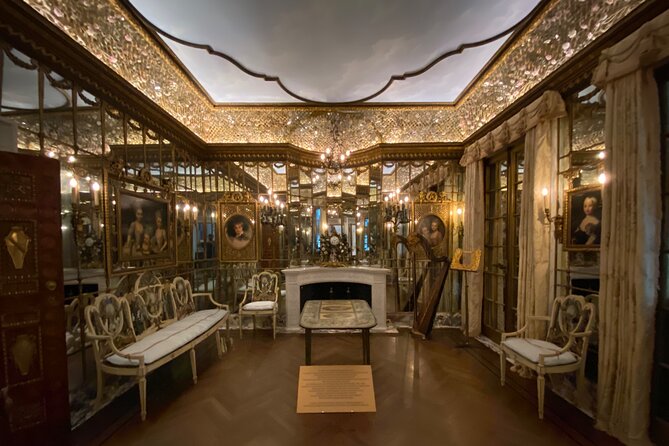
At 972 Fifth Avenue, the group enters a mansion and hears a scandalous story involving its architect. This is one of the more important stops for setting expectations, because interior access exists but is limited.
The preserved parts you see are described as significant pieces of New York’s past. They may look like a lobby at first glance, but the main hall is the meaningful space here. Look up, look across the woodwork, and pay attention to the craftsmanship rather than expecting a full private-home visit.
The indoor stop also offers a welcome break in poor weather. Several guides have adjusted the pace to give people more time inside on cold days. At $40, even a few genuine interior views help the experience feel more substantial than a standard sidewalk lecture.
A former wife and the changing role of women
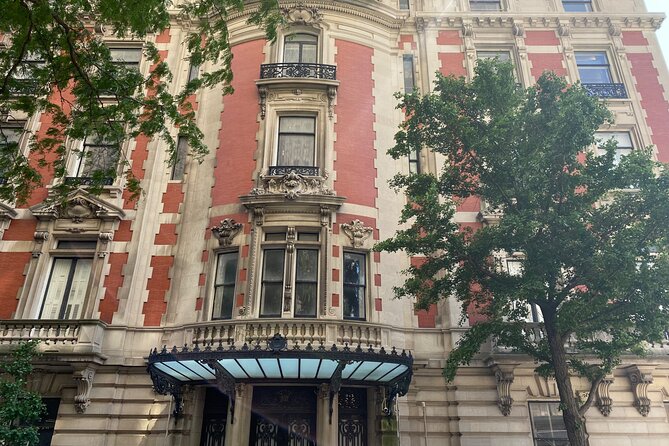
The next stop, listed simply in Manhattan, shifts attention from buildings to social change. The guide explains how the ex-wife of a former owner became a pioneer for women in America.
This is a useful counterweight to the usual parade of wealthy men. Gilded Age stories can easily become a roll call of industrial fortunes and enormous houses. A woman who used her position to push into public life gives the era a broader human frame.
The stop lasts about five minutes, so expect a concise story rather than a long discussion. Still, it helps show that these mansions were tied to questions about independence, reputation, marriage, and the changing place of women in American society.
A completely different way to spend a day nearby:
- NYC: Empire State Building Observation Deck Tickets
★ 4.7 · 22,072 reviews - NYC: Edge Observation Deck Admission Ticket
★ 4.6 · 20,918 reviews - New York City: Statue of Liberty & Ellis Island with Ferry
★ 4.6 · 18,683 reviews - New York City: American Museum of Natural History Ticket
★ 4.5 · 15,447 reviews
2 East 79th Street and a mansion saved from destruction
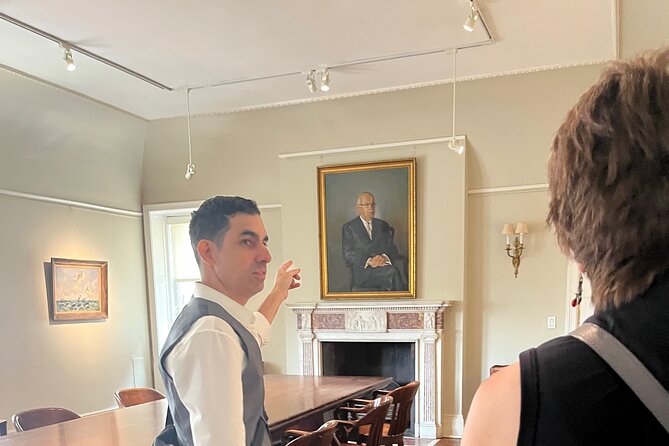
At 2 East 79th Street, the tour gathers several strong threads. You hear why one former owner went to prison in one of the country’s biggest scandals, how two reclusive owners connected to a famous figure from early New York, and how the building avoided destruction.
That combination gives the stop unusual range. You get crime and public disgrace, private lives, old New York connections, and the practical question of preservation. A building that survives is not guaranteed a future. It can be threatened by redevelopment, changing tastes, or the high cost of maintaining a large house.
The 10-minute stop should appeal to anyone who likes buildings with complicated afterlives. You are not just admiring a façade. You are learning why it remained on the avenue when so many neighboring mansions disappeared.
1009 Fifth Avenue and the surprise of size
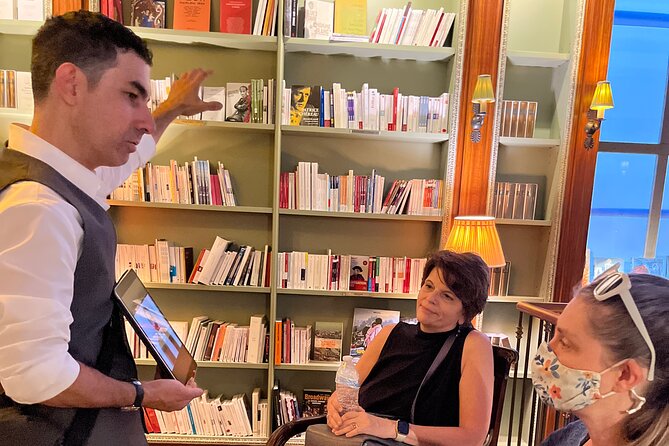
At 1009 Fifth Avenue, the guide reveals something surprising about the mansion’s scale. The stop also explains how a former owner left a gift that helps students receive full scholarships at a leading American university.
The size story gives you a practical sense of what these homes represented. Gilded Age wealth was not modest or discreet. A mansion could function as a public display of family power, and its dimensions helped communicate rank before a guest ever crossed the threshold.
The scholarship connection shows another side of concentrated wealth. Philanthropy could soften a family’s public image, support education, and shape institutions long after the original owner was gone. You get about 10 minutes here, enough for the guide to connect architecture with the lasting use of money.
The Metropolitan Museum of Art and Gilded Age glamour
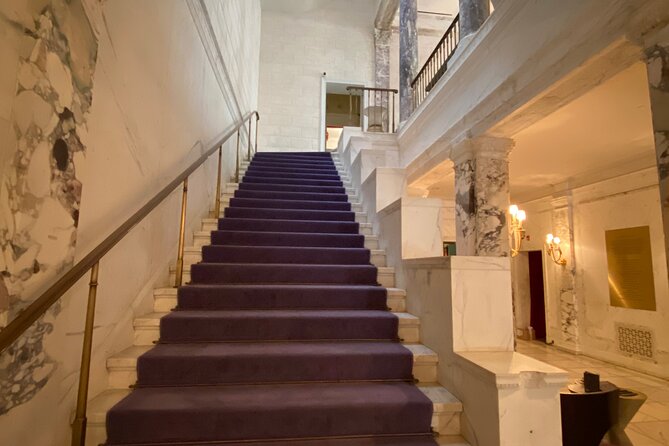
The Metropolitan Museum of Art is the only stop with clearly included museum admission. The tour goes inside and discusses the Met Gala, along with the museum’s connection to Gilded Age glamour.
This is a smart pause in the route. The Met is not a mansion, but it helps explain where the era’s appetite for display went after many private homes vanished. The museum’s grand public image and the modern spectacle of the Met Gala offer a bridge between old private parties and today’s high-profile fashion culture.
Do not expect this to be a full museum tour. The listed stop is about 10 minutes, so the guide’s focus is the Met’s relationship to the social world you have been tracing. If you want time with the collections, plan a separate visit.
The Neue Galerie later adds another cultural connection, but admission there is not included. You see and discuss the building from the route, while any museum entry would be your own choice and expense.
1040 Fifth Avenue and the fight for New York’s landmarks
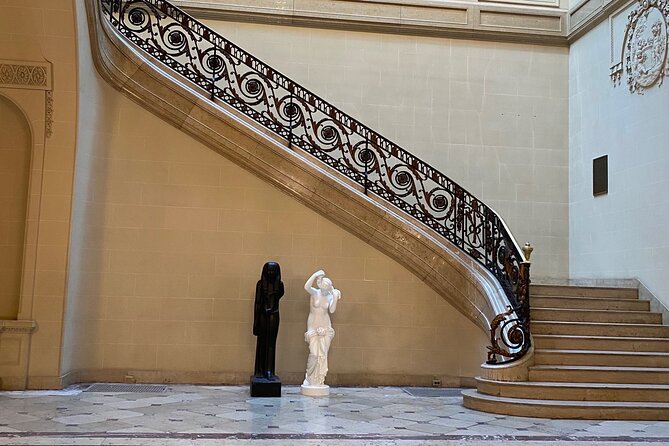
At 1040 Fifth Avenue, the guide explains how a famous former resident helped save one of the city’s most beautiful Gilded Age buildings from destruction.
This stop highlights a key truth about New York: preservation often depends on people willing to argue for old buildings when demolition seems easier or more profitable. The story adds civic drama to the architectural tour and helps you understand why surviving mansions are unusual.
The stop is short, about five minutes. Think of it as one sharp episode in the larger preservation story, not a detailed case study.
Neue Galerie and the Vanderbilt connection
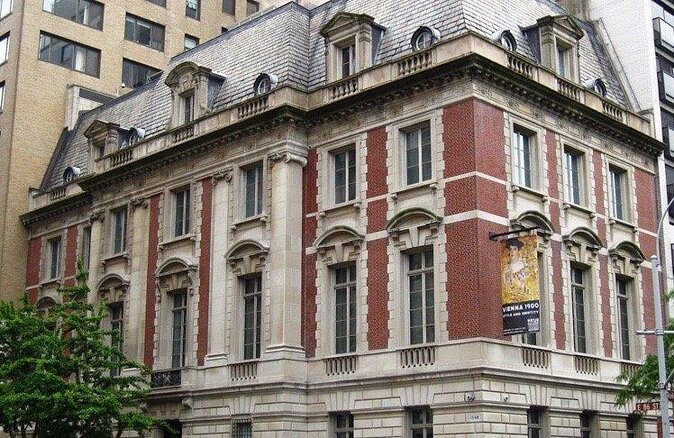
The Neue Galerie brings the Vanderbilts into the route. You learn how the family became the richest in America and one of its most influential dynasties.
The building is part of the tour’s outside-and-context approach. Admission to the Neue Galerie is not included, and the listed information does not promise an interior visit. That is worth noting if you are hoping to step inside every cultural building along Fifth Avenue.
Still, the Vanderbilt connection matters because the family represents the speed and scale of Gilded Age wealth. Their story helps explain how fortunes moved from business into architecture, art, philanthropy, and social influence.
If you are interested in visiting the Neue Galerie separately, treat the tour as an introduction rather than your museum admission. The walk gives you the backstory, while a separate visit would be needed to see its exhibitions.
2 East 91st Street and philanthropy beyond the mansion
At 2 East 91st Street, the focus turns to a former owner who pioneered American philanthropy. The guide connects this person to science education, the arts, and peace.
This is one of the route’s broader stops. Instead of asking only how the wealthy lived, it asks what they did with their fortunes afterward. Philanthropy can never erase the inequalities of the Gilded Age, but it did shape schools, cultural institutions, scientific work, and public causes.
You spend about 10 minutes here. That gives the guide room to show how a private fortune could influence national life. It also keeps the tour from becoming a simple parade of robber barons and gossip.
1 East 91st Street and a modern pop-culture link
At 1 East 91st Street, the former owner has an unexpected connection to Taylor Swift, Lady Gaga, and the Jonas Brothers.
This is the sort of modern reference that keeps the tour accessible if you are not already a student of American architecture. It links an old mansion to names you may recognize from music and popular culture, showing how ownership, patronage, or institutional history can reach into the present.
The stop lasts about five minutes. It is brief, but the contrast between Gilded Age residents and current entertainment figures gives the route a playful change of pace.
1109 Fifth Avenue and a final act of defiance
The final stop is 1109 Fifth Avenue. Here you learn about an owner who was warned not to build the house, then went ahead anyway in defiance of New York society.
It is a fitting ending. The tour has shown wealth as display, architecture as social competition, and preservation as a fight. This last story brings those ideas together through one owner’s refusal to accept the rules of the city’s elite.
The tour ends here after roughly two hours. You finish at East 91st Street, near public transportation, rather than returning to the starting point. Plan your next activity from the northern end of the route.
How much indoor access should you expect?
This is the most important practical point. You do go inside some mansions, and the preserved main halls can be beautiful. But the route does not provide a complete interior tour of every mansion named.
Some buildings are privately owned. Others are schools or modern museums. In several cases, the original Gilded Age rooms have not survived, so the visible interior may be modern or not open to public touring. The guide may show you photos or videos to fill in what you cannot physically enter.
I consider that a fair format for this part of New York, but the title can create a different expectation. Book this if you want architecture, social history, and a few meaningful interior glimpses. Do not book it expecting two hours inside fully preserved mansions.
Guides, pace, weather, and accessibility
The guide is central to the experience. Matthew is praised for strong preparation, photographs, videos, humor, and an ability to keep the story moving. Care is noted for clear speech, considerate pacing, practical warmth on cold days, and helpful suggestions for cafés, museums, libraries, and other tours. AJ is described as entertaining and well informed.
Weather matters because much of the route is outdoors. The experience requires good weather, and a cancellation for poor conditions brings the choice of another date or a full refund. Dress for a city walk, and check the forecast before you go.
The tour is wheelchair-friendly, and service animals are welcome. Most people can participate, and the route is near public transportation. The supplied details do not specify the exact sidewalk conditions or restroom access, so if you need those details, ask before booking.
You receive a mobile ticket, and the tour is offered in English. Snacks are not included, so eat beforehand or plan food after the walk.
Is $40 a fair price?
At $40 per person, the value rests on the guide’s research and storytelling more than on admission fees. You are not paying for extensive mansion entry. You are paying for a structured route, access to a few preserved interiors, the Met portion, and the connections that turn separate buildings into one story.
For someone who would otherwise walk Fifth Avenue and wonder about the façades, that is a reasonable price. The guide helps you notice owners, architects, social rivalries, philanthropy, and preservation battles that are easy to miss on your own.
The value is weaker if you mainly want indoor access. The Neue Galerie is not included, and most stops have no admission charge. A self-guided walk can show you the exteriors for free, but it will not provide the same sequence of stories or answer questions as you go.
Who should book this Upper East Side walk?
I would recommend it to fans of the television series The Gilded Age, architecture lovers, New York residents who pass these buildings often, and anyone who enjoys history told through people rather than dates alone.
It also suits first-time visitors who want a focused look at the Upper East Side without committing half a day to a museum. The two-hour length is manageable, and the small group limit should make the guide easier to hear.
You may want another experience if you dislike outdoor walking, need a fully indoor activity, or want access to many intact mansion rooms. The tour’s strongest feature is its storytelling, so your enjoyment will depend heavily on how much you like guided interpretation.
Should you book it?
Book this tour if you want to understand what the surviving mansions mean, not just photograph them. Matthew, Care, and AJ bring strong preparation and personality, while the route adds scandal, philanthropy, architecture, preservation, and modern cultural links.
Go in with accurate expectations: most of the tour takes place outside, and interior access is limited to a few preserved spaces. At $40, it is a good buy for a lively historical walk with selective indoor access, but not for a traditional mansion house tour.
Free cancellation is available up to 24 hours before the start time. Within 24 hours, changes and refunds are not accepted, so keep that deadline in mind when planning around New York weather.
FAQ
Where does the Gilded Age Mansions Tour start?
The tour starts at 1 East 78th Street, New York, NY 10075.
Where does the tour end?
It ends at 1109 Fifth Avenue, New York, NY 10128, near public transportation.
How long does the tour last?
The tour lasts approximately two hours.
How much does the tour cost?
The listed price is $40 per person.
Is the tour mostly indoors or outdoors?
Most of the tour takes place outdoors. You enter some buildings and see a few preserved interiors, but you do not tour every mansion from the inside.
Is admission to the Neue Galerie included?
No. Admission to the Neue Galerie is not included.
Is admission to the Metropolitan Museum of Art included?
Yes. The itinerary lists admission to the Metropolitan Museum of Art as included.
Is the tour wheelchair accessible?
The tour is wheelchair-friendly, and service animals are allowed.
Recently reviewed around New York City
- Dyker Heights Christmas Lights Guided Tour★ 4.5 · 920 reviews
- New York City Dinner Cruise with Live Music★ 4.0 · 377 reviews
- New York City Holiday Lights Tour★ 4.5 · 664 reviews
- NYC in a Day Tour: Statue of Liberty, Times Square and More★ 5.0 · 366 reviews
- Broadway and Times Square Insider Tour with Theater Professional★ 5.0 · 651 reviews
- NYC Central Park Bicycle Rentals★ 4.5 · 368 reviews
- Central Park Bike Rental New York City★ 4.0 · 560 reviews
- Manhattan Sky Tour: New York Helicopter Flight★ 4.5 · 1,458 reviews
New York City Tours, compared.


Empire State Building Tickets – Observatory & Museum
Read our review →
Empire State Building Observation Deck Tickets
Read our review →


Browse the lists this tour appears in