
Reviewed · NEW YORK CITY TOURS
NYC: The Secrets of Grand Central Terminal
Grand Central Terminal keeps its best stories just beyond the usual commute. In 90 minutes, you’ll find tennis courts above the concourse, a whispering gallery, the remains of a lost movie theater, and a tucked-away bar that once served as a tycoon’s private office.
I like the way this tour looks at both grand architecture and odd little details, from the world’s largest Tiffany clock to a multi-million-dollar jewel hiding in plain sight. I also like the use of headsets, which lets you hear the guide over train announcements and city noise. The one drawback is that the tour can feel fast, especially when holiday crowds fill the terminal or when a stop draws a large audience.
In This Review
- Key points to know before you book
- Why Grand Central deserves a closer look
- Meeting at Track 29 in the main atrium
- The main atrium, the Tiffany clock, and a costly design flaw
- Midtown views near the Chrysler Building and One Vanderbilt
- The off-limits glass walkways
- Tennis courts and the terminal’s stranger secrets
- The whispering gallery and a lesson in sound
- The lost movie theater and Grand Central’s changing life
- The multi-million-dollar jewel hiding in plain sight
- The Campbell, a private office turned bar
- Dining areas and the final return to Grand Central
- How good is the $39 value?
- Timing, comfort, and access
- Which guide style should you expect?
- Should you book The Secrets of Grand Central Terminal?
- FAQ
- Where does the tour meet?
- How long does the tour last?
- What language is the tour conducted in?
- Is the tour wheelchair accessible?
- What should I wear?
- Does the tour operate in bad weather?
- Are headsets provided?
- Are tripods allowed?
- What does the tour cost?
Key points to know before you book
- Find Track 29 first: Meet your guide inside the main atrium, in front of track 29.
- Expect more than the main hall: The route includes secret rooms, unusual passageways, outdoor views, and areas most commuters never notice.
- Guides bring the stories to life: John, Richard, Jonathan, AJ, Ray, Christian, Peter, and others have been praised for clear explanations, humor, and strong local knowledge.
- The pace is active: You’ll walk and stop often for short talks, so wear comfortable shoes.
- It runs in all weather: Most of the experience is indoors, but part of the route goes outside.
- The price is about access and context: At $39, the value comes from seeing places you would likely miss and understanding why the terminal changed so dramatically over time.
Why Grand Central deserves a closer look
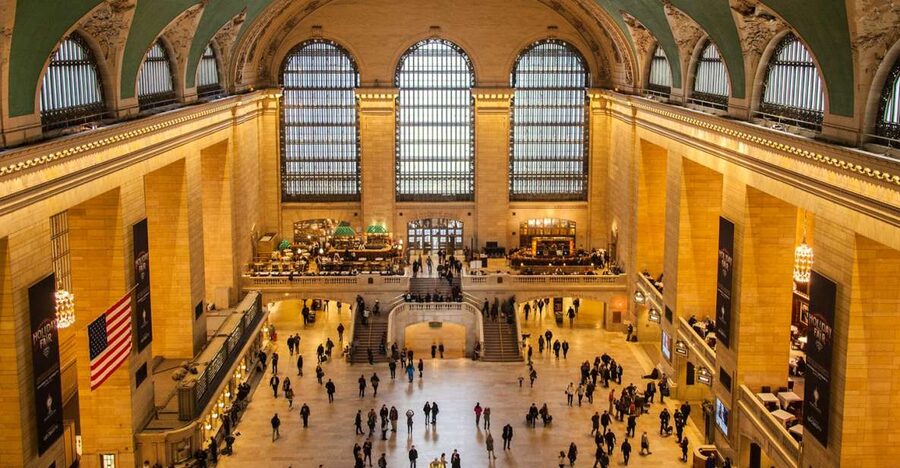
Grand Central Terminal can seem familiar even when you have never visited it before. Its main atrium appears in films, photographs, advertisements, and countless New York itineraries. Yet the grand room is only the opening chapter.
This tour takes you through the terminal’s changing story. You’ll hear about its railroad glory days, its period of decline, and the renovation that saved it from becoming a faded relic. That timeline gives the building a human scale. You are not only looking at a Beaux-Arts ceiling and marble staircases. You are seeing a place that was once celebrated, later treated as an embarrassment, and finally restored as one of Midtown Manhattan’s great public spaces.
I especially like this approach because it keeps the tour from becoming a string of architecture facts. The guide connects design, transport, business, movies, and New York personalities. Guides such as John, Richard, and Peter have been praised for their storytelling and their enthusiasm for railroad history, while Jonathan and AJ have earned praise for keeping the group involved and moving at a good pace.
The supplied rating is 4.8 from 718 reviews, and the praise is notably consistent around the guides. That matters here. Grand Central is noisy, crowded, and full of visual distractions. A guide who can tell a story clearly, remember names, answer questions, and keep people together makes a real difference.
Other New York City days travellers line up against this one:
- NYC: SUMMIT One Vanderbilt Tickets
★ 4.7 · 51,195 reviews - NYC: 9/11 Memorial & Museum Timed-Entry Ticket
★ 4.8 · 31,428 reviews - NYC: Empire State Building Tickets – Observatory & Museum
★ 4.7 · 25,757 reviews
Meeting at Track 29 in the main atrium
Your meeting point is inside Grand Central Terminal’s main atrium, in front of track 29. Give yourself enough time to get there. Grand Central has many entrances and levels, and arriving at the building is not the same as finding the precise meeting spot.
The tour begins in the terminal itself, so you do not need to make a separate trip to a museum or office building. That is convenient if you are already exploring Midtown, changing trains, or visiting the Chrysler Building, One Vanderbilt, or nearby shops.
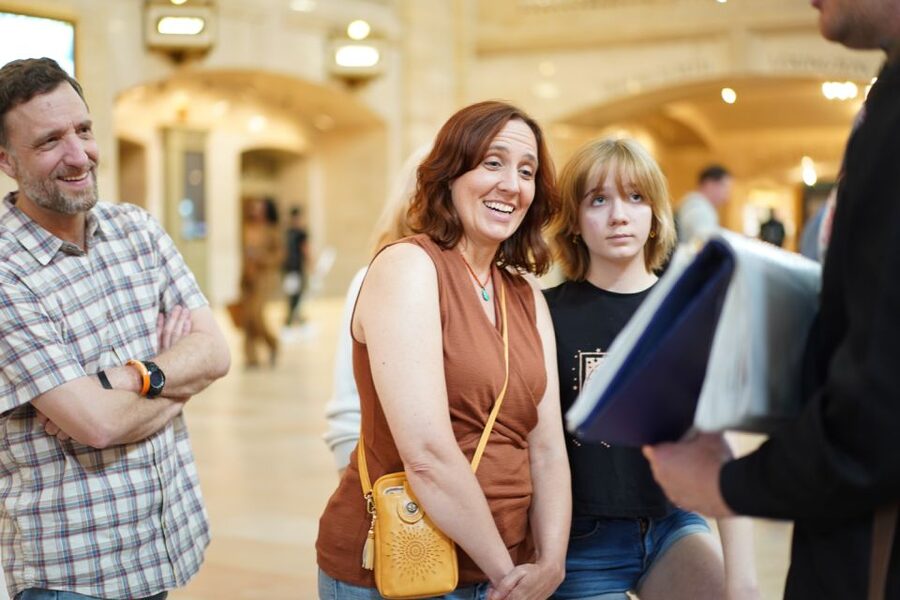
Your guide supplies headsets. This is more useful than it may sound. The main atrium is not a quiet gallery, and the terminal remains an active transportation hub. With an earpiece, you can step back to take in the ceiling or photograph a detail without losing every other sentence.
The tour is described as small-group, though the exact group size is not provided. A smaller group should help at narrow entrances and less public stops, but you will still be sharing space with commuters and other sightseers.
The main atrium, the Tiffany clock, and a costly design flaw
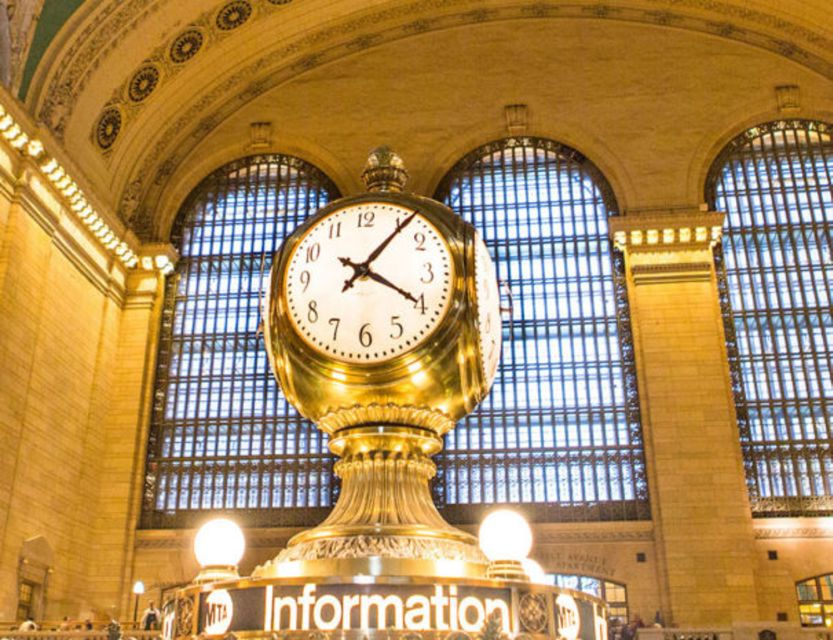
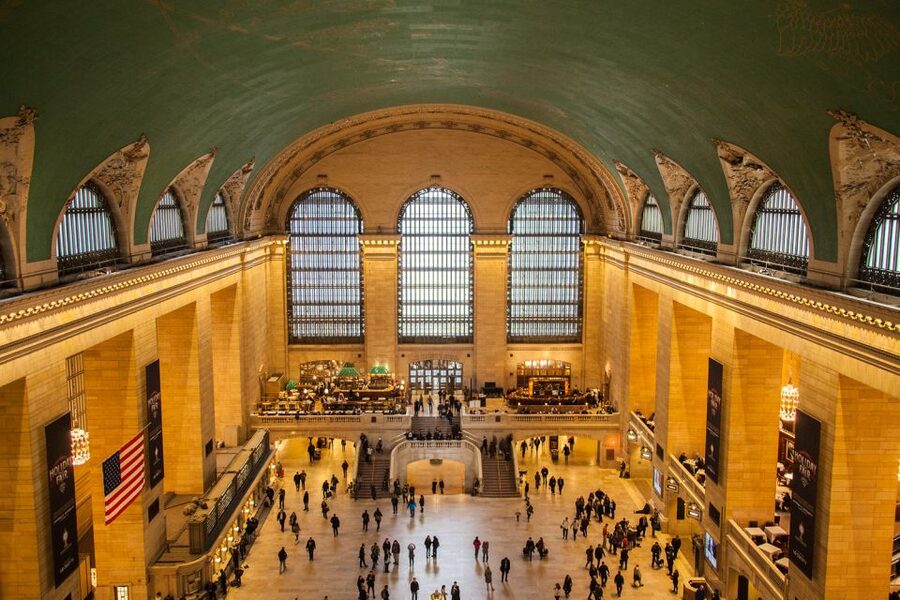
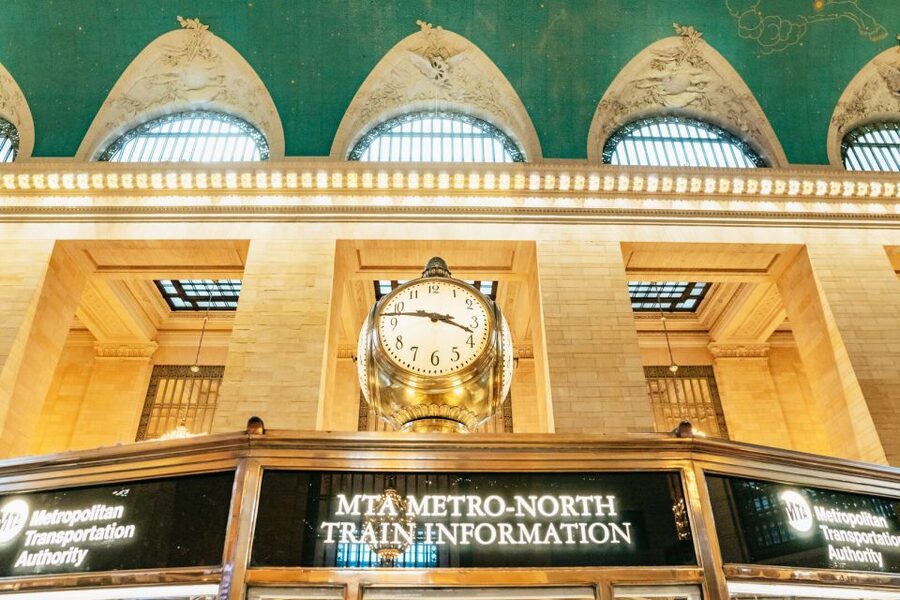
The central atrium gives you the grand first view: pale stone, monumental stairways, the famous celestial ceiling, and the four-faced clock above the information booth. The Tiffany clock is one of the terminal’s key details, and the tour points out why it deserves more than a quick photograph. It is identified as the world’s largest Tiffany clock.
The guide also explains a major design flaw in the main atrium. The exact detail is best experienced on site, where the proportions and layout make more sense than they do in a paragraph, but the point is important: even a celebrated building can contain practical compromises.
This is one reason a guided visit works better than a quick self-guided lap. You may notice the ceiling, clock, and marble, but you are less likely to understand how the room was planned, what its designers were trying to achieve, and where the design fell short.
Take photographs here, but do not let the atrium swallow the whole tour. The most unusual parts come later, and the group needs to stay together in a working terminal.
Midtown views near the Chrysler Building and One Vanderbilt
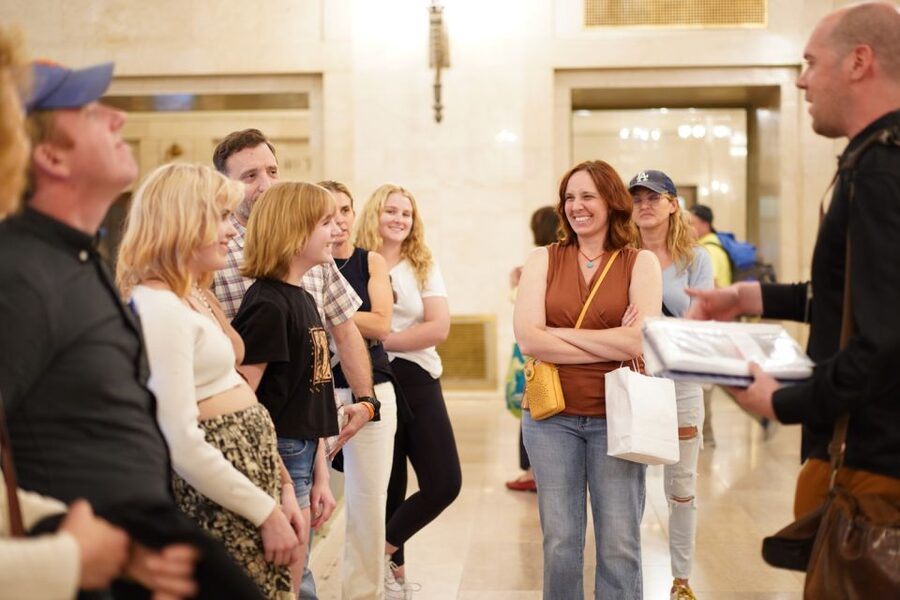
The route includes some time outside in Midtown Manhattan. You pass the Chrysler Building and One Vanderbilt, with photo stops along the way. These are not separate building tours, so you should not book this experience expecting interior access to either skyscraper.
Still, this outdoor section adds useful context. Grand Central does not exist in isolation. Its surroundings show how Midtown grew around transportation, commerce, and ever taller buildings. The contrast between the terminal’s historic stonework and the newer towers helps you understand the scale of change in the district.
The outside walk also gives your eyes a break from the indoor rooms. In summer, it can be warmer than the air-conditioned interior. In rain or cold, it may be less comfortable, since the tour operates rain or shine. Bring weather protection and wear shoes you can manage on city sidewalks.
One useful detail from the tour experience is its indoor and outdoor flow. A July participant praised that balance, while another noted that most of the route was air-conditioned but ended in a warmer, non-air-conditioned part of the terminal. Plan for changing temperatures rather than dressing for one environment alone.
A completely different way to spend a day nearby:
- NYC: Empire State Building Observation Deck Tickets
★ 4.7 · 22,072 reviews - NYC: Edge Observation Deck Admission Ticket
★ 4.6 · 20,918 reviews - New York City: Statue of Liberty & Ellis Island with Ferry
★ 4.6 · 18,683 reviews - New York City: American Museum of Natural History Ticket
★ 4.5 · 15,447 reviews
The off-limits glass walkways
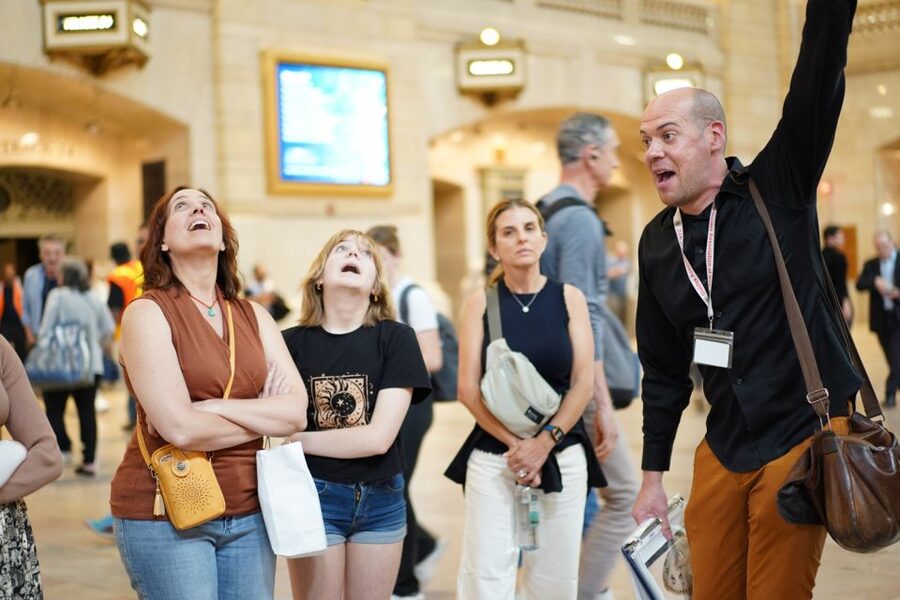
One of the tour’s most unusual promises is a peek into the entrance of Grand Central’s glass walkways. These are not ordinary public corridors that you can simply wander into. The tour gives you a look at an area that is easy to miss and difficult to understand from the main concourse.
The appeal is not only the view. These walkways reveal the terminal’s layered design and the way circulation was organized around the trains and public rooms. You get a sense that Grand Central is more than a beautiful hall. It is a large, intricate machine for moving people.
Access can depend on conditions inside the terminal, so do not think of this as a guaranteed private-room visit with unlimited time. The route takes place in an active building, and the guide must work around crowds, staff, and operating areas. That said, even a brief look is valuable because it takes you beyond the familiar public route.
Tennis courts and the terminal’s stranger secrets
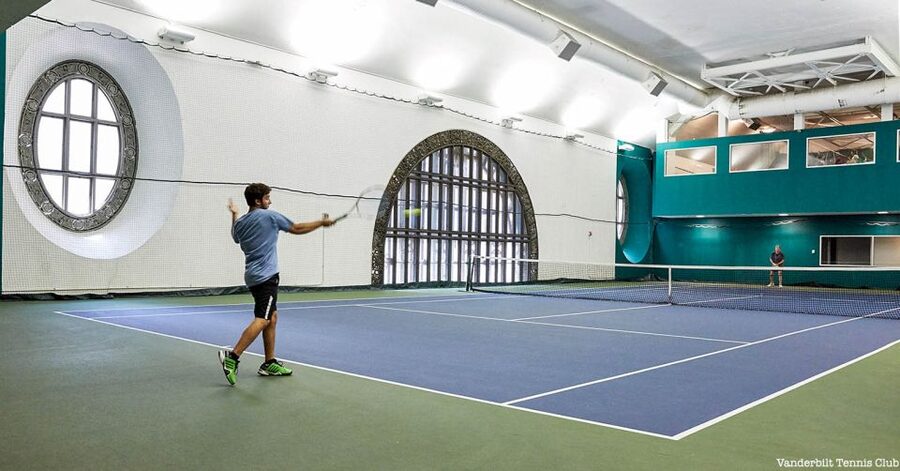
The hidden tennis courts are one of the most memorable stops. They are the kind of detail that changes your idea of Grand Central. You might expect trains, waiting rooms, shops, and platforms. You probably do not expect a place for tennis inside the terminal complex.
The tour does not merely point out a court and move on. It places the odd feature within the larger story of the building, its private spaces, and the changing ways New Yorkers have used the terminal. This is exactly the sort of stop that rewards a guide. Without explanation, it is just a surprising room. With context, it becomes part of Grand Central’s long, unusual life.
The tennis court area may be reached by a route that feels less polished than the main atrium. That is part of its charm, but it also means you should not expect a grand exhibit space. You are visiting a working historic property, not a theme park built for tours.
If you already know Grand Central well, this stop alone may justify the ticket. Several comments specifically praise the chance to see out-of-the-way areas that people would not find on their own.
The whispering gallery and a lesson in sound

The whispering gallery is a simple architectural trick with a reliable effect. Two people stand at separate points and speak softly toward the curved wall. Sound travels along the surface, allowing the other person to hear from a distance.
This is a hands-on stop, not just another lecture. It breaks up the history talk and gives you a small experience to share with someone in your group. The effect may be harder to appreciate when many people are trying it at once, so listen to the guide and take your turn patiently.
I like stops such as this because they make the building feel active. You are not only looking at decoration. You are testing how the space works. The terminal’s designers paid attention to movement, sound, light, and sight lines, and the whispering gallery makes that care easy to grasp.
The lost movie theater and Grand Central’s changing life
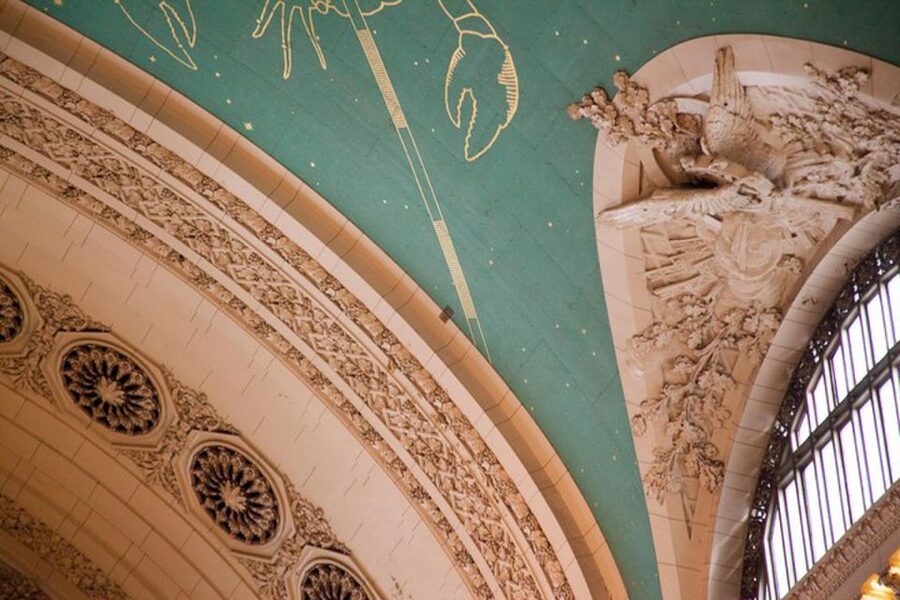
The remains of a former movie theater show how much the terminal has changed. Grand Central was not always used in the same way it is today. A movie theater within the complex points to an era when the terminal offered more than transportation.
The tour reveals what is left of that space rather than presenting a fully restored attraction. That limitation is part of the story. You see the traces of a past use, then imagine how the terminal once served people waiting for trains, meeting friends, shopping, eating, and passing time.
The stop also fits the tour’s larger theme: Grand Central has been repeatedly adapted. Its history includes ambitious planning, decline, threats to its future, and restoration. The theater remains help you see that change in physical form.
Film fans may enjoy this section, too. One guide, Ray, has been praised for connecting the terminal to movies filmed there, along with stories about the people behind the building and the celebrities associated with it. The exact film references can vary by guide, but the cinema connection is part of the tour’s appeal.
The multi-million-dollar jewel hiding in plain sight
The tour points out a multi-million-dollar jewel hidden in the terminal. The supplied details do not identify the object, so you should treat this as a reveal best saved for the tour itself rather than expecting a specific name in advance.
That restraint is useful. Grand Central is packed with valuable materials and carefully made details, but commuters often stop seeing them. A guide trains your eye to notice the difference between general decoration and a feature with real artistic or financial importance.
Look up, look across, and look behind the obvious routes. The terminal rewards attention to ceilings, clocks, walls, entrances, and small design choices. You may leave with a sharper eye for historic buildings in the rest of New York.
The Campbell, a private office turned bar
The Campbell is one of the tour’s most atmospheric stops. This tucked-away speakeasy bar once served as the private office of a business tycoon. The room’s appeal comes from that change in use: a private business space later became a place for drinks and social life.
The tour includes a guided visit and a photo stop. Do not assume it functions as a museum room reserved only for your group. It is a bar, and conditions may vary, but the guide helps you understand why the space matters.
This stop adds a touch of old New York glamour without losing the building’s practical story. Grand Central was tied to powerful business figures, private offices, rail companies, and public movement. The Campbell gives that world a physical setting.
It also creates a pleasant contrast with the terminal’s public rooms. The main atrium was made to impress thousands of people. The Campbell was designed for privacy and status. Seeing both in one short tour shows how different kinds of power operated under the same roof.
Dining areas and the final return to Grand Central
The route passes through the Dining Concourse before returning to Grand Central Terminal. This is a passing stop rather than a long guided visit, but it helps complete the building’s picture.
You see another side of the terminal’s daily life: food, movement, noise, and people using the building for ordinary purposes. After the hidden rooms and historic details, the dining area brings you back to the present.
The tour ends at Grand Central, which makes it easy to continue your day in Midtown. You can remain in the terminal, visit a nearby building, catch a train, or head toward the Chrysler Building and One Vanderbilt. Since the finish point is not a remote neighborhood, you do not lose time finding your way back.
How good is the $39 value?
At $39 per person, this is not the cheapest way to see Grand Central. You can enter the terminal without paying and admire the main atrium on your own.
The ticket becomes worthwhile if you want more than the famous clock and ceiling. You are paying for a local guide, access to less obvious areas, headsets, and a connected story about the terminal’s design and survival. The tennis courts, glass walkways, movie theater remains, whispering gallery, and Campbell are difficult to combine into a satisfying visit without help.
The value is strongest for first-time visitors who want structure, history, and unusual access. It is also good for repeat visitors who have already taken their photos and want to see what they missed.
The price is less compelling if you prefer to explore slowly, avoid group schedules, or spend most of your time studying architecture on your own. Ninety minutes gives you a brisk introduction, not an unhurried research visit.
Timing, comfort, and access
The listed duration is 90 minutes. The pace is active, with frequent stops and movement through public areas. One participant described a much longer outing, so allow a little extra time in case the guide runs over or crowd conditions slow the group.
Comfortable shoes are essential. You are walking through a large terminal, Midtown streets, and several different interior areas. Tripods are not allowed, so bring a handheld camera or phone instead.
The tour is wheelchair accessible. If you need extra time at stops, tell the guide early. Guides have been praised for checking on people’s wellbeing and accommodating elderly participants and special-needs students.
The tour takes place rain or shine. Much of it is indoors, but the Midtown section goes outside. A rainy day can work well because the route spends substantial time inside, but you still need suitable clothing for the outdoor portion.
English is the tour language, and English audio support is included through the headsets.
Which guide style should you expect?
The experience depends heavily on the guide, and the guide team has a clear strength: personal storytelling. John and Richard are praised for warmth and patience. Jonathan is often described as engaging, considerate, and good at remembering names. AJ is noted for keeping the information lively and helping people with different mobility needs.
Ray brings a native New Yorker’s perspective, while Peter is especially focused on railroads, transport planning, architecture, and construction. Christian is praised for energy and passion. These details suggest a tour that is not delivered from one rigid script by a single personality.
The guides also seem comfortable with questions. That matters because Grand Central raises plenty of them: how the spaces were used, why particular details were included, and how the terminal changed over time.
You should still expect some variation. One guide may focus more on trains, another on architecture, movies, or local stories. If you have a strong interest, ask questions during the tour rather than waiting for every subject to appear automatically.
Should you book The Secrets of Grand Central Terminal?
Book it if you want to understand why Grand Central Terminal is more than a handsome train station. The tour gives you unusual sights, a clear historical arc, and a local guide who can point out details you would likely walk past.
It is especially well suited to architecture fans, railroad enthusiasts, film lovers, families with older children, and repeat New York visitors. The headset, wheelchair accessibility, and attentive guide style also make it a practical choice for many mixed-age groups.
Skip it if you only want a quick look at the atrium or if you dislike a brisk group walk. For $39, the tour earns its keep through the places and stories beyond the public hall. Go ready to walk, listen, look up, and let Grand Central surprise you.
FAQ
Where does the tour meet?
Meet your guide inside Grand Central Terminal’s main atrium, in front of track 29.
How long does the tour last?
The scheduled duration is 90 minutes.
What language is the tour conducted in?
The live tour guide speaks English, and English audio support is included.
Is the tour wheelchair accessible?
Yes, the activity is listed as wheelchair accessible.
What should I wear?
Wear comfortable shoes because the experience is a walking tour through Grand Central and Midtown.
Does the tour operate in bad weather?
Yes. The tour takes place rain or shine, and part of the route goes outside.
Are headsets provided?
Yes. Headsets are included so you can hear the guide clearly from a distance.
Are tripods allowed?
No. Tripods are not allowed on the tour.
What does the tour cost?
The price is $39 per person.
Recently reviewed around New York City
- New York City Dinner Cruise with Live Music★ 4.0 · 377 reviews
- Dyker Heights Christmas Lights Guided Tour★ 4.5 · 920 reviews
- New York City Holiday Lights Tour★ 4.5 · 664 reviews
- NYC in a Day Tour: Statue of Liberty, Times Square and More★ 5.0 · 366 reviews
- Broadway and Times Square Insider Tour with Theater Professional★ 5.0 · 651 reviews
- NYC Central Park Bicycle Rentals★ 4.5 · 368 reviews
- Central Park Bike Rental New York City★ 4.0 · 560 reviews
- Manhattan Sky Tour: New York Helicopter Flight★ 4.5 · 1,458 reviews
New York City Tours, compared.


Empire State Building Tickets – Observatory & Museum
Read our review →
Empire State Building Observation Deck Tickets
Read our review →

Browse the lists this tour appears in