
Reviewed · FOOD & DRINK
The Premier New Orleans Food Tour
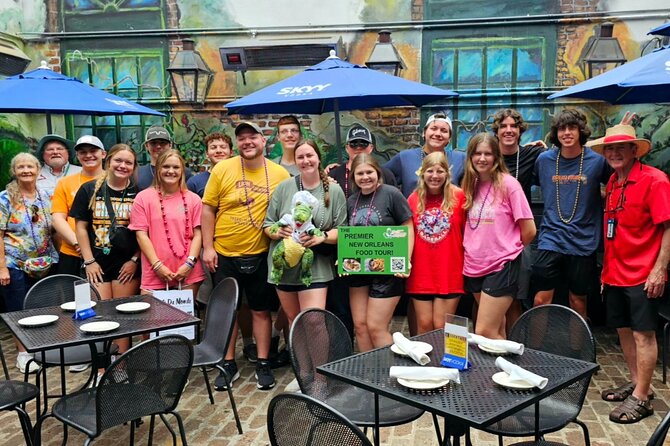
New Orleans food makes the past edible, and this three-hour walk gives you a generous introduction to it. You move through the French Quarter, stopping for gumbo, crawfish étouffée, jambalaya, muffuletta, po’boys, red beans and rice, and a pecan praline. Guides such as Naif and Heidi also explain how Cajun, Creole, and Sicilian traditions shaped the plate.
I like two things in particular: the food is substantial enough to replace a meal, and the guide offers practical restaurant advice for the rest of your stay. The small maximum of 12 people should also make it easier to ask questions. The main caution is that this is a full afternoon of food, and crowded restaurant conditions can sometimes slow the pace.
In This Review
- Key points to know before booking
- Starting at Market Cafe on Decatur Street
- Gumbo and the foundations of New Orleans cooking
- Crawfish étouffée and the value of explanation
- Red beans and rice, a New Orleans staple
- Jambalaya brings the one-pot tradition to the table
- Muffuletta and New Orleans Sicilian influence
- Po’boys and the lighter question
- Restaurant stops and the pace of the walk
- Pecan pralines finish the afternoon
- What the $81 price really buys
- Which guide style suits you best
- Who should book this food walk
- Should you book The Premier New Orleans Food Tour?
- FAQ
- How long does The Premier New Orleans Food Tour last?
- Where does the tour start?
- Where does the tour finish?
- What foods are included?
- Are drinks included?
- Can dietary restrictions be accommodated?
- How much walking is involved?
- What is the cancellation policy?
Key points to know before booking
- A full meal in eight New Orleans classics: Expect samples such as gumbo, jambalaya, étouffée, muffuletta, po’boys, red beans and rice, and pralines.
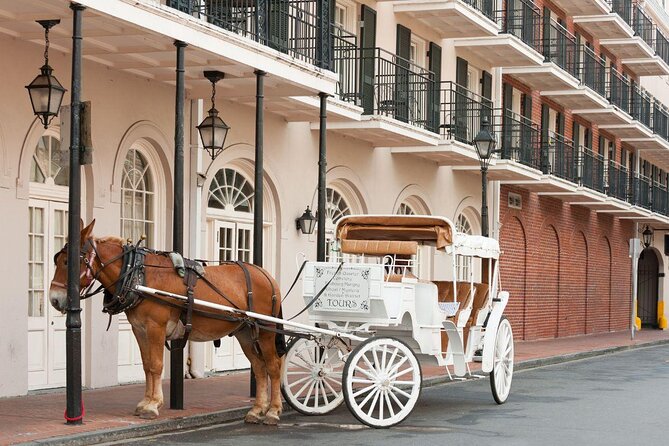
- French Quarter setting: The route starts at Market Cafe on Decatur Street and finishes at Tujague’s.
- Guides with different strengths: Naif is praised for personal stories, maps, and cultural context, while Heidi, Bryon, and Larry have also received strong marks for clear, friendly guiding.
- Three hours with moderate walking: The blocks are short, but you should wear comfortable shoes and arrive hungry.
- Small-group format: The maximum is 12 people, although one reported departure had 16.
- Good value at $81: Food tastings and a licensed local guide are included, but drinks and gratuity cost extra.
Starting at Market Cafe on Decatur Street
The tour begins at 1 p.m. outside Market Cafe, 1000 Decatur Street. That puts you in a useful part of the French Quarter, close to the river and within easy reach of public transportation.
You will meet your guide and the rest of the group before setting off on foot. The route covers short blocks in the historic quarter rather than requiring a long march, but the food stops take time. Allow roughly three hours from the 1 p.m. start, and avoid eating a large lunch beforehand.
This is an afternoon tour, not a quick series of bites grabbed from a counter. Several stops involve sitting down, and the food adds up quickly. One guide described the experience as four small meals, and that is a fair way to think about it. You may want to keep dinner light, especially if you prefer to sample slowly.
The French Quarter can be hot, humid, and wet depending on the season. Tours run in rain, so comfortable shoes and a small umbrella are sensible. Severe weather can lead to cancellation, with notice promised two hours before departure.
More Food Tours in New Orleans
- New Orleans Food Walking Tour of the French Quarter with Small-Group Option
★ 5.0 · 6,118 reviews - New Orleans Food and History Walking Tour
★ 5.0 · 1,544 reviews - New Orleans French Quarter Food Tour: Cajun, Creole and Culture
★ 5.0 · 1,246 reviews
Gumbo and the foundations of New Orleans cooking
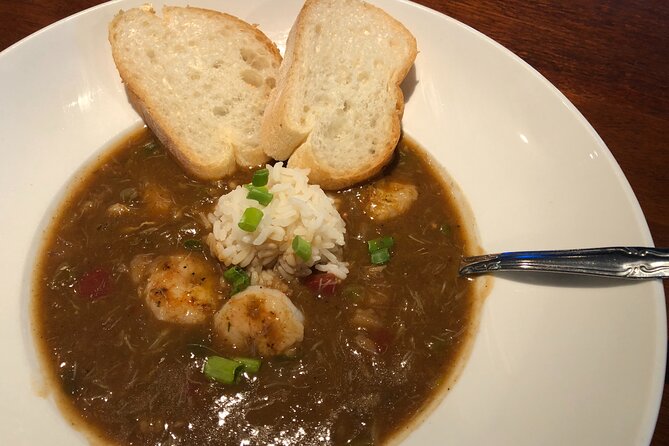
Gumbo is usually the first major taste. The sample menu lists hot seafood gumbo, though the exact preparation can change. Past versions have included duck gumbo, so you should treat the menu as a guide rather than a guarantee.
This opening dish gives the guide a natural way to explain the basic difference between Cajun and Creole cooking. You will hear how local food grew from several cultural traditions, including French, African, Spanish, Caribbean, and regional Louisiana influences. The point is not only to identify ingredients. It is to understand why dishes are built around rice, stock, seafood, meat, spices, and slow cooking.
The tour does not present New Orleans cuisine as one single style. That matters because visitors often use Cajun and Creole as if they mean the same thing. Your guide should help you see the broad distinction, while also explaining that real local cooking is more fluid than a simple rulebook.
Guides have different presentation styles. Naif is particularly associated with maps, personal stories, and lessons about Creole and Cajun culture. Bryon has been praised for adding background about buildings and events along the route, so the walk can become a city history lesson as well as a meal.
Crawfish étouffée and the value of explanation
Crawfish étouffée is another expected taste. The name means smothered, and the dish is commonly served over rice with a thick, seasoned sauce. It is filling, comforting, and quite different from a brothy gumbo, even though both belong to the same family of Louisiana comfort food.
One useful point to keep in mind is that étouffée is not simply a second gumbo. A past guest found the menu too heavy and thought two gumbo-style dishes felt repetitive. The operator clarified that the second dish was crawfish étouffée, not another gumbo. That distinction is worth noting because the tour favors classic, rice-based dishes, and several tastings can feel similar in weight.
For you, the benefit is breadth. You get to compare textures and cooking methods rather than eating only fried food or sandwiches. The drawback is less variety in lightness. If you want vegetables, salads, or smaller portions, this may not be the best food experience for you.
Dietary restrictions can be accommodated if you add them during checkout or contact the company after booking. Since the exact menu may change, give clear details in advance rather than waiting until the first restaurant.
Red beans and rice, a New Orleans staple
Red beans and rice is included on the sample menu and helps show the everyday side of New Orleans cooking. This is not a showpiece dish in the way a loaded muffuletta can be. It is a practical, hearty meal with strong ties to home cooking and weekly food traditions.
The guide can use it to explain why rice appears so often in south Louisiana food. Several dishes on this tour may be served with rice, which adds to the generous portions. That is historically appropriate, but it also means you need to pace yourself.
The tour works best if you think of each stop as a lesson with food, not just a tasting with a quick fact attached. Guides who do this well explain how the dish fits into local culture, then give you time to eat and ask questions. Naif has been praised for creating a friendly, family-like atmosphere, while Heidi is known for keeping the group engaged and adjusting her approach to the people in front of her.
More New Orleans food and drink outings:
- French Quarter walking Food Tour Famous Flavors of New Orleans
★ 5.0 · 1,115 reviews - New Orleans Cocktail and Food History Tour
★ 5.0 · 819 reviews - New Orleans: French Quarter Food History Walking Tour
★ 4.9 · 713 reviews - French Quarter walking Food Tour: Signature Tastes of New Orleans
★ 4.5 · 592 reviews
Jambalaya brings the one-pot tradition to the table
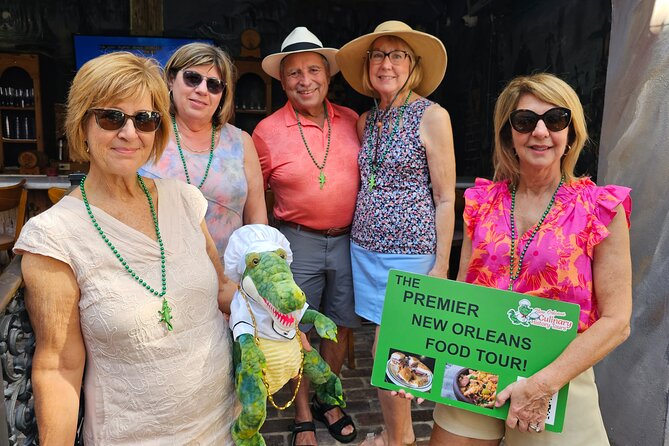
Jambalaya is one of the most familiar New Orleans dishes, and it is a strong choice for a food tour because it connects ingredients, technique, and local identity. Expect a rice dish with a seasoned mixture that may include meat or seafood, depending on the restaurant and the day.
The important lesson is that Louisiana cooking often grew from making a satisfying meal in one pot. Rice stretches the dish, while the seasoning and available ingredients give it character. Your guide can explain how this practical cooking style differs from the more sauce-based dishes served at other stops.
This is also where the tour becomes useful for choosing future meals. After trying jambalaya in a restaurant setting, you will have a better idea of what to look for on menus around the city. The guide’s recommendations are included in the value of the tour, particularly if this is your first visit and you want help sorting genuine local standards from generic tourist fare.
Muffuletta and New Orleans Sicilian influence
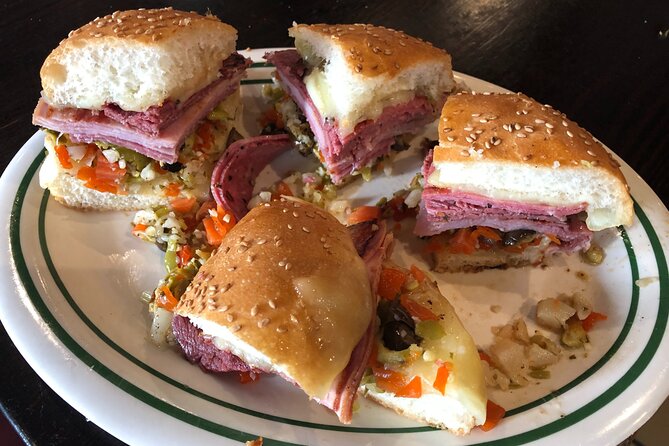
The muffuletta is often the most memorable sandwich on the route. It reflects the Sicilian influence on New Orleans food and usually combines a round loaf with cured meats, cheese, and olive salad. It is dense, salty, and unmistakably different from a po’boy.
This stop gives the tour a wider cultural frame. New Orleans food is not only gumbo and seafood. Italian immigrants shaped the city’s food culture, and the muffuletta makes that influence easy to taste.
The portion may be more than you expect. Several samples are described as full enough to serve as small meals, and the muffuletta can be especially filling. If you are sharing food with a companion, this is a good place to pace yourself, though the tour’s serving arrangements can vary.
Po’boys and the lighter question
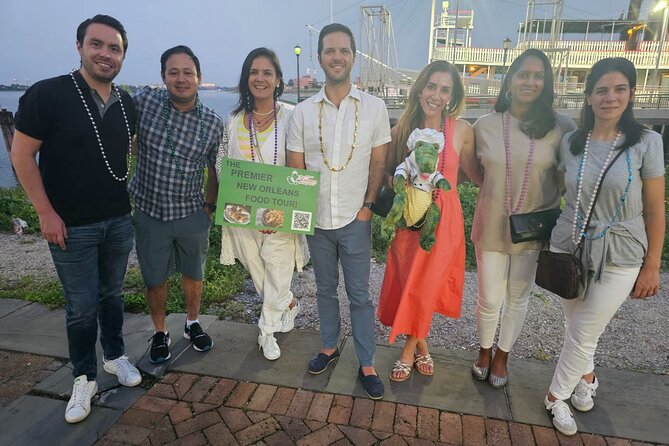
The sample menu also includes a po’boy, another New Orleans classic. Depending on the restaurant, it may feature seafood or another filling, and the exact selection can change.
Compared with the muffuletta, a po’boy usually offers a different sandwich experience: long bread, a generous filling, and a style tied closely to local casual dining. It is a useful comparison, but by this point you may already have eaten gumbo, étouffée, red beans and rice, and jambalaya.
That is the central food issue with this tour. The portions are generous, which makes the $81 price easier to justify, but the afternoon is not built around tiny chef samples. One particularly positive account still noted that the meal was so ample that dinner plans were no longer realistic. Plan your day around that fact.
Restaurant stops and the pace of the walk
The tour finishes at Tujague’s, 429 Decatur Street. The route uses historic restaurants and other food stops in the French Quarter, with several sit-down portions rather than one continuous walk.
The blocks are short, and the walking is described as moderate. This makes the tour manageable in warm weather, although you should still wear supportive shoes. One guide specifically kept the walking limited because of summer heat, while another departure became slow because restaurants were packed during a major holiday period.
That slower experience is the main operational risk. Busy restaurants can create waits between tastings, and the guide cannot control every kitchen or dining room. On a normal afternoon, the relaxed pace gives you room to talk and ask questions. During a crowded weekend, it can feel like standing around.
The maximum group size is listed as 12. A smaller group generally means better access to the guide and less difficulty hearing explanations. One reported departure had 16 people, so group size may not always match the stated maximum. If intimate guiding is especially important to you, confirm the current group size before booking.
Pecan pralines finish the afternoon
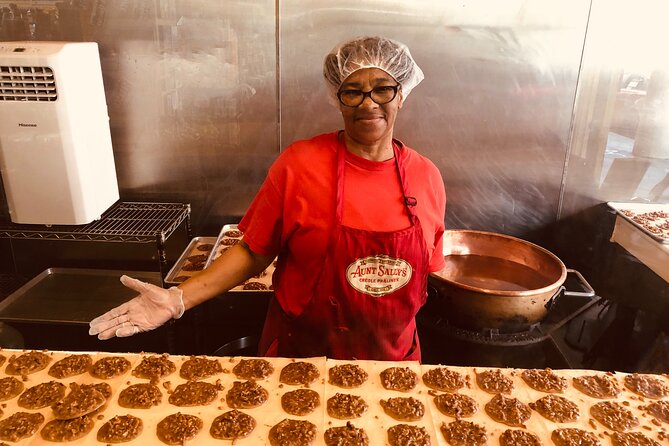
The final taste is a pecan praline, often picked up in a boxed form during a stop at Aunt Sally’s. This is a sweet, nutty ending to a meal-heavy afternoon and a simple souvenir to carry away.
The praline also rounds out the tour’s picture of New Orleans food. You begin with savory dishes built around rice, seafood, meat, and spice, then finish with a confection associated with the city’s French and Southern traditions.
Do not expect dessert to restore your appetite. By this stage, most people will have had plenty. The praline works best as a final note and a small reminder of the afternoon rather than as a stand-alone dessert course.
What the $81 price really buys
At $81 per person, this is not a cheap snack walk. It is a guided meal, a neighborhood stroll, and a cultural orientation rolled into one. The price includes every food sample and a licensed local guide. Alcoholic drinks are not included, though you can buy them along the way.
The value depends on how you use the information. If you only want to taste a few dishes, you could spend less by ordering individual plates. If you want someone to explain the difference between Cajun and Creole cooking, introduce you to several classic foods, and point you toward places to eat later, the price is more reasonable.
I would especially consider it good value at the start of a New Orleans stay. You receive restaurant suggestions before making many of your own meals, and you get a working vocabulary for local menus. It is less useful on your final afternoon, when you have already tried the classics and no longer need dining advice.
The overall score is 4.7 from 398 ratings, with 92 percent recommending it. That points to a strong, dependable experience, but the lower marks identify real concerns: a soft-spoken guide can be hard to hear, some explanations may feel less focused, and waits can stretch the three-hour schedule.
Which guide style suits you best
The guide can shape the afternoon as much as the food. Naif has received especially strong praise for his warmth, personal New Orleans stories, maps, cultural lessons, and ability to make a group feel comfortable. He is also praised for adjusting his presentation to the audience.
Heidi is another frequently praised guide. Her strengths include enthusiasm, clear background on the food, friendly hosting, and practical suggestions for the rest of your visit. Bryon is noted for explaining both dishes and the places you pass, while Larry has been described as helpful and well informed.
That does not mean every departure will feel identical. One past experience involved a guide who spoke too softly and did not explain the food in enough detail. Another guide was criticized for tangents and long waits. If you need crisp, tightly organized commentary, say so early and position yourself where you can hear.
The tour also involves direct conversation and eye contact. That suits people who like an open, social guide, but you can tell the guide if you prefer less direct interaction or a quieter style.
Who should book this food walk
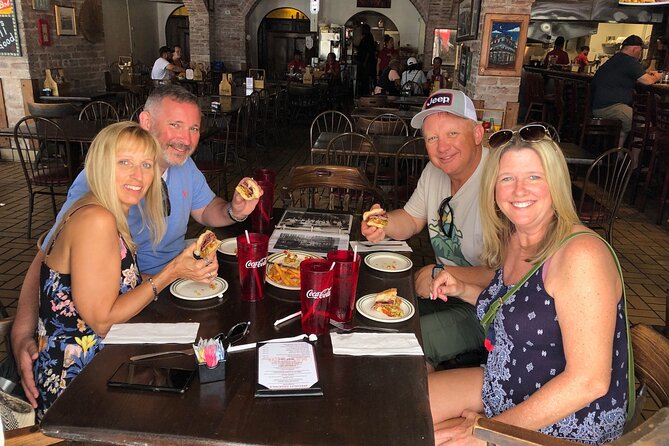
This tour fits first-time visitors who want a quick education in New Orleans cooking without spending several days figuring out what to order. It also suits food lovers, history fans, couples, families, and friends who enjoy sitting down together and sharing a meal.
It is a strong pick if you want the classic checklist: gumbo, jambalaya, étouffée, muffuletta, po’boys, red beans and rice, and pralines. It is also useful if you want to explore beyond the busiest Bourbon Street area, since part of the route includes older restaurants and nearby shops on less showy French Quarter blocks.
I would hesitate if you dislike heavy food, have strict dietary needs that are difficult to accommodate, or want a fast-paced walk with constant movement. The afternoon can be filling, and restaurant crowds may slow the route. Alcohol is extra, and gratuity is optional but appreciated.
Free cancellation is available if you cancel at least 24 hours before the 1 p.m. start. Changes made within 24 hours are not accepted for a refund. If severe weather cancels the tour, you can receive a different date or a full refund.
Should you book The Premier New Orleans Food Tour?
Book it if you want a generous introduction to New Orleans food and culture, especially near the beginning of your visit. The combination of classic dishes, short French Quarter walks, licensed local guides, and dining advice gives you more than a series of tastings.
Go with realistic expectations. This is a filling meal, not a delicate sampler. The route can slow down when restaurants are crowded, and the quality of the commentary may vary by guide. Still, the strong score, the useful dish selection, and the repeated praise for Naif and Heidi make it a sound choice for anyone who wants to eat well while learning why New Orleans tastes the way it does.
FAQ
How long does The Premier New Orleans Food Tour last?
The tour lasts approximately three hours and begins at 1 p.m.
Where does the tour start?
The meeting point is Market Cafe at 1000 Decatur Street, New Orleans, Louisiana 70116.
Where does the tour finish?
The tour ends at Tujague’s restaurant at 429 Decatur Street, New Orleans, Louisiana 70130.
What foods are included?
The sample menu includes gumbo, crawfish étouffée, red beans and rice, jambalaya, muffuletta, po’boys, seafood or classic étouffée, and a pecan praline. The menu can change.
Are drinks included?
All food samples are included, but alcoholic drinks are not. Alcoholic drinks can be purchased along the way.
Can dietary restrictions be accommodated?
Yes. Add your dietary restrictions to the Special Requirements field during checkout, or contact the company after booking with your specific needs.
How much walking is involved?
The tour includes a moderate amount of walking through the French Quarter. The blocks are short, but comfortable shoes are recommended.
What is the cancellation policy?
You can cancel for a full refund up to 24 hours before the experience begins. Cancellations or changes made less than 24 hours before the start time are not refunded.
More Food in New Orleans
- French Quarter Small-Group Cocktail and Foodie Crawl
★ 5.0 · 519 reviews - Little Havana Food and Walking Tour in Miami
★ 5.0 · 8,882 reviews - NYC Bus Tour of Brooklyn, Bronx, Queens: Art, Food & Sports
★ 5.0 · 3,805 reviews - Chef Guided Food Tour of Pike Place Market
★ 5.0 · 3,733 reviews
Recently reviewed around New Orleans
- New Orleans Yellow Fever Ghost Tour★ 5.0 · 1,298 reviews
- VIP Jazz Dinner Cruise with Private Tour and Open Bar Option★ 4.5 · 838 reviews
- Whitney Plantation Tour with Transportation from New Orleans★ 4.5 · 1,351 reviews
- New Orleans Private Carriage Tour of the French Quarter★ 5.0 · 537 reviews
- New Orleans French Quarter Photo Shoot★ 5.0 · 462 reviews
- New Orleans Delicious Donuts & Beignets: A Sweet Walking Tour★ 5.0 · 928 reviews
- The Escape Game at the French Quarter in New Orleans★ 5.0 · 364 reviews
- The Ghosts of New Orleans Tour★ 4.5 · 702 reviews
Food & Drink, compared.
New Orleans Food Walking Tour of the French Quarter with Small-Group Option
Read our review →
NYC Bus Tour of Brooklyn, Bronx, Queens: Art, Food & Sports
Read our review →
Savannah First Squares Culinary & Cultural Walking Food Tour
Read our review →
Chinatown & Little Italy Food Tour with 7 Flavorful Tastings
Read our review →
Food Tour with 5+ Tastings of Local Delicacies
Read our review →
Browse the lists this tour appears in