Reviewed · GHOST & HISTORY WALKING TOURS
New Orleans: French Quarter Food History Walking Tour
New Orleans food makes the most sense when you connect each bite to the people and places that shaped it. This French Quarter walk does exactly that, moving from Cajun gumbo and fiery hot sauce to pralines, po-boys, muffuletta, boudin, red beans and rice, and bananas foster bread pudding.
I like the wide food range, since you can sample both of the city’s famous sandwiches in one afternoon. I also like the guides’ storytelling. Beth, Gary, John, Meg, Kat, and others are praised for tying food to local history without turning the walk into a dry lecture.
The main consideration is the fixed menu. If you avoid seafood, alligator, gluten, dairy, or vegan ingredients, this may not work well. A vegetarian menu is available, but the provider does not offer gluten-free, dairy-free, or vegan substitutions.
In This Review
- Key points to know before you book
- Why this French Quarter food walk works
- Starting with Cajun gumbo at 3rd Block Depot
- Testing your limits at the hot sauce bar
- Pralines and the sweet side of Creole cooking
- Catfish po-boy at NOLA Poboys
- Muffuletta and boudin balls in one savory stretch
- Red beans and rice at Creole Cookery
- Ending with bananas foster bread pudding
- What vegetarians can expect
- Is $85 a fair price?
- Who should book this tour?
- Booking details that matter
- Should you book the French Quarter Food History Walking Tour?
- FAQ
- Where does the tour begin?
- Where does the tour finish?
- How long does the food tour last?
- How many food samples are included?
- Is there a vegetarian menu?
- Can I join if I need gluten-free, dairy-free, or vegan food?
Key points to know before you book
- Eight substantial tastes can replace lunch: Plan to arrive hungry, since the portions add up.
- Both po-boy and muffuletta are included: You get two signature New Orleans sandwiches in one tour.
- The food comes with context: Guides explain how local dishes connect to New Orleans culture and history.
- The route begins inside 3rd Block Depot: Meet at 316 Chartres Street, then finish on Toulouse Street.
- A vegetarian menu is available: Request black-eyed pea soup, veggie jambalaya, Portobello po-boy, and related dishes when booking.
- Drinks cost extra: Water is included, but soft drinks and alcohol are not.
Why this French Quarter food walk works
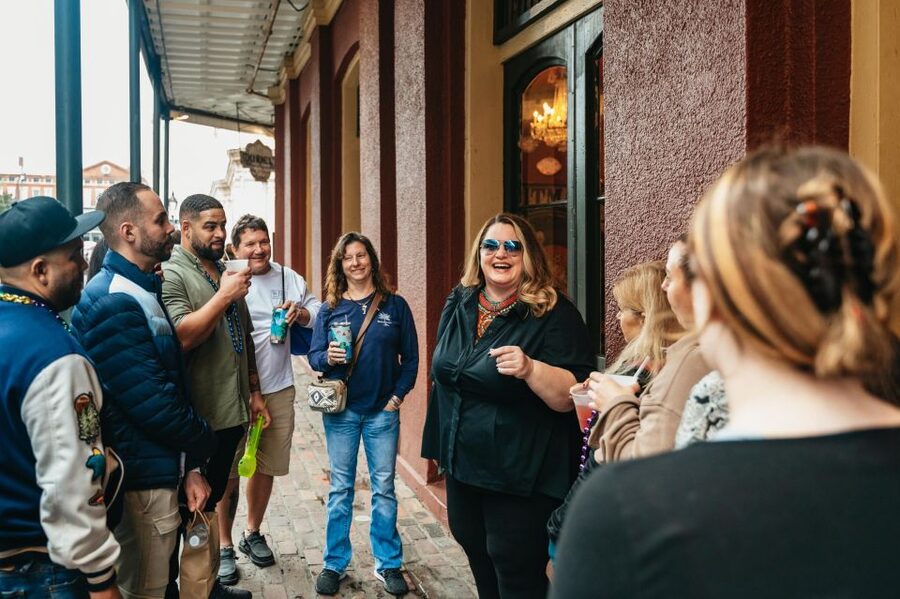
This is not simply a series of restaurant stops. The point is to understand why New Orleans eats the way it does.
Over three hours, you walk through the Vieux Carré, the French Quarter’s old square, with a guide who explains the links between food, migration, trade, local customs, and neighborhood life. The route is short enough to remain manageable, but long enough to give the meal a proper rhythm: taste, walk, listen, taste again.
That balance is the tour’s biggest strength. You are not seated in one restaurant for an entire afternoon, and you are not rushing through tiny samples at a market. Some stops are restaurants, some are shops, and some are casual places you could easily pass without noticing.
The guide makes a major difference. Names vary by departure, but Beth, Gary, John, Meg, Kat, Cat, Mike, and Dylan have all led this experience. The strongest guides use stories to connect the dish in front of you to the city around you. John, sometimes called Professor, is described as especially calm and well prepared. Beth is praised for her storytelling and feel for timing. Gary is known for connecting local food to the broader story of New Orleans.
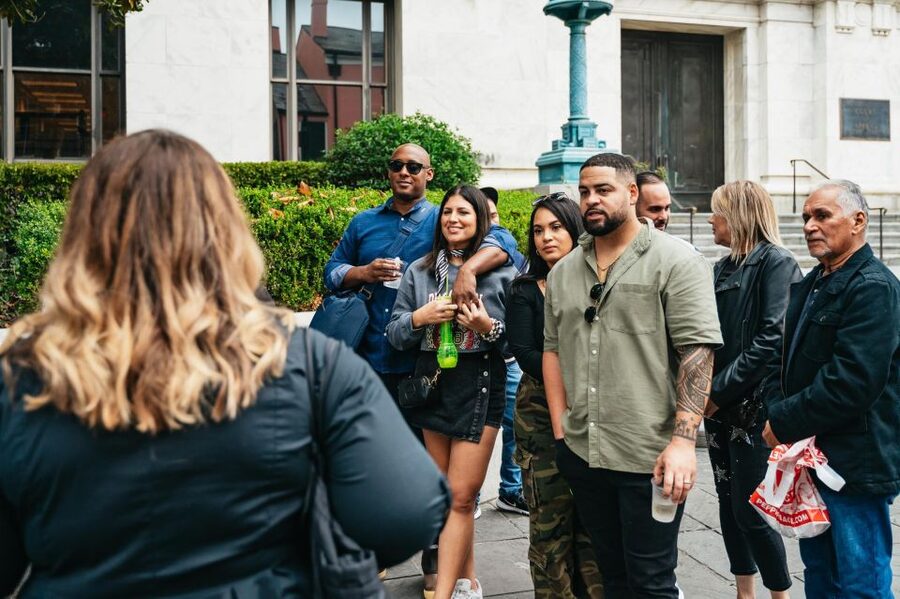
You should expect an English-language tour, usually with a small group of no more than nine people. That size matters. It allows questions and conversation without making each food stop feel like a herd moving through a restaurant.
More Food Tours in New Orleans
- New Orleans Food Walking Tour of the French Quarter with Small-Group Option
★ 5.0 · 6,118 reviews - New Orleans Food and History Walking Tour
★ 5.0 · 1,544 reviews - New Orleans French Quarter Food Tour: Cajun, Creole and Culture
★ 5.0 · 1,246 reviews
Starting with Cajun gumbo at 3rd Block Depot
Your meeting point is inside 3rd Block Depot at 316 Chartres Street. This is also the first food stop, so you do not waste time standing outside trying to identify a guide in the middle of the French Quarter.
The opening taste is rustic Cajun-style gumbo with warm potato salad. Gumbo is a useful first dish because it introduces the cooking style of the region in one bowl: a seasoned stew built for warmth, depth, and practical use of available ingredients.
The potato salad served warm is worth noting. It is not just a side dish placed beside the gumbo. In this style of meal, it becomes part of the experience and shows how New Orleans plates often combine hearty staples in unexpected ways.
Arriving hungry is important. Several people find the portions generous enough that the tour feels like a meal, not a string of decorative nibbles. If you eat a full breakfast or lunch first, you may have trouble keeping up with the later stops.
One practical warning: the opening restaurant can be noisy. A guide may be explaining the city while staff and diners carry on around you. If you have trouble hearing in busy rooms, stay close to the guide.
Testing your limits at the hot sauce bar
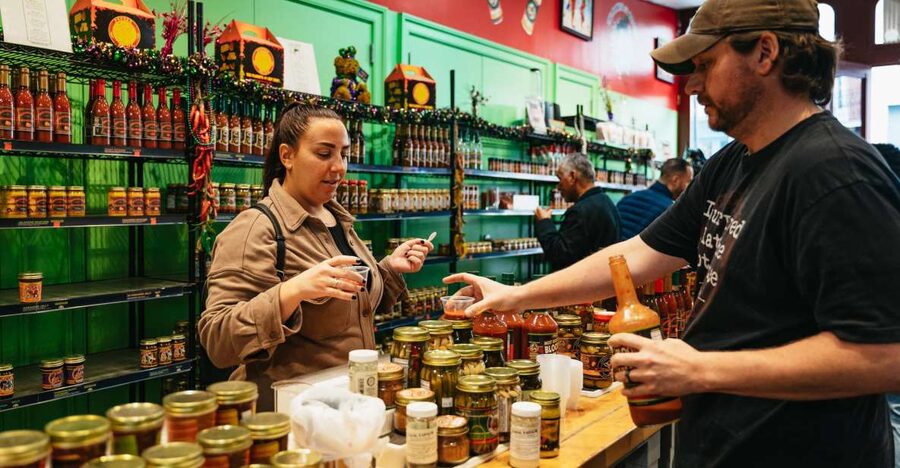
After the first tasting, the group walks about five minutes to a hot sauce bar. Here you can sample dozens of fiery varieties, from manageable heat to sauces that deserve caution.
This is one of the more playful moments of the tour, but it also tells you something about the local palate. New Orleans cooking is not defined only by heat, yet hot sauce is a familiar table companion and an easy way to personalize a dish.
You do not need to try every bottle. I would begin with a mild sample and work upward. One participant learned this the hard way and needed a glass of milk after trying an especially powerful sauce. That is a good reminder to treat the tasting as a choice, not a challenge.
The stop also breaks up the heavier foods. You have eaten gumbo, walked a little, and now get a quick, informal tasting before returning to more substantial dishes.
Pralines and the sweet side of Creole cooking
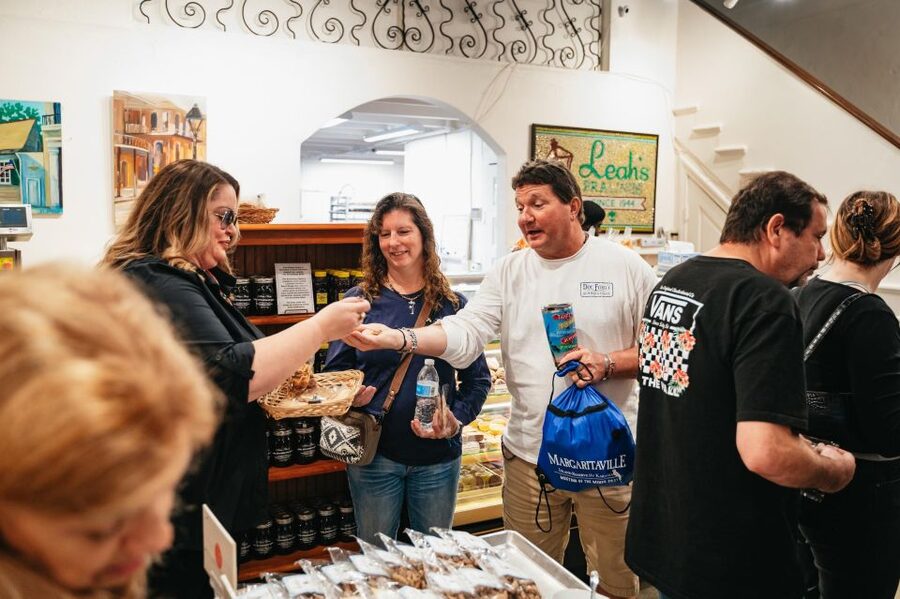
The route continues to Leah’s Pralines, a boutique candy shop where you sample a classic Creole praline or the bacon pecan brittle option.
Pralines show a different side of New Orleans cuisine. They are sweet, nutty, and closely tied to the city’s candy-making tradition. The bacon pecan brittle offers a saltier variation for anyone who prefers a sharper contrast.
This stop is brief, but it gives the tour useful range. You are not tasting only stews and sandwiches. You are also seeing how sugar, nuts, and local shop traditions became part of the city’s food identity.
It is also a good point to think about what you might want to buy later. The tasting is included, but extra purchases are your responsibility. Since the tour moves on, do not count on having unlimited time to browse.
More Ghost Tours in New Orleans
- New Orleans Garden District History Walking Tour
★ 5.0 · 2,879 reviews - New Orleans Haunted Ghost, Voodoo & Vampire Walking Tour
★ 4.5 · 2,731 reviews - New Orleans Small-Group Haunted History Carriage Tour
★ 4.5 · 2,289 reviews - Adults Only Haunted Pub Crawl in New Orleans
★ 4.5 · 2,158 reviews
Catfish po-boy at NOLA Poboys
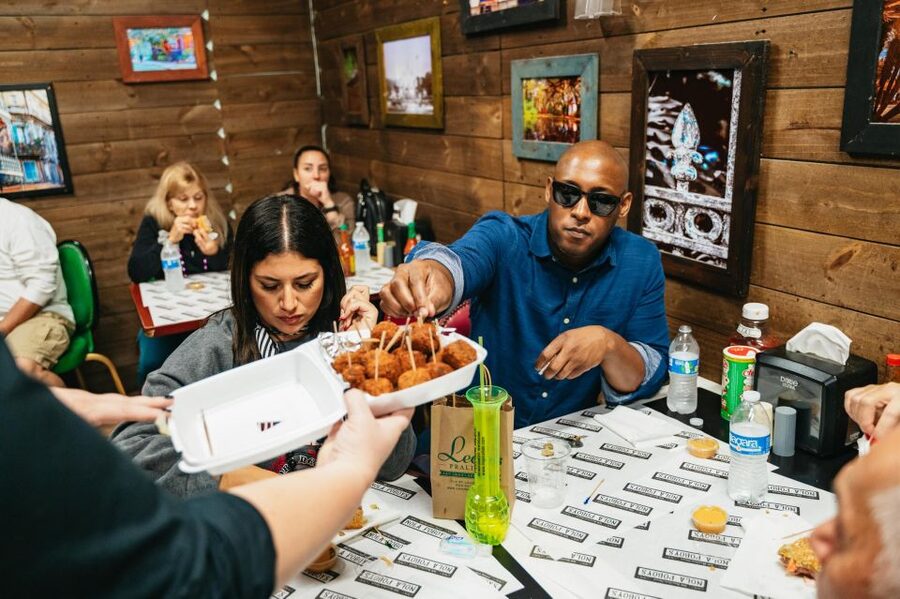
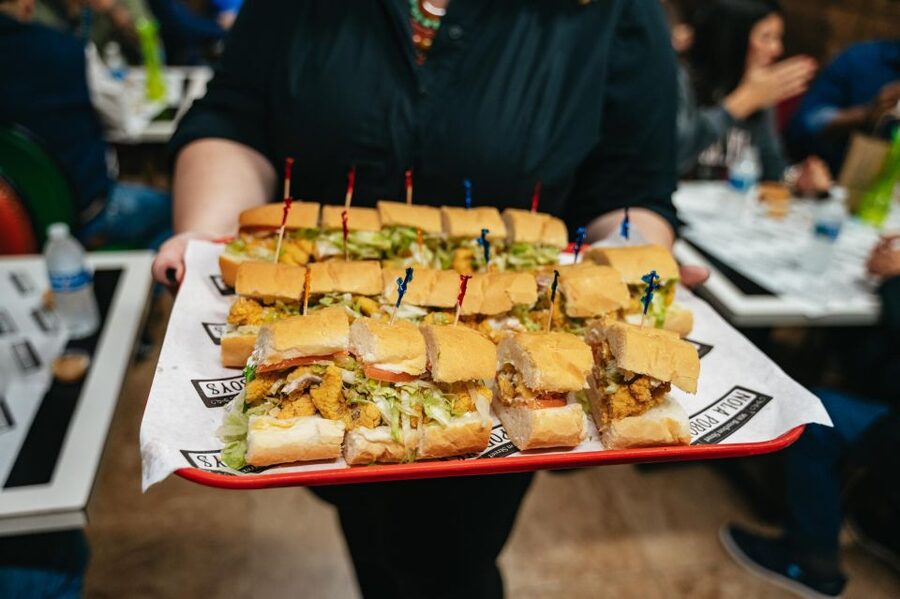
The next major food stop is NOLA Poboys. Here, the focus shifts to Louisiana’s seafood tradition with a freshly fried catfish po-boy.
A po-boy is more than a fried filling inside bread. It is one of the city’s defining casual meals, and this stop lets you try it in a setting devoted to the sandwich. The fried catfish gives you a clear taste of the Gulf and southern cooking, with crisp texture and a filling portion.
This is one of the stops that may decide whether the tour suits you. If seafood is off your menu, there may be little for you to enjoy here. The menu is not designed around broad substitutions, and the provider asks you to report actual food allergies when booking, not simply preferences.
The walk between stops is about five to ten minutes at a time. That is enough to let the food settle, but not enough to count as serious exercise. You will remain on city streets and sidewalks, with the usual French Quarter crowds, uneven surfaces, and weather exposure.
Muffuletta and boudin balls in one savory stretch
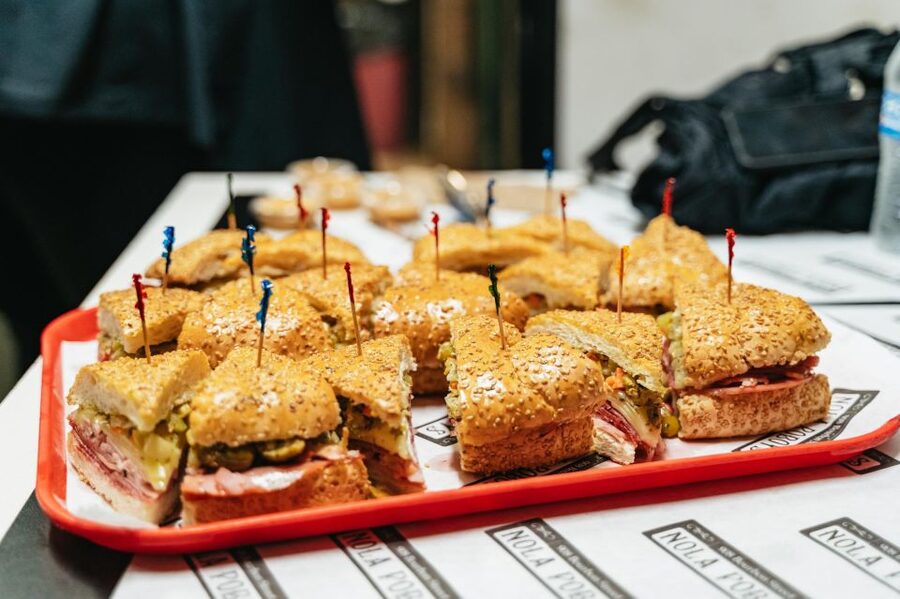
The tour then introduces another New Orleans original: the muffuletta sandwich. It is a meat-filled sandwich with a character very different from the po-boy, so tasting both in one afternoon makes the comparison especially useful.
The po-boy is usually associated with a fried or savory filling and a more immediate, casual bite. The muffuletta brings a denser sandwich style and a stronger cured-meat profile. You do not need to be a food expert to notice the contrast.
Boudin balls follow, adding another Louisiana specialty to the route. Boudin itself is a seasoned sausage mixture, and the ball format gives you a fried, easy-to-eat sample. Along with gumbo, it helps show how local cooking turns modest ingredients into filling food with a clear regional stamp.
This section can feel heavy, particularly in warm weather. The tour runs rain or shine, and New Orleans heat and humidity can make a full food walk more demanding than the three-hour length suggests. Wear light clothing, bring sun protection, and avoid arriving dehydrated.
Red beans and rice at Creole Cookery
At Creole Cookery, you taste red beans and rice, one of the most familiar comfort dishes in New Orleans.
This is a valuable stop because it moves away from the dishes most visitors already know. Gumbo and po-boys tend to get the attention, but red beans and rice says a great deal about everyday home cooking. It is hearty, economical, and filling, with a texture and seasoning profile that differs from the earlier dishes.
Several menu items work best when you slow down and listen to the guide. The food is only half the point. A good explanation can show why a dish became part of local weekly life and how family cooking differs from restaurant showpieces.
By this stage, you will probably understand the repeated advice to skip a meal before the tour. The samples are not all bite-sized. You may leave full, especially if you eat every savory portion and finish dessert.
Ending with bananas foster bread pudding
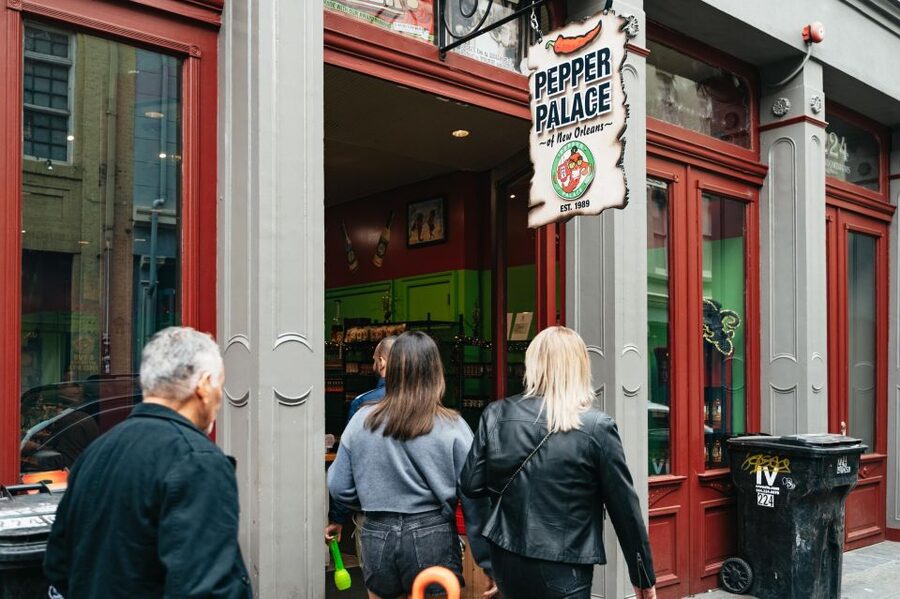
The final stop finishes on a sweet note with bananas foster bread pudding. This is a fitting ending after the salty sandwiches, sausage, gumbo, and rice.
Bread pudding is soft, warm, and substantial rather than delicate. The bananas foster style adds the familiar New Orleans dessert flavor, giving the last course enough character to feel like a proper finish.
Dessert is more than a pleasant reward here. It helps complete the tour’s portrait of New Orleans food by showing that local cooking is not just about spice and seafood. The city’s food traditions also include candy shops, rich baked desserts, and restaurant dishes built for lingering over.
The tour finishes on Toulouse Street, New Orleans, Louisiana 70116. That is useful for planning dinner or an evening in the French Quarter, though you will need to make your own way back to your hotel. There is no hotel pickup or drop-off.
What vegetarians can expect
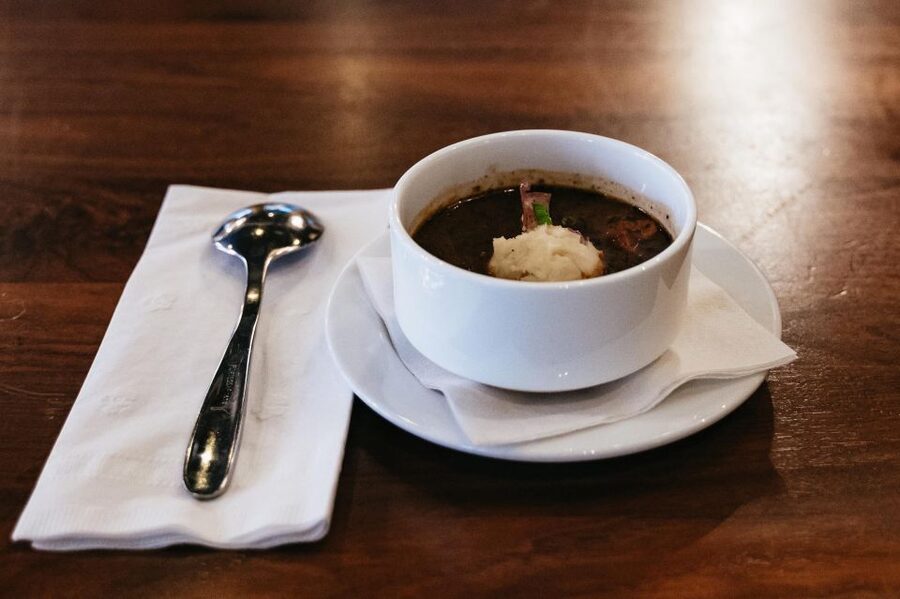
The vegetarian option is a real alternative, not simply a promise to remove meat from the standard menu. It includes black-eyed pea soup, veggie jambalaya, Portobello po-boy, and other versions of southern classics.
That gives vegetarian diners a chance to follow the same general food story as the rest of the group. You can still sample dishes built around beans, rice, vegetables, and southern seasoning.
You must request this option at checkout. Do not assume the guide can change the menu on the day of the tour.
The limits are important. There is no vegan, gluten-free, or dairy-free option. The provider asks you to list food allergies when booking, but the tour is not designed to handle every dietary preference or restriction. If you do not eat seafood, alligator, or other standard ingredients, you may find the fixed menu frustrating even if you are not formally allergic.
Is $85 a fair price?
At $85 per person, this is not a bargain meal. It is also not just a restaurant bill.
The price includes the walking tour, guide, water, up to eight food samples, and tips for servers and waitstaff. The tour description refers to as many as nine tastings, so I would plan around up to eight included samples rather than assume an exact number. Alcohol, soft drinks, and extra purchases are separate.
The value depends on how you use it. If you treat the tour as lunch plus an introductory French Quarter orientation, the price is easier to justify. You are paying for several dishes, service arrangements at multiple stops, and three hours of explanation. If you are mainly seeking a cheap way to sample one or two foods, it will feel expensive.
The food portions appear generous enough to fill most people. That makes the price more reasonable for anyone who would otherwise buy lunch and a few snacks. The guide’s local knowledge is the other part of the cost. A strong guide can save you from spending several meals guessing what to order, while also explaining why those dishes matter.
Who should book this tour?
I would suggest it for first-time visitors who want an easy introduction to New Orleans food and the French Quarter. It works especially well near the start of a stay, since you can use the guide’s suggestions to shape later meals.
It is also a good choice for couples, families with older children, and small groups with mixed levels of food experience. The food arrives in stages, the walk is broken into manageable sections, and the guide can answer questions as you go.
You should think twice if you dislike group tours, prefer to choose every dish yourself, or need a strict dietary menu. People with gluten intolerance and vegans should skip it. Although the activity is listed as wheelchair accessible, the provider also says it is not suitable for people with mobility impairments. Ask for a clear description of the route and surfaces before booking if mobility is a concern.
The tour runs in all weather. New Orleans rain can arrive quickly, and summer humidity can make three hours of walking and eating feel long. Comfortable shoes and a weather-ready plan are sensible.
Booking details that matter
The tour is in English and lasts three hours. Meet inside 3rd Block Depot at 316 Chartres Street, not simply somewhere near the restaurant.
You can cancel up to 24 hours before the start for a full refund, and the reserve-now, pay-later option keeps your plans flexible. Starting times vary, so check availability for your date.
Most restaurant stops have fully stocked bars. You can buy an alcoholic drink or soft drink during the tour, but those purchases are not included. Water is provided.
Should you book the French Quarter Food History Walking Tour?
Book it if you want a full meal with a story attached. The combination of gumbo, catfish po-boy, muffuletta, boudin, red beans and rice, praline, hot sauce, and dessert gives you a broad first look at New Orleans cooking in one organized afternoon.
The strongest reason to go is the guide. Beth, Gary, John, Meg, Kat, Cat, Mike, and Dylan are all associated with warm, engaging presentations, and the best guides connect food, place, and local history without rushing you through the stops.
Skip it if the fixed menu clashes with your diet or if $85 is more than you want to spend on a planned lunch. For everyone else, arrive hungry, bring water for the walk, go easy on the hottest sauce, and schedule the experience early in your New Orleans stay.
FAQ
Where does the tour begin?
Meet your guide inside 3rd Block Depot restaurant at 316 Chartres Street in the French Quarter.
Where does the tour finish?
The tour ends on Toulouse Street in New Orleans, Louisiana 70116.
How long does the food tour last?
The walking tour lasts three hours.
How many food samples are included?
The included package provides up to eight food samples. The tour description also refers to as many as nine tastings, so the exact number may vary.
Is there a vegetarian menu?
Yes. Request the Vegetarian Option at checkout. It includes items such as black-eyed pea soup, veggie jambalaya, and a Portobello po-boy.
Can I join if I need gluten-free, dairy-free, or vegan food?
No dedicated gluten-free, dairy-free, or vegan option is available. Notify the provider about food allergies when booking.
More Walking Tours in New Orleans
- New Orleans Premier Ghost, Voodoo and Vampire Walking Tour
★ 4.5 · 12,856 reviews - St. Louis Cemetery No. 1 Official Walking Tour
★ 4.5 · 3,941 reviews - New Orleans French Quarter, Voodoo and Culture Walking Tour
★ 4.5 · 2,961 reviews - Ghost and Vampire Walking Tour Of The French Quarter
★ 4.5 · 2,406 reviews
More Historical Tours in New Orleans
- French Quarter Historical Sights and Stories Walking Tour
★ 5.0 · 2,724 reviews - New Orleans Haunted History Ghost Tour
★ 4.5 · 2,084 reviews - Paddlewheeler Creole Queen Historic Mississippi River Cruise
★ 4.5 · 1,948 reviews - New Orleans: Creole Queen History Cruise with Optional Lunch
★ 4.3 · 1,112 reviews
Recently reviewed around New Orleans
- New Orleans Yellow Fever Ghost Tour★ 5.0 · 1,298 reviews
- Whitney Plantation Tour with Transportation from New Orleans★ 4.5 · 1,351 reviews
- New Orleans Private Carriage Tour of the French Quarter★ 5.0 · 537 reviews
- VIP Jazz Dinner Cruise with Private Tour and Open Bar Option★ 4.5 · 838 reviews
- New Orleans French Quarter Photo Shoot★ 5.0 · 462 reviews
- New Orleans Delicious Donuts & Beignets: A Sweet Walking Tour★ 5.0 · 928 reviews
- The Escape Game at the French Quarter in New Orleans★ 5.0 · 364 reviews
- The Ghosts of New Orleans Tour★ 4.5 · 702 reviews
Ghost & History Walking Tours, compared.
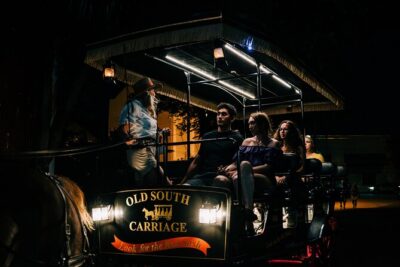
Haunted Evening Horse and Carriage Tour of Charleston
Read our review →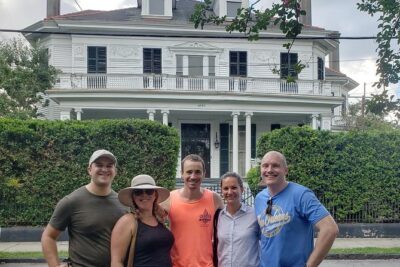
New Orleans Garden District History Walking Tour
Read our review →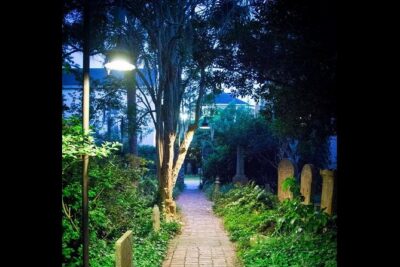
Ghosts of Charleston Night-Time Walking Tour with Unitarian Church Graveyard
Read our review →
New Orleans Haunted Ghost, Voodoo & Vampire Walking Tour
Read our review →