
Reviewed · HISTORICAL TOURS
French Quarter Historical Sights and Stories Walking Tour
The best part of this tour is how it turns the French Quarter from a pretty collection of balconies and courtyards into a place shaped by French, Spanish, Caribbean, and American influences. I like the small maximum of 12 people, which makes it easier to hear the guide and ask questions. I also like that guides such as Scott, Tim, Libby, Renée, Lesley, and Yvonne add food, politics, architecture, and local tips to the basic history.
The main drawback is that two hours can only cover part of the Quarter. One person wanted to see more buildings and cover more ground, and that is a fair point. You should also expect a real outdoor walk in sun, heat, rain, or cold, so water and comfortable shoes matter.
In This Review
- Key points to know before you book
- Why this two-hour walk helps you understand New Orleans
- Starting near Dumaine Street
- The French Quarter: a compact lesson in place and people
- French Market: stories amid daily activity
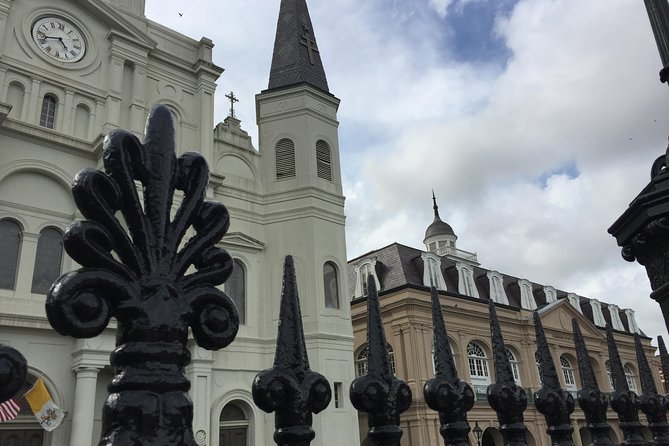
- St. Louis Cathedral and the religious story
- Mississippi River: the city’s great opportunity and threat
- Royal Street: architecture, shops, and practical tips
- Jackson Square: where the city’s influences meet
- The guides are the heart of the experience
- Who should book this French Quarter tour
- Booking value, timing, and cancellation
- Should you book it?
- FAQ
- How long does the French Quarter Historical Sights and Stories Walking Tour last?
- How much does the tour cost?
- Where does the tour start and end?
- What places does the walking tour visit?
- Is food or transportation included?
- What should I bring?
Key points to know before you book
- Small groups make a difference: The tour accepts up to 12 people, so you have a better chance of hearing stories clearly and getting answers.
- Six useful landmarks shape the walk: You visit the French Quarter, French Market, St. Louis Cathedral, Mississippi River, Royal Street, and Jackson Square.
- The guides add local judgment: Expect recommendations for restaurants, shopping, and places to visit after the walk.
- It works best early in your stay: The route helps you understand the Quarter and plan the rest of your New Orleans visit.
- The price is modest for a history tour: At $35 per person, you pay mainly for two hours of guided context rather than admissions or food.
- Weather is part of the deal: The walk operates in all weather, with no hotel pickup, food, or drinks included.
Why this two-hour walk helps you understand New Orleans
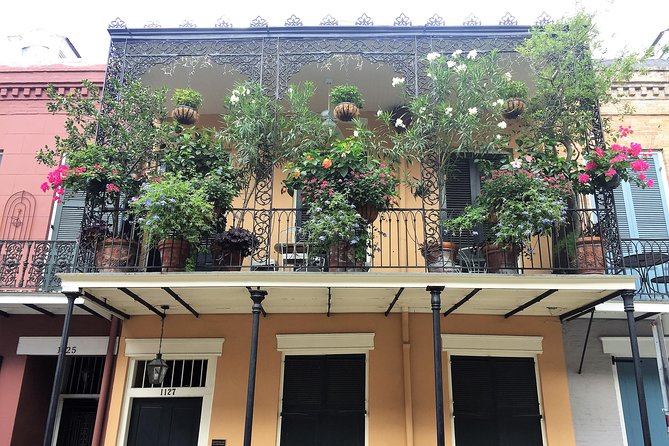
The French Quarter is easy to stroll through on your own, but it is not easy to understand on your own. You can admire iron balconies, colorful shutters, old churches, and narrow streets without seeing the forces that shaped them.
This walk gives those details a framework. Your guide explains how architecture reflects the district’s French and Spanish past, how religion fits into local life, and how the Mississippi River helped create the city while also bringing constant trouble. The best guides do not treat history as a list of dates. They connect buildings and streets to the people, customs, food, music, and politics of New Orleans.
I would schedule this near the start of your visit. Once you know the basic layout and hear suggestions from your guide, restaurants, shops, museums, and later walks become easier to choose. It is also a useful first look for children or first-time visitors who need a clear introduction before tackling the city on their own.
At $35, this is a good-value orientation walk. There are no extra admission fees at the listed stops, and the activity lasts about two hours. You are paying for the guide’s preparation, storytelling, and ability to point out details you would likely pass without noticing. It is not a food tour, a transportation tour, or an extended architectural survey, so the value depends on how much you want context rather than added activities.
More Historical Tours in New Orleans
- New Orleans Garden District History Walking Tour
★ 5.0 · 2,879 reviews - New Orleans Small-Group Haunted History Carriage Tour
★ 4.5 · 2,289 reviews - New Orleans Haunted History Ghost Tour
★ 4.5 · 2,084 reviews
Starting near Dumaine Street
The meeting point is at Instrument Men, 400 Dumaine St. in the French Quarter. The walk ends at 701 Decatur St., near Jackson Square, so you finish in a useful central spot rather than being returned to a hotel.
There is no hotel pickup or drop-off. Plan to reach the starting point yourself, using nearby public transportation or walking from your accommodation. Since the route moves through busy public streets, arrive ready to begin on foot rather than expecting a private vehicle or indoor waiting area.
The tour has three daily departure times. The exact options are supplied when you book, so choose one that fits your meals and other plans. Morning can be a smart choice in warmer months, while an afternoon departure may suit a slower start. The important point is to avoid placing a tight reservation immediately afterward. A guide may pause for questions, and street conditions or a parade can require a reroute.
One guide adjusted the route around a New Year’s parade, which is a useful reminder that the French Quarter is a working neighborhood and public event space. You are not walking through a sealed museum. Traffic, crowds, weather, music, and celebrations can affect the pace.
The French Quarter: a compact lesson in place and people
The first portion introduces the oldest neighborhood in New Orleans. The supplied timing gives about 30 minutes to this broad French Quarter section, though the whole route continues through the district afterward.
This is where the guide can establish the main architectural story. The Quarter’s buildings show more than age. Their materials, balconies, courtyards, and decorative details reflect the city’s European roots and its later American and Caribbean connections. A strong guide helps you look at those features as clues about who built the neighborhood and how people used it.
The history also reaches beyond architecture. You can expect discussion of religion, local culture, food, music, and the people who helped shape New Orleans. Several guides are praised for making the stories lively and easy to follow, with humor and room for questions.
This section is especially helpful if you are new to the city. You get a broad picture before the walk narrows to individual places. If you have visited New Orleans many times, do not assume you have already seen everything the Quarter can teach you. One repeat visitor learned new details despite previous trips.
French Market: stories amid daily activity
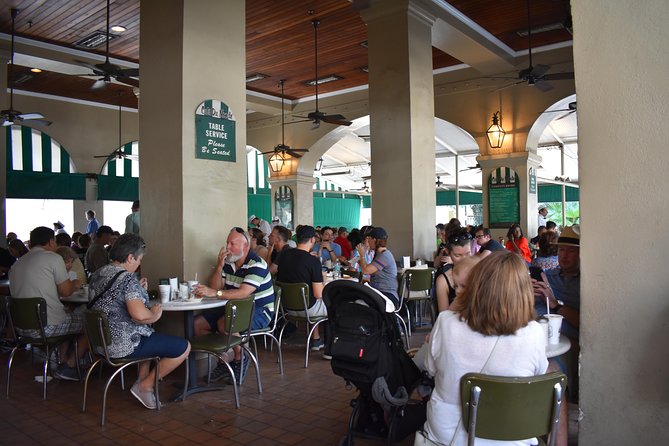
The walk then spends about 15 minutes around the French Market. This gives you a taste of the Quarter as a place of commerce, not just a backdrop for sightseeing.
The market’s value on this tour is the setting. Instead of hearing about New Orleans in an isolated classroom, you hear stories in a public space tied to shopping and local life. Your guide may connect the market to the city’s wider traditions and point you toward places worth returning to independently.
Do not expect a meal or tasting to be included. Food and drinks are your responsibility, but the guide can offer dining suggestions. That distinction matters if you are comparing this with a food-focused activity. Here, food is part of the cultural conversation, not the main product.
The 15-minute stop also shows the limits of the schedule. You will get useful context, but you will not have a long period to browse every stall or shop. Save time afterward if the market interests you.
More Walking Tours in New Orleans
- New Orleans Premier Ghost, Voodoo and Vampire Walking Tour
★ 4.5 · 12,856 reviews - New Orleans Food Walking Tour of the French Quarter with Small-Group Option
★ 5.0 · 6,118 reviews - St. Louis Cemetery No. 1 Official Walking Tour
★ 4.5 · 3,941 reviews - New Orleans French Quarter, Voodoo and Culture Walking Tour
★ 4.5 · 2,961 reviews
St. Louis Cathedral and the religious story
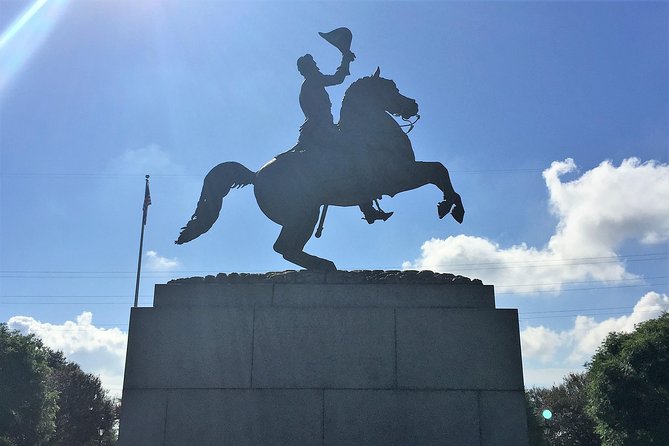
St. Louis Cathedral receives about 15 minutes. The basilica, built in the late 18th century, has witnessed both painful and joyful moments in New Orleans history.
A stop here adds weight to the architectural discussion. The cathedral is not simply a photogenic building beside Jackson Square. It helps explain the role of Catholic faith in a city shaped by French and Spanish rule, along with the way religion remained part of public life.
This is also a good place to listen for connections between architecture and memory. The guide can place the cathedral within the story of the surrounding square and the wider city, rather than treating it as a separate sight.
The schedule is brief, and admission is not listed as part of the experience. You should think of this as an exterior-focused historical stop unless your guide says otherwise. If entering the cathedral is important to you, ask about that during the tour or plan a separate visit.
Mississippi River: the city’s great opportunity and threat
About 15 minutes are set aside for the Mississippi River. The river gave New Orleans its reason for being, helping the city grow through trade and transport, but it has also forced residents to fight water and flooding over time.
This stop gives the tour a wider frame. The French Quarter can feel enclosed by its streets and buildings, yet the city’s story makes little sense without the river. You begin to see why location brought prosperity and why the natural environment remains a daily challenge.
The tour description calls the Mississippi the third-largest river in the world. More important for your visit, you get a direct look at the waterway that shaped New Orleans commerce and identity.
Do not expect a boat ride or a long waterfront presentation. This is a short viewing and storytelling stop within a walking route. It works best as a connection between the Quarter’s built environment and the forces beyond it.
Royal Street: architecture, shops, and practical tips
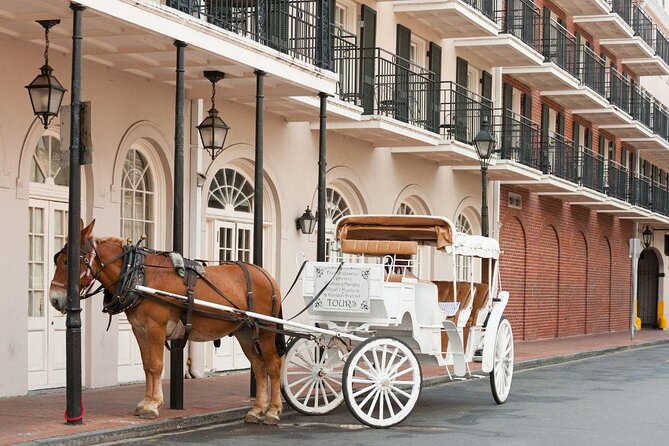
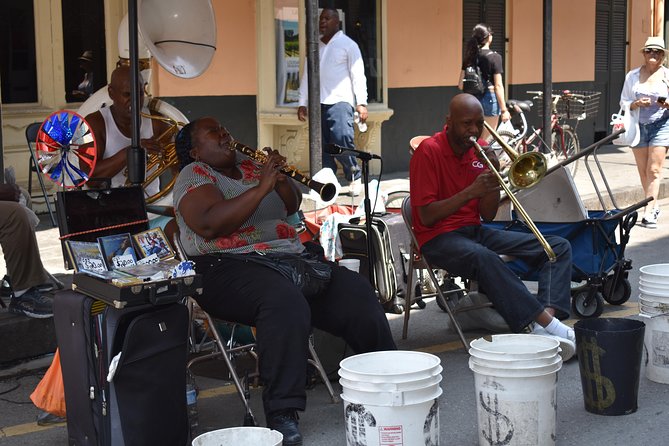
Royal Street gets about 30 minutes, making it one of the longer sections of the route. It combines architecture with the modern life of the Quarter: shopping, street performers, restaurants, and the stories attached to this well-known thoroughfare.
This is where you can put the guide’s advice to use. Ask about shopping areas, dining choices, and places you might return to later. Guides are encouraged to share local recommendations, and several named guides, including Scott, Tim, and Renée, are praised for giving practical suggestions along with historical facts.
The street also helps balance the tour. You are not only studying the past. You are seeing how the Quarter functions now, with businesses, performers, and people moving through the same old streets.
The drawback is that Royal Street can be active and distracting. Street noise and foot traffic may make it harder to hear at times, which is another reason the small group size helps. Stay close to the guide and speak up if you miss a point.
Jackson Square: where the city’s influences meet
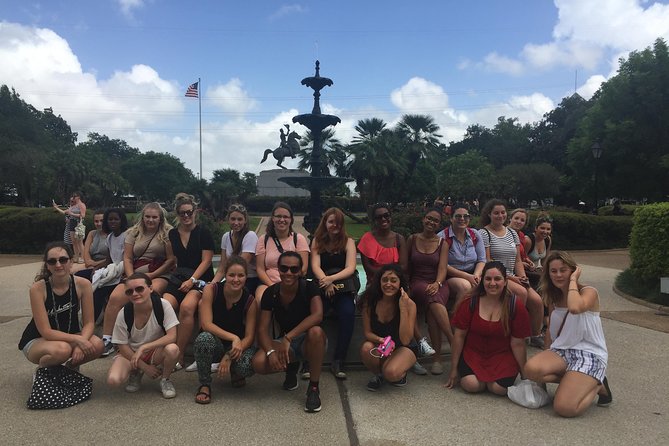
The walk ends around Jackson Square, the heart of the French Quarter. The official end point is at 701 Decatur St., and finishing here gives you easy access to more of the neighborhood afterward.
Jackson Square brings together many of the tour’s themes. The square tells a story that is French and Spanish, American and Caribbean. With the cathedral, surrounding buildings, artists, performers, and public activity close by, it is a natural place to make sense of New Orleans as a city with several identities at once.
I like this ending because you are not simply dropped at a random corner. You finish at a landmark that can serve as a reference point for the rest of your trip. You can continue exploring, return to the French Market, seek lunch, or use the square as a meeting place.
The 15-minute timing means the guide will not cover every corner or building in detail. If you want a slower photographic visit, come back after the tour. The walk gives you the background; your later visit lets you linger.
The guides are the heart of the experience
The strongest feature is the guide. Scott is repeatedly described as funny, engaging, and well informed, with a talent for explaining both history and architecture. Tim is praised for his friendly manner and broad understanding of New Orleans, while Libby is noted for passion, personal insight, and storytelling.
Other guides named in the supplied material include Renée, Lesley, and Yvonne. Their approaches may differ, but the common thread is clear: the experience depends on a person who can make a compact route feel meaningful.
You should ask questions. The group size and two-hour format leave room for conversation, and guides are prepared to discuss more than the next building. Topics can include local politics, food, religion, architecture, music, and contemporary New Orleans.
That range is useful, but it also means the exact emphasis may vary by guide. If you want a strict architectural study or a specific historical theme, ask at the start what your guide plans to cover. If you prefer a broad introduction with stories and local advice, the flexible format should suit you well.
Who should book this French Quarter tour
This is a strong fit for first-time visitors, solo visitors, couples, families, and repeat visitors who want more than another unstructured stroll. Families can use it as a clear introduction for children, though the experience remains a walking history tour rather than a children’s attraction.
It also suits anyone who likes to ask questions. A large group can make that awkward, but a maximum of 12 people gives you a better chance to interact with the guide. Solo visitors may especially appreciate having a structured way to understand the neighborhood at the start of a trip.
You should think twice if you dislike walking outdoors, need frequent indoor breaks, or want a tour built around food, drinks, or private transportation. The activity runs in all weather, and food, drinks, hotel pickup, and drop-off are not included.
Service animals are allowed, and most people can participate. Bring water, especially in warm weather, and wear shoes that can handle two hours on city streets.
Booking value, timing, and cancellation
The $35 price is reasonable for a two-hour guided introduction to the French Quarter, especially with a small group limit and no separate sightseeing admissions required at the listed stops. The tour is not the cheapest way to see the district, since you can walk its streets for free, but free sightseeing will not provide the same steady explanation or restaurant and shopping advice.
This experience is often reserved about 17 days ahead, so do not wait until the last minute if your schedule is fixed. Confirmation arrives when you book, and you can cancel up to 24 hours before the experience for a full refund.
The practical tradeoff is simple: you pay a modest fee for orientation and stories, then use the rest of your visit to explore with better judgment. That is a sound exchange in a neighborhood where the most interesting details are easy to miss.
Should you book it?
Book this tour if you want a clear, friendly introduction to New Orleans history, architecture, religion, food, and local life in one compact walk. It is especially useful on your first day or two, when a guide can help you get your bearings and suggest what to do next.
Skip it if you want a long, slow architectural inspection, a food tasting, or a private vehicle. The route covers important places, but the schedule is tight and some stops are short.
For most visitors, I would book it early, wear comfortable shoes, bring water, and arrive ready to listen and ask questions. The small group, strong guide lineup, useful ending at Jackson Square, and $35 price make this a practical way to start seeing the French Quarter as a living neighborhood rather than just a scenic street set.
FAQ
How long does the French Quarter Historical Sights and Stories Walking Tour last?
The tour lasts approximately two hours.
How much does the tour cost?
The price is $35 per person.
Where does the tour start and end?
It starts at Instrument Men, 400 Dumaine St., New Orleans, Louisiana 70116. It ends at 701 Decatur St. in Jackson Square, the heart of the French Quarter.
What places does the walking tour visit?
The route includes the French Quarter, French Market, St. Louis Cathedral, the Mississippi River, Royal Street, and Jackson Square.
Is food or transportation included?
No. Food and drinks are not included, and the tour does not provide hotel pickup or drop-off.
What should I bring?
Wear comfortable walking shoes and bring water, especially during warmer months. The tour operates in all weather, so dress for the conditions.
Recently reviewed around New Orleans
- New Orleans Yellow Fever Ghost Tour★ 5.0 · 1,298 reviews
- VIP Jazz Dinner Cruise with Private Tour and Open Bar Option★ 4.5 · 838 reviews
- Whitney Plantation Tour with Transportation from New Orleans★ 4.5 · 1,351 reviews
- New Orleans Private Carriage Tour of the French Quarter★ 5.0 · 537 reviews
- New Orleans French Quarter Photo Shoot★ 5.0 · 462 reviews
- New Orleans Delicious Donuts & Beignets: A Sweet Walking Tour★ 5.0 · 928 reviews
- The Escape Game at the French Quarter in New Orleans★ 5.0 · 364 reviews
- The Ghosts of New Orleans Tour★ 4.5 · 702 reviews
Historical Tours, compared.

History and Hauntings of Salem Guided Walking Tour
Read our review →
Charleston’s Old South Carriage Historic Horse & Carriage Tour
Read our review →

Big Island in a Day: Volcanoes Waterfalls Sightseeing and History
Read our review →
Freedom Trail History Small Group Walking Tour
Read our review →
Historic Charleston Guided Sightseeing Walking Tour
Read our review →
Starship Landmark 90 Minute Sightseeing Cruise
Read our review →Browse the lists this tour appears in