
Reviewed · MANTA RAY SNORKELING
Manta Ray Night Snorkel Kona – Coral Reef Snorkel Adventures
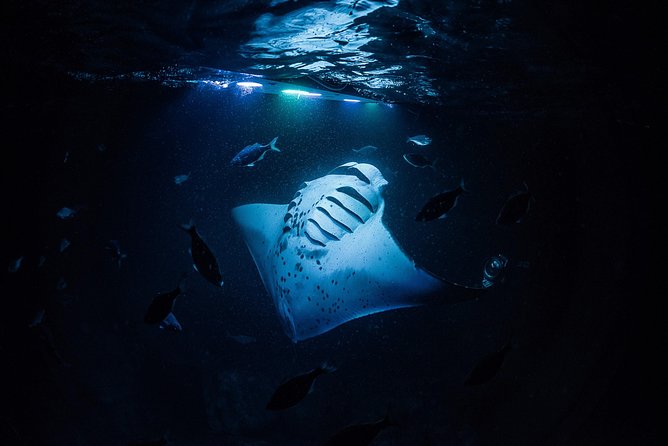
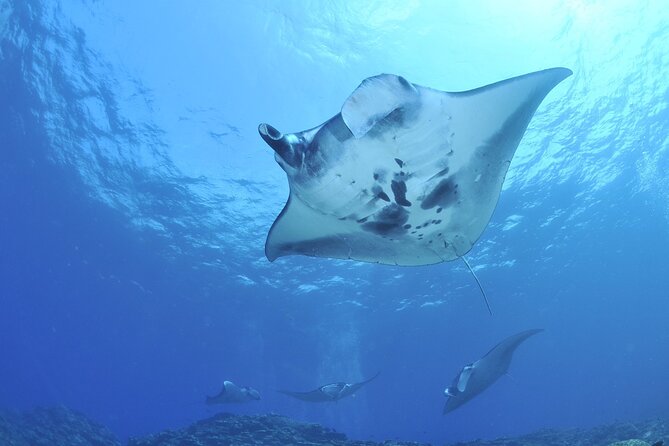
Kona’s manta ray night snorkel is one of those rare outings where the main event can glide within inches of your face. After dark, lights attract plankton, and manta rays sweep in beneath a floating lightboard, sometimes rolling and turning as they feed. The reported sighting rate is better than 90 percent, but these are wild animals, not scheduled performers.
I like the close-up view without touching the rays, and I like the lively guidance from crew members such as Jacob, Jeff, Cody, Erika, and Captain Alexis. The snacks, drinks, and included snorkel gear make the outing easy to manage. The main caution is the rough, fast ride on a small boat, plus the need to hold the board for roughly 30 to 45 minutes.
In This Review
- Key points before you book
- Meeting the boat at Honokohau Harbor
- The fast ride into Kona’s night ocean
- Holding the lightboard above the manta rays
- Why the manta encounter feels so close
- Crew support in a dark-water setting
- Cold water, wet suits, and the ladder back aboard
- The small-group question you should clarify
- Is $125 a fair price for 90 minutes?
- How to plan the booking around your holiday
- Who should book this manta snorkel?
- Should you book Coral Reef Snorkel Adventures?
- FAQ
- Where does the manta ray night snorkel begin?
- Where does the activity end?
- How long does the tour last?
- How much does the tour cost?
- Are manta ray sightings guaranteed?
- What happens if no manta rays appear?
- Is snorkeling equipment included?
- Do I need to bring a towel?
- How many people can join the boat?
- Do I need to know how to swim?
- Is the tour suitable for someone with neck problems?
- What is the cancellation policy?
Key points before you book
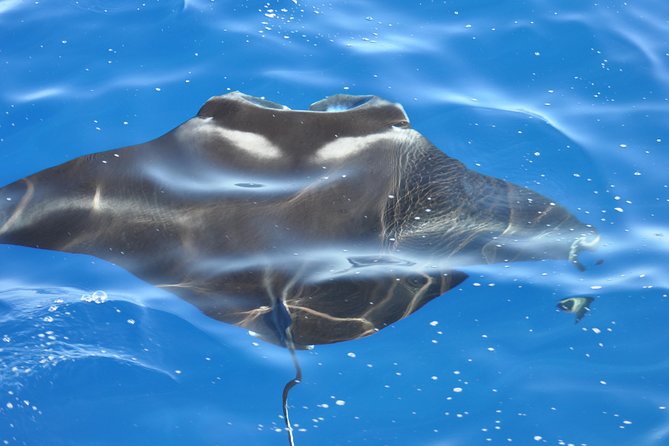
- Manta rays feed beneath a lightboard: Plankton gathers around the lights, bringing the rays close to the surface.
- A strong but not guaranteed sighting chance: The advertised success rate is above 90 percent, yet some departures see few or no mantas.
- Boat capacity needs clarification: The tour is promoted in places as an intimate group of six, while the operating limit is also listed as 12.
- The ocean ride can be rough: The trip takes about 20 to 25 minutes each way, and the small vessel can bounce sharply.
- You must swim independently: A floatation device cannot substitute for swimming ability.
- Book early in your stay: If the mantas do not appear, you may be offered another trip, but that helps only if you still have time on the island.
Meeting the boat at Honokohau Harbor
Your evening begins at Coral Reef Snorkel Adventures, 74-425 Kealakehe Parkway, near Honokohau Small Boat Harbor in Kailua-Kona. You meet the crew, receive instructions, and prepare for a short night trip into open water.
The practical routine is simple. You should bring a towel, but leave unnecessary items behind. Shoes and aquasocks come off before boarding, and belongings stay in a dry storage area during the outing. That matters because the boat is compact, with little room for loose bags or extra clothing.
The crew provides snorkel equipment, and wetsuits or wetsuit jackets are used according to the conditions described for these departures. Listen closely during the briefing. The important instructions are not just about masks and fins. You will learn how to enter the water, how to hold the board, and how to keep your hands and feet from disturbing the animals.
The official duration is about 90 minutes. In practice, the evening includes the ride out, time at the viewing site, and the return to the harbor. Several departures have allowed roughly 30 to 45 minutes in the water, though ocean conditions and the activity around the site can affect the schedule.
More Big Island of Hawaii trips worth a second look
- Big Island Manta Ray Night Snorkel
★ 5.0 · 5,656 reviews - KONA Manta Ray Night Snorkel – FREE re-ride if no Sightings
★ 5.0 · 2,212 reviews - Manta Ray Night Snorkel at Kona, Big Island
★ 5.0 · 1,758 reviews
The fast ride into Kona’s night ocean
The boat ride is part of the adventure, but it is also the part most likely to test you. The small vessel reaches the viewing area in about 20 to 25 minutes, and the ride can be bumpy, especially when the sea is unsettled.
Some people enjoy the speed, spray, sunset, and star-filled sky. Others find the pounding uncomfortable or become seasick before reaching the manta site. The boat may feel less stable than a larger vessel because it is small and open, and you may sit along the pontoon edge. A few people have chosen not to enter the water after the ride left them shaken.
This is not a flaw unique to one evening. Open-ocean conditions change, and the captain decides if the trip is safe to operate. Still, you should treat the ride as a serious part of the outing rather than a quiet transfer. If you are prone to motion sickness, ask a medical professional before the tour about suitable prevention. Do not wait until you are already bouncing offshore.
The compact boat has a clear benefit, too. You spend less time moving a large crowd through the process of getting in and out of the water. Once you reach the site, the crew can focus on helping people with masks, fins, and the lightboard.
Holding the lightboard above the manta rays
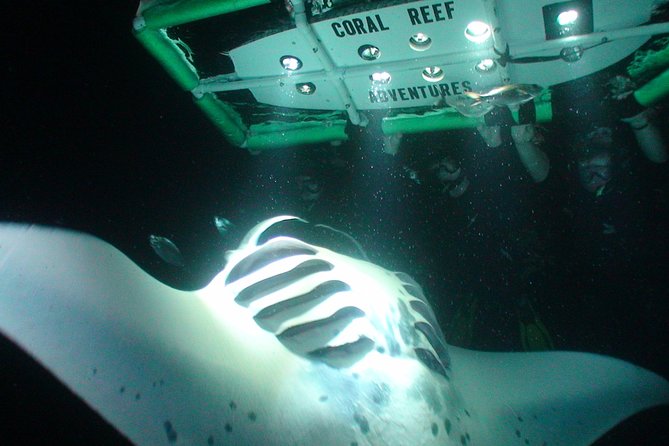
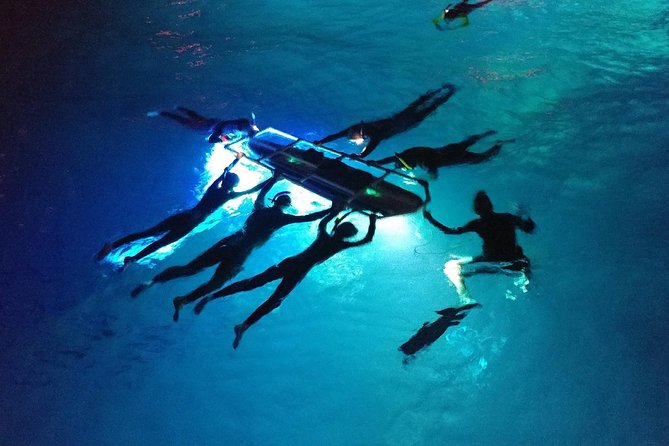
At the viewing area, you enter the water and hold onto a floating board fitted with lights. The light attracts plankton, and the plankton attracts manta rays. Your position is face-down at the surface, looking into the dark water while the animals pass below.
The sight can be startling at first. You are floating in the ocean at night, with little to see beyond the illuminated water, and then a broad-winged manta appears beneath you. The rays may turn upside down, make repeated rolls, or skim close to the board. Several reported encounters included rays passing within inches of swimmers, but touching is not part of the activity and should never be encouraged.
You need to keep your body calm. Kicking hard can send the rays away, and frantic movement makes the experience less comfortable for everyone sharing the board. The crew will help you settle into the right position and explain how to watch without interfering.
There is a small tradeoff between seeing and listening. If you place your whole head underwater, you may miss some of the guide’s explanations. If you keep one ear above the surface, you can hear more about manta behavior and habitat, but you may need to adjust your viewing angle. I would alternate between the two instead of trying to do both at once.
Why the manta encounter feels so close
Manta rays are not approaching because they want food from you. They are following plankton gathered by the lights. That makes the encounter feel natural, even though the lightboard creates the viewing setup.
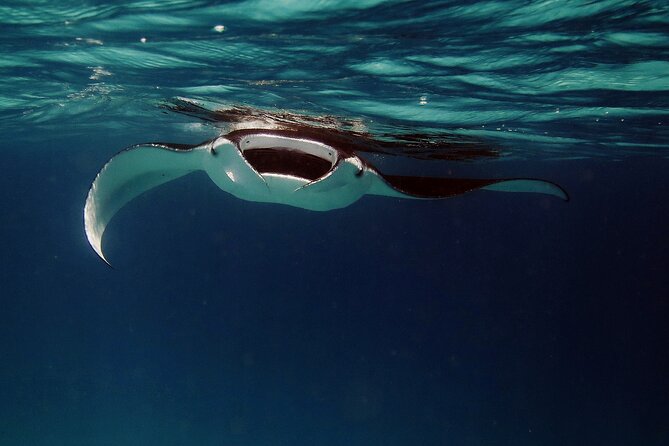
The rays’ size can be hard to judge in the dark. A manta may appear, sweep under your torso, and vanish before another one rolls into view. Sometimes one or two animals circle the board. On a strong night, four, six, 10, or even about a dozen may gather in the lit water.
The number is never guaranteed. A reported success rate above 90 percent is encouraging, but it still leaves room for a quiet departure. Some outings have seen only one ray repeatedly, while others have seen several at once. If no manta appears, the company has offered a return trip at no charge, subject to scheduling and availability. That is useful, but it is much more helpful if you book this early in your Big Island stay.
Do not judge the trip only by the number of rays. A single manta making repeated passes can provide a memorable encounter. The important point is that you are observing wild marine life, so patience matters.
A completely different way to spend a day nearby:
- Big Island in a Day: Volcanoes Waterfalls Sightseeing and History
★ 5.0 · 6,569 reviews - Big Island: Kona Manta Ray Snorkel Tour in Keauhou Harbor
★ 4.5 · 2,465 reviews - Hilo Shore Excursion: Volcanoes National Park & Black Sand Beach
★ 4.5 · 2,338 reviews - Big Island: Captain Cook Snorkel On A Power Catamaran With Lunch
★ 5.0 · 2,232 reviews
Crew support in a dark-water setting
The guides are central to the outing. Jacob is frequently singled out for clear information and a calm manner, and Jeff, Cody, Erika, Danny, Adam, and other crew members have also been praised for helping people feel safe and prepared.
That support matters most during the awkward moments: stepping into dark water, adjusting a mask, holding the board in small waves, or climbing the ladder afterward. A 10-year-old child has been reassured through the process, and a visitor with a bad knee received extra time and help getting back aboard.
The crew also adds context. You can learn about manta behavior and the habitat while watching the animals feed. If the water is choppy, keep your listening expectations realistic. You may need to focus on staying comfortable, then ask questions once you are back on the boat.
This is an active snorkel, not a passive boat ride. You need moderate fitness, the ability to swim without a floatation device, and enough upper-body strength to hold the board. Holding your arms out in front of you for 30 minutes or longer can tire your shoulders. Relax your grip and let the board support you instead of clenching the handles the whole time.
Cold water, wet suits, and the ladder back aboard
The water may not feel cold at first because you are concentrating on the mantas. After 30 to 45 minutes of floating, however, some people get chilled, especially on the ride back. A thin person may feel cold even with a wetsuit jacket.
Have your towel ready as soon as you leave the water. Drinks and snacks are included, though the timing and temperature of the refreshments may vary. Some outings have served drinks after the activity, and one report found them warm and available only at the end. Think of the snacks as a useful extra, not a full meal or a guaranteed hot beverage.
Getting back on the boat can be harder than getting in. The ladder requires effort, and waves may move the boat while you climb. If you have knee trouble, neck problems, or limited upper-body strength, consider the physical demands carefully and contact the operator before booking.
The stated weight limit is 280 pounds per person. The activity is not recommended for people with neck problems. These rules are practical safety limits, not minor footnotes.
The small-group question you should clarify
The tour is promoted as an intimate small-group trip, with some information describing a maximum of six people. That sounds appealing because fewer people usually mean more room around the board and easier access to the guide.
However, the operating information also lists a maximum of 12 people, and the company has clarified that its Coast Guard-certified vessels can carry up to 12. That is still smaller than boats carrying 30 to 50 or more people, but it is not the same as a six-person outing.
You should ask exactly how many people are booked on your departure if group size is important to you. This is especially worthwhile if you are paying a premium for a six-person experience. Private charters are available for people who need an exclusive group, though the price for a private charter is not provided here.
At the water, several companies may gather around the manta site. You might occasionally bump fins or feet with people from another group. The guides can help you hold your position, but the setting is not a private patch of ocean.
Is $125 a fair price for 90 minutes?
At $125 per person, this is not the cheapest way to spend an evening on the Big Island. The price includes the boat, snorkel gear, guide support, and snacks and non-alcoholic drinks. You are also paying for a specialized nighttime wildlife outing that requires a boat, lights, safety equipment, and a trained crew.
I think the value is good if close manta encounters are high on your list. The animals can come within inches, and the setting is unlike a standard daytime snorkel. The small vessel also gets you to the site quickly and avoids the feel of a large floating crowd.
The value is weaker if you dislike rough boat rides, get seasick easily, or mainly want a relaxed sunset cruise. You may spend much of the 90 minutes managing motion, cold, or tired shoulders rather than admiring the rays.
The 4.8 rating from 376 ratings and a 94 percent recommendation rate suggest that the core manta encounter usually delivers. Those figures should not make you ignore the practical warnings. A high sighting chance is not a promise, and a small boat is not automatically a smooth boat.
How to plan the booking around your holiday
This outing is best booked early in your Big Island visit. The company has offered a free return trip when no manta is seen, but that option is useful only if your schedule leaves room for another night.
It is also smart to check the ocean forecast and contact the operator if conditions concern you. The tour requires suitable weather, and a cancellation caused by poor conditions can lead to a different date or a full refund.
You can cancel for a full refund up to 24 hours before the start time. Changes or cancellations inside that 24-hour window are not accepted for a refund. The company may also cancel if the minimum number of people is not reached, in which case you are offered another date, another activity, or a full refund.
The tour is offered in English, and confirmation arrives when you book. The meeting point and return point are the same, which keeps the evening simple.
Who should book this manta snorkel?
I would recommend it to confident swimmers, families with older children who can follow water instructions, couples looking for a memorable night activity, and anyone excited by close wildlife encounters. It also suits people who appreciate a guide who explains what they are seeing rather than simply pointing at animals.
I would be cautious if you have serious motion sickness, neck problems, knee problems, or weak upper-body strength. You should also think twice if a large, steady boat is important to you.
For families, the emotional payoff can be huge. Children have been reassured by the crew, and young people may find the rays’ rolls and turns unforgettable. But parents need to be honest about the dark-water setting, the board hold, the boat ride, and the ladder.
Should you book Coral Reef Snorkel Adventures?
Book this tour if you want the best chance of a close manta encounter and can accept a fast, sometimes rough ride to get there. The guides, lightboard setup, and frequent close passes give the outing real appeal, and the $125 price is reasonable for a specialized wildlife activity.
Before paying, confirm the expected group size. The difference between six and 12 people is important, and the available information gives both numbers. Bring only what you need, pack a towel, plan for cold on the return ride, and schedule the tour early enough to try again if the ocean stays quiet.
If you can swim comfortably, stay calm in open water, and treat the mantas as wild animals rather than a guaranteed show, this is one of the Big Island’s strongest evening excursions.
FAQ
Where does the manta ray night snorkel begin?
The tour begins at Coral Reef Snorkel Adventures, 74-425 Kealakehe Parkway, Kailua-Kona, Hawaii 96740, near Honokohau Small Boat Harbor.
Where does the activity end?
The activity ends back at the same meeting point.
How long does the tour last?
The listed duration is approximately one hour and 30 minutes.
How much does the tour cost?
The listed price is $125 per person.
Are manta ray sightings guaranteed?
No. The tour advertises a sighting chance above 90 percent, but manta rays are wild animals and some departures may see few or none.
What happens if no manta rays appear?
The company has offered a free return trip when there is no manta sighting. You should book early in your holiday so you have time to use that option.
Is snorkeling equipment included?
Yes. Snorkeling equipment is provided.
Do I need to bring a towel?
Yes. You should bring your own towel.
How many people can join the boat?
The operating information lists a maximum of 12 people. Some tour descriptions refer to a smaller maximum of six, so confirm the group size before booking if that matters to you.
Do I need to know how to swim?
Yes. You must be able to swim without the assistance of a floatation device.
Is the tour suitable for someone with neck problems?
The activity is not recommended for people with neck problems. It also requires moderate physical fitness and enough strength to hold the lightboard and climb back onto the boat.
What is the cancellation policy?
You can cancel at least 24 hours before the start time for a full refund. Cancellations or changes made less than 24 hours before the start time are not accepted for a refund. A weather cancellation may result in a new date or a full refund.
Recently reviewed around Big Island of Hawaii
- Hilo Shore Excursion: Active Volcano, Lava Tube, Waterfall and Gardens★ 5.0 · 393 reviews
- Volcano Adventure: Hilo Sightseeing w/ Optional Helicopter Tour★ 4.5 · 412 reviews
- Kealakekua Bay Snorkeling Tour – 4 hour Kona Zodiac Adventure★ 5.0 · 508 reviews
- Whale Watching On The Big Island★ 5.0 · 573 reviews
- Hawaii Volcanoes, Waterfalls, Beaches & Hilo Highlights Day Tour★ 5.0 · 391 reviews
- Zodiac Raft Whale Watching Adventure★ 5.0 · 456 reviews
- Small Group Big Island Twilight Volcano and Stargazing Tour★ 5.0 · 1,619 reviews
- Manta Ray Night Snorkel Tour in Kailua-Kona, Big Island★ 5.0 · 382 reviews
Manta Ray Snorkeling, compared.
Kona Manta Ray Snorkel Tour in Keauhou Harbor
Read our review →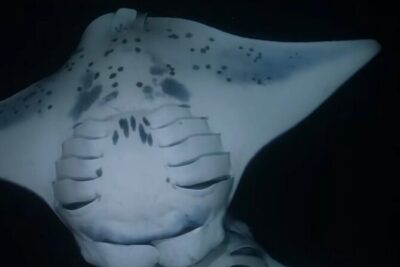
KONA Manta Ray Night Snorkel – FREE re-ride if no Sightings
Read our review →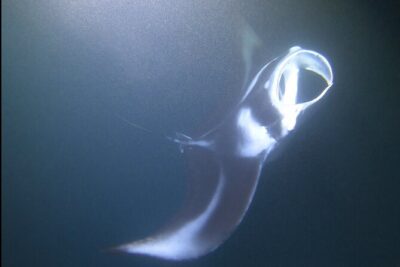
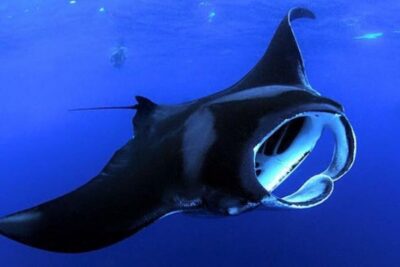
Kailua Kona: Night Manta Ray Adventure on the Big Island
Read our review →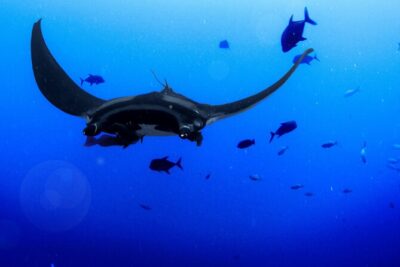
Manta Magic: Small-Group Manta Ray Night Snorkel in Kailua Kona
Read our review →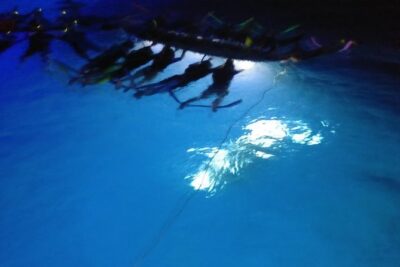
Browse the lists this tour appears in