
Reviewed · MUSEUMS
NYC: Metropolitan Museum of Art Highlights Tour
The Metropolitan Museum of Art is so large that a first visit can feel like being handed a map of a small city and told to pick a neighborhood. This two-hour highlights tour gives you a sensible route through 5,000 years of art, with a guide explaining why the objects matter rather than simply naming dates and artists.
I especially like two things here. First, guides such as Jett, Alex, Erika, Nicola, and Kevin are praised for turning art into stories that are easy to follow. Second, the tour ends you in a useful part of the museum, often near the European paintings, so you can continue on your own. The catch is simple: two hours is only an introduction, and you will move at a steady pace with little time for every room that catches your eye.
In This Review
- Key points to know before you book
- Why the Met needs a planned route
- Meeting the guide in the Great Hall
- What the two-hour route feels like
- Ancient Egypt, Greece, and Rome
- European paintings and the stories behind them
- A tour that works for art beginners
- Group size, pace, and comfort
- The Cantor Roof Garden in warm months
- Is $65 a fair price?
- Who should book this Met tour?
- My verdict: book it for direction, not total coverage
- FAQ
- How long does the Metropolitan Museum of Art highlights tour last?
- What is included in the price?
- Where do I meet the guide?
- How early should I arrive?
- What happens if I arrive late?
- Is the tour offered in languages other than English?
- Is the tour wheelchair accessible?
- Will the tour include every artwork mentioned in the description?
- Is the Cantor Roof Garden included?
- Can I cancel for a refund?
Key points to know before you book
- A smart first route through a huge museum: See selected Egyptian, Greek, Roman, European, and modern works without losing time finding the main galleries.
- Story-led guiding: Strong guides use background, anecdotes, and visual details to help you look at famous works in a new way.
- Small groups are common: Past groups were often around eight to ten people, a comfortable size for questions and moving through busy rooms.
- The ticket is included: Meet inside after security, with your guide holding your entry ticket near the pharaoh statue in the Great Hall.
- Two hours passes quickly: The pace is purposeful, so this suits you if you want an overview rather than a slow study of a few paintings.
- The roof garden is seasonal: The Cantor Roof Garden is usually part of the route from mid-April through October, but not in winter or early spring.
Why the Met needs a planned route
The Met is not a museum you casually finish in an afternoon. It contains more than two million works covering roughly 5,000 years, spread through galleries that can make even a confident museumgoer pause at the next turn.
That scale is the main reason to consider a guided visit. You do not need to spend your first hour deciding which wing to enter, and you are less likely to leave having seen only the grand entrance and one famous painting. A good guide gives the museum an order: ancient objects first, perhaps, then European painting, decorative arts, or another major section depending on the day’s route.
The experience is not designed to show everything. It aims to show the best-known and most useful highlights, with substitutions if a usual work is not on display. That flexibility matters because museum rooms and exhibitions can change.
I would think of the tour as an orientation with substance. You get enough context to understand what you are seeing, then you can stay inside and explore independently after the guided portion.
More Museum Tours in New York City
- NYC: 9/11 Memorial & Museum Timed-Entry Ticket
★ 4.8 · 31,428 reviews - NYC: Empire State Building Tickets – Observatory & Museum
★ 4.7 · 25,757 reviews - New York City: American Museum of Natural History Ticket
★ 4.5 · 15,447 reviews
Meeting the guide in the Great Hall
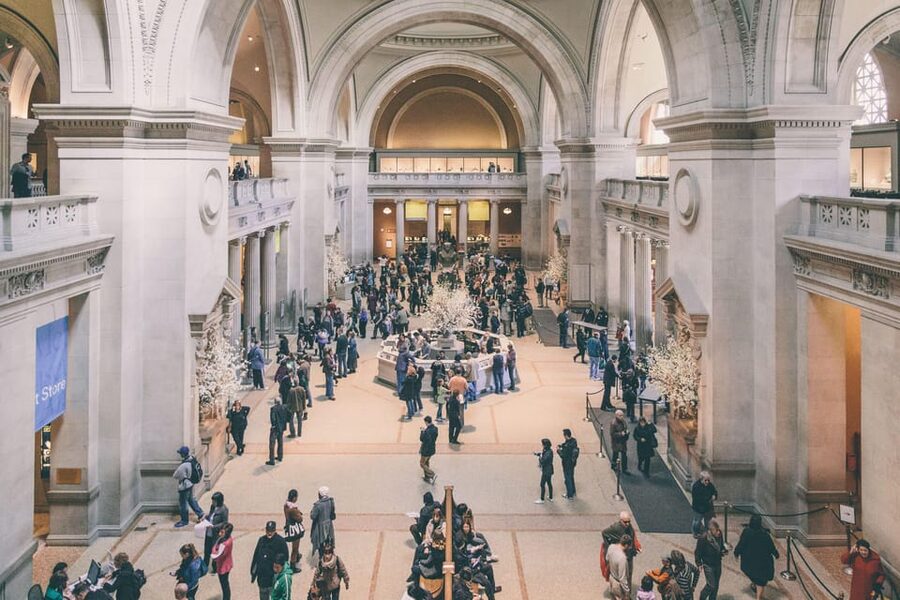
Your meeting point is inside the Met, after the security check. Once you enter the Great Hall, look to the right for the pharaoh statue. Your guide will be waiting there with your ticket.
The meeting instructions are clear, but the timing matters. Arrive 30 minutes early. You must pass through security, and the tour begins promptly. If you arrive late, you may not receive your entrance ticket or be able to catch up with the group.
This is worth treating as part of the planning, not as a minor footnote. The Met is in New York, where subway delays, crowds, and a slow walk from the entrance can quickly eat into your buffer. Having the guide already inside also means you should not expect to meet the group outside and enter together.
Once you find the pharaoh statue, the process is straightforward. The guide handles the included entry ticket, and the group begins inside the museum rather than wasting time in an outside ticket queue.
What the two-hour route feels like
The route is a brisk walk through selected parts of the museum. You may see ancient Egyptian, Greek, and Roman objects, then move into European masterpieces and other major collections. The exact works can vary, so you should not book this expecting a fixed checklist.
That flexibility is useful. A guide can replace a work that is temporarily unavailable, keeping the focus on the museum’s most important ideas rather than forcing the group to stand in front of an empty wall.
The pace is active. One guide reportedly covered a broad selection in a logical order, while another made two hours feel far shorter by linking each stop into a larger story. You will likely stop for an explanation, move to another room, and repeat the process. This is not the right format for sitting with one painting for half an hour.
You can ask questions along the way. Guides have handled everything from broad questions about art history to specific details about technique and symbolism. They also try to keep the group together without blocking rooms or competing with other tours for space.
Ancient Egypt, Greece, and Rome
The ancient collections give the tour a strong opening because the objects often tell clear stories through symbols, materials, and daily use. Egyptian art can seem formal at first glance, but a guide can point out how the figures, poses, and inscriptions reflect beliefs about power, death, and the afterlife.
One frequently appreciated stop is the hippopotamus figure. It may look simple, but it offers a useful way to see how a small object can carry religious meaning, artistic style, and details about the world that produced it. A lively guide can make this kind of piece memorable without turning the stop into a lecture.
Greek and Roman art then adds another layer. You may look at sculpture, painted objects, or architectural fragments and consider how later European artists borrowed from the classical world. The value here is not just seeing old things. It is learning to spot ideas that keep reappearing in Western art: ideal bodies, heroic poses, mythological stories, and the relationship between art and public life.
This part of the tour can move quickly, especially if the guide is trying to reach later galleries. If ancient art is your main interest, make a note of the rooms you want to revisit after the two-hour walk.
More New York City museums and collections:
- NYC: Museum of Modern Art (MoMA) Entry Ticket
★ 4.6 · 12,540 reviews - 9/11 Memorial, Ground Zero Tour with Optional 9/11 Museum Ticket
★ 5.0 · 6,381 reviews - 9/11 Memorial Museum Admission Ticket
★ 4.5 · 6,376 reviews - All-Access 9/11: Ground Zero Tour, Memorial and Museum, One World Observatory
★ 5.0 · 4,886 reviews
European paintings and the stories behind them
The European paintings are often the emotional high point. This is where guides can show how an artist’s choices change the way you see a familiar work.
Caravaggio is a good example. His paintings are not simply famous because of their dramatic light. The contrast between darkness and illumination directs your attention, shapes the mood, and makes the scene feel immediate. A guide who explains those choices can make the work look different when you return to it alone.
Van Gogh also benefits from close looking. One guide used the artist to show that brushwork is not random decoration. The direction, thickness, and movement of the paint can affect how a landscape, face, or object feels. You may already know the painting, but a few well-chosen observations can give you a fresh way to examine it.
Monet and other major European painters may also appear near the end of the route. One practical advantage is that the guide can leave you in the area where you can continue looking at these works on your own. If you have favorites, mention them early, but understand that the guide must balance individual requests with the planned route.
The best part of this section is the connection between facts and feeling. Instead of hearing only who painted a work and when, you learn how color, light, scale, and subject affect your response.
A tour that works for art beginners
You do not need an art background for this experience. In fact, first-time visitors may gain the most because the guide helps you understand where to look and what questions to ask.
Several guides are praised for explaining difficult ideas without making the group feel tested. The strongest approach is conversational: look at the work, notice something concrete, then connect that detail to the larger story. That method is more useful than memorizing a list of artists.
The guides also bring different personalities. Jett is repeatedly described as funny, warm, and gifted at storytelling. Alex is praised for enthusiasm, humor, and an efficient route. Erika is noted for making the walk feel lively and personal, while Nicola is praised for linking the rooms into one continuous narrative.
That does mean your experience depends partly on the individual guide assigned that day. The available information identifies several strong guides, but it does not promise a particular person. You should book for the format and the museum access, not for a guaranteed guide name.
Group size, pace, and comfort
Groups have commonly been around eight to ten people, which is small enough to hear the guide and ask questions without the feel of a large procession. A compact group also helps in crowded rooms, where a bigger cluster can become awkward.
You will be on your feet and moving between galleries for two hours. One past participant described the pace as fast, with little time to stop, but also found it worth the effort. That is the fair trade here: you see more of the museum, but you sacrifice long pauses.
The tour is wheelchair accessible. Still, the Met is a large building, and the exact route can change. If you need a particular pace or access arrangement, it is sensible to raise that when booking rather than assume every gallery stop will work in the same way.
There is no stated break in the route. Guides may respond to the group’s needs, but you should plan for a continuous museum walk. Wear comfortable shoes and keep your pre-tour meal or coffee simple so you are ready to start on time.
The Cantor Roof Garden in warm months
From roughly mid-April through October, the Cantor Roof Garden is typically included. This adds a change of pace after the interior galleries, with the city providing a striking setting for contemporary art and open-air viewing.
The roof is not guaranteed for every season or every visit. In winter and early spring, it is not part of the tour. If the roof is important to you, check the date and current opening information before booking.
Even when the roof is available, it should be seen as an extra, not the main reason to choose this experience. The real value lies in the indoor collections and the guide’s explanations. Seasonal planning simply helps you set the right expectations.
Is $65 a fair price?
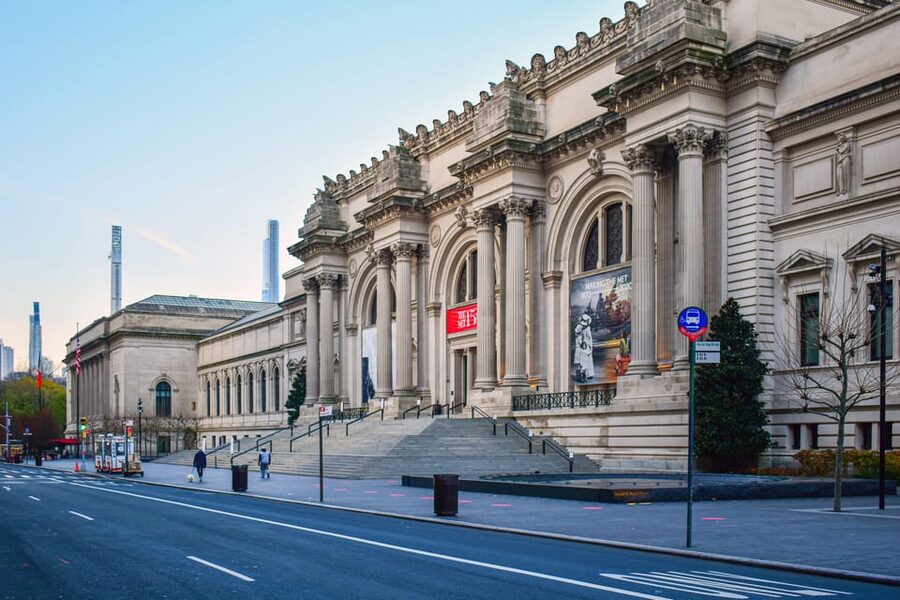
At $65 per person, the tour sits above a basic museum admission but includes the Met entry ticket and an English-speaking guide. The value depends on how much help you want making sense of a very large collection.
If you already know the Met well, prefer to wander alone, or plan to spend an entire day studying a narrow group of works, you may get more from a self-guided visit. You would have greater freedom and could set your own pace.
For a first visit, the price is easier to justify. You receive a route, explanations, and a way to avoid spending your limited New York time wandering without a plan. The included ticket also removes one separate task from your arrival.
I consider it good value for visitors who have only a few hours or feel unsure about art museums. It is less compelling if you mainly want entry and quiet time alone. The tour gives you a strong beginning, but you should allow extra time afterward if you want to see the museum properly.
Who should book this Met tour?
This tour suits first-time Met visitors, couples, families with older children, and anyone who wants a clear introduction before exploring alone. It is also a good choice if your New York schedule is tight and you want a focused museum visit rather than an all-day commitment.
Art enthusiasts can enjoy it too, especially if they want fresh context for familiar artists or a guide who can answer questions. The two-hour limit may feel short to serious museum fans, so treat the tour as a starting point and stay afterward.
You may want to skip it if you dislike group pacing, need long periods of quiet viewing, or already have a detailed personal route through the Met. The guide cannot guarantee every favorite room, and the featured works may change.
Cancellation is free up to 24 hours before the tour, and you can reserve now and pay later. Those terms help if your New York plans are still shifting.
My verdict: book it for direction, not total coverage
I would book this tour if you are visiting the Met for the first time and want the museum to feel manageable from the start. The strongest feature is not simply seeing famous paintings. It is learning how to look at them, from Caravaggio’s use of light to Van Gogh’s brushwork and the symbols in ancient objects.
The main limitation is the clock. Two hours gives you a lively introduction, not a complete museum visit. Arrive early, accept the steady pace, and plan to continue on your own afterward. Done that way, $65 buys both entry and a useful framework for one of New York’s most demanding and rewarding museums.
FAQ
How long does the Metropolitan Museum of Art highlights tour last?
The tour lasts two hours.
What is included in the price?
The price includes the Metropolitan Museum of Art entry ticket and an English-speaking tour guide.
Where do I meet the guide?
Meet inside the Metropolitan Museum of Art after the security check. The guide waits near the pharaoh statue to the right after you enter the Great Hall, holding your ticket.
How early should I arrive?
Arrive 30 minutes before the scheduled start. You must pass through security, and the tour begins promptly.
What happens if I arrive late?
You may not receive your entrance ticket or be able to catch up with the group if you arrive late.
Is the tour offered in languages other than English?
The tour is offered in English.
Is the tour wheelchair accessible?
Yes, the activity is wheelchair accessible.
Will the tour include every artwork mentioned in the description?
The route focuses on major highlights, but the exact works can vary. If a usual artwork is unavailable, the guide substitutes another piece.
Is the Cantor Roof Garden included?
The Cantor Roof Garden is typically included from mid-April through October. It is not included during winter and early spring.
Can I cancel for a refund?
Yes. You can cancel up to 24 hours in advance for a full refund. You can also reserve now and pay later.
Recently reviewed around New York City
- Dyker Heights Christmas Lights Guided Tour★ 4.5 · 920 reviews
- New York City Dinner Cruise with Live Music★ 4.0 · 377 reviews
- New York City Holiday Lights Tour★ 4.5 · 664 reviews
- NYC in a Day Tour: Statue of Liberty, Times Square and More★ 5.0 · 366 reviews
- Broadway and Times Square Insider Tour with Theater Professional★ 5.0 · 651 reviews
- NYC Central Park Bicycle Rentals★ 4.5 · 368 reviews
- Central Park Bike Rental New York City★ 4.0 · 560 reviews
- Manhattan Sky Tour: New York Helicopter Flight★ 4.5 · 1,458 reviews
Museums, compared.


Empire State Building Tickets – Observatory & Museum
Read our review →


9/11 Memorial, Ground Zero Tour with Optional 9/11 Museum Ticket
Read our review →

All-Access 9/11: Ground Zero Tour, Memorial and Museum, One World Observatory
Read our review →
Browse the lists this tour appears in