
Reviewed · WALKING TOURS
SoHo, Little Italy, and Chinatown 2-Hour Guided Walk
SoHo’s polished boutiques and cast-iron facades sit only a few blocks from old mob hangouts, Italian bakeries, Chinatown alleys, and one of New York’s most famous crime corners. This $39 walking tour links three very different neighborhoods in two hours, giving you a fast, story-filled look at downtown Manhattan.
I like the clear neighborhood progression and the guides’ personal style. Angela, Steve, George, Felipe, and several others are repeatedly praised for mixing facts with humor, pop culture, and local stories. I also like that the walk ends in Chinatown’s Columbus Park, where you can keep exploring on your own.
The tradeoff is simple: two hours is enough for an introduction, not a thorough tour of each district. You will also walk on city sidewalks for the full outing, and the experience is not suitable for people with mobility impairments.
In This Review
- Key points to know before you book
- Why this downtown walk works
- Starting in SoHo’s cast-iron streets
- Little Italy beyond Mulberry Street
- Chinatown and the Bloody Angle
- What the guide adds to the streets
- Is $39 a fair price?
- Who should take this walk?
- Should you book it?
- FAQ
- How long is the SoHo, Little Italy, and Chinatown walk?
- Where does the tour begin?
- Where does the tour finish?
- What language is the tour conducted in?
- Is food included in the price?
- What landmarks are included?
- Is the walk suitable for people with mobility impairments?
- What should I bring?
- Can I cancel the booking?
Key points to know before you book
- SoHo’s cast-iron district: See the E.V. Haughwout Building, home to the first safety elevator, and streets now linked with fashion and celebrity culture.
- Three neighborhoods in one route: Spend about 40 minutes each in SoHo, Little Italy, and Chinatown.
- New York crime stories: Hear about the Manhattan Well Murder, John Gotti’s Ravenite Club, Joe Gallo’s mob hit, and Doyers Street’s Bloody Angle.
- Food guidance, not a food tour: Food costs are not included, but the route gives you time and ideas for Italian and Chinese specialties.
- Strong guide presence: Guides including Steve, Angela, George, Felipe, and Ari are known for clear storytelling, humor, and practical recommendations.
- Easy planning: You can cancel up to 24 hours ahead for a full refund and reserve now while paying later.
Why this downtown walk works
The best feature here is the compact route. SoHo, Little Italy, and Chinatown are close together, but they do not feel alike. In a short distance, you move from cast-iron commercial buildings to Italian-American landmarks and then into streets shaped by Chinese immigration and old gang rivalries.
That contrast gives the walk a useful structure. You are not simply checking off famous addresses. You are watching New York change from one block to the next, while the guide explains why those changes happened.
The tour is also built around stories rather than dates alone. You hear about immigrant struggles, crowded neighborhoods, organized crime, food traditions, celebrity addresses, and the way old buildings found new uses. A good guide can turn an ordinary doorway into a reason to stop, look up, and imagine the people who once lived or worked there.
The guide matters a great deal. The experience has featured guides such as Angela, Steve, George, Felipe, Alex, Ari, Peter, Jacob, and others. I would pay attention to the meeting instructions for your specific departure, but you can expect an English-speaking live guide who handles questions and keeps the walk moving. The strongest guide comments point to energy, humor, local knowledge, and the ability to connect with both adults and children.
More Walking Tours in New York City
- SoHo, Little Italy, and Chinatown Walking Tour in New York
★ 5.0 · 3,153 reviews - Secrets of Grand Central Station Walking Tour New York City
★ 5.0 · 1,796 reviews - Greenwich Village Walking and Food Tasting Tour
★ 5.0 · 1,572 reviews
Starting in SoHo’s cast-iron streets
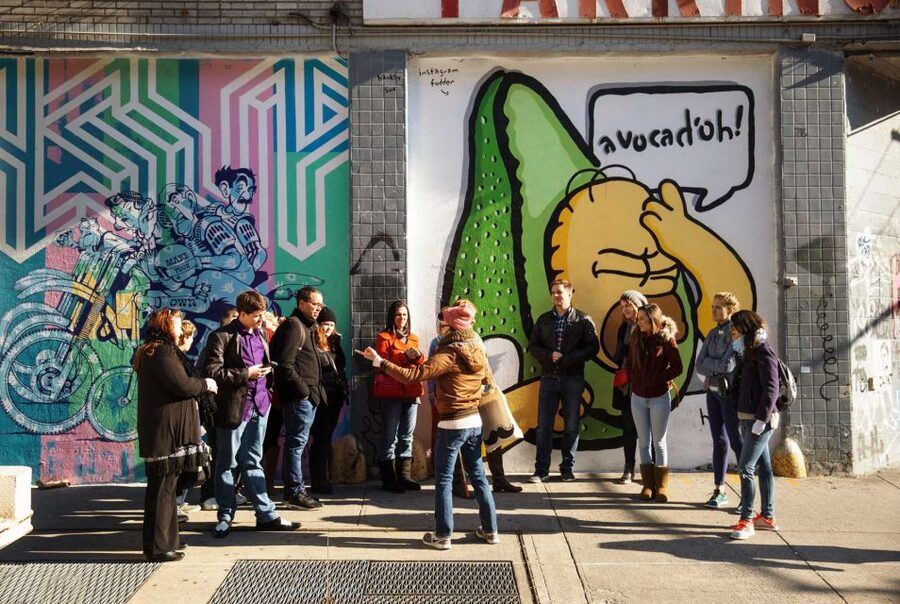
The walk begins at Spring Street Park, though the exact meeting point can vary with the option you book. From there, the SoHo section lasts about 40 minutes.
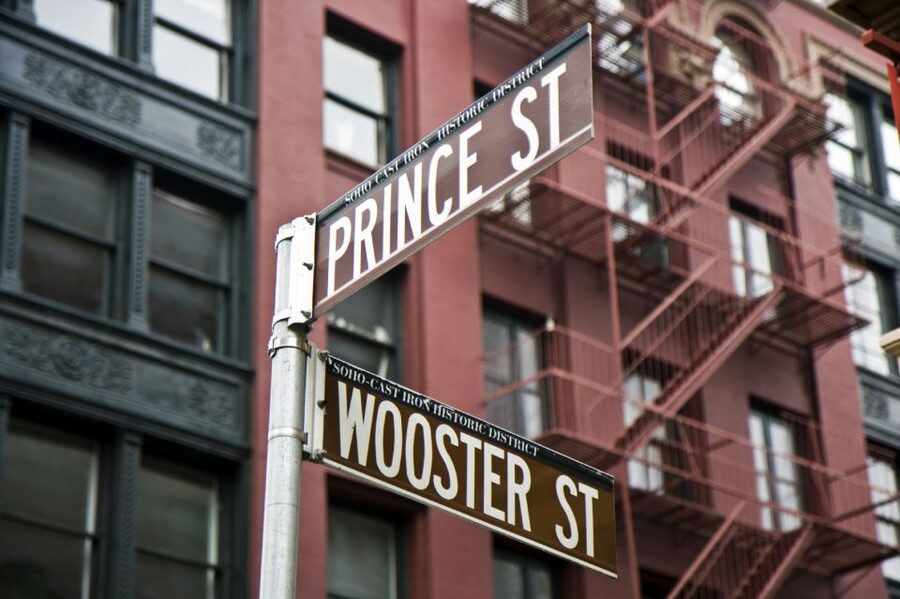
SoHo is often treated as a shopping district, but its real appeal is above eye level. The historic cast-iron buildings give the neighborhood its look, with decorative fronts that made commercial buildings feel more grand than their practical purpose required. Today, the same streets attract fashion shoppers, celebrities, and people scouting locations for photographs or film.
The guide points out Spring Street and the corner of Greene and Spring streets, the site of the Manhattan Well Murder. It is described as New York City’s first recorded murder case, giving the opening section an immediate dose of old New York mystery.
The E.V. Haughwout Building is another important stop. It was home to the first safety elevator, a small piece of technology with a large effect on city life. Elevators changed how buildings could be used, allowing upper floors to become more valuable rather than simply harder to reach.
You may also pass 421 Broome Street, connected with Heath Ledger’s death in Mary-Kate Olsen’s apartment. This is one of the tour’s more modern and unsettling references, and it shows how the walk moves between architectural history, crime, popular culture, and recent headlines.
SoHo is the most visually appealing part of the route, but it can also be the least intimate. The shopping streets are busy, and the area’s current image can overshadow its older working past. I find the guide’s explanation especially useful here because it gives the buildings a purpose beyond being attractive backdrops.
Keep your eyes up, and wear shoes that can handle uneven city pavement. The walk is described as comfortable rather than strenuous, but it is still a continuous urban walk with traffic, crowds, and limited chances to sit.
Little Italy beyond Mulberry Street
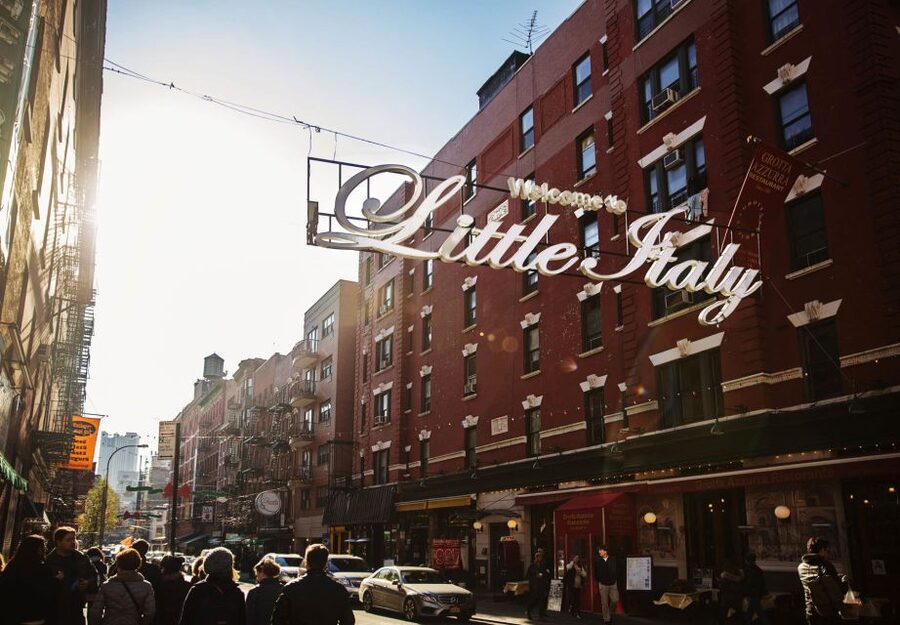
After SoHo, the route continues into Little Italy for another 40 minutes. Mulberry Street is the center of this section, and the guide uses the neighborhood to explain immigrant life, family businesses, religious traditions, and organized crime.
Little Italy is smaller than its name may suggest. Much of the historic Italian district has changed, and restaurants now share the streets with businesses serving a wider downtown crowd. That is precisely why a guided walk helps. Without context, you might see restaurant signs and old church buildings without understanding how the neighborhood formed or why its boundaries shifted.
The route includes the old police station, a 1909 Beaux-Arts building that is now a residence. It is a good example of New York’s habit of giving old structures new lives. The building’s former public role and current residential use also make a useful point about how downtown property has changed.
The Ravenite Club brings the story to John Gotti and the Mafia’s presence in the neighborhood. The tour does not present Little Italy as a movie set alone. It connects crime stories with the streets and buildings where power, policing, and community life overlapped.
Old Saint Patrick’s is another significant stop. The church adds a religious and community layer to the immigrant story, showing how institutions helped people maintain identity and support one another in a new country.
At Alleva Dairy, you hear about a business where cheese was made for a hundred years. The stop works well because food is one of the simplest ways to understand immigration. Recipes, ingredients, shops, and family trades can survive long after a neighborhood’s population begins to change.
The Italian American Museum is tied to the site of the Triangle Shirtwaist Factory fire. That connection broadens the story beyond Little Italy itself, bringing in labor, immigrant workers, and the dangerous conditions that shaped reform in New York. The fire is not just a tragic footnote. It helps explain why workplace safety became such an important public issue.
Umberto’s is associated with the mob hit on Joe Gallo. This is another crime story, but the value comes from hearing how the event fits into the neighborhood’s wider past rather than treating it as a sensational stop.
The National Shrine Church of San Gennaro adds a more unusual detail: the story of the liquefaction of the saint’s blood. You do not need to share the belief to find the tradition interesting. It shows how religious customs travel with communities and become part of a neighborhood’s public identity.
Food costs are not part of the $39 price. Still, Little Italy is the logical place to pause for a snack or meal if the schedule allows. One detailed description of the route includes a break to eat and explore on your own before meeting again for Chinatown. Treat that as a possible feature rather than a guarantee of included food or a set restaurant stop.
Chinatown and the Bloody Angle
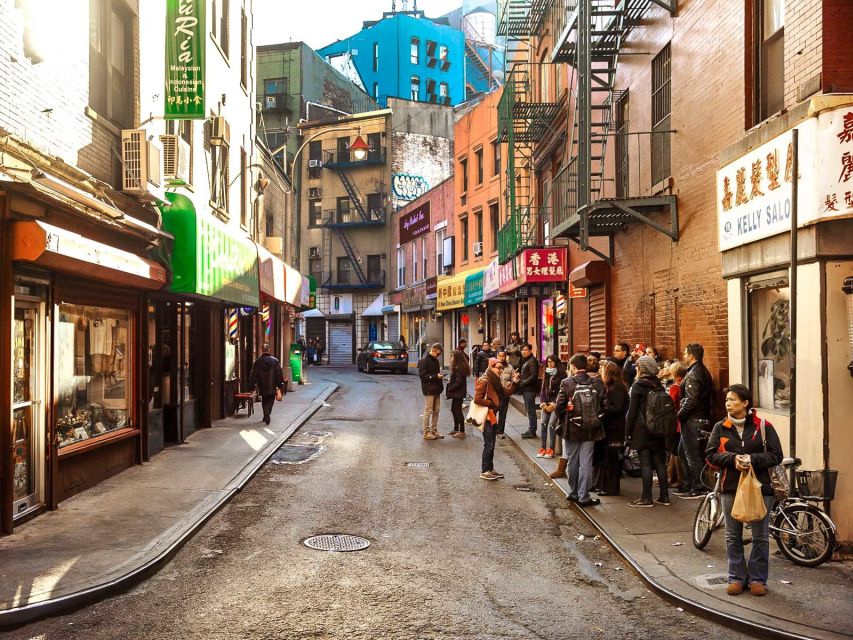
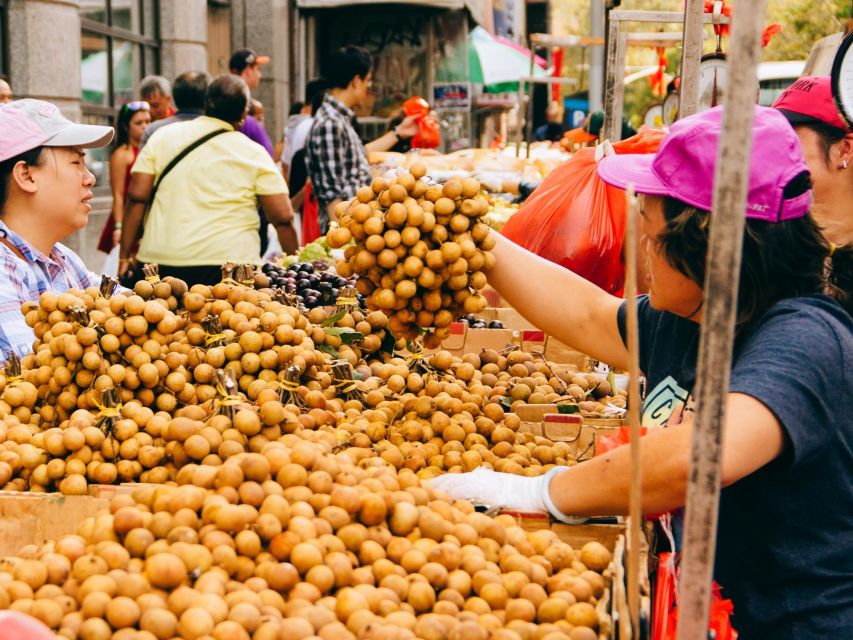
The final 40 minutes take you into Chinatown and end at Columbus Park. Chinatown has its own immigration story, business culture, religious traditions, and crime history, and the guide uses streets and landmarks to make those themes concrete.
The old opium den is one of the more atmospheric references on the route. It points to a period when outsiders often viewed Chinatown through sensational stories and stereotypes. A good explanation should help you separate fact from the lurid image that newspapers and popular culture often created.
Doyers Street, known as the Bloody Angle, brings the focus to Chinese gang violence. The street’s bend made it difficult to see around the corner and gave it a reputation for ambushes and fighting. Hearing that story while standing in the actual space is more memorable than reading the name in a guidebook.
The tour finishes at Columbus Park, associated with the gangs depicted in Gangs of New York. This ending gives you a clear place to continue independently. It also makes sense geographically, since you are not returned to the starting point. Plan your next stop from Columbus Park rather than assuming you will finish back in SoHo.
Chinatown is likely to feel the most crowded and active section of the walk. Sidewalk space can be tight, and you need to stay close enough to hear the guide while watching traffic and other pedestrians. Previous guide comments often highlight safety awareness, especially when crossing streets, but you should still remain alert.
I like the Chinatown finish because it leaves you with options. You can continue exploring the neighborhood, look for food, or use the subway and other city connections from downtown. The walk gives you an orientation without trying to claim that two hours can explain every corner.
More New York City walks with a guide:
- Artistic, Alternative Greenwich Village Walking Tour
★ 5.0 · 971 reviews - True Crime NYC: Mafia Walk w/Ret. NYPD Detective and Local Food
★ 5.0 · 848 reviews - Central Park Guided Walking Tour
★ 5.0 · 774 reviews - NYC Lower East Side Walking and Food Tour
★ 5.0 · 646 reviews
What the guide adds to the streets
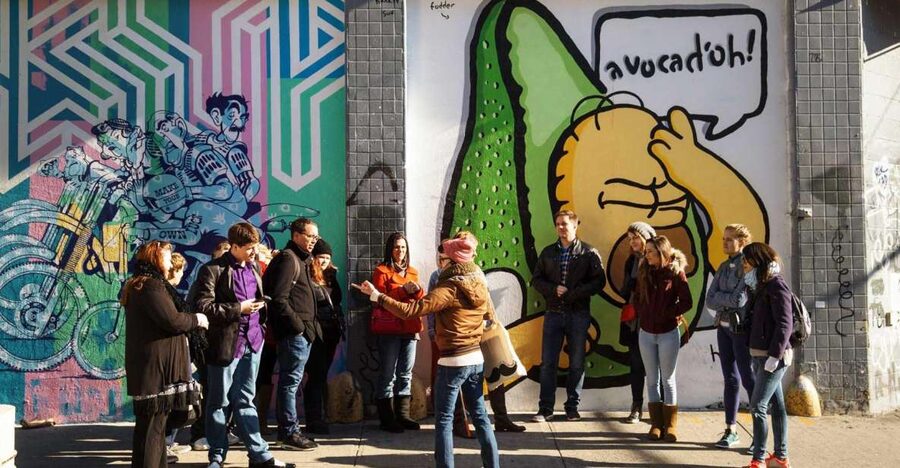
This tour succeeds or fails on delivery. The buildings and streets are already there, but the guide turns them into a connected story.
Steve is especially associated with local perspective and personal memories. He has been described as someone who has lived in the area for decades and can link neighborhood history with his own experiences. That can make the walk feel less like a standard script.
Angela is repeatedly noted for humor, energy, and a strong command of the subject. She is also described as good at managing a group on a busy morning and offering ideas for food and things to do afterward.
George is praised for warmth, humor, and answering questions. Felipe is known for combining stories about immigration, true crime, expensive apartments, pizza, and cannoli with an easy pace. Ari is often described as funny and informative, while Alex receives praise for clear speaking and useful recommendations.
Those details matter if you are deciding between a self-guided walk and this tour. You can find the addresses yourself, but you may not notice why the Manhattan Well Murder, the Haughwout elevator, Alleva Dairy, and Doyers Street belong in the same story. The guide supplies that connection.
The tour also appears adaptable to different groups. One private family group with three children found the guide able to engage everyone, and several people describe the pace as manageable. That does not remove the need for comfortable shoes, but it suggests you do not need to be an experienced hiker.
Is $39 a fair price?
At $39 per person, this is a reasonable price for a live, two-hour guided walk in Manhattan, especially if you want an overview rather than a specialist tour of one neighborhood.
The value comes from the range. You get architecture in SoHo, immigrant and labor stories in Little Italy, and Chinatown’s crime and community history in one booking. You also receive food suggestions and a better sense of where to return later.
The price does not include food, so budget separately if you want cheese, pizza, cannoli, or Chinese dishes along the way. That is not a flaw, since fixed food inclusions can limit your choices, but it is worth knowing before you arrive.
I would consider this good value for a first or second day in New York. It helps you get your bearings, then gives you ideas for the rest of your visit. If you already know these neighborhoods well, the general overview may feel familiar unless your guide adds fresh local stories.
Free cancellation up to 24 hours before the start gives you some protection, and the reserve-now, pay-later option helps keep plans flexible. Check the exact start time and meeting point for your selected option, since those details can vary.
Who should take this walk?
I would recommend it to first-time New York visitors who want more than photographs of famous streets. It is also a good fit for people who enjoy city history when it comes with crime stories, food references, and recognizable pop culture.
Families can benefit from the variety. A discussion of elevators may interest one person, while the Mafia, celebrity, and gang stories catch someone else’s attention. The guide’s ability to answer questions and adjust the presentation is important here.
Food-focused visitors should see this as a neighborhood introduction, not a dedicated tasting tour. You may get recommendations and a chance to stop for something on your own, but food is not included.
I would skip it if you need a fully seated experience or have mobility limitations. The route covers three districts on foot, and the end point is Columbus Park rather than the starting location. Also reconsider it if you prefer slow photography time. Forty minutes per district keeps the pace moving.
Should you book it?
Book this walk if you want a lively introduction to downtown Manhattan and enjoy stories about the people, scandals, businesses, and buildings behind the famous streets. The mix of SoHo architecture, Little Italy food and immigrant history, and Chinatown crime lore gives you a lot for two hours.
I would book it early in your New York stay, then return to the neighborhood that interests you most. Choose it for the guide-led storytelling, not for a checklist of interiors or included tastings. At $39, it earns its price when the guide is as engaging as Steve, Angela, George, Felipe, or Ari have been described.
FAQ
How long is the SoHo, Little Italy, and Chinatown walk?
The tour lasts two hours. The planned sections are about 40 minutes each in SoHo, Little Italy, and Chinatown.
Where does the tour begin?
The listed starting location is Spring Street Park in SoHo. The exact meeting point may vary depending on the option you book, so check your booking details.
Where does the tour finish?
The walk ends at Columbus Park in Chinatown. It does not return you to the starting point.
What language is the tour conducted in?
The tour is conducted in English by a live, English-speaking guide.
Is food included in the price?
No. Food costs are not included. The walk includes food-related sights and recommendations, and you may have an opportunity to buy food independently.
What landmarks are included?
Possible stops include Spring Street, the Manhattan Well Murder site, the Cast Iron district, the E.V. Haughwout Building, the old police station, the Ravenite Club, Old Saint Patrick’s, Mulberry Street, Alleva Dairy, the Italian American Museum, Umberto’s, the National Shrine Church of San Gennaro, an old opium den, Doyers Street, and Columbus Park.
Is the walk suitable for people with mobility impairments?
No. The experience is listed as not suitable for people with mobility impairments.
What should I bring?
Bring comfortable shoes and clothing suited to the weather. You should also be ready to walk on city sidewalks for the full two-hour experience.
Can I cancel the booking?
Yes. You can cancel up to 24 hours in advance for a full refund. The reserve-now, pay-later option allows you to hold your place without paying immediately.
More 2-Hour Experiences in New York City
- NYC: Circle Line 2h Harbor Lights Cruise Skip-The-Box-Office
★ 4.6 · 8,222 reviews - New York City: Gangsters and Ghosts 2-Hour Walking Tour
★ 4.7 · 615 reviews - 2-Hour Exotic Car Driving Experience in Las Vegas
★ 5.0 · 2,870 reviews - Rock Springs 2-Hour Glass Bottom Guided Kayak Eco Tour
★ 5.0 · 2,459 reviews
Recently reviewed around New York City
- Dyker Heights Christmas Lights Guided Tour★ 4.5 · 920 reviews
- New York City Dinner Cruise with Live Music★ 4.0 · 377 reviews
- New York City Holiday Lights Tour★ 4.5 · 664 reviews
- NYC in a Day Tour: Statue of Liberty, Times Square and More★ 5.0 · 366 reviews
- Broadway and Times Square Insider Tour with Theater Professional★ 5.0 · 651 reviews
- NYC Central Park Bicycle Rentals★ 4.5 · 368 reviews
- Central Park Bike Rental New York City★ 4.0 · 560 reviews
- Manhattan Sky Tour: New York Helicopter Flight★ 4.5 · 1,458 reviews
Walking Tours, compared.
History and Hauntings of Salem Guided Walking Tour
Read our review →
New Orleans Premier Ghost, Voodoo and Vampire Walking Tour
Read our review →
Freedom Trail History Small Group Walking Tour
Read our review →
Historic Charleston Guided Sightseeing Walking Tour
Read our review →
New Orleans Food Walking Tour of the French Quarter with Small-Group Option
Read our review →
St. Louis Cemetery No. 1 Official Walking Tour
Read our review →Browse the lists this tour appears in