
Reviewed · ANTELOPE CANYON TOURS
Lower Antelope Canyon Hiking Tour
Lower Antelope Canyon is a narrow, twisting world of red, orange, pink, and gold sandstone, shaped by wind, rain, and time. You walk through it with a Navajo guide, not simply past it, and that adds meaning to every curved wall and unusual rock shape.
I like the tour’s excellent photo help and its mix of geology, Navajo culture, and botany. Guides such as Eli, Archie, Aaron Yazzie, Taylor, and Konnnor have helped visitors find strong camera angles, while some guides add flute music or a short demonstration of how water and sand shape the canyon.
The main caution is physical: this is an all-walking route with a staircase, five flights of steps into the canyon, and eight ladders. The spaces can be narrow, the pace can feel brisk, and the no-bag policy means you need to arrive ready to carry only what is allowed.
In This Review
- Key points to know before you book
- Why Lower Antelope Canyon feels different
- From the check-in booth to the canyon entrance
- Five flights down into Lower Antelope Canyon
- Eight ladders through the sandstone passage
- The one-mile loop and its changing light
- Navajo guides add more than directions
- Photo tips that can improve your visit
- What $94 means in practical value
- Group size, timing, and the feel of the visit
- Who should book this canyon walk
- Booking and cancellation details
- Should you book Lower Antelope Canyon?
- FAQ
- How long does the Lower Antelope Canyon tour last?
- How far do you walk?
- How many stairs are involved?
- How many ladders are in Lower Antelope Canyon?
- Is the tour physically difficult?
- What should I wear?
- Can I bring a bag?
- Where does the tour meet?
- How many people can join the tour?
- What happens if bad weather cancels the tour?
Key points to know before you book
- The route covers about 1.1 miles: Expect roughly 1,800 meters round trip, including the walk from the check-in area and the canyon passage.
- You descend before you climb: Five flights of stairs lead down about 35 meters, followed by eight ladders with safety handrails.
- Navajo guides shape the experience: Your guide may explain geology, plants, culture, rock shapes, and useful photo angles.
- The canyon is spectacular but busy: The official maximum is 50 people, though some groups are much smaller, especially in quieter periods.
- Plan for about an hour: The complete experience is listed at roughly one hour, with some descriptions allowing 1 to 1.5 hours.
- The $94 price buys access and guidance: You are paying for a permitted, guided canyon visit, not just a walk through a scenic passage.
Why Lower Antelope Canyon feels different
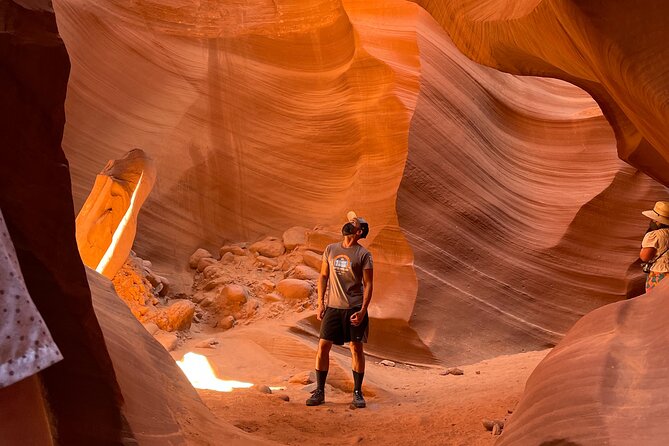
Lower Antelope Canyon is not a broad canyon overlook. It is a slot canyon, where the drama comes from being enclosed by sandstone walls that twist overhead. In some places, the rock feels smooth and flowing. In others, sharp shelves and ledges create shadows that change as the sun moves.
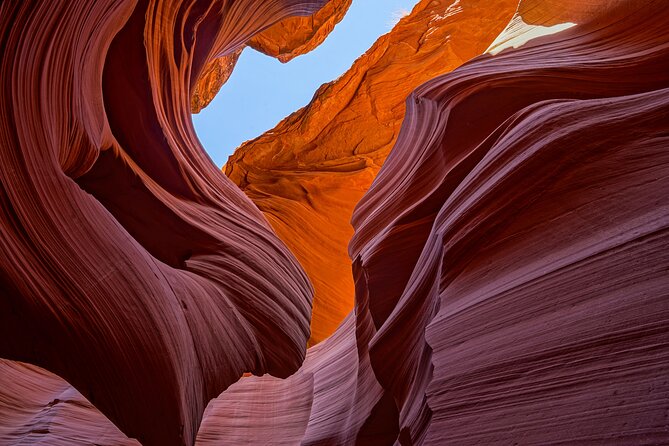
The colors are not painted onto the stone. They come from the sandstone itself, shaped by rain, wind, and erosion. Light catches the curves at different angles, so the canyon can look copper-colored in one spot and pale cream or deep orange a few steps later.
I find this kind of scenery best appreciated slowly, but the route is still a working tour path. You will need to keep moving with the group, especially when other parties are nearby. Your guide helps by pointing out details you might otherwise miss, including shapes that resemble an eagle, Mickey Mouse, or ET.
The name Lower Antelope Canyon also tells you something about the experience. You do not simply stroll in at ground level. You make a descent, move through the narrow canyon, and then work your way back up and out. That physical change gives the visit a stronger sense of progress than a flat viewpoint walk.
More Page & Antelope Canyon trips worth a second look
- Page: Lower Antelope Canyon Ticket and Guided Hiking Tour
★ 4.6 · 519 reviews - Antelope Canyon Lake Powell: Guided Kayaking & Hike Tour
★ 4.9 · 369 reviews - Multnomah Falls and Columbia River Gorge Half-Day Hiking Tour
★ 5.0 · 2,108 reviews
From the check-in booth to the canyon entrance
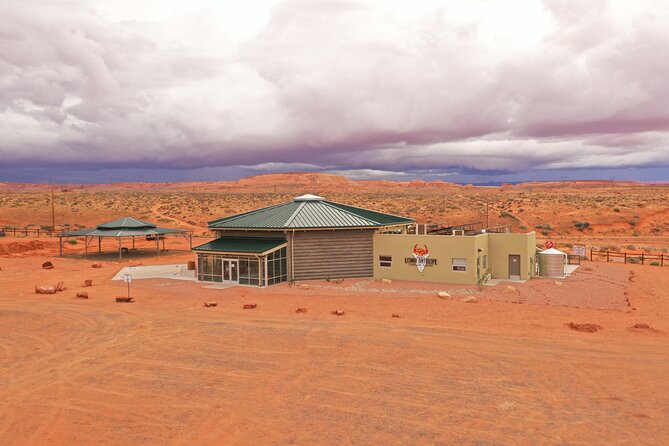
The meeting point is Dixie’s Lower Antelope Canyon Tours on Route 222 in Page, Arizona. After check-in, you walk for about 10 minutes toward the canyon entrance.
This approach is made of Navajo sandstone and can be rocky and sandy. I would wear shoes with a firm sole and good grip. Comfortable footwear is not a minor suggestion here, since loose sand, uneven ground, stairs, and ladders all form part of the route.
There is also a no-bag policy. Check the operator’s current rules before setting out, and do not arrive expecting to carry a large daypack through the canyon. You will want your hands free for the ladders and your phone ready for photos.
The waiting area can matter in colder weather. One account describes arriving 45 minutes early and spending much of that time outside before the guide appeared shortly before the appointment. Arriving on time is sensible, but you may not need to turn up far earlier unless the operator specifically tells you to do so.
Five flights down into Lower Antelope Canyon
The canyon route begins with a descent of five flights of stairs, dropping about 35 meters into the largest cavern included on the tour. The stairs are the point where you will most clearly notice the difference between a scenic walk and a moderate physical activity.
The descent is manageable for people with a reasonable level of fitness, but it is not suitable for anyone who cannot comfortably handle stairs and ladders. Take steady steps and use the rails. You do not need to rush, and your guide can help keep the group moving at a safe pace.
At the bottom, the canyon changes character quickly. The open approach gives way to tall walls and tighter passageways. The first large cavern helps you understand the scale of the stone around you, while the route ahead leads into a series of narrower, more sculpted sections.
This is also where the guide’s role becomes valuable. A good guide can orient you, explain how water carved the slot, and help you see patterns in the rock instead of simply walking through a red corridor.
Eight ladders through the sandstone passage
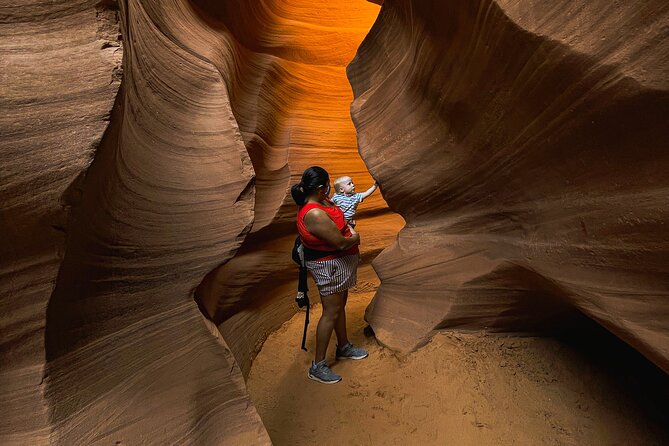
After the initial descent, the route includes eight ladders fitted with safety handrails. These ladders connect the canyon’s different levels and give Lower Antelope Canyon much of its adventurous feel.
You should expect narrow sections and tight turns. One recent account described some parts as narrow but easy to pass through, while another noted that the route moved more quickly than an Upper Antelope Canyon visit. Those two points fit together: the passage is not a technical climb, but you need to be comfortable moving through a confined space at the group’s pace.
The ladders are not there as decoration. They are an essential part of the route. Keep both hands available when needed, follow your guide’s instructions, and avoid carrying anything bulky. The handrails make the route more secure, but they do not remove the need for care.
If you have knee, balance, or mobility concerns, think seriously about this part before booking. The tour asks for a moderate physical fitness level, and the combination of stairs, ladders, uneven sandstone, and narrow passages is the reason.
A completely different way to spend a day nearby:
- Page: Lower Antelope Canyon Entry and Navajo Guided Tour
★ 4.7 · 7,801 reviews - Page: Antelope Canyon X Guided Tour
★ 4.6 · 4,034 reviews - Page: Lower Antelope Canyon Tour with Trained Navajo Guide
★ 4.7 · 2,552 reviews - Page: Upper Antelope Canyon Entry Ticket and Guided Tour
★ 4.5 · 2,406 reviews
The one-mile loop and its changing light
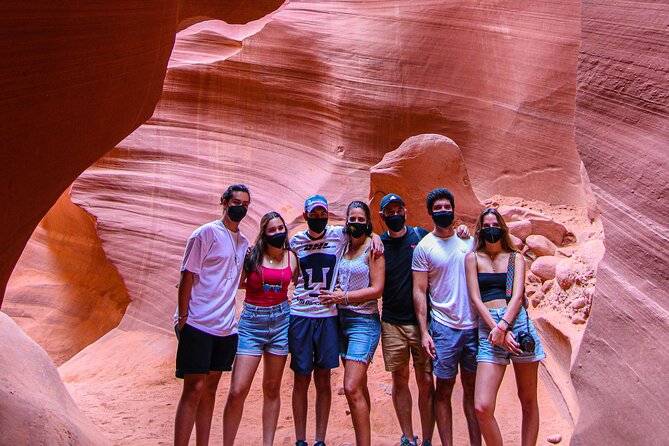
The full walking route covers about 1,800 meters, or 1.1 miles, round trip. The canyon itself is the focus, but the changing light gives the walk its rhythm.
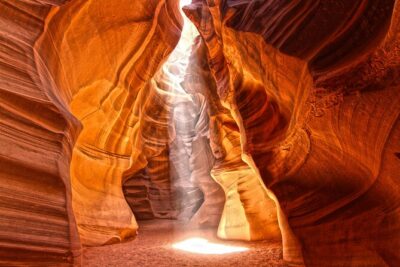
Sunlight filters into the slot from above, often catching the upper edges of the walls while leaving the lower sections in shade. The exact colors and light beams depend on the time of year, the time of day, and the weather. Do not expect your view to match every picture you have seen online.
That is not a flaw. It means the canyon does not look exactly the same on every visit. Some times offer stronger color, while others may show softer shadows and different patterns in the stone.
Allow time for photos, but keep your expectations realistic. You may have excellent angles for portraits and close views of the sandstone, yet you are still part of a guided group. Your guide may stop at specific points and help with poses, framing, and camera settings, but the tour is not a private photo session.
Navajo guides add more than directions
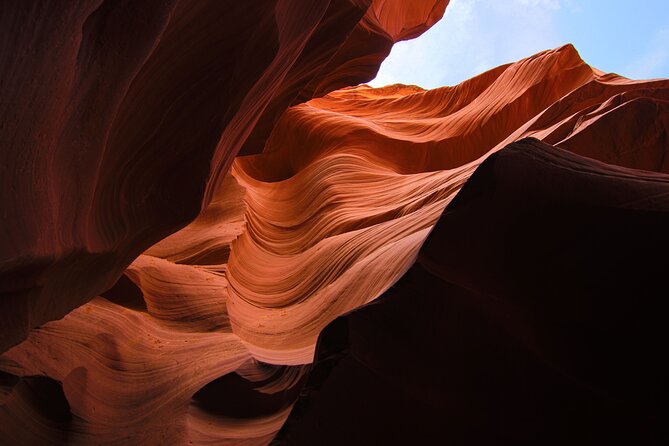
The best part of this tour is often the human element. You are not left to guess how the canyon formed or why certain shapes appear in the walls. The guide can connect the scenery to Navajo culture, geology, and botany.
Several guides have been singled out for different strengths. Eli has combined canyon facts and Navajo history with flute music. Archie has played a flute and even sung Happy Birthday in Navajo for a visitor. Aaron Yazzie has used sand and water to show how erosion works in real time, followed by music in the canyon.
Other guides praised for their photo help include Terran, Ian, Elijah, Taylor, Ray, Brad, and Kayson. That variety matters because the guide can shape the tone of your visit. Some focus on facts, some on humor, some on music, and some on helping you get the best pictures.
Do not assume every guide will provide exactly the same style. One account found the information less satisfying and the group management weak, while the overwhelming pattern is of friendly, patient, and well-informed guides. The tour’s quality can depend on who leads your group that day.
Photo tips that can improve your visit
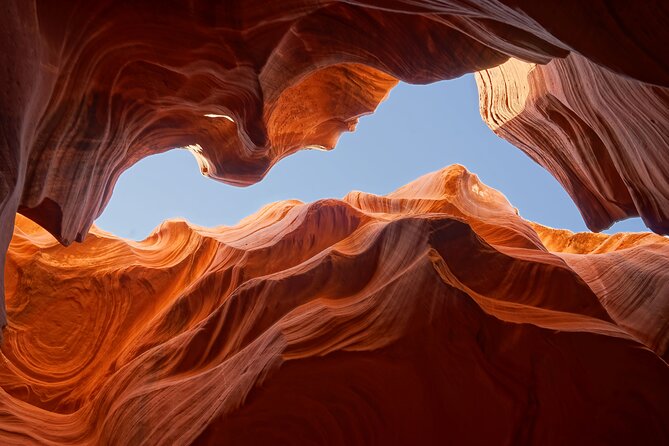
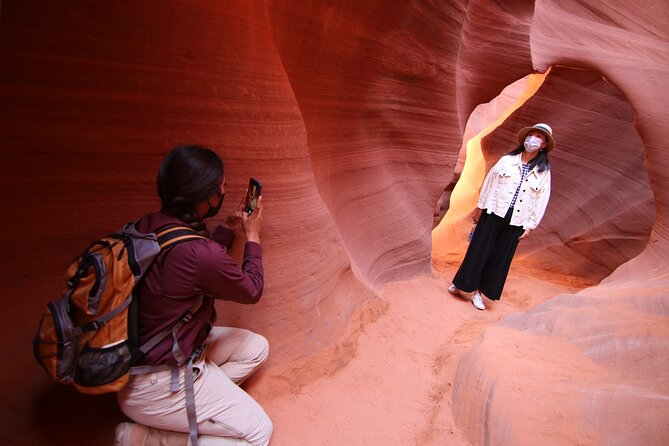
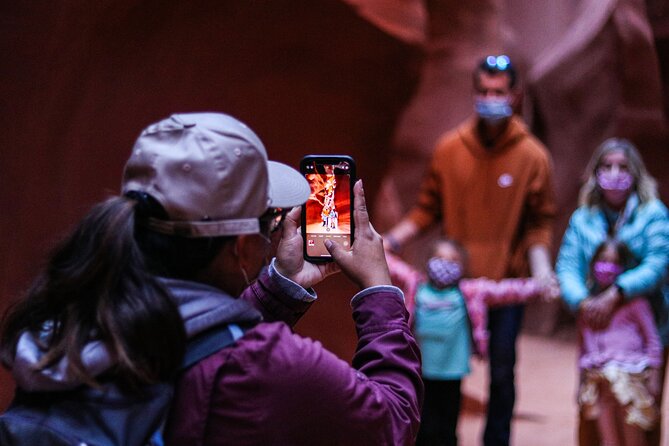
Your phone is enough to record the experience, but your guide may help you make better use of it. Guides have pointed out the strongest photo spots, suggested poses, and shown ways to frame the curves of the canyon.
The sandstone itself provides the background. Look for sweeping lines, dark openings, shelves, and shapes in the walls. A person in the frame can help show the scale of the passage, while a close shot can make the stone look almost abstract.
The light changes through the year, so avoid booking solely because a picture online shows a particular sunbeam. The canyon remains striking in different conditions, but the color balance may be warmer, cooler, brighter, or more muted than expected.
If you want photos of yourself, ask your guide politely when the group stops. Guides often know where to stand, and several have been praised for taking memorable pictures. Keep your phone secure and respect the pace of the group, especially in narrow areas.
What $94 means in practical value
The price is $94 per person, with admission included. That is a serious cost for an hour-long activity, but the value is not just the time spent walking.
Your fee covers access to a highly managed canyon experience, a Navajo guide, safety support on the route, and interpretation of the geology and culture. Independent wandering is not the product here. You are paying for a structured way to enter a place where stairs, ladders, narrow sections, and group movement need to be handled carefully.
The value looks better if you care about context and photography. A guide who explains erosion, points out rock shapes, plays flute music, or helps with camera angles can turn a short walk into a fuller experience.
It is also described as one of the less expensive major activities in the Page area by one family account, though you should compare current prices before booking. If your main goal is a long hike or solitude, one hour and a group setting may feel costly. If your goal is to see Lower Antelope Canyon safely and learn something while taking strong pictures, the price is easier to justify.
Group size, timing, and the feel of the visit
The stated maximum is 50 people. That sounds large for a narrow canyon, but actual groups can be smaller. Some recent visits involved only four people, while others described groups of around 15.
A smaller group makes it easier to hear the guide, ask questions, and pause for photos. A larger group may mean more waiting at ladders and tighter movement through the narrowest sections. The tour remains organized, but it is not a private outing.
The activity lasts about one hour according to the main timing, while the route description allows about 1 to 1.5 hours. Build a little flexibility into your Page plans rather than scheduling another fixed activity immediately afterward.
The experience ends back at the meeting point. It is near public transportation, though the provided information does not specify routes or schedules. The operator confirms your booking at the time of reservation.
Who should book this canyon walk
I would recommend this tour to you if you want a famous Page-area sight without committing to a long wilderness hike. It suits couples, families with older children, solo visitors, and first-time canyon explorers who are comfortable with stairs and ladders.
It is especially good for people who want help with photography. You may also enjoy it if you like learning how geology works and want cultural context from a Navajo guide rather than a purely visual attraction.
You should think twice if you dislike confined spaces, cannot manage repeated steps, or need to carry a bag through the route. The no-bag policy and ladder sections require a little planning.
The canyon is also very tourist-oriented. That is part of the bargain for a safe, organized visit to a popular natural attraction. You gain access and guidance, but you give up solitude and the freedom to stop wherever you like.
Booking and cancellation details
The tour requires good weather. If poor weather causes a cancellation, you can be offered another date or a full refund.
You can cancel for a full refund up to 24 hours before the experience starts. Cancellations or changes made less than 24 hours before the start time are not accepted for a refund, and the cut-off uses local time.
Because the activity is often booked around 25 days ahead, I would reserve early if your Page schedule is fixed. Still, check the meeting instructions and current bag rules before departure, since those small details affect how smoothly the morning or afternoon goes.
Should you book Lower Antelope Canyon?
Yes, if you want a visually remarkable canyon walk and can handle the stairs and ladders. The combination of sculpted sandstone, changing light, Navajo interpretation, and practical photo help makes this one of the strongest short activities around Page.
I would book it with realistic expectations: the route is busy, the time is limited, and the exact quality of the commentary depends on your guide. Ask about guides such as Eli, Archie, Aaron Yazzie, Taylor, or Konnnor if requests are possible, but do not count on a specific assignment.
For most people who are physically comfortable with the route, $94 is fair for the access, safety, and guidance. Bring sturdy shoes, arrive prepared for the no-bag rule, and let the sandstone do most of the talking.
FAQ
How long does the Lower Antelope Canyon tour last?
The tour is listed as approximately one hour. The route description allows about one to 1.5 hours, so you should leave some extra space in your schedule.
How far do you walk?
The complete route covers roughly 1,800 meters, or 1.1 miles, round trip. It includes the walk from the check-in booth to the canyon entrance and the canyon route itself.
How many stairs are involved?
You descend through five flights of stairs into the largest cavern of the tour. The total descent is about 35 meters.
How many ladders are in Lower Antelope Canyon?
The route includes eight ladders. Each ladder has safety handrails.
Is the tour physically difficult?
A moderate level of physical fitness is recommended. You need to manage uneven, rocky, and sandy ground, a staircase, five flights of steps, eight ladders, and narrow canyon sections.
What should I wear?
Comfortable shoes suitable for rocky and sandy ground are recommended. Shoes with a firm sole and good grip are a practical choice.
Can I bring a bag?
The tour has a no-bag policy. Check the operator’s current instructions before arriving so you know what you may carry.
Where does the tour meet?
The meeting point is Dixie’s Lower Antelope Canyon Tours on Route 222 in Page, Arizona. The activity ends back at the same meeting point.
How many people can join the tour?
The stated maximum is 50 people. Some tour groups may be smaller, but the published limit is 50.
What happens if bad weather cancels the tour?
If poor weather causes cancellation, you will be offered a different date or a full refund. You can also cancel up to 24 hours before the start time for a full refund.
Recently reviewed around Page & Antelope Canyon
- Page: Upper Antelope Canyon Walking Tour with Local Guide★ 4.5 · 586 reviews
- Page: Upper Antelope Canyon Sightseeing Tour w/ Entry Ticket★ 4.6 · 397 reviews
- Page/Lake Powell: Guided Kayak & Water Antelope Canyon Tour★ 4.9 · 477 reviews
- Page: Lower Antelope Canyon Prime-Time Guided Tour★ 4.6 · 668 reviews
- Page: Lower Antelope Canyon Ticket and Guided Hiking Tour★ 4.6 · 519 reviews
- Page: Lower Antelope Canyon Walking Tour with Navajo Guide★ 4.7 · 1,289 reviews
- Page: Upper Antelope Canyon Prime Time Entry & Navajo Guide.★ 4.6 · 619 reviews
- Grand Canyon West: West Rim Helicopter Tour with Landing★ 4.5 · 345 reviews
Antelope Canyon Tours, compared.

Lower Antelope Canyon Entry and Navajo Guided Tour
Read our review →
Lower Antelope Canyon and Horseshoe Bend Day Tour with Lunch
Read our review →

Lower Antelope Canyon Tour with Trained Navajo Guide
Read our review →
Upper Antelope Canyon Entry Ticket and Guided Tour
Read our review →
Antelope Canyon Horseshoe Bend Tour & Lake Powell
Read our review →
Browse the lists this tour appears in