
Reviewed · ANTELOPE CANYON TOURS
Page: Upper Antelope Canyon Prime Time Entry & Navajo Guide.
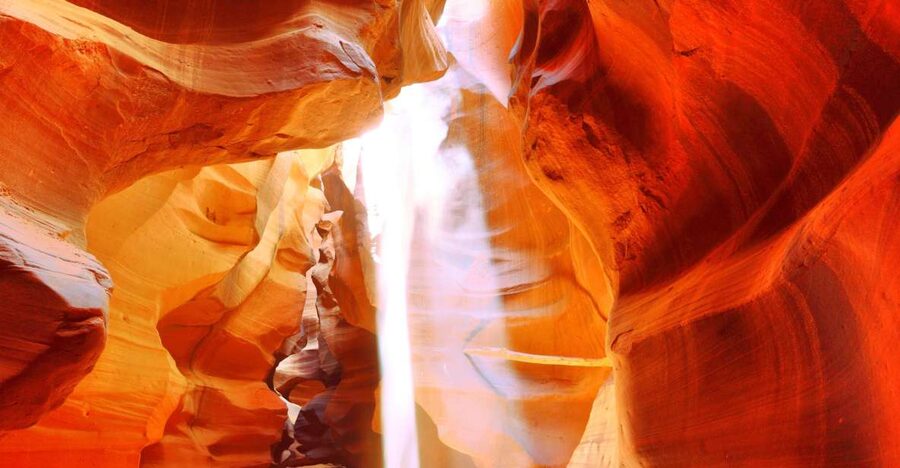
Upper Antelope Canyon is a short walk through towering sandstone walls that twist into flowing shapes, glowing orange, red, and gold when the light reaches the canyon floor. The tour pairs that famous scenery with a Navajo guide, so you hear about the land, local culture, and the forces that carved it.
I like two things here: the air-conditioned van keeps you out of the dust on the rough drive, and guides often help with camera settings, angles, and family photos. The main catch is strict timing. You must check in at least 45 minutes before departure, and the walking route is not suitable for wheelchairs, canes, or anyone with serious mobility limits.
In This Review
- Key points to know before you book
- Why Upper Antelope Canyon feels so different
- Check-in at Tse Bighanilini Tours
- The 10-minute van ride to the canyon
- Walking through the sandstone passage
- Getting better photos without special equipment
- Prime time versus regular admission
- Small groups, pace, and the feel of the visit
- What to wear and what to leave behind
- Is $95 plus the permit fee good value?
- Who should book this tour?
- Final decision: book it for the canyon, guide, and van
- FAQ
- How long does the Upper Antelope Canyon tour last?
- Where do I meet for the tour?
- How early should I arrive?
- What does the $95 price include?
- Is there an extra fee?
- Is the tour wheelchair accessible?
- Can I bring a bag or backpack?
- What camera equipment can I bring?
- What time zone does the tour use?
Key points to know before you book
- The ride is enclosed and comfortable: The 10-minute transfer uses a van rather than an open truck, which means less dust and better protection from the weather.
- Your guide is part of the experience: Guides including Lillian, Mario, Leland, Ro, and Amar have been praised for stories, photography help, and, in some cases, flute music.
- The canyon walk lasts about 75 minutes: The slot canyon is easy to walk in places, but you still face sand, stairs, ramps, and an uphill section at the exit.
- Prime time costs more for a reason: Stronger light can create the glowing beams and shadows that make Upper Antelope Canyon so popular with photographers.
- Pack almost nothing: Bags, backpacks, purses, hydration packs, tripods, selfie sticks, cameras beyond a phone, and umbrellas are not allowed.
- Budget for the extra fee: The $95 price does not include the $15 plus tax Navajo permit fee, listed as $16.05 per person.
Why Upper Antelope Canyon feels so different
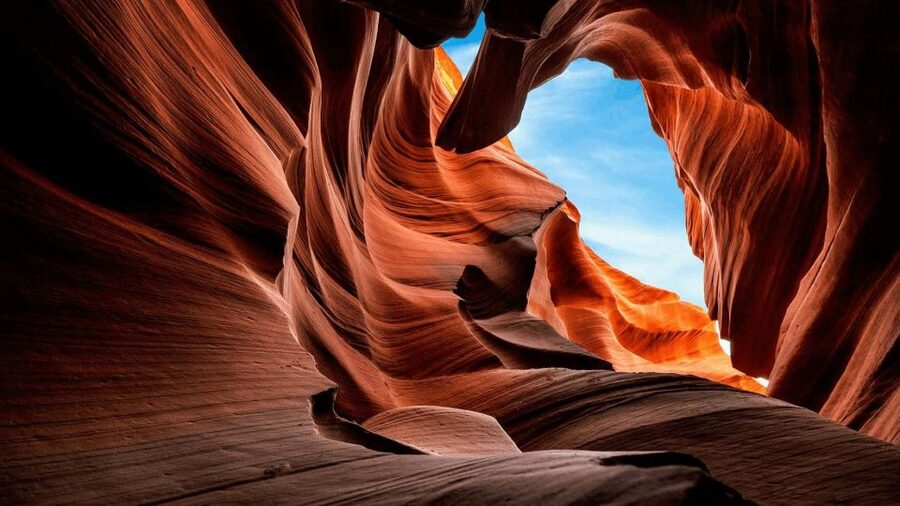
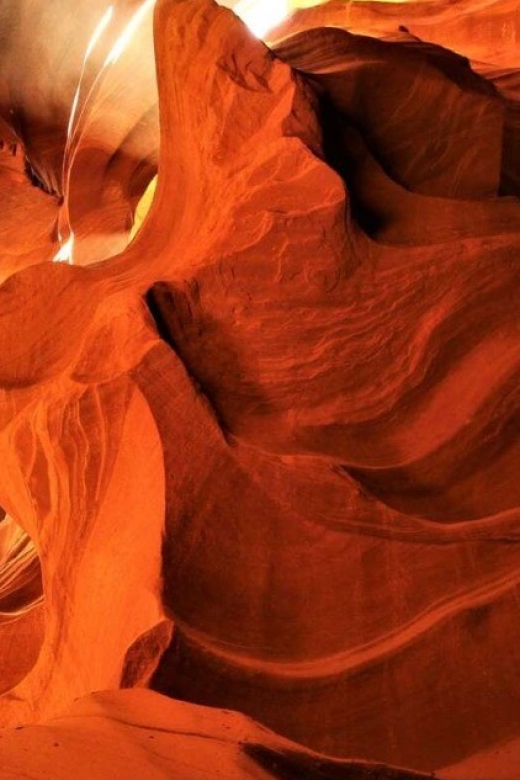
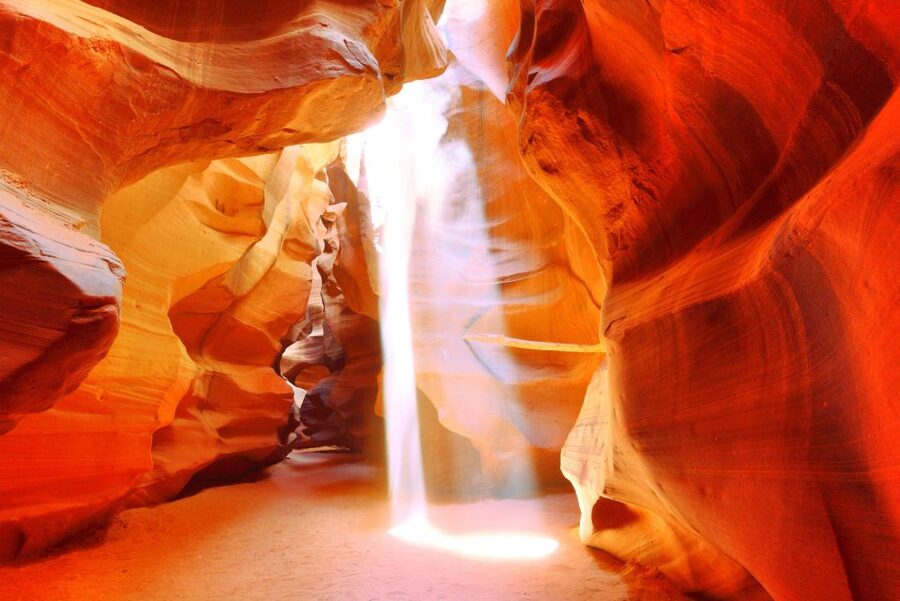
Upper Antelope Canyon is a slot canyon, a narrow passage cut through sandstone by flowing water and erosion. The walls curve inward and outward like fabric caught in a breeze, even though every fold is solid rock.
That shape makes the canyon special for photography. You may look up and see a slim strip of sky framed by smooth walls. A few steps later, the same rock can resemble a wave, a wing, or a familiar figure. Your guide points out these forms because the best details are easy to miss when you are busy watching your footing.
The canyon is also a place with cultural meaning. A Navajo guide adds local knowledge that you would not get from simply arriving at a viewpoint. Stories about the people, the canyon, and the geology give the short walk more weight than a photo stop alone.
I especially like the way the guides make the canyon approachable for people who are not serious photographers. Guides have helped visitors set up phone cameras, find the strongest angles, and take pictures of couples and families. That matters because Upper Antelope Canyon is not a place where everyone can stop for a private selfie. The passage is shared, and your group keeps moving.
More Page Arizona trips worth a second look
- Page: Lower Antelope Canyon Entry and Navajo Guided Tour
★ 4.7 · 7,801 reviews - Page: Antelope Canyon X Guided Tour
★ 4.6 · 4,034 reviews - Page: Lower Antelope Canyon Tour with Trained Navajo Guide
★ 4.7 · 2,552 reviews
Check-in at Tse Bighanilini Tours
Your tour begins at Tse Bighanilini Tours, with two listed starting location options connected to the same meeting area. Plan to arrive one hour before departure. Check-in closes 45 minutes before the scheduled time, and missing that cutoff can mean losing your ticket without a refund.
That rule may feel severe, but it is important here. The canyon entrance is reached by a scheduled shuttle, and the company has to coordinate vehicles, guides, and timed admissions. I would not cut this close, even if you know the area well.
Free parking is included, which makes this a practical choice if you are driving around Page and the surrounding Arizona region. Bring your passport or ID card, since identification is listed among the required items.
The tour follows Arizona time, the Phoenix Mountain Standard Time zone. This can cause confusion if you are driving from California or planning several activities in one day. The supplied schedule lists different relationships with Pacific time in winter and summer, so check the exact local time at booking and again before you set out.
The 10-minute van ride to the canyon
After check-in, you board a shuttle for the roughly 10-minute ride to Upper Antelope Canyon. This is one of the tour’s practical strengths.
The route is off-road and can be bumpy. That is part of the fun, but it is not a smooth highway transfer. The enclosed, air-conditioned vans are a better fit for most people than open-air trucks, especially on hot or dusty days. Several tours in the area use open vehicles, and dust can become a real nuisance before you even reach the canyon.
The van also helps in cooler or wet weather. One visitor arrived during a chilly, breezy, rainy period in early May, while another praised the coolness of the canyon during a summer tour. Conditions can change quickly, so comfortable clothing means layers rather than assuming Arizona will always be hot.
The ride is short, but it sets up the visit. You leave the check-in area, cross rough ground, and arrive at the canyon entrance ready to walk. Some guides drive and lead, giving you an early introduction to the area before the main walk begins.
Walking through the sandstone passage
The guided walk inside Upper Antelope Canyon lasts about 75 minutes, though the full activity is listed as 90 minutes. You follow the guide through a narrow sandstone corridor, stopping at selected points to look at the rock and take pictures.
The walk itself is not described as a strenuous hike. The canyon floor is generally manageable, and the pace is designed for a mixed small group of up to 10 people. Still, do not mistake not strenuous for effortless. The exit includes a sandy hill, stairs, and ramps. You need steady footing and the ability to walk without a cane or hiking stick.
Your guide explains how water and erosion shaped the canyon. Flash floods have played an important role in cutting and smoothing the sandstone, and one guide has even shown a video of floodwater moving through the canyon. This gives you a clearer sense of the canyon as a living geological process rather than a frozen monument.
The Navajo perspective is another strong point. Guides have shared stories about local people and the meaning attached to the area. Some have also played traditional flutes, turning a brief pause in the canyon into a quieter, more reflective moment. Those touches are not guaranteed on every departure, but they have been part of the experience with guides such as Ro and Mario.
A completely different way to spend a day nearby:
- Page: Upper Antelope Canyon Entry Ticket and Guided Tour
★ 4.5 · 2,406 reviews - Las Vegas: Antelope Canyon Horseshoe Bend Tour & Lake Powell
★ 4.7 · 2,307 reviews - Page: Lower Antelope Canyon Walking Tour with Navajo Guide
★ 4.7 · 1,289 reviews - Page: Lower Antelope Canyon Prime-Time Guided Tour
★ 4.6 · 668 reviews
Getting better photos without special equipment
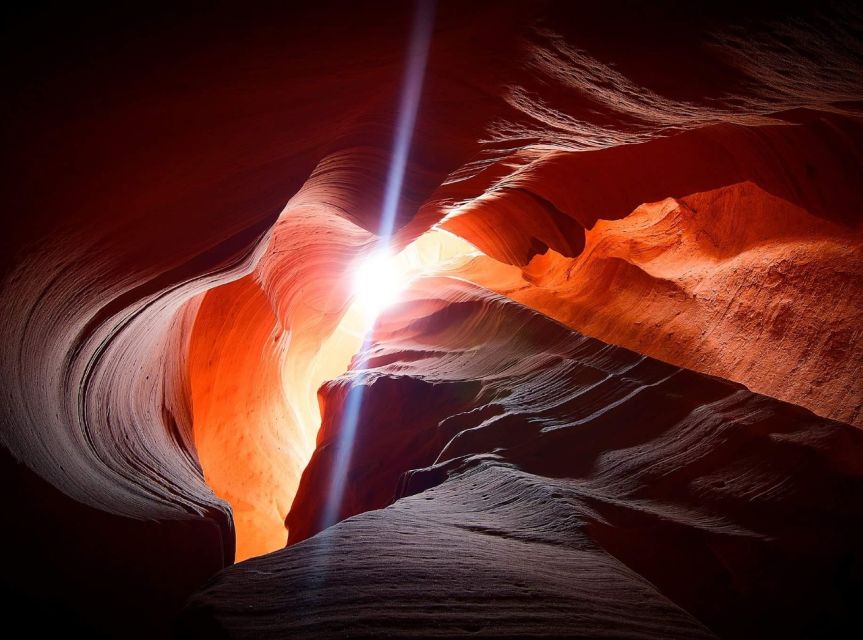
Upper Antelope Canyon is famous partly because it photographs so well. The narrow opening above filters sunlight into the passage, and the curved walls create strong contrast even when the weather outside is ordinary.
You do not need a professional camera. In fact, the rules limit you to a phone and small permitted items, so the guide’s advice is more useful than extra gear. Guides have helped visitors adjust phone settings, identify the best light, and use angles that show the curves of the walls.
Many guides also take pictures of each person or family. This is a small service with a big payoff. Nobody has to choose between appearing in the picture and standing behind the phone. Guides such as Lillian, Lionel, Bernice, Mario, Leland, and Amar have been singled out for helping with photographs.
Expect shared space, though. Groups move through the same narrow corridor, and you may have people ahead or behind you. One visitor felt the groups could have been spaced farther apart. Prime time may improve the light, but it does not turn the canyon into a private studio.
Bring a phone with enough storage and battery. Do not bring a tripod, selfie stick, GoPro, action camera, camcorder, or other prohibited camera equipment. The guide may help you create better images with the phone you already have.
Prime time versus regular admission
The prime-time option is aimed at people who care about light. Depending on the sun and the scheduled departure, you may see brighter shafts filtering into the canyon or stronger color on the walls.
That does not guarantee a perfect beam or empty passage. Sun position, season, weather, and the movement of other groups all matter. Still, if Upper Antelope Canyon is a major photography goal, prime time is the sensible choice.
Regular admission may be enough if you mainly want to see the canyon itself and hear the stories. The rock formations remain striking outside the strongest light, and late departures can sometimes feel calmer. One visitor specifically enjoyed a final shift because the canyon was quieter.
When comparing times, think about your priorities. Choose prime time for dramatic pictures and stronger illumination. Choose a regular or later time if you care more about a relaxed feel and are willing to accept less intense light.
Small groups, pace, and the feel of the visit
The group limit is 10 people. That is small enough for a guide to help with phone photography and answer questions, but it does not mean you will have the canyon to yourself.
A good guide makes a noticeable difference in this setting. Amara was praised for being funny, helpful, informative, and safety-conscious. Lillian has been especially appreciated for photography and her skill driving the off-road vehicle. Mario has combined geology, local stories, photos, and flute music. Leland has helped send guide-taken photos directly to phones.
The strongest pattern is clear: the guide shapes the visit. A patient guide lets the group gather before speaking, points out formations, and gives everyone a chance to photograph them. One visitor felt rushed and had trouble hearing because the guide began talking before the whole group had assembled. That is a useful reminder to stay close and speak up if you cannot hear.
The pace has generally worked well for families and older adults, but you still need to keep up with the group. The canyon is narrow, so long private pauses are not realistic.
What to wear and what to leave behind
Wear closed-toe, comfortable shoes. Sandals, open-toed shoes, high heels, hiking sticks, and canes are not allowed. The surface includes sand, and the exit includes stairs and ramps.
Comfortable clothes are best. Temperatures inside the canyon may feel cooler than outside, and the ride can be dusty or bumpy. If rain or wind is in the forecast, bring a jacket for the outdoor portions, but remember that umbrellas are prohibited.
The no-bag rule is the detail most likely to catch you off guard. Do not bring backpacks, purses, fanny packs, hydration bags, crossbody bags, messenger bags, or similar items. The information says clear backpacks may be accepted, but you should confirm that before arriving rather than rely on a regular bag.
A phone and identification are the safest essentials. Pets and service animals are not permitted, and firearms and weapons are forbidden.
Is $95 plus the permit fee good value?
The listed price is $95 per person, plus a $16.05 Navajo permit fee, for a stated total of $111.05 per person before any other booking costs. That is not a cheap walk, especially for a family.
I think the value depends on what you want from Upper Antelope Canyon. You are paying for timed entrance, transportation to the canyon, a local Navajo guide, a small group, and help with photography. The air-conditioned van is a real advantage over an open-air ride, particularly in heat, wind, or dust.
The canyon itself is the reason to come. If this is a long-planned stop on your Arizona trip, the cost may feel justified because the experience is difficult to reproduce on your own. If you are only mildly curious about slot canyons, the price may be harder to defend.
The extra permit fee needs to be part of your comparison from the start. The $95 headline price is not the final per-person cost.
Who should book this tour?
I would recommend it to people who want the classic Upper Antelope Canyon experience with organized transport and a guide who can add context. It suits couples, families, first-time visitors, and phone photographers who want someone to handle a few family shots.
It is also a good fit if you dislike dusty open-air vehicles. The van ride is enclosed and air-conditioned, though the off-road route remains bumpy.
I would not choose it for anyone who is pregnant, uses a wheelchair, has serious mobility limits or heart problems, or cannot manage uneven ground, sand, stairs, and ramps. The tour is not wheelchair accessible, and pets and service animals cannot join.
Allow plenty of time before departure. The strict check-in rule is not a minor footnote. Missing it can cost you the whole booking.
Final decision: book it for the canyon, guide, and van
Book this tour if Upper Antelope Canyon is high on your Arizona list and you want more than a quick look at the rock. The combination of a Navajo guide, photo help, local stories, and a comfortable van makes the price easier to understand.
Choose prime time if dramatic light is your main goal. Choose a later or regular departure if you prefer a potentially quieter visit and do not need the strongest sun effects.
I would book it for the canyon’s strange sandstone forms and the chance to have a guide such as Lillian, Mario, Leland, Ro, or Amar turn a beautiful walk into a more personal one. Just arrive early, pack light, wear proper shoes, and add the permit fee to your budget.
FAQ
How long does the Upper Antelope Canyon tour last?
The full activity lasts about 90 minutes. The walking portion inside the canyon is approximately 75 minutes, while the itinerary also includes a roughly 10-minute van ride to the canyon.
Where do I meet for the tour?
You meet at Tse Bighanilini Tours. The booking information lists two starting location options connected with the same meeting area.
How early should I arrive?
Plan to arrive one hour before your scheduled departure. Check-in closes 45 minutes before departure, and you must be checked in by then to keep your reservation.
What does the $95 price include?
The price includes the Upper Antelope Canyon entrance ticket, the walking tour, a local Navajo guide, and free parking.
Is there an extra fee?
Yes. The Navajo permit fee is not included. It is listed as $15 plus tax, or $16.05 per person.
Is the tour wheelchair accessible?
No. The tour is not wheelchair or handicap accessible. It is also not suitable for people with mobility impairments, pregnant women, people with heart problems, or wheelchair users.
Can I bring a bag or backpack?
No regular bags or backpacks are allowed. This includes fanny packs, hydration bags, crossbody bags, messenger bags, and purses. Clear backpacks may be accepted, but confirm the current rule before arriving.
What camera equipment can I bring?
You can bring a phone, but GoPros, action cameras, camcorders, tripods, and selfie sticks are not allowed. Umbrellas are also prohibited.
What time zone does the tour use?
The tour operates on Arizona time, the Phoenix Mountain Standard Time zone. The listed relationship with Pacific time changes during the year, so check the exact local departure time before your visit.
Recently reviewed around Page Arizona
- Page: Upper Antelope Canyon Walking Tour with Local Guide★ 4.5 · 586 reviews
- Page/Lake Powell: Guided Kayak & Water Antelope Canyon Tour★ 4.9 · 477 reviews
- Page: Upper Antelope Canyon Sightseeing Tour w/ Entry Ticket★ 4.6 · 397 reviews
- Page: Lower Antelope Canyon Prime-Time Guided Tour★ 4.6 · 668 reviews
- Page: Lower Antelope Canyon Ticket and Guided Hiking Tour★ 4.6 · 519 reviews
- Page: Lower Antelope Canyon Walking Tour with Navajo Guide★ 4.7 · 1,289 reviews
- Antelope Canyon Lake Powell: Guided Kayaking & Hike Tour★ 4.9 · 369 reviews
- Las Vegas: Antelope Canyon Horseshoe Bend Tour & Lake Powell★ 4.7 · 2,307 reviews
Antelope Canyon Tours, compared.
Lower Antelope Canyon Entry and Navajo Guided Tour
Read our review →
Lower Antelope Canyon and Horseshoe Bend Day Tour with Lunch
Read our review →

Lower Antelope Canyon Tour with Trained Navajo Guide
Read our review →
Upper Antelope Canyon Entry Ticket and Guided Tour
Read our review →
Antelope Canyon Horseshoe Bend Tour & Lake Powell
Read our review →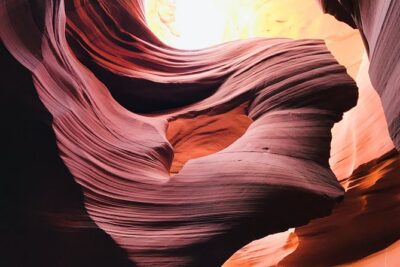
Browse the lists this tour appears in