
Reviewed · WALKING TOURS
NYC Underground Subway Walking Tour
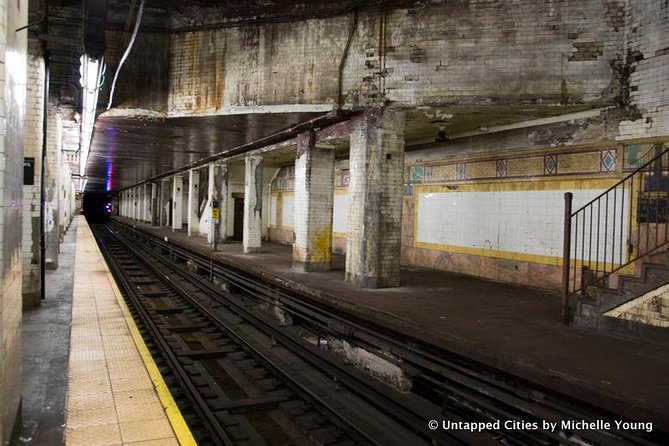
New York’s subway is more than a way to get across town. It is a moving museum of old stations, civic ambition, engineering choices, public art, and odd little details most riders miss. This tour connects those pieces on foot and aboard the 6 train, including views of abandoned stations often called ghost stations.
I like the small group limit of 12, which gives you room to ask questions, and I like the earpieces, a smart touch in a place where trains can drown out a speaking voice. Guides such as AJ, Pete, Cullen, Rayn, and Alexis have been praised for bringing their own transit interests and local knowledge to the route.
The main caution is physical: you will walk, use stairs, and spend much of the two hours underground. At $39, the tour offers solid value if you care about New York history or rail systems, but it may feel too technical if you want street-level stories about subway musicians, commuters, crime, or daily life.
In This Review
- Key points to know before you book
- Why the NYC subway makes a good walking tour
- Starting at 200 Broadway and City Hall Park
- The Brooklyn Bridge view and the Municipal Building
- Union Square’s art and the details above your head
- Riding the 6 train past abandoned stations
- What the guides add to the experience
- How much walking, noise, and underground time to expect
- Who will get the most from this $39 tour
- How to prepare for a smoother tour
- My call: book it for the subway, not just the sightseeing
- FAQ
- Where does the NYC Underground Subway Walking Tour begin?
- Where does the tour end?
- How long does the tour last?
- Is the subway fare included?
- Does the tour include a ride on the subway?
- Are earpieces provided?
- How large is the tour group?
- Is the tour offered in English?
- Can I cancel for a full refund?
Key points to know before you book
- Ghost stations from the 6 train: See abandoned subway spaces frozen in time as you ride through the system.
- City Hall Park opening: Learn how New York’s first subway station was created while viewing remnants near the park.
- Union Square art: Look for subway art that uses pieces of older station walls and unexpected design details.
- Native New York guides: Guides including AJ, Pete, Cullen, Rayn, and Alexis have led tours praised for their humor and transit expertise.
- Earpieces included: You can hear the guide more clearly while walking through stations and near passing trains.
- One MetroCard swipe extra: The tour price does not include the subway fare, so bring the required payment for one ride.
Why the NYC subway makes a good walking tour
Most subway tours begin with a map. This one begins with the city above ground, then shows you how streets, government, buildings, and transit grew together.
That matters because New York’s subway can feel confusing even after several rides. Lines overlap, stations have multiple levels, and old decisions still shape the way you move around the city. A guide can explain why the system looks and works as it does instead of leaving you to puzzle it out from signs and colored lines.
I like this tour for that reason. You are not simply riding from one station to another. You are learning how the system came into being, how it changed, and how older pieces still appear in places you might otherwise pass without a glance.
The subject leans toward transportation, architecture, business, and city planning. Some guides also bring in social and political context. If trains, engineering, and urban history interest you, the material should keep you busy. If you prefer a tour centered on personal stories and street characters, you may find parts of it too technical.
More Walking Tours in New York City
- SoHo, Little Italy, and Chinatown Walking Tour in New York
★ 5.0 · 3,153 reviews - Secrets of Grand Central Station Walking Tour New York City
★ 5.0 · 1,796 reviews - Greenwich Village Walking and Food Tasting Tour
★ 5.0 · 1,572 reviews
Starting at 200 Broadway and City Hall Park
The meeting point is outside Fulton Center at 200 Broadway. From there, the group heads toward City Hall Park, where the story of the first New York subway station begins.
City Hall Park is a useful place to start because it lets you see remnants of the early system before you head below street level. You will spend about 15 minutes learning about the station’s creation and looking at visible traces connected to it.
This opening also gives your guide a chance to explain the larger purpose of the subway. New York needed a faster way to connect its crowded streets, growing neighborhoods, business districts, and residential areas. The subway was not just a transport project. It changed how the city expanded and how people reached work, shops, and one another.
The short stop is free, as are the other outdoor portions of the tour. Wear shoes you can walk and climb stairs in. The route is not a long-distance hike, but the repeated movement between street entrances, platforms, and trains adds up.
The Brooklyn Bridge view and the Municipal Building
The route includes a look toward the Brooklyn Bridge early in the tour. This is a valuable bit of context, since the bridge and the subway belong to the same larger story of linking New York’s separate parts.
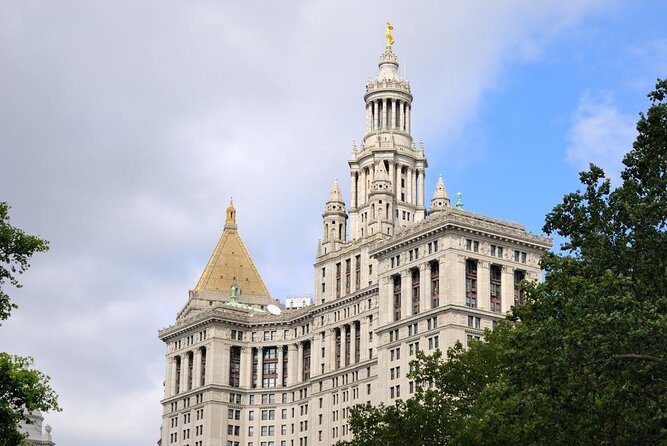
You will then spend about 10 minutes at the Municipal Building. The guide explains why this building mattered in the development of the subway system and how public institutions shaped the city’s transit network.
This stop helps balance the tour. You are not only looking at tunnels and trains. You are also seeing the government and civic architecture tied to the system’s creation. The subway required major decisions about funding, construction, routes, and public use. The Municipal Building gives those decisions a physical setting.
The outdoor stops also provide a break from the underground portions. One person who disliked the experience found nearly two hours below ground hot and tiring, while other people praised the steady pace and the chance to see so much. I would treat this as a true underground tour, not a short subway-themed walk with one train ride.
Union Square’s art and the details above your head
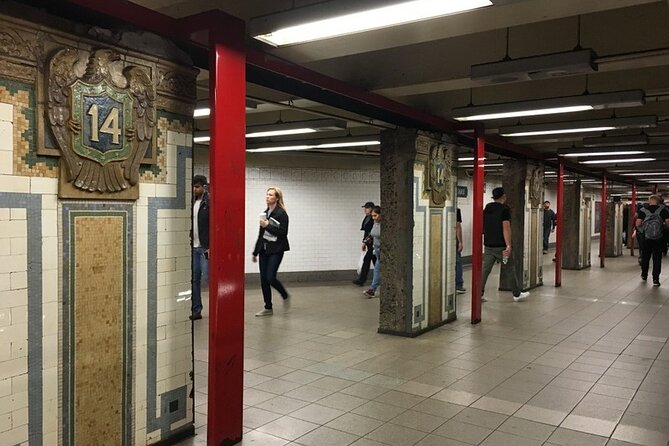
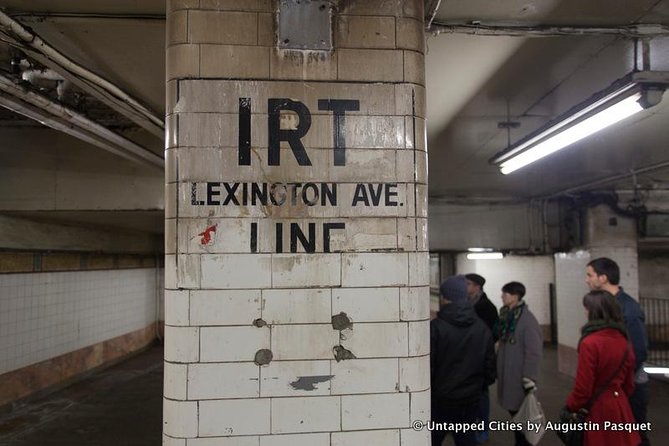
At Union Square, the group explores the subway station and its art installation for roughly 10 minutes. This is one of the tour’s best reminders that subway stations are not merely functional spaces.
The art can be easy to miss when you are hurrying for a train. A guide points out details and explains how older station material has been used in newer work, giving you a reason to slow down and look around.
I especially like this part for people who think they have already seen the subway. Regular riders often focus on the platform, the countdown clock, and the next arriving train. A guided stop changes your habits. You begin noticing tile, architecture, old surfaces, signs, and artwork that usually blend into the background.
The amount of time here is brief, so do not expect a museum-length art tour. The emphasis is on placing the installation within the broader story of the subway and showing you what to notice.
More New York City walks with a guide:
- Artistic, Alternative Greenwich Village Walking Tour
★ 5.0 · 971 reviews - True Crime NYC: Mafia Walk w/Ret. NYPD Detective and Local Food
★ 5.0 · 848 reviews - Central Park Guided Walking Tour
★ 5.0 · 774 reviews - NYC Lower East Side Walking and Food Tour
★ 5.0 · 646 reviews
Riding the 6 train past abandoned stations
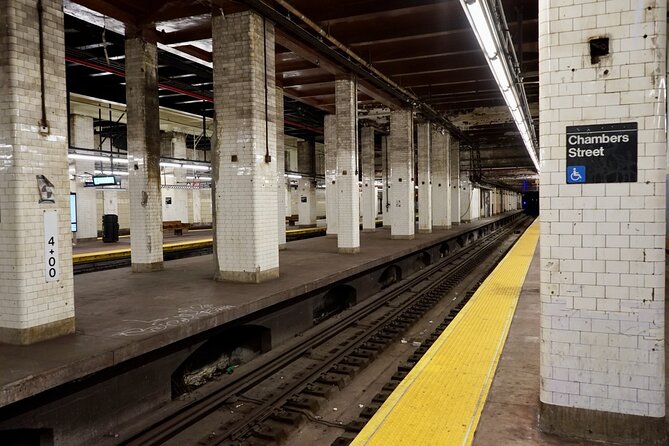
The most unusual part of the tour is the ride on the 6 train, which takes you through sections where abandoned stations can be seen. These old spaces offer a glimpse of subway New York that has been left behind.
The stations are not presented as ordinary stops where you get off and wander around. The appeal is in seeing preserved or abandoned areas from the moving train and learning what made them important. They can feel like time capsules, especially when contrasted with the noise and movement of the active system.
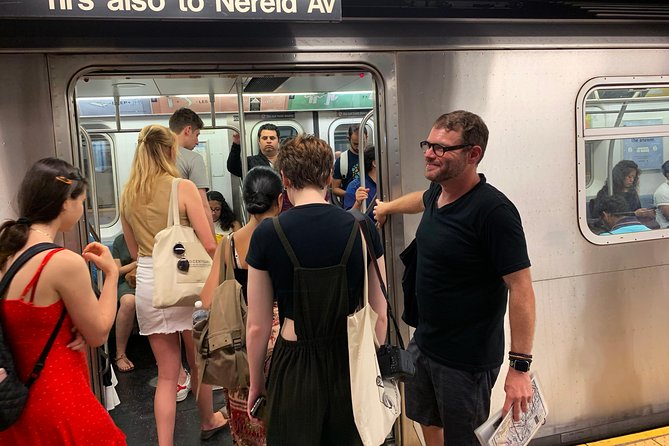
This is also where the earpieces earn their keep. Subway platforms are loud, and trains are louder. The tour provides earpieces so you can follow the guide while moving through the system. Most people found this helpful, though one small group had trouble hearing through the equipment and train noise. The operator uses standard audio gear rather than noise-canceling headphones, so expectations should stay realistic.
The train ride gives the tour its strongest sense of place. You are not looking at a model, a photograph, or a museum display. You are inside the system, moving through it as millions of New Yorkers do every day, while someone explains the parts you would normally miss.
What the guides add to the experience
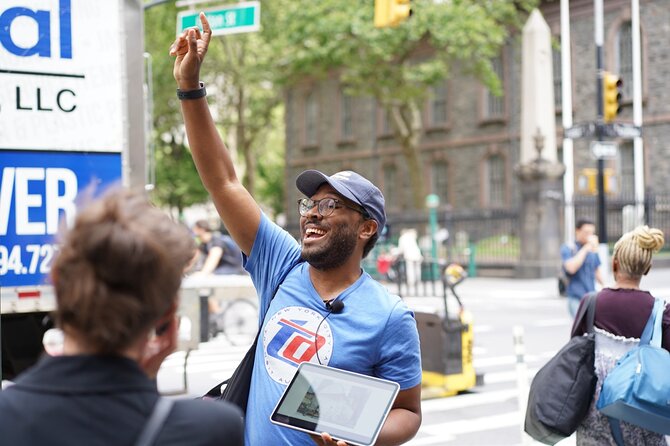
The tour depends heavily on the guide, and the names attached to the experience include AJ, Pete, Cullen, Rayn, and Alexis. Their styles may differ, but the strongest pattern is enthusiasm for the subway and its past.
AJ has been praised for handling a complicated route while keeping the group together through several stations and trains. Pete is described as funny and engaging, with enough information to hold the attention of both train fans and people mainly interested in New York history. Cullen has been singled out for a personable approach and for helping someone figure out how to reach a later destination.
Alexis brings attention to the social and political forces that shaped mass transit, while Rayn has been praised for explaining how the system works in practical terms. You may find the technical material easier to follow if you already know a little about New York’s subway lines.
That point is worth noting. The system is complex, and two hours covers a lot. A guide may move quickly through names, dates, routes, and station changes. Ask questions when you need a reset. The small group helps here, since you are less likely to disappear in a crowd of 30 or 40 people.
How much walking, noise, and underground time to expect

The tour lasts about two hours and ends back at the starting point. Along the way, you walk between stops, enter stations, ride the train, and climb stairs.
Several people specifically noted the stairs. Most participants can take part, and service animals are allowed, but the supplied information does not promise an elevator-based route or a step-free experience. If stairs are difficult for you, contact the operator before booking and ask about the current route.
Heat is another consideration. Subway conditions can be warm, and there is limited fresh air underground. Bring water and plan your clothing with the underground setting in mind. The tour takes place in an active public system, so crowds, train noise, and station conditions are part of the setting rather than problems the operator can fully control.
The earpieces help, but stay close to the guide and keep an eye on the group. The route involves turnstiles and train movement. One missed connection or wrong subway before the tour can also make you late, so check your route to 200 Broadway carefully.
Who will get the most from this $39 tour
At $39 per person, the value is strong for a two-hour small-group experience that combines street landmarks, station architecture, art, transit history, and a live subway ride.
The price makes the most sense for:
- Rail and transportation enthusiasts
- First-time visitors who want a different side of New York
- History fans interested in engineering, government, and city growth
- Locals who use the subway but rarely stop to examine it
- Families with older children who can manage stairs and a two-hour walking route
- Anyone who wants to understand the subway before using it independently
The value is less clear if you mainly want a ride through the city or a general New York sightseeing tour. You will not spend the whole time above ground, and the route does not focus on famous restaurants, neighborhood shopping, or personal stories from subway life.
The MetroCard or one subway swipe is not included, so add that small cost to your budget. The tour is offered in English, uses mobile tickets, and is usually booked well ahead of time, about 24 days in advance on average. I would not wait until the last morning if your schedule is fixed.
How to prepare for a smoother tour
Wear comfortable shoes with good support. The route includes a fair amount of walking and stairs, and the hard surfaces of subway stations can make a short tour feel longer than the clock suggests.
Arrive ready to listen in noisy places. The earpieces are provided, but they are not a guarantee that every word will cut through a train arriving beside you. Staying near the guide makes a real difference.
Bring water and keep your phone charged, since your ticket is mobile. You will also need to pay separately for one subway swipe.
If you enjoy background reading, the New York City Transit Museum can make a good companion visit. It gives you a basic framework, while this tour places that information inside active stations and on the train itself. You do not need to visit the museum first, but the combination makes the subway story easier to follow.
Free cancellation is available if you cancel at least 24 hours before the start time. Inside that window, the cost is not refunded, and late changes are not accepted.
My call: book it for the subway, not just the sightseeing
I recommend the NYC Underground Subway Walking Tour if you want to understand how New York’s transit system grew and why it still feels so complicated. The abandoned stations, Union Square art, City Hall remnants, and ride on the 6 train give the tour a clear sense of place.
Book it especially if you like trains, architecture, urban planning, or the less obvious side of New York. Guides such as AJ, Pete, Cullen, Rayn, and Alexis have earned strong praise for their humor, care, and subject knowledge.
Skip it if you dislike stairs, noise, heat, or long stretches underground. Also skip it if you want a tour focused on subway performers, crime, commuters, or street-level social stories. For the right audience, $39 buys an unusual and useful look at the city beneath the sidewalks.
FAQ
Where does the NYC Underground Subway Walking Tour begin?
It begins at 200 Broadway, New York, NY 10038, outside the Fulton Center area.
Where does the tour end?
The activity ends back at the meeting point.
How long does the tour last?
The tour lasts approximately two hours.
Is the subway fare included?
No. One MetroCard or subway swipe is not included in the tour price.
Does the tour include a ride on the subway?
Yes. The route includes a ride on the 6 train, with views of abandoned stations along the way.
Are earpieces provided?
Yes. Each participant receives an earpiece so the guide can be heard more clearly in the subway system.
How large is the tour group?
The group has a maximum of 12 participants.
Is the tour offered in English?
Yes. The tour is offered in English.
Can I cancel for a full refund?
Yes, if you cancel at least 24 hours before the experience start time. Cancellations made within 24 hours are not refunded.
Recently reviewed around New York City
- LEGOLAND® New York Theme Park Admission Ticket★ 4.0 · 1,396 reviews
- NYC: Woodbury Common Premium Outlets Shopping Round Trip Service★ 4.0 · 784 reviews
- Washington DC Day Tour from New York City★ 4.5 · 917 reviews
- Day trip to Washington from New York★ 5.0 · 348 reviews
- Whitney Museum of American Art Admission Ticket★ 4.0 · 1,579 reviews
- 2-hour Metropolitan Museum Guided Tour★ 5.0 · 515 reviews
- Drunk Shakespeare Ticket NYC★ 5.0 · 668 reviews
- NYC The Sopranos Iconic Filming Locations Bus Tour★ 4.5 · 427 reviews
Walking Tours, compared.

History and Hauntings of Salem Guided Walking Tour
Read our review →
New Orleans Premier Ghost, Voodoo and Vampire Walking Tour
Read our review →


Freedom Trail History Small Group Walking Tour
Read our review →
Historic Charleston Guided Sightseeing Walking Tour
Read our review →
New Orleans Food Walking Tour of the French Quarter with Small-Group Option
Read our review →
St. Louis Cemetery No. 1 Official Walking Tour
Read our review →Browse the lists this tour appears in