
Reviewed · WALKING TOURS
ORIGINAL Old Louisville Walking Tour seen in The New York Times!
Old Louisville is the main event here: forty square blocks and more than a thousand historic buildings, many packed with turrets, carved stone, stained glass, and fanciful porches. A good guide turns this grand neighborhood from a pretty backdrop into a place full of people, ambition, odd legends, and changing fortunes.
I like the small maximum of 20 people, which makes it easier to hear and ask questions. I also like the mix of architecture and local stories, from Millionaires Row to the Witches’ Tree and the long-running Shakespeare in the Park tradition.
The main catch is simple: this is a real walking tour, not a gentle stroll. You need to walk for about 90 minutes without a bathroom break, and the route is not recommended for people with mobility problems. The starting area is transitional, too, so expect an urban setting rather than a polished tourist zone.
In This Review
- Key points to know before you book
- Why Old Louisville deserves a walking tour
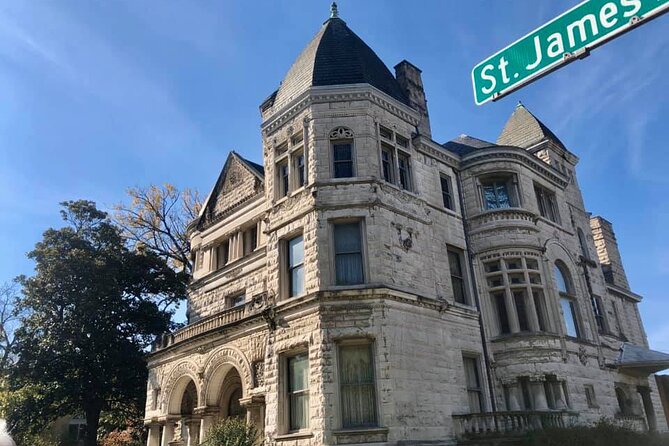
- Meeting the mansions around St. James Court
- The Witches’ Tree and Old Louisville folklore
- Conrad-Caldwell House, known as Conrad’s Castle
- Millionaires Row and the Bernheim Mansion
- The Ferguson Mansion and the Filson Historical Society
- Central Park, Olmsted’s green heart
- What the $25 price buys you
- Walking conditions, safety, and comfort
- Who will enjoy this Louisville walking tour
- Should you book the Old Louisville Walking Tour?
- FAQ
- How long does the Old Louisville Walking Tour last?
- Where does the tour begin and end?
- What sights are included on the route?
- Can I go inside the Conrad-Caldwell House Museum?
- Is the tour suitable for people with mobility issues?
- Is the tour available in languages other than English?
- What happens if bad weather cancels the tour?
Key points to know before you book

- A close look at Victorian Louisville: See St. James Court, Ormsby Avenue, Floral Terrace, Millionaires Row, and other streets lined with grand homes.
- Stories make the buildings memorable: Guides such as David, Gabe, Angelique, Brenda, and Frances bring in local people, unusual details, and neighborhood legends.
- The entire tour stays outdoors: You see the Conrad-Caldwell House Museum from outside. Mansion entry is separate and costs extra.
- Allow up to two hours: The walk itself lasts about 90 minutes, with several short stops along the way.
- Good value for architecture fans: At $25 per person, you get a certified guide and a focused introduction to one of Louisville’s most distinctive neighborhoods.
- Plan for city conditions: The meeting point is near Fourth Street, where you may encounter panhandlers and people experiencing homelessness.
Why Old Louisville deserves a walking tour
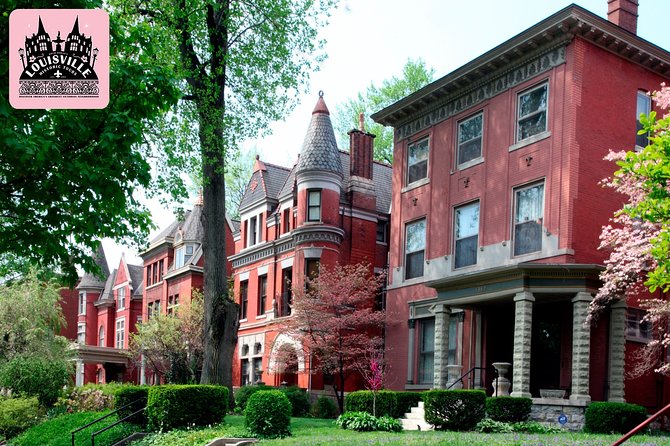
You can drive through Old Louisville and admire the houses, but the experience becomes much better when you know what you are seeing. The district is too large to absorb from one quick pass. Its forty square blocks contain more than a thousand structures, and the architecture changes from block to block.
The neighborhood also tells a bigger Louisville story. Wealthy industrialists and business figures once built elaborate homes here, hoping to display their success. Later, the area changed, and many buildings moved through different uses and periods of care. That tension between grandeur and everyday city life is part of what makes the walk interesting.
I would book this early in your Louisville visit. It gives you a useful sense of the city’s past, and it may help you notice details you would otherwise walk past. The route also puts several important Old Louisville sights into one organized outing, rather than asking you to search for them on your own.
The tour is led in English and usually runs between one hour and 40 minutes and two hours. The listing says it is commonly booked about 11 days ahead, so you should not leave it until the final morning of a busy trip.
More the USA walks with a guide:
- History and Hauntings of Salem Guided Walking Tour
★ 5.0 · 14,564 reviews - New Orleans Premier Ghost, Voodoo and Vampire Walking Tour
★ 4.5 · 12,856 reviews - Little Havana Food and Walking Tour in Miami
★ 5.0 · 8,882 reviews
Meeting the mansions around St. James Court
The walk begins at West Ormsby Avenue and South Fourth Street. This is a central starting point for the Old Louisville district, but it is not a formal gateway with ticket booths and tourist facilities. Arrive ready to walk and keep your expectations grounded in the setting.
From there, the route takes you through streets such as St. James Court, Ormsby Avenue, and Floral Terrace. These names matter because Old Louisville is not just one street of mansions. It is a collection of residential blocks with different styles, setbacks, gardens, and details.
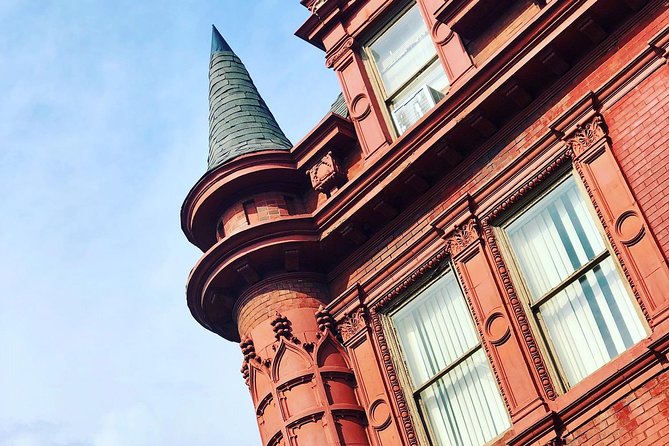
Look for the features that make Victorian architecture so easy to remember: towers, arched windows, decorative brickwork, elaborate entrances, and layers of ornament. The exact buildings discussed can vary with the guide, but the tour centers on the neighborhood’s grand homes and the people who commissioned them.
This is where guides with a strong personal connection to the area can add a lot. David is repeatedly praised for his storytelling and local experience. Gabe has been noted for keeping a clear pace and speaking continuously enough for a group to follow. Angelique is known for drawing attention to details ranging from trees and flowers to neighborhood cats. Brenda has used a microphone, which can help when street noise or a larger group makes listening difficult.
Do not expect to go inside the private houses. Most are residences, and the tour respects that. The reward is the exterior detail, along with an explanation of why a particular porch, façade, or location matters.
The Witches’ Tree and Old Louisville folklore
One of the shortest stops may be one of the most memorable. The Witches’ Tree is a gnarled trunk tied to a local story about witches who valued an earlier tree on the same spot.
According to the tale, the city removed the original tree, and the witches responded by sending a tornado to punish Louisville. People still leave small offerings at the twisted trunk to make peace with the crones.
You do not need to decide if the story is true to enjoy it. It gives the neighborhood a playful edge and breaks up the architectural detail with a piece of local folklore. The stop lasts only about five minutes, but it is exactly the sort of detail you could miss while walking alone.
Listen for the way your guide handles this kind of story. The best approach is to enjoy the legend while keeping it in its proper place: it is part of Old Louisville’s tradition, not a documented account of a supernatural event.
Conrad-Caldwell House, known as Conrad’s Castle
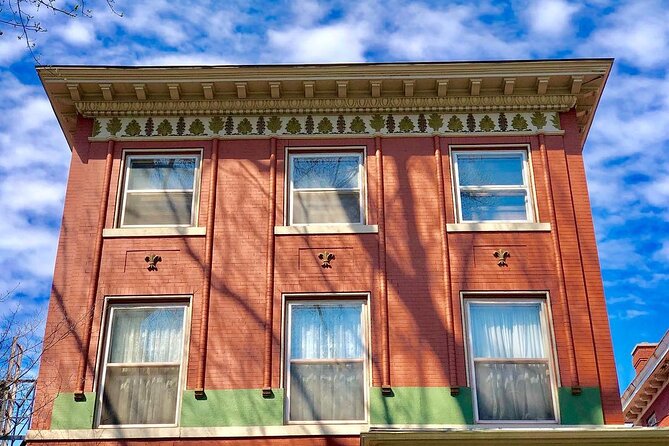
The Conrad-Caldwell House Museum is one of the tour’s most important visual stops. Its nickname, Conrad’s Castle, hints at the heavy stonework and dramatic design that make it easy to pick out from the surrounding homes.
The tour stops in front of the mansion, but admission is not included. Since the house is a separate museum, you can arrange a paid visit with them if you want to see the interior.
This arrangement is useful for two reasons. You keep the walking tour focused on the neighborhood instead of spending a large part of the time inside one building, and you retain the choice to add a museum visit if your schedule and interests allow it.
Architecture fans should pay close attention here. The exterior helps explain why Old Louisville attracts people who care about design, but the tour also gives the building a human setting. You are not just looking at a grand façade. You are hearing how the district’s wealthy owners, builders, and residents shaped the area.
A completely different way to spend a day nearby:
- NYC: SUMMIT One Vanderbilt Tickets
★ 4.7 · 51,195 reviews - NYC: 9/11 Memorial & Museum Timed-Entry Ticket
★ 4.8 · 31,428 reviews - NYC: Empire State Building Tickets – Observatory & Museum
★ 4.7 · 25,757 reviews - NYC: Empire State Building Observation Deck Tickets
★ 4.7 · 22,072 reviews
Millionaires Row and the Bernheim Mansion
The route continues toward the old Millionaires Row, where the Bernheim Mansion provides another strong example of Louisville’s high-style residential architecture.
The house is especially known for its green men, sculpted figures arranged around a triple Roman-arched porch. That small detail gives you something specific to look for, rather than a blur of general praise about old houses.
The Bernheim Mansion is now a bed and breakfast, but the tour views it from outside. Admission is not included. The brief stop lasts about two minutes, so it is more of a focused exterior explanation than a long visit.
I like this part of the route because it shows how a guide can make a short stop count. Without context, you might see an imposing porch and keep moving. With the green men and the Roman arches pointed out, the building becomes easier to remember.
It also helps to keep the scale of the walk in mind. The itinerary includes several short stops, but the largest portion is spent moving through Old Louisville itself. You are not hopping between isolated attractions. You are reading the neighborhood as a whole.
The Ferguson Mansion and the Filson Historical Society
The Filson Historical Society occupies the Ferguson Mansion, built in 1905. The building is a Beaux Arts example and was once regarded as the grandest home in Louisville.
Again, the tour does not include interior admission. Visits can be arranged separately, but this walking experience only stops outside.
This is a good place to think about how historic homes survive. A private mansion may later become a cultural institution, helping preserve documents and stories connected to the region. The building is useful not only as architecture, but also as a sign of how Louisville’s past is kept in public view.
The stop lasts about five minutes. Your guide may connect the house to the city’s former elite, the design choices of the period, and the later role of the Filson Historical Society. If you want to visit the society itself, plan that as a separate activity rather than assuming you can enter during the walk.
Central Park, Olmsted’s green heart
Central Park gives the route a welcome change of rhythm. The fourteen-acre park was designed by Frederick Law Olmsted, the same landscape designer associated with New York City’s Central Park.
Here you find native trees and shaded walkways spread over four city blocks. It is also the summer home of Shakespeare in the Park, which has run since 1961 and is described as the nation’s oldest free outdoor Shakespeare event.
The stop lasts about five minutes, but the park helps explain how Old Louisville was planned as a neighborhood, not merely a collection of expensive houses. Grand architecture needs open space around it, and Central Park supplies that breathing room.
This is also a practical point for your expectations. The tour is not an indoor museum circuit, and Central Park is one of the few stops where the setting itself gives you a pause from house façades and city sidewalks. On a pleasant day, it may be one of the most comfortable parts of the route.
What the $25 price buys you
The price is $25 per person, with a certified guide included. A $5 gratuity per person is not included, so budget $30 per person if you intend to cover both the tour and the suggested gratuity.
For a walk lasting roughly 100 to 120 minutes, that is fair value if you care about architecture, local history, or city orientation. You are paying for organization and interpretation, not admission to a house. Since nearly all of Old Louisville’s notable buildings are private residences, that distinction matters.
You could walk the streets for free. The question is how much you would understand. A guide can point out the Witches’ Tree, explain the role of Millionaires Row, identify architectural features, and connect the buildings to Louisville’s changing past.
The strongest value comes from the stories. The guides are not simply naming streets and dates. David is often praised for energy and local insight, while Gabe is noted for a steady pace and clear delivery. Angelique, Brenda, and Frances have also led tours that focus on details, humor, and a welcoming group atmosphere.
The tour has a maximum of 20 people. That is large enough to create a group feel, but small enough that you should have a reasonable chance to hear the guide and ask questions. The pace has been described as easy by some participants, though the distance still requires moderate physical fitness.
Walking conditions, safety, and comfort
Take the physical requirements seriously. You must be able to walk for 90 minutes without a bathroom break, and the tour is not recommended for people with mobility issues. Wear comfortable shoes, and consider weather conditions before booking.
The starting point is in a transitional part of the city. The tour information specifically warns that panhandlers, homeless people, and people who may look unfamiliar to you can be present along Fourth Street at the northern edge of the neighborhood. That is not a reason to dismiss the tour, but it is useful to know what kind of urban environment you are entering.
Stay aware of your surroundings, keep your belongings secure, and meet the guide at the stated corner rather than wandering around looking for a storefront. The route is near public transportation, and service animals are allowed.
The experience runs only in English. Since the walk is almost entirely outside, poor weather can cancel it. If that happens, you are offered another date or a full refund. The booking itself is non-refundable and cannot be changed for personal reasons, so check the forecast and your schedule before paying.
Who will enjoy this Louisville walking tour
I would choose this tour if you like old houses, city stories, and a guide who can answer questions along the way. It works especially well for first-time visitors who want a quick grounding in Louisville, but it also has enough local detail to interest people who already know the city.
Architecture fans will appreciate the range of styles and the chance to see St. James Court, the Bernheim Mansion, the Ferguson Mansion, and Conrad-Caldwell House in one outing. Families can join, including multigenerational groups, as long as everyone can manage the walking time.
Solo visitors may find the tour an easy way to get oriented. Couples can pair it with a later visit to the Conrad-Caldwell House Museum. Local residents may also find something new, especially if they have only driven through Old Louisville before.
I would skip it if you need frequent restrooms, have trouble walking for 90 minutes, or want to tour mansion interiors as part of the main activity. In that case, a shorter outing built around one museum may suit you better.
Should you book the Old Louisville Walking Tour?
Book it if you want more than a row of pretty façades. The tour’s best qualities are its focused route, strong local storytelling, and access to details you might miss on your own. The Witches’ Tree adds a little oddball fun, while Central Park and Millionaires Row give the walk variety.
At $25, it is a sensible introduction to Old Louisville, especially if you plan to add the Conrad-Caldwell House Museum separately. Just arrive prepared for a full outdoor walk, an urban meeting area, and a tour that ends where it began.
The current rating is 4.9 from 720 ratings, with 98 percent recommending it. Those numbers fit the experience described here: this is a highly focused neighborhood walk, not a broad overview of every Louisville attraction. If that is what you want, it is an easy choice. If you want indoor access, short distances, or a large list of city sights, choose another format.
FAQ
How long does the Old Louisville Walking Tour last?
The tour lasts approximately one hour and 40 minutes to two hours. You should be able to walk for about 90 minutes without a bathroom break.
Where does the tour begin and end?
It begins at West Ormsby Avenue and South Fourth Street in Louisville, Kentucky. The activity ends back at the meeting point.
What sights are included on the route?
The route includes Old Louisville, St. James Court, Ormsby Avenue, Floral Terrace, Millionaires Row, the Witches’ Tree, the Conrad-Caldwell House Museum exterior, the Bernheim Mansion exterior, the Filson Historical Society exterior, and Central Park.
Can I go inside the Conrad-Caldwell House Museum?
Interior admission is not included. The walking tour stops in front of the house, and you can arrange a separate mansion tour for a fee.
Is the tour suitable for people with mobility issues?
The tour is not recommended for visitors with mobility issues. You need a moderate level of physical fitness and must be able to walk for 90 minutes without a bathroom break.
Is the tour available in languages other than English?
No. The experience is offered in English.
What happens if bad weather cancels the tour?
The experience requires good weather. If it is canceled because of poor weather, you are offered a different date or a full refund. Personal cancellations and amendments are non-refundable.
Recently reviewed around the USA
- Dyker Heights Christmas Lights Guided Tour★ 4.5 · 920 reviews
- New York City Dinner Cruise with Live Music★ 4.0 · 377 reviews
- NYC in a Day Tour: Statue of Liberty, Times Square and More★ 5.0 · 366 reviews
- Broadway and Times Square Insider Tour with Theater Professional★ 5.0 · 651 reviews
- New York City Holiday Lights Tour★ 4.5 · 664 reviews
- NYC Central Park Bicycle Rentals★ 4.5 · 368 reviews
- Central Park Bike Rental New York City★ 4.0 · 560 reviews
- Manhattan Sky Tour: New York Helicopter Flight★ 4.5 · 1,458 reviews
Walking Tours, compared.
History and Hauntings of Salem Guided Walking Tour
Read our review →
New Orleans Premier Ghost, Voodoo and Vampire Walking Tour
Read our review →

Freedom Trail History Small Group Walking Tour
Read our review →
Historic Charleston Guided Sightseeing Walking Tour
Read our review →
New Orleans Food Walking Tour of the French Quarter with Small-Group Option
Read our review →
St. Louis Cemetery No. 1 Official Walking Tour
Read our review →Browse the lists this tour appears in