
Reviewed · MUSEUMS
The National WWII Museum Campus Pass plus 4-D Film
The most memorable part of this ticket is Beyond All Boundaries, a 4D film narrated by Tom Hanks. Vibrating seats, moving scenery, flashing lights, fog, loud sound, and sudden chair movements turn the Solomon Victory Theater into a physical part of the story.
I like the freedom to enter the museum before your film time, and I like having a reserved screening slot for one of the campus’s most popular attractions. The main drawback is simple: this is a large, serious museum, not a quick stop. Plan for several hours, plenty of walking, and emotionally difficult material.
In This Review
- Key points
- Why the 4D film changes the visit
- A six-acre campus, not a single gallery
- What to expect inside the pavilions
- A moving museum, with difficult material
- How much time should you allow?
- What the $49.35 price gets you
- Getting there and handling the practical details
- Who should book this museum pass?
- Should you book the Campus Pass plus 4D Film?
- FAQ
- Where is the National WWII Museum located?
- What does the $49.35 ticket include?
- Do I have to enter the museum at my film time?
- What are the museum’s opening hours?
- How long should I plan for the visit?
- Is a tour guide included?
- Is Beyond All Boundaries suitable for people sensitive to special effects?
- Is the 4D film closed captioned?
- Are service animals allowed?
- Can I cancel for a full refund?
- What happens if poor weather causes a cancellation?
Key points
- The timed Tom Hanks film: Choose your screening time, then enter the museum earlier to begin exploring.
- Five museum pavilions: The six-acre campus covers the war from several angles, including European and Pacific campaigns and life after 1945.
- A self-guided visit: You tour at your own pace, with displays, films, audio, and interactive kiosks rather than a scheduled guide.
- A full-day commitment: Several hours will give you a worthwhile visit, but seeing everything can take a full day or more.
- Powerful and difficult content: Loud effects, flashing images, war footage, and scenes from Nazi death camps may be upsetting.
- Good value for serious history fans: At $49.35, the package makes the most sense if you use the day well and watch the 4D film.
Why the 4D film changes the visit
The National WWII Museum is already a substantial museum, but Beyond All Boundaries gives the day a clear centerpiece. The film uses Tom Hanks’ narration with layered projection, sound effects, lighting, moving props, atmospheric effects, and seats that vibrate or move.
This is not a quiet documentary screening. You may feel the chair shift beneath you, hear sudden blasts, and notice fog or changing light in the theater. Those effects are designed to make the scale and danger of the war feel immediate.
I recommend choosing the film time before you start building your day. You can enter the museum at any point before the screening, so an early arrival works well. Begin with the exhibitions, keep an eye on the clock, and reach the Solomon Victory Theater with enough time to get seated without rushing through the galleries.
The film is often described as one of the strongest parts of the visit, and I can see why. It compresses a huge subject into a focused presentation, giving you a broad sense of the war before or after you work through the more detailed exhibits.
There is a practical caution. The museum specifically warns about loud noises, flashing lights, fog, and sudden chair movements. Stationary seating is available. Assisted listening devices can be requested at the Visitor Services desk in the theater, but the film is not closed captioned.
More New Orleans museums and collections:
- The National WWII Museum Admission Ticket New Orleans
★ 5.0 · 2,202 reviews - French Quarter Walking Tour With Comp 1850 House Museum Admission
★ 5.0 · 781 reviews - New Orleans: The National WWII Museum Ticket
★ 4.8 · 704 reviews
A six-acre campus, not a single gallery
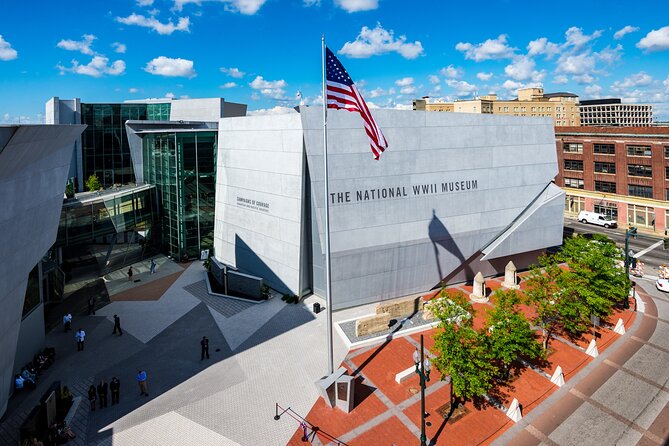
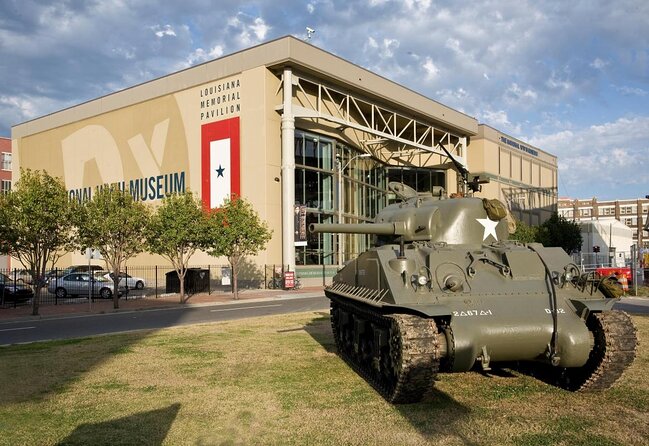
The museum occupies a six-acre campus in downtown New Orleans, with five separate pavilions. Think of it as a group of connected museum buildings rather than one room you can cover in an hour.
That size affects your planning. You will walk between sections, stop to read, watch films, listen to recorded stories, and pause at interactive displays. Several people have found that four to six hours still left large sections unseen. An eight-hour visit is possible, and a return visit can make sense if you want to read closely.
The campus layout also means you should not judge the museum by your first hour. The opening galleries may give you a strong introduction, but the museum keeps adding more material and different viewpoints. Give yourself time to find the parts that matter most to you.
You will encounter exhibits covering the war before it began, the major campaigns, the home front, the end of the war, and the postwar period. The displays include European and Pacific theaters, along with the experiences of women, Black Americans, Native Americans, political leaders, and people from different countries.
That range is important. World War II was not only a sequence of battles. It changed work, family life, politics, technology, migration, and the fate of millions of civilians. The museum’s best sections help you see those connections.
What to expect inside the pavilions
The exact route depends on how quickly you move and which exhibits hold your attention. You will find a large amount of reading, live footage, audio and visual material, and interactive kiosks.
The interactive features are useful when you need a break from wall text. One particularly personal option is the Follow a Soldier Dog Tag experience. It lets you follow an individual service member through the museum and connect the broad events of the war to one person’s story.
That approach can make the museum easier to navigate emotionally. Instead of treating the war as a list of dates, you have a human thread to follow. If you enjoy military history, this is one of the features worth making time for.
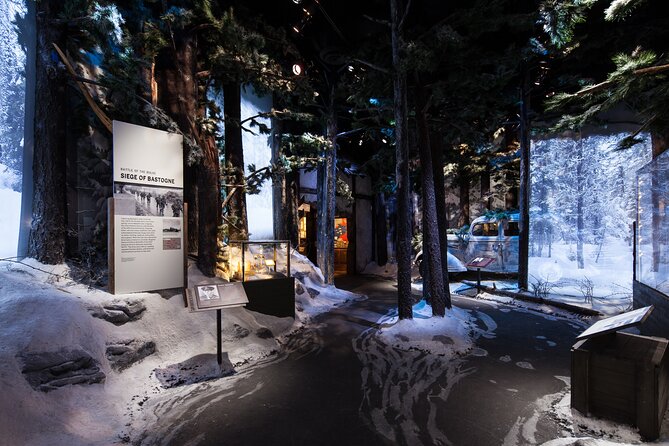
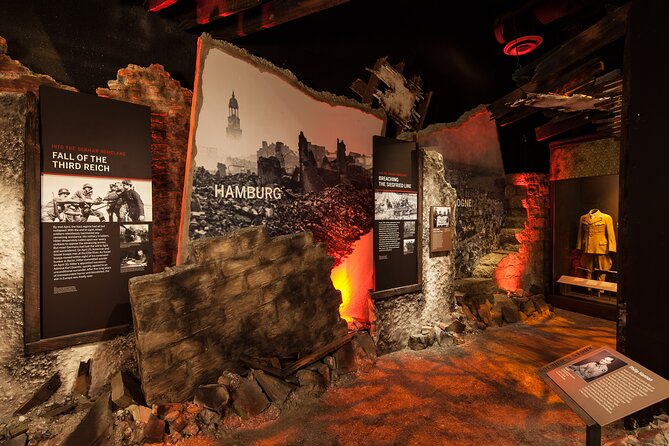
The European theater receives detailed treatment, as does the Pacific theater. The Liberation area can be especially difficult, with material that confronts the consequences of Nazi persecution and the liberation of camps. The museum does not soften the subject, so you should prepare yourself for disturbing photographs and footage.
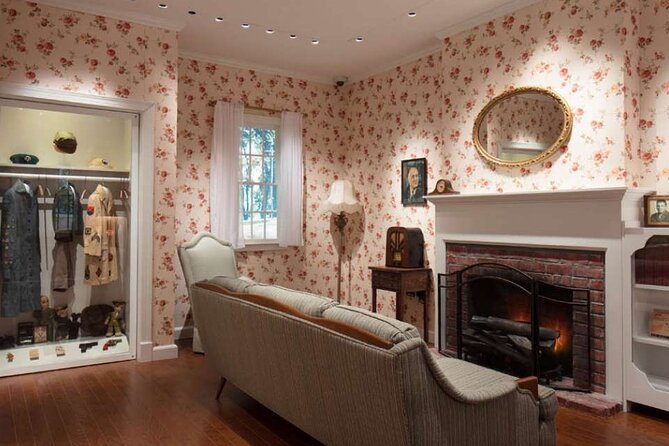
There are also displays about life after the war. That final part matters because the story does not end when the fighting stops. Veterans returned home, families adjusted, nations rebuilt, and the political order changed. Allow time for these sections instead of treating them as an afterthought.
You may also find commemorative details that make the visit personal. Some people have placed bricks honoring family members who served in World War II, and the museum’s memorial character is part of its appeal. It is both a history museum and a place of remembrance.
A moving museum, with difficult material
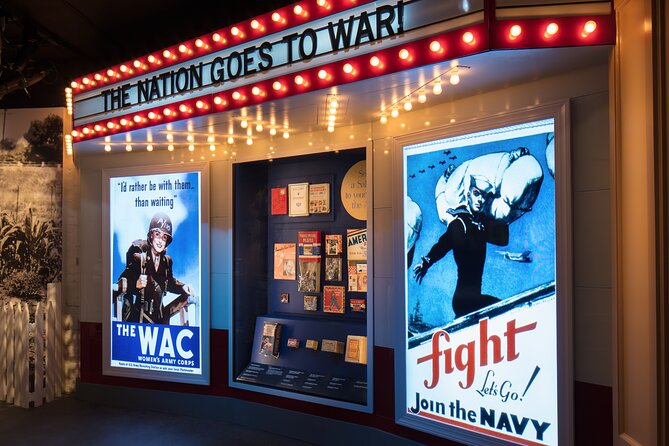
This is not light entertainment. The museum honors the courage and sacrifice of Allied forces, but it also shows the cost of war. You will encounter death, destruction, persecution, and civilian suffering.
That emotional weight is one of the reasons the museum works so well. The displays are not only about generals and weapons. They give space to ordinary people, military personnel, families, and communities caught in events much larger than themselves.
Some images may be hard to see, especially material related to Nazi death camps. The 4D film also uses startling effects. If you are sensitive to loud sound, flashing light, fog, or moving chairs, ask about stationary seating before the screening.
Families should think about age and temperament rather than assuming the museum suits every child. One young teenager with a strong interest in military history had a particularly rewarding visit, but the displays are text-heavy and the subject is grave. Younger children may find the length and content difficult.
Bring your glasses if you need them. There is a lot to read, and rushing past the text means missing much of the museum’s human detail.
A completely different way to spend a day nearby:
- New Orleans Premier Ghost, Voodoo and Vampire Walking Tour
★ 4.5 · 12,856 reviews - New Orleans Steamboat Natchez Jazz Cruise with Dinner Option
★ 4.0 · 7,533 reviews - Adults-Only New Orleans Ghost, Crime, Voodoo, and Vampire Tour
★ 5.0 · 6,545 reviews - New Orleans Food Walking Tour of the French Quarter with Small-Group Option
★ 5.0 · 6,118 reviews
How much time should you allow?
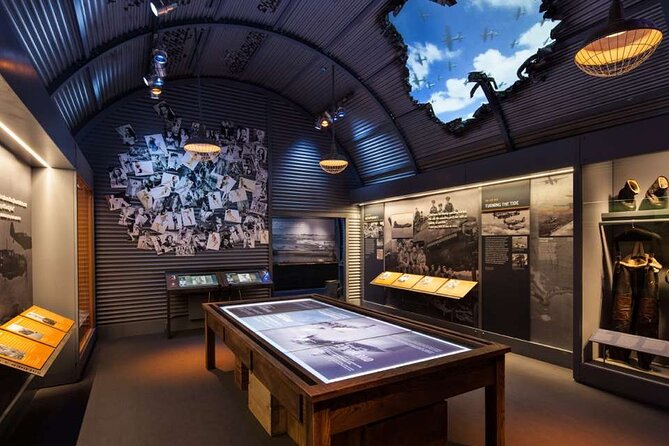
For a quick introduction, allow at least three hours, including the film. That will give you a chance to see selected galleries, watch Beyond All Boundaries, and take a short break.
Half a day is a better minimum if you care about the subject. You can cover several buildings, spend time with the interactive kiosks, and pause for the major films without racing.
A full day is the sensible plan for a first visit. You will need time for:
- The 4D film and its arrival window
- Several pavilions across the campus
- Reading exhibit panels
- Audio and video presentations
- Interactive displays
- A meal or rest break
- The emotional pauses that naturally come with this subject
The museum has a place to eat, which helps because leaving for lunch would interrupt your flow. Use the break wisely. A short rest can make the afternoon much better, especially if you have already spent hours standing and reading.
If you only have four hours, do not skip the visit. Choose the pavilions that interest you most, keep your film time fixed, and accept that you will leave parts unseen. If you have two days in New Orleans and a strong interest in World War II, a second day can be worthwhile. The museum offers a second-day pass for $15 according to the information provided with this experience.
What the $49.35 price gets you
The package costs $49.35 per person and includes museum admission plus the timed Beyond All Boundaries screening. The mobile ticket helps you avoid the ticket purchase line, and the reserved film time removes one major piece of uncertainty from the day.
The value depends on how long you stay. If you enter for two hours, watch the film, and leave, the price feels high. If you spend five to eight hours exploring the campus, the calculation improves considerably.
I would choose this package if you already know you want the film. It combines the two parts of the visit that are easiest to plan poorly: general admission and a screening slot. The wide range of film times also lets you fit the museum around the rest of your day.
You do not receive a tour guide with this admission. That is a benefit if you prefer to set your own pace and linger where you like. It is a limitation if you want someone to explain the galleries, provide background on specific artifacts, or guide you through the best route.
Plan your day before arrival. Decide if you want to follow a soldier, focus on one theater of the war, read every panel, or simply gain a broad overview. Without a plan, the size of the campus can make it harder to know what comes next.
Getting there and handling the practical details
The museum is in downtown New Orleans and is near public transportation. The listed opening hours are 9 a.m. to 5 p.m., Monday through Sunday.
Because your selected time applies to the 4D film, not your museum entry, arrive earlier if possible. This gives you room to begin touring and prevents the film from cutting your visit short.
Most people can participate, and service animals are allowed. The museum experience requires a fair amount of walking, standing, and reading, so comfortable footwear and a realistic pace will help.
The package offers free cancellation if you cancel at least 24 hours before the experience start time. Cancellations inside that window are not refunded, and changes are not accepted within 24 hours. Cutoff times use New Orleans local time. Poor weather can also affect the experience, in which case you will be offered another date or a full refund.
Who should book this museum pass?
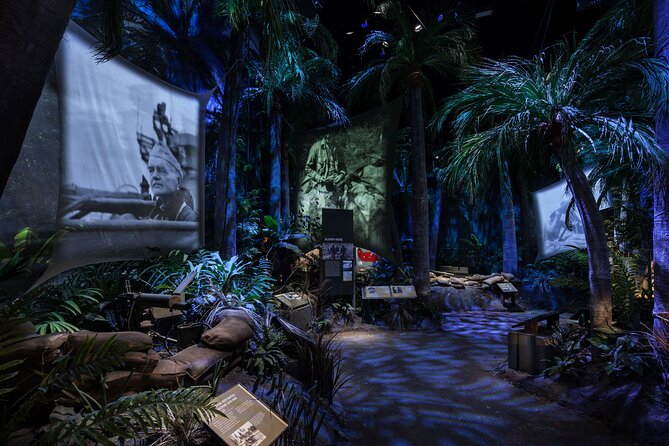
I would recommend it most strongly to adults, older teenagers, history students, military history fans, and anyone with a family connection to World War II. It also suits anyone who wants a serious cultural stop in New Orleans beyond the French Quarter.
The museum works especially well for people who enjoy learning independently. You can follow your own interests, use the kiosks, watch the films, and return to sections that need more time.
It may be less suitable if you want a short, relaxed attraction or a highly social activity. The subject is heavy, the reading load is considerable, and the 4D effects can be intense. Families with young children should consider the length and the material carefully.
The museum also rewards repeat visits. On a first day, you may focus on the main route and the film. On a second visit, you can slow down, follow a dog tag soldier, examine the Pacific exhibits, spend more time in the Liberation area, or explore the postwar story.
Should you book the Campus Pass plus 4D Film?
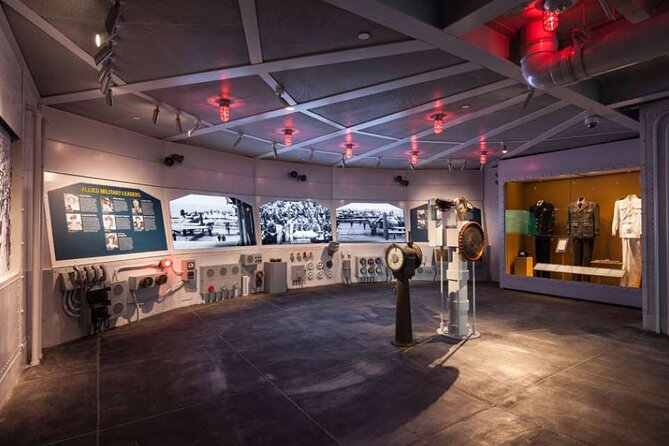
Yes, if you can spare at least half a day and want to understand why the National WWII Museum is one of New Orleans’ major attractions. The ticket is especially useful because it combines campus admission with a reserved Beyond All Boundaries time, while still letting you enter the museum beforehand.
Book it with a full-day mindset, even if your schedule allows only four or five hours. Wear comfortable shoes, bring glasses for the text, and expect loud effects and emotionally hard images. If that sounds manageable, the $49.35 price is fair for a serious museum day with a strong film centerpiece.
FAQ
Where is the National WWII Museum located?
It is located in downtown New Orleans, USA.
What does the $49.35 ticket include?
The ticket includes admission to the National WWII Museum campus and timed entry to the 4D film Beyond All Boundaries.
Do I have to enter the museum at my film time?
No. The selected time is for the 4D film. You may enter the museum at any time before your movie screening to begin touring.
What are the museum’s opening hours?
The museum is open Monday through Sunday from 9 a.m. to 5 p.m.
How long should I plan for the visit?
Plan at least half a day for a useful visit. A full day is better if you want to see several pavilions, read the displays, watch films, and use the interactive exhibits.
Is a tour guide included?
No. This ticket provides admission and film entry, but no tour guide. You explore the museum independently.
Is Beyond All Boundaries suitable for people sensitive to special effects?
The film includes loud noises, flashing lights, fog effects, and sudden chair movements. Stationary seating is available if needed.
Is the 4D film closed captioned?
No. Beyond All Boundaries is not closed captioned. Assisted listening devices are available from the Visitor Services desk in the Solomon Victory Theater.
Are service animals allowed?
Yes. Service animals are allowed.
Can I cancel for a full refund?
Yes, if you cancel at least 24 hours before the experience start time. Cancellations within 24 hours are not refunded, and changes inside that period are not accepted.
What happens if poor weather causes a cancellation?
You will be offered a different date or a full refund if the experience is canceled because of poor weather.
Recently reviewed around New Orleans
- New Orleans Yellow Fever Ghost Tour★ 5.0 · 1,298 reviews
- VIP Jazz Dinner Cruise with Private Tour and Open Bar Option★ 4.5 · 838 reviews
- Whitney Plantation Tour with Transportation from New Orleans★ 4.5 · 1,351 reviews
- New Orleans Private Carriage Tour of the French Quarter★ 5.0 · 537 reviews
- New Orleans Delicious Donuts & Beignets: A Sweet Walking Tour★ 5.0 · 928 reviews
- New Orleans French Quarter Photo Shoot★ 5.0 · 462 reviews
- The Escape Game at the French Quarter in New Orleans★ 5.0 · 364 reviews
- The Ghosts of New Orleans Tour★ 4.5 · 702 reviews
Museums, compared.

Empire State Building Tickets – Observatory & Museum
Read our review →


9/11 Memorial, Ground Zero Tour with Optional 9/11 Museum Ticket
Read our review →
All-Access 9/11: Ground Zero Tour, Memorial and Museum, One World Observatory
Read our review →
Browse the lists this tour appears in