

Reviewed · MUSEUMS
Boston: Boston Tea Party Ships and Museum Interactive Tour
The best part of this Boston attraction is that you do not simply watch the Boston Tea Party unfold. You are handed a colonist’s role, join the march to Griffin’s Wharf, and get to throw a crate of tea into the water. Live actors stay in character, which gives the hour a playful theatrical spark.
I like the strong mix of storytelling and technology, especially the 3D holograms and wraparound theater. I also like how the tour works for adults as well as children. The main drawback is pace: with a large group, you may not have enough time to study every artifact in the museum.
In This Review
- Key points to know before you go
- Why the Boston Tea Party works better as a performance
- Meeting the colonists inside the meeting house
- Marching to Griffin’s Wharf
- Walking aboard the two replica ships
- Holograms, arguments, and the museum displays
- The wraparound theater brings the story forward
- What the $35 price includes
- Who will enjoy this tour most
- Timing, booking, and practical advice
- Should you book the Boston Tea Party Ships and Museum?
- FAQ
- Where does the Boston Tea Party Ships and Museum tour begin?
- How long does the tour last?
- How much does admission cost?
- Do I get to throw tea into the harbor?
- Are the ships original?
- Is the tour conducted in English?
- Are foreign-language guides available?
- Is food included in the ticket?
- Is the experience suitable for wheelchair users?
Key points to know before you go

- Throw tea overboard: You toss a covered crate, a practical stand-in for the tea chests used in 1773.
- Play a colonist: A handbill assigns you a role before the march begins.
- Meet historic characters: Live performers guide the group through the meeting house and ships.
- See two ship replicas: The recreated vessels help you understand the scale and setting of the event.
- Finish with big-screen history: A giant wraparound theater shows the conflict that followed.
- Plan ahead: Timed tickets can sell out, especially on weekends.
Why the Boston Tea Party works better as a performance
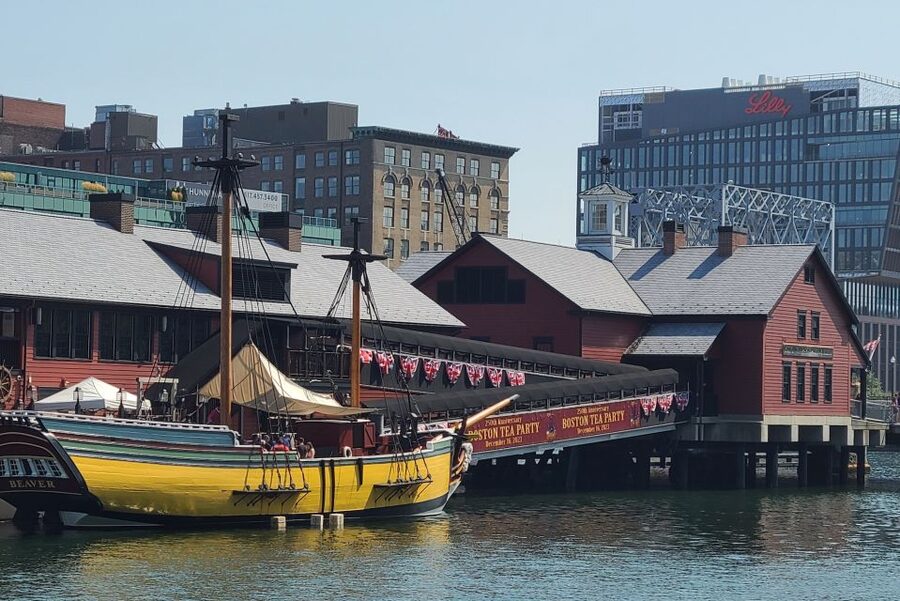
The Boston Tea Party was a protest against British taxation and control, but a short visit to Boston can leave you with only a slogan and a famous date. This experience fills in the action around December 16, 1773. You hear how the meeting was organized, learn who took part, and follow the group toward Griffin’s Wharf.
That approach matters because the event was not just a dramatic act of dumping tea. It grew from anger over British policies, colonial representation, and the cost of imported goods. The tour gives you enough context to see why the protest mattered without asking you to sit through a long lecture.
The tone is lively. The actors use period language, call for attention, and invite you to respond. By the end, the group is encouraged to give a hearty Huzzah. You will not mistake this for a quiet archive or a traditional museum walk. It is closer to a short historical play with physical sets, participation, and film.
I think that makes it especially useful on a first visit to Boston. If you have already walked the Freedom Trail, the tour adds a human and theatrical layer to the places and names you have encountered downtown.
More Boston museums and collections:
- Boston Tea Party Ships and Museum Admission
★ 4.5 · 2,512 reviews - NYC: 9/11 Memorial & Museum Timed-Entry Ticket
★ 4.8 · 31,428 reviews - NYC: Empire State Building Tickets – Observatory & Museum
★ 4.7 · 25,757 reviews
Meeting the colonists inside the meeting house
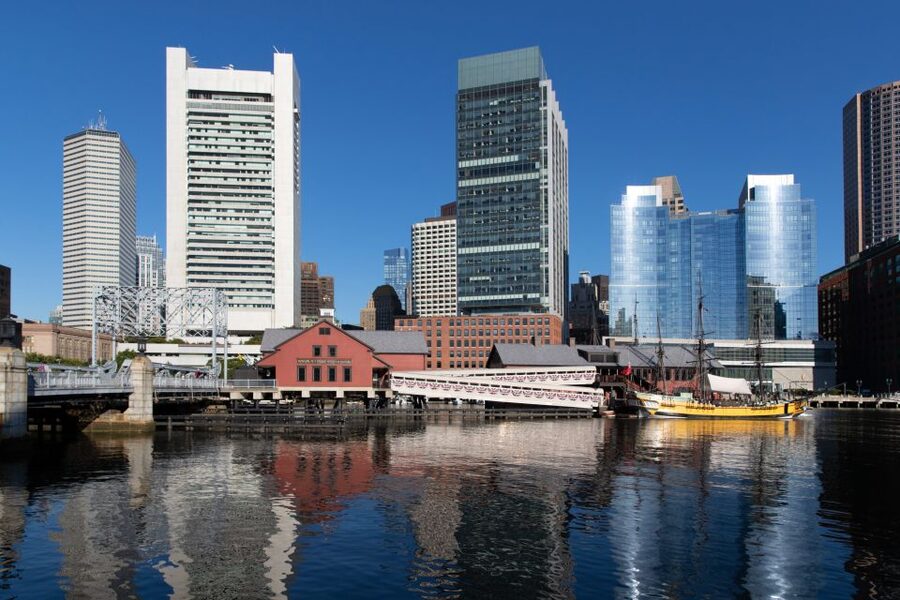
Your timed visit begins at the Boston Tea Party Ships and Museum on the Congress Street Bridge. Present your ticket when you arrive, then enter the opening part of the tour.
A guide gives you a handbill from one of the colonists. This is not just a souvenir. It helps assign a point of view and gives you a small part to play as the story moves forward. You may also receive a Mohawk disguise before the march, a lighthearted nod to the disguises worn by some participants.
The meeting house scene sets up the political tension. You hear about the night of December 16, 1773 and the choices facing the colonists. The performers make the information easy to follow, even if American Revolutionary history is new to you.
The group format is important here. You are not wandering at your own speed. Everyone moves through the same scenes together, and the actors direct attention from one moment to the next. That keeps the story clear, but it also means you cannot pause whenever you want.
The acting is one of the strongest parts of the experience. Performers have included characters such as Mrs. Grant, Chase, and Ebenezer McIntosh, though the cast can vary. Guides have been praised for staying in character from the moment the tour starts, and that commitment helps the setting feel more convincing.
Marching to Griffin’s Wharf
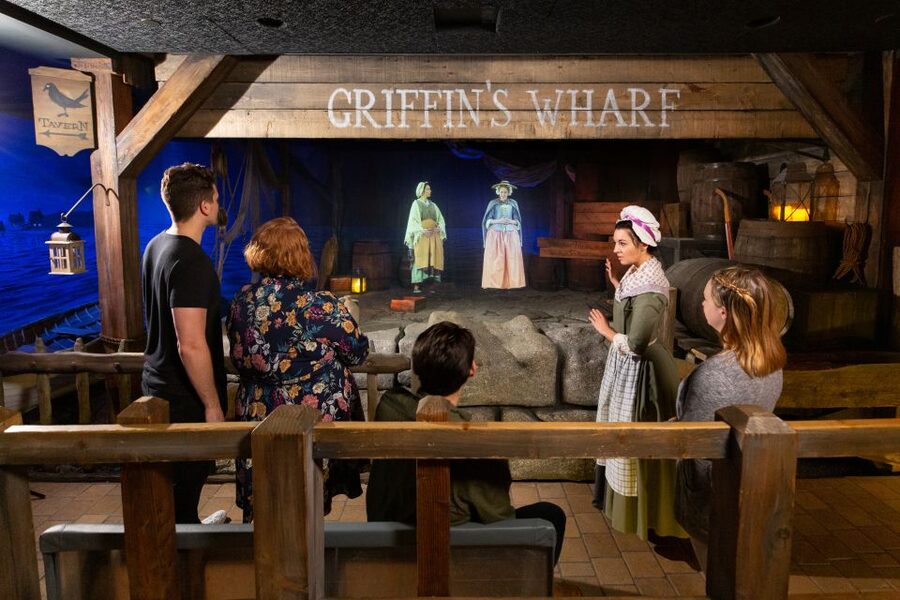
From the meeting house, the story moves toward Griffin’s Wharf. This transition gives the event a sense of movement. You are not only hearing that the tea was destroyed. You are following the same basic sequence from political meeting to direct action.
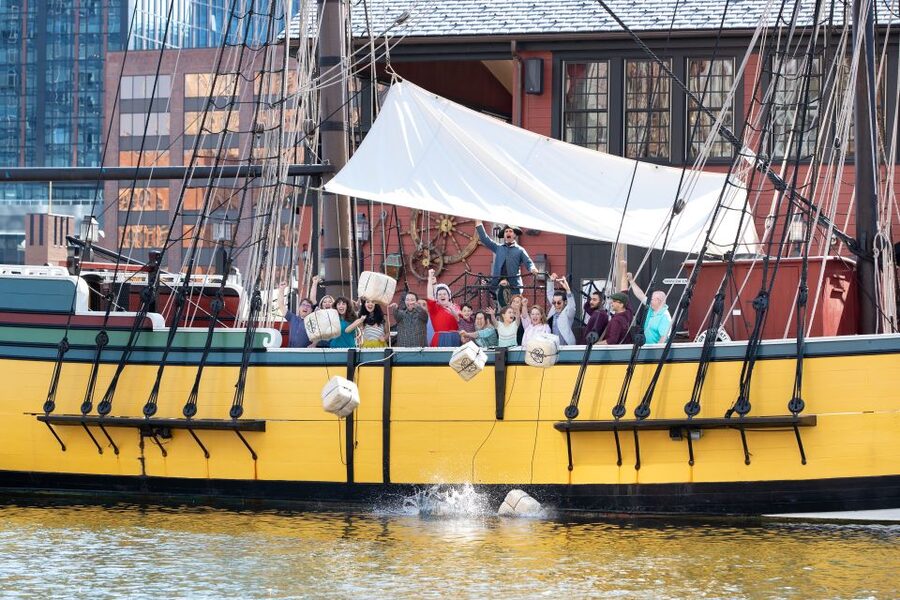
The tour then gives you the activity most people remember: throwing tea overboard. To be precise, you toss a covered milk crate rather than individual tea chests. That detail may sound small, but it helps explain how the tea was stored and moved.
For children, this is usually the clearest hands-on moment. Younger participants get a physical task and a reason to pay attention. Adults may find it slightly theatrical, but the action still makes the event easier to picture. You understand the effort involved in moving the cargo and the public nature of the protest.
You should expect the group to share this part of the tour. Not everyone will be at the rail at once, and the exact flow depends on the guide and the size of your group. The activity is memorable, but it is not a private tea-tossing session.
The wharf setting also helps correct a common misunderstanding. The Boston Tea Party was not a general riot or a random act of destruction. The tea was targeted, and the protest had a clear political purpose. The tour keeps that focus while still allowing room for humor.
Walking aboard the two replica ships

The attraction includes faithfully recreated replicas of two of the ships connected with the tea protest. These vessels give you a better sense of the cramped working environment than a display case can.
You can look at the ships as physical evidence of the practical side of the event. Cargo had to be loaded, guarded, and moved. The tea did not simply appear at the wharf. Seeing the recreated vessels helps connect the political story to the work of sailors, merchants, dock workers, and colonists.
The ship section is also one of the most atmospheric parts of the visit. You are surrounded by timber, decks, cargo areas, and the harbor setting. The actors continue the story here, so the ship visit is not a separate technical tour focused only on construction.
Space may feel limited when the group is large. Stay close enough to hear the guide, and do not expect unlimited time to inspect every corner. The attraction is designed to keep the story moving, not to provide a long, self-guided ship exploration.
I would give special attention to the tea crate. It is one of the details that turns an abstract lesson into something tangible. Once you see the size and shape of the cargo, the tea toss feels less like a symbolic gesture and more like a deliberate act involving real goods.
A completely different way to spend a day nearby:
- Boston Duck Boat Sightseeing City Tour with Cruise Along Charles River
★ 4.5 · 9,378 reviews - Boston: Freedom Trail History Small Group Walking Tour
★ 5.0 · 6,450 reviews - Boston Hop-On Hop-Off Trolley Tour with 13 Stops
★ 4.5 · 5,576 reviews - Boston: City Cruises Whale Watching Cruise
★ 4.5 · 4,710 reviews
Holograms, arguments, and the museum displays

After the live scenes and ships, you enter the museum portion. Here the style shifts from performance to visual presentation.
Three-dimensional holographic characters appear and speak before you. British soldiers and colonial patriots argue in front of the audience, showing the conflict from opposing sides. This is a useful choice because it avoids presenting the story as a simple contest between obvious heroes and villains.
The holograms will appeal most to children and to anyone who enjoys museum technology. They also help break up the information. Instead of reading a long wall of text, you see historical figures presented in a short dramatic exchange.
The museum contains artifacts and information that deserve time. The challenge is that the guided schedule may not leave you much of it. If your group is large, you could move through the exhibits before you have fully read every label or examined every object.
There is also a secret room with artifacts that some people may want to explore more fully. If you are keen on small historical details, pay attention when the group reaches that area and use any spare moments wisely.
Printed museum guides are available in 14 foreign languages. You can request one at the museum or print it before arrival using the link provided with your voucher. The live tour itself is in English, so the guide is useful if you want help following the museum displays rather than the performance.
The wraparound theater brings the story forward
The final film takes place in a giant wraparound theater. It shows the conflict that followed the tea protest and gives the experience a wider Revolutionary War setting.
This section is more cinematic than the opening scenes. The large screen surrounds you with images and action, making the conclusion feel bigger than the small meeting-house and ship settings. It also gives you a quick explanation of how the Boston Tea Party fit into the chain of events leading to war.
I like the change in format. The live acting creates personal contact, the ships provide a physical setting, the holograms offer visual interpretation, and the theater gives the story scale. The technology is not used simply as decoration. Each part handles a different job.
Still, the film is a finale rather than a full history course. You will gain a clear outline of what happened, but you should not expect a detailed account of every cause, battle, or political figure connected with the American Revolution.
The complete visit lasts about one hour. That is long enough to feel substantial and short enough to fit into a busy Boston day. If you are using the attraction as part of a history-focused itinerary, pair it with the Freedom Trail, which supplies real streets, churches, burial grounds, and government buildings to balance the staged presentation.
What the $35 price includes
At $35 per person, this is not a quick museum entry. You are paying for a timed, guided performance with actors, ship replicas, special effects, museum access, and the theater presentation.
I consider the price reasonable if you enjoy active attractions or are visiting Boston with children. The hour contains several different formats, so you are not paying for a single exhibit that you can finish in 20 minutes. The strongest value comes from the combination of participation and explanation.
The cost is harder to justify if you prefer quiet museums, long reading time, or complete control over your pace. You may wish the schedule allowed more time with the artifacts, particularly if you have a serious interest in colonial material culture.
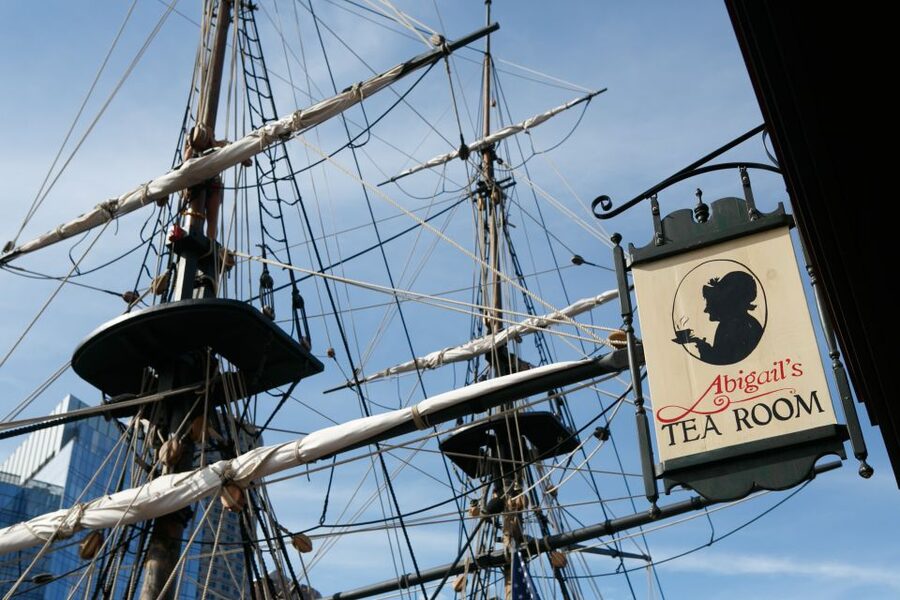
Food and drinks are not included. Abigail’s Tea Room is available at the attraction, and tea connected with the story can be sampled for an additional cost. Treat that as an optional extra rather than part of the ticket.
The gift shop is also well stocked, so allow a little restraint if you are traveling with children. The museum already gives you a hands-on memory, and you do not need a purchase to make the visit worthwhile.
Who will enjoy this tour most
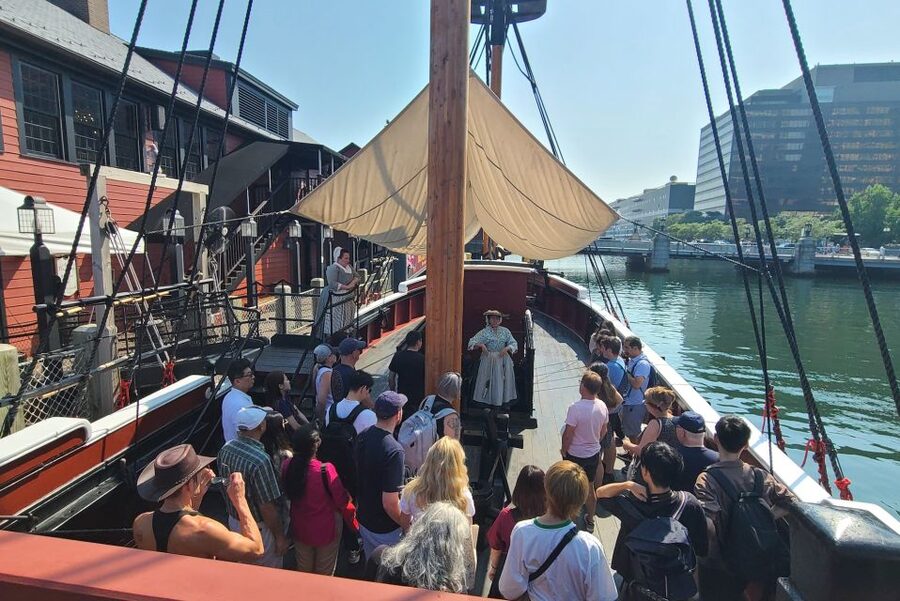
This is a strong choice for families, school-age children, first-time Boston visitors, and anyone who learns best through action. A 10 or 12-year-old is likely to respond well to the role cards, disguise, actors, ship visit, and tea toss.
Adults without children should not dismiss it. The content is presented for a general audience, but the political background and museum material give it enough substance to make the hour worthwhile. You will also pick up small details that are easy to miss on a quick walk past the Boston Tea Party site.
History enthusiasts may want to set expectations. This attraction is designed to engage rather than provide a scholarly account. It presents a carefully shaped story with humor, performance, and modern visual effects.
It is less suitable for you if you dislike audience participation or theatrical voices. You are invited to respond and take part, so the experience is not passive. The English-language format may also be a limitation if you need full spoken translation, although printed guides are available in 14 languages.
The attraction is not suitable for wheelchair users. Keep that in mind before booking, since the experience includes movement through the meeting house, ships, and museum areas.
Timing, booking, and practical advice
Book ahead if you can. Timed places can sell out, particularly on weekends, and booking in advance lets you choose a start time that fits around the Freedom Trail or other downtown plans.
The meeting point is the Boston Tea Party Ships and Museum on the Congress Street Bridge. You can skip the ticket line with a timed ticket, but allow enough time to arrive at the right place and present it at entry.
The host or greeter speaks English, and the tour language is English. If you want a foreign-language museum guide, request one at the museum or print it before you arrive. That guide may be most useful during the artifact sections, where the pace can feel quick.
Wear something comfortable for standing and moving with the group. The experience lasts one hour, but it includes several transitions and active scenes rather than a single seated presentation.
If you want tea or food afterward, budget separately. Food and beverages are not part of the admission, and any tea tasting costs extra.
Cancellation is flexible if your plans change. You can cancel up to 24 hours in advance for a full refund, and the reserve-now, pay-later option can help when your Boston schedule is still shifting.
Should you book the Boston Tea Party Ships and Museum?
Book it if you want history with movement, humor, and a clear beginning-to-end story. The strongest reasons are the committed actors, the chance to throw a tea crate overboard, and the mix of live scenes, replica ships, holograms, and film.
Skip it if you want a quiet museum visit or enough time to read every display. The one-hour format keeps the story lively, but it can leave little room for close study of the artifacts.
For most first-time visitors, I think it earns a place on a Boston itinerary, especially alongside the Freedom Trail. Reserve a timed spot, arrive ready to participate, and remember that the attraction is a theatrical history lesson, not a purely self-guided museum.
FAQ
Where does the Boston Tea Party Ships and Museum tour begin?
The experience begins at the Boston Tea Party Ships and Museum on the Congress Street Bridge in Boston, Massachusetts.
How long does the tour last?
The timed interactive tour lasts one hour.
How much does admission cost?
The listed price is $35 per person.
Do I get to throw tea into the harbor?
Yes. You take part in a reenactment by throwing a covered tea crate, or milk crate, overboard.
Are the ships original?
The attraction includes faithfully recreated replicas of two of the ships connected with the Boston Tea Party.
Is the tour conducted in English?
Yes. The host and tour are in English.
Are foreign-language guides available?
Printed museum guides are available in 14 foreign languages. You can request one at the museum or print one before arrival using the link on your voucher.
Is food included in the ticket?
No. Food and beverages are not included. Tea tasting and refreshments are available separately at an additional cost.
Is the experience suitable for wheelchair users?
No. The experience is listed as not suitable for wheelchair users.
Recently reviewed around Boston
- Delicious Donuts of Boston: A Sweet History Walking Tour★ 5.0 · 1,038 reviews
- Boston’s Freedom Trail: A Revolutionary Walking Tour★ 5.0 · 1,343 reviews
- Freedom Trail Walking Tour 250★ 4.5 · 1,118 reviews
- Boston North End Food Tour of 6+ Tastings, Cannoli, Lobster Roll★ 5.0 · 1,404 reviews
- Narrated Sunset Cruise of Boston Harbor★ 4.0 · 532 reviews
- Sunset Sailing Cruise on a Tall Ship in Boston Harbor★ 4.5 · 414 reviews
- City Cruises Salem High Speed Ferry to/from Boston★ 4.5 · 727 reviews
- Boston Harbor Sunset Cruise★ 4.5 · 632 reviews
Museums, compared.

Empire State Building Tickets – Observatory & Museum
Read our review →


9/11 Memorial, Ground Zero Tour with Optional 9/11 Museum Ticket
Read our review →

All-Access 9/11: Ground Zero Tour, Memorial and Museum, One World Observatory
Read our review →
Browse the lists this tour appears in