

Reviewed · WALKING TOURS
Boston’s Freedom Trail: A Revolutionary Walking Tour
Boston’s Freedom Trail is more than a red line through downtown. In about two and a half hours, you move from The Embrace and the State House to graveyards, meeting halls, Paul Revere’s home, Old North Church, and views toward Bunker Hill and the USS Constitution. The route connects the Revolution to later struggles over abolition, women’s rights, education, and immigration.
I like two things especially. First, a guide gives the street corners and old buildings a human voice, so Paul Revere, John Hancock, Samuel Adams, smugglers, Redcoats, and ordinary protesters become part of one unfolding story. Second, you cover all 16 official Freedom Trail sites in one outing, a useful way to get your bearings on a first visit.
The tradeoff is pace. This is a lot of Boston in 150 minutes, and one recent outing felt too fast for people using walking sticks or standing at the back of a large group. Wear good shoes, stay close to the guide, and ask to be positioned where you can hear.
In This Review
- Key points to know before you book
- Starting at The Embrace and the Massachusetts State House
- Park Street Church and the Granary Burying Ground
- King’s Chapel and the Old South Meeting House
- Old Corner Bookstore and the Old State House
- The Boston Massacre site and Faneuil Hall
- Paul Revere’s house in the North End
- Old North Church and the signal before Lexington
- Copp’s Hill, Bunker Hill, and the final views
- What $31 buys you in time and context
- Walking demands, weather, and who will enjoy it
- Should you book Boston’s Revolutionary Walking Tour?
- FAQ
- Where does the Freedom Trail tour begin?
- Where does the walking tour end?
- How long does the tour last?
- How much does the tour cost?
- How many people can join the tour?
- Is the tour offered in English?
- What happens if bad weather cancels the tour?
Key points to know before you book
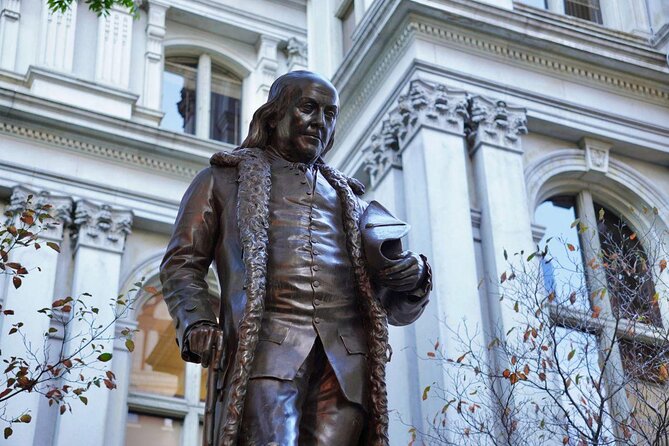
- The full official route: You check off all 16 Freedom Trail sites, including churches, burying grounds, meeting halls, historic homes, and major public landmarks.
- A strong guide makes the difference: Guides such as Alissa, Jim, Kenny, Alfred, Julia, Sam, and Charles R. are praised for clear storytelling, humor, and answers to detailed questions.
- A broad view of Boston: The tour links the American Revolution with abolition, women’s rights, education, immigration, and Boston’s 400-year story.
- A long urban walk: The route ends at Copp’s Hill Terrace after several miles, with views of Bunker Hill Monument and the USS Constitution.
- Small enough to feel manageable: The group limit is 25 people, though hearing can still be difficult if you are behind the guide.
- Weather matters: The experience requires good weather, with a different date or full refund offered if poor conditions force cancellation.
Starting at The Embrace and the Massachusetts State House
The meeting point is The Embrace, at 139 Tremont Street beside the Boston Common Visitor Information Center. This recent memorial honors Martin Luther King Jr. and Coretta Scott King, giving the walk a useful opening note: Boston’s story did not end with independence in 1776.
From here, the route moves toward the Massachusetts State House. Its golden dome is hard to miss, but the building’s date matters more than its shine. Construction began after Samuel Adams laid the cornerstone in 1795, making the State House a reminder that Massachusetts government continued to take shape after the Revolution.
I appreciate this beginning because it avoids treating Boston as a museum frozen in the 18th century. You start with a modern memorial, then step back into the colonial and revolutionary period. That movement helps place the familiar patriot story inside a longer account of public life and civic change.
More Walking Tours in Boston
- Boston: Freedom Trail History Small Group Walking Tour
★ 5.0 · 6,450 reviews - Cambridge: Harvard University Student-Guided Walking Tour
★ 4.6 · 3,931 reviews - Harvard University Campus Guided Walking Tour
★ 4.5 · 3,632 reviews
Park Street Church and the Granary Burying Ground
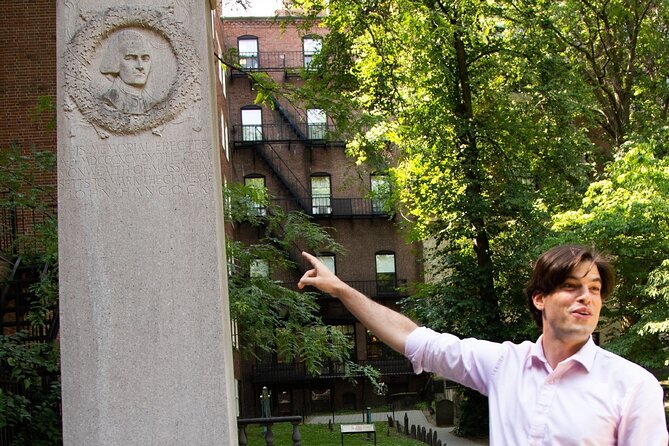
The red brick church built in 1809 was home to abolitionists and a setting for early anti-slavery speeches. Your guide uses the building to show that Boston’s reform tradition did not begin or end with the fight against Britain.
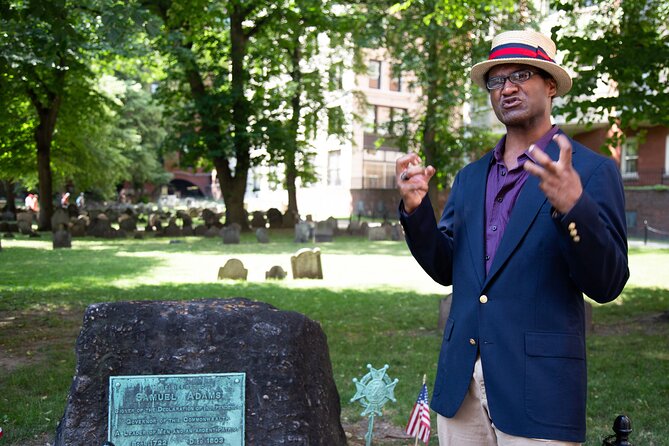
The next stop, Granary Burying Ground, dates to 1660. It is the resting place of John Hancock, Paul Revere, and Samuel Adams, among other notable figures. The stones are close together, and the stop can be one of the most rewarding parts of the walk if you like names, dates, and personal connections.
This is also where pacing can become uneven. One guide may spend a generous amount of time explaining the cemetery, then need to move quickly through the next stretch to keep the tour on schedule. If you want a long, quiet look at every marker, save extra time for a return visit.
King’s Chapel and the Old South Meeting House
King’s Chapel was built in 1754 as Boston’s first Anglican church. Its stone walls, adjacent burying ground, and crypts offer a different view of colonial society from the Puritan meeting houses nearby.
The contrast becomes sharper at the Old South Meeting House, built in 1729. This Puritan gathering place is tied to the Boston Tea Party, which began with a meeting and debate before it became an act of destruction and protest. The stop is valuable because it gives the event a setting and a crowd, rather than reducing it to a single famous gesture.
You will hear about the speeches and arguments that pushed Boston toward revolt. The tour does not simply list the date of the Tea Party. It shows how a public meeting could turn political anger into action.
If the Tea Party is your main interest, keep your expectations measured. The route gives you an important setting and context, but it may not linger over every detail of that night, such as the exact number of participants or the full sequence of events.
Old Corner Bookstore and the Old State House
The Old Corner Bookstore began as a colonial apothecary in a brick building dating to 1718. In the 19th century, it became the publishing home of Ticknor & Fields, linking the Freedom Trail to Boston’s literary life and the writers who shaped American reading culture.
That shift from medicine to publishing is one of the tour’s useful reminders. Buildings often changed purpose as Boston changed around them. A walk that begins with colonial politics also introduces commerce, print, and the spread of ideas.
The Old State House, built in 1713, brings you back to the conflict between Massachusetts residents and British authority. Its exterior is marked by the symbols of Great Britain, including the Lion and Unicorn. Inside and around this building, fiery speeches and confrontations helped turn political complaints into open resistance.
I like the way these two stops widen the usual Revolution lesson. The story is not only about soldiers and famous patriots. It is also about the places where people bought medicine, published books, gathered for meetings, and argued over who had the right to govern.
More Boston walks with a guide:
- Boston Freedom Trail Walking Tour with Costumed Guide
★ 4.5 · 2,531 reviews - The Full Revolutionary Story Epic Small Group Boston Walking Tour
★ 5.0 · 2,356 reviews - Boston’s Freedom Trail: A Revolutionary Walking Tour
★ 4.9 · 1,748 reviews - Boston: Freedom Trail History Small Group Walking Tour
★ 4.9 · 1,590 reviews
The Boston Massacre site and Faneuil Hall

A circle of stones marks the official site of the Boston Massacre. Here, five colonists died when British soldiers fired into a crowd in 1770. The guide gives a moment-by-moment account, helping you see why the incident became such a powerful piece of revolutionary propaganda.
The site is easy to pass without a guide. It is small, surrounded by modern streets, and lacks the visual drama of a large church or old house. The value comes from the explanation, especially the connection between a confused street confrontation and the political story later built around it.
Faneuil Hall follows, with its market below and meeting hall above. The upper room earned the name Cradle of Liberty because of the speeches delivered there. It is another place where the physical building matters less than the voices that used it.
The sequence works well. At the Old State House, you hear the government’s side of the conflict. At the Massacre site, you see the consequences of tension in the street. At Faneuil Hall, you learn how public speech helped organize opposition.
Paul Revere’s house in the North End
Paul Revere House dates to 1680 and is Boston’s oldest building. Revere lived there with his family, and the house gives a more ordinary scale to a man often remembered only as a rider in the night.
Your guide explains Revere’s family life and his role in the events that led to the Revolution. That human detail matters. He was not simply a bronze statue or a name in a schoolbook. He was a working Bostonian living in a crowded neighborhood and taking part in a dangerous political crisis.
The North End also changes the feel of the walk. Streets become narrower, and the route feels more residential than the broad spaces near Boston Common and the State House. You get a stronger sense of Boston as a lived-in town, not just a set of official monuments.
The building itself is compact, so the tour may focus more on its exterior and story than on an extended interior visit. If you want to study the house at length, plan to return independently if your schedule allows.
Old North Church and the signal before Lexington
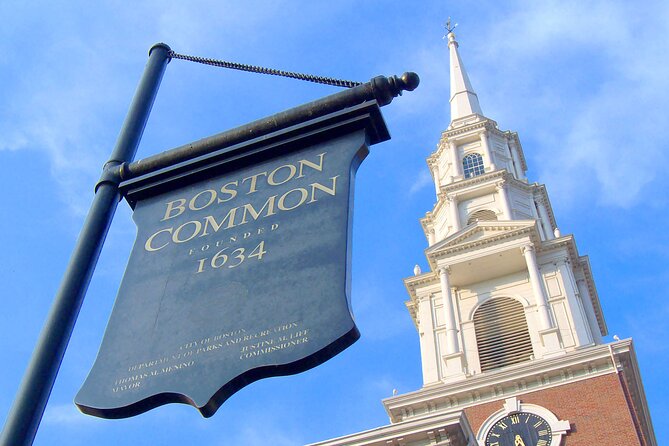
Old North Church was built in 1723 and is linked to the famous lantern signal before the fighting began at Lexington and Concord. Two lanterns shining from the steeple meant the British were moving by sea, while one would have indicated land.
The guide explains how Paul Revere arranged the signal and why it mattered on April 18, 1775. This is one of the route’s most memorable storytelling moments because a simple visual message carried such weight.
The church may be undergoing construction or crowded with other groups at times. A good guide can adjust the position of the group and continue the story, but you may not get a quiet or unobstructed view.
This is also a good point to pay attention to sound. The group limit is 25, yet city traffic and other tours can make it hard to hear if you fall behind. Stand near the guide and face the speaker during explanations.
Copp’s Hill, Bunker Hill, and the final views
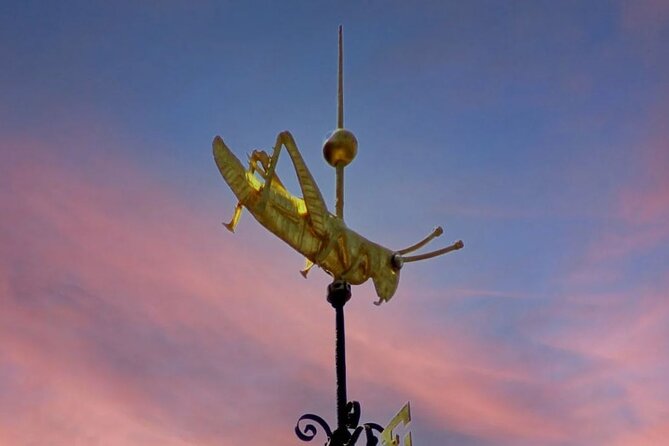
The route reaches Copp’s Hill Burying Ground, which dates to 1660. During the Battle of Bunker Hill, British forces placed cannon emplacements here. The guide also points out notable Bostonians buried in the ground.
From Copp’s Hill Terrace, you view the 221-foot Bunker Hill Monument across the water. The monument marks the site where colonial militia defended hastily built earthworks and repelled two British attacks before retreating.
This distinction is worth hearing carefully. The battle is commonly remembered through Bunker Hill, but the fighting took place mainly on nearby Breed’s Hill. The tour’s viewpoint lets you connect the monument, the battle story, and Boston’s waterfront geography without needing to cross into Charlestown.
You can also see the masts and rigging of USS Constitution. Known as Old Ironsides, it won battles in the War of 1812 and is the oldest warship afloat anywhere in the world. The tour ends with this later chapter in American history, a fitting reminder that Boston’s military story continued after independence.
The end point is listed as Copp’s Hill Terrace, with the street information given as 7 Jackson Avenue in Boston’s North End. It is not the same kind of finish as returning to Boston Common, so check your map before making dinner or transport plans.
What $31 buys you in time and context
At $31 per person, the tour is priced as a guide-led introduction rather than a series of paid museum admissions. The central value is the organized route and the explanations at places that can look modest or confusing when you see them alone.
Walking the Freedom Trail independently costs little, but the official sites are spread through downtown and the North End. You can easily miss the Old Corner Bookstore, misunderstand the Boston Massacre site, or pass the meeting halls without grasping their political role.
I see this tour as good value if you are visiting Boston for the first time, have limited time, or want a clear framework before exploring on your own. It is less useful if you already know the route well and prefer to stop for long periods at each site.
The group maximum of 25 is reasonable for an urban walk. Still, the quality of the experience depends on where you stand and how clearly the guide projects. Guides including Noah, Kenny, Sam, Alfred, Jim, Alissa, Julia, Kathy, Eliot, Stewart, and Charles R. have been praised for humor, strong storytelling, clear speech, and a steady pace, but guide style can vary.
Walking demands, weather, and who will enjoy it
You need a moderate level of physical fitness. The walk covers several miles, includes frequent standing, and keeps moving through city streets for roughly 2.5 hours. Comfortable shoes are not optional advice here.
People who walk slowly, use a walking stick, or tire easily should think carefully before booking. One outing moved too quickly for some members of the group, with the cemetery taking more time than expected and later stops passing at a faster rate.
Rain does not automatically ruin the experience. The route has been enjoyed in wet weather, but the company says good weather is required and may cancel for poor conditions. If that happens, you are offered another date or a full refund.
The tour fits families with older children and teenagers, couples, solo visitors, and friends who enjoy a full dose of history on foot. A lively guide can hold a teenager’s attention, while a strong storyteller gives history buffs details they may not already know.
It is also a useful first activity in Boston. You get a map in your head, learn which neighborhoods connect, and can return later to the sites that deserve more time.
Should you book Boston’s Revolutionary Walking Tour?
I would book it if you want the whole Freedom Trail in one guided walk and are prepared for a brisk urban outing. The 4.9 rating from 1,343 reviews and 97 percent recommendation rate fit the tour’s strongest qualities: guides who bring the past to life, answer questions, use humor well, and explain more than you would likely notice alone.
I would hesitate only if you need frequent rests, have trouble hearing in a group, or want extended interior visits. For most first-time visitors, $31 is a fair price for the route, the historical connections, and the useful orientation it provides.
Book at least a few days ahead if possible. The tour is booked an average of 12 days in advance, and free cancellation is available until 24 hours before the start time. If Boston’s Revolution is on your must-see list, this is a practical way to begin.
FAQ
Where does the Freedom Trail tour begin?
The tour begins at The Embrace, located at 139 Tremont Street beside the Boston Common Visitor Information Center in Boston.
Where does the walking tour end?
The tour ends at Copp’s Hill Terrace in Boston’s historic North End. From there, you can view Bunker Hill Monument and the USS Constitution in Charlestown.
How long does the tour last?
The tour lasts approximately 2 hours and 30 minutes.
How much does the tour cost?
The listed price is $31 per person.
How many people can join the tour?
The experience allows a maximum of 25 travelers.
Is the tour offered in English?
Yes. The tour is offered in English and includes a mobile ticket.
What happens if bad weather cancels the tour?
If poor weather causes the experience to be canceled, you will be offered a different date or a full refund. You can also cancel up to 24 hours before the start time for a full refund.
Recently reviewed around Boston
- Delicious Donuts of Boston: A Sweet History Walking Tour★ 5.0 · 1,038 reviews
- Freedom Trail Walking Tour 250★ 4.5 · 1,118 reviews
- Boston North End Food Tour of 6+ Tastings, Cannoli, Lobster Roll★ 5.0 · 1,404 reviews
- Narrated Sunset Cruise of Boston Harbor★ 4.0 · 532 reviews
- Sunset Sailing Cruise on a Tall Ship in Boston Harbor★ 4.5 · 414 reviews
- City Cruises Salem High Speed Ferry to/from Boston★ 4.5 · 727 reviews
- Boston Harbor Sunset Cruise★ 4.5 · 632 reviews
- Boston Pizza Lovers Food and History Walking Food Tour★ 4.5 · 1,082 reviews
Walking Tours, compared.
History and Hauntings of Salem Guided Walking Tour
Read our review →
New Orleans Premier Ghost, Voodoo and Vampire Walking Tour
Read our review →
Freedom Trail History Small Group Walking Tour
Read our review →
Historic Charleston Guided Sightseeing Walking Tour
Read our review →
New Orleans Food Walking Tour of the French Quarter with Small-Group Option
Read our review →
St. Louis Cemetery No. 1 Official Walking Tour
Read our review →Browse the lists this tour appears in