
Reviewed · HISTORICAL TOURS
Boston: Freedom Trail History Small Group Walking Tour
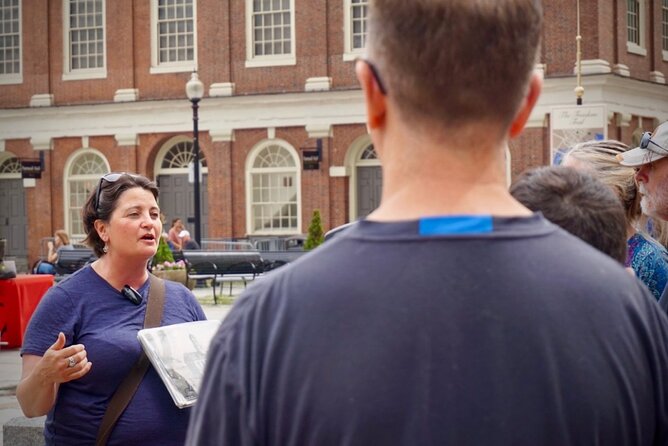
Boston’s Freedom Trail is best understood on foot, and this small-group tour of 15 people or fewer gives the city’s old streets room to breathe. Over about two and a half hours, you move from Boston Common to the North End, tracing the tense years before the American Revolution rather than simply ticking off red-brick landmarks.
I like the strong storytelling, especially the way guides such as Maura, Nick, Alejandro, and Cyrus put myths beside facts. I also like the useful midpoint pause at Quincy Market, where you can grab a drink or use the bathroom. The drawback is the pace: two miles of city walking, often with frequent stops, can feel long in freezing rain, heavy snow, or a summer crowd.
In This Review
- Key points to know before you book
- Why this Freedom Trail walk works
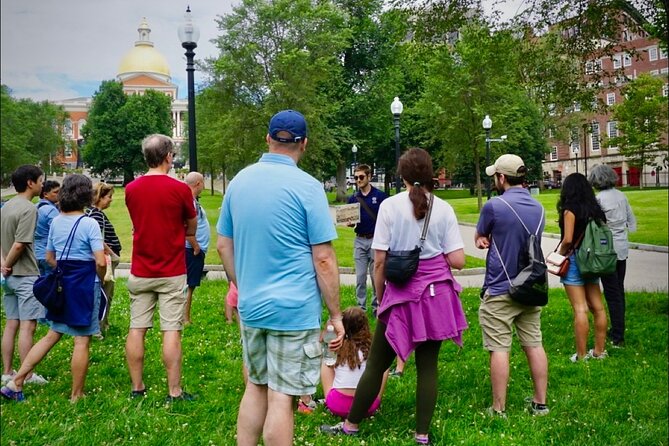
- Starting at Boston Common and the State House
- Granary Burying Ground and Boston’s famous names
- Franklin, books, and the road to open protest
- Old State House and the Boston Massacre Site
- Faneuil Hall, Quincy Market, and a useful pause
- Paul Revere’s house and the North End streets
- Old North Church, Copp’s Hill, and the final view
- Pace, weather, and physical effort
- Is $35 a fair price?
- Who will enjoy this Boston walking tour?
- Should you book the Freedom Trail History Small Group Walking Tour?
- FAQ
- How long does the Boston Freedom Trail tour last?
- How far do you walk?
- Where does the tour start?
- Where does the tour finish?
- How many people are in each group?
- Does the tour visit all 16 Freedom Trail landmarks?
- Are museum admissions included?
- Is the tour wheelchair accessible?
Key points to know before you book
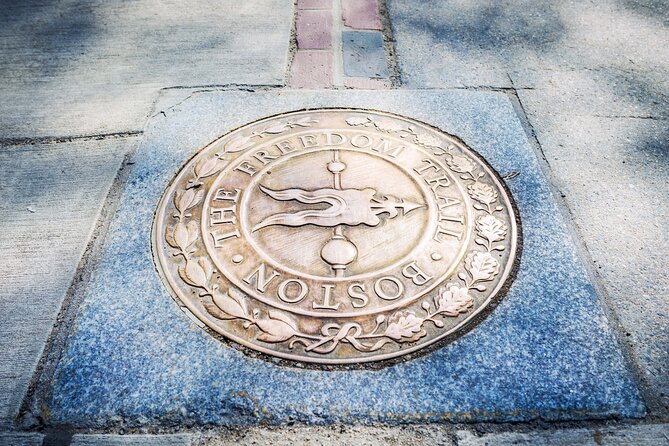
- Sixteen official Freedom Trail landmarks: You see the full set connected with this route, though the USS Constitution and Bunker Hill Monument are viewed from a distance rather than visited.
- A guide-led history lesson: The focus is the 15-year buildup to rebellion, with stories about loyalty, protest, propaganda, and the people caught between crown and country.
- Small groups capped at 15: You have a better chance of hearing questions and seeing the guide than you would in a large street tour.
- A smart North End finish: The walk ends at Copp’s Hill Terrace, close to the Old North Church, Paul Revere’s neighborhood, and Italian restaurants.
- About 2.0 miles on city streets: Wear shoes with good support and dress for wind, snow, rain, or heat.
- Good value at $35: You pay for the guide and route, not museum entry, but the price is fair if you want context instead of a self-guided walk.
Why this Freedom Trail walk works
Boston’s historic center is compact, but the story is not. One plaque may point to a burial ground, the next to a protest meetinghouse, and the next to a street corner where a political crisis turned deadly. Without a guide, you can see the buildings and still miss the argument connecting them.
This tour gives you that argument. The guide follows the period from rising colonial tension through the events that helped set the American Revolution in motion. You hear about taxes, public protest, British authority, local resistance, and the difficult choice between loyalty and rebellion.
I especially like that the tour is not built only around famous heroes. Paul Revere, Samuel Adams, Benjamin Franklin, and the British soldiers all enter the story, but the central theme is community pressure. Boston’s residents had to decide how far they were willing to go, and what rebellion might cost.
The format helps. With a maximum of 15 people, you are not trying to follow a flag through a huge crowd. The group can gather around a burial marker or move into a quieter corner of a square. Guides are also able to answer questions, a useful advantage for anyone who wants more than a fixed speech.
More Historical Tours in Boston
- Boston: Freedom Trail History Small Group Walking Tour
★ 5.0 · 6,450 reviews - Tour of Historic Fenway Park, America’s Most Beloved Ballpark
★ 4.5 · 3,013 reviews - Boston Food & History: Pizza, North End & Freedom Trail
★ 5.0 · 1,772 reviews
Starting at Boston Common and the State House
Meet inside Boston Common at the Boston Foundation Monument, on the park’s northern edge opposite 50 Beacon Street. Look for the granite memorial with a bronze relief of two men shaking hands, linked to the Puritans’ arrival in 1630.
This is a practical meeting point, but give yourself time to find the exact monument. Boston Common is large, and the start is not simply at a subway entrance or a broad visitor center. The Freedom Trail begins nearby, so the guide can move into the city’s earliest public spaces without wasting time on transfers.
The first stop is Boston Common, with about 15 minutes of guided attention. It is a good opening because the park gives you a sense of Boston’s scale before the streets narrow. You then pass the Massachusetts State House and Park Street Church, both important visual markers near the start of the route.
The State House is a reminder that Boston’s political life did not end with the Revolution. Park Street Church adds another layer, showing how civic and religious institutions sat close together in the old center.
Do not expect extended indoor visits here. This is a walking tour, and admission inside museums or historic buildings is not included. The value comes from seeing the places in sequence and hearing why each one matters.
Granary Burying Ground and Boston’s famous names
Granary Burying Ground is one of the most memorable stops, with roughly 25 minutes devoted to the site. This is where you encounter the final resting places of figures including Paul Revere and Samuel Adams, along with other major names from Boston’s early political story.
I like the pause here because it slows the tour down. Streets and speeches can blur together, but a burial ground gives the past a human scale. You are standing among the people whose names appear on textbooks and street signs, while the guide explains their roles and connections.
You will also pass King’s Chapel. The route does not turn into a full museum tour, so check your expectations if you want to inspect interiors. You are mainly getting the outdoor setting and the guide’s explanation.
That distinction matters at $35. The tour is priced as a guided walk, not as a package of admissions. If you want to go inside the Old South Meeting House, Old State House, or Paul Revere House after the walk, plan to pay separately.
Franklin, books, and the road to open protest
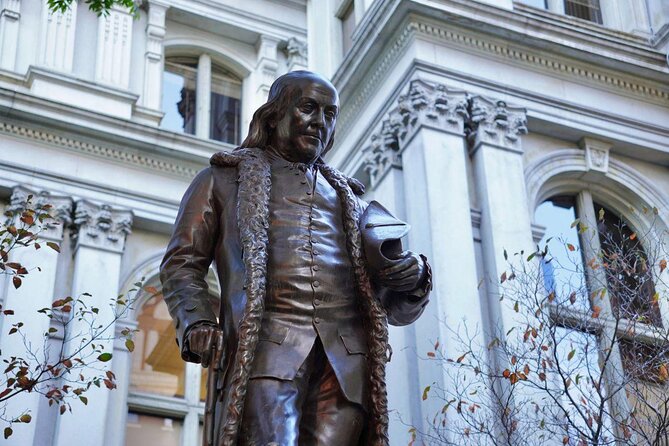
The next stretch connects Boston’s intellectual and civic life. You stop at the Boston Latin School site and Benjamin Franklin’s statue, with about 10 minutes of guided time. Franklin’s statue is especially useful for connecting Boston to the wider American story, though the stop is brief.
Old City Hall and the Old Corner Book Store follow. These are easy places to pass without noticing, which is one reason a guided walk earns its fee. The tour turns ordinary-looking corners into pieces of the city’s political and literary past.
At the Old South Meeting House, the guide spends about 10 minutes. This building is closely linked to the meetings and public arguments that preceded the Boston Tea Party. The important point is not only what happened inside, but how a large gathering could turn public anger into organized action.
The guides who work well here avoid simply reciting dates. The strongest style, reflected in the comments about Nick, Zoe, Maura, and others, gives you several angles and lets you think about the choices people made. That approach is particularly helpful for visitors from outside the United States who know the Revolution only in broad outline.
More Walking Tours in Boston
- Cambridge: Harvard University Student-Guided Walking Tour
★ 4.6 · 3,931 reviews - Harvard University Campus Guided Walking Tour
★ 4.5 · 3,632 reviews - Boston Freedom Trail Walking Tour with Costumed Guide
★ 4.5 · 2,531 reviews - The Full Revolutionary Story Epic Small Group Boston Walking Tour
★ 5.0 · 2,356 reviews
Old State House and the Boston Massacre Site
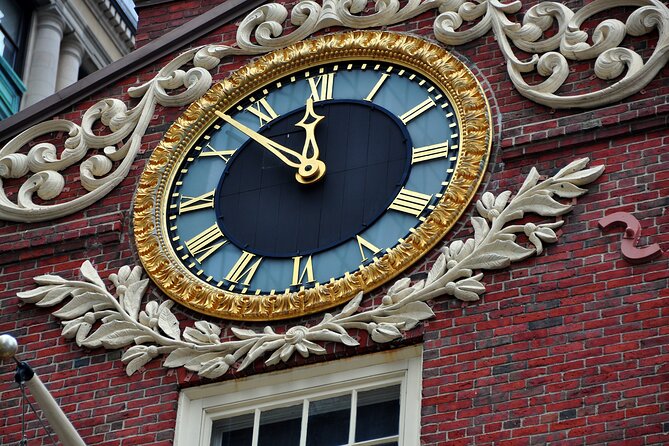
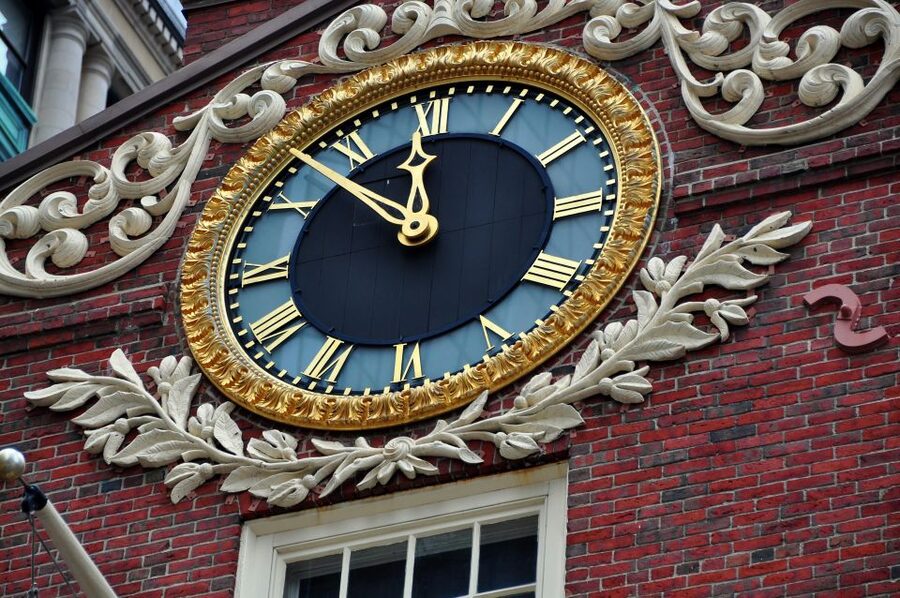
The Old State House is one of the tour’s central stops. Its balconies and position above the street make it easy to imagine how government authority was displayed in colonial Boston.
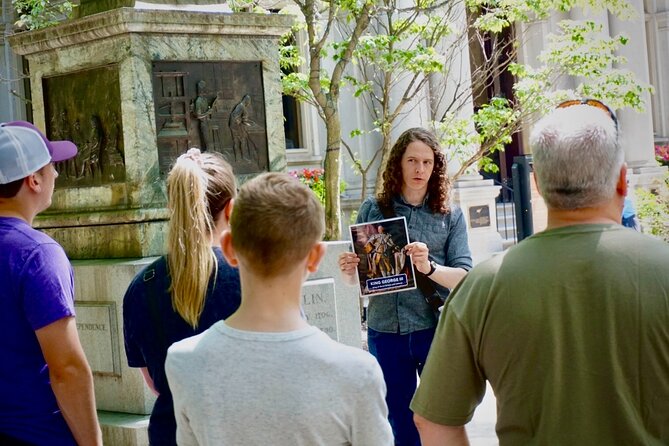
Right outside is the Boston Massacre Site, where about 15 minutes are set aside. This is a point where the tour’s balance matters. The event became a powerful political image, but the facts, language, and later propaganda deserve careful treatment.
One guide praised in the supplied feedback was noted for explaining competing interpretations rather than repeating a simple patriotic version. That is exactly what you want here. You can learn how the event was presented to colonial audiences, how it affected public opinion, and why words such as massacre carried such force.
This stop can be crowded and noisy because it sits in an active part of downtown. A small group helps, but you still need to pay attention to the guide and stay close. The sidewalk is not a quiet classroom.
Faneuil Hall, Quincy Market, and a useful pause
Faneuil Hall receives about five minutes of guided attention. The stop is short, but its place in Boston’s public life makes it worthwhile. The building is tied to speeches, debate, and the city’s tradition of gathering to argue political questions.
You then pass through Quincy Market, with a planned 10-minute break. This is one of the tour’s most practical features. Two and a half hours on foot is easier when you know there is a bathroom and drink stop in the middle.
Do not treat the break as a full meal period. Ten minutes is enough for a quick purchase or a short reset, not a relaxed lunch. If you need food, the North End at the end of the walk is a better place to plan a proper stop.
The break also divides the tour naturally. The first half centers on Boston Common, civic power, protest, and the public crisis. The second half moves into the North End and the personal story of Paul Revere.
Paul Revere’s house and the North End streets
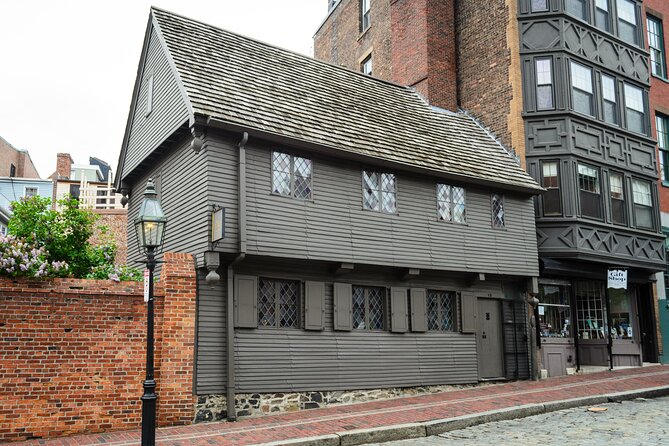
Paul Revere House is a major highlight, with about 15 minutes of guided time. The building gives you a direct connection to one of Boston’s best-known Revolutionary figures, but the wider neighborhood is just as important.
Hanover Street carries you through the North End, where restaurants, bakeries, and narrow streets replace the formal civic spaces downtown. The transition helps you picture Boston as a lived-in colonial town rather than a collection of grand monuments.
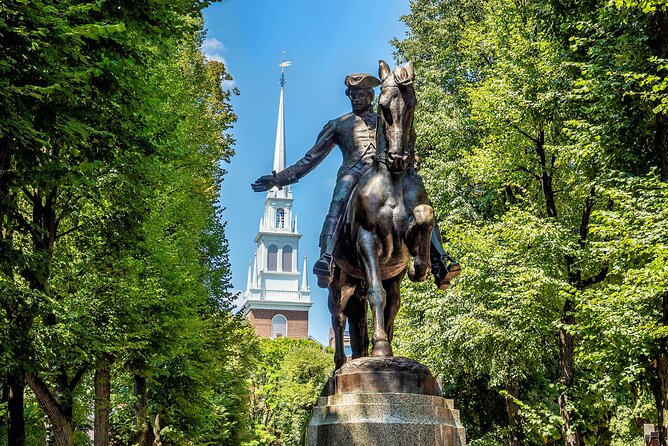
The tour continues to the Paul Revere Statue, with about 10 minutes of explanation. This is a good moment to separate the famous legend from the complete story. One point that can surprise first-time visitors is that Revere did not complete the entire Midnight Ride in the simple way schoolbook versions often suggest.
A strong guide uses that correction to make the history more interesting, not less. You learn how stories become symbols and how later memory can simplify a complicated event.
Guides also tend to be useful with North End suggestions. Some have offered restaurant and bakery advice, and the tour’s final location puts you close to the area’s Italian restaurants. That makes this a good afternoon activity if you want dinner nearby afterward.
Old North Church, Copp’s Hill, and the final view
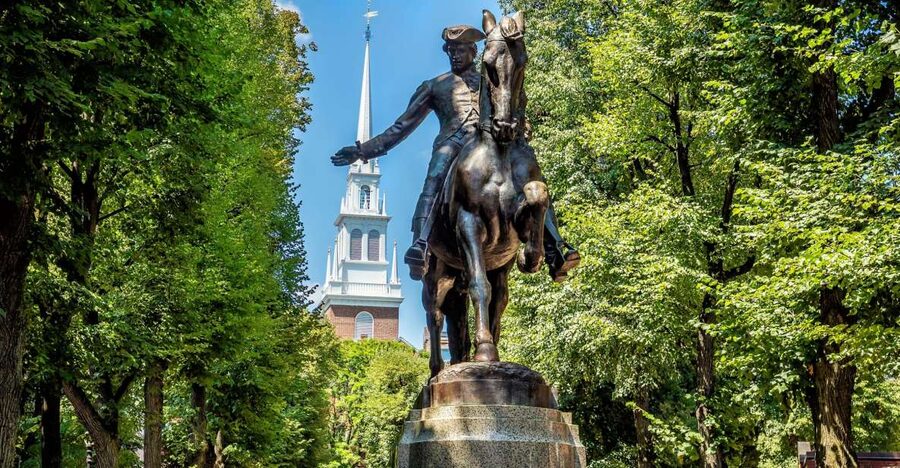
Old North Church receives about 10 minutes. The church is tied to the lantern signal associated with the Midnight Ride, making it one of the most recognizable points on the trail.
The tour then reaches Copp’s Hill Burying Ground. Like Granary Burying Ground, it changes the tone from public protest to individual lives and death. The setting also helps you understand the North End’s older edge.
You do not walk into Charlestown on this experience. Instead, the route offers scenic views toward the USS Constitution and Bunker Hill Monument. The walk ends at Copp’s Hill Terrace, about 10 minutes from the close.
This ending is well chosen. You get a wider view across the water and can place two important Revolutionary sites in the distance. Just remember that seeing the USS Constitution and Bunker Hill Monument is not the same as touring Charlestown. If those are priorities, you need a separate visit.
Pace, weather, and physical effort
The stated accessible route covers about 2.0 miles, or 3.2 kilometers, and the tour can run anywhere from 150 minutes to no more than three hours. The distance is manageable for many people, but the frequent stops and city pavement make it more tiring than the mileage suggests.
Wear comfortable shoes. You will walk on sidewalks and through busy historic areas, with little chance to sit during many of the stops. Children under six are not accepted, and the activity is not recommended for people with low fitness or mobility impairments.
There is a confusing detail in the practical information: the route is described as wheelchair accessible, yet the activity is also marked unsuitable for people with mobility impairments. I would not assume that accessible means effortless. Contact the provider before booking if you use a wheelchair, walker, or need regular seating.
Weather is a serious factor in Boston. Guides have led the route through freezing February conditions, thick snow, and heavy rain, and the outdoor format means you should prepare rather than hope for luck. Bring weather-appropriate clothing, and keep luggage or large bags at your accommodation because they are not allowed.
Video recording is also not allowed. You can still listen, take notes, and photograph the city when appropriate, but do not plan to record the guide’s full presentation.
Is $35 a fair price?
At $35 per person, this is a solid price for a live, English-language tour lasting around 2.5 hours. You are paying about what a casual meal might cost, but receiving a structured route through 16 official Freedom Trail landmarks and the benefit of a guide who can connect them.
The value is strongest for a first visit. You see a large share of central Boston in one continuous walk, then finish in the North End, an area you will likely want to explore on your own anyway.
The price is less attractive if you already know the Freedom Trail well or prefer to read at your own speed. Museum admissions are not included, gratuity is optional, and Charlestown is not visited. You should also budget for any indoor attractions you decide to enter later.
I would tip the guide if the tour is well delivered, especially since the experience depends heavily on the guide’s preparation, energy, and ability to keep the group together. Names such as Maura, Nick, Alejandro, Cyrus, Zoe, and Sara have been associated with particularly strong tours, but you cannot choose a specific guide from the information provided.
You can cancel up to 24 hours before the start for a full refund, and the reserve-now, pay-later option is useful when your Boston schedule is still shifting.
Who will enjoy this Boston walking tour?
I would recommend it to first-time visitors, families with children over six, history fans, and anyone who wants an efficient introduction to central Boston. It also works well as a first-day activity because it gives you a map of the city and points out places you can revisit later.
The tour is a good fit for international visitors. The guides explain the background rather than assuming you already know every colonial name, and the story is presented as a conflict over power, loyalty, money, and identity.
Families should consider the full 2.5-hour commitment. The supplied comments describe guides keeping children engaged, but the tour still contains a lot of spoken history and outdoor standing. Older children are likely to get more from it than very young ones.
I would skip it if you dislike group walking, need frequent seating, want extended time inside each attraction, or plan to visit only the Charlestown landmarks. In those cases, a shorter self-guided outing or a separate museum visit may suit you better.
Should you book the Freedom Trail History Small Group Walking Tour?
Book it if you want the full downtown-to-North-End Freedom Trail in one organized walk, with stories that connect the landmarks instead of isolated facts. The small group, midpoint break, strong guide roster, and fair $35 price make it a sensible choice for most first visits.
Go in with the right expectations. You will see all 16 official landmarks along the route, but several are outdoor viewing stops, and Charlestown remains for another day. Wear serious walking shoes, prepare for Boston weather, and leave room afterward for a North End meal.
FAQ
How long does the Boston Freedom Trail tour last?
The listed duration is 150 minutes, or about 2.5 hours. The tour can vary in length but will not last more than three hours.
How far do you walk?
The accessible route travels approximately 2.0 miles, or 3.2 kilometers.
Where does the tour start?
Meet inside Boston Common at the Boston Foundation Monument on the park’s northern boundary, opposite 50 Beacon Street, Boston, Massachusetts 02108.
Where does the tour finish?
The walk ends at Copp’s Hill Terrace in Boston’s North End, near the Old North Church and Italian restaurants.
How many people are in each group?
Groups are limited to a maximum of 15 guests.
Does the tour visit all 16 Freedom Trail landmarks?
The route includes all 16 official landmarks connected with the Freedom Trail. The USS Constitution and Bunker Hill Monument are viewed from the route, but Charlestown is not visited.
Are museum admissions included?
No. Admission inside museums and historic buildings is not included in the $35 tour price.
Is the tour wheelchair accessible?
The activity information describes an accessible route, but it also says the tour is not suitable for people with mobility impairments. If you need accessibility support, confirm the route directly before booking.
Recently reviewed around Boston
- Delicious Donuts of Boston: A Sweet History Walking Tour★ 5.0 · 1,038 reviews
- Boston’s Freedom Trail: A Revolutionary Walking Tour★ 5.0 · 1,343 reviews
- Freedom Trail Walking Tour 250★ 4.5 · 1,118 reviews
- Boston North End Food Tour of 6+ Tastings, Cannoli, Lobster Roll★ 5.0 · 1,404 reviews
- Narrated Sunset Cruise of Boston Harbor★ 4.0 · 532 reviews
- Sunset Sailing Cruise on a Tall Ship in Boston Harbor★ 4.5 · 414 reviews
- City Cruises Salem High Speed Ferry to/from Boston★ 4.5 · 727 reviews
- Boston Harbor Sunset Cruise★ 4.5 · 632 reviews
Historical Tours, compared.

History and Hauntings of Salem Guided Walking Tour
Read our review →
Charleston’s Old South Carriage Historic Horse & Carriage Tour
Read our review →

Big Island in a Day: Volcanoes Waterfalls Sightseeing and History
Read our review →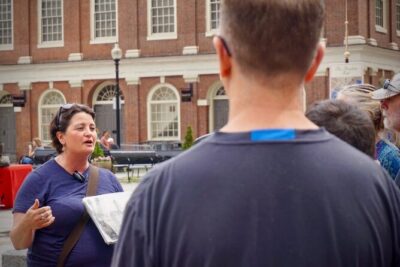
Freedom Trail History Small Group Walking Tour
Read our review →
Historic Charleston Guided Sightseeing Walking Tour
Read our review →
Starship Landmark 90 Minute Sightseeing Cruise
Read our review →Browse the lists this tour appears in