
Reviewed · WALKING TOURS
The Full Revolutionary Story Epic Small Group Boston Walking Tour
Boston’s Revolution did not unfold in the neat order of the Freedom Trail’s red bricks. This tour fixes that by moving through the city in historical sequence, from Puritan Boston and colonial politics to the Boston Massacre, the Tea Party, Paul Revere, and the fighting at Lexington and Concord.
I like the small group, limited to 15 people, and the way guides such as Tyler, Mike, Chris, and Tom turn streets and graveyards into a connected story. I also like the detours into modern Boston, including the Greenway, Financial District, and Harborwalk. The catch is simple: this is a long outdoor walk, often close to three and a half hours, so good shoes and weather-ready clothing matter.
In This Review
- Key reasons to consider this Boston walk
- Why the chronological route makes such a difference
- City Hall Plaza and Boston’s early story
- King’s Chapel and Granary Burying Ground
- Old City Hall, Franklin, and the Old State House
- The Boston Massacre and the road to revolt
- Post Office Square, the Financial District, and Faneuil Hall
- The Greenway and the move toward Paul Revere
- North Square, Old North Church, and the midnight ride
- Bunker Hill and the harbor finale
- What the $55 price buys you
- Pace, weather, and who should book
- Should you book The Full Revolutionary Story tour?
- FAQ
- How long does the Boston Revolutionary Story tour last?
- How large is the tour group?
- Where does the tour begin?
- Where does the tour end?
- Is transportation included?
- Are museum admissions included?
- Is the tour suitable for children?
Key reasons to consider this Boston walk
- The Revolution unfolds in order: You follow events as they developed, rather than simply ticking off Freedom Trail stops from west to east.
- History gets practical: Guides use maps, character cards, visual aids, and even Lego soldiers to explain battles and political conflict.
- The route goes beyond the red brick: You see City Hall, Post Office Square, the Financial District, Rose Kennedy Greenway, and Boston Harbor.
- Small groups help the teaching work: With no more than 15 people, it is easier to hear the guide and ask questions.
- The finish is useful: Lewis Wharf puts you near the North End’s Italian food, seafood, pizza, cannoli, public restrooms, parking, and the Aquarium subway stop.
- The pace requires stamina: The walk is suitable for people with moderate fitness, but it may not suit anyone with mobility limits.
Why the chronological route makes such a difference
Many Boston walks use the Freedom Trail as a simple geographic path. This one treats the trail as a stage for a developing story.
You begin with the people and beliefs that shaped early Massachusetts Bay. Then you move into the political arguments, street violence, protests, and acts of resistance that pushed Boston toward war. By the time you reach Paul Revere, the Old North Church, and Bunker Hill, the main figures and conflicts already have a place in your mind.
That order is the tour’s main strength. You are not just looking at Paul Revere’s house because it happens to be next on a route. You first learn about the pressure building in Boston, then see how Revere fit into that world.
The result is more like a long outdoor history class than a quick photo walk. That will suit you if you want context and cause and effect. If you prefer a short introduction with plenty of free time for pictures, shopping, or museums, this may feel too detailed.
More Walking Tours in Boston
- Boston: Freedom Trail History Small Group Walking Tour
★ 5.0 · 6,450 reviews - Cambridge: Harvard University Student-Guided Walking Tour
★ 4.6 · 3,931 reviews - Harvard University Campus Guided Walking Tour
★ 4.5 · 3,632 reviews
City Hall Plaza and Boston’s early story
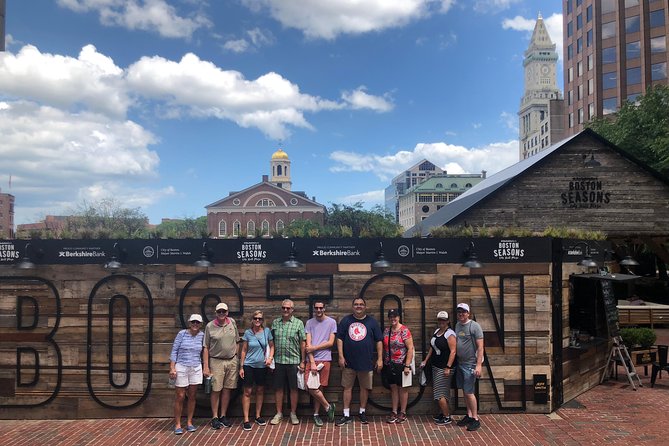
Meet your guide at City Hall Plaza, between Five Iron Golf and City Hall, near the seasonal beer garden and the large BOSTON sign. Faneuil Hall appears behind the sign, making this a useful first photo stop and an easy place to get your bearings.
The opening also introduces present-day Boston. City Hall’s unusual concrete architecture provides a sharp contrast to the brick, stone, and Georgian buildings that follow. The guide uses the building to discuss democracy and the problems that come with governing a city.
That opening is brief, but it helps frame the tour. Boston is not a preserved colonial set. It is a working city, and the old arguments about power and representation still sit beside offices, restaurants, transit stops, and public plazas.
King’s Chapel and Granary Burying Ground
At King’s Chapel Burying Ground, the focus shifts to the first settlers of Massachusetts Bay. The discussion centers on the Puritans, including their beliefs, social rules, and the less familiar parts of their world.
This is a useful correction to the tidy version of early American history. You get more than dates and famous names. The tour explains the people who built the society that later produced Boston’s political disputes.
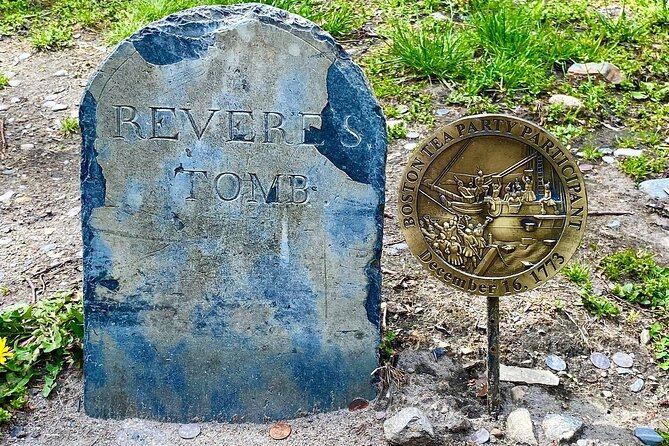
The walk then passes the first Anglican church in Boston and reaches Granary Burying Ground. Here you can see the graves of Paul Revere, John Hancock, and Samuel Adams.
The cemetery is compact and easy to visit from the street, but the real value comes from the guide’s explanation of the Sons of Liberty. You learn who these men were, what they wanted, and how protest moved from speeches and meetings into direct action.
The tour also pauses at Brimstone Corner, known for fiery sermons. Its connection to William Lloyd Garrison’s first public anti-slavery address in Boston adds a later chapter to the route. It reminds you that Boston’s story did not stop with independence.
Old City Hall, Franklin, and the Old State House
Old City Hall provides some of the prettiest architecture on the route. It also serves as a place to consider the practical challenges of democracy, rather than treating democratic ideals as a finished achievement.
Next comes the Benjamin Franklin statue and the site of America’s first public school. Franklin’s connection to the school gives the stop a personal angle. You are not only hearing about a famous statesman and inventor. You are connecting him to the civic institutions of colonial Boston.
The Old State House then brings politics into sharper focus. It was the center of Massachusetts government and the setting for arguments over British authority and American rights.
The building is one of the tour’s strongest stops because it puts political tension in a physical place. The questions being argued here were not abstract. They concerned taxation, representation, law, and who had the right to make decisions for the colonies.
More Boston walks with a guide:
- Boston Freedom Trail Walking Tour with Costumed Guide
★ 4.5 · 2,531 reviews - Boston’s Freedom Trail: A Revolutionary Walking Tour
★ 4.9 · 1,748 reviews - Boston: Freedom Trail History Small Group Walking Tour
★ 4.9 · 1,590 reviews - Boston’s Freedom Trail: A Revolutionary Walking Tour
★ 5.0 · 1,343 reviews
The Boston Massacre and the road to revolt

At the Boston Massacre site, the guide separates the soldiers, townspeople, loyalists, and patriot leaders caught in the crisis. That balance matters. A good explanation of the Revolution needs more than heroes on one side and villains on the other.
The stop shows how quickly a tense occupation could become deadly. It also helps you understand why images and stories about the event had such power in colonial politics.
The route passes the former publishing house associated with Ralph Waldo Emerson, Henry Wadsworth Longfellow, Nathaniel Hawthorne, and other American literary figures. This is one of the short side notes that broadens the experience beyond the Revolution.
You then reach the Old South Meeting House, where the Boston Tea Party story begins. The tour presents the meeting house as the place where protest gathered force before the tea was destroyed. This is a turning point in the story, and the guide explains why there was no easy return to normal relations after it.
Post Office Square, the Financial District, and Faneuil Hall
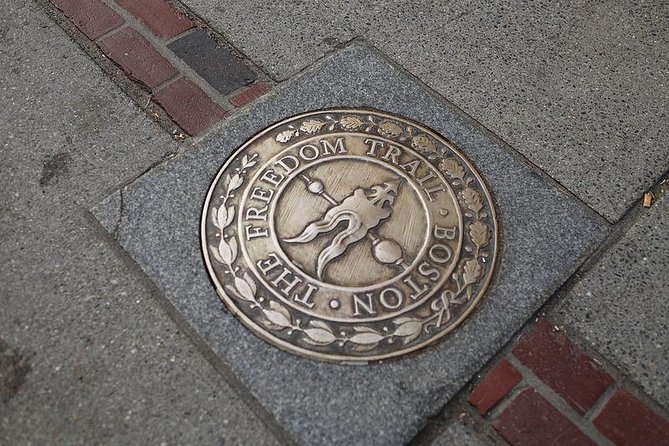
Post Office Square is a reminder that the Revolutionary story now runs through a modern downtown. Towers, streets, offices, and traffic surround the places where colonial arguments once played out.
The Financial District stop adds more present-day context, with discussion of Boston’s roles in education, health care, and finance. I appreciate this part because it prevents the tour from treating history as something sealed off from daily life.
Faneuil Hall returns you to the political heart of colonial Boston. Often called the Cradle of Liberty, it was a place for public meetings and protest. Here the tour explains how opposition to British policy became an organized movement.
There is a built-in break at Faneuil Hall and Quincy Market. It is not a full meal stop, but it helps break up the walk and gives you a chance to look around. Quincy Market can be useful for a quick snack, though you should expect plenty of tourist-oriented food and shopping.
The guide’s warning about tourist traps is practical. If you plan to eat here, compare prices and choices before settling in. The better food advice comes later, in the North End.
The Greenway and the move toward Paul Revere
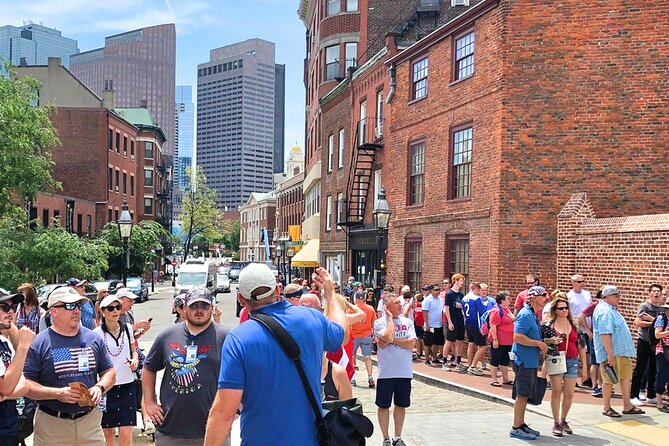
After Faneuil Hall and Quincy Market, the route crosses the Rose Fitzgerald Kennedy Greenway. This long public garden gives your feet a change of scenery and shows how Boston has reshaped its downtown.
The Greenway is also a good example of the tour’s wider aim. You are seeing the historic core, but you are also seeing how the modern city uses public space.
At the Paul Revere House, the story becomes more personal. The house sits in North Square, one of Boston’s oldest and most attractive public spaces. The guide presents Revere as more than the rider from a famous poem.
That distinction is worthwhile. The familiar legend is only part of his life and work. The stop gives you a better sense of the man, his place in Boston, and the network of people involved in resistance.
The house itself is not included as a museum admission. You see the site from the outside during the walk, so plan a separate visit if you want to go indoors.
North Square, Old North Church, and the midnight ride
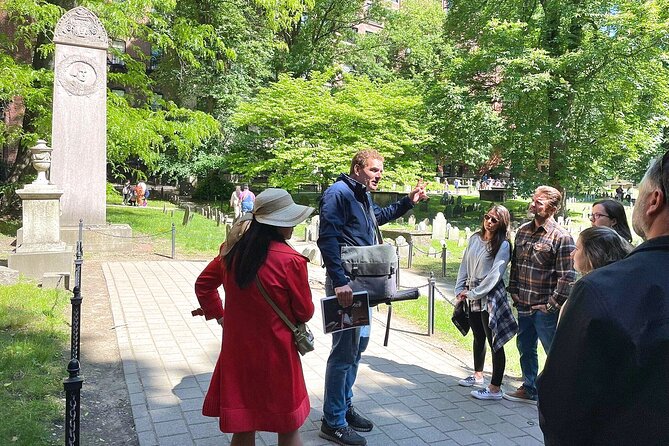
North Square Park has the feel of an old residential neighborhood, with narrow streets and historic buildings around it. The guide uses the square to connect Paul Revere’s home with the wider North End community.
At the Paul Revere statue, you get a straightforward picture stop. It is brief, which is welcome on a long walk, but the stop works better after you have heard about Revere’s real activities.
The Old North Church brings the midnight ride into view. The famous signal of one lantern by land and two by sea leads into the rush toward Lexington and Concord.
This is also where visual aids can help. Guides on this tour have used maps, character cards, and small props to make troop movements and battle plans easier to follow. One guide used Lego soldiers to illustrate Bunker Hill. That may sound playful, but a simple physical model can make a confusing battle much clearer than a long verbal explanation.
The church interior is not part of the included experience. You view the historic site from outside and receive tips on how to visit it separately.
Bunker Hill and the harbor finale
The route continues toward views of Charlestown and Boston Harbor from near the second-oldest burial ground in Boston. This stop is viewed from outside, but the terrace gives you a useful outlook across the water.
The Bunker Hill Monument section recreates the battle and explains why it mattered. Bunker Hill was the largest battle of the American Revolution, and the guide uses the setting to describe the fighting rather than leaving it as a name on a monument.
You also get an overview of USS Constitution, known as Old Ironsides, from across Boston Harbor. It was not part of the Revolution, so the tour does not pretend otherwise. Instead, the guide explains its later naval importance and offers advice for seeing the ship properly on your own.
The final stretch follows Boston Harbor and the Harborwalk. Ocean air, piers, wharfs, and waterfront parks provide a strong change from graveyards and government buildings. The walk ends at Lewis Wharf, near the heart of the North End.
This ending is well chosen. You finish near Italian restaurants, seafood, pizza, cannoli, and clam chowder, with the Aquarium subway stop less than five minutes away. Public restrooms, parking, and bicycles are also close by, and the original meeting area is less than a ten-minute walk away.
What the $55 price buys you
At $55 per person, this is not the cheapest way to see the Freedom Trail. You can walk much of the trail on your own for free, and several landmarks can be viewed from public streets.
The value comes from the teaching. The fee covers a three to three and a half hour small-group session, a route through 14 official landmarks, side trips beyond the official trail, and a guide focused on connecting events rather than reciting building facts.
It is especially good value if you would otherwise pay for several separate activities and still need to build the story yourself. The guides bring academic training and teaching experience, and the interactive maps and props are useful for families and anyone who finds military history hard to picture.
You should not expect museum entry, transportation, costumes, or theatrical reenactments. This is an outdoor walking lesson. Gratuity is optional and not included.
Pace, weather, and who should book
Wear comfortable walking shoes. The route is long, and the physical demand comes from time on your feet rather than from a single difficult climb.
All of the main experience takes place outside, so rain, cold, wind, or heat can shape your day. Guides have kept groups engaged in cold and strong wind, but warm layers and weather protection remain your responsibility.
The tour is appropriate for children, but it is not a simplified kids program. An adult must accompany children, and the amount of political and military detail may suit older children best.
I would choose this tour early in a Boston visit. It gives you a useful map of the historic center, points out places to return to, and leaves you in the North End at lunchtime. The tour is often reserved well ahead, with an average booking time of about 49 days, so it is sensible to plan before your trip.
Free cancellation is available up to 24 hours before the start time. Poor weather or failure to reach the minimum group size can lead to a new date or full refund.
Should you book The Full Revolutionary Story tour?
Book it if you want the Revolution explained as a connected chain of events and you are happy to walk for three hours or more. It is a strong fit for history fans, families with older children, solo visitors, and anyone who prefers a guide with teaching skill over a quick list of dates.
Skip it if you have limited mobility, dislike extended outdoor tours, or mainly want to enter historic buildings. For a serious introduction to Boston’s colonial politics, famous figures, and modern city center, $55 is a fair price. The small group, chronological route, visual aids, and North End finish make it more useful than a basic Freedom Trail stroll.
FAQ
How long does the Boston Revolutionary Story tour last?
The experience lasts approximately three to three and a half hours.
How large is the tour group?
The tour has a maximum of 15 people.
Where does the tour begin?
It begins at City Hall Plaza, at 1 City Hall Square, near the large BOSTON sign and Faneuil Hall.
Where does the tour end?
It ends at Lewis Wharf in Boston’s North End, near restaurants, public restrooms, parking, bicycles, and public transportation.
Is transportation included?
No. This is a walking tour, and transportation is not included.
Are museum admissions included?
Museum entry is not included, except for the built-in visit to Faneuil Hall and Quincy Market. The Paul Revere House and Old North Church are viewed from outside during the route.
Is the tour suitable for children?
Yes, children can join, but they must be accompanied by an adult. The tour is designed for all ages, though it is not a special children’s version and requires moderate physical fitness.
Recently reviewed around Boston
- Delicious Donuts of Boston: A Sweet History Walking Tour★ 5.0 · 1,038 reviews
- Boston’s Freedom Trail: A Revolutionary Walking Tour★ 5.0 · 1,343 reviews
- Freedom Trail Walking Tour 250★ 4.5 · 1,118 reviews
- Boston North End Food Tour of 6+ Tastings, Cannoli, Lobster Roll★ 5.0 · 1,404 reviews
- Narrated Sunset Cruise of Boston Harbor★ 4.0 · 532 reviews
- Sunset Sailing Cruise on a Tall Ship in Boston Harbor★ 4.5 · 414 reviews
- City Cruises Salem High Speed Ferry to/from Boston★ 4.5 · 727 reviews
- Boston Harbor Sunset Cruise★ 4.5 · 632 reviews
Walking Tours, compared.
History and Hauntings of Salem Guided Walking Tour
Read our review →
New Orleans Premier Ghost, Voodoo and Vampire Walking Tour
Read our review →
Freedom Trail History Small Group Walking Tour
Read our review →
Historic Charleston Guided Sightseeing Walking Tour
Read our review →
New Orleans Food Walking Tour of the French Quarter with Small-Group Option
Read our review →
St. Louis Cemetery No. 1 Official Walking Tour
Read our review →Browse the lists this tour appears in