

Reviewed · WALKING TOURS
Boston’s Freedom Trail: A Revolutionary Walking Tour
Boston’s Freedom Trail is best understood on foot, with the city’s most important Revolutionary-era places linked into one lively route. This 2.5-hour walking tour takes you from The Embrace on Boston Common through all 16 official sites, including the Boston Massacre Site, Paul Revere’s home, Old North Church, and the USS Constitution.
I like the way the guides connect famous names with less familiar stories about women, African Americans, immigrants, abolition, and education. I also like the strong value: at $31, you get a live guide and a full tour of the trail without paying separate admission fees along the way. The tradeoff is pace. You cover a lot of ground, and some stops are viewed from outside rather than entered.
In This Review
- Key points at a glance
- Starting at The Embrace on Boston Common
- The Golden Dome, Park Street Church, and Granary Burying Ground
- King’s Chapel and Franklin’s Boston
- The Old Corner Bookstore and Old South Meeting House
- The Old State House and the Boston Massacre Site
- Faneuil Hall and Boston’s wider civic story
- Paul Revere House and the Midnight Riders
- Old North Church and Copp’s Hill Burying Ground
- The USS Constitution and Bunker Hill Monument
- What the $31 price really covers
- Guide style, pace, and group experience
- Who should book this Freedom Trail walk
- Should you book it?
- FAQ
- Where does the tour begin?
- Where does the tour end?
- How long does the walking tour last?
- What language is the tour offered in?
- Are admission tickets included?
- What should I bring?
- Can I cancel for a refund?
Key points at a glance
- All 16 official sites in one tour: You see the complete Freedom Trail route, from Boston Common and the Massachusetts State House to Bunker Hill Monument.
- Stories beyond Paul Revere: The tour also addresses women, African Americans, immigrants, abolition, and Boston’s role in American education.
- A brisk 2.5-hour route: Comfortable shoes and water matter because this is a substantial walk with many stops.
- Strong guide-led experience: Rob, Kenneth, Charlie R, Alissa, Matthew, Stewart, Noah, Megan, Julia, and others have been praised for clear storytelling, humor, and useful local suggestions.
- Historic sites viewed, not fully toured: Admission tickets are not included, so the value comes from orientation and interpretation rather than interior visits.
- Easy starting point: Meet at The Embrace beside the Boston Common Visitor’s Center at 139 Tremont Street.
Starting at The Embrace on Boston Common
Your meeting point is The Embrace statue, beside the Visitor’s Center on Boston Common at 139 Tremont Street. This is a useful place to begin because Boston Common gives you a clear sense of the city’s layout before the route heads into the older streets.
Your guide will not wear a costume. Look for a flag marked with the Boston History Company name. That detail matters in a crowded park, especially if several groups are gathering near the Visitor’s Center.
Boston Common is also one of the 16 official Freedom Trail locations. The tour uses it as more than a meeting place, introducing the public ground that shaped Boston’s civic life. From here, the group moves toward the Massachusetts State House and the familiar Golden Dome.
The walk is conducted in English, and the tone is designed to be accessible rather than academic. Expect stories, quick explanations, questions, and occasional dad jokes. The humor helps keep the tour moving, though anyone hoping for a quiet, solemn lecture may find the style more energetic than expected.
More Walking Tours in Boston
- Boston: Freedom Trail History Small Group Walking Tour
★ 5.0 · 6,450 reviews - Cambridge: Harvard University Student-Guided Walking Tour
★ 4.6 · 3,931 reviews - Harvard University Campus Guided Walking Tour
★ 4.5 · 3,632 reviews
The Golden Dome, Park Street Church, and Granary Burying Ground
The Massachusetts State House gives you one of Boston’s most recognizable views. The Golden Dome is a visual marker for the city’s political center, and it helps place the Revolutionary story within Boston’s continuing public life.
Next comes Park Street Church, whose steeple is part of the city’s skyline and reform story. The tour also points to Boston’s later work in abolition and education, showing that the city’s importance did not end when the fighting stopped.
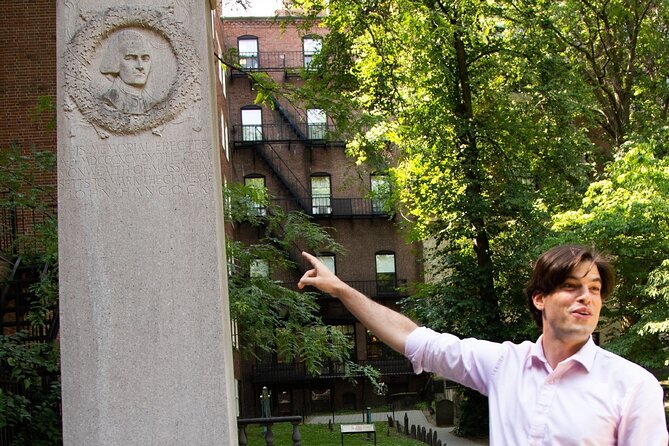
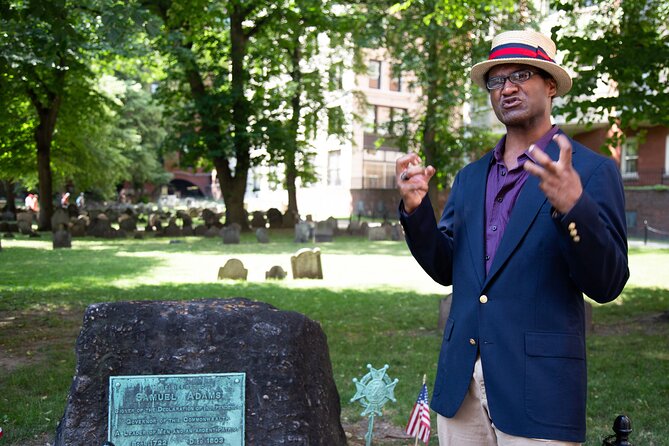
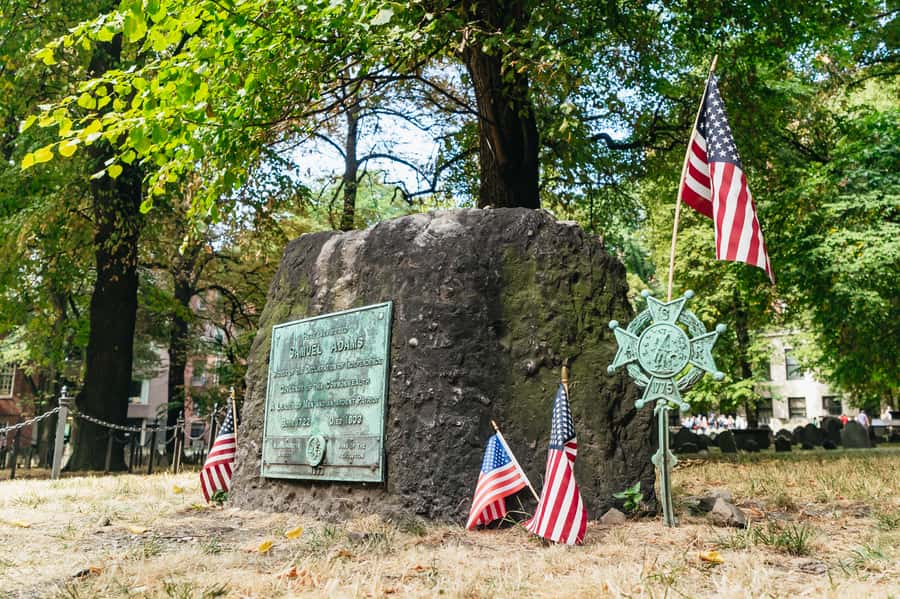
At Granary Burying Ground, you can see the final resting places of major Revolutionary figures, including John Hancock, Paul Revere, and Samuel Adams. This is one of the route’s most rewarding stops because the names from schoolbooks become tied to a real, compact urban cemetery.
You should expect an outdoor visit rather than an included cemetery tour or extended time inside every site. The guide’s explanation supplies the context, while you get a chance to look at the stones and absorb the setting.
King’s Chapel and Franklin’s Boston
King’s Chapel adds another layer to the story. It represents Boston’s religious and civic past, and its place along the trail shows how close together the city’s major institutions were. The guide uses the stop to connect buildings with the people and conflicts that shaped colonial Boston.
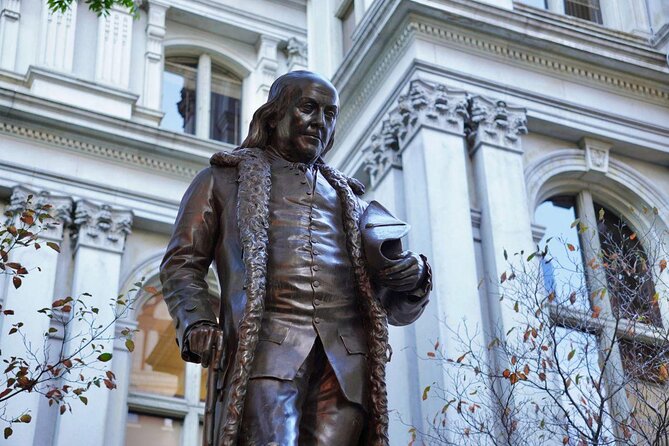
Nearby, the Benjamin Franklin Statue recalls one of Boston’s best-known sons. Franklin’s story gives the tour a chance to move beyond battle dates and military leaders. You hear about a person linked to printing, public life, education, and the creation of a new American identity.
This section also makes the route useful for first-time visitors who want basic orientation. Instead of seeing isolated landmarks, you learn how the sites relate to one another. The Old Corner Bookstore and Old South Meeting House continue that pattern, placing publishing, public debate, and protest along the same walk.
The Old Corner Bookstore and Old South Meeting House

The Old Corner Bookstore is a small but important stop on the trail. Its connection to Boston’s publishing world gives the guide a way to explain how ideas traveled before modern mass media. It also reminds you that revolutionary change depended on words, arguments, pamphlets, and public persuasion, not only on soldiers.
At Old South Meeting House, the story turns toward open resistance. This is where the tour addresses the Boston Tea Party and the tense gatherings that helped push the colonies toward rebellion.
The value here is the location. You are not simply hearing about a protest in an abstract way. You are standing in the part of Boston where people gathered, argued, and made decisions with serious consequences.
Interior admission is not included. If you want to explore the buildings inside, you will need to arrange and pay for entry separately. That is an important distinction: this tour gives you the route and the explanation, but it is not a ticketed museum tour of every attraction.
More Boston walks with a guide:
- Boston Freedom Trail Walking Tour with Costumed Guide
★ 4.5 · 2,531 reviews - The Full Revolutionary Story Epic Small Group Boston Walking Tour
★ 5.0 · 2,356 reviews - Boston: Freedom Trail History Small Group Walking Tour
★ 4.9 · 1,590 reviews - Boston’s Freedom Trail: A Revolutionary Walking Tour
★ 5.0 · 1,343 reviews
The Old State House and the Boston Massacre Site
The Old State House is one of the most powerful stops because it brings government and street-level conflict together. Its balcony and façade are tied to the political drama of colonial Boston, while the pavement nearby marks the site of the Boston Massacre.
The guide explains the bloody confrontation that helped turn public opinion against British rule. Seeing the site in its modern surroundings can be surprising. Boston is a working city, and traffic, shops, and pedestrians continue around these markers. That contrast makes the past feel close rather than sealed away behind museum glass.
This is also where the tour’s storytelling style matters most. The event is often reduced to a single image or slogan, but a good guide can explain the tension, the people involved, and the way the incident was used in revolutionary propaganda.
You will likely pause on a sidewalk or public square, so stay close enough to hear. Large groups can make this part harder, particularly when city noise rises. Guides such as Kenneth, Matthew, and Charlie R have been singled out for answering questions and keeping large groups together, which is useful at crowded downtown stops.
Faneuil Hall and Boston’s wider civic story
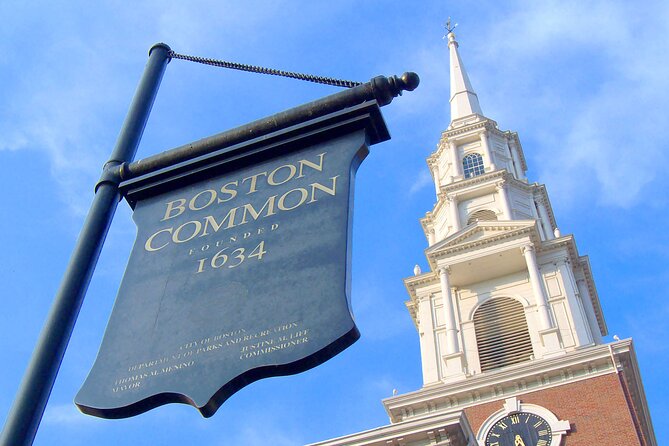
Faneuil Hall is one of the route’s best-known landmarks. It is tied to public meetings, speeches, commerce, and Boston’s political identity. The tour places it within the larger story of rebellion instead of treating it as a stand-alone photo stop.
This is also a good point for the tour to broaden its focus. Boston’s past includes conflict over slavery, abolition, immigration, and access to education. The experience does not present the Revolution as the work of a few famous men alone. It brings in lesser-known people and groups who helped shape the city.
That wider view is one of the tour’s strongest features. You still hear about John Hancock and Samuel Adams, but the story does not end with their portraits. If you want a basic introduction to Boston’s civic character as well as its military past, this route gives you more to think about.
Faneuil Hall can be busy, and the stop may feel more like a public-city visit than a quiet historic pause. That is part of the point, but it means you should not expect every explanation to take place in a calm setting.
Paul Revere House and the Midnight Riders
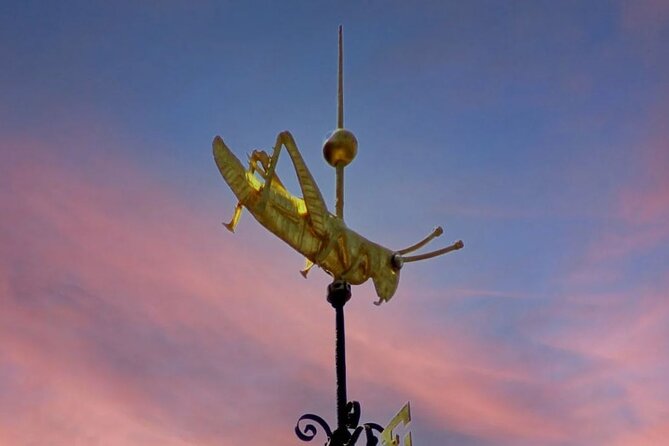
Paul Revere House is the trail’s direct connection to one of the Revolution’s most famous midnight rides. The building is a physical reminder that the people who became national symbols lived in ordinary urban surroundings.
The guide also tells stories about rebels, gangs, and the Midnight Riders. That wording signals a tour with some personality. You get the major events, but you also hear about the messy human world around them.
The house itself is an attraction with its own admission arrangements. Your $31 tour price does not include entry tickets. Still, seeing it from the outside, learning where it sits in the North End, and understanding Revere’s place in the larger network of patriots gives you a useful first look.
If you later want to return for an interior visit, the guided walk has already given you the context to make that stop more meaningful. The tour is particularly helpful here because Revere is often remembered as a lone hero, while the guide explains the wider web of people and warnings behind the famous ride.
Old North Church and Copp’s Hill Burying Ground

Old North Church is the stop connected to the two lanterns hung in the steeple. This is one of the trail’s most memorable visual stories, because the signal was simple, fast, and tied to urgent military movement.
The guide explains the role of the church and the Midnight Riders while you stand near one of Boston’s most recognizable historic buildings. The steeple makes the story easy to picture, even for visitors who know little about the Revolution.
Copp’s Hill Burying Ground follows with another cemetery stop. Like Granary, it gives the tour a quieter setting and a chance to consider the people who lived through Boston’s political and military upheaval.
You should pace yourself here. The route includes several cemeteries, churches, meeting houses, and public markers in a short period. That variety keeps the walk interesting, but the amount of information can be a lot if you have not eaten, brought water, or taken a break before starting.
The USS Constitution and Bunker Hill Monument
The final stretch reaches the USS Constitution and Bunker Hill Monument, linking the city’s Revolutionary streets to larger military history. The USS Constitution is a major landmark and gives the tour a strong closing chapter.
Bunker Hill Monument marks the site of one of the Revolution’s key battles. The tour includes it as one of the 16 official sites, but the information provided indicates that the monument itself is not climbed as part of the experience. You should think of this as a guided exterior visit and overview, not an included tower admission.
The route then returns to the original meeting point. That makes the tour easier to fit into a day because you do not finish in an unfamiliar part of the city. The walk is still demanding, though, and its return route means the itinerary covers a lot of distance in 2.5 hours.
One practical point is worth noting: the activity is described as wheelchair accessible, but it is also listed as not suitable for people with mobility impairments. Since the tour covers uneven urban streets, cemeteries, sidewalks, and a long route, contact the provider before booking if mobility is a concern.
What the $31 price really covers
At $31 per person, this is a fair price for a live guide covering all 16 official sites in one outing. You are paying for structure, historical interpretation, and local orientation rather than admission to a series of museums.
That distinction helps you judge the value. If you walked the trail alone, you could see many of the same exterior landmarks for little or no cost. But you would need to research the route, identify the sites, understand their connections, and keep yourself moving. The guide handles that work and adds stories about people often left out of a basic Revolutionary War account.
The strongest value comes on a first visit. You can use the tour to decide which places deserve a return visit, such as Paul Revere House, Old South Meeting House, or another attraction where you want more time indoors.
The $31 price is especially useful if you have limited time. One person used a Boston layover for the tour, and the 2.5-hour length makes that kind of short visit possible, provided your schedule allows enough time to reach Boston Common and continue afterward.
Guide style, pace, and group experience
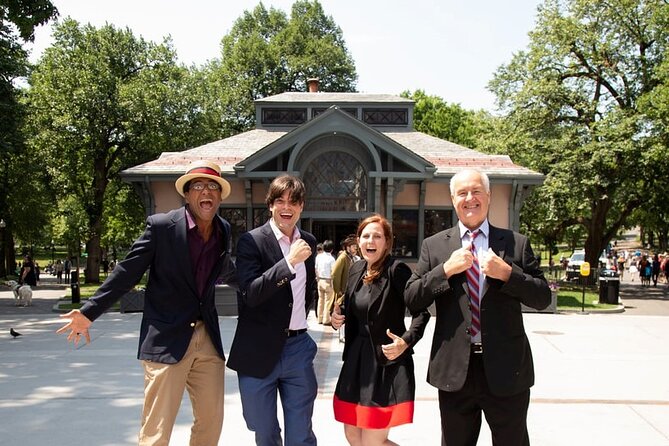
The guide can shape the whole outing. The strongest pattern across the named guides is a mix of clear facts, personal energy, humor, and room for questions. Rob, Kenneth, Charlie R, Alissa, Matthew, Stewart, Noah, Megan, Julia, Malcolm, Sam, Jim, Jules, and others have all led this experience.
You may get a guide who tells the story at a quick pace. Matthew, for example, has been described as speaking fast in English, which could be difficult for some non-native speakers. If English is not your first language, stay near the guide and ask for clarification when needed.
The group can also affect how personal the tour feels. Some departures are described as small and conversational, while one group was large but well managed. You should expect a public walking tour rather than a private experience.
The humor is part of the approach. Guides use light jokes to keep attention during long explanations. That works well for families and visitors who prefer a relaxed tone, but those seeking a formal lecture may want a quieter museum setting instead.
Video recording is not allowed. Bring comfortable clothes, sturdy walking shoes, and water. The route is long enough that footwear can make the difference between enjoying the final stops and simply trying to finish.
Who should book this Freedom Trail walk
I would choose this tour if you are visiting Boston for the first time, want the full route in one session, or prefer stories to reading plaques on your own. It is also a good fit if you have only a few hours and want a clear introduction before exploring more deeply.
Families, history beginners, and adults on a short city break should find the format approachable. The guides explain major events in plain language and add enough humor to keep the walk from becoming a list of dates.
You should think twice if you want long interior visits, a slow photographic pace, or a quiet group. The tour moves quickly and does not include attraction entry. It may also be a poor fit if walking for 2.5 hours is difficult.
Book at least 24 hours before the start time if you want the full refund cancellation option. You can also reserve now and pay later, which helps if your Boston schedule is still shifting.
Should you book it?
Book this $31 Freedom Trail tour if you want a lively overview of Boston’s Revolution-era landmarks, a guide who can connect famous events with overlooked people, and all 16 official sites in one organized walk.
Skip it if you plan to spend most of the day inside museums or want to explore each stop at your own speed. For most first-time visitors, though, the route offers a practical starting point, strong storytelling, and a useful sense of how Boston’s streets connect its past.
FAQ
Where does the tour begin?
Meet your guide at The Embrace statue beside the Boston Common Visitor’s Center at 139 Tremont Street.
Where does the tour end?
The tour ends back at the original meeting point.
How long does the walking tour last?
The tour lasts 2.5 hours. Starting times vary, so check availability when booking.
What language is the tour offered in?
The live guided tour is offered in English.
Are admission tickets included?
No. The price includes the live guide and walking tour, but entry tickets to attractions are not included.
What should I bring?
Bring comfortable shoes, water, and comfortable clothing.
Can I cancel for a refund?
Yes. You can cancel up to 24 hours in advance for a full refund. You can also reserve now and pay later.
Recently reviewed around Boston
- Delicious Donuts of Boston: A Sweet History Walking Tour★ 5.0 · 1,038 reviews
- Boston’s Freedom Trail: A Revolutionary Walking Tour★ 5.0 · 1,343 reviews
- Freedom Trail Walking Tour 250★ 4.5 · 1,118 reviews
- Boston North End Food Tour of 6+ Tastings, Cannoli, Lobster Roll★ 5.0 · 1,404 reviews
- Narrated Sunset Cruise of Boston Harbor★ 4.0 · 532 reviews
- Sunset Sailing Cruise on a Tall Ship in Boston Harbor★ 4.5 · 414 reviews
- City Cruises Salem High Speed Ferry to/from Boston★ 4.5 · 727 reviews
- Boston Harbor Sunset Cruise★ 4.5 · 632 reviews
Walking Tours, compared.

History and Hauntings of Salem Guided Walking Tour
Read our review →
New Orleans Premier Ghost, Voodoo and Vampire Walking Tour
Read our review →

Freedom Trail History Small Group Walking Tour
Read our review →
Historic Charleston Guided Sightseeing Walking Tour
Read our review →
New Orleans Food Walking Tour of the French Quarter with Small-Group Option
Read our review →
St. Louis Cemetery No. 1 Official Walking Tour
Read our review →Browse the lists this tour appears in