

Reviewed · MUSEUMS
Country Music Hall of Fame and Museum Admission
The Country Music Hall of Fame tells the story of country music with far more than old guitars behind glass. Across two broad floors, you’ll move from folk roots and early radio stars to Johnny Cash, Dolly Parton, Garth Brooks, Taylor Swift, and today’s artists. Costumes, cars, films, recordings, gold records, and personal objects make the music feel tied to real people and real moments.
I like the clear historical sweep, from Jimmie Rodgers and Hank Williams through the modern country scene. I also like the mix of quiet reading and hands-on features, including recording and songwriting areas, music trivia, a giant forty-foot guitar, and occasional live programs. The main drawback is that this is self-guided, so anyone hoping for a lively guide throughout will need to set their own pace.
In This Review
- Key points to know before you go
- Nashville’s country music story begins at the front door
- From Johnny Cash to Dolly Parton and modern Nashville
- Costumes, instruments, cars, and the objects behind the songs
- Interactive stations and the Taylor Swift Education Center
- Temporary exhibitions add a reason to return
- Live music can change the rhythm of your visit
- How long should you spend inside?
- Is the $31.95 admission a good value?
- When to go and how to make entry easier
- Who will enjoy this museum most?
- Practical booking and cancellation details
- Should you book the Country Music Hall of Fame?
- FAQ
- How much does admission cost?
- How long does the visit take?
- Is the Country Music Hall of Fame visit guided?
- What are the opening hours?
- What language is the experience offered in?
- Is the museum near public transportation?
- Are service animals allowed?
- Can I cancel for a full refund?
Key points to know before you go

- Follow country music from folk roots to the present: The galleries are arranged as a long story, beginning before modern country music took shape and continuing into today’s stars.
- See more than costumes: Expect instruments, cars, handwritten material, gold records, video clips, sound recordings, and personal memorabilia.
- Allow at least two hours: A quick visit can take about 90 minutes, but two to four hours gives you time for films, displays, and temporary exhibitions.
- Arrive near opening time: The museum opens at 9:00 a.m., and an early start can mean a calmer visit and a shorter ticket process.
- Budget for downtown parking: Parking can add noticeably to the cost, so consider your transportation plans before you arrive.
- Check the live program schedule: More than 250 programs and activities take place during the year, including music and special events.
Nashville’s country music story begins at the front door
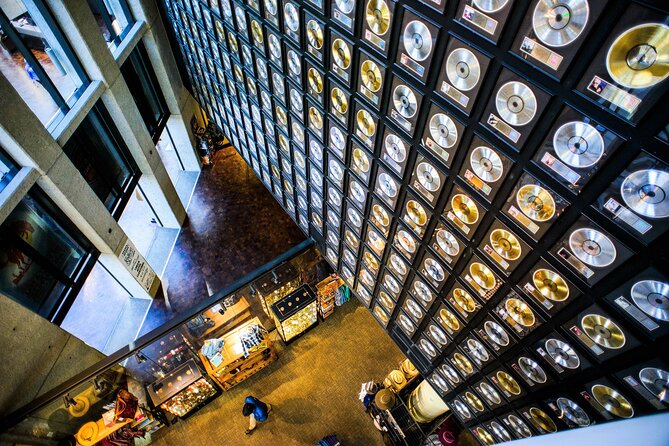
Located in the heart of downtown Nashville, the Country Music Hall of Fame is easy to pair with other city sights. The building itself is large and modern, with 350,000 square feet devoted to galleries, storage, classrooms, shops, restaurants, and event space.
The museum’s size matters. You are not walking into a small room with a few famous outfits. You get two expansive floors of gallery space, with permanent displays and limited-engagement exhibitions that can change the feel of a return visit.
The main route begins with Sing Me Back Home: The Journey Begins, which traces country music from its folk roots through the 1960s. This section works best when you take your time. It places the music within American history and shows how the genre developed rather than treating it as a list of famous names.
Biographical panels give you the basic story of important performers. Carefully selected sound recordings and video footage add life to the text. You’ll encounter early figures such as Jimmie Rodgers and Hank Williams, then follow the path toward the performers who shaped country music in later decades.
I appreciate this chronological layout because it gives first-time visitors a useful frame. If your knowledge begins with modern Nashville radio, you can see where the familiar sounds came from. If you already know the genre well, the early displays provide context instead of simply repeating a greatest-hits list.
More Nashville museums and collections:
- Nashville: Country Music Hall of Fame and Museum
★ 4.7 · 945 reviews - Musicians Hall of Fame and Museum Admission Ticket in Nashville
★ 4.5 · 337 reviews - NYC: 9/11 Memorial & Museum Timed-Entry Ticket
★ 4.8 · 31,428 reviews
From Johnny Cash to Dolly Parton and modern Nashville
The second major section, Dreaming My Dreams: The Journey Continues, carries the story from the 1960s to the present. This is where the museum’s range becomes especially clear.
Johnny Cash, Dolly Parton, Garth Brooks, and Reba McEntire appear alongside many other major figures. Contemporary displays include artifacts connected with Taylor Swift, Luke Bryan, Carrie Underwood, and Keith Urban. The result is a useful bridge between country music’s established legends and the artists who fill current playlists.
You’ll see how clothing, instruments, stage objects, and recordings can explain an artist’s place in the music. A costume may show a performer’s public image. A handwritten item or instrument can make the work feel more personal. A car or a wall of gold records gives you a quick visual marker of fame and commercial success.
The museum also uses multimedia displays to break up the reading. Short films and sound clips help, though the balance still leans toward objects and written interpretation. If you want constant touchscreens and elaborate digital effects, you may find the interactive side lighter than expected.
That is not necessarily a weakness. The museum’s strongest moments often come from seeing the real things associated with performers. Still, families with young children should know that much of the visit involves reading, listening, and looking carefully.
Costumes, instruments, cars, and the objects behind the songs
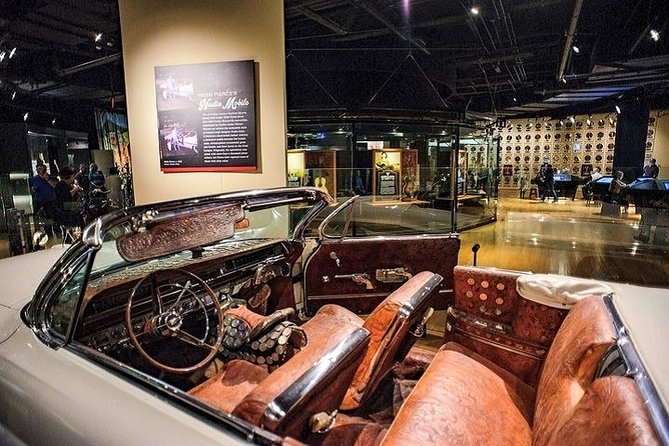
The artifacts are the heart of the visit. You can expect a wide range of clothing, instruments, cars, memorabilia, and awards spread through the galleries.
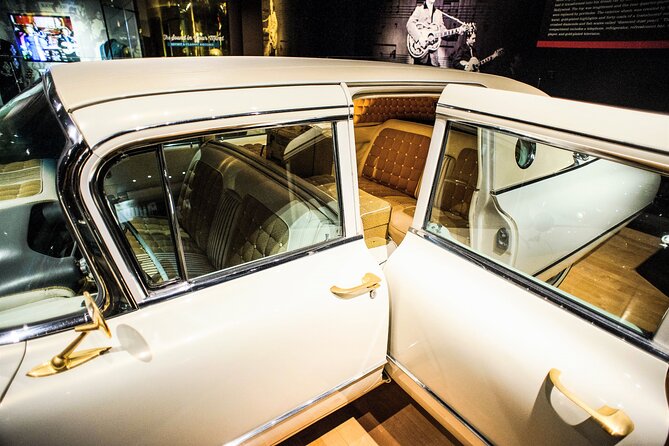
One memorable display includes Elvis Presley’s gold-plated Cadillac. The car gives the collection a sense of scale and showmanship that a guitar or jacket cannot provide. Other displays bring together the clothing and equipment used by performers across several decades.
The museum does a good job of showing how country music has always involved both sound and image. Rhinestones, stage clothing, hats, boots, instruments, and automobiles all play a part in the public identity of a performer.
You should wear comfortable shoes. Even a focused visit involves plenty of walking, and the two floors give you a lot to cover. Restrooms are available, and the building is clean, though one practical note matters: the interior may feel warm. If you are sensitive to heat, plan a shorter break or keep your visit flexible.
Interactive stations and the Taylor Swift Education Center
The Country Music Hall of Fame is not only a display museum. Several areas invite you to take part.
You might find recording and songwriting stations, music trivia, and other interactive features. The exact mix can depend on the current exhibitions and programs, but the museum offers ways to engage with the music rather than simply read about it.
The Taylor Swift Education Center adds a family-friendly element. It is smaller than some people expect, but it gives younger visitors and fans another way to connect with the subject. Families should not count on the entire museum being hands-on, though. The center is one part of a much larger visit that still depends on galleries and written displays.
The forty-foot guitar is another memorable visual feature. It gives the museum a little theatrical flair without replacing the serious historical material around it.
I like these touches because they help break up a long museum route. If you are visiting with a teenager, the modern artist displays and interactive areas may provide a useful reason to slow down. If you are visiting alone or as a couple, they add variety between the heavier historical sections.
A completely different way to spend a day nearby:
- Nashville Hop On Hop Off Trolley Tour
★ 4.5 · 5,643 reviews - Nashville: Food Tour with 5+ Tastings of Local Delicacies
★ 5.0 · 2,704 reviews - Best of Nashville City Sightseeing Tour on Double Decker Bus
★ 4.5 · 2,601 reviews - Explore the City of Nashville Sightseeing Tour by Golf Cart
★ 5.0 · 2,544 reviews
Temporary exhibitions add a reason to return
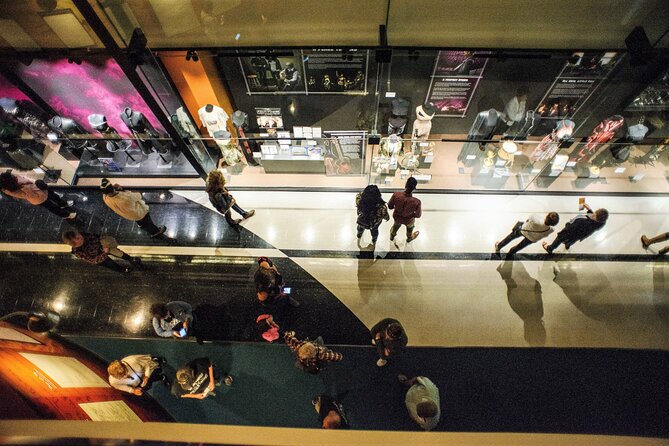
The permanent galleries provide the backbone, but limited-engagement exhibitions can be the most personal part of a visit.
Recent displays have included a Muscle Shoals exhibition and a Lainey Wilson exhibition. These shows offer a closer look at a particular artist, place, or musical chapter, with more focused displays than the main chronological route.
This is worth checking before you book if you have already visited the museum. The building and permanent displays may feel familiar on a return trip, while a temporary exhibition can give you a fresh reason to go back.
Exhibitions also affect how long you need. If you only want the major highlights, 90 minutes may be enough. Add a temporary exhibition, several films, and the contemporary gallery, and two to four hours feels more realistic.
Live music can change the rhythm of your visit
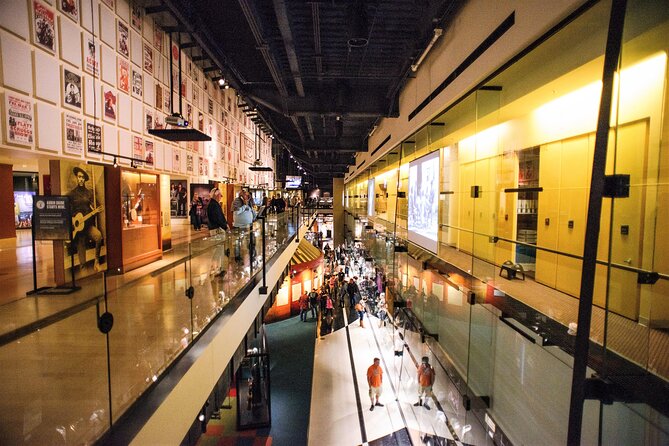
The museum presents more than 250 programs and activities each year. These can include live music from well-known legends and songwriters, archived films, educational events, and opportunities to play an instrument.
A live performance at the Ford Theater can be a pleasant surprise during a museum visit. One recent program featured Andy May, and small performances can add the human connection that a display case cannot provide.
Check what is scheduled for your date. The basic admission ticket covers the museum, but some programs or special experiences may involve an additional charge. A live event can make the visit feel less like a standard museum stop and more like part of Nashville’s working music culture.
Do not build your whole day around an unconfirmed performance. Treat live music as a useful bonus unless you have separately checked the schedule and any extra cost.
How long should you spend inside?

The suggested visit time is two to four hours, and that is sensible for a careful visit. You can move faster, but you will have to skip films, text panels, or temporary displays.
Here is how I would think about the timing:
- About 90 minutes: Focus on the major artists, famous costumes, cars, and the Hall of Fame displays.
- About two hours: Follow both main historical sections at a comfortable pace and stop for selected video or audio material.
- Three to four hours: Read more of the panels, explore temporary exhibitions, use the interactive areas, and fit in a program if the schedule allows.
The museum is self-guided, so you control the pace. That works well for mixed groups. One person can read every panel while another moves ahead to the next display.
It also means you need to make your own choices. There is a lot to see, and trying to read everything can leave you tired before reaching the modern galleries. I suggest starting with the early history, then giving yourself extra time for the artists and exhibitions that matter most to you.
Is the $31.95 admission a good value?
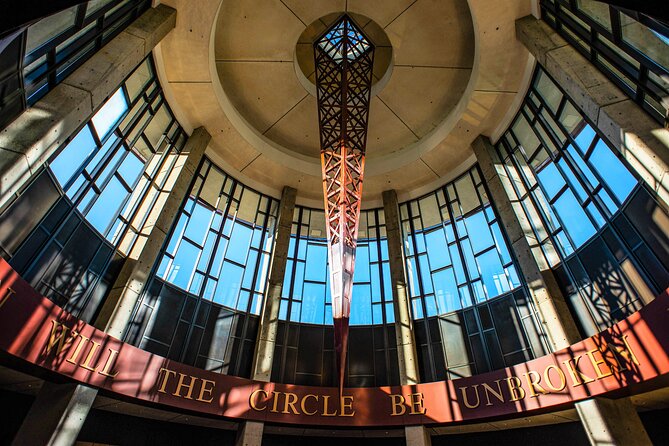
Admission costs $31.95 per person. That is not a bargain-priced museum ticket, especially once you add downtown parking, food, or shopping. The value depends on how much time and attention you give the visit.
For a country music fan, the price is easier to justify because the collection is unusually broad. You are getting two floors of galleries, major costumes and instruments, films, sound material, current artists, and changing exhibitions in one location.
For a casual visitor, the calculation is different. If you only spend an hour looking at a few famous objects, the ticket may feel expensive. If you stay for two hours or more and take time with the historical story, the cost becomes more reasonable.
The museum also has three restaurants, 2|22, Red Onion, and Bajo Sexto Taco, plus four shops: The Museum Store, Circa, Hatch Show Print, and the Haley Gallery. These are convenient, but purchases are extra. Hatch Show Print is especially interesting for families and design fans because it connects music with the history of printed performance posters. A hands-on poster-printing experience may be available as part of an added activity.
Parking deserves a clear warning. Downtown parking can feel costly, and one hour at the museum may not seem worth the combined ticket and parking expense. Arriving early helps with crowds, but you should still plan your transportation before the day begins.
When to go and how to make entry easier
The museum is open daily from 9:00 a.m. to 5:00 p.m. An early arrival is one of the simplest ways to improve the experience.
A 9:00 or 9:30 start gives you a quieter first pass through the galleries. The museum can feel much more crowded later, especially in the central exhibits and popular displays.
If you have a voucher, go to the information booth or front desk first to receive your admission tickets before joining the entry line. This small step can save time and reduce confusion at the door.
The activity is offered in English. Most people can participate, and service animals are allowed. The venue is near public transportation, which may be useful if you would rather avoid downtown parking.
The booking information lists a maximum of 10 participants, but the museum visit itself is self-guided rather than a traditional small-group tour. Think of this as timed admission to a major museum, not a guided walk with a named leader.
Who will enjoy this museum most?
You should put this high on your Nashville list if you already love country music or want a serious introduction to the genre. The museum gives you both famous names and the less glamorous groundwork that came before them.
It also works well for mixed-age groups. A parent may want the early history, a teenager may head for the Taylor Swift or contemporary artist displays, and everyone can meet again around the cars, costumes, and interactive stations.
Families with very young children may need to manage expectations. There are hands-on areas, but the main galleries contain plenty of reading and quiet observation. Older children and teenagers are more likely to appreciate the range of displays.
You can also enjoy the museum without being an expert. The chronological route explains enough to make the story easy to follow, and the objects provide plenty of visual interest even when you do not know every artist.
Practical booking and cancellation details
You receive confirmation at booking. The experience has free cancellation if you cancel at least 24 hours before the local start time, with a full refund.
Changes or cancellations made less than 24 hours before the start time are not accepted for a refund. The experience also requires good weather, and if poor weather causes cancellation, you are offered another date or a full refund.
Since this is an indoor museum, the weather rule may matter mainly for the overall booking arrangement rather than the galleries themselves. Still, keep the policy in mind if your Nashville plans are uncertain.
Should you book the Country Music Hall of Fame?
I would book it if you want more than a quick photo stop in Nashville. The strongest reason to go is the combination of clear historical storytelling and genuine objects connected with the performers, from early country pioneers to current stars.
Book it early in the day, allow at least two hours if possible, and check the program calendar for live music or special exhibitions. If parking costs are a concern, plan transportation before you arrive and avoid treating this as a short one-hour stop.
You may want to skip it if you dislike museums built around reading, costumes, and archival material. The interactive features are useful but not everywhere, and the experience is self-guided. For everyone else, especially country music fans and first-time visitors to Nashville, the museum earns its place as one of the city’s main cultural stops.
FAQ
How much does admission cost?
Admission costs $31.95 per person.
How long does the visit take?
The suggested visit lasts about two to four hours. A shorter visit of around 90 minutes is possible if you focus on major highlights.
Is the Country Music Hall of Fame visit guided?
No. The visit is self-guided. Exhibits, biographical panels, video footage, sound recordings, and audio material tell the story as you move through the galleries.
What are the opening hours?
The museum is open Monday through Sunday from 9:00 a.m. to 5:00 p.m.
What language is the experience offered in?
The experience is offered in English.
Is the museum near public transportation?
Yes. The museum is near public transportation.
Are service animals allowed?
Yes. Service animals are allowed.
Can I cancel for a full refund?
Yes. You can cancel at least 24 hours before the experience start time for a full refund. Cancellations or changes made less than 24 hours before the start time are not accepted for a refund.
Recently reviewed around Nashville
- The Ghosts of Nashville Night-Time Walking Tour★ 4.5 · 799 reviews
- Nashville Rollin Jamboree Comedy & Country Music Sing-Along Tour★ 5.0 · 965 reviews
- 60 Minute Escape Game at Opry Mills★ 5.0 · 370 reviews
- Nashville Combo Tour: Sightseeing, Murals & Brewery/Distillery★ 5.0 · 641 reviews
- “Murder in Music City” Night-Time Ghost Walking Tour of Nashville★ 4.5 · 742 reviews
- Seeking Spirits Haunted Night-Time Pub Crawl in Nashville★ 4.5 · 341 reviews
- All-Inclusive Pub Crawl with Moonshine, Cocktails, and Craft Beer★ 4.5 · 975 reviews
- Nashville RCA Studio B & Country Music Hall of Fame Ticket Combo★ 5.0 · 1,532 reviews
Museums, compared.


Empire State Building Tickets – Observatory & Museum
Read our review →


9/11 Memorial, Ground Zero Tour with Optional 9/11 Museum Ticket
Read our review →

All-Access 9/11: Ground Zero Tour, Memorial and Museum, One World Observatory
Read our review →
Browse the lists this tour appears in