

Reviewed · WALKING TOURS
French Quarter Walking and Storytelling Tour
New Orleans makes more sense when someone connects the music, courtyards, old buildings, and complicated people in the same story. This two-hour French Quarter tour does that well, moving from the jazz fountain to Jackson Square while bringing in the city’s French, African, Caribbean, Spanish, and American threads. I like the small groups and the guides’ knack for lively storytelling, especially names such as Scott, Libby, Tim, and Lesley. The main drawback is the pavement: uneven sidewalks can make the walk tiring, and summer heat adds another challenge.
I also like that the tour goes beyond the usual postcard stops. You see St. Louis Cathedral, the Mississippi River, Jackson Square, and the French Market, but you also get courtyards, an old convent, architectural details, and stories about slavery and the people who shaped the Quarter. The $35 price is fair for a personal introduction, though you should bring water and comfortable shoes because neither is included.
In This Review
- Key points at a glance
- Starting at the jazz fountain in the French Market
- The French Market and the Quarter’s many voices
- St. Louis Cathedral and Jackson Square
- Old buildings, courtyards, and details you could miss
- Reaching the Mississippi River
- Stories about slavery, music, and the people of New Orleans
- How much does the $35 price deliver?
- Walking conditions, heat, and accessibility
- Who will get the most from this tour?
- Booking details worth knowing
- Should you book the French Quarter Walking and Storytelling Tour?
- FAQ
- How long is the French Quarter Walking and Storytelling Tour?
- Where does the tour meet?
- Where does the tour finish?
- What sights are included?
- Is the tour wheelchair accessible?
- What should I bring?
Key points at a glance
- Start at the jazz fountain: Meet at Decatur and Dumaine Streets, beside the historic French Market.
- Small groups matter: Guides can slow down, answer questions, and tailor the route to your interests.
- See the classic Quarter: The walk includes St. Louis Cathedral, Jackson Square, the Mississippi River, and the French Market.
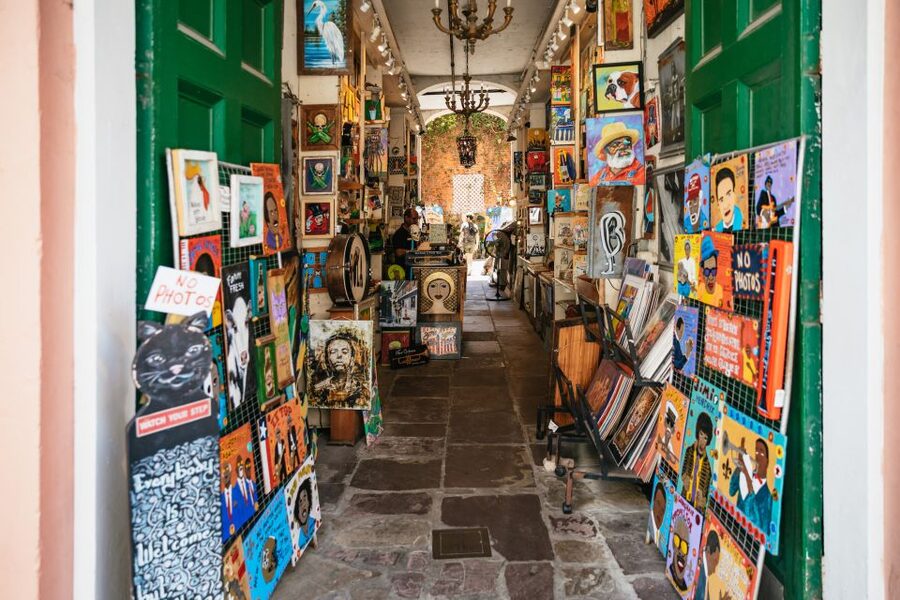
- Look beyond the facades: Expect courtyards, old religious buildings, 18th and 19th century architecture, and lesser-known corners.
- Stories carry the tour: History, slavery, music, culture, architecture, and colorful local characters all enter the conversation.
- Plan for rough ground: Water, sturdy footwear, and a realistic view of two hours on uneven sidewalks will improve the experience.
Starting at the jazz fountain in the French Market
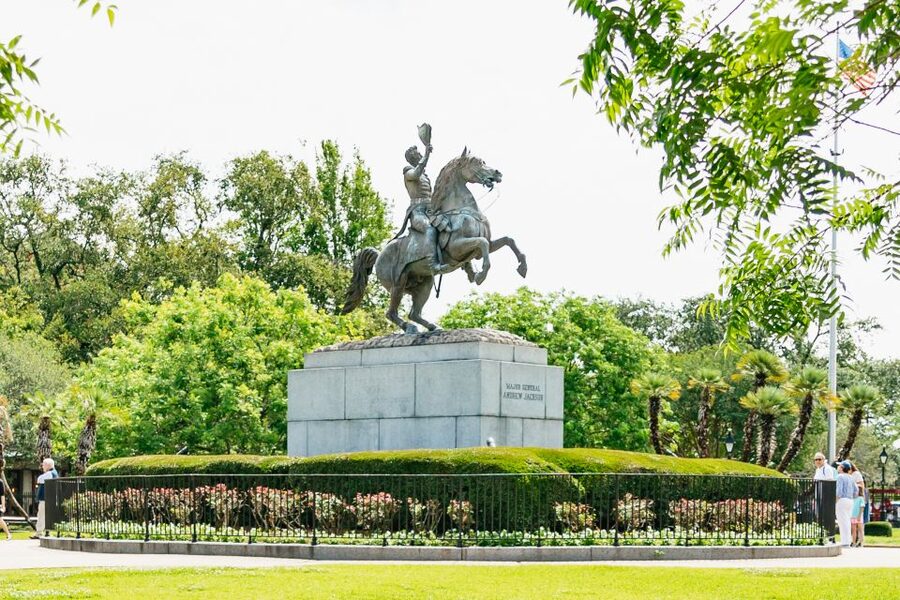
Your meeting point is the jazz fountain at the intersection of Decatur and Dumaine Streets. This puts you in the French Market district, a useful location because you are already near the Mississippi River, Jackson Square, and the oldest part of the French Quarter.
The guide sends an email the night before with a photograph, contact details, and directions to the meeting spot. That is a small but useful touch in a crowded neighborhood where several streets and attractions can blur together, especially if you are arriving for your first look at New Orleans.
The tour opens with a short overview of New Orleans. You need this foundation. Without it, the French Quarter can seem like a collection of pretty balconies, bars, souvenir shops, and old walls. With some context, you begin to see how the city’s different groups, languages, faiths, and trades helped shape the neighborhood.
The meeting point is easy to combine with a later walk through the market or along the riverfront. Just avoid bringing luggage or a large bag, which is not allowed. Pets and smoking are also not permitted on the tour.
More Walking Tours in New Orleans
- New Orleans Premier Ghost, Voodoo and Vampire Walking Tour
★ 4.5 · 12,856 reviews - New Orleans Food Walking Tour of the French Quarter with Small-Group Option
★ 5.0 · 6,118 reviews - St. Louis Cemetery No. 1 Official Walking Tour
★ 4.5 · 3,941 reviews
The French Market and the Quarter’s many voices
The French Market is more than a convenient starting point. It helps explain how the Quarter worked as a place of commerce and exchange. From here, your guide sets the scene for a neighborhood founded as a French colonial outpost in 1718, then reshaped by people from many parts of the world.
The tour’s strongest theme is the mixture of cultures that gives New Orleans its particular sound and look. You may hear music on the surrounding blocks while the guide explains how French, African, Caribbean, Spanish, and other influences helped form local life. The point is not simply that New Orleans has many cultures. The point is that they meet in the food, language, buildings, music, and customs you encounter on the street.
This is also where the storytelling approach pays off. The guides do not treat the Quarter as a museum frozen in the past. They connect its old structures with the unusual, rough-edged characters who have long been drawn to the neighborhood. Some stories are triumphant. Others are tawdry, troubling, or strange. That range gives you a more honest sense of the place than a polished list of dates.
You should expect the guide to adjust the emphasis based on your questions. Small groups have allowed guides such as Scott and Yvonne to focus on subjects that interest the people in front of them. That might mean more architecture, more cultural history, more discussion of the wider city, or more time on a particular building.
St. Louis Cathedral and Jackson Square
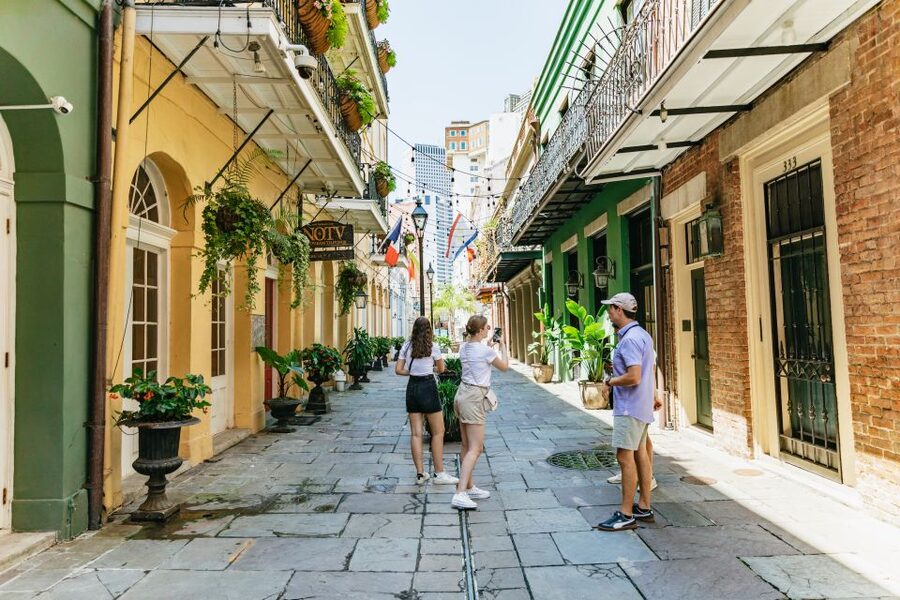
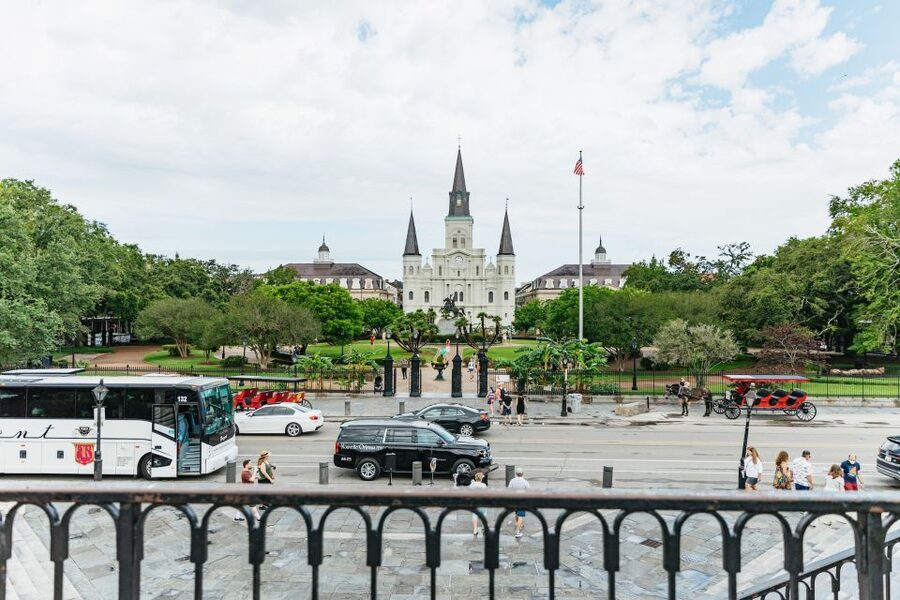
St. Louis Cathedral and Jackson Square are the tour’s most recognizable sights. They are also good places to understand how public life, religion, and architecture meet in the French Quarter.
The cathedral anchors the square with its distinctive profile, while the surrounding buildings create one of the most memorable urban views in New Orleans. Your guide gives the setting meaning, rather than asking you to admire it only as a photo stop. Look closely at the relationship between the square, the cathedral, the surrounding facades, and the open space itself.
Jackson Square is also where the tour ends, either in the square or right beside it. That makes the finish practical. You can continue exploring on foot, stop for food, return to the market, or use the guide’s suggestions for restaurants, attractions, and jazz venues.
Several guides are especially good at turning this final stretch into more than a standard explanation. Libby has been praised for making local history fun and easy to follow, while Tim is noted for keeping a comfortable pace. If you are the kind of person who likes to ask questions, the small-group format gives you a better chance to do so before the tour wraps up.
One practical note: Jackson Square can be busy, and the Quarter’s streets may be noisy. You will get more from the guide if you stay close enough to hear clearly. A small group helps here, since you are less likely to be lost at the back of a large crowd.
Old buildings, courtyards, and details you could miss

The best part of a walking tour is often not the famous building at the end of the street. It is the detail you would have walked past alone.
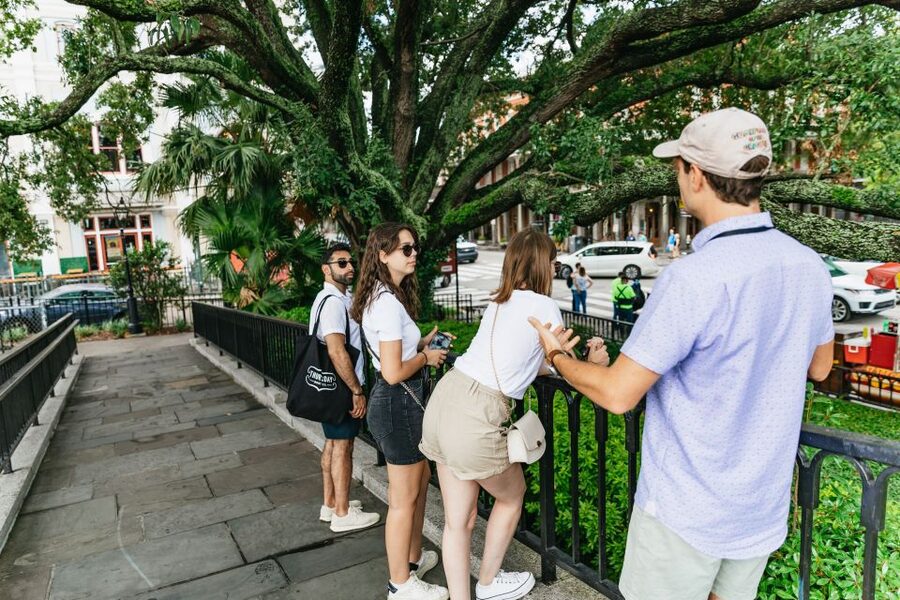
This route includes courtyards tucked behind 18th and 19th century buildings, along with an almost 300-year-old convent. You may find yourself paying closer attention to doorways, balconies, walls, and the way private spaces sit behind public street fronts. The Quarter rewards slow looking, and a guide can point out why a modest passage or building matters.
The architecture also helps explain the neighborhood’s survival and change. The tour places you among old homes and commercial structures where the Creole character of New Orleans remains visible. You are not simply collecting photographs. You are learning how the city grew around these spaces and why the Quarter still feels distinct from other parts of New Orleans.
The route is not presented as a haunted-house performance. If you want spooky tales above all else, this may not be your ideal choice. The focus is on the real history, people, architecture, and culture of the Quarter, with unusual stories included because the neighborhood’s past is already dramatic enough.
That balance is one reason I would choose this tour early in a New Orleans visit. It gives you a framework for later walks. Once you understand what you are seeing, a courtyard or weathered facade can carry more weight than it did on your first pass.
More New Orleans walks with a guide:
- New Orleans French Quarter, Voodoo and Culture Walking Tour
★ 4.5 · 2,961 reviews - New Orleans Garden District History Walking Tour
★ 5.0 · 2,879 reviews - New Orleans Haunted Ghost, Voodoo & Vampire Walking Tour
★ 4.5 · 2,731 reviews - French Quarter Historical Sights and Stories Walking Tour
★ 5.0 · 2,724 reviews
Reaching the Mississippi River
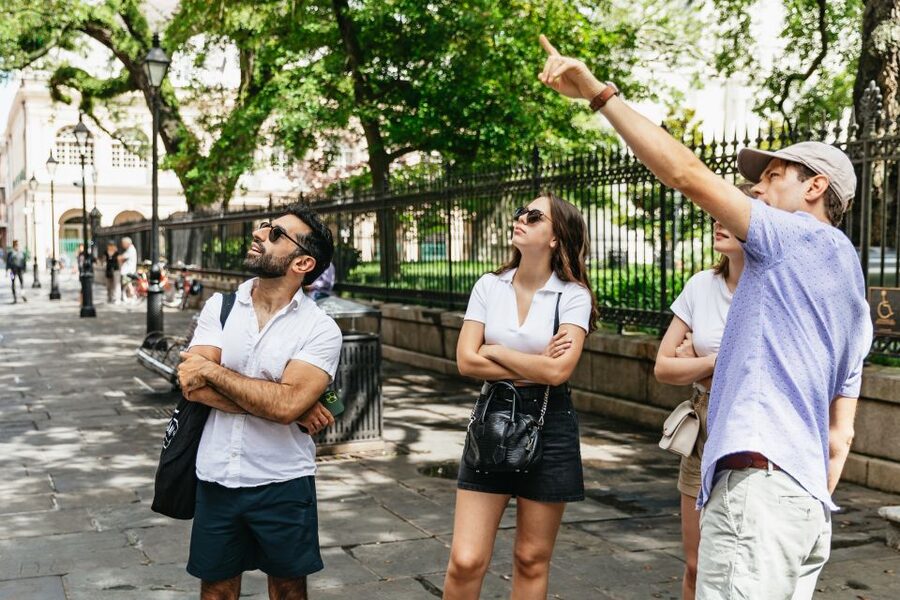
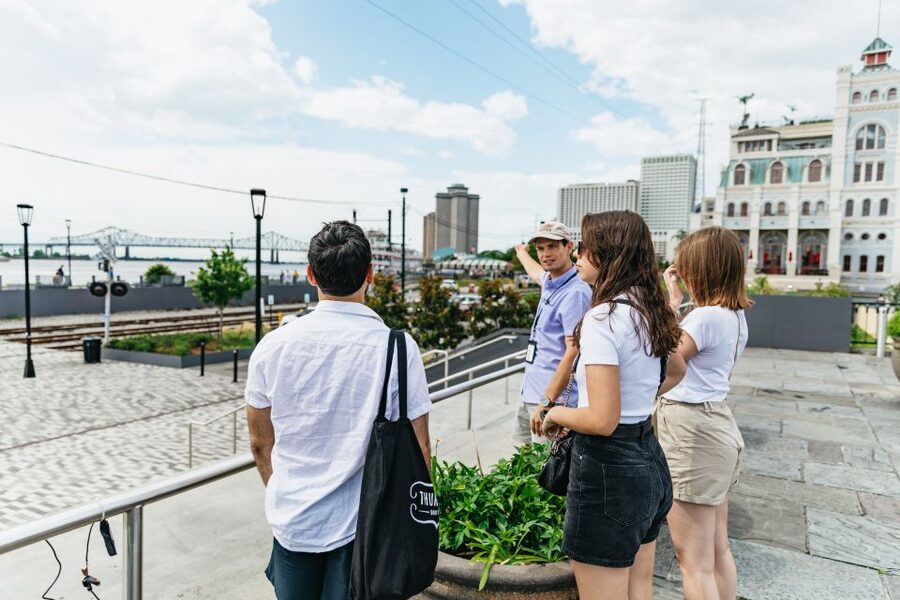
The Mississippi River provides one of the tour’s clearest changes of mood. After walking through narrow streets and enclosed courtyards, you reach a broad waterfront setting that helps explain why New Orleans grew where it did.
The guide points out the river as part of the Quarter’s story, not just as a scenic view. Its presence is central to the city’s trade, movement, and development. Even a short stop here can help you understand why the French Quarter became such an important urban center.
This is also a good photo opportunity. The river gives you a wider view than the Quarter’s compact streets, and it makes a useful contrast with the cathedral and old buildings you see later. Keep your camera ready, but do not let photographs replace listening. The tour’s value comes from the connections between the sights.
The exact walking pace can vary with the group and the weather. Guides have adjusted stops for shade during hot conditions, and some groups have covered less ground while still receiving plenty of explanation. That flexibility is welcome in New Orleans, particularly from April through October when heat and humidity can quickly sap your energy.
Stories about slavery, music, and the people of New Orleans
The tour earns its title through the stories. You will hear about the people who helped make the Quarter famous, including both admirable and disreputable figures. The storytelling gives the walk personality, but the better stories also open the door to harder subjects.
The discussion can include slavery, the city’s cultural development, architecture, and the relationship between the French Quarter and New Orleans as a whole. That broader context matters. It keeps the Quarter from becoming a costume set of French balconies and jazz clubs.
Music is part of the atmosphere from the moment you begin. The promise of hearing music on many blocks fits the neighborhood, where sound is often part of the visual experience. Still, this is a walking and storytelling tour, not a dedicated music performance. You should book it to understand the setting, not to receive a concert.
The guides’ personalities are a major part of the experience. Scott has a reputation for adapting the conversation to group interests and answering many questions. Libby brings humor and energy to the past. Tim is good at maintaining an easy pace, while Lesley combines historical, cultural, and archaeological detail with practical suggestions for the rest of your stay.
Because the tour uses several guides, the tone may vary. That is not necessarily a weakness, but you should expect a human-led experience rather than a fixed audio script. One guide may spend more time on architecture, another on personal stories, and another on the city’s wider context.
How much does the $35 price deliver?
At $35 per person, this is a reasonable buy if you want a strong introduction to the French Quarter. The tour lasts two hours, includes a live English-speaking guide, and covers several major sights plus details that are easy to miss alone.
The value is greatest for a first visit. You get orientation, background, and recommendations in one sitting. By the end, you should have a better sense of where to return for food, music, buildings, and further walks. Guides also share suggestions for restaurants, attractions, and jazz venues, though you may want to keep your phone ready because there may not be enough time to write everything down.
The price is less attractive if you dislike walking, already know the Quarter well, or want a tour built around one narrow subject. You are paying for the guide’s judgment and storytelling, not admission to an attraction. There are no drinks, food, or transportation included.
Gratuity is not included and is appreciated throughout the year. Water is also not included, so pack your own. In the hot months, that is essential rather than optional.
Walking conditions, heat, and accessibility
The French Quarter’s sidewalks are quite uneven. Wear comfortable walking shoes with firm support, and expect occasional rough patches that can slow you down. Do not plan this tour in delicate footwear simply because the Quarter looks easy to stroll.
The experience is listed as wheelchair accessible, but the practical warning matters: sturdy wheelchairs are recommended because of the pavement. If you use a wheelchair, consider contacting the provider ahead of time with questions about your needs. The tour can accommodate wheelchairs, but old streets are not the same as smooth paths.
Heat deserves equal attention. Water is recommended, especially from April through October. Guides have made a point of stopping in the shade during very hot weather, and small groups make that kind of adjustment easier.
Two hours is a sensible length. It is long enough to build a useful picture of the Quarter without turning the walk into an endurance test. Several people found the time passed quickly, while others appreciated that the pace stayed easy. You should still arrive ready to be outside for the full period.
Who will get the most from this tour?

I would recommend this for first-time visitors, families who want a clear introduction, and anyone who prefers local stories to a memorized list of dates. It also suits curious repeat visitors who have seen the main streets but want help reading the buildings and understanding the neighborhood’s place in New Orleans.
It is a particularly good choice if you like asking questions. A small group may let the guide tailor the walk to your interests, and that personal exchange is one of the main reasons to choose this experience over a large sightseeing group.
History-minded visitors should appreciate the range of subjects. The tour can touch on slavery, cultural change, architecture, music, religion, and the city beyond the Quarter. It is not a full course in New Orleans history, but it gives you enough structure to make later exploring more rewarding.
I would be cautious about booking it if you want a ghost tour, a food tour, or a long-distance sightseeing walk. You may hear unusual or dark stories, but the main purpose is a grounded look at the French Quarter. Also think twice if uneven sidewalks or hot weather will make two hours uncomfortable.
Booking details worth knowing
Lucky Bean Tours operates the experience with English-speaking guides. Guide assignments can vary, with Scott, Libby, Tim, Lesley, Casey, and Yvonne among the names associated with recent departures.
You receive the guide’s photograph, contact information, and meeting directions by email the night before. The tour begins at the jazz fountain at Decatur and Dumaine Streets and finishes in or beside Jackson Square.
You can cancel up to 24 hours before the start for a full refund. A reserve-now, pay-later option is also available, which helps if your New Orleans schedule is still shifting. Check the available start times when booking.
The tour does not allow pets, smoking, luggage, or large bags. Bring water, wear sturdy shoes, and leave enough time to find the fountain without rushing.
Should you book the French Quarter Walking and Storytelling Tour?
Yes, if you want the French Quarter to become more than a pretty backdrop. For $35, you get two hours of direct access to a local guide, a useful first orientation, major sights, overlooked details, and stories that connect the neighborhood to the wider city.
I would book it near the start of your visit, then use the guide’s restaurant, attraction, and music suggestions for the rest of your stay. Choose it for history, architecture, culture, and human stories. Skip it only if you want food, ghosts, live music, or a smoother route than the Quarter’s old sidewalks can provide.
FAQ
How long is the French Quarter Walking and Storytelling Tour?
The tour lasts two hours.
Where does the tour meet?
It meets at the jazz fountain at the intersection of Decatur and Dumaine Streets in the French Market district of the French Quarter.
Where does the tour finish?
The tour concludes in or next to Jackson Square.
What sights are included?
The route includes St. Louis Cathedral, Jackson Square, the French Market, the Mississippi River, an almost 300-year-old convent, courtyards, and old French Quarter buildings.
Is the tour wheelchair accessible?
Yes, the tour is listed as wheelchair accessible. The sidewalks are quite uneven, so sturdy wheelchairs are recommended.
What should I bring?
Bring water, especially from April through October, and wear comfortable walking shoes. Pets, smoking, luggage, and large bags are not allowed.
Recently reviewed around New Orleans
- New Orleans Yellow Fever Ghost Tour★ 5.0 · 1,298 reviews
- Whitney Plantation Tour with Transportation from New Orleans★ 4.5 · 1,351 reviews
- New Orleans Private Carriage Tour of the French Quarter★ 5.0 · 537 reviews
- VIP Jazz Dinner Cruise with Private Tour and Open Bar Option★ 4.5 · 838 reviews
- New Orleans French Quarter Photo Shoot★ 5.0 · 462 reviews
- New Orleans Delicious Donuts & Beignets: A Sweet Walking Tour★ 5.0 · 928 reviews
- The Escape Game at the French Quarter in New Orleans★ 5.0 · 364 reviews
- The Ghosts of New Orleans Tour★ 4.5 · 702 reviews
Walking Tours, compared.
History and Hauntings of Salem Guided Walking Tour
Read our review →
New Orleans Premier Ghost, Voodoo and Vampire Walking Tour
Read our review →
Freedom Trail History Small Group Walking Tour
Read our review →
Historic Charleston Guided Sightseeing Walking Tour
Read our review →
New Orleans Food Walking Tour of the French Quarter with Small-Group Option
Read our review →
St. Louis Cemetery No. 1 Official Walking Tour
Read our review →Browse the lists this tour appears in