
Reviewed · MUSEUMS
Salem Witch Museum Admission Ticket
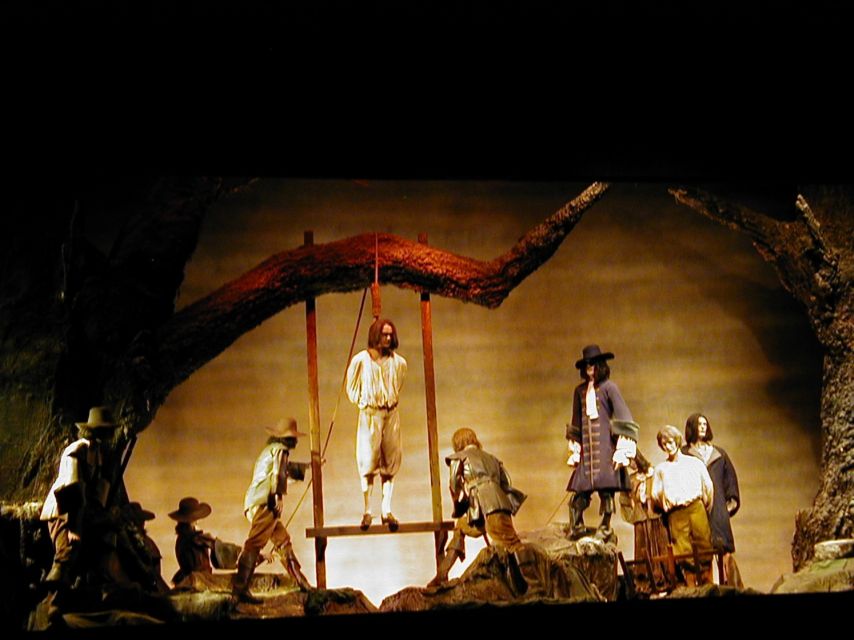
The most striking part of the Salem Witch Museum is its dark auditorium, where 13 life-size stage sets light up around you as a narration recounts the Salem Witch Trials of 1692. It is part museum, part stage presentation, and a quick way to grasp the basic story before exploring Salem’s other historic sites.
I like the clear chronological telling and the second exhibit’s wider look at witch hunts, from pre-Christian pagan traditions to modern Wicca. I also like the practical format: you sit during the 30-minute presentation, then receive a shorter guided explanation of the next exhibit. The main drawback is that the second room can feel crowded, and a soft-spoken guide may be hard to hear from the back.
In This Review
- Key points to know before you go
- What the Salem Witch Museum actually offers
- The 30-minute presentation on Salem in 1692
- The second exhibit, from pagan midwife to modern Wiccan
- A short visit with a clear purpose
- How the price compares with the experience
- Who will get the most from this museum
- Timing, tickets, and October planning
- How to build the museum into a Salem day
- My practical verdict
- FAQ
- How long does the Salem Witch Museum visit take?
- What does the first presentation cover?
- What is included with admission?
- Is the museum wheelchair accessible?
- Can I bring luggage or a large bag?
- Are tickets valid on any day?
- Can I cancel my reservation?
Key points to know before you go
- Thirteen illuminated stage scenes: Life-size settings appear around the auditorium as the Salem story unfolds.
- Two different presentations: The first covers the 1692 trials, while the second examines how the meaning of witch has changed.
- About 75 minutes total: Allow time for both exhibits, with seating provided for the opening presentation.
- English presentation, eight audio translations: Spanish, Chinese, French, German, Italian, Japanese, Russian, and English options are available.
- A useful first stop in Salem: The museum gives you basic context before you visit sites connected with the trials.
- October restrictions matter: Vouchers are not valid on weekends in October or on Halloween Day.
What the Salem Witch Museum actually offers
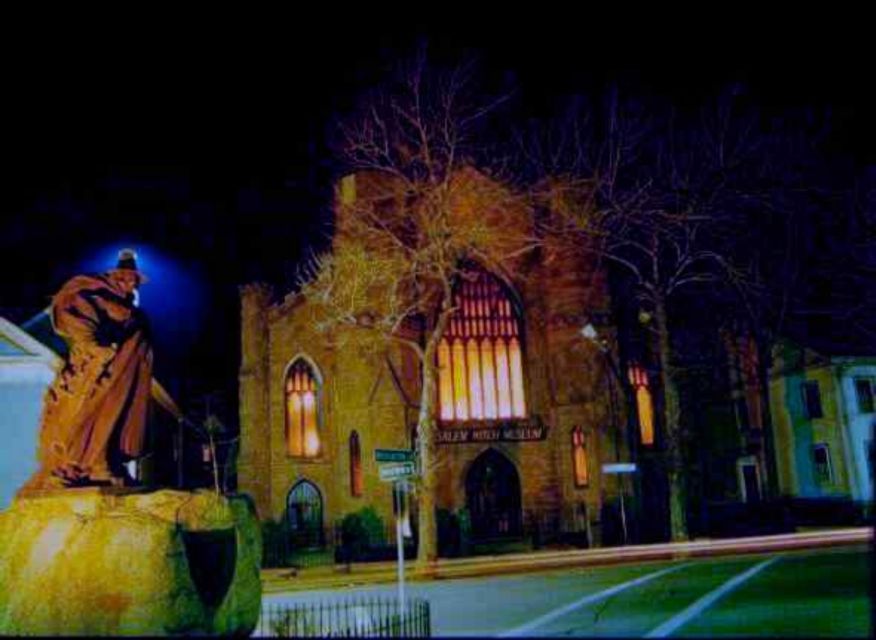
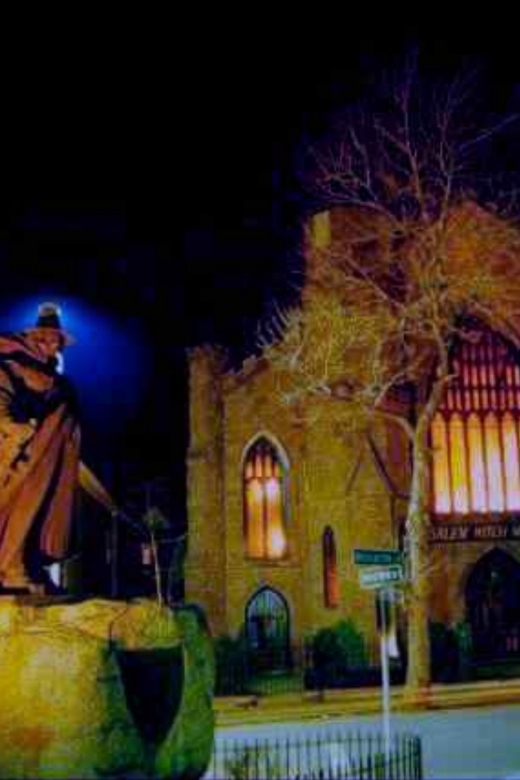
The Salem Witch Museum is at 19 1/2 Washington Square North, a central spot on Salem’s busy Washington Square. You enter at the front ticket counter, exchange your voucher, and join the next available presentation.
This is not a quiet museum filled with rows of glass cases. The main attraction is a staged presentation in a large, darkened auditorium. Seats fill the room, and the action takes place above and around you as individual scenes are lit in sequence.
That format gives you a fast overview. Instead of reading a long wall of text, you follow a narrated story with visual settings and figures. It is easy to understand, even if you know little about Salem before arriving.
The approach is theatrical. Some people will find it memorable and atmospheric. Others may find it a little old-fashioned, with a style that recalls a traditional historical show rather than a modern interactive museum. That difference matters when you decide how much time and money to devote to it.
More Salem museums and collections:
- NYC: 9/11 Memorial & Museum Timed-Entry Ticket
★ 4.8 · 31,428 reviews - NYC: Empire State Building Tickets – Observatory & Museum
★ 4.7 · 25,757 reviews - New York City: American Museum of Natural History Ticket
★ 4.5 · 15,447 reviews
The 30-minute presentation on Salem in 1692
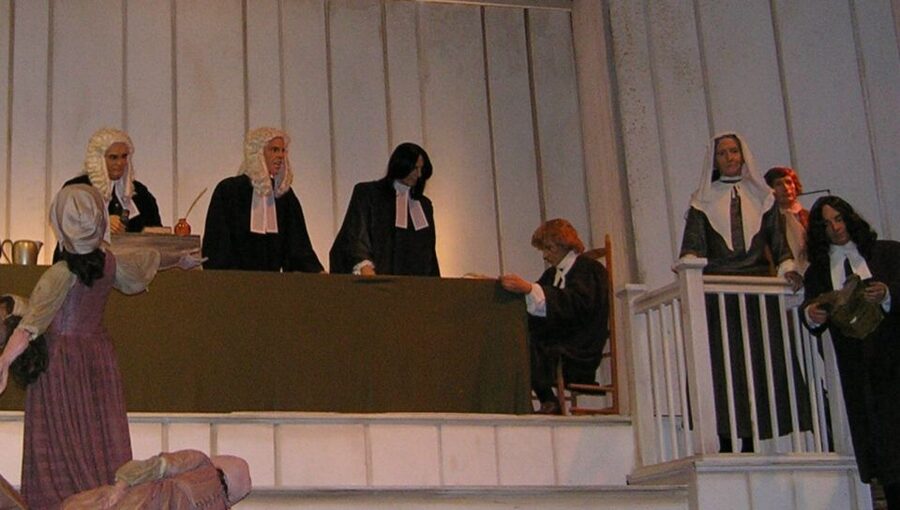
The opening presentation focuses on Salem village in 1692 and the events that led to the witch trials. As the narration proceeds, one of the 13 life-size scenes illuminates at a time.
You remain seated while the scenes appear around the auditorium. This is helpful if you have been walking around Salem all day, and it also makes the experience accessible for people who prefer not to stand for a long guided tour. A wheelchair user can take part, and staff have been helpful with older visitors using wheelchairs.
The presentation gives you the basic sequence of the accusations, proceedings, and consequences. It is less about examining every legal document or individual biography and more about showing how fear and accusation spread through the community.
I like this opening because it supplies a framework for the rest of Salem. Once you understand the broad sequence, places such as the Salem Witch Trials Memorial and the historic sites around town have more meaning. The museum does not replace those sites, but it can help you know what you are looking at.
Your seat can affect the experience. The scenes are positioned around the room, and some figures may be partly hidden depending on your angle. The narration is central, so listen carefully. If you sit far back and the guide or audio is quiet, parts of the presentation can be difficult to catch.
The tone is serious. The story deals with fear, accusation, imprisonment, and execution, rather than treating the trials as a playful Halloween tale. Salem has plenty of spooky entertainment, but this presentation keeps its attention on the human cost of the events.
The second exhibit, from pagan midwife to modern Wiccan
After the auditorium presentation, museum staff guide you through Witches: Evolving Perceptions. This section shifts away from Salem alone and asks what the word witch has meant at different points in history.
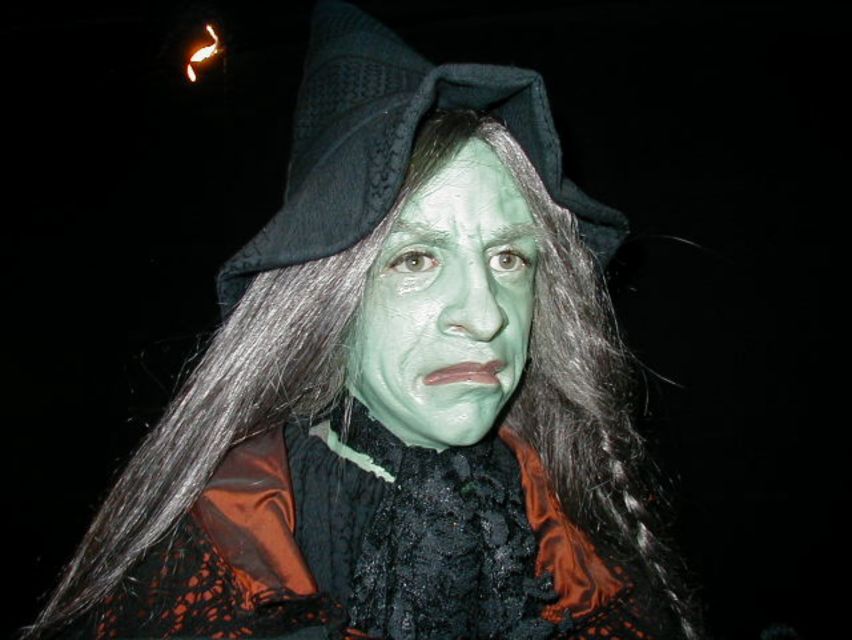
The life-size displays trace the idea of the witch from the pagan midwife of pre-Christian times to the modern-day Wiccan. The point is not that these figures are all the same. Instead, you see how one label has been applied to very different people and beliefs.
This section also explains how witch hunts begin and gives examples of witch hunts since 1692. That wider view is valuable because it moves the subject beyond Salem’s famous case. It encourages you to think about scapegoating, fear, and public pressure as recurring human problems.
The presentation lasts no more than 15 minutes, but the guided format can make it feel longer or shorter depending on the group. Staff explain the displays as you move through the room. A good guide can add warmth, humor, and useful detail. One guide named Sean has been praised for mixing humor with history in a way that kept the subject engaging.
The main issue is crowding. When more than one group gathers in the room, it can be hard to see the objects being discussed. A guide may be well prepared, but that does not help much if you are standing at the back and cannot hear every word.
I would try to stay near the guide without blocking other people. If you have hearing difficulties, the translated audio options may help, though the supplied information does not specify whether every part of the staff-led presentation uses the same audio system.
A short visit with a clear purpose
Allow about 1 hour and 15 minutes for the complete visit. The first presentation takes roughly 30 minutes, and the second presentation takes no more than 15 minutes. The remaining time covers moving between sections and looking around afterward.
That makes this an easy addition to a day in Salem. You do not need to give it half a day, and you can plan another museum, historic site, or walking route around it.
The short length is both a strength and a weakness. I like that the museum does not demand a huge block of your schedule. If you are visiting Salem with children, older relatives, or anyone who tires easily, the seated first section is useful.
At the same time, you should not expect an all-day museum visit. The displays are focused, and the second exhibit is brief. Some people will wish they had more time with the material, especially after the opening presentation has set up questions they want answered.
The museum works best as an introduction. Think of it as a compact orientation to the trials and the changing idea of witchcraft, not as the final word on Salem’s past.
More Salem trips worth a second look
- NYC: SUMMIT One Vanderbilt Tickets
★ 4.7 · 51,195 reviews - NYC: Empire State Building Observation Deck Tickets
★ 4.7 · 22,072 reviews - NYC: Edge Observation Deck Admission Ticket
★ 4.6 · 20,918 reviews - New York City: Top of the Rock Observation Deck Ticket
★ 4.6 · 14,488 reviews
How the price compares with the experience
Admission costs $18 per person. At that price, I consider the museum a reasonable purchase if you want a guided overview and appreciate theatrical presentation.
You are paying for two exhibits, not just a single short show. The first uses the 13 illuminated scenes to tell the story of the trials, and the second adds context about witch hunts and the word witch. The audio translations also make the visit more useful for people who do not want to follow the presentation only in English.
The value is less clear if you prefer independent museum visits, original documents, or long explanations beside individual objects. The experience is compact and scripted, so it will not satisfy everyone looking for extensive collections.
You can also spend more money after the presentations in the gift store. It carries Salem and witchcraft souvenirs for different ages, though some items are priced higher than you might expect. I would treat the shop as an optional finish, not part of the admission value.
The overall rating of 3.9 from 417 reviews fits the experience well. The strongest points are the clear story, helpful staff, historical information, and memorable opening presentation. The weaker points are the short duration, limited interaction, crowding in the second section, and occasional problems hearing the guide.
Who will get the most from this museum
I would recommend the museum to you if this is your first visit to Salem and you want a basic understanding of the 1692 trials before exploring the town. It is also a good fit if you enjoy historical attractions that use sets, narration, and staged scenes rather than only written displays.
Families may appreciate the visual storytelling, though younger children may find the subject matter serious and the second section a little long. The museum does not rely on live role-play or audience participation, so children expecting an interactive show may be disappointed.
History-minded visitors will value the attempt to connect Salem with later examples of witch hunts. The exhibit is especially useful if you want to think about how labels and fear can shape public behavior.
The visit can also work well for older relatives. There is seating throughout the auditorium, the activity is wheelchair accessible, and the museum staff have helped visitors with mobility needs.
I would be more cautious if you want a detailed academic treatment, a large collection of artifacts, or extensive time to explore at your own pace. You may find the staged presentation too polished or the second room too compressed.
Timing, tickets, and October planning
Your ticket is valid for one day and only on the date purchased. Check the available starting times before you book, since you exchange your voucher for the next available presentation rather than simply walking into any session on another date.
October requires special care. Vouchers are not valid on October weekends or Halloween Day. Salem is especially busy during its Halloween season, so confirm the allowed date before building your itinerary around the museum.
You can cancel up to 24 hours in advance for a full refund, and the reservation option allows you to book without paying immediately. Those terms are useful if your Salem plans depend on weather or changing schedules.
Leave large bags and luggage behind. They are not allowed inside, so carry only what you need for the visit.
The host and staff operate in English. Complimentary audio translations are available in English, Spanish, Chinese, French, German, Italian, Japanese, and Russian. If language access is important to your group, ask at the ticket counter how the audio option applies to the two sections.
How to build the museum into a Salem day
Because the museum sits on Washington Square, it is easy to use as an early stop. Begin here, get the basic story, and then walk through Salem with a better sense of what the trials meant.
I would avoid scheduling it at the very end of a packed day. The presentation is short, but you need enough attention to follow the narration and the scenes around the room. Afterward, give yourself time to think about the second exhibit rather than rushing straight to the next attraction.
Parking can be a challenge in Salem, especially during busy periods. If you are driving, allow extra time and do not plan to arrive at the exact start time. The museum itself is at the stated meeting point, and the activity finishes there, so you do not need to arrange a separate return transfer.
The gift shop makes a simple final stop. You can browse Salem-themed and witchcraft-related items, but remember that the shop is not included in the $18 admission price.
My practical verdict
Book the Salem Witch Museum if you want a short, accessible introduction to the 1692 trials, especially on a first visit. The opening auditorium presentation is the main reason to come, and the second exhibit adds useful context by showing that witch hunts did not end with Salem.
Go in expecting a scripted historical presentation, not a large conventional museum. Sit where you can see the displays and hear the narration, allow 75 minutes, check your date carefully in October, and keep large bags elsewhere.
I would call it good value for an hour of focused history at $18, with the strongest appeal for first-time visitors, families, and anyone who enjoys visual storytelling. If you want extensive artifacts, long-form research, or a highly interactive tour, spend your admission money elsewhere.
FAQ
How long does the Salem Witch Museum visit take?
You should allow about 1 hour and 15 minutes for both exhibits, including the 30-minute opening presentation and the second presentation of no more than 15 minutes.
What does the first presentation cover?
It recounts the Salem Witch Trials of 1692 through narration and 13 life-size stage sets that illuminate around the auditorium.
What is included with admission?
Your ticket includes entrance to both Salem Witch Museum exhibits. Audio translations are available in English, Spanish, Chinese, French, German, Italian, Japanese, and Russian.
Is the museum wheelchair accessible?
Yes, the activity is wheelchair accessible, and seating is available throughout the auditorium.
Can I bring luggage or a large bag?
No. Luggage and large bags are not allowed inside the museum.
Are tickets valid on any day?
No. Vouchers are valid only on the date purchased. They are also not valid on weekends in October or on Halloween Day.
Can I cancel my reservation?
Yes. You can cancel up to 24 hours in advance for a full refund. A reserve-now, pay-later option is also available.
Recently reviewed around Salem
- Salem, MA: History and Hauntings Guided Walking Tour★ 4.8 · 651 reviews
- Salem: Boos and Brews Haunted Pub Crawl★ 4.1 · 411 reviews
- Salem Night Tour: Haunt and History Guided Night Tour★ 4.5 · 673 reviews
- Salem Ghost Tours: Witches & Wicked Whispers★ 4.2 · 436 reviews
- 2.5-Hour Salem History & Sightseeing Guided Walking Tour★ 5.0 · 850 reviews
- Best Salem Witch Trials Historical Walking Tour★ 4.0 · 743 reviews
- Salem Ghost Tour: Witches & Wicked Whispers★ 4.5 · 571 reviews
- Wicked Awesome Tours: Witch Trial History and Salem Haunts!★ 5.0 · 1,032 reviews
Museums, compared.

Empire State Building Tickets – Observatory & Museum
Read our review →


9/11 Memorial, Ground Zero Tour with Optional 9/11 Museum Ticket
Read our review →

All-Access 9/11: Ground Zero Tour, Memorial and Museum, One World Observatory
Read our review →
Browse the lists this tour appears in