
Reviewed · HISTORICAL TOURS
Best Salem Witch Trials Historical Walking Tour
The most useful thing about this Salem tour is also the easiest to miss: most places tied to the 1692 witch trials are gone. Instead of walking through preserved courtrooms and jails, you stand on their former sites while a guide explains what happened there. The Witch House is the major exception.
I like the compact route, which covers about one mile and returns you downtown. I also like the focus on real people, including Bridget Bishop, Giles Corey, George Corwin, and the young Betty Parris. The main drawback is clear: this is a talk-heavy history walk, with frequent stops and limited interior sightseeing. If you expect a string of preserved buildings, you may feel shortchanged.
In This Review
- Key points to know before you book
- What this Salem witch trials walk really offers
- Starting with the people behind the 1692 crisis
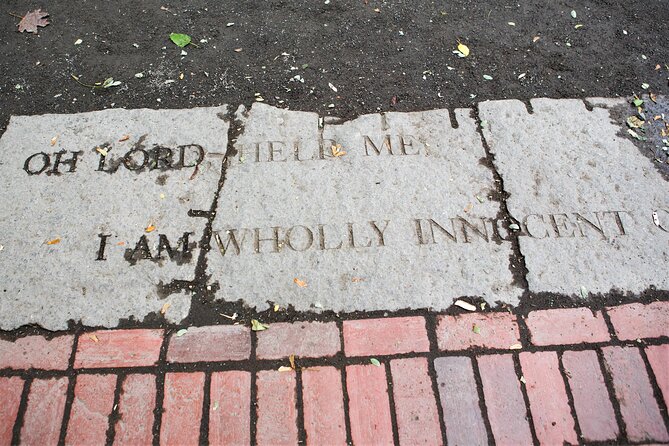
- The Salem Witch Trials Memorial: a quiet stop with weight
- Rockafellas and the former First Church site
- The Joshua Ward House and George Corwin’s role
- The Witch House, Salem’s key surviving structure
- Betty Parris and the Sewall Street connection
- Bridget Bishop’s story at Lyceum Hall
- The jail, the Witch Dungeon Museum, and Giles Corey
- A lighter pause with Samantha Stevens
- The Witchcraft Court and the former jail site
- Why the missing buildings matter
- Walking conditions, timing, and October crowds
- Is $30 a fair price?
- Who should book this Salem walking tour?
- Should you book it?
- FAQ
- How long is the Salem Witch Trials walking tour?
- Where does the tour begin?
- Where does the tour end?
- What time does the tour depart?
- Is the tour offered in languages other than English?
- Are attraction admissions included?
- Is the tour suitable for people with mobility concerns?
- What happens if the weather is bad?
Key points to know before you book
- The Witch House is the only surviving Salem building with direct ties to the trials.
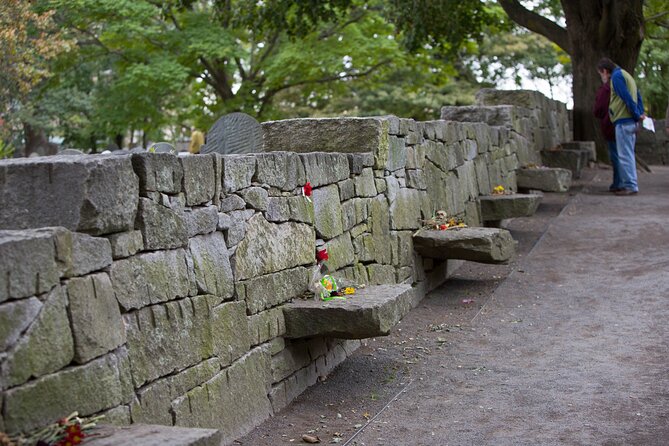
- The Salem Witch Trials Memorial gives the tour its emotional center, with a bench for each of the 20 people who died.
- The route covers about one mile in 90 minutes, mostly through downtown Salem.
- Several stops mark vanished buildings, including the jail and the court, so this tour depends heavily on storytelling.
- Bob is one guide praised by name for vivid historical narration, though guide assignments vary.
- October brings serious traffic, parking, and crowd problems, so arrive early and expect uneven sidewalks.
What this Salem witch trials walk really offers
Salem’s witch-trial story is often reduced to pointed hats, spooky souvenirs, and a few famous names. This walk works better when it keeps its attention on the human disaster: neighbors accusing neighbors, judges accepting weak evidence, prisoners paying for their own confinement, and families losing homes and property.
At $30 per person, the price is reasonable if you want a quick introduction before visiting Salem’s museums on your own. You are paying for a guide who connects scattered downtown locations and supplies the missing context. You are not paying for admission to the Witch House, Witch Dungeon Museum, or other buildings.
The experience lasts about 90 minutes and is offered in English at 10 a.m., 1 p.m., and 4 p.m. The group can reach 40 people, so the feel may range from intimate to fairly large. In a bigger group, listening clearly and staying close to the guide matters.
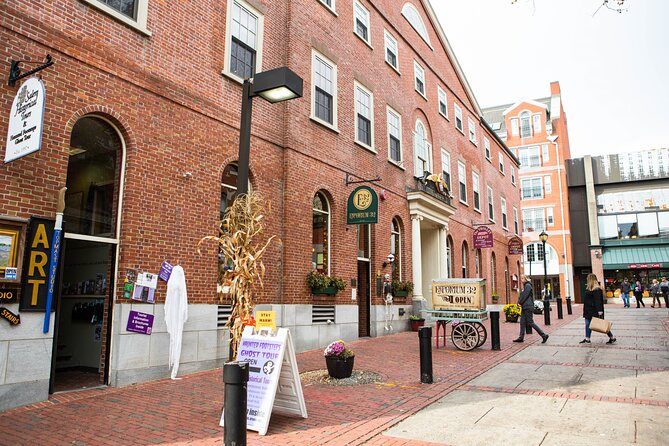
The walk begins at the Salem Historical Tours office at 8 Central Street. Look for the guide holding a recognizable sign, and arrive 15 minutes early. One practical warning: some booking messages may refer to different nearby office buildings, so check the meeting details carefully before setting out.
More Historical Tours in Salem
- History and Hauntings of Salem Guided Walking Tour
★ 5.0 · 14,564 reviews - Wicked Awesome Tours: Witch Trial History and Salem Haunts!
★ 5.0 · 1,032 reviews - 2.5-Hour Salem History & Sightseeing Guided Walking Tour
★ 5.0 · 850 reviews
Starting with the people behind the 1692 crisis
The opening portion sets the stage with the demographics, theories, and personal stories behind the witchcraft panic. You hear how fear moved through the community and how accusations turned ordinary disputes into legal charges.
This part is important because Salem’s events did not happen in a vacuum. The guide discusses the people involved and points out where key structures once stood, even when modern buildings occupy the ground today. The route is not a theatrical performance, though some guides tell the story with plenty of energy and dramatic timing.
That style varies. Some guides provide a clear timeline and answer questions well. Others may offer more anecdotes than structure. If chronology matters to you, ask early for the basic sequence of events, from the first accusations through the court proceedings and executions.
The Salem Witch Trials Memorial: a quiet stop with weight
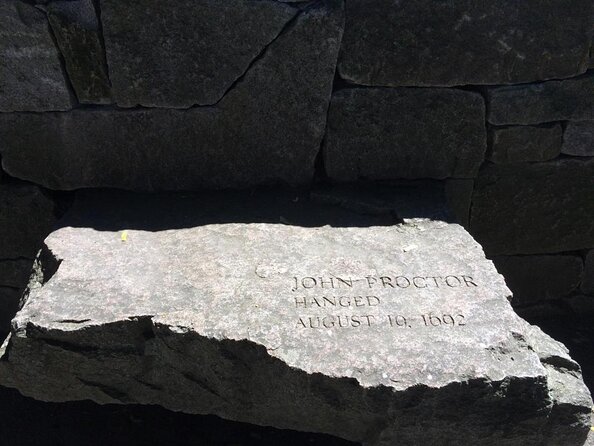
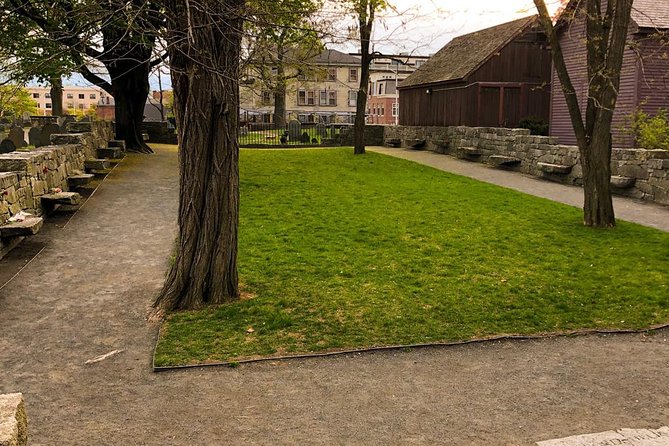
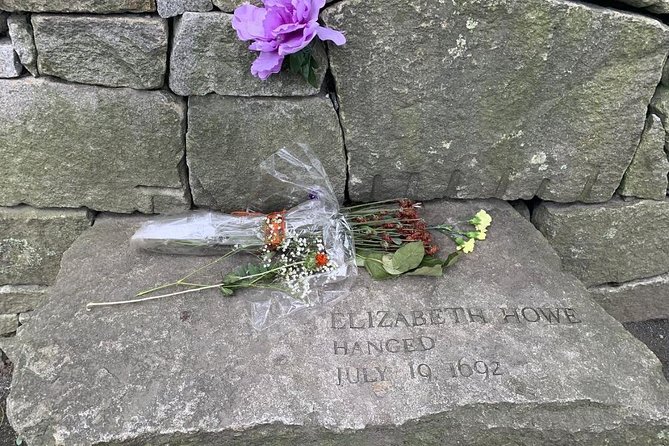
The memorial, created in 1992, honors the 20 people who died during the trials. Its simple design uses stone benches, each marked with a name, the date of death, and the manner of death.
The guide explains the symbolism and shares individual stories. This is one of the strongest stops because it moves the subject away from folklore and toward actual victims. Take a moment to read the names yourself. The memorial is not a grand monument. Its restraint suits the subject.
One point to clarify before booking: the planned stop is near the memorial, but the amount of time spent walking through it can vary. If you want to examine every bench, tell the guide. The scheduled stop is about 10 minutes, so there is not time for a long independent visit during the group walk.
Rockafellas and the former First Church site
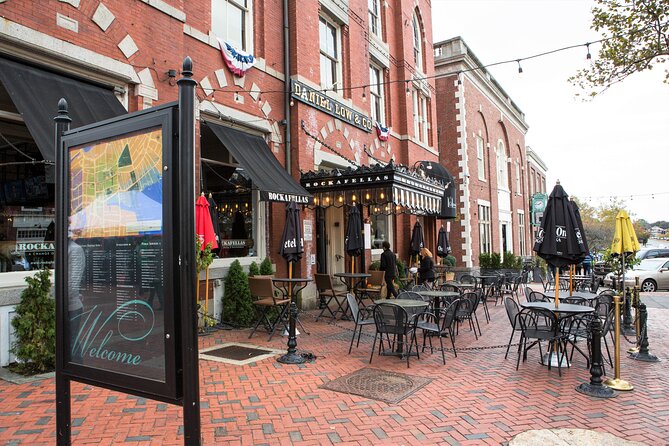
Rockafellas Restaurant occupies the Daniel Low and Co. building in central Salem. The location once held the First Church of Salem and the town meeting house during the witch trials.
You will not enter the restaurant as part of the tour, and food or drink is not included. The value here is location. Standing at the site helps you picture where civic and religious life met during the crisis, even though the 1692 structure no longer survives.
This is a good example of what the tour does best: it links today’s ordinary streets with events that took place more than three centuries ago. It is also a stop that may disappoint anyone expecting a preserved interior or a museum display.
More Walking Tours in Salem
- Salem Voodoo, Vampires, and Ghosts Guided Walking Tour
★ 5.0 · 1,931 reviews - Bewitched Walking Tour of Salem
★ 5.0 · 1,895 reviews - Salem, MA: History and Hauntings Guided Walking Tour
★ 4.8 · 651 reviews - Requiem for Salem Walking Ghost Tour
★ 4.5 · 562 reviews
The Joshua Ward House and George Corwin’s role
The Joshua Ward House now operates as the Merchant Hotel. The tour identifies this area as the former site of George Corwin’s home. Corwin served as High Sheriff of Essex County in 1692 and signed arrest and execution warrants.
His role was not limited to paperwork. The story includes the seizure of personal property and allegations that people were tortured in his home. The location helps bring the machinery of the trials into view. Accusations became arrests, arrests became imprisonment, and officials profited or gained power from the process.
The house itself is not presented as a trial museum, and admission is not part of the walk. Think of this as a historical marker explained by a guide, not a building visit.
The Witch House, Salem’s key surviving structure
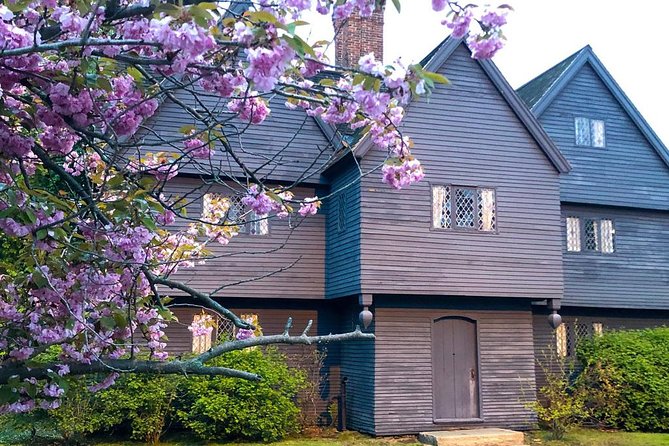
The Witch House is the tour’s most tangible connection to 1692. Dating from the 1660s, it was the home of Judge Jonathan Corwin, who met there with Judge John Hathorne to discuss accusations and decide who might be considered a witch.
This is the only remaining Salem structure with direct ties to the trials. That distinction matters. Several places on the route are connected through later buildings or known locations, but the Witch House gives you an actual surviving room-and-timber setting linked to one of the judges.
Admission is not included, and the group may stop outside rather than conduct a full interior visit. If you want to explore the house in detail, plan a separate visit and allow extra time. The 10-minute stop is enough to understand its importance, not enough for an unhurried museum experience.
Betty Parris and the Sewall Street connection
The Salem YMCA now occupies a site on Sewall Street. The street name recalls Judge Stephen Sewall, who served on the Witchcraft Court. The tour also points to the former home where nine-year-old Betty Parris was moved in July 1692.
Betty was the daughter of Reverend Samuel Parris, and her symptoms and accusations helped set the crisis in motion. Her cousin also played a role in the early events. The house is gone, so the guide supplies the story while you stand in a modern setting.
This stop is valuable for visitors who want to understand how children became central to the accusations. It also reinforces the need to separate known facts from later legends. A strong guide will explain what records show and where historians remain uncertain.
Bridget Bishop’s story at Lyceum Hall
Turner’s Seafood operates in Lyceum Hall, built on land once owned by Bridget Bishop and her husband, Edward. Bishop was the first woman executed during the 1692 trials.
Her story is one of the tour’s sharper examples of how quickly suspicion could become a death sentence. According to the tour account, only eight days passed between her arrest, trial, and execution. The stop lasts about five minutes, so expect a concise explanation rather than a long examination of the building.
Turner’s Seafood is not included as a meal stop, but it can be useful for a later lunch or dinner plan. The historical connection is the reason for stopping, not the restaurant service.
The jail, the Witch Dungeon Museum, and Giles Corey
The Witch Dungeon Museum is not directly connected to the original 1692 trials, but it helps explain the conditions prisoners faced. The tour describes tiny jail cells, sometimes no bigger than a phone booth or closet, and the fact that prisoners had to pay for their own confinement.
You may also get a photo opportunity in the pillories, also called stocks. This is the most openly interactive part of the route, though it remains brief. Admission is not included.
The walk then identifies 50 St. Peter Street as the site of the former Witchcraft Jail. The jail itself is gone. Here you hear about people held there, including Giles Corey, who was crushed during interrogation after refusing to enter a plea. Some prisoners died in jail.
These stops explain why a historical walking tour in Salem cannot promise constant architecture. The locations matter, but the buildings disappeared. If that distinction is clear in your mind, the experience makes more sense. If you want preserved cells and recreated scenes, you will need to add a museum visit.
A lighter pause with Samantha Stevens
The Bewitched statue of Elizabeth Montgomery offers a sharp change of tone. The statue shows Samantha Stevens, the fictional witch from the television series Bewitched. You can take a photograph and learn about episodes filmed in Salem.
The guide also points out the irony of the statue’s setting and land history. This is a short, free stop, and it adds modern popular culture to a tour otherwise centered on a grim colonial episode.
Some people will enjoy the contrast. Others may see it as a distraction. I find it useful because Salem’s identity today mixes serious historical study with witch-themed entertainment. The tour lets you see both sides without pretending they are the same thing.
The Witchcraft Court and the former jail site
The Salem Masonic Building, home of Essex Lodge, marks the area where the Witchcraft Court once operated. The court, formally called the Court of Oyer and Terminer, met in the middle of Washington Street near the present building. Additional trials occurred there in January 1693.
The guide explains some of the court’s worst decisions. In one case, a jury declared an accused person innocent, but the judges rejected that result. Details like this show how the legal process failed, rather than leaving you with the vague idea that Salem was simply a mass panic.
The final location, 50 St. Peter Street, returns to the former jail. Together, these stops give you the outline of arrest, confinement, trial, and punishment. The tour does not take you to the execution site, which is more than a mile away. That is a significant limitation for anyone hoping to see Gallows Hill during the walk.
Why the missing buildings matter
A common source of frustration is that the route includes places you cannot enter or structures you cannot see. The jail, courthouse, sheriff’s house, and many accused people’s homes are gone. You are often looking at a street corner, office building, restaurant, or hotel.
That can feel repetitive if the guide does not provide a clear visual aid. The tour sometimes uses pictures from old books to show former buildings and locations. Those images help, but the quality and amount may depend on the guide.
I recommend treating this as a story walk, not an architectural tour. The physical sites anchor the narrative, but the real content is the explanation of who lived there, what happened, and how the legal system worked.
Walking conditions, timing, and October crowds
The route covers roughly one mile in 90 minutes, with frequent stops. You need to walk and stand for the full period. Salem has narrow and uneven sidewalks, brick surfaces, cobblestones, and stairs. Comfortable shoes are essential.
The tour operates in all weather. Bring clothing for rain, wind, or cold, and do not assume a sunny forecast will hold. There are no public restrooms included, so plan ahead before meeting the group.
October is the most difficult month for logistics. Halloween crowds, street vendors, traffic, and limited parking can make downtown Salem slow to reach. GPS arrival estimates are not enough. Give yourself extra time, especially for the 10 a.m. and 1 p.m. departures.
The tour allows service animals, and children must be accompanied by an adult. Most people can participate, but anyone with mobility concerns should consider the uneven surfaces and the requirement to finish one mile within 90 minutes.
Is $30 a fair price?
At $30, I consider this a fair introduction for a first visit to Salem. You receive 90 minutes with a local guide, a focused route, and a human explanation of sites that are easy to overlook when you follow the city’s free yellow trail alone.
The value drops if you already know the trials well or dislike standing while listening. It also drops if you expect admission to the Witch House or Witch Dungeon Museum, since those costs are separate. Parking and hotel transportation are not included either.
The best way to use the tour is as an orientation. Take it early in your Salem visit, then return to the Witch House, the memorial, or a museum that interests you. The walk shows you where to spend more time instead of trying to cover every attraction at random.
Who should book this Salem walking tour?
I would recommend it to first-time visitors, families with older children, and anyone who wants the real names and locations behind Salem’s famous story. A 14-year-old interested in history should find plenty to follow, especially the stories of Betty Parris, Bridget Bishop, and Giles Corey.
It also suits people who prefer a short walking experience rather than a full-day museum schedule. Guides can answer questions, and the strongest ones bring the period to life with a clear narrative and a bit of humor. Bob, in particular, has been praised for making the people and events feel immediate while keeping the grim subject bearable.
I would hesitate if you want a fully chronological lecture, extensive interior access, or a visit to the execution site. Guide presentation can vary, and some people find the information repetitive when the route pauses at several vanished locations.
Should you book it?
Book this tour if you want a practical introduction to Salem’s witch trials and accept that much of the evidence is found beneath modern streets, not inside preserved buildings. The memorial and Witch House give the walk real physical anchors, while the former jail, court, and sheriff’s site add useful context.
Skip it if you already know the subject well or prefer to explore independently with the yellow trail. For most first-time visitors, $30 is a reasonable price for getting oriented, asking questions, and hearing the stories of the accused and victims directly connected to downtown Salem.
FAQ
How long is the Salem Witch Trials walking tour?
The tour lasts approximately 90 minutes and covers about one mile.
Where does the tour begin?
It begins at the Salem Historical Tours office at 8 Central Street, Salem, Massachusetts 01970.
Where does the tour end?
The walk returns to the downtown area. The guide can direct you toward your next destination.
What time does the tour depart?
Tours depart at 10 a.m., 1 p.m., and 4 p.m. You should arrive 15 minutes before departure.
Is the tour offered in languages other than English?
No. The experience is offered in English.
Are attraction admissions included?
No. Admission to places such as the Witch House, Witch Dungeon Museum, and other attractions is not included.
Is the tour suitable for people with mobility concerns?
The tour can be challenging because it requires about one mile of walking and frequent standing. Salem has narrow and uneven sidewalks, brick and cobblestone surfaces, and stairs.
What happens if the weather is bad?
The tour operates in all weather conditions, so you should dress appropriately. Free cancellation is available if you cancel at least 24 hours before the start time.
Recently reviewed around Salem
- Salem, MA: History and Hauntings Guided Walking Tour★ 4.8 · 651 reviews
- Salem Witch Museum Admission Ticket★ 3.9 · 417 reviews
- Salem: Boos and Brews Haunted Pub Crawl★ 4.1 · 411 reviews
- Salem Night Tour: Haunt and History Guided Night Tour★ 4.5 · 673 reviews
- Salem Ghost Tours: Witches & Wicked Whispers★ 4.2 · 436 reviews
- 2.5-Hour Salem History & Sightseeing Guided Walking Tour★ 5.0 · 850 reviews
- Requiem for Salem Walking Ghost Tour★ 4.5 · 562 reviews
- Salem Ghost Tour: Witches & Wicked Whispers★ 4.5 · 571 reviews
Historical Tours, compared.

History and Hauntings of Salem Guided Walking Tour
Read our review →
Charleston’s Old South Carriage Historic Horse & Carriage Tour
Read our review →

Big Island in a Day: Volcanoes Waterfalls Sightseeing and History
Read our review →
Freedom Trail History Small Group Walking Tour
Read our review →
Historic Charleston Guided Sightseeing Walking Tour
Read our review →
Starship Landmark 90 Minute Sightseeing Cruise
Read our review →Browse the lists this tour appears in