
Reviewed · HISTORICAL TOURS
Salem, MA: History and Hauntings Guided Walking Tour
Salem’s most powerful stories are found outdoors, where old streets, elegant houses, and the Witch Trials Memorial give the past a real setting. This two-hour walk mixes the hard facts of the 1692-1693 witch trials with ghost stories, maritime history, architecture, and a few film-location surprises.
I like the clear historical storytelling, especially the effort to explain how fear and bad evidence drove the witch trials. I also like the route through the McIntire and Chestnut Street districts, where you get far more than a quick look at Salem’s best-known witch attractions.
The main drawback is simple: this is an outdoor walk that runs rain or shine, and Salem’s older sidewalks can be uneven. The tour also does not enter any buildings, so you will see places such as the Witch House from outside rather than tour their interiors.
In This Review
- Key points at a glance
- Why this Salem walk works so well
- Starting at Old Town Hall in Derby Square
- Essex Street and the public face of Salem
- The Bewitched Sculpture and Salem’s pop-culture side
- The Witch House and the facts behind the trials
- Walking through the McIntire Historic District
- Ropes Mansion and Garden
- Chestnut Street and 300 years of architecture
- Ending at the Salem Witch Trials Memorial
- How much history and how much haunting?
- Is $36 a fair price?
- Practical advice for the two-hour route
- Who should book this walking tour?
- Should you book the Salem History and Hauntings tour?
- FAQ
- Where does the Salem walking tour begin?
- Where does the tour finish?
- How long does the tour last?
- Does the tour enter the Witch House or other buildings?
- Does the tour run in bad weather?
- Is the tour wheelchair accessible?
Key points at a glance
- The Salem Witch Trials get a serious explanation: You learn what happened in 1692 and 1693, not just the spooky version.
- The route covers Salem’s finest streets: Old Town Hall, Essex Street, the McIntire Historic District, Ropes Mansion, and Chestnut Street all fit into two hours.
- The guides make the difference: Guides including Joe, Diane, Dean, Hilary, Henry, Sean, and Anne are known for strong delivery, humor, and care with difficult stories.
- It is history with a ghost-story edge: Supernatural tales add atmosphere without replacing the central historical account.
- You stay outdoors: No interiors are included, so wear good shoes and dress for the forecast.
- The $36 price buys useful orientation: You get a broad introduction to Salem before deciding which museums or sites deserve more of your time.
Why this Salem walk works so well
Salem can feel like several towns packed into one. It is a port city, a colonial settlement, a center of the witch-trials story, a preserved architectural district, and a modern destination built partly around its spooky reputation.
That mix is the reason I would take a guided walk early in a Salem visit. In two hours, you get the basic map and the connections between the sights. A building is no longer just a pretty facade. A street is tied to a person, a court case, a shipping fortune, or a later film appearance.
The best part is the balance. The supernatural material supplies atmosphere, but the tour also treats the accused men and women as real people caught in a damaging legal and social crisis. Guides such as Diane have been especially praised for telling those accounts with respect, while guides including Joe, Dean, Hilary, Sean, and Henry bring energy and humor to the walk.
That range matters because Salem’s witch story can easily become a costume-shop caricature. A good guide keeps the fun spooky details while explaining the human cost.
More Historical Tours in Salem
- History and Hauntings of Salem Guided Walking Tour
★ 5.0 · 14,564 reviews - Wicked Awesome Tours: Witch Trial History and Salem Haunts!
★ 5.0 · 1,032 reviews - 2.5-Hour Salem History & Sightseeing Guided Walking Tour
★ 5.0 · 850 reviews
Starting at Old Town Hall in Derby Square
Meet at 32 Derby Square, beside Old Town Hall on the side with three staircases. This is a useful starting point because you are immediately in the center of Salem’s historic core, not waiting on the edge of town for the story to begin.
Old Town Hall receives about ten minutes for a photo stop, a visit from the outside, and an introduction to the city. The building gives the tour a strong visual opening, and the guide begins placing Salem’s past into a wider setting.
You will hear about Salem as a major seaport, an important point that can get lost when the witch trials take over the conversation. The city’s fortunes were tied to ships, trade, merchants, and the waterfront. That background helps explain why Salem developed the way it did.
The stop is brief, so do not expect a full architectural lecture here. Think of it as the first chapter and a chance to get comfortable with the group, the guide’s voice, and the walking pace.
Essex Street and the public face of Salem
The group then moves toward Essex Street for roughly ten minutes. This section helps you see how Salem presents its past today, with historic buildings, shops, public spaces, and a steady stream of people moving through the center.
This is also where a guide can connect the old city to its modern image. Salem’s witch identity is everywhere, but the city is more than one tragic episode. A good explanation gives you enough context to separate genuine history from later folklore and commercial storytelling.
The street portion is practical as well as informative. You begin to understand how close many of Salem’s major sights are to one another. That makes it easier to return later for a museum, shop, meal, or extra look at a building that caught your eye.
The Bewitched Sculpture and Salem’s pop-culture side
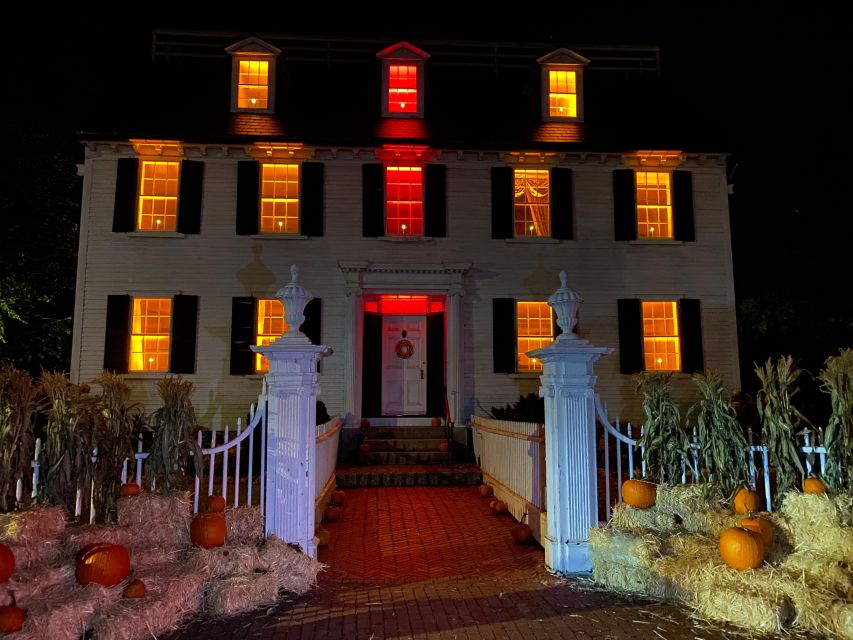
A stop at the Bewitched Sculpture gives the tour a lighter turn. You have time to see it, take photographs, and hear about Salem’s connection to popular entertainment.
The sculpture points to the city’s link with the television show Bewitched, and the tour may also touch on film connections such as Hocus Pocus. These details are not the main reason to book a history walk, but they help explain why Salem attracts such a wide mix of visitors.
I like this stop because it shows how Salem’s modern identity was built. The city’s public image includes colonial buildings, witch-trial memory, ghost stories, television, and movies. The guide can move between those subjects without pretending they all carry the same historical weight.
If you want only solemn history, this is the most playful part of the route. If you enjoy seeing how a place turns its past into popular culture, it adds useful context.
More Walking Tours in Salem
- Salem Voodoo, Vampires, and Ghosts Guided Walking Tour
★ 5.0 · 1,931 reviews - Bewitched Walking Tour of Salem
★ 5.0 · 1,895 reviews - Best Salem Witch Trials Historical Walking Tour
★ 4.0 · 743 reviews - Requiem for Salem Walking Ghost Tour
★ 4.5 · 562 reviews
The Witch House and the facts behind the trials
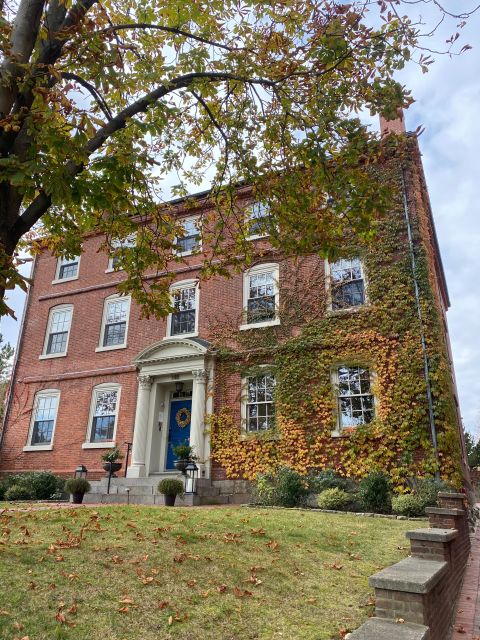
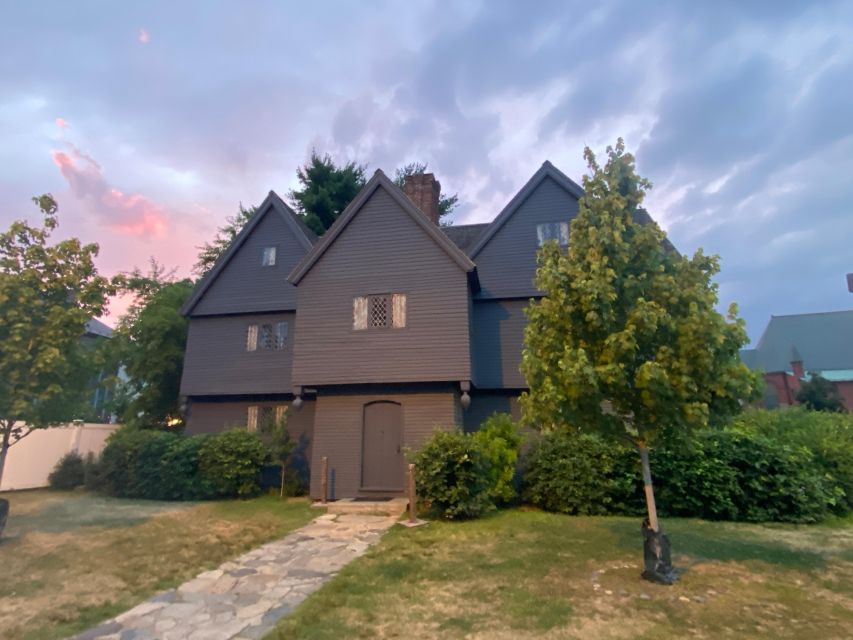
The Witch House is one of the tour’s most important stops, with around fifteen minutes set aside for photographs, explanation, and sightseeing. You do not go inside, but the exterior gives the guide a clear place to discuss the Salem Witch Trials of 1692 and 1693.
This is where the tour’s historical value becomes most clear. You will hear about the hysteria, the accusations, and the people pulled into the crisis. The goal is not simply to repeat the familiar story of witches in Salem. The guide explains the process and helps you understand how suspicion became accusation and accusation became punishment.
That distinction is crucial. Salem’s witch trials are often presented as a spooky tale, but the real story is more troubling. Men and women were accused, imprisoned, and condemned through a system shaped by fear, pressure, and unreliable claims.
Guides have been praised for making the subject easy to follow, even for people arriving with only a basic idea of what happened. Joe, for example, is noted for breaking down the events clearly, while Diane is known for treating the victims with care. You can expect questions to be welcome during the walk, though the exact amount of discussion depends on the group and the guide.
The fifteen-minute stop cannot cover every person or legal detail. It gives you a solid framework, then leaves you better prepared for the Salem Witch Trials Memorial at the end and for any museum you choose to visit afterward.
Walking through the McIntire Historic District
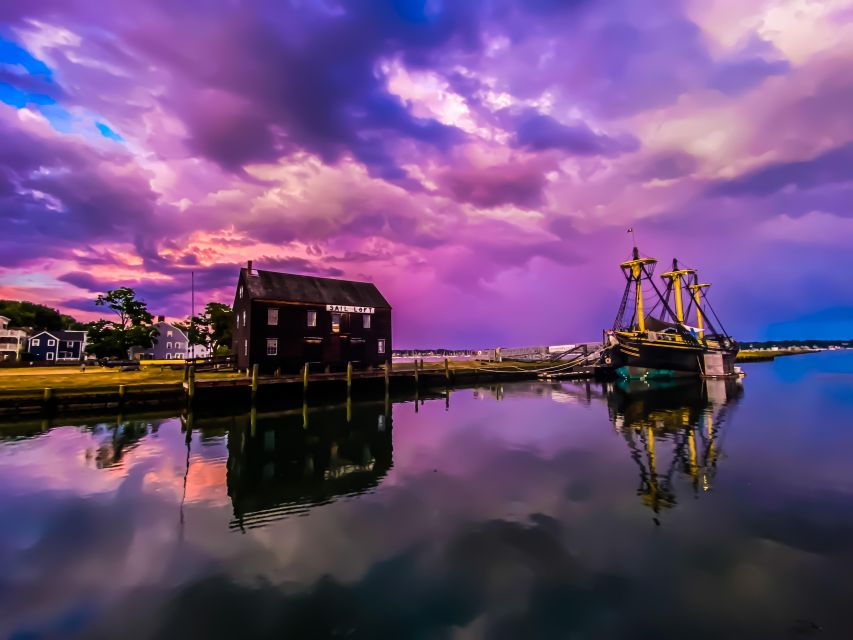
About thirty minutes are spent in the McIntire Historic District, the longest section of the route. This is the architectural heart of the walk and one of the best reasons to choose it over a tour focused only on ghost stories.
The district is known for centuries of architecture, including the work and influence associated with Salem architect Samuel McIntire. You move through streets lined with old homes and carefully preserved facades, seeing how Salem’s wealth and taste changed over time.
The guide adds meaning to the details you might otherwise miss. Look for doorways, windows, rooflines, trim, spacing between houses, and the overall scale of the streets. You are not simply checking off old buildings. You are seeing how a prosperous seaport created a residential district with a strong visual character.
One description of the route calls a nearby street one of the most beautiful in America, showcasing 300 years of architecture. That is a bold claim, but the area makes a good case for slowing down and looking up.
This is the section where the walking pace matters most. Reviews of the tour repeatedly note that the pace is manageable and that guides stop often enough for photographs and explanations. Still, you are outdoors for two hours, and the sidewalks can be uneven. Comfortable shoes are not optional advice here.
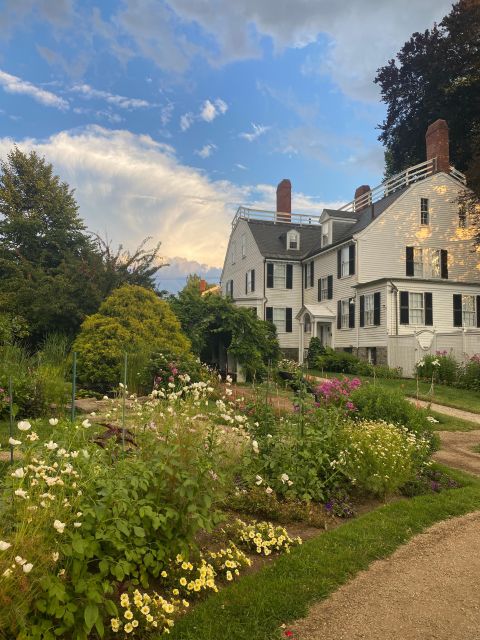
Ropes Mansion and Garden
The tour pauses for about ten minutes at Ropes Mansion and Garden. Again, this is an exterior stop, so you should not expect an indoor house tour.
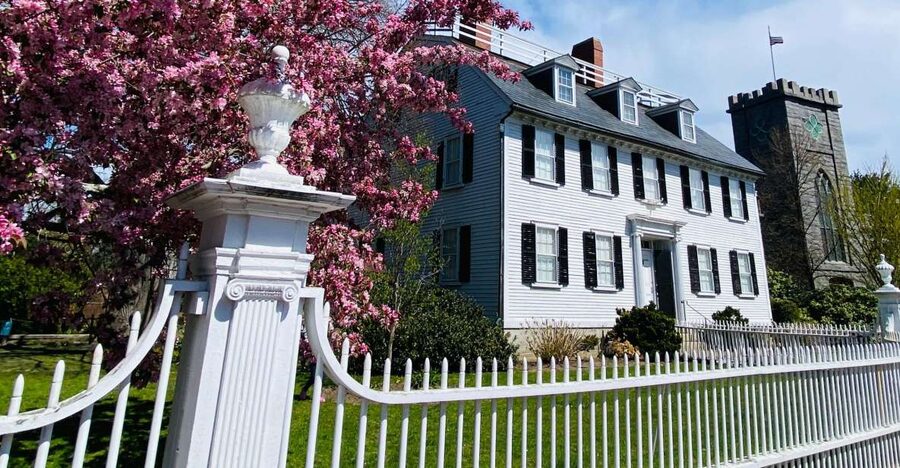
The mansion gives you another chance to see Salem’s historic architecture in a more residential setting. Its garden and facade make an appealing photo stop, but the guide’s context is what turns it into part of the larger story.
This section also connects with Salem’s film identity. The city’s historic properties have appeared in popular movies, and Ropes Mansion is associated with Hocus Pocus. That connection can be fun for film fans, especially if you have come to Salem partly because of the movie.
The stop is short enough that it will not satisfy anyone who wants a detailed study of the mansion itself. It works better as a scenic pause within a larger walk.
Chestnut Street and 300 years of architecture
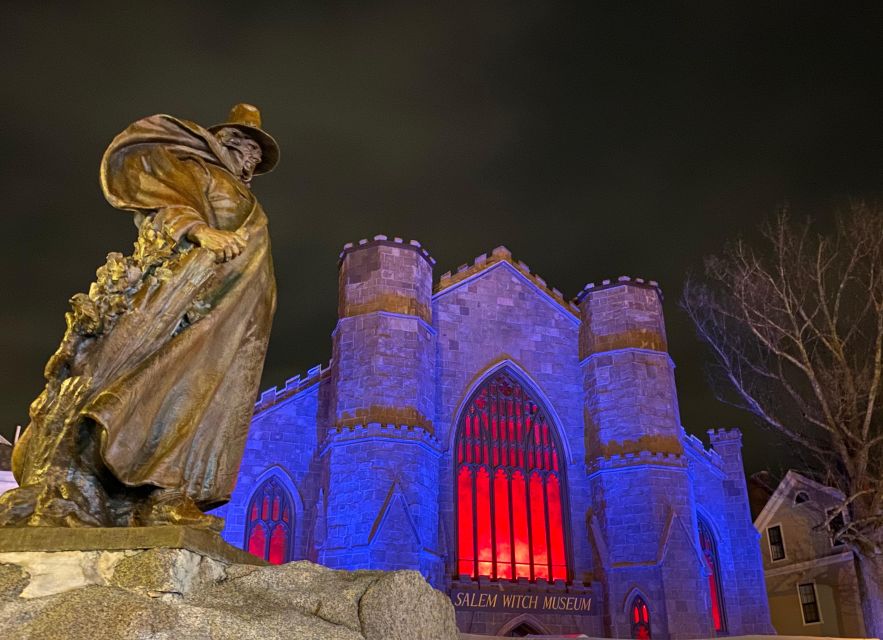
The Chestnut Street District receives around ten minutes, but its buildings reward more than a quick glance. This is another part of Salem where the city’s merchant wealth and architectural ambition are easy to see.
Chestnut Street is especially useful for understanding that Salem’s story did not end with the witch trials. The houses reflect later periods of prosperity and civic confidence. Their design gives you a visual record of how the city changed after the events that made it famous.
I would pay attention here even if architecture is not your main interest. The street helps balance the tour. You move from accusations and hauntings to a quieter look at daily life, wealth, design, and the people who shaped Salem long after 1692.
The guide may also point out small details or local connections that are easy to miss alone. Several guides have been praised for combining architecture with history rather than treating the houses as background scenery.
Ending at the Salem Witch Trials Memorial
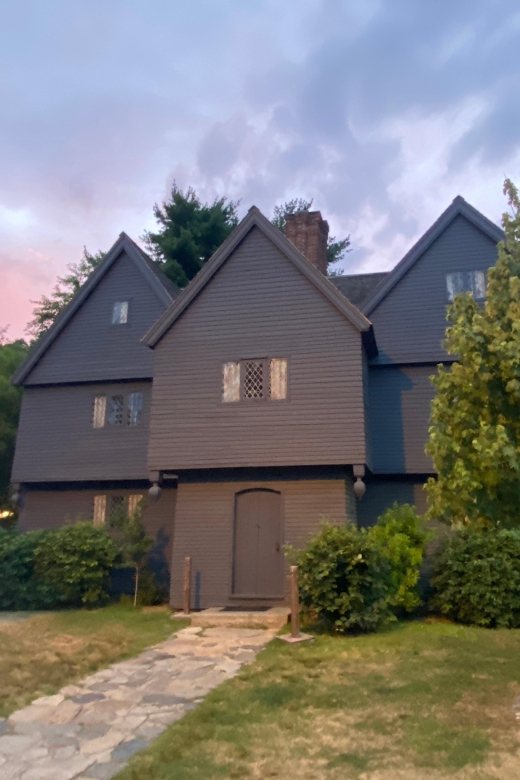
The walk finishes at the Salem Witch Trials Memorial. This is the right place to end because the tour’s historical thread returns to the people harmed by the trials.
The memorial gives the earlier discussion a quiet, physical focus. After hearing about the accusations and the forces behind the hysteria, you arrive somewhere designed for reflection rather than entertainment.
The supernatural stories can be memorable, especially when the weather turns windy or rainy, but the memorial helps keep the tour grounded. The accused were not fictional characters. They were people whose lives were damaged by fear and by a legal process that failed them.
I appreciate that the tour does not use the memorial as a quick photo stop and rush away. The ending allows the serious side of Salem to remain with you. It also gives you a natural point from which to continue exploring the city on your own.
How much history and how much haunting?
The title promises both history and hauntings, but the balance leans toward history. You will hear eerie stories connected with Salem’s streets and buildings, along with supernatural tales that create a spooky mood.
At the same time, this is not a theatrical ghost show built around jump scares. The strongest material comes from the contrast between documented events and later legends. The guide can tell you what is known, what is claimed, and what has become part of Salem’s folklore.
That makes the experience a good fit for mixed groups. One person can enjoy ghost stories, another can focus on the witch trials, and someone else can spend the walk admiring the houses. The humor helps, too. Guides such as Lee, Dana, William, and Hilary have been praised for keeping the mood lively without losing the thread.
Expect different personalities depending on who leads your departure. The guide names most often associated with especially strong tours include Joe, Diane, Dean, Hilary, Henry, Sean, Anne, Dawn, and John. The common qualities are clear speech, energy, command of the material, and the ability to keep a group together around traffic and city noise.
Is $36 a fair price?
At $36 per person, this is not the cheapest way to see Salem, but it is a fair price if you want a useful introduction rather than a simple stroll.
You get two hours with a licensed guide and a route that covers several separate parts of the city. The value comes from the connections: maritime Salem, the witch trials, local architecture, ghost stories, and film history all appear in one outing.
I would be less enthusiastic about the price if you mainly want to enter buildings. No admissions are included, and the tour is entirely outdoors. You will need to pay separately for any museums or historic houses you visit afterward.
For a first visit, the walk can save you from wandering past important sites without knowing why they matter. It also helps you decide where to spend the rest of your day. That makes the price easier to justify, particularly if you are visiting Salem for only a short time.
Practical advice for the two-hour route
Book this early in your stay if possible. The walk gives you a map of the center and introduces places you may want to revisit at a slower pace.
Wear shoes with good support. Salem’s sidewalks can be uneven, and the tour covers enough ground that flimsy footwear will become irritating. Bring weather-appropriate clothing, since the tour runs rain or shine.
Rain can add atmosphere, but it can also make it harder to hear and stay comfortable. Guides have handled heavy rain, loud cars, sirens, and large Halloween crowds, yet you should still arrive prepared with a waterproof layer.
The tour is listed as wheelchair accessible, but an outdoor historic district with uneven sidewalks can still present practical challenges. If access is a major concern, contact the provider before booking so you can confirm the conditions for your date.
Alcohol and drugs are not allowed. The tour is conducted in English with a live guide.
Free cancellation is available up to 24 hours before departure, and you can reserve now while paying later. That is useful if your Salem plans depend on weather or changing day-trip schedules.
Who should book this walking tour?
I would recommend it to first-time Salem visitors, history fans, families with older children, and anyone who wants more context than a row of spooky shops can provide.
It also suits people who usually avoid tours because they fear a corny performance. The mix of architecture, court history, maritime background, local legends, and film connections gives the guide plenty to work with. The best guides use jokes to keep the group alert, then shift into a respectful tone when discussing the accused.
Families should find the route approachable. One guide has been praised for keeping children engaged, and the short stops make the two-hour length manageable. Still, the subject includes imprisonment, accusations, and executions, so parents should decide how much detail suits their children.
I would choose another activity if you want interior access, a highly specialized architectural lecture, or a long and quiet study of the trial records. This is an overview, designed to make the city readable and memorable.
Should you book the Salem History and Hauntings tour?
Yes, if you want a strong first look at Salem that treats the witch trials as history while leaving room for spooky fun. The route covers the city’s major visual highlights, and the guides bring the material to life with clear explanations, humor, and local feeling.
The key limitation is that every stop is outdoors. Come ready to walk in changing weather, accept that group size can grow during busy Halloween periods, and use the tour as an introduction rather than a replacement for Salem’s museums.
For $36, you get a well-shaped two-hour orientation and a better understanding of what you are seeing. I would book it near the start of a Salem visit, then return to the places that deserve more time.
FAQ
Where does the Salem walking tour begin?
The tour begins at 32 Derby Square, at Old Town Hall. Meet your guide on the side of the building with three staircases.
Where does the tour finish?
The walk ends at the Salem Witch Trials Memorial.
How long does the tour last?
The walking tour lasts two hours.
Does the tour enter the Witch House or other buildings?
No. The activity is outdoors only, and buildings are viewed from the outside.
Does the tour run in bad weather?
Yes. Tours run rain or shine, so bring weather-appropriate clothing and comfortable shoes.
Is the tour wheelchair accessible?
Yes, the activity is listed as wheelchair accessible. Because the route uses outdoor historic streets and sidewalks, you may want to confirm specific conditions before booking.
Recently reviewed around Salem
- Salem Witch Museum Admission Ticket★ 3.9 · 417 reviews
- Salem: Boos and Brews Haunted Pub Crawl★ 4.1 · 411 reviews
- Salem Night Tour: Haunt and History Guided Night Tour★ 4.5 · 673 reviews
- Salem Ghost Tours: Witches & Wicked Whispers★ 4.2 · 436 reviews
- 2.5-Hour Salem History & Sightseeing Guided Walking Tour★ 5.0 · 850 reviews
- Best Salem Witch Trials Historical Walking Tour★ 4.0 · 743 reviews
- Salem Ghost Tour: Witches & Wicked Whispers★ 4.5 · 571 reviews
- Wicked Awesome Tours: Witch Trial History and Salem Haunts!★ 5.0 · 1,032 reviews
Historical Tours, compared.

History and Hauntings of Salem Guided Walking Tour
Read our review →
Charleston’s Old South Carriage Historic Horse & Carriage Tour
Read our review →

Big Island in a Day: Volcanoes Waterfalls Sightseeing and History
Read our review →
Freedom Trail History Small Group Walking Tour
Read our review →
Historic Charleston Guided Sightseeing Walking Tour
Read our review →
Starship Landmark 90 Minute Sightseeing Cruise
Read our review →Browse the lists this tour appears in