
Reviewed · HISTORICAL TOURS
Charleston: Historical Downtown Tour by Horse-drawn Carriage
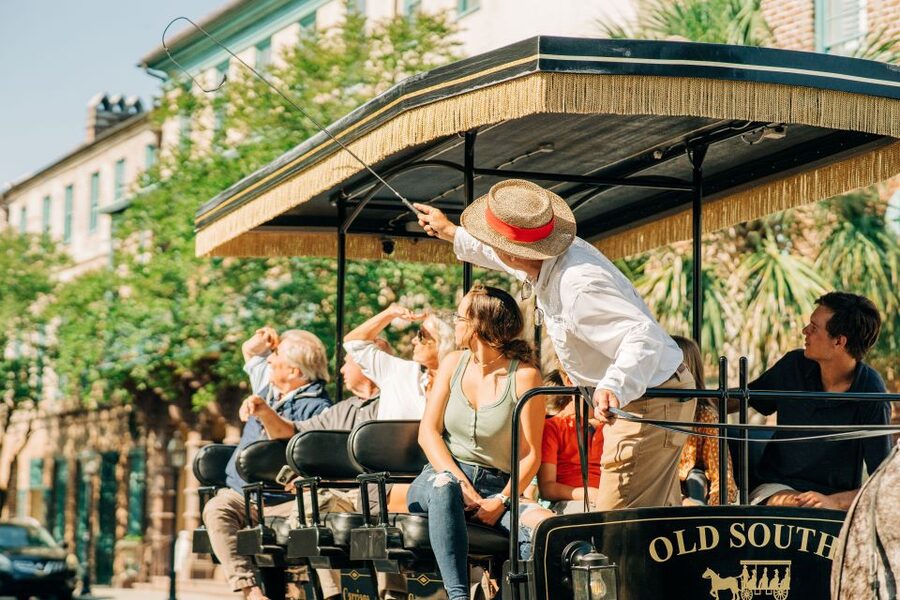
Charleston’s best first look may come from a slow horse-drawn carriage, not a hurried walk. From your seat, you can take in the harbor, old homes, gardens, and broad streets while a licensed guide connects the buildings to 350 years of city history. Guides such as Donald, Carol, Michael H, and Christina have earned praise for mixing facts with humor.
I like two things here: the relaxed pace lets you cover more ground than on foot, and the ride gives you a useful list of places to revisit later. The horses also become part of the experience, with riders often noting calm animals such as Jesse, Buddy, Ace, and Milo.
The main catch is that Charleston assigns the route through a bingo-style system. You may pass the advertised sights, but you cannot choose your exact streets, and four adults on one bench can feel tight. Street noise may also make parts of the live commentary hard to hear.
In This Review
- Key points at a glance
- Why a carriage is a smart first look at Charleston
- Checking in at Old South Carriage Co
- Leaving the stable and heading toward the Old City Market
- Charleston Harbor, Rainbow Row, and the city’s best-known views
- The Four Corners of Law and King Street
- White Point Gardens and the Charleston Battery
- What the history feels like from the carriage
- Weather, comfort, and accessibility
- Is $50 a fair price for one hour?
- Who should book this carriage ride?
- Booking details worth knowing
- Should you book it?
- FAQ
- How long is the Charleston horse-drawn carriage tour?
- Where do I check in?
- How early should I arrive?
- Which language is the tour conducted in?
- Which sights can the tour include?
- Is the carriage tour wheelchair accessible?
- What happens if bad weather cancels the ride?
- Can I cancel for a full refund?
Key points at a glance
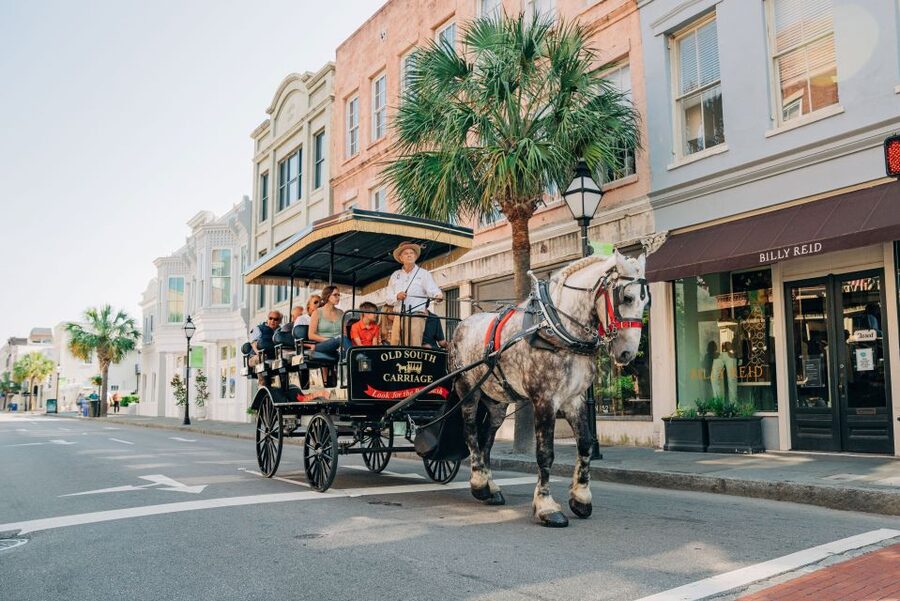
- A one-hour orientation ride: See major parts of historic downtown without committing to a long walking tour.
- The route is assigned by the city: A bingo-style system creates variety, but it means you cannot guarantee every listed sight.
- Guides carry the experience: Expect live English commentary, local stories, architecture, floods, gardens, and Charleston’s long past.
- You travel from a working stable: Check in at Old South Carriage Co, where the lobby has seating, water, and restrooms.
- The ride is wheelchair accessible: Confirm your needs when booking, since carriage access still involves a physical boarding process.
- Good value at $50: The price makes sense if you want a broad introduction, a seated ride, and human commentary in one hour.
Why a carriage is a smart first look at Charleston
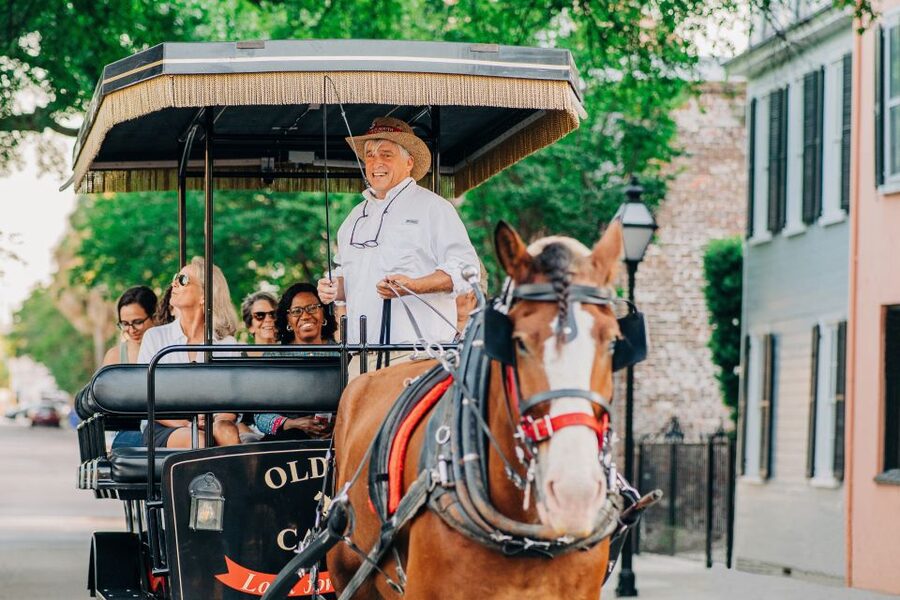
Charleston rewards slow looking. Its historic center is filled with elegant houses, narrow lanes, churches, gardens, old trees, and details that are easy to miss when you are watching traffic or checking a map. A carriage gives you time to look up.
I like this ride as an opening activity rather than a final box to tick. In one hour, you get the shape of downtown and a sense of which areas deserve more time on foot. You may spot a house, street, garden, or shop that you want to find again after the carriage returns to the stable.
The horse also sets the tone. This is not a fast sightseeing loop. The pace is gentle, and that makes the city feel more like a place to notice than a list of photo stops. Several guides are praised for handling busy streets while keeping the horse moving steadily, including praise for the teamwork between guides and horses such as Roger, Winston, Bob, and Mac.
The ride is especially useful during a first visit, for families, and for anyone who prefers not to walk continuously. One hour is long enough to provide substance but short enough to fit before lunch, after arrival, or between other downtown plans.
More Historical Tours in Charleston
- Charleston’s Old South Carriage Historic Horse & Carriage Tour
★ 5.0 · 10,023 reviews - Historic Charleston Guided Sightseeing Walking Tour
★ 5.0 · 6,216 reviews - Charleston Horse-Drawn Carriage Tour: Explore Historic Charleston
★ 5.0 · 3,561 reviews
Checking in at Old South Carriage Co
You begin at the Old South Carriage Co stables. Enter through the front door and check in at the reception desk in the main lobby. This is a practical start, especially if you arrive early, since the lobby provides seating, water, and restrooms.
Do not cut the timing close. You need to check in at least 10 minutes before departure. If you miss that cutoff, your reservation may be lost and you will be placed on the next available carriage. That is an avoidable problem, so build in time for parking and finding the stable.
Parking is not included, and the cost can be a sore spot. One rider specifically called out expensive parking, so check local parking options before arriving rather than assuming the carriage company covers it.
After check-in, you board a custom-built carriage and leave from the barn. The vehicle is part of the appeal, but keep seating in mind. The carriage benches can feel cramped with four average-size adults across one row. Couples and smaller groups will likely find the arrangement easier, while a full carriage may feel less comfortable than the open-air setting first suggests.
Leaving the stable and heading toward the Old City Market
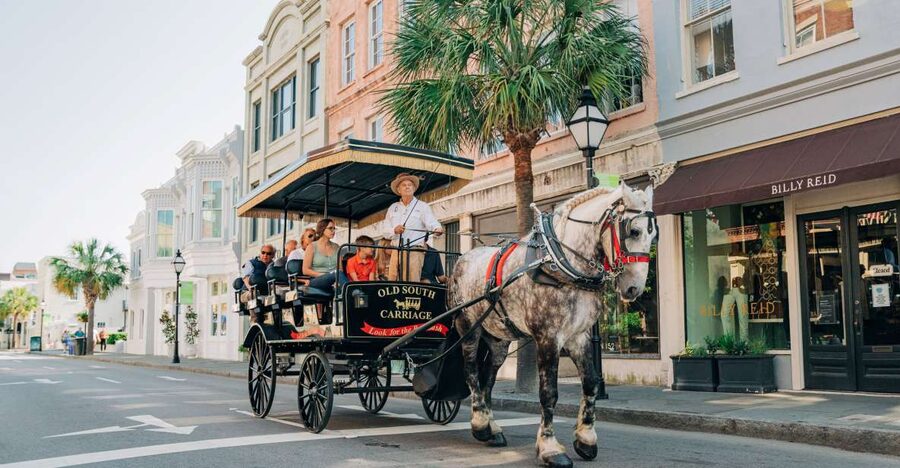
The ride heads toward the city gate near the Old City Market. This opening stretch shifts you from the stable area into Charleston’s historic core and begins the guided story.
Your guide handles the commentary while also managing the horse and city traffic. That is a demanding job, and it shapes the rhythm of the tour. You are not stopping at every landmark for a formal visit. Instead, you are moving through the district while the guide points out what matters and explains how the city developed.
Guides vary, but the strongest pattern is clear: the best ones make the history easy to follow. Donald is praised for being funny while delivering a large amount of information. Carol is described as covering architecture, flood history, trees, vines, and the seasonal scents of jasmine and magnolia. Terry is praised for making the French Quarter accessible and entertaining, while other guides, including Madison, Skylar, Hunter, and Scott, are singled out for friendly delivery and strong city knowledge.
Your exact guide is assigned on the day, so you should not book this expecting a particular person. Still, the format gives the guide room to adjust the tone for the group. One family described a guide who kept the material suitable and engaging for eight younger girls, while another family said a teenage daughter enjoyed the ride. That flexibility matters if your group includes children or mixed ages.
Charleston Harbor, Rainbow Row, and the city’s best-known views
The route can take you by Charleston Harbor, where the city’s connection to the water comes into focus. The harbor is not just a scenic backdrop. It helps explain Charleston’s growth, trade, defenses, and place in South Carolina’s story.
Rainbow Row is another major visual stop. The colorful row of historic houses is among the city’s most recognizable sights, and viewing it from a carriage gives you a good first orientation. You will want to return on foot if you hope to linger, take careful photographs, or inspect the architecture closely.
The carriage also passes elegant residential streets. This is where the ride earns its keep. You can see the proportions of the houses, their porches, shutters, gardens, and decorative details without having to plan a route yourself. One useful criticism is that some riders wanted more time spent discussing individual houses. If architecture is your main interest, treat the carriage tour as an introduction and plan a separate walking route afterward.
The commentary may also touch on flowers, old trees, vines, and the way Charleston changes with the seasons. That kind of detail gives the streets a sense of daily life rather than presenting the city as a collection of preserved façades.
More Charleston trips worth a second look
- Haunted Evening Horse and Carriage Tour of Charleston
★ 4.5 · 3,678 reviews - Charleston’s Historic Residential Horse and Carriage Tour
★ 4.5 · 668 reviews - Charleston Horse & Carriage Historic Sightseeing Tour
★ 4.5 · 460 reviews - Charleston: Downtown Horse-Drawn Carriage Tour
★ 4.8 · 459 reviews
The Four Corners of Law and King Street
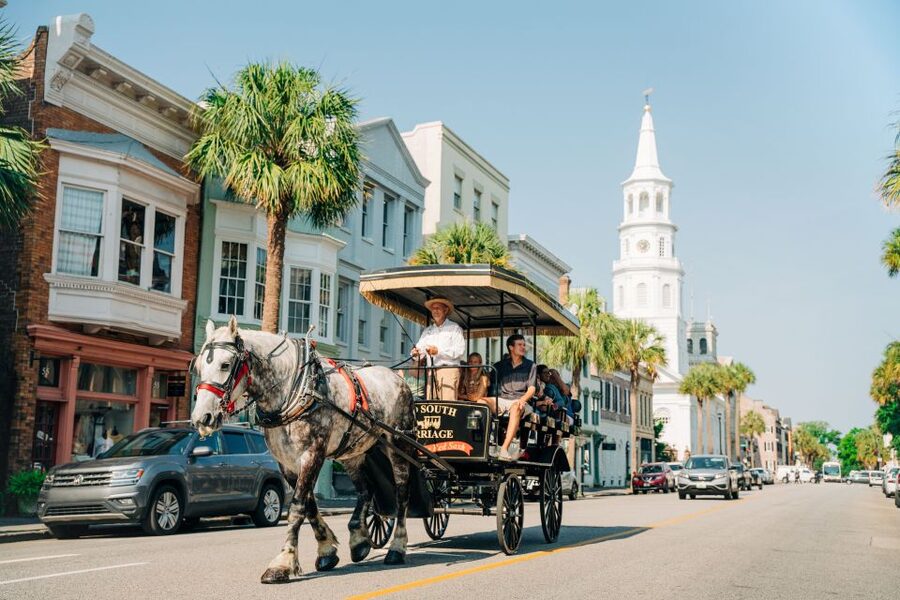
The Four Corners of Law is a memorable downtown landmark because four important civic and religious buildings meet at one intersection. Your guide uses this area to explain how Charleston’s public life, law, and religion developed side by side.
You will not get a museum-style stop with time to go inside. The value comes from hearing the explanation in place, then recognizing the location later when you walk through downtown. I find this sort of introduction useful because it turns an intersection into a piece of the city’s story.
King Street gives the carriage a different view of Charleston. It is one of the city’s major commercial streets, with a more active feel than the quiet residential lanes. From the carriage, you can compare the old homes and civic buildings with the shops and traffic of a working downtown.
Busy streets bring the tour’s clearest practical weakness. Engines, horns, and general street noise can compete with the guide’s voice. If hearing every word matters to you, sit where you can face the guide and listen closely. A portable microphone would improve the experience, and some riders have found the commentary difficult to catch in traffic.
White Point Gardens and the Charleston Battery
White Point Gardens offers a more open stretch of the ride. The park sits at the southern end of the historic district, where broad views, mature trees, and public space create a welcome change from tighter streets.
The Charleston Battery continues that waterfront experience. You see the edge of the city, historic homes, and the relationship between Charleston’s residential district and the water. The carriage cannot replace a walk along the Battery, but it helps you understand where the promenade fits into the city.
This part of the route is also a reminder that the tour is partly about geography. You learn how the harbor, gardens, streets, homes, and public buildings connect. For a first visit, that mental map may be more useful than a long list of isolated facts.
The route may not include every named sight on every departure. Charleston uses a bingo-style system to assign carriage routes, and the company does not control the result. That system keeps the streets from receiving too much carriage traffic and gives returning riders a different ride, but it makes the tour less predictable. If seeing Rainbow Row or the Battery is essential, ask at check-in what your assigned route includes, though the final routing system may limit what can be changed.
What the history feels like from the carriage
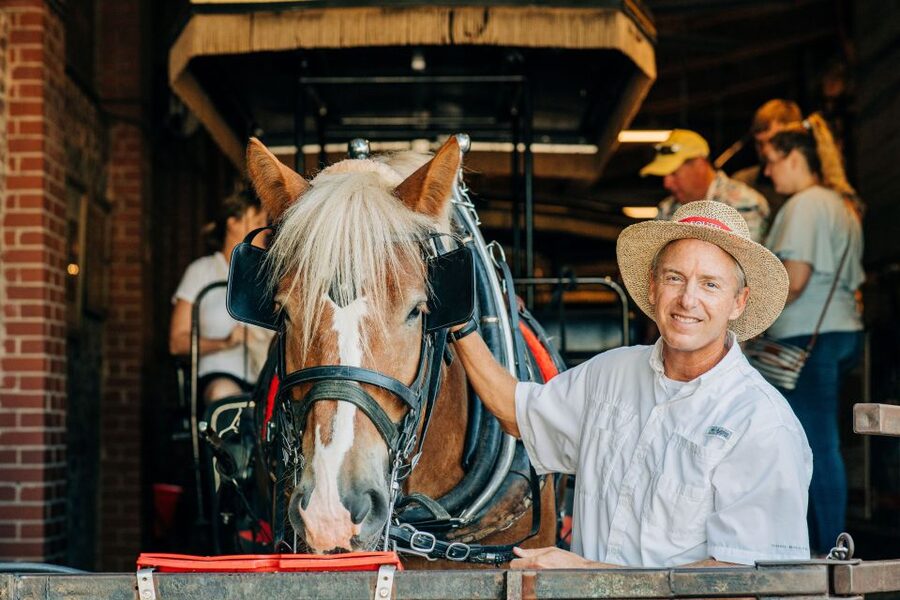
The tour covers roughly 350 years of Charleston history, but the quality of that hour depends on how the guide tells the story. A list of dates would be dull from any vehicle. The better approach connects the past to what you are looking at now.
You might hear about buildings, architecture, floods, streets, trees, local customs, and the city’s changing neighborhoods. The guides are also praised for local stories, humor, and a genuine affection for Charleston. That mix helps the hour feel like a conversation rather than a recorded announcement.
I particularly like the way the horse gives the guide a natural focus. You may hear about the horse’s name, temperament, or work as the animal carries the carriage through traffic. Riders have warmly singled out Jesse, Buddy, Ace, Jordan, Ryan, Shy, Noah, Milo, Cooper, Henry, Dusty, Aiken, and others. The names change, but the pattern is useful: the horse is not an anonymous engine. It is part of the character of the ride.
The horses also require the guide to work at a measured pace. You will not rush from one photo opportunity to the next, and that is a benefit in a city designed for close observation.
Weather, comfort, and accessibility
Charleston weather can shape this experience. If bad weather prevents the tour from departing, you are offered a refund or another date. Even in workable weather, dress for an outdoor ride and consider sun, heat, or light rain when choosing your departure time.
Morning departures can be a sensible choice if you want cooler conditions and a quick overview before the day gets busy. A 9 a.m. ride has been used as a way to see the main highlights early. Later departures may suit your schedule, but weather and street noise can affect comfort and how well you hear the guide.
The activity is listed as wheelchair accessible. You should still mention your needs when booking or checking in, since the practical boarding arrangement and carriage seating matter. The carriage system is described as easy to board and exit, but accessibility is never just a label. Give yourself time and ask the staff for the clearest boarding instructions.
There is no need to pack food or drinks for the ride. The stable provides water in the lobby, and the hour is short enough that the main concern is comfort rather than supplies.
Is $50 a fair price for one hour?
At $50 per person, this is not the cheapest way to move through Charleston. You are paying for the carriage, the horse, the guide, the stable operation, and a compact introduction to the historic district.
The price feels fair if you value three things: a seated ride, live storytelling, and a broad look at downtown without planning your own route. A walking tour may offer more detail in a smaller area, while a self-guided stroll costs less. Neither gives you the same pace, vehicle, or hands-free view.
I would especially consider the tour good value for a first day in Charleston. It helps you decide where to spend the rest of your visit. If you already know downtown well, the assigned route may feel less useful unless you mainly want the carriage experience.
The one-hour length is another value point. You get a proper orientation without giving up half a day. That makes it easy to combine with museums, meals, shopping, or a longer walk.
Who should book this carriage ride?
I would recommend it to first-time visitors, families, older adults, people who want a gentler introduction, and anyone who enjoys buildings and local stories. It also works well for a group with different energy levels, since you cover more ground than a walking tour while still seeing the streets up close.
Children may appreciate the horse and vehicle more than a standard history lecture, especially when the guide adds humor. The ride can also suit teenagers, provided they are interested in seeing the city rather than expecting constant action.
I would hesitate if you need a guaranteed route, dislike shared bench seating, or want a detailed stop at every house. I would also think twice if street noise makes it hard for you to hear live commentary.
For architecture fans, book this as a survey, not the whole lesson. Use the hour to mark places for later walks. For history fans, choose a departure when you are alert and ready to listen, because the guide’s commentary is the heart of the experience.
Booking details worth knowing
The tour runs for one hour and is conducted in English by a live guide. The guide service, horse-drawn carriage ride, and use of the stable’s restrooms are included.
You can cancel up to 24 hours before departure for a full refund. A reserve-now, pay-later option is available, which helps if your plans are still shifting. If weather stops the tour, you can choose a refund or a new date.
Arrive at the Old South Carriage Co lobby at least 10 minutes before your scheduled time. Bring patience for city traffic, flexibility about the route, and realistic expectations about shared seating.
Should you book it?
Yes, if you want an easy, engaging first look at Charleston. The strongest reasons are the relaxed pace, the amount of downtown covered, and the chance to learn from a guide who can connect ordinary streets with the city’s long story.
Book it with two cautions in mind. The city assigns the route, so you cannot promise yourself every landmark, and a full carriage may feel snug. If those limits do not bother you, $50 buys a pleasant hour and a useful plan for what to see next on foot.
FAQ
How long is the Charleston horse-drawn carriage tour?
The tour lasts one hour.
Where do I check in?
Check in at the Old South Carriage Co reception desk. Enter through the front door into the main lobby.
How early should I arrive?
You must check in at least 10 minutes before departure. If you miss that cutoff, you may lose your scheduled reservation and be placed on the next available carriage.
Which language is the tour conducted in?
The live tour is conducted in English.
Which sights can the tour include?
The route can include Charleston Harbor, Rainbow Row, the Four Corners of Law, King Street, White Point Gardens, and the Charleston Battery, along with historic residential streets. The city assigns the route through a bingo-style system, so the exact route varies.
Is the carriage tour wheelchair accessible?
Yes, the activity is listed as wheelchair accessible.
What happens if bad weather cancels the ride?
If inclement weather prevents the tour from departing, you are offered a refund or a new date.
Can I cancel for a full refund?
Yes. You can cancel up to 24 hours in advance for a full refund.
Recently reviewed around Charleston
- Kayak With Dolphins in Historic Shem Creek★ 5.0 · 407 reviews
- Charleston’s Best Highlights: History, Culture & Architecture★ 5.0 · 422 reviews
- 2-Hour Guided Kayak Eco Tour in Charleston★ 5.0 · 954 reviews
- Charleston Ghosts of Liberty Guided Walking Tour★ 4.5 · 473 reviews
- Undiscovered Charleston: Half Day Food, Wine & History Tour with Cooking Class★ 5.0 · 948 reviews
- Real Hauntings of Charleston! (Small Group Ghost Tour)★ 5.0 · 724 reviews
- Afternoon Schooner Sightseeing Dolphin Cruise on Charleston Harbor★ 4.5 · 620 reviews
- Private Luxury Yacht Charters, BYOB & Dolphins★ 5.0 · 395 reviews
Historical Tours, compared.

History and Hauntings of Salem Guided Walking Tour
Read our review →
Charleston’s Old South Carriage Historic Horse & Carriage Tour
Read our review →

Big Island in a Day: Volcanoes Waterfalls Sightseeing and History
Read our review →
Freedom Trail History Small Group Walking Tour
Read our review →
Historic Charleston Guided Sightseeing Walking Tour
Read our review →
Starship Landmark 90 Minute Sightseeing Cruise
Read our review →Browse the lists this tour appears in