
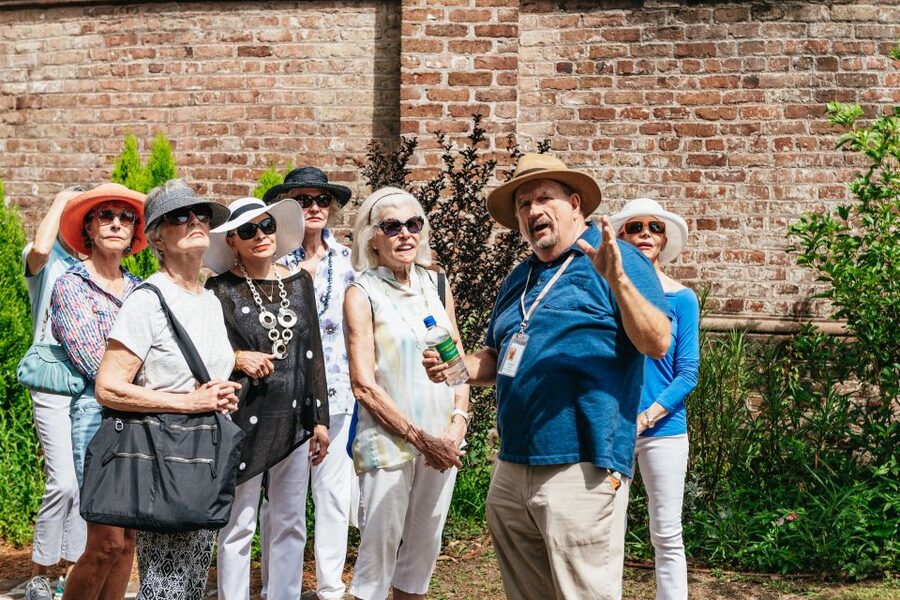
Reviewed · HISTORICAL TOURS
Charleston: Old Walled City Historical Walking Tour
Charleston’s past is written into its cobblestone streets, churchyards, and weathered homes, and this tour gives those clues a human voice. In two hours, you move from colonial growth and piracy to rice wealth, war, epidemics, fires, hurricanes, sieges, bombardments, and the earthquake that changed the city.
I like the local perspective, especially when the guide is a seventh-generation Charlestonian such as Bruce, or a longtime guide such as Alfie, who has been leading tours since 1982. I also like the route’s variety: you get architecture, public squares, waterfront views, graveyard symbols, and difficult history rather than one narrow subject. The main drawback is simple: this is a substantial walk, often packed with information, and some guides may speak quickly.
In This Review
- Key points to know before you book
- Why this Charleston walk is worth two hours
- Starting at Meeting and Chalmers Streets
- The French Quarter sets the historical tone
- Charleston County and the city’s wider story
- Dock Street Theatre and Charleston’s public life
- The Old Exchange and Provost Dungeon
- Waterfront Park opens the view
- Rainbow Row and the appeal of Charleston’s houses
- Heyward-Washington House and private life
- Churches, tombstones, and the marks of time
- Charleston’s disasters are part of the story
- The guide makes the biggest difference
- Pace, access, and practical comfort
- Who should book this walk
- Should you book the Old Walled City Historical Walking Tour?
- FAQ
- How long is the Charleston Old Walled City Historical Walking Tour?
- How much does the tour cost?
- Where does the tour meet?
- What language is the tour conducted in?
- What should I bring?
- Does the tour involve much walking?
- Can I cancel for a refund?
Key points to know before you book
- Two hours on foot: You cover a good stretch of the historic center, so comfortable shoes matter.
- A strong local voice: Guides including Al, Bruce, Eric, and Alfie have been praised for personal stories, humor, and detailed knowledge of Charleston.
- History beyond pretty buildings: The tour addresses slavery, war, piracy, epidemics, natural disasters, and the city’s rise as a commercial center.
- A well-rounded route: Stops include the French Quarter, Dock Street Theatre, Old Exchange, Waterfront Park, Rainbow Row, and St. Michael’s Episcopal Church.
- Small groups may be possible: Some departures have had only two people or a group of eight, though group size can vary.
- Good first-day orientation: The route helps you understand the historic core before exploring Charleston on your own.
Why this Charleston walk is worth two hours
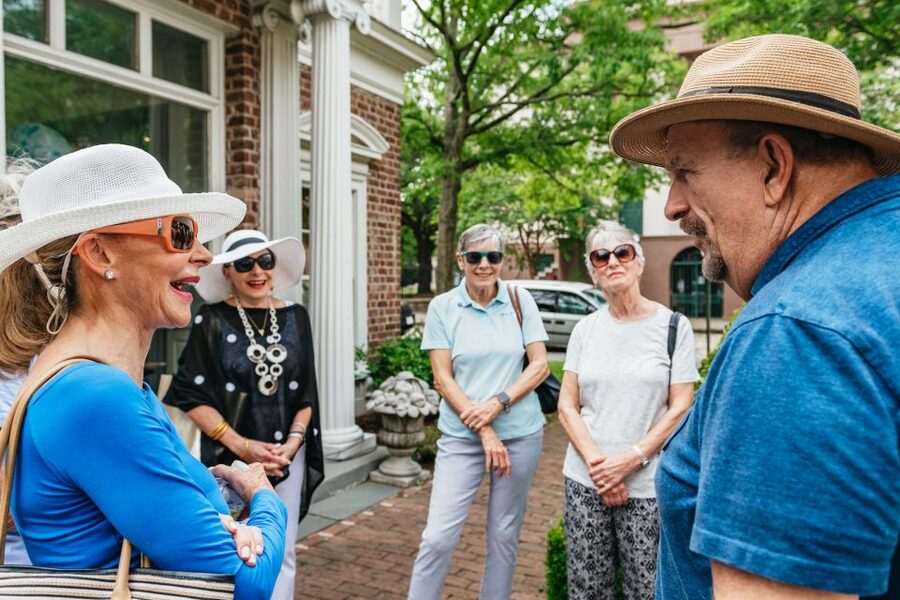
A carriage ride lets you cover more ground, but a walking tour lets you pause where the details matter. Here, a church façade, tombstone, doorway, or bend in the street becomes part of a larger story.
The route passes through the old walled city, described as the only English walled city in North America. That detail helps explain the compact feel of the historic center. You are not simply checking off landmarks. You are following the shape of a city built for trade, defense, worship, and status.
At $30 per person, the price is fair for a two-hour tour with a professional guide. The value depends heavily on the person leading your group, but the strong pattern of praise for guides such as Al, Bruce, Eric, and Alfie suggests that storytelling is the main product here. You are paying less for entry to buildings than for an informed walk through streets you could otherwise pass without understanding.
I would book this near the start of a Charleston visit. The route gives you a working map of the old center, and the stories can make later visits to churches, houses, and the waterfront more meaningful.
More Historical Tours in Charleston
- Charleston’s Old South Carriage Historic Horse & Carriage Tour
★ 5.0 · 10,023 reviews - Historic Charleston Guided Sightseeing Walking Tour
★ 5.0 · 6,216 reviews - Charleston Horse-Drawn Carriage Tour: Explore Historic Charleston
★ 5.0 · 3,561 reviews
Starting at Meeting and Chalmers Streets

The meeting point is on the sidewalk at the corner of Meeting Street and Chalmers Street, with Chalmers being the cobblestone street. Look for the tour near Shop Historic Charleston.
This is a useful location because the walk begins in the historic center rather than at a distant transport point. Still, give yourself time to find the exact corner. Chalmers is cobbled, and the surrounding streets can be busy with pedestrians.
Wear shoes with firm soles. Charleston’s historic streets are part of the experience, but uneven paving can make a long walk tiring. Bring water, sunscreen, and clothing suited to the weather. Shade may be available along parts of the route, but you should not count on cool conditions, especially in warmer months.
The tour is in English. If you have trouble hearing, stay close to the guide and mention it at the start. One person specifically found that a guide’s voice sometimes dropped at the end of a sentence, a useful warning for anyone with hearing concerns.
The French Quarter sets the historical tone
The longest portion of the route is through the French Quarter, with about 50 minutes of walking, sightseeing, and photo stops. This is where the tour can best connect Charleston’s graceful appearance with its turbulent past.
Expect colorful pre-colonial and post-colonial homes, storefronts, churches, and public buildings. The value is not just seeing attractive architecture. A good guide explains why certain buildings look as they do and connects them to the people, wealth, beliefs, and trade that shaped the city.
The tour covers Charleston’s colonial roots, rapid growth, the age of piracy, and the rise of the rice planters. These subjects help you see the city as a working port and political center, not only as a pretty Southern destination.
This portion can be information-heavy. One person appreciated the guide’s passion but wished he had spoken more slowly because there was so much to absorb. I suggest taking mental notes rather than trying to remember every date. If a story catches your interest, ask a question while you are still near the site.
Charleston County and the city’s wider story
The itinerary includes a sightseeing and photo stop in Charleston County, but no single named landmark is specified for this portion. Treat it as part of the connecting walk rather than a separate attraction with an interior visit.
That matters because the tour is built around the relationship between places. You may be moving from a church to a residence, then from a public building toward the waterfront. The guide’s narration fills in the links between those stops.
This is also where a local guide can make a difference. Guides who grew up in Charleston, or who have spent decades studying and guiding here, can add personal observations about famous residents, changing neighborhoods, and corners that are easy to miss. Several guides have been praised for sharing stories from growing up in the city and for taking the group to places people might not visit on their own.
More Walking Tours in Charleston
- Ghosts of Charleston Night-Time Walking Tour with Unitarian Church Graveyard
★ 4.5 · 2,835 reviews - Hidden Alleyways and Historic Sites Small-Group Walking Tour
★ 5.0 · 2,335 reviews - Highlights of Charleston Guided Walking Tour
★ 5.0 · 2,206 reviews - Charleston Haunted Booze and Boos Ghost Walking Tour
★ 5.0 · 1,569 reviews
Dock Street Theatre and Charleston’s public life
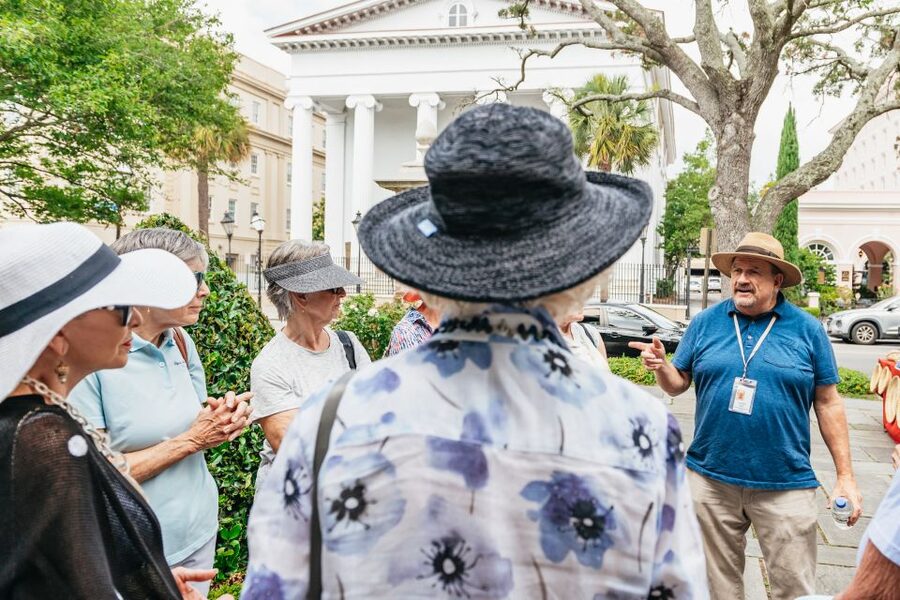
The Dock Street Theatre receives about 15 minutes for a visit, walk, and photo stop. It offers a change of pace from residential streets and churchyards, bringing the city’s cultural life into the story.
The stop is useful for understanding that Charleston was not only a place of commerce and government. Public entertainment, social life, and architecture all played a role in how residents saw themselves.
Expect a look from the outside and a guided explanation rather than a full performance or extended theater visit. The tour’s strength is breadth. You see several kinds of Charleston places in one morning or afternoon, but you do not spend a long time inside any one of them.
The Old Exchange and Provost Dungeon
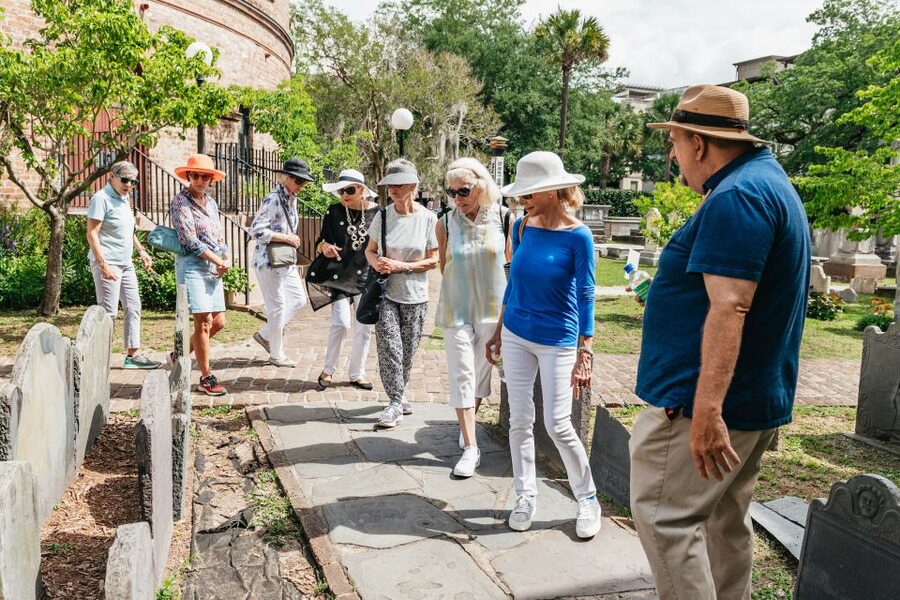
The Old Exchange and Provost Dungeon is scheduled for roughly 12 minutes of sightseeing and photographs. This stop brings the city’s political and military past into sharper focus.
The tour’s larger story includes sieges and bombardments, so this is a natural place for the guide to explain how conflict affected Charleston. The mention of a dungeon also points to the harsher side of public life, away from the polished façades and formal churches.
I like this balance. A tour that only celebrates architecture would leave out much of what made Charleston important and vulnerable. Here, the city’s power, wealth, conflict, and punishment can be discussed in the same short walk.
Waterfront Park opens the view
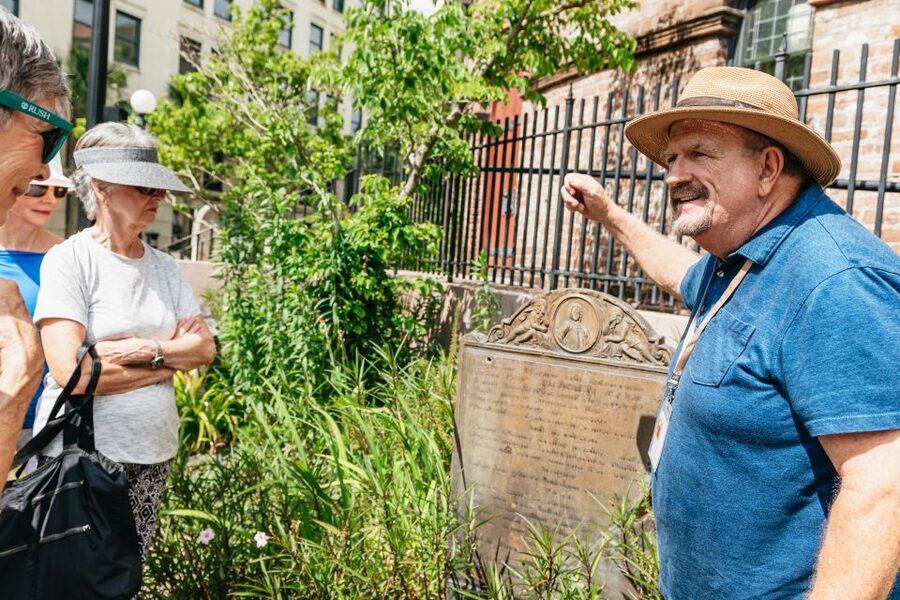
Waterfront Park receives about 15 minutes, including a scenic walk and views along the way. After the tighter streets of the historic center, the open waterfront gives you room to pause and look outward.
This stop also helps explain Charleston’s connection to the sea. The tour discusses piracy, trade, hurricanes, sieges, and bombardments, all subjects that make more sense when you understand the city’s coastal position.
The park is a good photography break, but it is not a long rest stop. You are still on a timed walking route. If the day is hot, use this pause to drink water and reset before continuing through the streets.
Rainbow Row and the appeal of Charleston’s houses
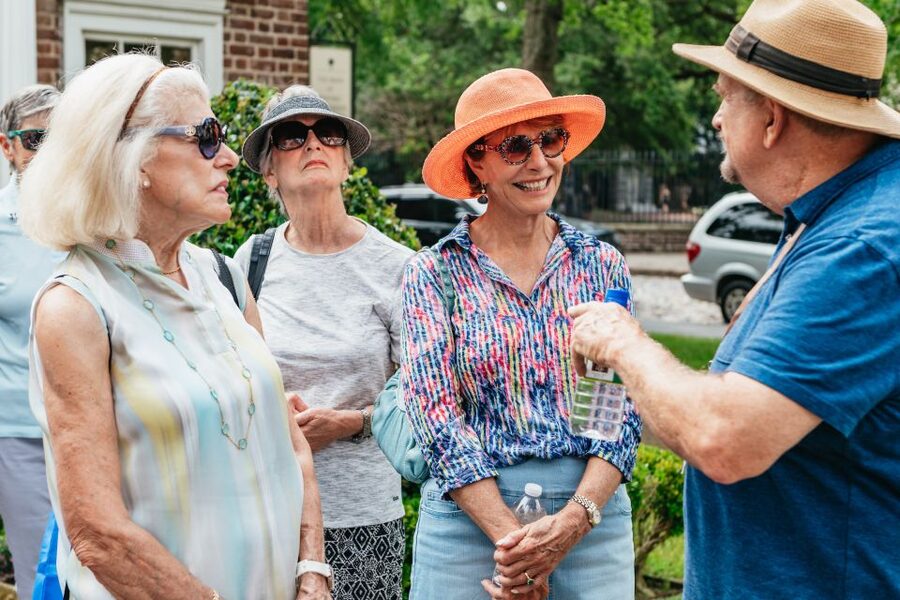
Rainbow Row gets about seven minutes for photographs and scenic views. The colorful façades are among the most recognizable images in Charleston, but the short stop tells you what to expect: this is primarily a viewing and photography point, not an extended house visit.
The surrounding architecture becomes more interesting once you know how to look at it. During the broader French Quarter walk, the guide discusses pre-colonial and post-colonial homes, famous residents, and the city’s growth. Rainbow Row works best as a visual expression of that story.
I would not book this tour only for Rainbow Row. You can see the row quickly on your own. Book it for the context that turns a collection of colorful buildings into part of Charleston’s social and commercial past.
Heyward-Washington House and private life
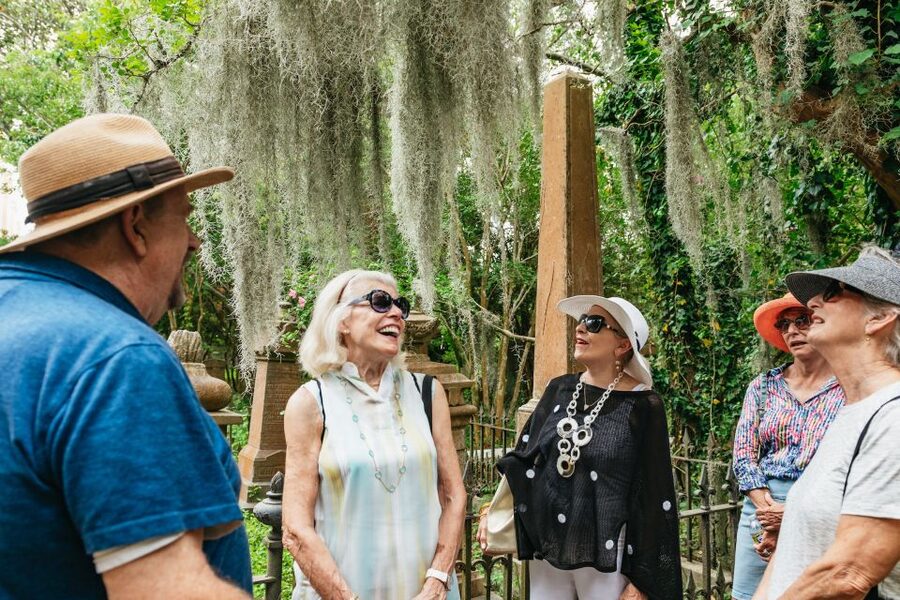
The Heyward-Washington House is a brief five-minute photo and walking stop. Even a short pause here adds a residential layer to the route.
The tour does not promise a full interior visit, so think of the house as a place to discuss architecture, residents, and the way Charleston’s leading families lived. This kind of stop is valuable because public landmarks can dominate a first visit. Historic homes show how power and money appeared at street level.
The quick timing also keeps the tour moving. You see more of the old city instead of spending the whole two hours at one property.
Churches, tombstones, and the marks of time
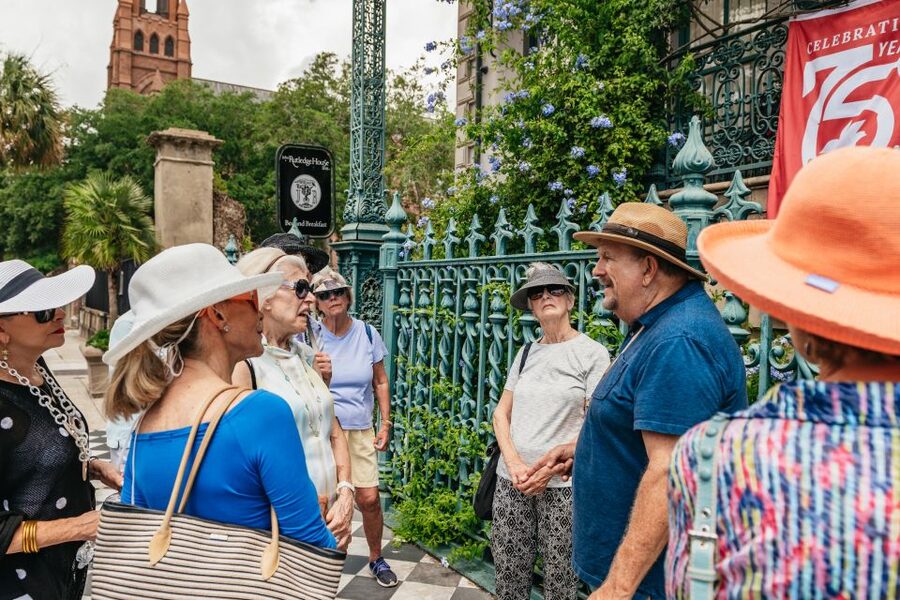
The route includes a general Charleston sightseeing stop and then about 12 minutes at St. Michael’s Episcopal Church. Along the way, the guide may point out churches and explain the symbols carved into old tombstones.
Reading grave markers is one of the more distinctive parts of this experience. Tombstones can reveal names, beliefs, social standing, family ties, and the way earlier residents understood death. You do not need to be an architecture specialist to find these details engaging.
St. Michael’s adds another important thread: religion and public identity. The church is not presented as an isolated photo stop. It fits into the larger account of Charleston’s colonial and post-colonial life.
As with the other churches, the schedule indicates sightseeing and photographs rather than a guaranteed extended interior tour. Respect services and local rules if the building is active during your visit.
Charleston’s disasters are part of the story
The tour’s most useful feature may be its refusal to treat Charleston as untouched old-world scenery. The city has endured seven major fires, hurricanes, epidemics, sieges, bombardments, and a devastating earthquake.
That list changes how you read the streets. Old buildings are not simply old because time passed gently. They exist within a record of destruction, rebuilding, disease, war, and environmental danger.
A guide’s storytelling can make these events easier to grasp. Several guides have been praised for making Charleston’s past feel immediate, using humor and personal connections without avoiding difficult subjects. One person valued a guide who addressed hard topics honestly and with care.
You should still expect a tour, not a full course in every part of Charleston’s past. Two hours forces the guide to choose. The reward is a broad framework that you can explore further at museums, houses, churches, and historic sites afterward.
The guide makes the biggest difference
This is a guide-led experience, and the individual guide shapes the pace and tone. Al is repeatedly described as enthusiastic, humorous, and able to make the city’s story clear. Bruce is a seventh-generation Charlestonian with a strong connection to local history. Eric has been praised for linking stories to people in the group and for discussing both history and architecture.
Other guides named in the feedback include Alfred Ray, Alfie, Bob, Judi, Kent, and Eric Wright. Alfie is a native Charlestonian who has guided since 1982. That range suggests an experienced team, but you may not be able to choose a specific guide when booking.
The best guides do more than recite dates. They ask about your interests, answer questions, adjust the route when possible, and connect Charleston’s past to everyday places. One group had only two people and effectively received a private-feeling walk. Another group of eight found the size comfortable. Your group may be larger or smaller.
If you want a quiet, self-paced walk, this may feel too structured. If you like asking questions and hearing stories from a local voice, it is a strong match.
Pace, access, and practical comfort
Two hours is not extreme for a city walk, but the route covers real ground. The supplied guidance calls the walking substantial, and several people specifically noted that the tour covers a lot in that time.
Plan for standing as well as walking. Bring water and sunscreen, and dress for the forecast. Charleston’s heat, humidity, or rain can affect your comfort even when the route itself is not strenuous.
The route may not suit every wheelchair user because it includes cobblestones and historic streets. Still, one guide adjusted the route to accommodate a person using a wheelchair, so it is worth discussing your needs before the walk rather than assuming. The same advice applies to children. A guide has been praised for being patient and kind with a family traveling with children, but the amount of walking may still test younger legs.
Free cancellation is available up to 24 hours before the tour for a full refund, and you can reserve now while paying later. Those terms are useful if your Charleston plans are still shifting.
Who should book this walk
I would recommend it to first-time visitors who want a clear introduction to the historic center. It also suits people who prefer history told through streets and buildings rather than a lecture room.
Architecture fans will have plenty to look at, from churches and colonial homes to public buildings and Rainbow Row. History fans will appreciate the range, especially the sections on piracy, rice planters, conflict, epidemics, and natural disasters.
It can also work for repeat visitors. One long-term Charleston resident used the walk to discover old places and anecdotes that were new to him. That is a good sign for anyone who already knows the obvious landmarks but wants a closer look at the city’s connections.
I would hesitate only if you dislike walking, struggle with rapid spoken English, or want long interior visits at each stop. This tour moves from place to place and gives you interpretation along the way.
Should you book the Old Walled City Historical Walking Tour?
Book it if you want a strong first look at Charleston with a local storyteller, not just a parade of photo stops. At $30, two hours of guided history is a sensible use of your sightseeing budget, especially when the guide brings decades of local experience.
Choose a cooler part of the day if possible, wear proper shoes, and stay near the guide if hearing every detail matters to you. For a compact introduction to Charleston’s buildings, disasters, people, and complicated past, this walk earns its place near the beginning of your visit.
FAQ
How long is the Charleston Old Walled City Historical Walking Tour?
The tour lasts two hours.
How much does the tour cost?
The listed price is $30 per person.
Where does the tour meet?
Meet on the sidewalk at the corner of Meeting Street and Chalmers Street, beside the cobblestone street, near Shop Historic Charleston.
What language is the tour conducted in?
The live tour guide speaks English.
What should I bring?
Bring comfortable shoes, sunscreen, water, and clothing suited to the weather.
Does the tour involve much walking?
Yes. The tour involves a substantial amount of walking through Charleston’s historic center.
Can I cancel for a refund?
You can cancel up to 24 hours in advance for a full refund. You can also reserve now and pay later.
Recently reviewed around Charleston
- Kayak With Dolphins in Historic Shem Creek★ 5.0 · 407 reviews
- Charleston’s Best Highlights: History, Culture & Architecture★ 5.0 · 422 reviews
- 2-Hour Guided Kayak Eco Tour in Charleston★ 5.0 · 954 reviews
- Charleston Ghosts of Liberty Guided Walking Tour★ 4.5 · 473 reviews
- Undiscovered Charleston: Half Day Food, Wine & History Tour with Cooking Class★ 5.0 · 948 reviews
- Real Hauntings of Charleston! (Small Group Ghost Tour)★ 5.0 · 724 reviews
- Afternoon Schooner Sightseeing Dolphin Cruise on Charleston Harbor★ 4.5 · 620 reviews
- Private Daytime Horse-Drawn Carriage Tour of Charleston★ 5.0 · 340 reviews
Historical Tours, compared.

History and Hauntings of Salem Guided Walking Tour
Read our review →
Charleston’s Old South Carriage Historic Horse & Carriage Tour
Read our review →

Big Island in a Day: Volcanoes Waterfalls Sightseeing and History
Read our review →
Freedom Trail History Small Group Walking Tour
Read our review →
Historic Charleston Guided Sightseeing Walking Tour
Read our review →
Starship Landmark 90 Minute Sightseeing Cruise
Read our review →Browse the lists this tour appears in