
Reviewed · WALKING TOURS
Lost Stories of Black Charleston Walking Tour
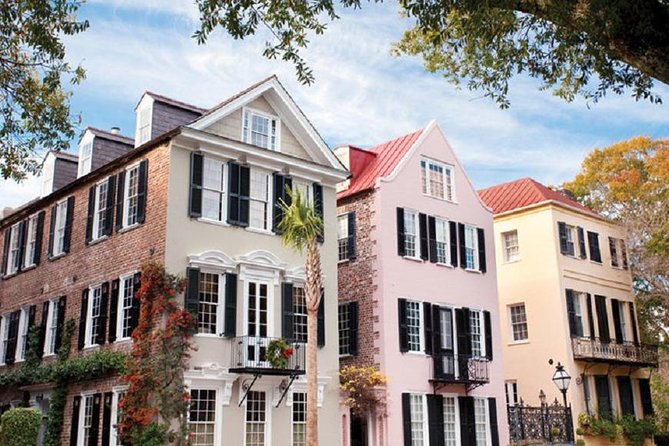
Charleston is often presented through grand homes, polished gardens, and Revolutionary-era heroes. This two-hour walk shifts the focus to the Black people who built, shaped, resisted, and reshaped the city, with author and historian Damon Fordham leading the way through downtown streets.
I like two things right away. First, the route connects well-known places, such as City Market and Waterfront Park, to stories you are unlikely to hear on a standard sightseeing walk. Second, Fordham brings both research and personal and family connections to the subject. You may also hear music, including melodica playing, along with the history.
The main consideration is the delivery. Fordham’s style is direct, passionate, and sometimes theatrical. That works beautifully for many people, but one review found his corrections of visitors and dramatic character voices too sharp. You should also expect to stand in place for extended stretches, and Charleston’s heat can make a two-hour walk feel longer.
In This Review
- Key points to know before you book
- Why this Charleston walk feels different
- Starting at Buxton Books on King Street
- City Market, Jehu Jones, and Catfish Row
- The Heyward-Washington House and the limits of old-house tourism
- The Old Slave Mart Museum stop
- Waterfront Park and Charleston Harbor
- Damon Fordham’s storytelling style
- Price, timing, and practical value
- Who should book this tour
- Should you book the Lost Stories of Black Charleston walk?
- FAQ
- Where does the Lost Stories of Black Charleston Walking Tour begin?
- Where does the tour end?
- How long does the tour last?
- What time does the tour start?
- Who leads the tour?
- Is admission to the historic sites included?
- What happens if the weather is poor?
Key points to know before you book
- Damon Fordham leads the walk: He is a published author, educator, historian, musician, and licensed Charleston guide.
- The route links major sites to overlooked stories: City Market, the Jehu Jones Hotel site, Catfish Row, Waterfront Park, the Heyward-Washington House, and the Old Slave Mart Museum all appear along the way.
- Black Charleston remains the central subject: The tour traces stories from slavery through Reconstruction and the civil rights era, with attention to people left out of familiar accounts.
- You walk for about two hours: The group starts at 3:30 p.m. outside Buxton Books and returns there at the end.
- The group is capped at 20 people: That is small enough for a more personal presentation, though the experience still depends on where everyone can gather along the streets.
- The tour costs $39 per person: For a focused history walk led by a guide with strong academic and personal ties to the subject, that is a fair price if this is the Charleston story you want to hear.
Why this Charleston walk feels different
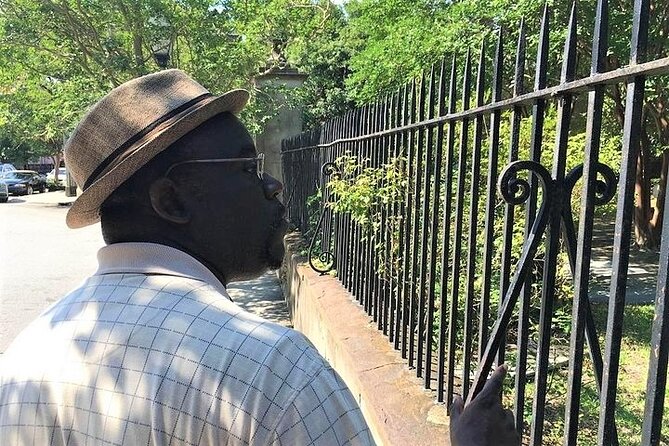
Many city tours give you dates, building names, and a quick explanation before moving to the next stop. This one is built around voice and interpretation. Fordham combines documented events with personal perspective, family connections, and stories about people whose work did not make it into the usual classroom version of South Carolina history.
That approach gives the walk a clear purpose. You are not simply looking at old buildings. You are being asked to consider who lived there, who worked there, who was excluded, and how the past still shapes Charleston.
The tone is serious, but the tour is not described as dry. Fordham uses humor, music, and theatrical storytelling to keep the group involved. Some accounts describe him as witty and spontaneous, while another found the dramatic elements awkward. I would treat that as a matter of personal taste. If you like a guide who speaks with force and personality, this should suit you. If you prefer a quiet, measured lecture, the performance may feel intense.
The tour is offered in English, and the maximum group size is 20. That matters here because much of the value comes from listening closely and asking questions. A smaller group also makes it easier to hear a speaker on busy downtown streets, though this remains a public walking tour rather than a private conversation.
More Walking Tours in Charleston
- Historic Charleston Guided Sightseeing Walking Tour
★ 5.0 · 6,216 reviews - Ghosts of Charleston Night-Time Walking Tour with Unitarian Church Graveyard
★ 4.5 · 2,835 reviews - Hidden Alleyways and Historic Sites Small-Group Walking Tour
★ 5.0 · 2,335 reviews
Starting at Buxton Books on King Street
Meet at Buxton Books, 160 King Street, at 3:30 p.m. The activity ends back at this same point. Since you are on foot from the start, wear comfortable shoes and plan for outdoor conditions.
The meeting point is useful for visitors staying in central Charleston because it places you near the downtown core. The route does not use a coach or shuttle, so you get a street-level view of the city. You notice the blocks between sites, not just the monuments themselves.
I would arrive a little early. The tour has an advertised average booking time of 13 days in advance, which suggests that popular dates may fill before your visit. Confirmation is sent within 48 hours, subject to availability, so do not leave a tightly scheduled afternoon to the last minute.
Children must be accompanied by an adult. Service animals are allowed, and most people can participate, but the supplied information does not give a total walking distance or promise a step-free route. If mobility is a concern, ask the operator before booking.
City Market, Jehu Jones, and Catfish Row
The first main portion takes about 30 minutes and begins around Charleston City Market. The market is familiar to many people, but this tour uses it as a doorway into a less familiar account of the city.
That is an effective choice. You start in a place that looks lively and accessible, then learn how Black labor, commerce, and public life fit into Charleston’s development. Instead of treating the market as a simple shopping stop, Fordham places it within the wider story of race, work, and power.
From there, the group continues toward the site of the Jehu Jones Hotel. Jones was a Black hotel owner and formerly enslaved person whose business represented a form of independence and economic ambition that is easy to miss when Charleston is presented only through wealthy white households.
The route also reaches Catfish Row, the Charleston setting associated with George Gershwin’s opera Porgy and Bess. Here, the tour can help you separate the real community from the artistic version created for the stage. That distinction matters. Popular culture may bring attention to a place, but it can also simplify the people and conditions behind the story.
This section is a good example of the tour’s larger method: use a recognizable name, building, or cultural reference, then ask what has been left out. You will hear about places that look ordinary now but carried considerable meaning for Black Charlestonians.
The Heyward-Washington House and the limits of old-house tourism
The group passes the Heyward-Washington House, associated with Thomas Heyward Jr., a signer of the United States Declaration of Independence. The tour does not include admission to the house.
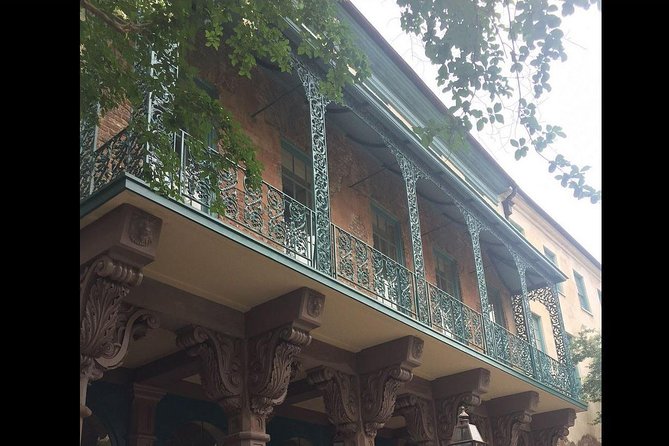
That detail is worth noting because Charleston’s grand residences can dominate a first visit. They are visually impressive, but a house tour by itself can leave you with a narrow picture of the city. Seeing the Heyward-Washington House in this setting gives you a chance to consider both the public figure remembered by the building and the Black people whose labor supported households like his.
You should not expect a long interior visit here. This is a street-based stop, and its value comes from the explanation rather than a collection of rooms or furnishings. If you already plan to tour historic houses, this walk gives those visits useful context.
It also keeps the focus from drifting. The point is not to add one more famous Charleston property to your list. The point is to understand how the city’s celebrated architecture fits into a much larger social story.
More Charleston walks with a guide:
- Highlights of Charleston Guided Walking Tour
★ 5.0 · 2,206 reviews - Charleston Haunted Booze and Boos Ghost Walking Tour
★ 5.0 · 1,569 reviews - Charleston’s Pleasing Terrors Night-Time Walking Ghost Tour
★ 5.0 · 1,345 reviews - Charleston historical walking tour with a Professor of History at The Citadel
★ 5.0 · 1,284 reviews
The Old Slave Mart Museum stop
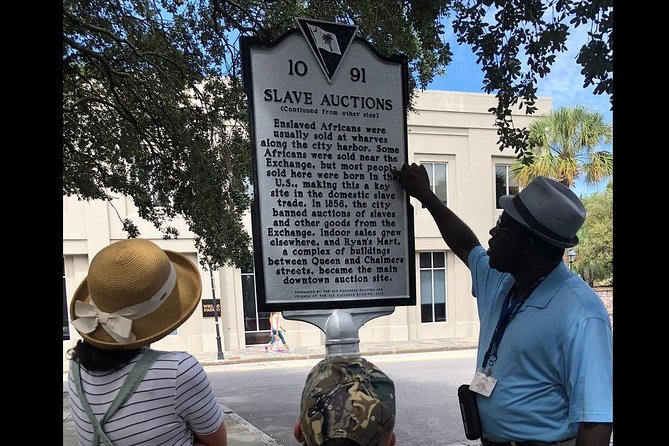
The Old Slave Mart Museum is one of the most emotionally difficult places on the route. The building once held slave auction galleries, and its presence forces a direct look at Charleston’s role in the domestic slave trade.
The tour spends about 15 minutes here. Admission is not included, so check the details before assuming you will have an interior museum visit as part of the $39 ticket. The supplied route identifies the stop, but you should be prepared for the possibility that the guide’s main role is to interpret the site from the walking route rather than provide a separate museum admission.
This is not a light sightseeing stop. You may hear material that is painful, angry, or unsettling. That is appropriate to the subject, and Fordham’s approach is clearly meant to resist softening the past into a comfortable story.
I value the inclusion of this site because it gives the larger tour a physical anchor. Slavery is not treated as a distant chapter disconnected from downtown Charleston. It is tied to a specific building, street pattern, economy, and set of human lives.
If you want to visit the museum inside, allow extra time or verify the admission arrangement before the tour. The walking experience itself lasts about two hours, and the group returns to Buxton Books at the end.
Waterfront Park and Charleston Harbor
The final major section takes about 30 minutes and leads toward Waterfront Park and Charleston Harbor. The setting becomes more open, but the discussion continues to follow the path from slavery through Reconstruction and into the civil rights era.
That shift in scenery can help you process the earlier stops. The harbor is beautiful, yet it also points toward Charleston’s connection to shipping, trade, forced labor, and the movement of people and goods. The tour asks you to hold both sides of the city in view: the attractive waterfront and the human cost behind parts of its prosperity.
This is also where the tour emphasizes lesser-known heroes and heroines who made history without receiving the same public recognition as Charleston’s better-known political figures. The exact stories may vary with the guide’s presentation, but the aim is clear: to restore people to the city’s account rather than treat them as background figures.
The experience also includes stories connected to Mother Emanuel A.M.E. Church. The supplied details do not say that the route enters the church, so you should think of this as part of the historical narration rather than a guaranteed interior visit.
The walk ends back at the original meeting point. Waterfront Park is listed as a free stop, and there is no separate ticket for the outdoor route.
Damon Fordham’s storytelling style
The guide is the heart of this experience. Fordham is described as a writer, historian, educator, adjunct professor, musician, and licensed tour guide. He has also written books about Charleston, which may be available for purchase and signing after the tour.
His strongest quality is the way he connects broad events to individual lives. Instead of giving only a general account of Black Charleston, he brings in personal and family ties, researched details, and present-day meaning. That can make the material easier to remember because you are hearing stories rather than memorizing a list of dates.
He also welcomes questions and can address topics beyond the prepared route. One practical point is that the tour may not sound exactly the same every time. His style is described as spontaneous, and that can give the afternoon a more natural feel.
There is a tradeoff. Fordham’s passion sometimes comes through as sternness. One account praised the material but felt that he scolded or corrected people too sharply. His use of different voices for dramatic effect also will not appeal to everyone.
I would book this tour for substance and personality, not for a polished, restrained script. You will get a strong point of view. That is useful when a subject has been ignored or reduced for generations, but you should be ready for a guide who expects the group to listen carefully and engage seriously.
Price, timing, and practical value
At $39 per person, this is not the cheapest way to spend two hours in Charleston, but the price is reasonable for a focused walking tour led by a published historian with personal ties to the subject. You are paying for interpretation and access to stories, not transportation or a paid attraction ticket.
The value is strongest if you want to understand Charleston beyond its preserved houses. A general city walk may cover some of the same streets, but this tour gives them a different purpose. It can also make later visits to the City Market, Old Slave Mart Museum, or historic houses more meaningful.
The price does not include admission to the Heyward-Washington House or Old Slave Mart Museum. Those sites are part of the route, but you should budget separately if you plan to enter them.
The walk begins at 3:30 p.m., lasts roughly two hours, and takes place outdoors. Charleston can be hot, so bring water and dress for the weather. One review found the walk worthwhile even in the heat, but that should not be taken as a reason to ignore the forecast.
The tour requires good weather. If poor weather causes cancellation, you are offered another date or a full refund. You can cancel for a full refund up to 24 hours before the start time. Cancellations or changes inside that 24-hour window are not refunded or accepted.
Who should book this tour
I would choose this walk if you want:
- Black Charleston placed at the center of the story, not added as a short aside
- A guide who uses personal perspective alongside research
- Stories connected to real downtown sites
- A thoughtful introduction before visiting museums and historic houses
- A small-to-medium group rather than a large sightseeing crowd
- A presentation that may include music, humor, and theatrical touches
It is especially useful for first-time visitors who are planning the usual Charleston stops but want a fuller account of how the city developed. It also suits repeat visitors who have already seen the main houses and want to reconsider familiar streets.
You may want another type of tour if you dislike strong opinions, audience correction, or expressive performance. You should also think twice if standing outdoors for long periods is difficult. The route is manageable for most people, but the supplied information does not provide a distance, pace, or detailed accessibility breakdown.
Should you book the Lost Stories of Black Charleston walk?
Yes, if you want a serious and personal account of Charleston’s Black past. The 4.9 rating from 412 reviews and 98 percent recommendation rate fit the experience described here: the strongest praise centers on Fordham’s storytelling, research, personal connection, humor, and ability to explain material missing from many school lessons.
I would book it early, especially if your visit is only a few days long. Go in expecting an outdoor history lesson with a distinct voice, not a neutral audio guide. Wear good shoes, prepare for heat, and leave room afterward to think about what you heard.
At $39, this is a sound choice for anyone who wants Charleston’s streets to mean more than attractive buildings. It gives you a fuller way to read the city, and that is exactly what a good walking tour should do.
FAQ
Where does the Lost Stories of Black Charleston Walking Tour begin?
The tour begins at Buxton Books, located at 160 King Street, Charleston, South Carolina 29401.
Where does the tour end?
The activity ends back at the original meeting point at Buxton Books.
How long does the tour last?
The walking tour lasts approximately two hours.
What time does the tour start?
The stated meeting time is 3:30 p.m.
Who leads the tour?
Damon Fordham leads the tour. He is described as a writer, historian, educator, adjunct professor, musician, and licensed tour guide.
Is admission to the historic sites included?
Admission is not included for the Heyward-Washington House or the Old Slave Mart Museum. The route also includes free outdoor stops such as Charleston City Market and Waterfront Park.
What happens if the weather is poor?
The experience requires good weather. If it is canceled because of poor weather, you can choose another date or receive a full refund. Free cancellation is available up to 24 hours before the start time.
Recently reviewed around Charleston
- Kayak With Dolphins in Historic Shem Creek★ 5.0 · 407 reviews
- Charleston’s Best Highlights: History, Culture & Architecture★ 5.0 · 422 reviews
- 2-Hour Guided Kayak Eco Tour in Charleston★ 5.0 · 954 reviews
- Charleston Ghosts of Liberty Guided Walking Tour★ 4.5 · 473 reviews
- Undiscovered Charleston: Half Day Food, Wine & History Tour with Cooking Class★ 5.0 · 948 reviews
- Real Hauntings of Charleston! (Small Group Ghost Tour)★ 5.0 · 724 reviews
- Afternoon Schooner Sightseeing Dolphin Cruise on Charleston Harbor★ 4.5 · 620 reviews
- Private Daytime Horse-Drawn Carriage Tour of Charleston★ 5.0 · 340 reviews
Walking Tours, compared.
History and Hauntings of Salem Guided Walking Tour
Read our review →
New Orleans Premier Ghost, Voodoo and Vampire Walking Tour
Read our review →
Freedom Trail History Small Group Walking Tour
Read our review →
Historic Charleston Guided Sightseeing Walking Tour
Read our review →
New Orleans Food Walking Tour of the French Quarter with Small-Group Option
Read our review →
St. Louis Cemetery No. 1 Official Walking Tour
Read our review →Browse the lists this tour appears in