
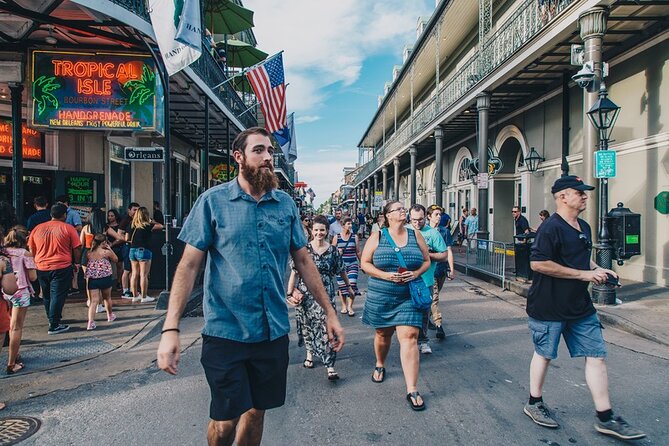
Reviewed · HISTORICAL TOURS
New Orleans Jazz History and Music Walking Tour
New Orleans jazz makes more sense when you follow it through the streets that shaped it. This 2.5-hour walk begins at Louis Armstrong Park and Congo Square, then moves through the French Quarter toward a live music club. The story connects African, Caribbean, European, Creole, gospel, blues, and jazz traditions in a way a museum visit cannot.
I like the small group, capped at 12, and the chance to hear real musicians during the tour. I also like that guides such as Kristi, Adam, and Andre have been praised for making the music feel personal, not academic. The main catch is simple: you will walk about 14 blocks, or 1.5 miles, and the route and club choices can change with the evening’s music schedule.
In This Review
- Key points at a glance
- Starting at Louis Armstrong Park and Congo Square
- Crossing into the French Quarter
- Bourbon Street, buskers, and musical connections
- Frenchmen Street and the live music stop
- Preservation Hall and the French Quarter finish
- Guides who make the difference
- What the $60.56 price buys you
- Walking, timing, and who should book
- Should you book the New Orleans Jazz History and Music Walking Tour?
- FAQ
- Where does the tour begin?
- Where does the tour end?
- How long does the tour last?
- How far do you walk?
- What neighborhoods does the tour visit?
- Is live music included?
- Is a drink included?
- Can people under 21 join?
- How many people are in each group?
- Can I cancel for a refund?
Key points at a glance
- Congo Square gives the tour its musical foundation: Learn where enslaved people and free people of color gathered, shared music, and maintained cultural traditions.
- Louis Armstrong Park starts the story in the Tremé neighborhood: The tour links Armstrong’s life and legacy with one of New Orleans’ most important historic districts.
- Your guide chooses the best music route for that night: You may visit Bourbon Street, Frenchmen Street, or both, depending on where the music is strongest.
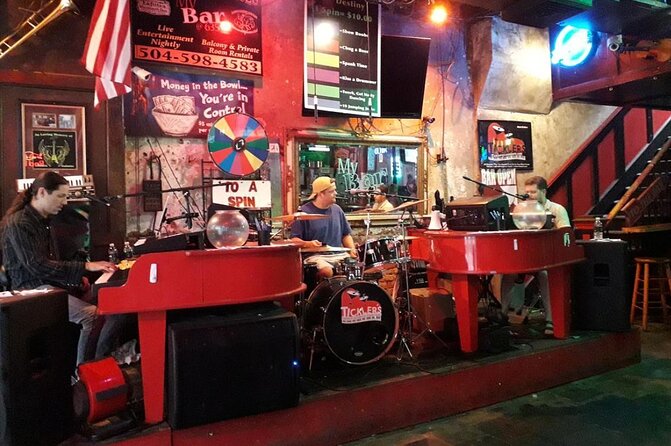
- Live music is part of the experience: The guide takes you into at least one selected venue, and recent tours often included two clubs.
- The group stays small: With no more than 12 people, it is easier to ask questions and keep up with the guide.
- One drink is included: Additional drinks and food cost extra, and tips for the guide and musicians are not included.
Starting at Louis Armstrong Park and Congo Square
Meet at 701 N Rampart Street, just outside the French Quarter. The tour begins in Louis Armstrong Park, a pleasant change from the hard pavement and crowded streets nearby. You will have about 35 minutes here, with time to look around while your guide sets the scene.
The park is in Tremé, one of the key neighborhoods in New Orleans music history. This is where the tour moves beyond famous names and explains how jazz grew from many traditions meeting in one city. Your guide will discuss Louis Armstrong, one of the music’s defining figures, and explain why New Orleans became such fertile ground for his sound.
You will also pass the Mahalia Jackson Theater of the Performing Arts. It is named for the New Orleans-born gospel singer, an important reminder that the city’s musical story is not limited to jazz clubs. Gospel, blues, brass bands, and other forms of Black music all belong in the picture.
The most important stop is Congo Square. Here, enslaved people and free people of color were allowed to gather and socialize. West African and Caribbean musical practices met European instruments and forms, helping create the conditions for a new American music.
That context is one of the strongest parts of the tour. You are not just hearing that New Orleans is the birthplace of jazz. You are learning about the people, restrictions, gatherings, and cultural exchanges that made the music possible.
One practical note: a guide has sometimes used short music clips to illustrate early jazz. In a noisy park, these may be hard to hear, especially if another event is taking place. Treat the clips as a bonus, not the main event. The spoken explanation and the city around you do most of the work.
More Historical Tours in New Orleans
- New Orleans Garden District History Walking Tour
★ 5.0 · 2,879 reviews - French Quarter Historical Sights and Stories Walking Tour
★ 5.0 · 2,724 reviews - New Orleans Small-Group Haunted History Carriage Tour
★ 4.5 · 2,289 reviews
Crossing into the French Quarter
From the park, you walk into the Vieux Carré, the French Quarter. This portion lasts only about 10 minutes as a listed stop, but the Quarter becomes the setting for much of the rest of the evening.
Your guide will point out historic places and explain how music fits into the neighborhood’s daily life. The value here is practical as well as historical. You learn how clubs operate, how to find music listings, when to arrive, and how to continue your night after the tour ends.
I especially like doing this experience early in a New Orleans stay. A guide can give you a useful starting list of venues and help you decide where to return later. One group even wished they had taken the tour at the beginning because the recommendations made the rest of their visit more meaningful.
The French Quarter portion is not a formal building-by-building sightseeing tour. You will pass places rather than enter a long list of attractions. If you want detailed architectural commentary or major landmark admission, this is not the right outing. The focus is music, neighborhoods, and the local club scene.
Bourbon Street, buskers, and musical connections
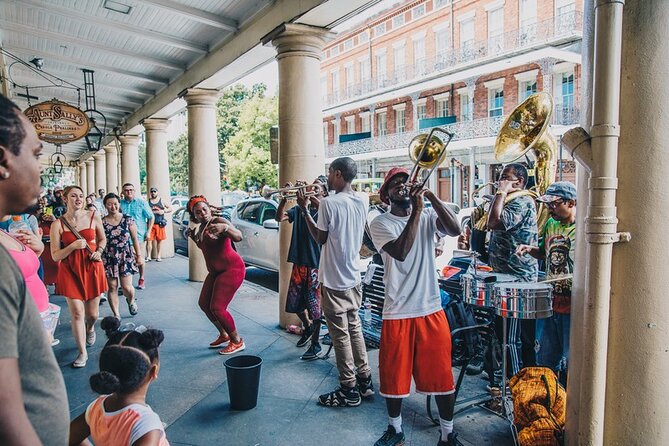
One possible route takes you along Bourbon Street. The street is famous for nightlife, but the guide puts its sound and history into a broader setting. You will hear about residential and commercial places where blues and jazz collaborators worked and spent time.
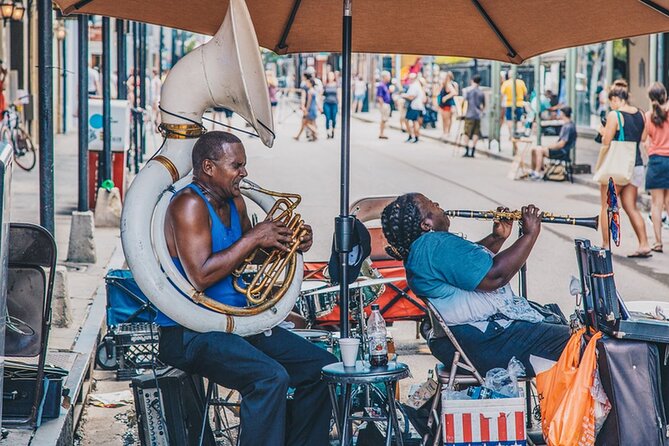
You may also catch a busker near the historic French Market. That kind of unplanned moment fits the tour well. New Orleans music is not confined to a concert hall, and a performance on the street can show you how public the city’s musical life remains.
The drawback is that this part depends on the route and the night. The tour does not promise a particular performer, busker, or club. Your guide selects the path to match the best available music, so come ready for a flexible evening rather than a fixed checklist.
Frenchmen Street and the live music stop
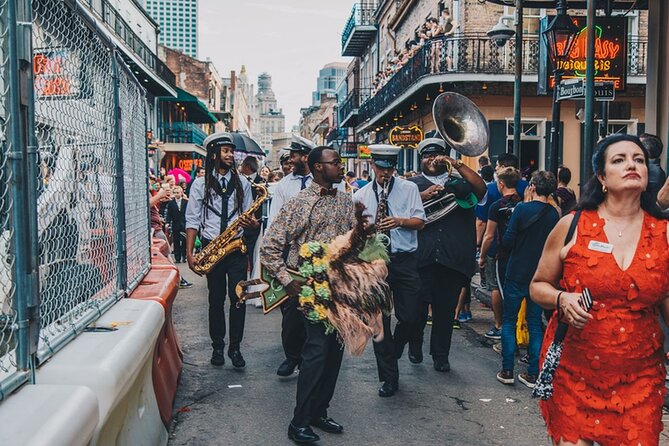
Another possible route takes you to Frenchmen Street, home to the city’s largest concentration of live music venues. This is where the walking tour shifts from explanation to listening.
Your guide brings you into a music venue selected for that evening. Recent experiences often included two clubs, sometimes one in the French Quarter and another on Frenchmen Street. That is a useful feature, since you may hear different bands and get a feel for more than one room.
The exact number of venues is not guaranteed in the basic description, so you should not book this expecting a specific band or a fixed concert program. Still, the live stop gives the tour its point. You hear musicians in working clubs, not just stories about musicians from the past.
Some groups have stayed at the second venue after the official tour ended. That is possible because the tour finishes in the French Quarter and includes recommendations for the rest of your evening. If you find a room you like, you can continue on your own, buying additional drinks as needed.
The free drink is included at one music stop. It can be alcoholic or nonalcoholic, and you are not required to choose alcohol. Food and extra drinks are not covered, so budget for those separately.
More Walking Tours in New Orleans
- New Orleans Premier Ghost, Voodoo and Vampire Walking Tour
★ 4.5 · 12,856 reviews - New Orleans Food Walking Tour of the French Quarter with Small-Group Option
★ 5.0 · 6,118 reviews - St. Louis Cemetery No. 1 Official Walking Tour
★ 4.5 · 3,941 reviews - New Orleans French Quarter, Voodoo and Culture Walking Tour
★ 4.5 · 2,961 reviews
Preservation Hall and the French Quarter finish
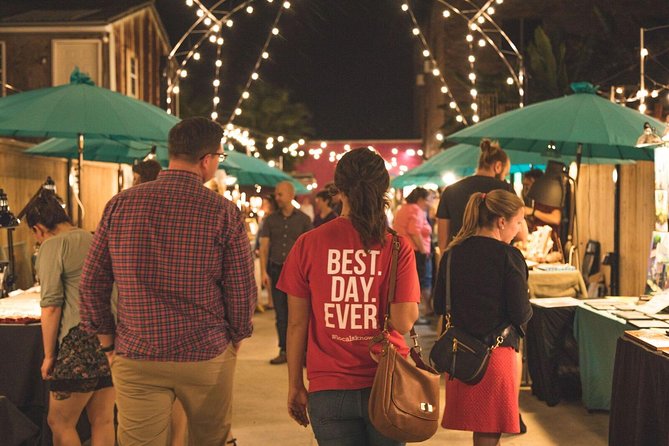
The walk may pass Preservation Hall, the long-running venue devoted to protecting and continuing traditional New Orleans jazz. You may not go inside, but seeing it from the street adds useful context to the club route.
Preservation Hall represents one side of the city’s music culture: traditional jazz kept alive through dedicated performers and a focused venue. Frenchmen Street and other clubs show how the city’s music continues to change. The tour works best when you see both sides, the old forms and the current night out.
The final French Quarter portion is less about checking off another attraction and more about helping you understand how to use the city. You can ask about club etiquette, music listings, neighborhood routes, and places to visit later. Guides such as Kristi have also shared personal suggestions for the rest of a stay, which makes the closing conversation especially useful.
Guides who make the difference
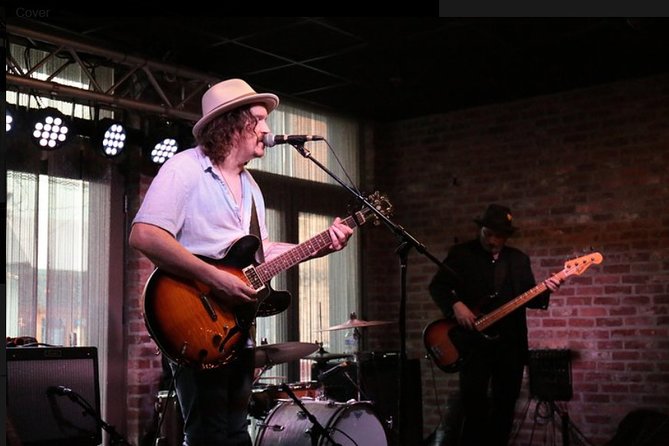
The guide is the most important variable in this experience. Names praised in the supplied feedback include Kristi, Adam, and Andre. Kristi is described as a New Orleans local and a musician, while Adam is praised for his passion, clear explanations, and relaxed pace.
That personal link matters. A guide who plays music can explain not only names and dates, but also why a style sounds the way it does and how musicians fit into the present-day city. Several tours were also flexible, adjusting the route around the group’s interests and the evening’s performers.
There is one clear caution. The tour includes social and economic history, including the current financial pressures facing New Orleans musicians. That subject is relevant because your participation helps support local musicians and venues, but the balance can vary by guide. One recorded experience felt that social and economic commentary took attention away from jazz itself.
If you want only music theory, musician biographies, and uninterrupted performances, ask at the start for a strong focus on the musical side. If you enjoy seeing how music connects to race, work, neighborhoods, and city life, the wider discussion may be a benefit.
What the $60.56 price buys you
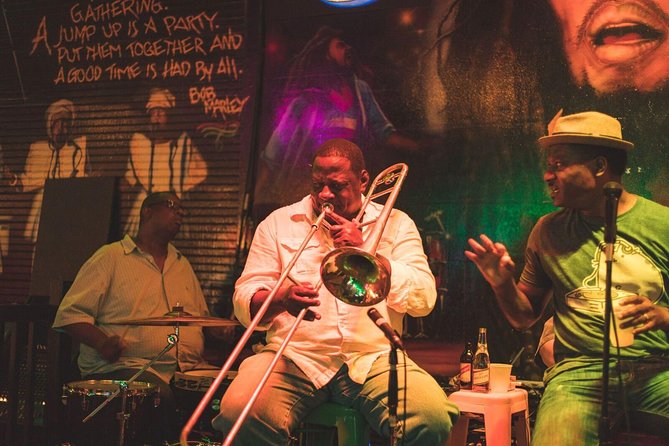
At $60.56 per person, this is not the cheapest way to hear music in New Orleans. You are paying for a guided history walk, local orientation, a small group, entry into a selected venue, one drink, and help finding music for the rest of the evening.
The value is strongest if you are new to New Orleans or unsure how to choose clubs. A good guide can save you from wandering without a plan and can lead you toward music that fits the night. The information can also pay off later, since you receive recommendations for continuing on your own.
The value is weaker if you already know the French Quarter and Frenchmen Street well, or if you prefer to pick your own clubs. You still receive historical context, but the route may cover familiar ground, and the included drink does not make the price a bargain by itself.
The small group helps justify the cost. A maximum of 12 people is far more manageable than a large street group, especially when the guide is explaining musical examples or moving into a club. Some departures may be much smaller, even just a handful of people, but you should not assume a private tour.
Walking, timing, and who should book
Plan on 2.5 hours and roughly 1.5 miles of walking. The pace has been described as relaxed, but you will be on your feet through Tremé and the French Quarter, often at night. Wear comfortable shoes, as this is the most repeated practical tip for good reason.
The tour is for people aged 21 and over. It is near public transportation, and most people can participate, but the provided details do not promise a fully accessible route. If you have mobility concerns, confirm the current route before booking.
The activity requires good weather. If rain or other poor conditions cause cancellation, you will be offered another date or a full refund. You can cancel for a full refund up to 24 hours before the start time. Changes or cancellations inside that window are not accepted.
This tour suits:
- First-time New Orleans visitors who want a music plan.
- Couples and solo visitors who prefer a small group.
- Jazz fans who want history before hearing live bands.
- People who enjoy local culture alongside music.
- Anyone who wants suggestions for the rest of the evening.
It is less suited to anyone under 21, people who dislike walking, or visitors who want a guaranteed artist, venue, or uninterrupted concert.
Should you book the New Orleans Jazz History and Music Walking Tour?
I would book this near the beginning of a New Orleans visit, especially if jazz is one of your main reasons for coming. The combination of Congo Square, Louis Armstrong Park, neighborhood history, and live music gives you a useful map of the city’s sound.
Book it if you value a local guide and want help choosing clubs. Kristi, Adam, and Andre have each been praised for warmth, strong music knowledge, and good pacing, though your guide and route may differ. Keep your expectations flexible, since the evening’s venues depend on the music schedule.
Skip it if you want a fixed itinerary or a guaranteed headliner. Also think twice if you want a purely musical lecture. Social history and the present-day working life of musicians are part of the tour, and that wider view may be either a welcome part of New Orleans or more than you hoped to hear.
For most adults seeking a first taste of the city’s jazz culture, the price is fair. You get an informed walk, a live music stop, one drink, and practical advice you can use after the tour ends. Just bring good shoes, an open evening, and enough room in your plans to stay for another set if the music grabs you.
FAQ
Where does the tour begin?
It begins at 701 N Rampart Street in New Orleans, near the French Quarter.
Where does the tour end?
The tour ends in the French Quarter.
How long does the tour last?
It lasts approximately 2 hours and 30 minutes.
How far do you walk?
You cover about 14 blocks, or roughly 1.5 miles, on foot.
What neighborhoods does the tour visit?
The route includes Tremé and the French Quarter. Depending on the evening, it may also include Bourbon Street or Frenchmen Street.
Is live music included?
Yes. The guide takes you into a live jazz or music venue selected for the evening. Recent tours often visited two venues, but the exact number and locations can vary.
Is a drink included?
Yes. One drink is included at a music stop. You may choose an alcoholic or nonalcoholic drink. Additional drinks and food cost extra.
Can people under 21 join?
No. Participants must be at least 21 years old.
How many people are in each group?
The maximum group size is 12 people.
Can I cancel for a refund?
Yes. You can cancel at least 24 hours before the start time for a full refund. If poor weather cancels the tour, you will be offered another date or a full refund.
Recently reviewed around New Orleans
- New Orleans Yellow Fever Ghost Tour★ 5.0 · 1,298 reviews
- VIP Jazz Dinner Cruise with Private Tour and Open Bar Option★ 4.5 · 838 reviews
- Whitney Plantation Tour with Transportation from New Orleans★ 4.5 · 1,351 reviews
- New Orleans Private Carriage Tour of the French Quarter★ 5.0 · 537 reviews
- New Orleans French Quarter Photo Shoot★ 5.0 · 462 reviews
- New Orleans Delicious Donuts & Beignets: A Sweet Walking Tour★ 5.0 · 928 reviews
- The Escape Game at the French Quarter in New Orleans★ 5.0 · 364 reviews
- The Ghosts of New Orleans Tour★ 4.5 · 702 reviews
Historical Tours, compared.

History and Hauntings of Salem Guided Walking Tour
Read our review →
Charleston’s Old South Carriage Historic Horse & Carriage Tour
Read our review →

Big Island in a Day: Volcanoes Waterfalls Sightseeing and History
Read our review →
Freedom Trail History Small Group Walking Tour
Read our review →
Historic Charleston Guided Sightseeing Walking Tour
Read our review →
Starship Landmark 90 Minute Sightseeing Cruise
Read our review →Browse the lists this tour appears in